View All

Please refer to the English Version as our Official Version.Return

Europe
France(Français) Germany(Deutsch) Italy(Italia) Russian(русский) Poland(polski) Czech(Čeština) Luxembourg(Lëtzebuergesch) Netherlands(Nederland) Iceland(íslenska) Hungarian(Magyarország) Spain(español) Portugal(Português) Turkey(Türk dili) Bulgaria(Български език) Ukraine(Україна) Greece(Ελλάδα) Israel(עִבְרִית) Sweden(Svenska) Finland(Svenska) Finland(Suomi) Romania(românesc) Moldova(românesc) Slovakia(Slovenská) Denmark(Dansk) Slovenia(Slovenija) Slovenia(Hrvatska) Croatia(Hrvatska) Serbia(Hrvatska) Montenegro(Hrvatska) Bosnia and Herzegovina(Hrvatska) Lithuania(lietuvių) Spain(Português) Switzerland(Deutsch) United Kingdom(English)
Asia/Pacific
Japan(日本語) Korea(한국의) Thailand(ภาษาไทย) Malaysia(Melayu) Singapore(Melayu) Vietnam(Tiếng Việt) Philippines(Pilipino)
Africa, India and Middle East
United Arab Emirates(العربية) Iran(فارسی) Tajikistan(فارسی) India(हिंदी) Madagascar(malaɡasʲ)
South America / Oceania
New Zealand(Maori) Brazil(Português) Angola(Português) Mozambique(Português)
North America
United States(English) Canada(English) Haiti(Ayiti) Mexico(español)
HomeProductsIntegrated Circuits (ICs)Embedded - FPGAs (Field Programmable Gate Array)EP4SGX530NF45C2
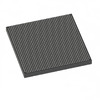
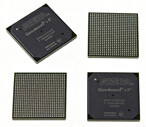
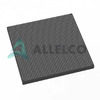
EP4SGX530NF45C2 Image
Image may be representation.
See specifications for product details.
EXPRESS OPTION
Payment method

EP4SGX530NF45C2 - Intel

Manufacturer Part Number
EP4SGX530NF45C2
Manufacturer
Intel
Allelco Part Number
32D-EP4SGX530NF45C2
Warranty
1 Year Allelco Warranty - Find out more
Stock Status:
14,020 pcs available, New & Original
Parts Description
IC FPGA 920 I/O 1932FBGA
Package
1932-FBGA, FC (45x45)
Data sheet
EP4SGX530NF45C2.pdf
RoHs Status
 
Our certification
In stock: 14020

Required fields are indicated by an asterisk (*)
Please send RFQ, we will respond immediately.

Quantity

Specifications

EP4SGX530NF45C2 Tech Specifications
Intel - EP4SGX530NF45C2 technical specifications, attributes, parameters and parts with similar specifications to Intel - EP4SGX530NF45C2

Product Attribute Attribute Value
Manufacturer Intel
Voltage - Supply 0.87V ~ 0.93V
Total RAM Bits 28033024
Supplier Device Package 1932-FBGA, FC (45x45)
Series Stratix® IV GX
Package / Case 1932-BBGA, FCBGA
Package Tray
Product Attribute Attribute Value
Operating Temperature 0°C ~ 85°C (TJ)
Number of Logic Elements/Cells 531200
Number of LABs/CLBs 21248
Number of I/O 920
Mounting Type Surface Mount
Base Product Number EP4SGX530

Environmental & Export Classifications

ATTRIBUTE DESCRIPTION
RoHs Status RoHS non-compliant
Moisture Sensitivity Level (MSL) 3 (168 Hours)
ECCN 3A001A7A
HTSUS 8542.39.0001

Parts Introduction

EP4SGX530NF45C2 Image
EP4SGX530NF45C2 (1)

Manufacturer Part Number

EP4SGX530NF45C2

Manufacturer

Intel

Introduction

High-performance, low-power field-programmable gate array (FPGA) for embedded applications

Product Features and Performance

Stratix IV GX series FPGA

531,200 logic elements

28,033,024 total RAM bits

21,248 LABs/CLBs

920 I/O pins

Operating temperature range: 0°C to 85°C

Product Advantages

High logic density and performance

Flexible, reconfigurable architecture

Low power consumption

Key Technical Parameters

Package: 1932-BBGA, FCBGA

Mounting type: Surface mount

Supply voltage: 0.87V to 0.93V

Quality and Safety Features

RoHS non-compliant

Compatibility

Suitable for embedded applications

Application Areas

Industrial automation

Communications equipment

Medical devices

Military and aerospace systems

Product Lifecycle

Active product, no information on discontinuation

Several Key Reasons to Choose This Product

High-performance FPGA with large logic capacity and memory

Flexible and reconfigurable design for diverse applications

Power-efficient operation suitable for embedded systems

Extensive I/O options for interfacing with other components

Frequently Asked Questions(FAQ)

What is the recommended operating voltage range for the EP4SGX530NF45C2 FPGA, and how does this impact power delivery design in high-speed systems?
The EP4SGX530NF45C2 operates within a tightly regulated supply voltage range of 0.87V to 0.93V, which corresponds to a nominal core voltage of 0.9V. This low voltage requirement reduces dynamic power consumption significantly compared to older FPGA generations but demands precise voltage regulation. In system-level design, this necessitates a low-dropout linear regulator (LDO) or DC-DC converter capable of maintaining ±2% accuracy under load transients. Any deviation beyond this window may cause timing failures or functional instability due to reduced noise margins at such low voltages.
How many logic elements does the Stratix IV GX EP4SGX530NF45C2 contain, and what implications does this have for routing congestion in large designs?
The EP4SGX530NF45C2 features 531,200 logic elements (LEs), representing approximately 106,240 equivalent adaptive logic modules (ALMs). With 21,248 LABs distributed across the array, complex state machines and arithmetic pipelines can be implemented efficiently. However, when targeting more than 80% utilization, designers should expect increased routing delays, especially in designs with heavy inter-block communication. Placement constraints and clock domain crossings become critical factors that may require incremental compile strategies and timing-driven placement efforts to meet performance targets.
Can the EP4SGX530NF45C2 support high-speed transceivers up to 6.25 Gbps, and what transceiver configuration options are available?
Yes, the Stratix IV GX variant EP4SGX530NF45C2 includes integrated transceivers supporting data rates up to 6.25 Gbps using SerDes technology. These transceivers are organized into 24 lanes, allowing flexible channel bonding for higher aggregate bandwidth. When designing backplane or optical interconnects, engineers must consider equalization settings, pre-emphasis levels, and receiver sensitivity adjustments based on channel loss profiles. The transceivers also support PCIe Gen2, SATA II, and XAUI protocols, enabling diverse interface implementations without external PHY components.
How much embedded memory is available in the EP4SGX530NF45C2, and how is it allocated between M9K blocks and MLABs?
The EP4SGX530NF45C2 provides a total of 28,033,024 bits of embedded memory, distributed across 14,016 M9K blocks and 10,624 MLABs. Each M9K block offers 18 Kbits of dedicated SRAM, ideal for large FIFO buffers or lookup tables, while MLABs provide 2 Kbits each and are better suited for small register files or coefficient storage. For applications requiring deep packet buffering or video frame storage, M9Ks should be prioritized; however, over-reliance on M9Ks can lead to inefficient area usage. Optimal allocation depends on access patterns and read/write port requirements.
What is the maximum number of user I/O pins supported by the EP4SGX530NF45C2, and how do electrical characteristics affect signal integrity?
The device supports up to 920 general-purpose I/O pins, configurable as single-ended LVDS, LVCMOS, or HSTL standards. Each pin can source up to 12 mA and sink 16 mA, with programmable drive strength and slew rate control. In high-frequency designs, termination schemes and impedance matching become essential to prevent reflections. For DDR memory interfaces, the internal DLLs allow skew management within ±75 ps, reducing setup and hold violations. Careful PCB layout with controlled impedance traces and ground stitching planes is necessary to maintain signal integrity across the full temperature range.
How does thermal performance compare between the EP4SGX530NF45C2 and previous Stratix IV GS variants under typical workloads?
While both Stratix IV GX and GS families share similar process nodes, the EP4SGX530NF45C2 dissipates slightly higher power due to its transceiver activity and increased logic density. At 85°C junction temperature, measured thermal resistance from junction to ambient is approximately 1.8°C/W for the FBGA package. Compared to GS devices, GX variants show up to 15% higher power draw under full transceiver load, necessitating improved airflow or heat spreaders in compact systems. Power gating strategies and dynamic partial reconfiguration can help mitigate thermal buildup during intermittent operation.
Is there a difference in package availability between commercial and industrial grade versions of the EP4SGX530NF45C2?
The EP4SGX530NF45C2 is specified for commercial temperature operation (0°C to 85°C), with no direct industrial (-40°C to +85°C) variant in the same model number. Attempting to use this part outside its rated conditions risks parametric drift and reliability degradation. If extended temperature support is required, engineers must either qualify an alternate part number or implement external thermal management to keep junction temperatures within spec. Always verify solder reflow profiles and moisture sensitivity level (MSL 3) handling procedures before assembly.
How does the EP4SGX530NF45C2 compare to newer Arria 10 devices in terms of DSP slice count and power efficiency?
The EP4SGX530NF45C2 contains 2,128 DSP slices, each capable of 27×27 multiplication-add operations per cycle. In contrast, comparable Arria 10 FPGAs offer up to 2,520 DSP blocks with higher precision (18×19) and lower voltage scaling down to 0.75V. Power efficiency has improved by roughly 40% in Arria 10 due to FinFET transistor architecture and advanced clock gating. For compute-intensive applications like radar processing or AI inference, migrating to Arria 10 yields better performance-per-watt, though migration costs and toolchain compatibility must be evaluated carefully.
What role do global clock networks play in minimizing skew across the EP4SGX530NF45C2 array?
The EP4SGX530NF45C2 employs dedicated global clock lines driven by phase-locked loops (PLLs) and zero-delay feedback (ZDB) circuits to distribute clocks with minimal skew. These networks span the entire die, supporting up to six independent PLLs per device. By using global clock resources instead of local routing, designers achieve sub-picosecond skew between logic blocks—critical for synchronous designs like memory controllers or high-speed serial links. However, overusing global clocks without proper balancing can increase power consumption and reduce available routing flexibility.
Are there any known limitations when implementing multi-gigabit SERDES protocols directly on the EP4SGX530NF45C2?
Implementing 6.25 Gbps SERDES requires careful consideration of jitter tolerance, eye diagram compliance, and protocol-specific encoding overhead. The EP4SGX530NF45C2’s transceivers support common protocols but lack native forward error correction (FEC), making them sensitive to channel impairments over longer traces. Additionally, transmit pre-emphasis must be calibrated per link length, and receiver de-emphasis adjusted to compensate for skin effect losses. Without adequate margin testing, bit error rates may exceed 1E-12, leading to link instability in production environments.
What tools are recommended for optimizing place-and-route results on the EP4SGX530NF45C2?
Intel Quartus Prime Pro Edition provides advanced timing closure features tailored for Stratix IV GX devices, including incremental compilation, physical synthesis, and timing-driven placement. For designs exceeding 70% utilization, iterative compile scripts with effort set "high" yield better results than default settings. Additionally, using timing budgets and false path definitions early in the flow reduces unnecessary optimization pressure. Memory and DSP block utilization maps should be reviewed post-place to avoid resource contention that degrades routability.
How does partial reconfiguration capability work on the EP4SGX530NF45C2, and what are the practical constraints?
The EP4SGX530NF45C2 supports partial reconfiguration via the Partial Reconfiguration Controller (PRC), allowing dynamic updates of specific regions without disrupting other logic. Configurable regions are limited to 16 per device and must be defined during initial compilation. The reconfiguration interface uses a dedicated ASx or JTAG port, with transfer speeds capped at 100 MHz for bitstream loading. Timing constraints must account for configuration time plus setup margin, typically adding hundreds of microseconds to application restart sequences. Isolation logic around reconfigurable areas prevents interference with active functions.
What is the impact of non-compliance with RoHS regulations for the EP4SGX530NF45C2?
The EP4SGX530NF45C2 is classified as RoHS non-compliant due to lead content in the package. This restricts its use in certain geographic markets, particularly within the European Union where RoHS mandates restrict hazardous substances. Procurement teams must verify alternative compliant substitutes if regulatory adherence is required. Even if current inventory exists, long-term supply planning should avoid reliance on non-RoHS parts to prevent obsolescence risks and compliance audits during product certification.
How does the Moisture Sensitivity Level (MSL) rating of 3 for the EP4SGX530NF45C2 affect manufacturing handling?
As an MSL 3 component, the EP4SGX530NF45C2 must be stored in dry packaging and assembled within 168 hours after opening unless baked per IPC/JEDEC J-STD-033 guidelines. Absorbed moisture can cause popcorning during solder reflow, leading to package cracking and catastrophic failure. Facilities must maintain Class 1 humidity-controlled storage and log bake cycles accordingly. Failure to follow these procedures increases field return rates and compromises yield, especially in high-volume production lines where traceability is essential.
What ECCN classification applies to the EP4SGX530NF45C2, and what export considerations arise?
The EP4SGX530NF45C2 carries an ECCN of 3A001A7A, indicating it is subject to U.S. export controls as a programmable logic device with cryptographic capabilities. This classification arises from embedded security features like AES encryption engines and secure configuration interfaces. Exporting the device or related design files may require a license depending on destination country and end-use. Companies should consult ITAR and EAR regulations before international deployment, especially in defense or telecommunications sectors.
How does the 1932-FBGA package influence thermal dissipation and signal routing in high-density designs?
The 45×45 mm 1932-ball fine-pitch ball grid array package offers high pin density but presents thermal challenges due to limited exposed pad exposure and poor backside heat conduction. Effective thermal management requires a solid ground plane beneath the package and thermal vias connecting to internal layers. Signal routing is constrained by via-in-pad limitations and minimum pitch requirements; thus, layer stacking and escape routing demand advanced PCB fabrication techniques such as microvias or sequential lamination. Blind and buried vias help preserve top-layer space while maintaining impedance control.
What alternatives exist if the EP4SGX530NF45C2 becomes unavailable due to lifecycle discontinuation?
Should the EP4SGX530NF45C2 reach end-of-life, potential substitutes include the EP4SGX530NF45C2G (slightly faster speed grade) or migration to Intel Cyclone V or Arria 10 series depending on performance needs. The EP4SGX530NF45C2G offers similar pin compatibility and feature set but with tightened timing margins. Transitioning to newer architectures involves revalidation of I/O standards, transceiver protocols, and power budgeting. FPGA vendors often provide IP migration tools and compatibility matrices to assist in this process, though full functional parity cannot always be guaranteed.
Why might a designer choose the EP4SGX530NF45C2 over discrete ASIC solutions despite higher unit cost?
The EP4SGX530NF45C2 enables rapid prototyping and field upgrades without hardware changes, reducing development risk and time-to-market. Its integrated transceivers, hardened memory controllers, and DSP blocks eliminate need for external components, simplifying board layout. While NRE costs are avoided, unit economics favor FPGAs only above ~1,000 units—below which ASICs are cheaper. For niche or evolving standards (e.g., custom protocol acceleration), the flexibility outweighs cost penalties, provided power and thermal budgets remain manageable.

Parts with Similar Specifications

The three parts on the right have similar specifications to Intel EP4SGX530NF45C2

Product Attribute EP4SGX530NF45C2G EP4SGX530NF45C2N EP4SGX530NF45C3N EP4SGX530NF45C3G
Part Number EP4SGX530NF45C2G EP4SGX530NF45C2N EP4SGX530NF45C3N EP4SGX530NF45C3G
Manufacturer Intel Intel Intel Intel
Total RAM Bits - - - -
Operating Temperature - -40°C ~ 85°C 0°C ~ 70°C -40°C ~ 85°C
Series - - - -
Supplier Device Package - 196-NFBGA (12x12) 16-PDIP 64-VQFN (9x9)
Package / Case - 196-LFBGA 16-DIP (0.300', 7.62mm) 64-VFQFN Exposed Pad
Package - Tape & Reel (TR) Tube Tape & Reel (TR)
Number of LABs/CLBs - - - -
Number of I/O - - - -
Voltage - Supply - - - -
Base Product Number - DAC34H84 MAX500 ADS62P42
Number of Logic Elements/Cells - - - -
Mounting Type - Surface Mount Through Hole Surface Mount

EP4SGX530NF45C2 Datasheet PDF

Download EP4SGX530NF45C2 pdf datasheets and Intel documentation for EP4SGX530NF45C2 - Intel.

Datasheets
Stratix IV Device Handbook Vol.1.pdf Stratix IV Devices.pdf Virtual JTAG Megafuntion Guide.pdf
PCN Obsolescence/ EOL
Mult Dev EOL 30/Mar/2020.pdf
PCN Packaging
Mult Dev Label CHG 24/Jan/2020.pdf Mult Dev Label Chgs 24/Feb/2020.pdf
PCN Part Status Change
Mult Dev NRND 10/Jan/2020.pdf
Errata
Stratix IV GX Errata.pdf

Customer Reviews

Evaluation: 10 Articles

  • Emil***rperTech
    Jun 23, 2026

    Works exactly as described. I used it as a USB-to-SPI bridge in a small MCU development project and communication was stable from the first setup.

  • Liam***terTech
    Jun 15, 2026

    Used this CPLD in a logic control project. Programming was straightforward and signal timing matched the design requirements.

  • Nath***rooks
    Jun 11, 2026

    Installed this power component in a converter board. Output remained stable under different load conditions and thermal performance was better than expected.

  • Dani***alkerTech
    Jun 1, 2026

    Product works, but setup took more effort than expected. Once configured the MCU ran reliably, although documentation support felt older compared with newer platforms. Fine for maintenance projects.

  • Yuki***aka88
    May 26, 2026

    信号通信プロジェクトでこのRS-485トランシーバーを使用しました。設置は簡単で、長距離ケーブルでも通信は安定していました。消費電力も、以前使用していたものより低くなっています。

  • Stev***aker
    May 20, 2026

    Solid diode for power rectification. Works well in switching circuits.

  • Bran***Lewis
    May 11, 2026

    Compact FPGA with good performance. Suitable for basic signal processing tasks.

  • Oliv***arris
    May 7, 2026

    Reliable I/O expander. Works well in embedded control applications.

  • Jess***Jones
    Apr 17, 2026

    It offers good value for the price, and the specifications match the description. I’ve been using it for two days with no issues, and I’ll definitely buy it again if I need it in the future.

  • Mich***Smith
    Apr 17, 2026

    Shipping was on time, the component pins are neatly aligned, and I tested 10 of them with a multimeter—all readings were within the specified range. Highly recommended.

Write a Review

Your Email address will not be published.

Shipment

Delivery Time

In-stock items can be shipped within 24 hours. Some parts will be arranged for delivery within 1-2 days from the date all items arrive at our warehouse. And Allelco ships order once a day at about 17:00, except Sunday. Once the goods are shipped, the estimated delivery time depends on the shipping methods and Delivery destination. The table below shows are the logistic time for some common countries.

Delivery Cost

  1. Use your express account for shipment if you have one.
  2. Use our account for the shipment. Refer to the table below for the approximate charges.
(Different time frame / countries / package size has different price.)

Delivery Method

  1. Global Common Shipment by DHL / UPS / FedEx / TNT / EMS / SF we support.
  2. Others more shipping ways, please get in touch with your customer manager.

Common Countries Logistic Time Reference
Region Country Logistic Time(Day)
America United States 5
Brazil 7
Europe Germany 5
United Kingdom 4
Italy 5
Oceania Australia 6
New Zealand 5
Asia India 4
Japan 4
Middle East Israel 6
DHL & FedEx Shipment Charges Reference
Shipment charges(KG) Reference DHL(USD$)
0.00kg-1.00kg USD$30.00 - USD$60.00
1.00kg-2.00kg USD$40.00 - USD$80.00
2.00kg-3.00kg USD$50.00 - USD$100.00
Note:
The above table is for reference only. There may have some data bias for the uncontrollable factors.
Contact us if you have any questions.
  • QC (Quality Warranty)
  • Payment Support
  • Packaging
  • Certifications & Memberships

QC (Quality Warranty)

Allelco is committed to exceeding customer expectations through customer service excellence, order accuracy, and on-time delivery.
This is achieved through our commitment to the continual improvement of our processes, services, and products.


Strict quality inspection builds a solid foundation for electronic component quality.
  1. Visual inspection
  2. Performance testing and reliability verification
  3. Standardized full-process testing
  4. Precise control of every parameter
We eliminate defective components and ensure the stable operation of electronic devices through professional quality standards.

Payment Support

The payment method can be chosen from the methods shown below: Wire Transfer (T/T, Bank Transfer), Western Union, Credit card, PayPal.
  • HKBea
  • Paypal
  • MasterCard
  • Western-Union
  • VISA
Stable Delivery, Sincere Partnership — Your Faithful Supply Chain Partner
  • Efficient Supply Management
  • Cost-Saving Procurement
  • Fast Sourcing & Delivery
Contact us if you have any questions.

Packaging

Electrostatic Discharge Protection and Handling

All electrostatic-sensitive components are handled in accordance with electrostatic discharge control procedures. The products are hermetically sealed in anti-static safe packaging to prevent electrostatic damage. Appropriate labeling is also applied for identification and traceability. This ensures product integrity during storage, handling and transportation.


ESD

Certifications & Memberships

Third-party certified, strict quality control. Our certification
  • ISO 9001: 2015
  • ISO 13485: 2016
  • ISO 14001: 2015
  • ISO 28000: 2007
  • ISO 45001: 2018
  • GB/T 27922-2011
  • SMTA
  • IPC
  • ESD
  • PSMA
EP4SGX530NF45C2 Image

EP4SGX530NF45C2

Intel
32D-EP4SGX530NF45C2

Want a better price? Add to Cart and Submit RFQ now, we'll contact you immediately.

0 RFQ
Shopping cart (0 Items)
It is empty.
Compare List (0 Items)
It is empty.
Feedback

Your feedback matters! At Allelco, we value the user experience and strive to improve it constantly.
Please share your comments with us via our feedback form, and we'll respond promptly.
Thank you for choosing Allelco.

Subject
E-mail
Comments
Captcha
Drag or click to upload file
Upload File
types: .xls, .xlsx, .doc, .docx, .jpg, .png and .pdf.
Max file size: 10MB