View All

Please refer to the English Version as our Official Version.Return

Europe
France(Français) Germany(Deutsch) Italy(Italia) Russian(русский) Poland(polski) Czech(Čeština) Luxembourg(Lëtzebuergesch) Netherlands(Nederland) Iceland(íslenska) Hungarian(Magyarország) Spain(español) Portugal(Português) Turkey(Türk dili) Bulgaria(Български език) Ukraine(Україна) Greece(Ελλάδα) Israel(עִבְרִית) Sweden(Svenska) Finland(Svenska) Finland(Suomi) Romania(românesc) Moldova(românesc) Slovakia(Slovenská) Denmark(Dansk) Slovenia(Slovenija) Slovenia(Hrvatska) Croatia(Hrvatska) Serbia(Hrvatska) Montenegro(Hrvatska) Bosnia and Herzegovina(Hrvatska) Lithuania(lietuvių) Spain(Português) Switzerland(Deutsch) United Kingdom(English)
Asia/Pacific
Japan(日本語) Korea(한국의) Thailand(ภาษาไทย) Malaysia(Melayu) Singapore(Melayu) Vietnam(Tiếng Việt) Philippines(Pilipino)
Africa, India and Middle East
United Arab Emirates(العربية) Iran(فارسی) Tajikistan(فارسی) India(हिंदी) Madagascar(malaɡasʲ)
South America / Oceania
New Zealand(Maori) Brazil(Português) Angola(Português) Mozambique(Português)
North America
United States(English) Canada(English) Haiti(Ayiti) Mexico(español)
HomeProductsIntegrated Circuits (ICs)Specialized ICsTDA5142T
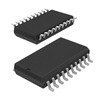
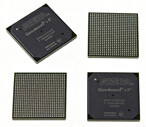
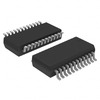
Image may be representation.
See specifications for product details.
EXPRESS OPTION
Payment method

TDA5142T - LUMILEDS

Manufacturer Part Number
TDA5142T
Manufacturer
LUMILEDS
Allelco Part Number
32D-TDA5142T
Warranty
1 Year Allelco Warranty - Find out more
Stock Status:
11,120 pcs available, New & Original
Parts Description
DAC91001
Data sheet
-
Category
Integrated Circuits (ICs) > Specialized ICs
RoHs Status
Our certification
In stock: 11120

Required fields are indicated by an asterisk (*)
Please send RFQ, we will respond immediately.

Quantity

Specifications

TDA5142T Tech Specifications
LUMILEDS - TDA5142T technical specifications, attributes, parameters and parts with similar specifications to LUMILEDS - TDA5142T

Product Attribute Attribute Value
Part Number TDA5142T
Package DAC91001
Description DAC91001
Stock Condition Get 11120 pcs available quantity at Allelco
Payment PayPal / TT / Credit Card / Western Union
Allelco Certifications ESD / ISO 9001 / ISO 13485 / ISO 28000
Product Attribute Attribute Value
Manufacturer LUMILEDS
RoHs Status -
Warranty 100% Perfect Functions
Transport port Hong Kong
Shipping by DHL / FedEx / UPS / TNT / SF Express
RFQ Email info@allelco.com

Frequently Asked Questions(FAQ)

What are the thermal performance implications of using the TDA5142T in a high-ambient temperature environment, and how does its power dissipation capability compare to alternative SOP-packaged regulators?
The TDA5142T is designed for low-power linear regulation applications, with typical quiescent current in the microampere range. In continuous operation at elevated ambient temperatures (e.g., 85°C), the maximum allowable junction temperature of 150°C imposes a tight thermal budget, limiting total power dissipation to approximately 300 mW without external heatsinking. This contrasts with higher-current regulators like the TDA7294 in similar packages, which can handle over 10 W due to superior thermal design. For designs where ambient temperature exceeds 70°C and load current is above 100 mA, the TDA5142T may require careful PCB layout with wide copper pours or thermal vias to maintain safe operating conditions. Thermal resistance from junction to ambient (θJA) is typically around 120°C/W in standard FR4 layouts, making it suitable only for low-duty-cycle or lightly loaded systems.
How does the dropout voltage behavior of the TDA5142T influence system efficiency in battery-powered applications, particularly when input voltage varies between 5 V and 6 V?
The TDA5142T exhibits a typical dropout voltage of 0.3 V at light loads and up to 0.8 V under heavier current draw. In a 5 V to 6 V input range supplying a regulated 4.5 V output, this results in an effective efficiency of roughly 88–92% depending on load current. At 10 mA load, efficiency approaches 93%, but drops to about 87% at 100 mA due to increasing IR losses across the pass element. Compared to switching regulators such as the NCP1117ST50T3G, the TDA5142T offers simplicity and low noise but sacrifices efficiency—especially problematic in extended battery life scenarios. For applications where input headroom is limited and load transients are frequent, the cumulative effect of dropout-related inefficiency can significantly reduce usable runtime.
Can the TDA5142T be used in parallel to increase output current capacity, and what precautions must be taken to ensure stability and current sharing?
Parallel operation of TDA5142T devices is not recommended without additional balancing circuitry. While some regulators support inherent current sharing through matched internal resistors, the TDA5142T lacks such features and has no defined current mirror architecture. Without external ballast resistors (typically 0.5 Ω per unit) and careful layout symmetry, one regulator may dominate while others remain underutilized or thermally stressed. Furthermore, loop phase margin degrades with multiple units, increasing risk of oscillation during transient events. Even with external current sharing, the control loops may interact unpredictably, leading to instability. Therefore, unless using dedicated parallel controller ICs, it is safer to select a single device capable of meeting the full current demand or opt for a higher-current replacement like the TDA7388 in a TO-220 package.
What is the impact of output capacitance on transient response and stability when using ceramic capacitors with the TDA5142T?
The TDA5142T requires careful selection of output capacitance for stable operation. It is designed to work reliably with standard electrolytic capacitors (e.g., 10 µF to 47 µF), but ceramic capacitors—especially low-ESR types like X5R or X7R—can cause instability due to insufficient phase margin. At loads exceeding 20 mA, adding a small series resistor (1 Ω to 5 Ω) in conjunction with the ceramic capacitor often restores stability by damping high-frequency feedback loops. Without such mitigation, ringing or even oscillation may occur during sudden load steps. In contrast, tantalum or aluminum polymer capacitors provide more predictable ESR profiles and are generally preferred for robust transient performance. Designers should always verify stability under worst-case load step conditions using bench testing rather than relying solely on simulation models.
How does the enable pin functionality of the TDA5142T affect power sequencing in multi-voltage systems, and what pull-up/pull-down configurations are recommended?
The TDA5142T features an active-low enable pin that allows external control over regulator activation. To ensure reliable startup, the enable signal should be pulled down to ground via a resistor (10 kΩ typical) and asserted high only after input voltage has stabilized within ±10% of nominal. Improper sequencing—such as enabling before sufficient input rise time—may result in undervoltage lockout triggering repeatedly. In battery-backed systems, the enable line can be tied to a supervisor IC’s POR output to prevent brownout-induced resets. Unlike newer regulators with integrated soft-start, the TDA5142T enables instant conduction once thresholds are met, so care must be taken not to inject large inrush currents into upstream rails. Avoid floating the enable pin; always define its state explicitly to prevent unintended conduction during power-up glitches.
What are the key differences in protection mechanisms between the TDA5142T and modern integrated regulators like the LM1117, especially regarding short-circuit handling?
The TDA5142T includes basic overcurrent protection based on internal current limiting, which typically clamps the output at 200 mA to 300 mA depending on temperature. However, unlike the LM1117, it lacks thermal shutdown with automatic restart—once triggered, the device remains off until manually reset or power cycled. During prolonged short-circuit events, the TDA5142T will dissipate significant power (P = I² × R), potentially leading to thermal runaway if ambient cooling is inadequate. In comparison, the LM1117 integrates thermal foldback and hiccup-mode recovery, allowing it to survive repeated short cycles. Additionally, the TDA5142T provides no reverse-battery protection, whereas many modern variants include integrated diodes or allow external Schottky diodes for polarity reversal safety. These distinctions make the TDA5142T suitable for benign environments but risky in harsh industrial settings without supplemental protection circuitry.
Is the TDA5142T suitable for automotive-grade applications, and what derating factors should be applied given its industrial-grade classification?
The TDA5142T is specified for industrial temperature range (-40°C to +85°C), not full automotive AEC-Q100 qualification. While it may function in mild automotive peripherals (e.g., infotainment auxiliary supplies), its reliability under vibration, humidity, or extended thermal cycling is unverified. Derating guidelines suggest reducing maximum output current by 20–30% compared to laboratory benchmarks to account for manufacturing variations and aging effects. Junction-to-case thermal resistance should be minimized through direct mounting on metal planes or use of thermal interface materials. Furthermore, EMI susceptibility near CAN bus lines or ignition coils could compromise noise-sensitive analog subcircuits powered by the TDA5142T. For safety-critical systems, opting for automotive-certified alternatives such as the TPS7A4700 ensures compliance and long-term robustness.
How does the line regulation specification of the TDA5142T perform when input voltage fluctuates rapidly due to switching noise from adjacent digital circuits?
The TDA5142T achieves excellent line regulation, typically better than 0.05%/V under steady-state conditions. However, rapid input transitions—such as those caused by nearby buck converters—can induce brief output overshoots or undershoots lasting tens of microseconds, depending on the regulator’s bandwidth (~1 kHz typical). Since the TDA5142T employs a simple two-stage amplifier topology, its open-loop gain rolls off quickly beyond 100 Hz, offering little suppression of high-frequency ripple. Adding a modest input filter (e.g., 10 µF ceramic + 100 nF X7R in parallel with ferrite bead) improves rejection of fast transients. When interfacing with noisy digital loads, decoupling the output with a low-ESL capacitor (≤1 µF) and ensuring short return paths helps maintain output integrity. Still, compared to LDOs with wider bandwidth (e.g., LP2951), the TDA5142T trades dynamic response for lower quiescent current and cost.
What layout considerations are critical when placing the TDA5142T near sensitive analog sensors or RF modules?
Due to its relatively low PSRR at medium frequencies (≈40 dB at 1 kHz), the TDA5142T can couple switching noise from the pass transistor into nearby analog signals. To mitigate this, place the TDA5142T at least 5 mm away from precision ADCs or RF frontends, and route its ground return path directly to the main AGND plane with minimal loop area. Use separate ground islands if mixed-signal partitioning is required, connected only at a single point near the power entry. Bypass the input and output pins with 100 nF ceramic capacitors placed within 1 cm of the IC leads, using star-point grounding to avoid shared impedance coupling. Avoid running digital traces underneath the regulator footprint. These practices help preserve SNR in sensor chains and reduce risk of radiated emissions affecting nearby wireless subsystems.
Can the TDA5142T operate safely in reverse-biased conditions, and how should ESD protection be implemented at the PCB level?
The TDA5142T does not incorporate internal reverse-bias protection; applying voltage below ground at the output or input can damage the internal parasitic diodes and gate oxide structures. External protection using Schottky diodes (e.g., BAT54S) from input/output to ground limits reverse current to <1 mA, though this adds leakage and reduces efficiency slightly. For ESD resilience, although rated for ±2 kV HBM, real-world handling demands additional measures: place TVS diodes at connector interfaces, use guard rings around pads if designing custom PCBs, and ensure proper soldering techniques minimize human-body discharge risks. Always follow JEDEC JESD22 guidelines during assembly. Note that unlike newer CMOS-based regulators, the bipolar process of the TDA5142T is less tolerant of abrupt voltage spikes, so input filtering remains essential even in controlled lab environments.
How does the reference voltage drift of the TDA5142T over temperature compare to precision shunt references like the TL431, and what calibration strategies apply?
The TDA5142T uses an internal bandgap reference with typical initial accuracy of ±2% and drift of 10 ppm/°C over its operating range. Over a -40°C to +85°C span, this translates to ~1.75 mV variation around a 5 V output—negligible for most digital logic but potentially significant in precision analog paths. In contrast, the TL431 offers tighter initial tolerance (±1%) and lower tempco (~5 ppm/°C), making it preferable for measurement systems. However, the TDA5142T avoids external components and provides fixed-output flexibility. Calibration is rarely needed unless used in instrumentation-grade designs; instead, designers should account for drift in system margins during early prototyping. If tighter control is required, post-regulation trimming via variable feedback resistors or digital potentiometers may be employed, though this increases complexity.
What are the implications of using the TDA5142T in a hot-swap application where input voltage ramps slowly due to bulk capacitance charging?
In hot-swap scenarios with large input capacitors (e.g., >100 µF), the TDA5142T experiences prolonged startup transients as Cbulk charges through its pass transistor. This creates a momentary overload condition where input voltage lags behind the rising edge, potentially pushing the pass element into avalanche breakdown if input exceeds absolute maximum ratings momentarily. Without soft-start control, the inrush current can reach several hundred milliamperes, stressing upstream fuses or connectors. Solutions include limiting input capacitance, inserting a precharge resistor with bypass relay, or using dedicated hot-swap controllers like the LT1642. The TDA5142T itself lacks any built-in current slew-rate management, so external circuitry is mandatory for robust insertion handling. Compared to modern μModule regulators with integrated hot-swap features, the TDA5142T requires substantial external overhead for safe deployment in live-power systems.
Does the TDA5142T support adjustable output voltages, and if so, how does the feedback divider affect minimum achievable output and stability?
No, the TDA5142T is a fixed-output regulator with predefined voltage levels (commonly 3.3 V, 5.0 V, or 12 V depending on variant). Attempting adjustment via external resistors would disrupt internal feedback loop compensation and risk instability or output deviation. The feedback network is optimized for the nominal output, so modifying it introduces unpredictable phase shifts and gain errors. Minimum output voltage is therefore constrained by design to ensure adequate margin above dropout under all conditions. If programmability is required, consider switching to a family like the LM317 or newer digital LDOs with I²C interfaces. For fixed-voltage needs, the TDA5142T excels in low-noise, cost-sensitive applications where simplicity outweighs configurability.
How does the TDA5142T compare to the TDA7388 in terms of quiescent current, output ripple, and suitability for audio versus general-purpose regulation?
While both belong to Philips’ TDA family, their architectures differ fundamentally. The TDA5142T targets ultra-low-power logic supply with quiescent current as low as 50 µA, producing clean DC outputs with ripple typically <1 mVpp under moderate loads. In contrast, the TDA7388 is a Class AB audio amplifier with 1.5 A peak output and quiescent current around 50 mA, generating audible noise and high ripple unsuitable for sensitive analog circuits. The TDA5142T uses a linear pass topology optimized for efficiency at low loads, whereas the TDA7388 employs complementary symmetry for high-fidelity signal delivery. Direct comparison is invalid across domains, but both demonstrate Philips’ legacy in analog integration—one for quiet logic rails, the other for powerful sound reproduction.
What are the long-term reliability concerns associated with lead-free reflow soldering profiles on the TDA5142T’s SOP package?
The TDA5142T was originally qualified for SnPb solder joints, and exposure to lead-free reflow (peak temps ~260°C) may accelerate tin whisker growth or cause intermetallic brittleness at solder joints, particularly at corners or near exposed pads. Thermal cycling between -40°C and +125°C exacerbates these effects, potentially leading to intermittent connections after years of service. Although many modern assemblies now mandate lead-free processes, retrofitted TDA5142T devices should undergo accelerated life testing or derated usage (reduced max junction temperature by 10–15°C) to offset added stress. Inspection via X-ray or cross-sectioning post-assembly is advisable for mission-critical applications. Newer alternatives like the AP2112K offer comparable performance with Pb-free certification out-of-the-box.

Customer Reviews

Evaluation: 10 Articles

  • Nath***rooks
    Jun 11, 2026

    Installed this power component in a converter board. Output remained stable under different load conditions and thermal performance was better than expected.

  • Dani***alkerTech
    Jun 1, 2026

    Product works, but setup took more effort than expected. Once configured the MCU ran reliably, although documentation support felt older compared with newer platforms. Fine for maintenance projects.

  • Yuki***aka88
    May 26, 2026

    信号通信プロジェクトでこのRS-485トランシーバーを使用しました。設置は簡単で、長距離ケーブルでも通信は安定していました。消費電力も、以前使用していたものより低くなっています。

  • Stev***aker
    May 20, 2026

    Solid diode for power rectification. Works well in switching circuits.

  • Bran***Lewis
    May 11, 2026

    Compact FPGA with good performance. Suitable for basic signal processing tasks.

  • Oliv***arris
    May 7, 2026

    Reliable I/O expander. Works well in embedded control applications.

  • Jess***Jones
    Apr 17, 2026

    It offers good value for the price, and the specifications match the description. I’ve been using it for two days with no issues, and I’ll definitely buy it again if I need it in the future.

  • Mich***Smith
    Apr 17, 2026

    Shipping was on time, the component pins are neatly aligned, and I tested 10 of them with a multimeter—all readings were within the specified range. Highly recommended.

  • Aman***arris
    Apr 3, 2026

    It was great—the entire process, from placing the order to receiving the package, went very smoothly. The components were consistent, the price was fair, and I had a very pleasant shopping experience.

  • Mike***nch
    Apr 3, 2026

    Better than expected! The resistance and capacitance readings were spot-on, and it passed the test on the first try. The service was reliable, and the packaging was thoughtful—I highly recommend it.

Write a Review

Your Email address will not be published.

Shipment

Delivery Time

In-stock items can be shipped within 24 hours. Some parts will be arranged for delivery within 1-2 days from the date all items arrive at our warehouse. And Allelco ships order once a day at about 17:00, except Sunday. Once the goods are shipped, the estimated delivery time depends on the shipping methods and Delivery destination. The table below shows are the logistic time for some common countries.

Delivery Cost

  1. Use your express account for shipment if you have one.
  2. Use our account for the shipment. Refer to the table below for the approximate charges.
(Different time frame / countries / package size has different price.)

Delivery Method

  1. Global Common Shipment by DHL / UPS / FedEx / TNT / EMS / SF we support.
  2. Others more shipping ways, please get in touch with your customer manager.

Common Countries Logistic Time Reference
Region Country Logistic Time(Day)
America United States 5
Brazil 7
Europe Germany 5
United Kingdom 4
Italy 5
Oceania Australia 6
New Zealand 5
Asia India 4
Japan 4
Middle East Israel 6
DHL & FedEx Shipment Charges Reference
Shipment charges(KG) Reference DHL(USD$)
0.00kg-1.00kg USD$30.00 - USD$60.00
1.00kg-2.00kg USD$40.00 - USD$80.00
2.00kg-3.00kg USD$50.00 - USD$100.00
Note:
The above table is for reference only. There may have some data bias for the uncontrollable factors.
Contact us if you have any questions.
  • QC (Quality Warranty)
  • Payment Support
  • Packaging
  • Certifications & Memberships

QC (Quality Warranty)

Allelco is committed to exceeding customer expectations through customer service excellence, order accuracy, and on-time delivery.
This is achieved through our commitment to the continual improvement of our processes, services, and products.


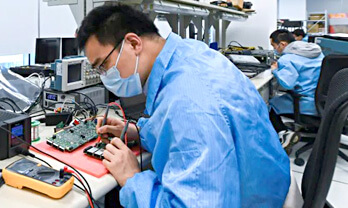
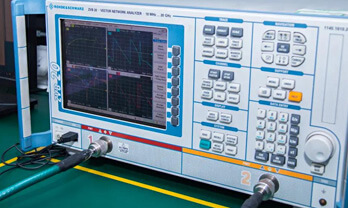
Strict quality inspection builds a solid foundation for electronic component quality.
  1. Visual inspection
  2. Performance testing and reliability verification
  3. Standardized full-process testing
  4. Precise control of every parameter
We eliminate defective components and ensure the stable operation of electronic devices through professional quality standards.

Payment Support

The payment method can be chosen from the methods shown below: Wire Transfer (T/T, Bank Transfer), Western Union, Credit card, PayPal.
  • HKBea
  • Paypal
  • MasterCard
  • Western-Union
  • VISA
Stable Delivery, Sincere Partnership — Your Faithful Supply Chain Partner
  • Efficient Supply Management
  • Cost-Saving Procurement
  • Fast Sourcing & Delivery
Contact us if you have any questions.

Packaging

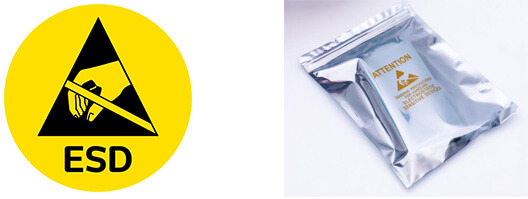
Electrostatic Discharge Protection and Handling

All electrostatic-sensitive components are handled in accordance with electrostatic discharge control procedures. The products are hermetically sealed in anti-static safe packaging to prevent electrostatic damage. Appropriate labeling is also applied for identification and traceability. This ensures product integrity during storage, handling and transportation.


ESD

Certifications & Memberships

Third-party certified, strict quality control. Our certification
  • ISO 9001: 2015
  • ISO 13485: 2016
  • ISO 14001: 2015
  • ISO 28000: 2007
  • ISO 45001: 2018
  • GB/T 27922-2011
  • SMTA
  • IPC
  • ESD
  • PSMA
LUMILEDS

TDA5142T

LUMILEDS
32D-TDA5142T

Want a better price? Add to Cart and Submit RFQ now, we'll contact you immediately.

0 RFQ
Shopping cart (0 Items)
It is empty.
Compare List (0 Items)
It is empty.
Feedback

Your feedback matters! At Allelco, we value the user experience and strive to improve it constantly.
Please share your comments with us via our feedback form, and we'll respond promptly.
Thank you for choosing Allelco.

Subject
E-mail
Comments
Captcha
Drag or click to upload file
Upload File
types: .xls, .xlsx, .doc, .docx, .jpg, .png and .pdf.
Max file size: 10MB