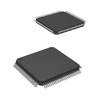
View All

Please refer to the English Version as our Official Version.Return

Europe
France(Français) Germany(Deutsch) Italy(Italia) Russian(русский) Poland(polski) Czech(Čeština) Luxembourg(Lëtzebuergesch) Netherlands(Nederland) Iceland(íslenska) Hungarian(Magyarország) Spain(español) Portugal(Português) Turkey(Türk dili) Bulgaria(Български език) Ukraine(Україна) Greece(Ελλάδα) Israel(עִבְרִית) Sweden(Svenska) Finland(Svenska) Finland(Suomi) Romania(românesc) Moldova(românesc) Slovakia(Slovenská) Denmark(Dansk) Slovenia(Slovenija) Slovenia(Hrvatska) Croatia(Hrvatska) Serbia(Hrvatska) Montenegro(Hrvatska) Bosnia and Herzegovina(Hrvatska) Lithuania(lietuvių) Spain(Português) Switzerland(Deutsch) United Kingdom(English)
Asia/Pacific
Japan(日本語) Korea(한국의) Thailand(ภาษาไทย) Malaysia(Melayu) Singapore(Melayu) Vietnam(Tiếng Việt) Philippines(Pilipino)
Africa, India and Middle East
United Arab Emirates(العربية) Iran(فارسی) Tajikistan(فارسی) India(हिंदी) Madagascar(malaɡasʲ)
South America / Oceania
New Zealand(Maori) Brazil(Português) Angola(Português) Mozambique(Português)
North America
United States(English) Canada(English) Haiti(Ayiti) Mexico(español)
HomeProductsIntegrated Circuits (ICs)Specialized ICsLC4256V-5TN100I
Image may be representation.
See specifications for product details.
EXPRESS OPTION
Payment method

LC4256V-5TN100I - Lattice

Manufacturer Part Number
LC4256V-5TN100I
Manufacturer
Lattice Semiconductor
Allelco Part Number
41D-LC4256V-5TN100I
Warranty
1 Year Allelco Warranty - Find out more
Stock Status:
9,230 pcs available, New & Original
Parts Description
TQFP-100(14x14)
Data sheet
-
Category
Integrated Circuits (ICs) > Specialized ICs
RoHs Status
Our certification
In stock: 9230

Required fields are indicated by an asterisk (*)
Please send RFQ, we will respond immediately.

Quantity

Specifications

LC4256V-5TN100I Tech Specifications
Lattice - LC4256V-5TN100I technical specifications, attributes, parameters and parts with similar specifications to Lattice - LC4256V-5TN100I

Product Attribute Attribute Value
Part Number LC4256V-5TN100I
Package TQFP-100(14x14)
Description TQFP-100(14x14)
Stock Condition Get 9230 pcs available quantity at Allelco
Payment PayPal / TT / Credit Card / Western Union
Allelco Certifications ESD / ISO 9001 / ISO 13485 / ISO 28000
Product Attribute Attribute Value
Manufacturer Lattice Semiconductor
RoHs Status -
Warranty 100% Perfect Functions
Transport port Hong Kong
Shipping by DHL / FedEx / UPS / TNT / SF Express
RFQ Email info@allelco.com

Parts Introduction

Manufacturer Part Number

LC4256V-5TN100I

Manufacturer

Lattice Semiconductor

Introduction

The LC4256V-5TN100I is a high-performance, low-power, and in-system programmable Complex Programmable Logic Device (CPLD) from Lattice Semiconductor. It offers a flexible and cost-effective solution for a wide range of embedded applications, providing a powerful and configurable logic platform.

Product Features and Performance

256 Macrocells and 16 Logic Blocks for high design capacity

5 ns maximum propagation delay for fast logic processing

3V to 3.6V internal voltage supply for low-power operation

64 user-configurable I/O pins for versatile interface options

Operating temperature range of -40°C to 105°C for wide environmental adaptability

Product Advantages

High logic density and performance for complex embedded designs

Low power consumption for energy-efficient applications

In-system programmability for easy design updates and modifications

Wide temperature range for use in diverse operating environments

Key Reasons to Choose This Product

Scalable and flexible logic solution for a variety of embedded applications

Excellent performance and power efficiency for cost-effective design

Simplified design process with in-system programmability

Reliable and durable operation across a wide temperature range

Quality and Safety Features

Rigorously tested and certified for quality and reliability

Designed to meet industry safety standards for safe and reliable operation

Compatibility

Compatible with a range of embedded systems and platforms

Application Areas

Industrial automation and control

Telecommunications and networking equipment

Automotive electronics

Consumer electronics

Medical devices

Product Lifecycle

The LC4256V-5TN100I is an active product, and there are no immediate plans for discontinuation. Lattice Semiconductor offers a range of equivalent and alternative CPLD models that may be suitable for your specific requirements. If you need further assistance, please contact our sales team through our website for more information.

Frequently Asked Questions(FAQ)

How does the LC4256V-5TN100I compare to other ispMACH 4000V family members in terms of timing performance and power efficiency for low-latency control applications?
The LC4256V-5TN100I offers a maximum propagation delay of 5 ns, which is among the fastest in the ispMACH 4000V series, making it suitable for high-speed state machines and real-time control loops. Compared to slower variants like the LC4256V-10TN100C (10 ns tpd), this device reduces signal path latency by up to 50%, critical in precision timing systems such as motor control or communication protocol handling. While all devices operate at 3.3V core logic, the tighter timing allows for more aggressive clocking without violating hold or setup constraints, indirectly improving effective throughput. However, this speed comes with slightly higher dynamic power consumption due to increased switching activity, though still within typical CPLD ranges for this class.
What are the key considerations when selecting the LC4256V-5TN100I versus an FPGA for glue logic and interface bridging tasks?
For simple glue logic—such as address decoding, bus multiplexing, or level shifting—the LC4256V-5TN100I provides sufficient macrocells (256) and I/Os (64) without the overhead of FPGA fabric. It consumes less static power than most FPGAs and boots faster from configuration memory since it uses non-volatile ISP technology. Unlike FPGAs, there’s no need for external configuration devices, reducing board complexity and cost. However, if the design requires complex algorithms, large state machines, or extensive routing resources beyond what 256 macrocells can support efficiently, an FPGA becomes necessary despite higher power and development time.
Can the LC4256V-5TN100I be used reliably in industrial environments with wide temperature swings, and how does its TJ rating affect long-term reliability?
Yes, the LC4256V-5TN100I operates across -40°C to +105°C junction temperature, meeting stringent industrial requirements. This range exceeds many commercial-grade alternatives and aligns with automotive-grade expectations. The extended high-temperature capability stems from robust transistor design and reduced leakage currents at elevated temperatures, enhancing stability in thermally stressed environments. Over time, operating near the upper limit may reduce mean time between failures slightly compared to lower temperatures, but Lattice validates the device through JEDEC standards, ensuring predictable behavior over thousands of hours at full TJ.
Is the MSL 3 classification of the LC4256V-5TN100I acceptable for reflow soldering in mass production, and what precautions should be taken during assembly?
MSL 3 indicates the part can withstand up to three floor-life periods before baking, with a 168-hour window after unpacking. For standard lead-free reflow profiles (e.g., peak 245°C), this poses no risk provided the PCB and solder paste are compatible. To avoid moisture-related defects (popcorning), ensure proper storage per IPC/JEDEC guidelines—typically in dry cabinets below 30% RH. Most SMT lines bake parts preemptively if shelf life exceeds 168 hours, so tracking lot codes and timestamps is essential. No special handling beyond typical HIC-class components is required.
How many macrocells does the LC4256V-5TN100I actually provide usable logic capacity, considering routing overhead and unused resources?
While the datasheet specifies 256 macrocells, practical implementations often see 15–20% reduction due to routing congestion, especially in dense pinouts like the 100-pin TQFP. On average, expect usable logic capacity around 210–230 equivalent macrocells in moderately complex designs. This translates to approximately 1,800–2,000 usable product terms depending on fan-out and interconnect delays. Engineers should reserve 10–15% headroom during synthesis to accommodate timing closure and rework iterations.
What voltage supply conditions must be met for stable operation of the LC4256V-5TN100I, and how sensitive is it to supply noise?
The device requires a stable 3.0V to 3.6V supply at the VCCINT pin, with strict decoupling requirements: place a 10 µF bulk capacitor and a 0.1 µF ceramic near the package. Supply ripple above 50 mV p-p may cause glitching in output buffers, particularly at 5 ns edge rates. The internal regulator tolerates moderate transients, but brownout resets can occur if voltage drops below 2.8V for >10 µs. Always use linear regulators instead of switching supplies unless filtered adequately, as switching noise couples easily into analog-sensitive nets adjacent to digital logic.
How does the 5 ns propagation delay impact clock domain crossing strategies when interfacing with faster external ICs?
With tpd = 5 ns, combinatorial paths can complete within a single fast clock cycle (e.g., 100 MHz = 10 ns period). This enables direct synchronous transfers without gray-code encoding or FIFO buffering under moderate data rates (<50 Mbps). However, for asynchronous interfaces or burst traffic, dual-clock FIFOs remain mandatory regardless of CPLD speed. Misalignment between source and destination clocks exceeding one propagation delay introduces metastability risks; thus, even fast CPLDs require careful CDC analysis using timing tools that account for jitter and skew.
What programming method is supported for the LC4256V-5TN100I, and how does In-System Programmability affect field updates?
The device supports In-System Programming (ISP) via JTAG or Lattice’s proprietary downloader interface, allowing firmware updates without removing the chip. This enables remote reconfiguration in deployed systems, such as updating protocol stacks or fixing logic bugs. Each flash cell has ~10,000 write cycles, sufficient for occasional updates but not continuous reprogramming. ISP also preserves user code during future upgrades, unlike volatile FPGAs requiring external configuration memory. Ensure bootloader compatibility and secure authentication if used in safety-critical applications.
How many I/O pins are available for bidirectional signals on the LC4256V-5TN100I, and can they drive legacy 5V logic levels safely?
All 64 I/Os support Schmitt-trigger inputs and LVCMOS outputs at 3.3V swing. They cannot natively drive 5V TTL inputs without level shifters, as input thresholds are centered at ~1.65V. However, outputs can tolerate 5V inputs (5.5V max absolute rating), so receiving from 5V systems is safe. For driving 5V loads, use open-drain configurations with pull-ups or dedicated buffer ICs. The slew-rate control feature helps manage EMI during transitions, beneficial when interfacing mixed-voltage domains.
What is the expected static power consumption of the LC4256V-5TN100I at room temperature, and how does idle current scale with configuration density?
At 3.3V and 25°C, typical static current is ~1.8 mA when half the macrocells are active. Idle current drops to ~0.9 mA with minimal usage. Power scales roughly linearly with utilized macrocells due to internal bias circuitry and leakage paths. In battery-powered edge devices, this results in days-to-weeks of operation from small coin cells if clock gating and power-down modes are employed. Note that leakage increases significantly above 85°C, doubling near 105°C due to subthreshold conduction.
Does the LC4256V-5TN100I support hot-swapping, and what ESD protection measures are built-in?
Hot-swap capability is limited; the device includes ±15 kV HBM ESD protection at pads, but hot-plugging into powered buses risks latch-up if I/O voltages exceed VCCIO by >0.5V. Avoid inserting the board while target system is live unless using hot-swap controllers with soft-start FETs. Internal clamp diodes prevent damage during normal handling, but external TVS arrays are recommended for telecom or industrial backplane applications where surge events occur frequently.
How does the base product number LC4256 relate to the variant LC4256V-5TN100I, and what changes exist between them?
The base number LC4256 identifies the entire ispMACH 4000V family with 256 macrocells. The “V” denotes the 3.3V core voltage variant, distinguishing it from earlier 5V-compatible versions like LC4256C. The “5” specifies the 5 ns propagation delay grade, faster than standard-speed parts (e.g., LC4256V-10). The “TN100I” defines packaging (100-pin TQFP) and industrial temperature range (-40°C to 105°C). Thus, LC4256V-5TN100I represents an industrial-grade, high-speed, 3.3V version optimized for demanding embedded roles.
What toolchain and software ecosystem support development for the LC4256V-5TN100I, and how mature is third-party IP integration?
Lattice provides Diamond Design Suite with free Express Edition for synthesis, place-and-route, and JTAG programming. Third-party support exists via Synopsys Precision Synthesis and Mentor Graphics Questa, though optimization for CPLD architectures differs from ASIC/FPGA flows. Available IP cores include UARTs, SPI masters, and CRC generators, but complex peripherals require custom implementation. HDL coding practices should favor structured RTL over behavioral abstractions due to limited resource sharing in CPLD fabrics.
How does the 100-TQFP (14x14 mm) footprint influence thermal management in compact designs, and what heatsinking options exist?
The 14x14 mm body generates modest heat (~0.5 W max dynamic power), but in sealed enclosures or high-airflow environments, junction temperatures can rise above ambient. Use thermal vias under the exposed pad (if present) and connect to inner ground planes for passive cooling. Avoid placing high-current traces near the package edge to prevent localized heating. Natural convection suffices for most applications, but forced airflow improves margins in cramped chassis.
Are there any known errata or silicon revisions affecting the LC4256V-5TN100I, particularly around timing or power-up behavior?
As of latest datasheet revision (v2.1), no major errata impact functional use. Minor notes advise avoiding simultaneous assertion of multiple global signals during power-on reset, as internal oscillator settling may cause brief misbehavior. Also, avoid toggling I/Os immediately after configuration until PLLs stabilize (typically <100 µs). Consult Lattice’s Application Note AN01028 for workarounds. Always verify against the most recent errata bulletin before committing to production.
How does the RoHS3 compliance status of the LC4256V-5TN100I impact material selection and regulatory documentation for EU markets?
RoHS3 compliance means the device meets Directive 2011/65/EU as amended by 2015/863, restricting four additional substances (DEHP, BBP, DBP, DIBP) beyond original six. No lead, mercury, PBB, PBDE, cadmium, hexavalent chromium, nor these four phthalates are present above threshold limits. This simplifies RoHS declaration and avoids exemptions. Documentation typically requires only a manufacturer’s statement; no testing is mandated if compliant per Lattice’s SCIP database submission.
What is the recommended decoupling strategy for the LC4256V-5TN100I in noisy RF coexistence scenarios, and how does layout affect signal integrity?
Place two 0.1 µF X7R MLCCs directly adjacent to VCCIO and VCCINT pins, connected via short, wide traces to solid ground planes. Use 10 µF tantalum or polymer capacitor for bulk filtering. Keep feedback loops small to minimize inductance. In systems sharing space with RF modules, route digital nets away from antennas and avoid crossing split planes. Series termination resistors (22–51 Ω) on high-speed lines reduce reflections given the 5 ns rise/fall times.
How does the Moisture Sensitivity Level (MSL) 3 rating interact with lead-free assembly processes, and what happens if stored improperly?
MSL 3 allows three 24-hour periods before baking, aligning with standard Pb-free reflow (260°C peak). If exceeded, moisture vaporizes during thermal soak, causing internal delamination or popcorn cracking. Most manufacturers bake parts at 125°C for 24 hours before processing. Shelf life begins at date of manufacture; always check batch codes. Failure to follow MSL rules voids warranty and risks field returns. Dry storage at <10% RH extends usable life indefinitely.

Customer Reviews

Evaluation: 10 Articles

  • Dani***alkerTech
    Jun 1, 2026

    Product works, but setup took more effort than expected. Once configured the MCU ran reliably, although documentation support felt older compared with newer platforms. Fine for maintenance projects.

  • Yuki***aka88
    May 26, 2026

    信号通信プロジェクトでこのRS-485トランシーバーを使用しました。設置は簡単で、長距離ケーブルでも通信は安定していました。消費電力も、以前使用していたものより低くなっています。

  • Stev***aker
    May 20, 2026

    Solid diode for power rectification. Works well in switching circuits.

  • Bran***Lewis
    May 11, 2026

    Compact FPGA with good performance. Suitable for basic signal processing tasks.

  • Oliv***arris
    May 7, 2026

    Reliable I/O expander. Works well in embedded control applications.

  • Jess***Jones
    Apr 17, 2026

    It offers good value for the price, and the specifications match the description. I’ve been using it for two days with no issues, and I’ll definitely buy it again if I need it in the future.

  • Mich***Smith
    Apr 17, 2026

    Shipping was on time, the component pins are neatly aligned, and I tested 10 of them with a multimeter—all readings were within the specified range. Highly recommended.

  • Aman***arris
    Apr 3, 2026

    It was great—the entire process, from placing the order to receiving the package, went very smoothly. The components were consistent, the price was fair, and I had a very pleasant shopping experience.

  • Mike***nch
    Apr 3, 2026

    Better than expected! The resistance and capacitance readings were spot-on, and it passed the test on the first try. The service was reliable, and the packaging was thoughtful—I highly recommend it.

  • Daic***K.
    Mar 23, 2026

    Very good. No issue after long time testing.

Write a Review

Your Email address will not be published.

Shipment

Delivery Time

In-stock items can be shipped within 24 hours. Some parts will be arranged for delivery within 1-2 days from the date all items arrive at our warehouse. And Allelco ships order once a day at about 17:00, except Sunday. Once the goods are shipped, the estimated delivery time depends on the shipping methods and Delivery destination. The table below shows are the logistic time for some common countries.

Delivery Cost

  1. Use your express account for shipment if you have one.
  2. Use our account for the shipment. Refer to the table below for the approximate charges.
(Different time frame / countries / package size has different price.)

Delivery Method

  1. Global Common Shipment by DHL / UPS / FedEx / TNT / EMS / SF we support.
  2. Others more shipping ways, please get in touch with your customer manager.

Common Countries Logistic Time Reference
Region Country Logistic Time(Day)
America United States 5
Brazil 7
Europe Germany 5
United Kingdom 4
Italy 5
Oceania Australia 6
New Zealand 5
Asia India 4
Japan 4
Middle East Israel 6
DHL & FedEx Shipment Charges Reference
Shipment charges(KG) Reference DHL(USD$)
0.00kg-1.00kg USD$30.00 - USD$60.00
1.00kg-2.00kg USD$40.00 - USD$80.00
2.00kg-3.00kg USD$50.00 - USD$100.00
Note:
The above table is for reference only. There may have some data bias for the uncontrollable factors.
Contact us if you have any questions.
  • QC (Quality Warranty)
  • Payment Support
  • Packaging
  • Certifications & Memberships

QC (Quality Warranty)

Allelco is committed to exceeding customer expectations through customer service excellence, order accuracy, and on-time delivery.
This is achieved through our commitment to the continual improvement of our processes, services, and products.


Strict quality inspection builds a solid foundation for electronic component quality.
  1. Visual inspection
  2. Performance testing and reliability verification
  3. Standardized full-process testing
  4. Precise control of every parameter
We eliminate defective components and ensure the stable operation of electronic devices through professional quality standards.

Payment Support

The payment method can be chosen from the methods shown below: Wire Transfer (T/T, Bank Transfer), Western Union, Credit card, PayPal.
  • HKBea
  • Paypal
  • MasterCard
  • Western-Union
  • VISA
Stable Delivery, Sincere Partnership — Your Faithful Supply Chain Partner
  • Efficient Supply Management
  • Cost-Saving Procurement
  • Fast Sourcing & Delivery
Contact us if you have any questions.

Packaging

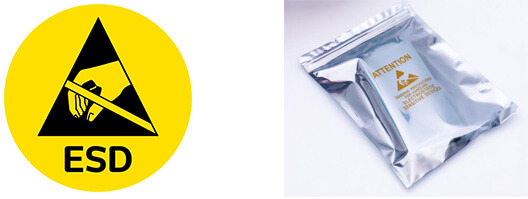
Electrostatic Discharge Protection and Handling

All electrostatic-sensitive components are handled in accordance with electrostatic discharge control procedures. The products are hermetically sealed in anti-static safe packaging to prevent electrostatic damage. Appropriate labeling is also applied for identification and traceability. This ensures product integrity during storage, handling and transportation.


ESD

Certifications & Memberships

Third-party certified, strict quality control. Our certification
  • ISO 9001: 2015
  • ISO 13485: 2016
  • ISO 14001: 2015
  • ISO 28000: 2007
  • ISO 45001: 2018
  • GB/T 27922-2011
  • SMTA
  • IPC
  • ESD
  • PSMA
Lattice

LC4256V-5TN100I

Lattice
41D-LC4256V-5TN100I

Want a better price? Add to Cart and Submit RFQ now, we'll contact you immediately.

0 RFQ
Shopping cart (0 Items)
It is empty.
Compare List (0 Items)
It is empty.
Feedback

Your feedback matters! At Allelco, we value the user experience and strive to improve it constantly.
Please share your comments with us via our feedback form, and we'll respond promptly.
Thank you for choosing Allelco.

Subject
E-mail
Comments
Captcha
Drag or click to upload file
Upload File
types: .xls, .xlsx, .doc, .docx, .jpg, .png and .pdf.
Max file size: 10MB