View All

Please refer to the English Version as our Official Version.Return

Europe
France(Français) Germany(Deutsch) Italy(Italia) Russian(русский) Poland(polski) Czech(Čeština) Luxembourg(Lëtzebuergesch) Netherlands(Nederland) Iceland(íslenska) Hungarian(Magyarország) Spain(español) Portugal(Português) Turkey(Türk dili) Bulgaria(Български език) Ukraine(Україна) Greece(Ελλάδα) Israel(עִבְרִית) Sweden(Svenska) Finland(Svenska) Finland(Suomi) Romania(românesc) Moldova(românesc) Slovakia(Slovenská) Denmark(Dansk) Slovenia(Slovenija) Slovenia(Hrvatska) Croatia(Hrvatska) Serbia(Hrvatska) Montenegro(Hrvatska) Bosnia and Herzegovina(Hrvatska) Lithuania(lietuvių) Spain(Português) Switzerland(Deutsch) United Kingdom(English)
Asia/Pacific
Japan(日本語) Korea(한국의) Thailand(ภาษาไทย) Malaysia(Melayu) Singapore(Melayu) Vietnam(Tiếng Việt) Philippines(Pilipino)
Africa, India and Middle East
United Arab Emirates(العربية) Iran(فارسی) Tajikistan(فارسی) India(हिंदी) Madagascar(malaɡasʲ)
South America / Oceania
New Zealand(Maori) Brazil(Português) Angola(Português) Mozambique(Português)
North America
United States(English) Canada(English) Haiti(Ayiti) Mexico(español)
HomeProductsIntegrated Circuits (ICs)Specialized ICsLCMXO2-1200HC-5TG144I
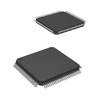
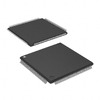
Image may be representation.
See specifications for product details.
EXPRESS OPTION
Payment method

LCMXO2-1200HC-5TG144I - Lattice

Manufacturer Part Number
LCMXO2-1200HC-5TG144I
Manufacturer
Lattice Semiconductor
Allelco Part Number
41D-LCMXO2-1200HC-5TG144I
Warranty
1 Year Allelco Warranty - Find out more
Stock Status:
9,250 pcs available, New & Original
Parts Description
TQFP-144(20x20)
Data sheet
-
Category
Integrated Circuits (ICs) > Specialized ICs
RoHs Status
Our certification
In stock: 9250
  • Unit Price: $8.657
  • Subtotal: $0.00

Want a better price?
Add to Cart and Submit RFQ now, we'll contact you immediately.

Quantity Unit Price Ext. Price
1+ $8.657 $8.66
200+ $3.351 $670.20
500+ $3.232 $1,616.00
1000+ $3.175 $3,175.00
The above prices does not include taxes and freight rates, which will be calculated on the order pages.

Specifications

LCMXO2-1200HC-5TG144I Tech Specifications
Lattice - LCMXO2-1200HC-5TG144I technical specifications, attributes, parameters and parts with similar specifications to Lattice - LCMXO2-1200HC-5TG144I

Product Attribute Attribute Value
Part Number LCMXO2-1200HC-5TG144I
Package TQFP-144(20x20)
Description TQFP-144(20x20)
Stock Condition Get 9250 pcs available quantity at Allelco
Payment PayPal / TT / Credit Card / Western Union
Allelco Certifications ESD / ISO 9001 / ISO 13485 / ISO 28000
Product Attribute Attribute Value
Manufacturer Lattice Semiconductor
RoHs Status -
Warranty 100% Perfect Functions
Transport port Hong Kong
Shipping by DHL / FedEx / UPS / TNT / SF Express
RFQ Email info@allelco.com

Parts Introduction

Manufacturer Part Number

LCMXO2-1200HC-5TG144I

Manufacturer

lattice-semiconductor

Introduction

The LCMXO2-1200HC-5TG144I is a high-capacity, low-power FPGA (Field Programmable Gate Array) from Lattice Semiconductor's MachXO2 series. It offers a comprehensive set of features and capabilities, making it a versatile solution for a wide range of embedded applications.

Product Features and Performance

160 Logic Array Blocks (LABs) and 1,280 Configurable Logic Cells

65,536 Total RAM Bits

107 User I/O Pins

Operating Voltage Range: 2.375V to 3.465V

Operating Temperature Range: -40°C to 100°C (TJ)

144-Pin Low-Profile Quad Flat Package (LQFP)

Product Advantages

High Logic Capacity and Flexibility

Low Power Consumption

Wide Operating Temperature Range

Robust I/O Capabilities

Compact Packaging

Key Reasons to Choose This Product

Versatile FPGA solution for diverse embedded applications

Optimized for power-sensitive designs

Reliable and durable performance in harsh environments

Seamless integration with other system components

Cost-effective solution for your project needs

Quality and Safety Features

Stringent quality control and testing processes

Compliance with industry safety standards

Robust and reliable design for long-term operation

Compatibility

The LCMXO2-1200HC-5TG144I is compatible with a wide range of systems and can be integrated into various embedded applications, such as industrial automation, medical devices, consumer electronics, and more.

Application Areas

Industrial Automation and Control

Medical Devices and Equipment

Consumer Electronics

Telecommunications and Networking

Automotive and Transportation Systems

Product Lifecycle

The LCMXO2-1200HC-5TG144I is an active product in our website's sales team's portfolio. There are equivalent and alternative models available, such as the LCMXO2-1200HC-5TG100I and the LCMXO2-1200HC-5TG144C. For more information on the availability and lifecycle of this product, please contact our website's sales team.
Frequently Asked Questions(FAQ)

How does the LCMXO2-1200HC-5TG144I compare to other MachXO2 variants in terms of logic density and I/O availability for space-constrained embedded designs?
The LCMXO2-1200HC-5TG144I offers 1,280 logic elements and 107 I/O pins within a 144-pin TQFP package, providing a balanced ratio of logic resources per pin count. Compared to lower-density variants like the LCMXO2-256HC, it delivers nearly five times more logic capacity while maintaining similar packaging footprints. This makes it particularly suitable for mid-complexity state machine implementations or small control logic where moderate I/O is required alongside programmable interconnect flexibility.
What are the key thermal and electrical constraints when integrating the LCMXO2-1200HC-5TG144I into a high-reliability industrial system operating at elevated ambient temperatures?
The device operates across -40°C to +100°C (junction temperature), but sustained operation near the upper limit requires careful PCB thermal management. With a typical power consumption of approximately 10–15 mW under moderate activity, the 144-LQFP’s exposed pad can help dissipate heat, though airflow or copper planes may be necessary in tightly packed enclosures. Users should verify that local ambient conditions don’t force junction temperatures beyond specification, especially during startup transients or high-switching-rate I/O configurations.
In what scenarios would the LCMXO2-1200HC-5TG144I be preferable over discrete CPLD solutions, and how do its configuration options impact system boot reliability?
The LCMXO2-1200HC-5TG144I provides significantly higher logic density than traditional CPLDs due to its 1,280 macrocells versus typically fewer than 500 in equivalent CPLD families. It also supports in-system reprogramming via SPI or JTAG, enabling field updates—unlike many CPLDs with one-time programmable options. However, unlike some hardened flash-based FPGAs, it relies on volatile configuration memory requiring external non-volatile storage (e.g., SPI flash) to reload upon power-up, which introduces minor latency but ensures design flexibility and lower cost compared to antifuse alternatives.
How does the 65Kbit RAM block allocation in the LCMXO2-1200HC-5TG144I support real-time data buffering in communication gateways, and what architectural considerations apply?
The 65,536-bit distributed RAM is organized as 512 × 128 bits per block, allowing flexible implementation of dual-port FIFO structures or lookup tables for protocol parsing. For example, a UART-to-I²C bridge might use 2 KB of this RAM for packet buffering without consuming logic cells. Since each block is clocked independently, designers must ensure proper timing closure across asynchronous interfaces by using synchronizers or handshaking protocols to avoid metastability.
When selecting pull-up/pull-down resistors for the LCMXO2-1200HC-5TG144I’s GPIOs, what voltage compatibility and drive strength trade-offs should engineers consider given the 2.375V–3.465V supply range?
While the core operates at 3.3V nominal, some I/O banks support LVCMOS standards compatible with 1.8V systems. If interfacing with legacy 3.3V peripherals, standard 4.7kΩ pull-ups suffice; however, for longer traces or noisy environments, values between 10kΩ and 100kΩ may improve signal integrity. Drive strength settings (e.g., 2mA, 4mA, 8mA) affect rise/fall times and EMI characteristics—stronger drives reduce noise margins but increase power and electromagnetic emissions, necessitating simulation or prototyping under worst-case load conditions.
What role does the MachXO2 architecture play in reducing development time for glue logic applications compared to ASIC prototyping, particularly with the LCMXO2-1200HC-5TG144I?
The LCMXO2-1200HC-5TG144I enables rapid iteration of digital glue logic such as bus bridging or timing generation without mask costs or fabrication delays. Its pre-built PLLs allow precise clock synthesis from reference frequencies as low as 5 MHz, supporting common crystal oscillators used in embedded controllers. Combined with Lattice’s Diamond software, developers can implement complex protocols like SMBus or custom serial interfaces in hours rather than weeks, accelerating time-to-market for proof-of-concept systems.
How does the Moisture Sensitivity Level (MSL) rating of 3 for the LCMXO2-144TQFP affect handling procedures during reflow soldering, and what precautions apply to the LCMXO2-1200HC-5TG144I?
As an MSL 3 component with a floor life of 168 hours, the LCMXO2-1200HC-5TG144I must be stored in dry packaging after desiccant removal and baked if humidity exposure exceeds 10% relative humidity for >168 hours. During assembly, it should not remain outside controlled environment bins longer than allowed by JEDEC J-STD-033 guidelines. Failure to follow these steps risks popcorning during reflow, potentially damaging the 144-pin fine-pitch leads.
Can the LCMXO2-1200HC-5TG144I safely interface directly with 5V logic levels, and what level-shifting strategies are recommended for mixed-voltage systems?
No, the device does not tolerate 5V input voltages. Direct connection could damage inputs. Instead, use dedicated bidirectional level shifters (e.g., TXB0108) or resistor-divider networks for unidirectional signals. For bidirectional lines like I²C, open-drain configurations with external pull-ups set to 3.3V ensure safe coexistence between 5V masters and 3.3V slaves. Always validate transient response during hot-plug events if applicable.
What impact does the 160 LAB/CLB structure have on timing predictability when routing critical paths in a multi-clock domain design using the LCMXO2-1200HC-5TG144I?
With only 160 logic array blocks serving 1,280 macrocells, routing congestion increases significantly when multiple high-fanout signals traverse adjacent LABs. Critical paths should be confined to single LABs where possible, leveraging local routing resources. The Diamond Place & Route tool reports estimated delays based on actual placement, so iterative synthesis and timing analysis are essential—especially for synchronous designs crossing clock domains, where additional synchronization registers may be needed to meet setup/hold requirements.
How does the absence of built-in hard IP blocks in the LCMXO2-1200HC-5TG144I influence power consumption and performance compared to larger FPGA families?
Unlike mid-range or high-end FPGAs with hardened DSP slices or transceivers, the LCMXO2-1200HC-5TG144I uses soft logic for arithmetic operations, resulting in higher dynamic power for compute-intensive tasks. However, for control-oriented applications with limited math, its ultra-low static power (<1 µA in standby) and lack of unused hard blocks make it energy-efficient. Designers gain flexibility but must accept longer synthesis times and potential timing penalties when implementing custom algorithms in soft logic.
What configuration memory options exist for the LCMXO2-1200HC-5TG144I, and how do they affect system security and fault recovery capabilities?
The part supports configuration via SPI flash, quad-SPI, or JTAG interfaces. Using external SPI NOR flash allows secure boot sequences and version-controlled firmware updates. However, since configuration memory is volatile, a backup bootloader in internal ROM can restore default logic if flash corruption occurs. Encryption is not supported natively, so sensitive designs requiring anti-tamper features may need additional security ICs alongside the FPGA.
How should PCB layout be optimized around the LCMXO2-1200HC-5TG144I to minimize crosstalk and ensure reliable operation at maximum supply voltage (3.465V)?
Maintain minimum 3W spacing between high-speed I/O traces and keep analog or RF circuits away from digital nets. Decouple each VCC pin with 100nF ceramic capacitors placed within 2 mm of the package, plus a bulk 10µF tantalum near the power entry point. The exposed pad must be solidly grounded with multiple vias to reduce ground bounce. At 3.465V, even small inductance in power paths can cause overshoot during switching, potentially exceeding absolute max ratings.
What are the typical latency implications of using the LCMXO2-1200HC-5TG144I as a reconfigurable logic controller compared to fixed-function microcontrollers?
While microcontrollers offer deterministic interrupt response times (often <100 ns), the LCMXO2-1200HC-5TG144I provides sub-microsecond path delays for combinatorial logic but incurs synthesis and place-and-route overhead before execution begins. For periodic tasks like PWM generation or ADC triggering, FPGA-based approaches allow parallel execution across multiple channels with jitter under 10 ns—superior to software polling—but require HDL expertise and longer development cycles.
How does the RoHS3 compliance status of the LCMXO2-1200HC-5TG144I align with global electronics manufacturing regulations, particularly in the EU and Asia?
RoHS3 compliance confirms exclusion of hazardous substances including lead, mercury, cadmium, and certain phthalates, meeting Directive 2011/65/EU requirements. This simplifies export documentation for consumer and industrial products in Europe and Japan. Note that REACH status being “Unaffected” indicates no SVHC (Substances of Very High Concern) above threshold concentrations, reducing compliance burden during supply chain audits.
Can the LCMXO2-1200HC-5TG144I support hot-swapping of peripheral devices connected to its GPIOs, and what protection circuitry is advisable?
Hot-swapping is not guaranteed due to ESD sensitivity and undefined I/O states during power-up. Adding series resistors (22Ω–100Ω) limits current surges, while TVS diodes clamp transients. For USB or SD card interfaces, dedicated hot-swap controllers are recommended. Internal weak pull-ups/downs help define default states, but external isolation buffers enhance robustness in plug-and-play environments.
What tools and file formats are supported for programming the LCMXO2-1200HC-5TG144I, and how does this affect integration into automated test systems?
Lattice Diamond Programmer and Radiant Software Suite support .jed, .bit, and .stp files for programming via JTAG or SPI. These formats integrate with ATE (Automated Test Equipment) frameworks using standard IEEE 1149.1 boundary-scan protocols. Binary output files (.bin) facilitate direct flash programming, streamlining production lines where post-assembly configuration is required without host PC intervention.
How does the 107 I/O count constrain expansion in modular designs using the LCMXO2-1200HC-5TG144I, and what multiplexing techniques preserve functionality?
With only 107 general-purpose I/Os, expansion often requires shared buses (e.g., SPI, I²C) or time-multiplexed access to pins. For example, driving seven 7-segment displays might use a serial interface instead of direct connections. Alternatively, dedicated peripherals like shift registers or port expanders offload GPIO demands. Careful state machine design ensures correct sequencing while avoiding race conditions during multiplexed operations.
What are the implications of the ECCN classification (EAR99) for the LCMXO2-1200HC-5TG144I in international shipments, especially to regions with strict export controls?
ECCN EAR99 indicates the device is subject to U.S. Export Administration Regulations but does not require a license for most destinations due to low technical sophistication. However, end-use restrictions may still apply if incorporated into defense-related equipment. Exporters should verify final application context, as some countries impose additional controls on programmable logic regardless of ECCN.

Customer Reviews

Evaluation: 10 Articles

  • Nath***rooks
    Jun 11, 2026

    Installed this power component in a converter board. Output remained stable under different load conditions and thermal performance was better than expected.

  • Dani***alkerTech
    Jun 1, 2026

    Product works, but setup took more effort than expected. Once configured the MCU ran reliably, although documentation support felt older compared with newer platforms. Fine for maintenance projects.

  • Yuki***aka88
    May 26, 2026

    信号通信プロジェクトでこのRS-485トランシーバーを使用しました。設置は簡単で、長距離ケーブルでも通信は安定していました。消費電力も、以前使用していたものより低くなっています。

  • Stev***aker
    May 20, 2026

    Solid diode for power rectification. Works well in switching circuits.

  • Bran***Lewis
    May 11, 2026

    Compact FPGA with good performance. Suitable for basic signal processing tasks.

  • Oliv***arris
    May 7, 2026

    Reliable I/O expander. Works well in embedded control applications.

  • Jess***Jones
    Apr 17, 2026

    It offers good value for the price, and the specifications match the description. I’ve been using it for two days with no issues, and I’ll definitely buy it again if I need it in the future.

  • Mich***Smith
    Apr 17, 2026

    Shipping was on time, the component pins are neatly aligned, and I tested 10 of them with a multimeter—all readings were within the specified range. Highly recommended.

  • Aman***arris
    Apr 3, 2026

    It was great—the entire process, from placing the order to receiving the package, went very smoothly. The components were consistent, the price was fair, and I had a very pleasant shopping experience.

  • Mike***nch
    Apr 3, 2026

    Better than expected! The resistance and capacitance readings were spot-on, and it passed the test on the first try. The service was reliable, and the packaging was thoughtful—I highly recommend it.

Write a Review

Your Email address will not be published.

Shipment

Delivery Time

In-stock items can be shipped within 24 hours. Some parts will be arranged for delivery within 1-2 days from the date all items arrive at our warehouse. And Allelco ships order once a day at about 17:00, except Sunday. Once the goods are shipped, the estimated delivery time depends on the shipping methods and Delivery destination. The table below shows are the logistic time for some common countries.

Delivery Cost

  1. Use your express account for shipment if you have one.
  2. Use our account for the shipment. Refer to the table below for the approximate charges.
(Different time frame / countries / package size has different price.)

Delivery Method

  1. Global Common Shipment by DHL / UPS / FedEx / TNT / EMS / SF we support.
  2. Others more shipping ways, please get in touch with your customer manager.

Common Countries Logistic Time Reference
Region Country Logistic Time(Day)
America United States 5
Brazil 7
Europe Germany 5
United Kingdom 4
Italy 5
Oceania Australia 6
New Zealand 5
Asia India 4
Japan 4
Middle East Israel 6
DHL & FedEx Shipment Charges Reference
Shipment charges(KG) Reference DHL(USD$)
0.00kg-1.00kg USD$30.00 - USD$60.00
1.00kg-2.00kg USD$40.00 - USD$80.00
2.00kg-3.00kg USD$50.00 - USD$100.00
Note:
The above table is for reference only. There may have some data bias for the uncontrollable factors.
Contact us if you have any questions.
  • QC (Quality Warranty)
  • Payment Support
  • Packaging
  • Certifications & Memberships

QC (Quality Warranty)

Allelco is committed to exceeding customer expectations through customer service excellence, order accuracy, and on-time delivery.
This is achieved through our commitment to the continual improvement of our processes, services, and products.


Strict quality inspection builds a solid foundation for electronic component quality.
  1. Visual inspection
  2. Performance testing and reliability verification
  3. Standardized full-process testing
  4. Precise control of every parameter
We eliminate defective components and ensure the stable operation of electronic devices through professional quality standards.

Payment Support

The payment method can be chosen from the methods shown below: Wire Transfer (T/T, Bank Transfer), Western Union, Credit card, PayPal.
  • HKBea
  • Paypal
  • MasterCard
  • Western-Union
  • VISA
Stable Delivery, Sincere Partnership — Your Faithful Supply Chain Partner
  • Efficient Supply Management
  • Cost-Saving Procurement
  • Fast Sourcing & Delivery
Contact us if you have any questions.

Packaging

Electrostatic Discharge Protection and Handling

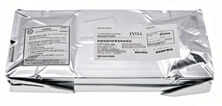
All electrostatic-sensitive components are handled in accordance with electrostatic discharge control procedures. The products are hermetically sealed in anti-static safe packaging to prevent electrostatic damage. Appropriate labeling is also applied for identification and traceability. This ensures product integrity during storage, handling and transportation.


ESD

Certifications & Memberships

Third-party certified, strict quality control. Our certification
  • ISO 9001: 2015
  • ISO 13485: 2016
  • ISO 14001: 2015
  • ISO 28000: 2007
  • ISO 45001: 2018
  • GB/T 27922-2011
  • SMTA
  • IPC
  • ESD
  • PSMA
Lattice

LCMXO2-1200HC-5TG144I

Lattice
41D-LCMXO2-1200HC-5TG144I

Want a better price? Add to Cart and Submit RFQ now, we'll contact you immediately.

0 RFQ
Shopping cart (0 Items)
It is empty.
Compare List (0 Items)
It is empty.
Feedback

Your feedback matters! At Allelco, we value the user experience and strive to improve it constantly.
Please share your comments with us via our feedback form, and we'll respond promptly.
Thank you for choosing Allelco.

Subject
E-mail
Comments
Captcha
Drag or click to upload file
Upload File
types: .xls, .xlsx, .doc, .docx, .jpg, .png and .pdf.
Max file size: 10MB