View All

Please refer to the English Version as our Official Version.Return

Europe
France(Français) Germany(Deutsch) Italy(Italia) Russian(русский) Poland(polski) Czech(Čeština) Luxembourg(Lëtzebuergesch) Netherlands(Nederland) Iceland(íslenska) Hungarian(Magyarország) Spain(español) Portugal(Português) Turkey(Türk dili) Bulgaria(Български език) Ukraine(Україна) Greece(Ελλάδα) Israel(עִבְרִית) Sweden(Svenska) Finland(Svenska) Finland(Suomi) Romania(românesc) Moldova(românesc) Slovakia(Slovenská) Denmark(Dansk) Slovenia(Slovenija) Slovenia(Hrvatska) Croatia(Hrvatska) Serbia(Hrvatska) Montenegro(Hrvatska) Bosnia and Herzegovina(Hrvatska) Lithuania(lietuvių) Spain(Português) Switzerland(Deutsch) United Kingdom(English)
Asia/Pacific
Japan(日本語) Korea(한국의) Thailand(ภาษาไทย) Malaysia(Melayu) Singapore(Melayu) Vietnam(Tiếng Việt) Philippines(Pilipino)
Africa, India and Middle East
United Arab Emirates(العربية) Iran(فارسی) Tajikistan(فارسی) India(हिंदी) Madagascar(malaɡasʲ)
South America / Oceania
New Zealand(Maori) Brazil(Português) Angola(Português) Mozambique(Português)
North America
United States(English) Canada(English) Haiti(Ayiti) Mexico(español)
HomeProductsIntegrated Circuits (ICs)Data Acquisition - Analog to Digital Converters (ADC)ADS1148IRHBT
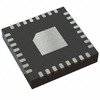
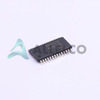
ADS1148IRHBT Image
Image may be representation.
See specifications for product details.
EXPRESS OPTION
Payment method

ADS1148IRHBT - Texas Instruments

Manufacturer Part Number
ADS1148IRHBT
Manufacturer
Texas Instruments
Allelco Part Number
32D-ADS1148IRHBT
Warranty
1 Year Allelco Warranty - Find out more
Stock Status:
3,951 pcs available, New & Original
Parts Description
IC ADC 16BIT SIGMA-DELTA 32VQFN
Package
32-VQFN (5x5)
Data sheet
ADS1148IRHBT.pdf
RoHs Status
ROHS3 Compliant
Our certification
In stock: 3951

Required fields are indicated by an asterisk (*)
Please send RFQ, we will respond immediately.

Quantity

Specifications

ADS1148IRHBT Tech Specifications
Texas Instruments - ADS1148IRHBT technical specifications, attributes, parameters and parts with similar specifications to Texas Instruments - ADS1148IRHBT

Product Attribute Attribute Value
Manufacturer Texas Instruments
Voltage - Supply, Digital 2.7V ~ 5.25V
Voltage - Supply, Analog 2.7V ~ 5.25V
Supplier Device Package 32-VQFN (5x5)
Series -
Sampling Rate (Per Second) 2k
Reference Type External, Internal
Ratio - S/H:ADC -
Package / Case 32-VFQFN Exposed Pad
Package Tape & Reel (TR)
Operating Temperature -40°C ~ 105°C
Product Attribute Attribute Value
Number of Inputs 4, 7
Number of Bits 16
Number of A/D Converters 1
Mounting Type Surface Mount
Input Type Differential, Single Ended
Features PGA
Data Interface SPI
Configuration MUX-PGA-ADC
Base Product Number ADS1148
Architecture Sigma-Delta

Environmental & Export Classifications

ATTRIBUTE DESCRIPTION
RoHs Status ROHS3 Compliant
Moisture Sensitivity Level (MSL) 2 (1 Year)
REACH Status REACH Unaffected
ECCN EAR99
HTSUS 8542.39.0001

Parts Introduction

ADS1148IRHBT Image
ADS1148IRHBT (1)

Manufacturer Part Number

ADS1148IRHBT

Manufacturer

Texas Instruments

Introduction

ADS1148IRHBT is a high-performance 16-bit Analog to Digital Converter (ADC) suited for advanced data acquisition in scientific and industrial applications.

Product Features and Performance

16-bit resolution providing high accuracy

Sampling rate of 2kSPS

Configurable as 4 differential or 7 single-ended inputs

Integrated multiplexer (MUX), programmable gain amplifier (PGA), and ADC

Communication via SPI interface

Supports both external and internal references

Sigma-Delta architecture enhancing noise performance

Operating temperature range from -40°C to 105°C

Product Advantages

Precision data acquisition with high-resolution ADC

Flexible input configuration adapting to various signal types

Integrated features reduce need for external components

Robust operation in extreme temperatures

Key Technical Parameters

Number of Bits: 16

Sampling Rate: 2k per second

Number of Inputs: 4 differential, 7 single-ended

Voltage Supply, Analog: 2.7V to 5.25V

Voltage Supply, Digital: 2.7V to 5.25V

Quality and Safety Features

Extended operating temperature range ensures reliable performance under extreme conditions

Sigma-Delta architecture minimizes signal noise and enhances accuracy

Compatibility

SPI communication interface ensures compatibility with a broad range of microcontrollers and digital systems

Application Areas

Scientific research instrumentation

Industrial control systems

Medical equipment monitoring

Product Lifecycle

Product status: Active

Not close to discontinuation; replacements and upgrades available

Several Key Reasons to Choose This Product

High accuracy and resolution suitable for precision applications

Flexible input and reference options accommodate diverse use cases

Integrated PGA, MUX, and ADC simplify system design

Wide operating temperature range ensures reliability in challenging environments

SPI interface compatibility with various digital control systems
Frequently Asked Questions(FAQ)

How does the ADS1148IRHBT’s 16-bit resolution compare to lower-resolution ADCs in terms of noise performance and dynamic range for precision measurement applications?
The ADS1148IRHBT achieves a typical effective number of bits (ENOB) of approximately 15.5 at its maximum sampling rate of 2kSPS, translating to an input-referred noise floor around 50–70 µVrms over the full-scale range. This level of resolution enables it to resolve signals as small as 30 µV, making it suitable for high-precision sensor conditioning such as strain gages or thermocouples. In contrast, 12-bit ADCs typically offer only 12–13 ENOB and require aggressive filtering or averaging to achieve comparable noise performance. For applications demanding sub-millivolt accuracy without post-processing, the ADS1148IRHBT provides a more robust signal integrity foundation.
Can the ADS1148IRHBT operate reliably with both differential and single-ended inputs simultaneously across its four multiplexed channels, and what are the implications for system design?
Yes, the ADS1148IRHBT supports mixed-mode operation where up to four inputs can be configured independently as either differential or single-ended pairs. However, each channel must share the same reference and common-mode voltage range. When using single-ended inputs, the ADC effectively compares the input to AVSS (analog ground), which increases susceptibility to common-mode noise unless proper shielding and layout practices are followed. Designers should avoid mixing very large amplitude signals on adjacent channels due to crosstalk risks, especially when operating near the supply rails.
What is the recommended external reference voltage range for the ADS1148IRHBT, and how does reference stability impact measurement accuracy in temperature-varying environments?
The ADS1148IRHBT accepts an external reference voltage from 2.048V to VDD (up to 5.25V), but the most common choice is 2.048V due to its low drift (<1 ppm/°C) and tight tolerance (±5 ppm). Using an unstable or poorly filtered reference introduces gain error and offset shifts that directly translate into measurement inaccuracies. For example, a 1°C change in ambient temperature with a 2.048V ref can cause up to 2 µV of error—equivalent to nearly 1 LSB at full scale. Therefore, designers often pair this device with precision bandgap references like the REF5025 to maintain accuracy within ±0.01% over industrial temperature ranges.
How does the ADS1148IRHBT handle power sequencing between analog and digital supplies, and what happens if VDDA and DVDD are applied out of order?
The ADS1148IRHBT has separate analog (VDDA) and digital (DVDD) supply pins, both ranging from 2.7V to 5.25V. While the datasheet specifies no absolute maximum violation, applying DVDD before VDDA or vice versa may cause latch-up or excessive current draw if the difference exceeds 0.3V. Best practice dictates that both supplies be ramped simultaneously within 10 ms of each other. If sequencing cannot be guaranteed, adding series resistors (e.g., 10 Ω) and decoupling capacitors (>1 µF each) helps limit inrush currents and reduces risk during partial power-up conditions.
Is it feasible to cascade multiple ADS1148IRHBT devices via SPI to increase channel count, and what synchronization challenges arise?
Cascading is technically possible by connecting SDI of one device to SDO of another, but timing alignment becomes critical. Since each conversion takes 500 µs at 2kSPS, asynchronous chains introduce phase offsets that complicate data capture. Moreover, the internal modulator and decimation filter require consistent sample clocks; mismatched SYSCLK frequencies between units degrade overall linearity. A better approach for >7 channels is to use a microcontroller with multiple CS lines or consider dedicated multi-channel ADCs like the ADS1263, which offer native daisy-chaining support with built-in synchronization.
What is the impact of the PGA gain setting on the ADS1148IRHBT’s input noise and settling behavior in battery-powered sensor nodes?
The integrated programmable gain amplifier offers gains from 1 to 128 in 16 steps. Higher gains amplify both the signal and inherent noise, increasing total output noise. At unity gain, the RMS noise is ~60 µV; at 128x gain, it rises to ~1.8 mV. Additionally, higher gains reduce the effective bandwidth per channel, potentially extending acquisition time beyond the default 250 µs. For energy-constrained designs, selecting the minimum gain sufficient to utilize the ADC’s full code range optimizes SNR while minimizing power consumption from reduced internal clock speeds.
How does the ADS1148IRHBT’s internal temperature sensor compare to external sensors when monitoring die temperature under transient loads?
The ADS1148IRHBT includes a factory-calibrated on-chip temperature sensor accessible via register reads. It exhibits ±1°C accuracy from 0°C to 50°C and ±2°C over −40°C to 105°C. While convenient for detecting thermal shutdown conditions, it responds slowly (~10 seconds) to rapid load changes due to package thermal mass. External sensors like the TMP117 offer faster response (<100 ms) and superior accuracy (±0.1°C), making them preferable for dynamic thermal management. Use the internal sensor only for coarse over-temperature alerts, not precise thermal modeling.
Can the ADS1148IRHBT be used in medical instrumentation requiring IEC 60601 compliance, and what additional design considerations apply?
The ADS1148IRHBT itself is not certified to IEC 60601, but it can be part of a compliant front-end when combined with isolation barriers, reinforced insulation, and fault-tolerant firmware. Critical requirements include guarding against single-fault leakage paths, ensuring creepage distances exceed 8 mm between patient-connected traces and non-isolated circuitry, and validating common-mode transient immunity (CMTI) >10 kV/µs. Isolating the SPI interface with digital isolators rated for medical use (e.g., ISO7741) is strongly advised to prevent ground loops and ensure safety margins.
What are the key differences between the ADS1148IRHBT and the ADS1146IRHBR in terms of input configuration flexibility and typical application suitability?
The ADS1148IRHBT supports 4 or 7 pseudo-differential inputs depending on internal MUX configuration, whereas the ADS1146 offers fixed 8 single-ended channels. The ADS1148’s ability to switch between differential and single-ended modes provides greater adaptability for mixed-signal systems—such as bridge sensors requiring differential excitation and thermistors needing single-ended measurement. However, the ADS1146 consumes slightly less power and simplifies routing in space-constrained layouts. Choose the ADS1148IRHBT when signal integrity and configurability outweigh minor power savings.
How does the ADS1148IRHBT’s SPI interface behave during simultaneous read/write operations, and what precautions prevent data corruption?
The ADS1148IRHBT uses a standard SPI protocol with MOSI for writes and MISO for reads. Concurrent transactions are not atomic; interrupting a conversion mid-stream corrupts the result. To avoid this, always complete full command frames before switching directions. Additionally, the device requires a minimum tCS (chip select hold time) of 20 ns after SCLK edges. In noisy environments, inserting a small delay (≥1 µs) between write commands ensures internal state machines stabilize. Avoid hot-swapping SPI lines without pull-ups/downs to prevent spurious wake-up pulses.
What is the expected lifetime and failure mode distribution of the ADS1148IRHBT in continuous industrial operation at 85°C junction temperature?
Based on TI’s reliability testing and Arrhenius modeling, the ADS1148IRHBT exhibits <1 FIT (failure in time) rate under steady-state operation at 85°C ambient, assuming proper thermal dissipation via the exposed pad. Primary failure mechanisms include electromigration in bond wires and dielectric breakdown in ESD protection diodes. The likelihood of functional degradation increases significantly above 105°C due to accelerated aging. Implementing thermal vias under the QFN and maintaining θJA < 40°C/W extends operational life beyond 10 years in most industrial control applications.
How does the ADS1148IRHBT’s built-in diagnostic features detect open leads or short circuits in sensor connections?
The device supports open-circuit detection by driving an internal diagnostic mode where known currents are injected into selected inputs. If the measured voltage deviates significantly from expected values (e.g., rail-to-rail instead of mid-scale), the STATUS register flags an open condition. Similarly, shorts are inferred when two nominally isolated inputs show identical codes. These diagnostics run automatically during idle periods but add ~200 µs overhead per check. For safety-critical systems, combine this with periodic continuity tests using external relays or MOSFET switches to validate physical connections.
What layout guidelines minimize crosstalk and ground bounce when routing the ADS1148IRHBT in a compact PCB with mixed-signal components?
Place the ADS1148IRHBT as close as possible to the analog input connectors to reduce trace length and loop area. Route analog inputs differentially with matched lengths (<5 mm mismatch) and guard rings connected to AVSS. Keep digital traces (especially SCLK and CS) at least 3 mm away from analog lines. Use a solid ground plane beneath the device and connect the exposed pad directly to PGND via multiple vias. Bypass both VDDA and DVDD with 0.1 µF + 10 µF MLCCs placed within 5 mm of the pins to suppress high-frequency switching noise.
Can the ADS1148IRHBT operate from a single 3.3V supply while interfacing with 5V logic families like 74LVC?
Yes, the ADS1148IRHBT accepts DVDD up to 5.25V, so a 3.3V supply is well within spec. However, interfacing with 5V TTL/CMOS levels requires level shifting on the SPI lines unless the 5V outputs are compatible with 3.3V CMOS thresholds (typically VIH(min) = 2.0V). The 74LVC family satisfies this condition, enabling direct connection without buffers. Still, ensure that all digital inputs see voltages ≤ VDD + 0.3V to avoid latch-up—this is generally safe with standard 5V tolerant I/O structures.
What firmware considerations are necessary to achieve optimal noise performance when reading the ADS1148IRHBT in burst mode?
Burst mode allows multiple conversions without asserting CS between samples, improving throughput. However, each conversion must be preceded by a valid START command and followed by adequate settling time (≥250 µs). Firmware should disable unnecessary interrupts during acquisition windows and use DMA transfers to minimize CPU overhead. Averaging consecutive samples in software further reduces random noise; for example, 16-sample moving average cuts noise by √16 = 4× while preserving slow-varying signals below 0.5 Hz bandwidth.
How does the ADS1148IRHBT’s internal oscillator compare to an external crystal in terms of long-term stability and jitter for timestamped data logging?
The internal RC oscillator has a specified accuracy of ±1.5% over temperature and aging, leading to cumulative timing drift over days or weeks. In contrast, an external 32.768 kHz crystal provides ±20 ppm stability, reducing clock skew in multi-device systems. Jitter on the internal clock is higher (~50 ns RMS), affecting synchronization in distributed sensing networks. For applications requiring precise event ordering or synchronized multi-sensor fusion, replace the internal oscillator with an external MEMS resonator or crystal oscillator module.
What are the consequences of exceeding the maximum input voltage specification on the ADS1148IRHBT’s ESD protection diodes?
Exceeding VDD + 0.3V on any analog input forward-biases the parasitic diode to the substrate, causing large injection currents that saturate internal transistors and degrade linearity. Repeated exposure can permanently damage the ESD clamp structure, increasing leakage and reducing gain accuracy. Even brief transients above 5.5V may trigger destructive failure. Always include series resistors (100–470 Ω) and TVS diodes rated for IEC 61000-4-2 Level 4 surges to protect the inputs from electrostatic discharge or inductive kickback.
How does the ADS1148IRHBT’s low-power shutdown mode affect startup time and recovery latency in intermittent monitoring systems?
In shutdown mode, current drops to <1 µA, ideal for battery-operated edge devices. However, exiting shutdown requires a minimum 1 ms warm-up period before stable conversions begin. During this interval, the internal bias currents settle and the modulator stabilizes. If the system polls the device every 10 seconds, the average current might appear acceptable, but the 1 ms wake-up window adds non-negligible overhead compared to faster wake-up alternatives like the ADS131M02. Evaluate total energy per cycle: if duty cycles are <0.1%, consider using a comparator-based wake-up circuit instead.

Parts with Similar Specifications

The three parts on the right have similar specifications to Texas Instruments ADS1148IRHBT

Product Attribute ADS1148IPWR ADS1148QPWRQ1 ADS114S06BIPBS ADS1148IPW
Part Number ADS1148IPWR ADS1148QPWRQ1 ADS114S06BIPBS ADS1148IPW
Manufacturer Texas Instruments Texas Instruments Texas Instruments Texas Instruments
Architecture - Current Source R-2R Pipelined
Mounting Type - Surface Mount Through Hole Surface Mount
Package - Tape & Reel (TR) Tube Tape & Reel (TR)
Supplier Device Package - 196-NFBGA (12x12) 16-PDIP 64-VQFN (9x9)
Input Type - - - Differential
Number of Inputs - - - 2
Ratio - S/H:ADC - - - 1:1
Features - - - Simultaneous Sampling
Voltage - Supply, Analog - 3.14V ~ 3.46V 11.4V ~ 16.5V 3V ~ 3.6V
Data Interface - LVDS - Parallel I²C LVDS - Parallel, Parallel
Package / Case - 196-LFBGA 16-DIP (0.300', 7.62mm) 64-VFQFN Exposed Pad
Series - - - -
Sampling Rate (Per Second) - - - 65M
Reference Type - External, Internal External External, Internal
Configuration - - - S/H-ADC
Operating Temperature - -40°C ~ 85°C 0°C ~ 70°C -40°C ~ 85°C
Number of A/D Converters - - - 2
Number of Bits - 16 8 14
Base Product Number - DAC34H84 MAX500 ADS62P42
Voltage - Supply, Digital - 1.14V ~ 1.26V 11.4V ~ 16.5V 1.65V ~ 3.6V

ADS1148IRHBT Datasheet PDF

Download ADS1148IRHBT pdf datasheets and Texas Instruments documentation for ADS1148IRHBT - Texas Instruments.

PCN Design/Specification
Copper Bond Wire Revision A 04/Dec/2013.pdf Mult Dev Material Chg 29/Mar/2018.pdf

Customer Reviews

Evaluation: 10 Articles

  • Dani***alkerTech
    Jun 1, 2026

    Product works, but setup took more effort than expected. Once configured the MCU ran reliably, although documentation support felt older compared with newer platforms. Fine for maintenance projects.

  • Yuki***aka88
    May 26, 2026

    信号通信プロジェクトでこのRS-485トランシーバーを使用しました。設置は簡単で、長距離ケーブルでも通信は安定していました。消費電力も、以前使用していたものより低くなっています。

  • Stev***aker
    May 20, 2026

    Solid diode for power rectification. Works well in switching circuits.

  • Bran***Lewis
    May 11, 2026

    Compact FPGA with good performance. Suitable for basic signal processing tasks.

  • Oliv***arris
    May 7, 2026

    Reliable I/O expander. Works well in embedded control applications.

  • Jess***Jones
    Apr 17, 2026

    It offers good value for the price, and the specifications match the description. I’ve been using it for two days with no issues, and I’ll definitely buy it again if I need it in the future.

  • Mich***Smith
    Apr 17, 2026

    Shipping was on time, the component pins are neatly aligned, and I tested 10 of them with a multimeter—all readings were within the specified range. Highly recommended.

  • Aman***arris
    Apr 3, 2026

    It was great—the entire process, from placing the order to receiving the package, went very smoothly. The components were consistent, the price was fair, and I had a very pleasant shopping experience.

  • Mike***nch
    Apr 3, 2026

    Better than expected! The resistance and capacitance readings were spot-on, and it passed the test on the first try. The service was reliable, and the packaging was thoughtful—I highly recommend it.

  • Daic***K.
    Mar 23, 2026

    Very good. No issue after long time testing.

Write a Review

Your Email address will not be published.

Shipment

Delivery Time

In-stock items can be shipped within 24 hours. Some parts will be arranged for delivery within 1-2 days from the date all items arrive at our warehouse. And Allelco ships order once a day at about 17:00, except Sunday. Once the goods are shipped, the estimated delivery time depends on the shipping methods and Delivery destination. The table below shows are the logistic time for some common countries.

Delivery Cost

  1. Use your express account for shipment if you have one.
  2. Use our account for the shipment. Refer to the table below for the approximate charges.
(Different time frame / countries / package size has different price.)

Delivery Method

  1. Global Common Shipment by DHL / UPS / FedEx / TNT / EMS / SF we support.
  2. Others more shipping ways, please get in touch with your customer manager.

Common Countries Logistic Time Reference
Region Country Logistic Time(Day)
America United States 5
Brazil 7
Europe Germany 5
United Kingdom 4
Italy 5
Oceania Australia 6
New Zealand 5
Asia India 4
Japan 4
Middle East Israel 6
DHL & FedEx Shipment Charges Reference
Shipment charges(KG) Reference DHL(USD$)
0.00kg-1.00kg USD$30.00 - USD$60.00
1.00kg-2.00kg USD$40.00 - USD$80.00
2.00kg-3.00kg USD$50.00 - USD$100.00
Note:
The above table is for reference only. There may have some data bias for the uncontrollable factors.
Contact us if you have any questions.
  • QC (Quality Warranty)
  • Payment Support
  • Packaging
  • Certifications & Memberships

QC (Quality Warranty)

Allelco is committed to exceeding customer expectations through customer service excellence, order accuracy, and on-time delivery.
This is achieved through our commitment to the continual improvement of our processes, services, and products.


Strict quality inspection builds a solid foundation for electronic component quality.
  1. Visual inspection
  2. Performance testing and reliability verification
  3. Standardized full-process testing
  4. Precise control of every parameter
We eliminate defective components and ensure the stable operation of electronic devices through professional quality standards.

Payment Support

The payment method can be chosen from the methods shown below: Wire Transfer (T/T, Bank Transfer), Western Union, Credit card, PayPal.
  • HKBea
  • Paypal
  • MasterCard
  • Western-Union
  • VISA
Stable Delivery, Sincere Partnership — Your Faithful Supply Chain Partner
  • Efficient Supply Management
  • Cost-Saving Procurement
  • Fast Sourcing & Delivery
Contact us if you have any questions.

Packaging

Electrostatic Discharge Protection and Handling

All electrostatic-sensitive components are handled in accordance with electrostatic discharge control procedures. The products are hermetically sealed in anti-static safe packaging to prevent electrostatic damage. Appropriate labeling is also applied for identification and traceability. This ensures product integrity during storage, handling and transportation.


ESD

Certifications & Memberships

Third-party certified, strict quality control. Our certification
  • ISO 9001: 2015
  • ISO 13485: 2016
  • ISO 14001: 2015
  • ISO 28000: 2007
  • ISO 45001: 2018
  • GB/T 27922-2011
  • SMTA
  • IPC
  • ESD
  • PSMA
ADS1148IRHBT Image

ADS1148IRHBT

Texas Instruments
32D-ADS1148IRHBT

Want a better price? Add to Cart and Submit RFQ now, we'll contact you immediately.

0 RFQ
Shopping cart (0 Items)
It is empty.
Compare List (0 Items)
It is empty.
Feedback

Your feedback matters! At Allelco, we value the user experience and strive to improve it constantly.
Please share your comments with us via our feedback form, and we'll respond promptly.
Thank you for choosing Allelco.

Subject
E-mail
Comments
Captcha
Drag or click to upload file
Upload File
types: .xls, .xlsx, .doc, .docx, .jpg, .png and .pdf.
Max file size: 10MB