View All

Please refer to the English Version as our Official Version.Return

Europe
France(Français) Germany(Deutsch) Italy(Italia) Russian(русский) Poland(polski) Czech(Čeština) Luxembourg(Lëtzebuergesch) Netherlands(Nederland) Iceland(íslenska) Hungarian(Magyarország) Spain(español) Portugal(Português) Turkey(Türk dili) Bulgaria(Български език) Ukraine(Україна) Greece(Ελλάδα) Israel(עִבְרִית) Sweden(Svenska) Finland(Svenska) Finland(Suomi) Romania(românesc) Moldova(românesc) Slovakia(Slovenská) Denmark(Dansk) Slovenia(Slovenija) Slovenia(Hrvatska) Croatia(Hrvatska) Serbia(Hrvatska) Montenegro(Hrvatska) Bosnia and Herzegovina(Hrvatska) Lithuania(lietuvių) Spain(Português) Switzerland(Deutsch) United Kingdom(English)
Asia/Pacific
Japan(日本語) Korea(한국의) Thailand(ภาษาไทย) Malaysia(Melayu) Singapore(Melayu) Vietnam(Tiếng Việt) Philippines(Pilipino)
Africa, India and Middle East
United Arab Emirates(العربية) Iran(فارسی) Tajikistan(فارسی) India(हिंदी) Madagascar(malaɡasʲ)
South America / Oceania
New Zealand(Maori) Brazil(Português) Angola(Português) Mozambique(Português)
North America
United States(English) Canada(English) Haiti(Ayiti) Mexico(español)
HomeProductsIntegrated Circuits (ICs)Interface - Drivers, Receivers, TransceiversAM26LV31CNSR
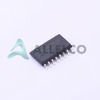
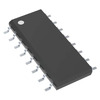
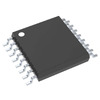
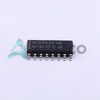
Image may be representation.
See specifications for product details.
EXPRESS OPTION
Payment method

AM26LV31CNSR - Texas Instruments

Manufacturer Part Number
AM26LV31CNSR
Manufacturer
Texas Instruments
Allelco Part Number
32D-AM26LV31CNSR
Warranty
1 Year Allelco Warranty - Find out more
Stock Status:
60,740 pcs available, New & Original
Parts Description
IC DRIVER 4/0 16SO
Package
16-SO
Data sheet
AM26LV31CNSR.pdf
RoHs Status
ROHS3 Compliant
Our certification
In stock: 60740
  • Unit Price: $0.534
  • Subtotal: $0.00

Want a better price?
Add to Cart and Submit RFQ now, we'll contact you immediately.

Quantity Unit Price Ext. Price
1+ $0.534 $0.53
200+ $0.207 $41.40
500+ $0.20 $100.00
1000+ $0.197 $197.00
The above prices does not include taxes and freight rates, which will be calculated on the order pages.

Specifications

AM26LV31CNSR Tech Specifications
Texas Instruments - AM26LV31CNSR technical specifications, attributes, parameters and parts with similar specifications to Texas Instruments - AM26LV31CNSR

Product Attribute Attribute Value
Manufacturer Texas Instruments
Voltage - Supply 3V ~ 3.6V
Type Driver
Supplier Device Package 16-SO
Series -
Protocol RS422, RS485
Package / Case 16-SOIC (0.209', 5.30mm Width)
Product Attribute Attribute Value
Package Tape & Reel (TR)
Operating Temperature 0°C ~ 70°C
Number of Drivers/Receivers 4/0
Mounting Type Surface Mount
Duplex -
Data Rate -
Base Product Number AM26LV31

Environmental & Export Classifications

ATTRIBUTE DESCRIPTION
RoHs Status ROHS3 Compliant
Moisture Sensitivity Level (MSL) 1 (Unlimited)
REACH Status REACH Unaffected
ECCN EAR99
HTSUS 8542.39.0001

Parts Introduction

Manufacturer Part Number

AM26LV31CNSR

Manufacturer

Texas Instruments

Introduction

The AM26LV31CNSR is a 4-bit, high-speed, balanced line driver designed for RS-422 and RS-485 communications. It is well-suited for applications requiring high-speed data transmission over long distances or in noisy environments.

Product Features and Performance

4-bit line driver

High-speed operation up to 10 Mbps

Supports RS-422 and RS-485 interfaces

Differential driver outputs for high noise immunity

Slew-rate limited outputs for EMI reduction

Thermal shutdown protection

3V to 3.6V supply voltage range

Operates from 0°C to 70°C

Product Advantages

Robust RS-422 and RS-485 communication support

High-speed data transmission over long distances

Excellent noise immunity for reliable operation

Thermal shutdown protection for safety

Wide operating voltage and temperature range

Key Technical Parameters

Number of Drivers/Receivers: 4/0

Protocol: RS-422, RS-485

Driver Type: Balanced line driver

Supply Voltage: 3V to 3.6V

Operating Temperature: 0°C to 70°C

Quality and Safety Features

RoHS3 compliant

Thermal shutdown protection

Compatibility

The AM26LV31CNSR is compatible with a variety of RS-422 and RS-485 communication systems.

Application Areas

Industrial automation and control systems

Telecommunications equipment

Medical devices

Transportation systems

Security and surveillance systems

Product Lifecycle

The AM26LV31CNSR is an active product and is not nearing discontinuation. Replacement or upgrade options are available from Texas Instruments.

Key Reasons to Choose This Product

Robust RS-422 and RS-485 communication support

High-speed data transmission up to 10 Mbps

Excellent noise immunity for reliable operation

Wide operating voltage and temperature range

Thermal shutdown protection for safety

RoHS3 compliance for environmental responsibility

Frequently Asked Questions(FAQ)

How does the AM26LV31CNSR compare to the AM26LV31INSR in terms of thermal performance and package suitability for compact PCB layouts?
The AM26LV31CNSR features a standard 16-SOIC (5.30mm width) package, while the AM26LV31INSR uses a slightly smaller 16-SOP variant with tighter pitch constraints. Both share identical electrical characteristics, including a 3V–3.6V supply range and RS422/RS485 driver functionality. However, the INSR’s reduced lead frame dimensions can offer marginally better signal integrity at high data rates due to lower parasitic capacitance, though the CNSR remains suitable for most industrial control applications where board space is less constrained. Thermal dissipation between the two is comparable under typical operating conditions, as both rely on similar exposed pad designs for junction-to-ambient performance.
What design considerations are critical when selecting the AM26LV31CNSR for an industrial sensor network operating near its maximum temperature rating?
The AM26LV31CNSR is rated for operation from 0°C to 70°C, which aligns with many industrial environments but requires careful thermal management near the upper limit. At sustained temperatures approaching 70°C, the device’s propagation delay may increase by approximately 15–20% compared to room temperature performance, potentially affecting timing margins in multi-drop RS485 networks. Engineers should ensure adequate airflow or use thermal vias beneath the SOIC package to maintain junction temperatures below 125°C. Additionally, derating input/output current by 10% during continuous full-load transmission helps preserve reliability over time.
Can the AM26LV31CNSR be used in half-duplex communication systems, and how does its pinout support such configurations?
Yes, the AM26LV31CNSR supports half-duplex RS485 communication by driving only the A and B differential pairs while leaving the Y and Z outputs inactive. Its 4-transmitter architecture allows up to four independent drivers per device, making it ideal for multi-point bus topologies common in fieldbus protocols like Modbus RTU. Proper enable/disable sequencing via the DE (Driver Enable) pin ensures collision avoidance during direction changes. For optimal noise immunity, termination resistors (typically 120Ω) should be placed at the far end of the bus regardless of duplex mode.
How does the supply voltage tolerance of the AM26LV31CNSR impact system-level power budgeting in battery-operated edge devices?
With a nominal supply range of 3V to 3.6V, the AM26LV31CNSR operates efficiently within single Li-ion or alkaline cell regimes, enabling low-power sensor nodes. However, brown-out risks arise if the system voltage drops below 3V, causing undefined logic states that could disrupt driver enable signals. Designers must ensure stable rail regulation using low-dropout regulators (LDOs) capable of maintaining >3V even during transient loads. In continuous transmit mode, average current draw is typically around 8mA per driver channel, so a 200mAh battery would theoretically sustain four active channels for ~12 hours—though real-world efficiency depends heavily on baud rate and duty cycle.
What precautions should be taken when substituting the AM26LV31CNSR with alternative parts like the DS26C31TM/NOPB in legacy system upgrades?
While the DS26C31TM/NOPB offers similar RS485 functionality, key differences exist: it operates over a broader voltage range (5V nominal) and includes integrated ESD protection beyond standard IEC levels. Substituting into a 3.3V AM26LV31CNSR circuit is generally safe due to backward compatibility, but reverse-current leakage through the DS26C31TM’s internal diodes could affect ultra-low-power modes. Additionally, the DS26C31TM uses a different pinout arrangement, requiring layout modifications. Thermal profiles also vary—the DS26C31TM has higher thermal resistance, necessitating larger copper pours for equivalent heat dissipation.
Why might engineers choose the AM26LV31CNSR over discrete transistor-based RS485 solutions in modern embedded designs?
Discrete implementations require external biasing resistors, level-shifting components, and careful matching to meet RS485 specifications, increasing bill-of-materials (BOM) count and layout complexity. The AM26LV31CNSR integrates all necessary transceivers, slew-rate control, and fault detection in a single IC, reducing component count by over 90%. It also provides built-in short-circuit protection and thermal shutdown, enhancing system robustness without additional circuitry. Furthermore, its surface-mount packaging simplifies automated assembly, and RoHS compliance ensures regulatory readiness across global markets.
How does the AM26LV31CNSR handle common-mode voltage swings in long cable runs typical of building automation systems?
The AM26LV31CNSR supports common-mode voltages from -7V to +12V, exceeding the ±7V minimum requirement for RS485 standards. This extended range accommodates ground potential differences of up to 12V, which is essential in distributed installations where earth loops or floating supplies create voltage offsets. During transient surges (e.g., lightning-induced transients), the device’s internal clamping diodes limit input excursions safely, preventing latch-up or damage. Nevertheless, transient voltage suppressors (TVS) are recommended at the interface for enhanced protection in harsh environments.
Is the AM26LV31CNSR suitable for automotive applications requiring functional safety certification?
No, the AM26LV31CNSR does not carry any automotive-grade qualification (e.g., AEC-Q100), and its operating temperature range (0°C to 70°C) falls short of typical automotive requirements (-40°C to +125°C). While it may function adequately in non-critical infotainment subsystems, its use in safety-related systems (e.g., braking or steering control) is inappropriate without supplemental validation. For automotive designs, TI offers alternatives like the SN65HVD23x family, which meet AEC-Q100 Grade 2 and provide wider thermal margins.
What role does the MSL 1 classification play in the handling and storage of the AM26LV31CNSR during mass production?
Moisture Sensitivity Level (MSL) 1 indicates the AM26LV31CNSR is highly stable under ambient storage conditions and can be exposed to soldering processes without pre-baking, simplifying inventory management. As long as the device remains within its shelf life (usually 12 months unopened), no humidity conditioning is required before reflow. This reduces manufacturing overhead and minimizes waste, particularly beneficial for high-volume production lines where rapid turnover is essential.
How do the substitution options (AM26LV31INSR, DS26C31TM/NOPB) affect long-term procurement risk mitigation strategies?
Relying solely on the AM26LV31CNSR introduces single-source risk; diversifying across substitutes like the AM26LV31INSR (same base part, different package) or DS26C31TM/NOPB (different manufacturer, but functionally compatible) enhances supply chain resilience. However, each substitution requires updated PCB footprints, revised test procedures, and potentially revalidation of EMI/EMC performance. The AM26LV31INSR offers easier hand-soldering due to wider leads, whereas the DS26C31TM/NOPB provides higher ESD robustness—factors that influence selection based on production volume and environmental demands.
What are the implications of using the AM26LV31CNSR in noisy environments without proper shielding or filtering?
Without proper cabling practices (e.g., twisted-pair routing, grounded shields, or TVS diodes), the AM26LV31CNSR remains vulnerable to electromagnetic interference (EMI) induced by motors, variable-frequency drives, or radio transmitters. This can manifest as bit errors or false receiver activations, especially at baud rates above 100 kbps. Although the device incorporates robust differential receivers with hysteresis, system-level noise mitigation is still mandatory. Field testing under worst-case EMI conditions is strongly advised before deployment.
Does the AM26LV31CNSR support hot-plugging, and what precautions are needed when connecting/disconnecting nodes dynamically?
Hot-plug capability is not guaranteed without external protection. Connecting or disconnecting nodes while powered can cause large inductive kickback voltages on the A/B lines, potentially damaging the AM26LV31CNSR’s input stages. Implementing series current-limiting resistors (typically 10–47Ω) and TVS diodes rated for ±15V significantly reduce risk. Alternatively, enable drivers only after bus initialization and disable them before disconnection to prevent contention during transitions.
How does the AM26LV31CNSR’s driver output slew rate compare to other RS485 transceivers, and why might this matter for signal integrity?
The AM26LV31CNSR features controlled slew rates to minimize electromagnetic emissions while maintaining adequate rise/fall times for reliable data transmission. Typical values are ~10V/µs, which strikes a balance between speed and EMI compliance. Faster slew rates increase high-frequency harmonics that degrade crosstalk in dense harnesses; slower rates extend pulse edges, limiting maximum achievable baud rates. For networks spanning 500 meters, this compromise ensures signal fidelity without excessive ringing or reflections.
What steps should be taken to verify the AM26LV31CNSR’s performance in a custom firmware implementation using open-collector logic?
Since the AM26LV31CNSR uses push-pull outputs rather than open-drain, direct connection to open-collector peripherals is incompatible. To interface with such logic, add external pull-up/pull-down resistors on the DE and DI pins, or use a level translator. Firmware must manage driver enable timing precisely—asserting DE before DI transitions prevents glitches. Additionally, monitor VCC stability during startup, as undervoltage can cause unpredictable driver states until the supply exceeds the minimum operating threshold (2.7V).
Are there any limitations regarding the number of receivers connected to a single AM26LV31CNSR driver channel?
The AM26LV31CNSR contains zero dedicated receivers (4/0 configuration), meaning it drives only and cannot listen to the bus simultaneously. This simplifies half-duplex designs but requires separate receive-only transceivers (e.g., TI’s SN75176) for bidirectional communication. Maximum receiver load on the driven bus follows RS485 standards: up to 32 unit loads (UL = 12kΩ || 0.5µF) or 100 receivers if using 1/8 UL devices. Exceeding these limits degrades signal amplitude and increases susceptibility to noise.
How does the ECCN classification (EAR99) affect international distribution of products incorporating the AM26LV31CNSR?
ECCN EAR99 signifies the AM26LV31CNSR is not subject to strict export controls under U.S. regulations, allowing relatively unrestricted global shipment without complex licensing. However, end-use restrictions still apply (e.g., military or proliferation-sensitive applications), and importers may impose their own local regulations. Compliance documentation should accompany shipments to avoid customs delays, especially when exporting to regions with stringent trade policies.
What advantages does the Cut Tape (CT) packaging format offer over reel-and-reel for prototyping with the AM26LV31CNSR?
Cut tape (CT) provides individual devices mounted linearly on tape, facilitating manual handling and breadboarding during early-stage development. This avoids the need for pick-and-place equipment and reduces setup time for small-batch builds. Digi-Reel® variants suit high-volume assembly lines, but CT is more cost-effective for evaluation kits and proof-of-concept circuits where quantity demand fluctuates. Both formats maintain MSL 1 handling benefits, ensuring consistent quality across usage scenarios.
When should engineers consider adding external biasing resistors when using the AM26LV31CNSR in multi-drop configurations?
External 120Ω termination resistors at both ends of the bus are always recommended for multi-drop RS485 networks longer than 1 meter to prevent signal reflections. However, biasing resistors (typically 4.7kΩ pull-up on A, 4.7kΩ pull-down on B) become critical if no receiver is permanently connected to establish a defined idle state. In half-duplex systems with multiple drivers, these ensure the bus defaults to recessive (high-impedance) when inactive, avoiding false wake-ups from floating lines. Their inclusion is independent of the AM26LV31CNSR’s internal architecture but essential for reliable protocol operation.

Parts with Similar Specifications

The three parts on the right have similar specifications to Texas Instruments AM26LV31CNSR

Product Attribute AM26LV31CNSLE AM26LV31EINSR AM26LV31CDRE4 AM26LV31CDR
Part Number AM26LV31CNSLE AM26LV31EINSR AM26LV31CDRE4 AM26LV31CDR
Manufacturer Texas Instruments Texas Instruments Texas Instruments Texas Instruments
Type - - - -
Supplier Device Package - 196-NFBGA (12x12) 16-PDIP 64-VQFN (9x9)
Package - Tape & Reel (TR) Tube Tape & Reel (TR)
Protocol - - - -
Operating Temperature - -40°C ~ 85°C 0°C ~ 70°C -40°C ~ 85°C
Package / Case - 196-LFBGA 16-DIP (0.300', 7.62mm) 64-VFQFN Exposed Pad
Duplex - - - -
Base Product Number - DAC34H84 MAX500 ADS62P42
Voltage - Supply - - - -
Series - - - -
Mounting Type - Surface Mount Through Hole Surface Mount
Number of Drivers/Receivers - - - -
Data Rate - - - -

AM26LV31CNSR Datasheet PDF

Download AM26LV31CNSR pdf datasheets and Texas Instruments documentation for AM26LV31CNSR - Texas Instruments.

PCN Design/Specification
Cylindrical Battery Holders.pdf
HTML Datasheet
Cylindrical Battery Holders.pdf
PCN Packaging
Carrier Tape Revision C 09/Apr/2015.pdf PCN Cancelled 17/Apr/2015.pdf

Customer Reviews

Evaluation: 10 Articles

  • Dani***alkerTech
    Jun 1, 2026

    Product works, but setup took more effort than expected. Once configured the MCU ran reliably, although documentation support felt older compared with newer platforms. Fine for maintenance projects.

  • Yuki***aka88
    May 26, 2026

    信号通信プロジェクトでこのRS-485トランシーバーを使用しました。設置は簡単で、長距離ケーブルでも通信は安定していました。消費電力も、以前使用していたものより低くなっています。

  • Stev***aker
    May 20, 2026

    Solid diode for power rectification. Works well in switching circuits.

  • Bran***Lewis
    May 11, 2026

    Compact FPGA with good performance. Suitable for basic signal processing tasks.

  • Oliv***arris
    May 7, 2026

    Reliable I/O expander. Works well in embedded control applications.

  • Jess***Jones
    Apr 17, 2026

    It offers good value for the price, and the specifications match the description. I’ve been using it for two days with no issues, and I’ll definitely buy it again if I need it in the future.

  • Mich***Smith
    Apr 17, 2026

    Shipping was on time, the component pins are neatly aligned, and I tested 10 of them with a multimeter—all readings were within the specified range. Highly recommended.

  • Aman***arris
    Apr 3, 2026

    It was great—the entire process, from placing the order to receiving the package, went very smoothly. The components were consistent, the price was fair, and I had a very pleasant shopping experience.

  • Mike***nch
    Apr 3, 2026

    Better than expected! The resistance and capacitance readings were spot-on, and it passed the test on the first try. The service was reliable, and the packaging was thoughtful—I highly recommend it.

  • Daic***K.
    Mar 23, 2026

    Very good. No issue after long time testing.

Write a Review

Your Email address will not be published.

Shipment

Delivery Time

In-stock items can be shipped within 24 hours. Some parts will be arranged for delivery within 1-2 days from the date all items arrive at our warehouse. And Allelco ships order once a day at about 17:00, except Sunday. Once the goods are shipped, the estimated delivery time depends on the shipping methods and Delivery destination. The table below shows are the logistic time for some common countries.

Delivery Cost

  1. Use your express account for shipment if you have one.
  2. Use our account for the shipment. Refer to the table below for the approximate charges.
(Different time frame / countries / package size has different price.)

Delivery Method

  1. Global Common Shipment by DHL / UPS / FedEx / TNT / EMS / SF we support.
  2. Others more shipping ways, please get in touch with your customer manager.

Common Countries Logistic Time Reference
Region Country Logistic Time(Day)
America United States 5
Brazil 7
Europe Germany 5
United Kingdom 4
Italy 5
Oceania Australia 6
New Zealand 5
Asia India 4
Japan 4
Middle East Israel 6
DHL & FedEx Shipment Charges Reference
Shipment charges(KG) Reference DHL(USD$)
0.00kg-1.00kg USD$30.00 - USD$60.00
1.00kg-2.00kg USD$40.00 - USD$80.00
2.00kg-3.00kg USD$50.00 - USD$100.00
Note:
The above table is for reference only. There may have some data bias for the uncontrollable factors.
Contact us if you have any questions.
  • QC (Quality Warranty)
  • Payment Support
  • Packaging
  • Certifications & Memberships

QC (Quality Warranty)

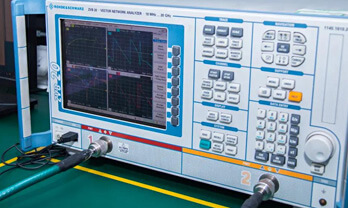
Allelco is committed to exceeding customer expectations through customer service excellence, order accuracy, and on-time delivery.
This is achieved through our commitment to the continual improvement of our processes, services, and products.


Strict quality inspection builds a solid foundation for electronic component quality.
  1. Visual inspection
  2. Performance testing and reliability verification
  3. Standardized full-process testing
  4. Precise control of every parameter
We eliminate defective components and ensure the stable operation of electronic devices through professional quality standards.

Payment Support

The payment method can be chosen from the methods shown below: Wire Transfer (T/T, Bank Transfer), Western Union, Credit card, PayPal.
  • HKBea
  • Paypal
  • MasterCard
  • Western-Union
  • VISA
Stable Delivery, Sincere Partnership — Your Faithful Supply Chain Partner
  • Efficient Supply Management
  • Cost-Saving Procurement
  • Fast Sourcing & Delivery
Contact us if you have any questions.

Packaging

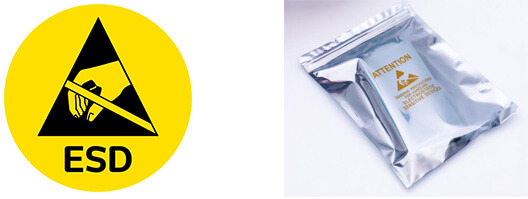
Electrostatic Discharge Protection and Handling

All electrostatic-sensitive components are handled in accordance with electrostatic discharge control procedures. The products are hermetically sealed in anti-static safe packaging to prevent electrostatic damage. Appropriate labeling is also applied for identification and traceability. This ensures product integrity during storage, handling and transportation.


ESD

Certifications & Memberships

Third-party certified, strict quality control. Our certification
  • ISO 9001: 2015
  • ISO 13485: 2016
  • ISO 14001: 2015
  • ISO 28000: 2007
  • ISO 45001: 2018
  • GB/T 27922-2011
  • SMTA
  • IPC
  • ESD
  • PSMA
Texas Instruments

AM26LV31CNSR

Texas Instruments
32D-AM26LV31CNSR

Want a better price? Add to Cart and Submit RFQ now, we'll contact you immediately.

0 RFQ
Shopping cart (0 Items)
It is empty.
Compare List (0 Items)
It is empty.
Feedback

Your feedback matters! At Allelco, we value the user experience and strive to improve it constantly.
Please share your comments with us via our feedback form, and we'll respond promptly.
Thank you for choosing Allelco.

Subject
E-mail
Comments
Captcha
Drag or click to upload file
Upload File
types: .xls, .xlsx, .doc, .docx, .jpg, .png and .pdf.
Max file size: 10MB