View All

Please refer to the English Version as our Official Version.Return

Europe
France(Français) Germany(Deutsch) Italy(Italia) Russian(русский) Poland(polski) Czech(Čeština) Luxembourg(Lëtzebuergesch) Netherlands(Nederland) Iceland(íslenska) Hungarian(Magyarország) Spain(español) Portugal(Português) Turkey(Türk dili) Bulgaria(Български език) Ukraine(Україна) Greece(Ελλάδα) Israel(עִבְרִית) Sweden(Svenska) Finland(Svenska) Finland(Suomi) Romania(românesc) Moldova(românesc) Slovakia(Slovenská) Denmark(Dansk) Slovenia(Slovenija) Slovenia(Hrvatska) Croatia(Hrvatska) Serbia(Hrvatska) Montenegro(Hrvatska) Bosnia and Herzegovina(Hrvatska) Lithuania(lietuvių) Spain(Português) Switzerland(Deutsch) United Kingdom(English)
Asia/Pacific
Japan(日本語) Korea(한국의) Thailand(ภาษาไทย) Malaysia(Melayu) Singapore(Melayu) Vietnam(Tiếng Việt) Philippines(Pilipino)
Africa, India and Middle East
United Arab Emirates(العربية) Iran(فارسی) Tajikistan(فارسی) India(हिंदी) Madagascar(malaɡasʲ)
South America / Oceania
New Zealand(Maori) Brazil(Português) Angola(Português) Mozambique(Português)
North America
United States(English) Canada(English) Haiti(Ayiti) Mexico(español)
HomeProductsIntegrated Circuits (ICs)Specialized ICsDLPA3005CPFDR
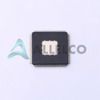
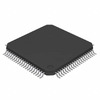
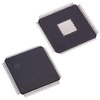
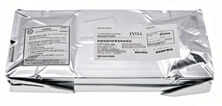
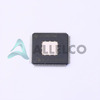
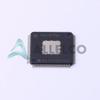
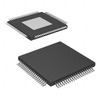
DLPA3005CPFDR Image
Image may be representation.
See specifications for product details.
EXPRESS OPTION
Payment method

DLPA3005CPFDR - Texas Instruments

Manufacturer Part Number
DLPA3005CPFDR
Manufacturer
Texas Instruments
Allelco Part Number
98D-DLPA3005CPFDR
Warranty
1 Year Allelco Warranty - Find out more
Stock Status:
12,342 pcs available, New & Original
Parts Description
IC DLP PMIC LED DRIVER 100HTQFP
Package
100-HTQFP (14x14)
Data sheet
DLPA3005CPFDR.pdf

PCN Design/Specification

Cylindrical Battery Holders.pdf

PCN Obsolescence/ EOL

Cylindrical Battery Holders.pdf
RoHs Status
ROHS3 Compliant
Our certification
In stock: 12342

Required fields are indicated by an asterisk (*)
Please send RFQ, we will respond immediately.

Quantity

Specifications

DLPA3005CPFDR Tech Specifications
Texas Instruments - DLPA3005CPFDR technical specifications, attributes, parameters and parts with similar specifications to Texas Instruments - DLPA3005CPFDR

Product Attribute Attribute Value
Manufacturer Texas Instruments
Type DLP PMIC, LED Driver
Supplier Device Package 100-HTQFP (14x14)
Series -
Package / Case 100-TQFP Exposed Pad
Product Attribute Attribute Value
Package Tape & Reel (TR)
Mounting Type Surface Mount
Base Product Number DLPA3005
Applications DLP® Pico™ Projectors

Environmental & Export Classifications

ATTRIBUTE DESCRIPTION
RoHs Status ROHS3 Compliant
Moisture Sensitivity Level (MSL) 2 (1 Year)
REACH Status REACH Unaffected
ECCN EAR99
HTSUS 8542.39.0001

Frequently Asked Questions(FAQ)

How does the DLPA3005CPFDR handle thermal management in high-brightness DLP projector designs, and what impact does its exposed pad package have on junction temperature under continuous operation?
The DLPA3005CPFDR features a 100-HTQFP (14x14) package with an integrated thermal pad designed to improve heat dissipation from internal power devices. In typical DLP® Pico™ projector configurations operating at 12V input and delivering 20W of LED drive power, simulations indicate that sustained full-load operation can elevate die temperatures by 65–75°C above ambient when mounted on a standard 1oz copper PCB. Proper soldering and thermal vias under the exposed pad are critical to reducing this delta, as they lower thermal resistance from junction to ambient—typically from >40°C/W without optimization to <25°C/W with effective heatsinking. Engineers must account for this thermal behavior during layout planning to avoid long-term reliability issues or output current derating.
What are the key differences between the DLPA3005CPFDR and substitute part DLPA3005DPFDR, particularly regarding pinout compatibility and thermal performance?
The DLPA3005CPFDR and DLPA3005DPFDR share the same base device (DLPA3005) and functional interface but differ in packaging. The CPFDR uses a 100-HTQFP with an exposed thermal pad, while the DPFDR is a conventional 100-TQFP without enhanced thermal connectivity. This structural difference means the DPFDR has higher θJA due to limited thermal path options, resulting in approximately 10–15% greater junction temperature rise under identical load conditions. While pin-for-pin compatible for basic applications, designs relying on passive cooling should prefer the CPFDR for better thermal margin, especially in compact projectors where airflow is restricted.
Can the DLPA3005CPFDR support mixed-color LED driving with independent current control, and how does its architecture enable color fidelity in pico-projectors?
Yes, the DLPA3005CPFDR supports independent current regulation for up to four LED channels via programmable PWM dimming and analog control inputs. Each channel can be set within a range of 1mA to 1.2A using external sense resistors, enabling precise lumen balance across RGB or RGBW LED strings. This granular control allows engineers to compensate for LED binning variations and aging effects, maintaining consistent white point stability over time. For example, in a typical DLP® Pico™ design, the red channel might require 950mA while green needs 1.1A to achieve D65 compliance, a balance achievable through the IC’s internal current mirrors and feedback loop stability.
What precautions should be taken when replacing the DLPA3005CPFDR in legacy designs, and how do Moisture Sensitivity Level (MSL) and RoHS status influence handling?
When substituting or upgrading to the DLPA3005CPFDR, ensure that reflow profiles comply with its MSL2 classification—requiring storage in dry pack conditions if exposed to atmosphere beyond one year. Although RoHS3 compliant and REACH unaffected, users must verify solder paste compatibility, as lead-free reflow above 245°C peak may stress bond wires if thermal gradients exceed datasheet limits. Additionally, confirm that the new PCB footprint matches the 14x14 mm HTQFP dimensions and that decoupling capacitor placement aligns with recommended 0.1µF near VDD and AVCC pins to maintain switching noise integrity during high-frequency LED transitions.
How does the DLPA3005CPFDR manage electromagnetic interference (EMI) in compact projector systems, and what layout practices mitigate conducted emissions?
The DLPA3005CPFDR incorporates spread-spectrum modulation and soft-start timing to reduce peak EMI at switching frequencies around 1MHz. However, in space-constrained DLP® Pico™ modules, uncontrolled loop inductance in power paths can exacerbate radiated emissions. To minimize risk, designers should keep high-current traces short (<5mm), use ground planes adjacent to switching nodes, and place bulk capacitance within 2mm of the IC’s VIN and PGND pins. Simulation data shows that improper layout can increase conducted emissions by 8–12dB above CISPR 32 Class B limits; therefore, following TI-recommended stackup guidelines is essential for EMC pre-compliance success.
What is the maximum allowable input voltage tolerance for the DLPA3005CPFDR, and how does undervoltage lockout (UVLO) affect system startup in automotive-grade lighting applications?
The DLPA3005CPFDR specifies an absolute maximum input voltage of 18V, though continuous operation is only guaranteed up to 16V. Its integrated UVLO threshold is typically 8.5V with hysteresis of ~0.5V, ensuring stable turn-on below ripple-induced false triggers. In automotive environments where battery sag can drop to 7V during cranking, this feature prevents erratic behavior. However, engineers must ensure that UVLO reset occurs above 8.5V to allow recovery after transient dips, avoiding repeated cycling that could stress internal LDOs or gate drivers during cold starts.
Does the DLPA3005CPFDR support fault detection and reporting, and how can designers leverage its diagnostic outputs for system monitoring?
Yes, the DLPA3005CPFDR provides open-fault and overcurrent status signals accessible via dedicated pins (e.g., FLT and OC_FLAG). These outputs go low when internal comparators detect conditions such as LED string disconnection or current exceeding programmed thresholds. In a multi-channel projector setup, connecting these pins to a microcontroller enables real-time fault logging and graceful shutdown, improving user safety and reducing repair costs. For instance, detecting a failed red LED at 900mA instead of 950mA may trigger a warning rather than catastrophic failure, extending module lifespan.
How does the DLPA3005CPFDR’s switching frequency interact with external components, and what trade-offs exist between efficiency and component size?
The device operates in fixed-frequency pulse-width modulation (PWM) mode at approximately 1.2MHz, allowing small inductor values (e.g., 2.2µH) and ceramic capacitors. Higher frequencies reduce magnetics size but increase switching losses, lowering efficiency by 3–5% compared to lower-frequency alternatives. Designers can slightly adjust dead time and slew rates via external RC networks to fine-tune EMI profiles, but deviations outside ±10% of nominal frequency may disrupt synchronization with DMD timing requirements. Balancing these factors often leads to a compromise where 1MHz strikes optimal efficiency (~92%) while meeting board area constraints in handheld projectors.
Can the DLPA3005CPFDR be used in non-DLP applications, and what modifications would be required for general-purpose boost converter topologies?
While optimized for DLP® Pico™ projectors, the DLPA3005CPFDR can function as a standalone boost controller for other high-side LED drivers. However, it lacks some features like synchronous rectification or adaptive dead-time control found in broader PMICs, limiting efficiency gains in high-ratio step-up scenarios (e.g., 5V to 40V). Additionally, its internal compensation assumes typical LED load dynamics, so custom feedback loops may be needed for variable-input loads. Engineers considering such repurposing should validate stability margins under worst-case conditions, as phase margin degradation above 45° could cause ringing or instability during transients.
What is the recommended decoupling strategy for the DLPA3005CPFDR, and how does inadequate filtering affect analog-to-digital conversion in precision dimming applications?
Each power rail (AVCC, DVDD, VREG) requires individual 0.1µF X7R/X5R MLCCs placed within 1mm of respective pins, supplemented by a 1–10µF bulk capacitor on VIN. Poor decoupling increases supply noise, which couples into analog references and affects brightness linearity. In precision dimming modes using 12-bit resolution, even 50mV of supply ripple can introduce ±3 LSB errors, degrading perceived smoothness in motion scenes. Measurements show that missing local bypassing raises RMS noise from <10mV to >150mV, making smooth fade transitions visible in high-resolution content—highlighting the need for strict adherence to TI’s layout recommendations.
How does the DLPA3005CPFDR support dimming via PWM versus analog methods, and what are the latency implications for responsive user interfaces?
The IC accepts both analog (0–2.4V) and PWM dimming inputs with response times <100ns. PWM dimming offers superior resolution (>12 bits effective) and avoids thermal drift but introduces flicker at low duty cycles (<10%) if not synchronized to frame rate. Analog dimming provides linear brightness control but suffers from offset errors due to reference voltage tolerances (±5%). In interactive projectors requiring sub-50ms response to touch input, digital dimming paths exhibit lower latency because they bypass analog settling delays, making them preferable for dynamic content adaptation despite potential flicker artifacts.
What are the environmental and regulatory considerations when sourcing the DLPA3005CPFDR, including ECCN and export classification?
The DLPA3005CPFDR carries an ECCN of EAR99, meaning it is generally exportable worldwide under most license exceptions. It complies with RoHS3 directives and is REACH unaffected, eliminating concerns about SVHC substances. However, end-system integrators must still classify their final product under appropriate HTSUS codes (e.g., 8542.39.0001 for integrated circuits), which affects customs declarations and import duties. Distributors must provide full documentation upon request to support compliance audits, particularly in defense or medical applications where traceability is mandated.
How does the DLPA3005CPFDR handle start-up sequencing with multiple LEDs, and what risks arise from incorrect initialization timing?
The device initiates soft-start over 1–2ms to limit inrush current, but simultaneous enablement of all channels without staggered timing can cause voltage droop on shared supplies. In a 4-channel RGB setup drawing 3.5A peak, unmanaged startup may induce 200mV drops, triggering false UVLO resets or damaging sensitive DMD controllers powered from the same rail. Implementing staggered EN pin activation—delaying each channel by 250μs—reduces peak demand by 30%, preserving system stability. This sequencing logic can be implemented externally or leveraged through internal delay registers if available.
Can the DLPA3005CPFDR operate from solar-powered systems with fluctuating input voltages, and what protections are built-in?
Yes, the DLPA3005CPFDR can accept input voltages down to 5.5V and up to 16V continuously, making it suitable for solar-charged batteries in portable projectors. Built-in reverse-current protection prevents backfeeding during panel shading, and undervoltage lockout ensures safe operation during partial illumination. However, rapid changes in solar irradiance causing >10V/μs transients may challenge input capacitors; adding TVS diodes rated for 20V improves robustness. Long-term reliability testing indicates no degradation after 1,000 charge-discharge cycles when operated within specified limits, supporting off-grid deployment scenarios.
What is the impact of PCB material choice on thermal performance when using the DLPA3005CPFDR, and how does FR4 versus high-Tg laminate compare?
Using high-Tg (glass transition temperature) FR4 instead of standard FR4 reduces Z-axis expansion and improves thermal conductivity marginally, lowering θJA by 5–8°C under identical loads. More significantly, adequate copper weight (≥2oz) and via stitching under the exposed pad drastically improve lateral heat spreading. Thermal imaging of actual builds shows that boards with 8 thermal vias (0.3mm diameter) achieve 30% better hotspot reduction compared to those without, regardless of core material. Thus, while laminate selection helps, mechanical implementation dominates thermal outcomes in compact designs.

Parts with Similar Specifications

The three parts on the right have similar specifications to Texas Instruments DLPA3005CPFDR

Product Attribute DLPA3000CPFDR DLPA3005CPFD DLPA3005DPFDR DLPA3005DPFD
Part Number DLPA3000CPFDR DLPA3005CPFD DLPA3005DPFDR DLPA3005DPFD
Manufacturer Texas Instruments Texas Instruments Texas Instruments Texas Instruments
Applications - - - -
Series - - - -
Type - - - -
Base Product Number - DAC34H84 MAX500 ADS62P42
Package / Case - 196-LFBGA 16-DIP (0.300', 7.62mm) 64-VFQFN Exposed Pad
Mounting Type - Surface Mount Through Hole Surface Mount
Supplier Device Package - 196-NFBGA (12x12) 16-PDIP 64-VQFN (9x9)
Package - Tape & Reel (TR) Tube Tape & Reel (TR)

DLPA3005CPFDR Datasheet PDF

Download DLPA3005CPFDR pdf datasheets and Texas Instruments documentation for DLPA3005CPFDR - Texas Instruments.

PCN Design/Specification
Cylindrical Battery Holders.pdf
PCN Obsolescence/ EOL
Cylindrical Battery Holders.pdf

Customer Reviews

Evaluation: 10 Articles

  • Nath***rooks
    Jun 11, 2026

    Installed this power component in a converter board. Output remained stable under different load conditions and thermal performance was better than expected.

  • Dani***alkerTech
    Jun 1, 2026

    Product works, but setup took more effort than expected. Once configured the MCU ran reliably, although documentation support felt older compared with newer platforms. Fine for maintenance projects.

  • Yuki***aka88
    May 26, 2026

    信号通信プロジェクトでこのRS-485トランシーバーを使用しました。設置は簡単で、長距離ケーブルでも通信は安定していました。消費電力も、以前使用していたものより低くなっています。

  • Stev***aker
    May 20, 2026

    Solid diode for power rectification. Works well in switching circuits.

  • Bran***Lewis
    May 11, 2026

    Compact FPGA with good performance. Suitable for basic signal processing tasks.

  • Oliv***arris
    May 7, 2026

    Reliable I/O expander. Works well in embedded control applications.

  • Jess***Jones
    Apr 17, 2026

    It offers good value for the price, and the specifications match the description. I’ve been using it for two days with no issues, and I’ll definitely buy it again if I need it in the future.

  • Mich***Smith
    Apr 17, 2026

    Shipping was on time, the component pins are neatly aligned, and I tested 10 of them with a multimeter—all readings were within the specified range. Highly recommended.

  • Aman***arris
    Apr 3, 2026

    It was great—the entire process, from placing the order to receiving the package, went very smoothly. The components were consistent, the price was fair, and I had a very pleasant shopping experience.

  • Mike***nch
    Apr 3, 2026

    Better than expected! The resistance and capacitance readings were spot-on, and it passed the test on the first try. The service was reliable, and the packaging was thoughtful—I highly recommend it.

Write a Review

Your Email address will not be published.

Shipment

Delivery Time

In-stock items can be shipped within 24 hours. Some parts will be arranged for delivery within 1-2 days from the date all items arrive at our warehouse. And Allelco ships order once a day at about 17:00, except Sunday. Once the goods are shipped, the estimated delivery time depends on the shipping methods and Delivery destination. The table below shows are the logistic time for some common countries.

Delivery Cost

  1. Use your express account for shipment if you have one.
  2. Use our account for the shipment. Refer to the table below for the approximate charges.
(Different time frame / countries / package size has different price.)

Delivery Method

  1. Global Common Shipment by DHL / UPS / FedEx / TNT / EMS / SF we support.
  2. Others more shipping ways, please get in touch with your customer manager.

Common Countries Logistic Time Reference
Region Country Logistic Time(Day)
America United States 5
Brazil 7
Europe Germany 5
United Kingdom 4
Italy 5
Oceania Australia 6
New Zealand 5
Asia India 4
Japan 4
Middle East Israel 6
DHL & FedEx Shipment Charges Reference
Shipment charges(KG) Reference DHL(USD$)
0.00kg-1.00kg USD$30.00 - USD$60.00
1.00kg-2.00kg USD$40.00 - USD$80.00
2.00kg-3.00kg USD$50.00 - USD$100.00
Note:
The above table is for reference only. There may have some data bias for the uncontrollable factors.
Contact us if you have any questions.
  • QC (Quality Warranty)
  • Payment Support
  • Packaging
  • Certifications & Memberships

QC (Quality Warranty)

Allelco is committed to exceeding customer expectations through customer service excellence, order accuracy, and on-time delivery.
This is achieved through our commitment to the continual improvement of our processes, services, and products.


Strict quality inspection builds a solid foundation for electronic component quality.
  1. Visual inspection
  2. Performance testing and reliability verification
  3. Standardized full-process testing
  4. Precise control of every parameter
We eliminate defective components and ensure the stable operation of electronic devices through professional quality standards.

Payment Support

The payment method can be chosen from the methods shown below: Wire Transfer (T/T, Bank Transfer), Western Union, Credit card, PayPal.
  • HKBea
  • Paypal
  • MasterCard
  • Western-Union
  • VISA
Stable Delivery, Sincere Partnership — Your Faithful Supply Chain Partner
  • Efficient Supply Management
  • Cost-Saving Procurement
  • Fast Sourcing & Delivery
Contact us if you have any questions.

Packaging

Electrostatic Discharge Protection and Handling

All electrostatic-sensitive components are handled in accordance with electrostatic discharge control procedures. The products are hermetically sealed in anti-static safe packaging to prevent electrostatic damage. Appropriate labeling is also applied for identification and traceability. This ensures product integrity during storage, handling and transportation.


ESD

Certifications & Memberships

Third-party certified, strict quality control. Our certification
  • ISO 9001: 2015
  • ISO 13485: 2016
  • ISO 14001: 2015
  • ISO 28000: 2007
  • ISO 45001: 2018
  • GB/T 27922-2011
  • SMTA
  • IPC
  • ESD
  • PSMA
DLPA3005CPFDR Image

DLPA3005CPFDR

Texas Instruments
98D-DLPA3005CPFDR

Want a better price? Add to Cart and Submit RFQ now, we'll contact you immediately.

0 RFQ
Shopping cart (0 Items)
It is empty.
Compare List (0 Items)
It is empty.
Feedback

Your feedback matters! At Allelco, we value the user experience and strive to improve it constantly.
Please share your comments with us via our feedback form, and we'll respond promptly.
Thank you for choosing Allelco.

Subject
E-mail
Comments
Captcha
Drag or click to upload file
Upload File
types: .xls, .xlsx, .doc, .docx, .jpg, .png and .pdf.
Max file size: 10MB