View All

Please refer to the English Version as our Official Version.Return

Europe
France(Français) Germany(Deutsch) Italy(Italia) Russian(русский) Poland(polski) Czech(Čeština) Luxembourg(Lëtzebuergesch) Netherlands(Nederland) Iceland(íslenska) Hungarian(Magyarország) Spain(español) Portugal(Português) Turkey(Türk dili) Bulgaria(Български език) Ukraine(Україна) Greece(Ελλάδα) Israel(עִבְרִית) Sweden(Svenska) Finland(Svenska) Finland(Suomi) Romania(românesc) Moldova(românesc) Slovakia(Slovenská) Denmark(Dansk) Slovenia(Slovenija) Slovenia(Hrvatska) Croatia(Hrvatska) Serbia(Hrvatska) Montenegro(Hrvatska) Bosnia and Herzegovina(Hrvatska) Lithuania(lietuvių) Spain(Português) Switzerland(Deutsch) United Kingdom(English)
Asia/Pacific
Japan(日本語) Korea(한국의) Thailand(ภาษาไทย) Malaysia(Melayu) Singapore(Melayu) Vietnam(Tiếng Việt) Philippines(Pilipino)
Africa, India and Middle East
United Arab Emirates(العربية) Iran(فارسی) Tajikistan(فارسی) India(हिंदी) Madagascar(malaɡasʲ)
South America / Oceania
New Zealand(Maori) Brazil(Português) Angola(Português) Mozambique(Português)
North America
United States(English) Canada(English) Haiti(Ayiti) Mexico(español)
HomeProductsIntegrated Circuits (ICs)Embedded - MicrocontrollersMSP430F2232IRHAT
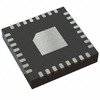
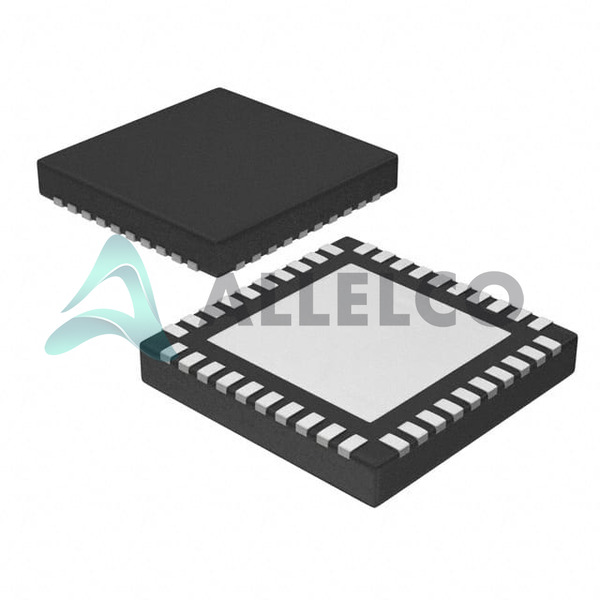
MSP430F2232IRHAT Image
Image may be representation.
See specifications for product details.
EXPRESS OPTION
Payment method

MSP430F2232IRHAT - Texas Instruments

Manufacturer Part Number
MSP430F2232IRHAT
Manufacturer
Texas Instruments
Allelco Part Number
32D-MSP430F2232IRHAT
Warranty
1 Year Allelco Warranty - Find out more
Stock Status:
10,703 pcs available, New & Original
Parts Description
IC MCU 16BIT 8KB FLASH 40VQFN
Package
40-VQFN (6x6)
Data sheet
MSP430F2232IRHA.pdf

PCN Assembly/Origin

2.73KHz.pdf
RoHs Status
ROHS3 Compliant
Our certification
In stock: 10703

Required fields are indicated by an asterisk (*)
Please send RFQ, we will respond immediately.

Quantity

Specifications

MSP430F2232IRHAT Tech Specifications
Texas Instruments - MSP430F2232IRHAT technical specifications, attributes, parameters and parts with similar specifications to Texas Instruments - MSP430F2232IRHAT

Product Attribute Attribute Value
Manufacturer Texas Instruments
Voltage - Supply (Vcc/Vdd) 1.8V ~ 3.6V
Supplier Device Package 40-VQFN (6x6)
Speed 16MHz
Series MSP430F2xx
RAM Size 512 x 8
Program Memory Type FLASH
Program Memory Size 8KB (8K x 8 + 256B)
Peripherals Brown-out Detect/Reset, POR, PWM, WDT
Package / Case 40-VFQFN Exposed Pad
Package Tape & Reel (TR)
Product Attribute Attribute Value
Oscillator Type Internal
Operating Temperature -40°C ~ 85°C (TA)
Number of I/O 32
Mounting Type Surface Mount
EEPROM Size -
Data Converters A/D 12x10b
Core Size 16-Bit
Core Processor MSP430 CPU16
Connectivity I²C, IrDA, LINbus, SCI, SPI, UART/USART
Base Product Number MSP430F2232

Environmental & Export Classifications

ATTRIBUTE DESCRIPTION
RoHs Status ROHS3 Compliant
Moisture Sensitivity Level (MSL) 3 (168 Hours)
REACH Status REACH Unaffected
ECCN EAR99
HTSUS 8542.31.0001

Parts Introduction

MSP430F2232IRHAT Image
MSP430F2232IRHAT (1)

Manufacturer Part Number

MSP430F2232IRHAT

Manufacturer

Texas Instruments

Introduction

The MSP430F2232IRHAT is a 16-bit microcontroller from Texas Instruments, designed for low power and high-performance applications in the embedded system domain.

Product Features and Performance

16-bit MSP430 CPU16 core

Maximum frequency of 16MHz

I2C, IrDA, LINbus, SCI, SPI, UART/USART connectivity options

Integrated Brown-out Detect/Reset, Power-On Reset (POR), Pulse Width Modulation (PWM), Watchdog Timer (WDT)

Internal oscillator

32 configurable I/O pins

Product Advantages

High performance with low power consumption

Versatile connectivity for various communication protocols

Compact 40-VQFN (6x6) package fitting in space-constrained applications

Key Technical Parameters

Program Memory Size: 8KB (Flash)

RAM Size: 512B

ADC: 12-bit, 10 channels

Voltage Supply: 1.8V to 3.6V

Operating Temperature: -40°C to 85°C

Quality and Safety Features

Integrated safety features including Brown-out Reset and Watchdog Timer for system reliability

Power-On Reset for initial safety checks upon power-up

Compatibility

Compatible with a range of development tools provided by Texas Instruments

Suitable for surface mount technology (SMT) assembly processes

Application Areas

Industrial automation

Sensor systems

Consumer electronics

Portable health devices

Product Lifecycle

Currently active with ongoing manufacturer support

Not nearing discontinuation, with replacements and upgrades readily available

Several Key Reasons to Choose This Product

Highly reliable, enduring extreme temperatures ranging from -40°C to 85°C

Low power consumption ideal for battery-operated applications

Extensive integration reducing external component requirement

Strong support and comprehensive development ecosystem from Texas Instruments

Flexible and versatile connectivity options accommodating multiple communication standards
Frequently Asked Questions(FAQ)

How does the MSP430F2232IRHAT handle power consumption during active versus low-power modes, and what impact does this have on battery life in embedded sensor applications?
The MSP430F2232IRHAT features a multi-power-mode architecture typical of the MSP430 CPU16 core. In active mode at 16MHz with full peripherals enabled, it draws approximately 170 µA/MHz, resulting in around 2.7 mA current consumption. When operating in LPM3 (low-power mode 3), which disables the CPU but retains RAM and some timers, current drops to about 1.2 µA. This enables extended battery life in duty-cycled sensor nodes where the device spends most of its time in sleep states. For example, a coin-cell-powered application sampling sensors every 10 seconds could achieve over two years of operation due to this efficient power profile.
What are the key differences between the MSP430F2232IRHAT and other members of the MSP430F2xx series in terms of memory configuration and peripheral integration?
While sharing the same 16-bit MSP430 CPU16 core and 40-VQFN packaging, the MSP430F2232IRHAT distinguishes itself from siblings like the F2132 or F2013 by offering 8KB of FLASH memory plus 256B of information memory—double that of many smaller variants. It also includes a 12-channel, 10-bit ADC, which is more extensive than found in lower-memory models lacking analog front-ends. Additionally, it supports LINbus and IrDA protocols, making it suitable for automotive and industrial communication scenarios where simpler variants lack these interfaces.
Can the MSP430F2232IRHAT reliably operate in industrial temperature ranges, and how does its internal oscillator perform under varying supply voltages?
Yes, the MSP430F2232IRHAT is rated for -40°C to +85°C, meeting industrial grade requirements. Its internal digitally controlled oscillator (DCO) maintains frequency stability across the entire voltage range of 1.8V to 3.6V. At 3.6V, the DCO can be calibrated to deliver 16MHz with ±1% accuracy; even at minimum supply voltage (1.8V), it still sustains 16MHz operation, albeit with slightly reduced phase noise. This ensures consistent timing behavior in systems powered by non-regulated batteries or solar cells experiencing voltage sag.
How should decoupling capacitors be selected and placed when using the MSP430F2232IRHAT in high-noise environments such as motor control circuits?
Given its 1.8V to 3.6V operating range and sensitivity to digital switching noise, the MSP430F2232IRHAT benefits from a robust decoupling strategy. A 100nF ceramic capacitor must be placed within 2mm of each VCC and VSS pin, preferably using a 0201 or smaller package for high-frequency response. Additionally, a 10µF tantalum or ceramic capacitor should connect the main power rail to ground to stabilize bulk energy delivery during rapid transitions. In noisy environments, a ferrite bead may be inserted between the regulator output and the MCU if local filtering is insufficient.
Is the MSP430F2232IRHAT compatible with standard 5V microcontroller development tools, and what level shifting considerations apply for I/O interfacing?
The MSP430F2232IRHAT operates natively at 1.8V to 3.6V and cannot tolerate 5V logic directly on its GPIO pins. While some inputs have Schmitt-trigger characteristics and tolerate up to VCC + 0.3V briefly, sustained exposure above 3.6V risks damage. Therefore, interfacing with 5V systems requires bidirectional level shifters such as TXS0108E or discrete MOSFET-based solutions. Alternatively, a regulated 3.3V supply can be used, ensuring all external signals remain below 3.3V absolute maximum ratings.
What programming and debugging interface options are supported by the MSP430F2232IRHAT, and how do they affect pin allocation?
The MSP430F2232IRHAT supports Spy-Bi-Wire (two-wire JTAG alternative), which uses just two GPIO pins (usually P1.0 and P1.1). This allows programming and real-time debugging without occupying additional pins compared to full JTAG implementations. However, once configured in Spy-Bi-Wire mode, those pins become dedicated and cannot serve as general-purpose I/O unless erased via a specific erase algorithm. Careful planning is required to avoid conflicts with peripheral functions like UART or SPI.
How does the built-in watchdog timer (WDT) in the MSP430F2232IRHAT function, and what precautions are necessary to prevent accidental resets during firmware development?
The MSP430F2232IRHAT includes a windowed watchdog timer capable of generating system resets if not periodically cleared within a defined interval. During normal operation, software must execute the WDTCTL register write sequence within the correct time window—typically using the signature pattern 0x5A00 to disable it. In development environments, failing to manage the WDT can cause unexpected resets, especially after power-on or reset events. Always initialize the WDT early in startup code and either enable it securely or disable it entirely based on system reliability needs.
Can the MSP430F2232IRHAT support external crystal oscillators, and what are the trade-offs between using internal versus external clock sources?
Yes, the MSP430F2232IRHAT allows external crystals up to 32kHz or 16MHz depending on configuration. Using an external 32.768kHz crystal provides accurate real-time clock (RTC) functionality with minimal power draw, ideal for timekeeping. Conversely, a high-precision 16MHz crystal enables faster execution but consumes more power and requires additional load capacitors and layout attention. Internal oscillators are sufficient for non-critical timing but offer less accuracy (<1%) and drift with temperature and voltage variations.
What considerations apply when designing PCB layouts for the MSP430F2232IRHAT’s 40-VQFN package to ensure reliable soldering and thermal performance?
The MSP430F2232IRHAT comes in a 40-pin VQFN (6x6mm) with an exposed thermal pad. Proper PCB design requires connecting the pad to a solid ground plane with multiple vias (at least 4–6) to dissipate heat and improve solder wetting during reflow. Thermal relief patterns should minimize parasitic inductance while allowing paste flow. Avoid placing sensitive analog traces near the edge of the thermal pad, and maintain clearance rules per IPC standards to prevent tombstoning or incomplete connections.
How does the MSP430F2232IRHAT’s ADC perform in terms of resolution and sampling rate, and what factors influence measurement accuracy in real-world applications?
The MSP430F2232IRHAT integrates a 12-channel, 10-bit successive approximation ADC with a maximum sampling rate of 50 kSPS per channel. Effective resolution degrades slightly due to internal reference nonlinearity and settling time constraints. To achieve best results, sample-and-hold circuitry should be stabilized before conversion starts, and input signals should settle within the specified acquisition window. External noise, poor grounding, or inadequate shielding can introduce errors exceeding 1 LSB, particularly in high-impedance sensor configurations like thermistors or photodiodes.
Are there known limitations in using the MSP430F2232IRHAT for USB communication, and what alternatives exist for serial data transfer?
No, the MSP430F2232IRHAT does not include native USB hardware. Instead, it relies on software-based bit-banging or UART/USART modules to emulate CDC (Communications Device Class) protocols over RS-232 or TTL levels. This approach introduces latency and CPU overhead, limiting throughput to tens of kbps. For higher-speed serial links, consider pairing it with external transceivers like FTDI chips or opting for a different MSP430 variant with integrated USB, such as the F5xx series.
How does the MSP430F2232IRHAT compare to ARM Cortex-M0+ devices in terms of power efficiency and development complexity for battery-powered IoT endpoints?
While the MSP430F2232IRHAT excels in ultra-low quiescent current and has decades of mature toolchain support, ARM Cortex-M0+ cores typically offer higher performance (up to 48MHz+) and better compiler optimization. However, the MSP430F2232IRHAT’s sub-millisecond wake-up time and microamp-level sleep currents often yield longer battery life in intermittent-use cases. Development complexity is lower due to deterministic interrupt handling and simpler memory model, though C++ support and modern IDE features lag behind newer ARM ecosystems.
What precautions must be taken when updating firmware on the MSP430F2232IRHAT to prevent bricking during flash programming?
Flash programming requires stable power throughout erase/write cycles. Voltage must remain above 2.7V during operations to avoid corruption, especially when modifying sectors containing bootloader code. Always verify checksums post-programming and implement a recovery mechanism such as a secondary bootloader or SWD interface fallback. Avoid interrupting programming sequences via watchdog or brown-out resets, and use TI’s Flash Loader Demonstrator or CCS with appropriate driver settings to mitigate risk.
How does the MSP430F2232IRHAT support brown-out detection and reset functionality, and what thresholds are available?
The MSP430F2232IRHAT incorporates programmable brown-out reset (BOR) with four selectable voltage levels: 1.8V, 2.2V, 2.7V, and 3.0V. These thresholds protect against undervoltage conditions that could cause erratic behavior. The BOR triggers a full system reset when VCC falls below the set level, preserving program integrity. Combined with power-on reset (POR) and watchdog timer, this creates a robust fault management system suitable for unattended deployments where voltage fluctuations might otherwise compromise operation.
What are the implications of the MSP430F2232IRHAT’s MSL rating of 3 regarding storage and handling before PCB assembly?
With an MSL3 classification (168-hour floor life), the MSP430F2232IRHAT must be stored in dry ambient conditions with humidity below 85% RH. Once removed from moisture-protective packaging, it should be assembled within 168 hours unless baked per JEDEC J-STD-033 guidelines. Extended exposure beyond this window increases the risk of popcorning during reflow soldering. Always track lot numbers and usage dates to comply with manufacturing reliability standards.
How does the MSP430F2232IRHAT’s instruction set architecture facilitate efficient code size, and what role does the FRAM-like FLASH play in this context?
Although it uses traditional FLASH memory rather than FRAM, the MSP430F2232IRHAT leverages a highly optimized 16-bit RISC architecture with single-cycle execution for most instructions. Compact opcodes and rich addressing modes reduce instruction count, enabling dense code generation. Additionally, parallel execution of fetch and execute stages minimizes cycle overhead. While FLASH endurance is limited (~10k writes), this is rarely a concern in read-mostly applications like firmware storage, giving it an edge in code density over 8-bit MCUs with larger instruction footprints.
What are the typical applications where the MSP430F2232IRHAT offers distinct advantages over higher-pin-count or higher-power MCUs?
The MSP430F2232IRHAT shines in space-constrained, low-power embedded systems such as wireless sensor nodes, portable medical monitors, and battery-operated environmental loggers. Its combination of 32 I/O lines, integrated ADC, and multi-protocol support (I2C, SPI, UART, LIN) eliminates need for external interface chips, reducing board area and cost. Applications requiring <1mA average current draw and occasional data transmission benefit most from its balance of connectivity, memory, and energy efficiency.
How does the RoHS compliance status of the MSP430F2232IRHAT affect global market distribution, and what documentation is required for regulatory submission?
As a ROHS3-compliant device, the MSP430F2232IRHAT meets EU Directive 2011/65/EU and subsequent amendments, eliminating restricted substances like lead, mercury, and cadmium. This facilitates entry into commercial markets worldwide, including North America, Europe, and Asia. Manufacturers must maintain technical files including material declarations, test reports, and supplier certificates. The device’s ECCN EAR99 classification simplifies export controls, avoiding complex licensing requirements under U.S. regulations.

Parts with Similar Specifications

The three parts on the right have similar specifications to Texas Instruments MSP430F2232IRHAT

Product Attribute MSP430F2232IRHAR MSP430F2232TRHAT MSP430F2232TRHAR MSP430F2232IDAR
Part Number MSP430F2232IRHAR MSP430F2232TRHAT MSP430F2232TRHAR MSP430F2232IDAR
Manufacturer Texas Instruments Texas Instruments Texas Instruments Texas Instruments
Speed - - - -
Package / Case - 196-LFBGA 16-DIP (0.300', 7.62mm) 64-VFQFN Exposed Pad
Voltage - Supply (Vcc/Vdd) - - - -
Program Memory Type - - - -
Connectivity - - - -
Supplier Device Package - 196-NFBGA (12x12) 16-PDIP 64-VQFN (9x9)
Series - - - -
Core Processor - - - -
Number of I/O - - - -
Peripherals - - - -
Operating Temperature - -40°C ~ 85°C 0°C ~ 70°C -40°C ~ 85°C
Program Memory Size - - - -
Mounting Type - Surface Mount Through Hole Surface Mount
Base Product Number - DAC34H84 MAX500 ADS62P42
Oscillator Type - - - -
Data Converters - - - -
EEPROM Size - - - -
Core Size - - - -
RAM Size - - - -
Package - Tape & Reel (TR) Tube Tape & Reel (TR)

MSP430F2232IRHAT Datasheet PDF

Download MSP430F2232IRHAT pdf datasheets and Texas Instruments documentation for MSP430F2232IRHAT - Texas Instruments.

Datasheets
MSP430x2xx User Guide.pdf
PCN Assembly/Origin
2.73KHz.pdf

Customer Reviews

Evaluation: 10 Articles

  • Emil***rperTech
    Jun 23, 2026

    Works exactly as described. I used it as a USB-to-SPI bridge in a small MCU development project and communication was stable from the first setup.

  • Liam***terTech
    Jun 15, 2026

    Used this CPLD in a logic control project. Programming was straightforward and signal timing matched the design requirements.

  • Nath***rooks
    Jun 11, 2026

    Installed this power component in a converter board. Output remained stable under different load conditions and thermal performance was better than expected.

  • Dani***alkerTech
    Jun 1, 2026

    Product works, but setup took more effort than expected. Once configured the MCU ran reliably, although documentation support felt older compared with newer platforms. Fine for maintenance projects.

  • Yuki***aka88
    May 26, 2026

    信号通信プロジェクトでこのRS-485トランシーバーを使用しました。設置は簡単で、長距離ケーブルでも通信は安定していました。消費電力も、以前使用していたものより低くなっています。

  • Stev***aker
    May 20, 2026

    Solid diode for power rectification. Works well in switching circuits.

  • Bran***Lewis
    May 11, 2026

    Compact FPGA with good performance. Suitable for basic signal processing tasks.

  • Oliv***arris
    May 7, 2026

    Reliable I/O expander. Works well in embedded control applications.

  • Jess***Jones
    Apr 17, 2026

    It offers good value for the price, and the specifications match the description. I’ve been using it for two days with no issues, and I’ll definitely buy it again if I need it in the future.

  • Mich***Smith
    Apr 17, 2026

    Shipping was on time, the component pins are neatly aligned, and I tested 10 of them with a multimeter—all readings were within the specified range. Highly recommended.

Write a Review

Your Email address will not be published.

Shipment

Delivery Time

In-stock items can be shipped within 24 hours. Some parts will be arranged for delivery within 1-2 days from the date all items arrive at our warehouse. And Allelco ships order once a day at about 17:00, except Sunday. Once the goods are shipped, the estimated delivery time depends on the shipping methods and Delivery destination. The table below shows are the logistic time for some common countries.

Delivery Cost

  1. Use your express account for shipment if you have one.
  2. Use our account for the shipment. Refer to the table below for the approximate charges.
(Different time frame / countries / package size has different price.)

Delivery Method

  1. Global Common Shipment by DHL / UPS / FedEx / TNT / EMS / SF we support.
  2. Others more shipping ways, please get in touch with your customer manager.

Common Countries Logistic Time Reference
Region Country Logistic Time(Day)
America United States 5
Brazil 7
Europe Germany 5
United Kingdom 4
Italy 5
Oceania Australia 6
New Zealand 5
Asia India 4
Japan 4
Middle East Israel 6
DHL & FedEx Shipment Charges Reference
Shipment charges(KG) Reference DHL(USD$)
0.00kg-1.00kg USD$30.00 - USD$60.00
1.00kg-2.00kg USD$40.00 - USD$80.00
2.00kg-3.00kg USD$50.00 - USD$100.00
Note:
The above table is for reference only. There may have some data bias for the uncontrollable factors.
Contact us if you have any questions.
  • QC (Quality Warranty)
  • Payment Support
  • Packaging
  • Certifications & Memberships

QC (Quality Warranty)

Allelco is committed to exceeding customer expectations through customer service excellence, order accuracy, and on-time delivery.
This is achieved through our commitment to the continual improvement of our processes, services, and products.


Strict quality inspection builds a solid foundation for electronic component quality.
  1. Visual inspection
  2. Performance testing and reliability verification
  3. Standardized full-process testing
  4. Precise control of every parameter
We eliminate defective components and ensure the stable operation of electronic devices through professional quality standards.

Payment Support

The payment method can be chosen from the methods shown below: Wire Transfer (T/T, Bank Transfer), Western Union, Credit card, PayPal.
  • HKBea
  • Paypal
  • MasterCard
  • Western-Union
  • VISA
Stable Delivery, Sincere Partnership — Your Faithful Supply Chain Partner
  • Efficient Supply Management
  • Cost-Saving Procurement
  • Fast Sourcing & Delivery
Contact us if you have any questions.

Packaging

Electrostatic Discharge Protection and Handling

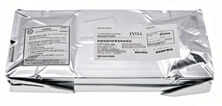
All electrostatic-sensitive components are handled in accordance with electrostatic discharge control procedures. The products are hermetically sealed in anti-static safe packaging to prevent electrostatic damage. Appropriate labeling is also applied for identification and traceability. This ensures product integrity during storage, handling and transportation.


ESD

Certifications & Memberships

Third-party certified, strict quality control. Our certification
  • ISO 9001: 2015
  • ISO 13485: 2016
  • ISO 14001: 2015
  • ISO 28000: 2007
  • ISO 45001: 2018
  • GB/T 27922-2011
  • SMTA
  • IPC
  • ESD
  • PSMA
MSP430F2232IRHAT Image

MSP430F2232IRHAT

Texas Instruments
32D-MSP430F2232IRHAT

Want a better price? Add to Cart and Submit RFQ now, we'll contact you immediately.

0 RFQ
Shopping cart (0 Items)
It is empty.
Compare List (0 Items)
It is empty.
Feedback

Your feedback matters! At Allelco, we value the user experience and strive to improve it constantly.
Please share your comments with us via our feedback form, and we'll respond promptly.
Thank you for choosing Allelco.

Subject
E-mail
Comments
Captcha
Drag or click to upload file
Upload File
types: .xls, .xlsx, .doc, .docx, .jpg, .png and .pdf.
Max file size: 10MB