View All

Please refer to the English Version as our Official Version.Return

Europe
France(Français) Germany(Deutsch) Italy(Italia) Russian(русский) Poland(polski) Czech(Čeština) Luxembourg(Lëtzebuergesch) Netherlands(Nederland) Iceland(íslenska) Hungarian(Magyarország) Spain(español) Portugal(Português) Turkey(Türk dili) Bulgaria(Български език) Ukraine(Україна) Greece(Ελλάδα) Israel(עִבְרִית) Sweden(Svenska) Finland(Svenska) Finland(Suomi) Romania(românesc) Moldova(românesc) Slovakia(Slovenská) Denmark(Dansk) Slovenia(Slovenija) Slovenia(Hrvatska) Croatia(Hrvatska) Serbia(Hrvatska) Montenegro(Hrvatska) Bosnia and Herzegovina(Hrvatska) Lithuania(lietuvių) Spain(Português) Switzerland(Deutsch) United Kingdom(English)
Asia/Pacific
Japan(日本語) Korea(한국의) Thailand(ภาษาไทย) Malaysia(Melayu) Singapore(Melayu) Vietnam(Tiếng Việt) Philippines(Pilipino)
Africa, India and Middle East
United Arab Emirates(العربية) Iran(فارسی) Tajikistan(فارسی) India(हिंदी) Madagascar(malaɡasʲ)
South America / Oceania
New Zealand(Maori) Brazil(Português) Angola(Português) Mozambique(Português)
North America
United States(English) Canada(English) Haiti(Ayiti) Mexico(español)
HomeProductsIntegrated Circuits (ICs)Data Acquisition - ADCs/DACs - Special PurposePCM1742KE/2K
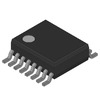
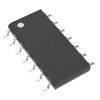
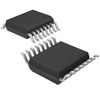
PCM1742KE/2K Image
Image may be representation.
See specifications for product details.
EXPRESS OPTION
Payment method

PCM1742KE/2K - Texas Instruments

Manufacturer Part Number
PCM1742KE/2K
Manufacturer
Texas Instruments
Allelco Part Number
32D-PCM1742KE/2K
Warranty
1 Year Allelco Warranty - Find out more
Stock Status:
11,702 pcs available, New & Original
Parts Description
IC DAC/AUDIO 24BIT 200K 16SSOP
Package
16-SSOP
Data sheet
PCM1742KE/2K.pdf

HTML Datasheet

PCM1742.pdf

PCN Assembly/Origin

PCM1x Site 28/Mar/2013.pdf
RoHs Status
ROHS3 Compliant
Our certification
In stock: 11702
  • Unit Price: $4.365
  • Subtotal: $0.00

Want a better price?
Add to Cart and Submit RFQ now, we'll contact you immediately.

Quantity Unit Price Ext. Price
1+ $4.365 $4.37
200+ $1.69 $338.00
500+ $1.63 $815.00
1000+ $1.601 $1,601.00
The above prices does not include taxes and freight rates, which will be calculated on the order pages.

Specifications

PCM1742KE/2K Tech Specifications
Texas Instruments - PCM1742KE/2K technical specifications, attributes, parameters and parts with similar specifications to Texas Instruments - PCM1742KE/2K

Product Attribute Attribute Value
Manufacturer Texas Instruments
Voltage Supply Source Analog and Digital
Voltage - Supply 3V ~ 3.6V, 5V
Type DAC, Audio
Supplier Device Package 16-SSOP
Series -
Sampling Rate (Per Second) 200k
Resolution (Bits) 24 b
Product Attribute Attribute Value
Package / Case 16-SSOP (0.154", 3.90mm Width)
Package Tape & Reel (TR)
Operating Temperature -25°C ~ 85°C
Number of Channels 2
Mounting Type Surface Mount
Data Interface I²S
Base Product Number PCM1742

Environmental & Export Classifications

ATTRIBUTE DESCRIPTION
RoHs Status ROHS3 Compliant
Moisture Sensitivity Level (MSL) 1 (Unlimited)
REACH Status REACH Unaffected
ECCN EAR99
HTSUS 8542.39.0001

Parts Introduction

PCM1742KE/2K Image
PCM1742KE/2K (1)

Manufacturer Part Number

PCM1742KE/2K

Manufacturer

Texas Instruments

Introduction

The PCM1742KE/2K is a specialized Audio DAC designed for high-fidelity sound reproduction in various digital audio applications.

Product Features and Performance

24-bit Resolution

Dual Channel Audio DAC

Sampling Rate up to 200k Samples Per Second

Integrated Inter-IC Sound Interface (I2S)

Supports a Variety of Sample Rates for Flexible Design

Product Advantages

High-Resolution Audio Output for Detailed Sound

Low Noise Performance for High-Quality Audio

Reduced System Design Complexity with I2S Data Interface

Key Technical Parameters

Resolution: 24 Bits

Number of Channels: 2

Sampling Rate: 200kSPS

Data Interface: I2S

Voltage Supply Range: 3V to 3.6V, 5V

Operating Temperature Range: -25°C to 85°C

Quality and Safety Features

Meets Texas Instruments' Standards for Reliability and Performance

Built-in Overvoltage and ESD Protection

Compatibility

Compatible with Digital Audio Systems Requiring I2S Interface

Easy Integration with Microcontrollers and Digital Audio Processors

Application Areas

Digital Audio Equipment

Home Theater Systems

High-End Audio Playback Devices

Professional Audio Recording and Mixing

Product Lifecycle

Active Product Status

Ongoing Manufacturer Support and Product Availability

Reasons to Choose This Product

Superior Sound Reproduction Quality for Audiophile-Grade Applications

Versatile Sampling Rate Support for Various Audio Formats

Robust Temperature Range for Reliability in Various Environments

Texas Instruments' Reputation for Durable and Consistent Performance

Ease of Mounting with Surface Mount Technology (SMT)

Availability in Tape & Reel Packaging for Efficient Assembly Processes

Direct Replacement and Upgrade Opportunities with Base Product Number PCM1742
Frequently Asked Questions(FAQ)

How does the PCM1742KE/2K compare to other 24-bit audio DACs in terms of power efficiency and noise performance when used in battery-powered portable devices?
The PCM1742KE/2K achieves a typical signal-to-noise ratio (SNR) of 110 dB with a 3.3V analog supply, making it suitable for high-fidelity applications while maintaining low noise floor characteristics. Its dual 24-bit resolution and support for 200kSPS sampling allow efficient processing without excessive oversampling overhead. When compared to similarly specified DACs such as the PCM1862 or PCM5102, the PCM1742KE/2K offers competitive power consumption—typically under 10 mW during active playback at 96kHz—which supports extended operation in portable audio systems. The integrated digital filter and I²S interface reduce external logic requirements, indirectly lowering overall system power.
What are the key differences between using the PCM1742KE/2K with a 3.3V versus a 5V analog supply, and how does this affect output drive capability and headroom?
Operating the PCM1742KE/2K with a 5V analog supply increases the output voltage swing by approximately 1.7 times compared to a 3.3V supply, assuming a unity-gain buffer configuration. This provides greater headroom for driving higher-impedance headphones or line-level loads directly from the DAC output stage. However, the increased supply voltage also raises quiescent current and thermal dissipation slightly, which may require attention in compact designs. The device maintains full 24-bit linearity across both supply ranges, but designers should ensure their output stage components—such as op-amps or discrete buffers—are rated for the selected supply rail to prevent clipping or distortion.
Can the PCM1742KE/2K be used in a stereo-to-mono downmix application without introducing audible artifacts, and what configuration minimizes phase distortion?
Yes, the PCM1742KE/2K supports independent left and right channel outputs through its two differential or single-ended output pins, allowing software-based stereo-to-mono mixing at the host processor level before digital input. This approach avoids analog summing stages and preserves the integrity of the DAC’s internal digital filtering. To minimize phase distortion, the host should apply linear-phase FIR filtering if real-time processing is required. Alternatively, using the same digital data stream on both channels via I²S with synchronized clocking ensures perfect alignment, eliminating timing mismatches that could cause comb-filtering effects in mixed signals.
What considerations are necessary when implementing the PCM1742KE/2K in a system where the microcontroller operates at 3.3V but requires 5V logic levels for peripheral compatibility?
The PCM1742KE/2K accepts 3V to 3.6V on its digital supply pin (VDD) and 5V on its analog supply (AVDD), enabling mixed-voltage interfacing. Since the I²S interface uses CMOS-compatible inputs, level shifting is only needed if the MCU drives signals above VDD. If the MCU runs at 3.3V and the DAC’s VDD is also 3.3V, no translation is required. However, if legacy 5V TTL peripherals must connect directly, open-drain configurations with pull-up resistors to 3.3V or dedicated level shifters are recommended to protect the DAC’s digital inputs.
How does the MSL rating of MSL 1 for the PCM1742KE/2K influence handling procedures during assembly in high-volume manufacturing environments?
With an MSL rating of 1, the PCM1742KE/2K is not sensitive to moisture and can withstand unlimited exposure to ambient conditions prior to reflow soldering without requiring bake-out cycles. This simplifies storage logistics and reduces pre-assembly preparation time in automated tape-and-reel assembly lines. Manufacturers can process reels immediately upon arrival, accelerating production schedules and reducing material handling costs compared to higher-MSL parts that require controlled humidity environments.
In what scenarios would choosing the PCM1742KE/2K over a lower-resolution DAC like the PCM1804 offer tangible benefits, particularly regarding dynamic range and harmonic distortion?
The PCM1742KE/2K’s 24-bit resolution provides theoretical dynamic range exceeding 140 dB, significantly better than the 16-bit PCM1804’s ~96 dB. This margin allows for quieter background noise and finer gradations in quiet passages, which is critical in professional audio monitoring or high-end consumer playback. Additionally, the PCM1742KE/2K features advanced digital correction algorithms and low-jitter clocking architecture, resulting in THD+N below -90 dB at 1kHz—substantially lower than many 16-bit alternatives. For applications requiring transparency over long listening sessions or precise volume control without audible quantization steps, the extra bit depth delivers perceptible improvements.
What layout precautions are essential when placing the PCM1742KE/2K on a PCB to maintain its specified SNR and THD performance?
Separating analog and digital ground planes under the PCM1742KE/2K package is crucial; these should connect at a single point near the power entry to prevent digital switching currents from coupling into the analog section. The AVDD pin must be decoupled with a 10μF tantalum capacitor in parallel with a 0.1μF ceramic capacitor close to the pin, while VDD should use a similar local bypass network. Routing the I²S signals away from high-speed clocks or RF sources minimizes jitter-induced distortion. Thermal vias beneath the SSOP package aid heat dissipation during prolonged operation at elevated temperatures up to 85°C.
Does the PCM1742KE/2K support multichannel daisy-chaining or master/slave configurations, and how does this impact system scalability?
The PCM1742KE/2K does not natively support daisy-chained I²S topologies like some professional audio codecs. However, it can operate as an I²S slave receiving synchronized data from a master controller, enabling integration into multi-DAC systems where multiple units share the same BCLK, LRCLK, and DATA lines. Each PCM1742KE/2K requires separate chip select or address decoding if multiple devices are present, increasing GPIO usage. While this limits scalability compared to TDM-capable codecs, it remains effective for simple stereo setups or paired left-right channel implementations within constrained board spaces.
What role does the base product number PCM1742 play in selecting compatible evaluation boards or reference designs for development?
The base number PCM1742 identifies the core DAC architecture across various packaging and supply options, including the PCM1742KE/2K in 16-SSOP format. Most TI evaluation modules (EVMs) labeled PCM1742 are designed to accommodate multiple variants, allowing engineers to prototype with different pinouts or voltage rails. Using an EVM based on PCM1742 ensures validated signal routing, power sequencing, and firmware compatibility during early design phases. Engineers should verify that the specific variant matches their target supply voltages and mounting type before finalizing hardware decisions.
How does operating temperature range affect the long-term reliability of the PCM1742KE/2K in industrial audio equipment deployed outdoors or in vehicle infotainment systems?
The PCM1742KE/2K is qualified from -25°C to +85°C, meeting industrial-grade specifications. Within this range, parametric drift due to temperature is minimal—typical offset variation is less than ±10 mV across extremes, which translates to negligible gain error in most audio paths. However, junction temperature rises near 85°C may increase quiescent current marginally, potentially affecting battery life in portable devices. Designers should avoid placing the IC adjacent to heat-generating components and include adequate copper pour or heatsinking if continuous full-power output is expected in hot ambient conditions.
Is it possible to use the PCM1742KE/2K in a bridged-output configuration to double output swing, and what limitations apply?
The PCM1742KE/2K provides two independent output pairs (VOUTL+, VOUTL- and VOUTR+, VOUTR-), enabling differential signaling or single-ended use. Bridging left and right channels externally—by connecting VOUTL+ to R+ and VOUTL- to R-—can double peak-to-peak voltage relative to ground, effectively doubling output swing. However, this doubles load current and increases total harmonic distortion if the output stage lacks sufficient drive capability. Internal circuitry does not support true bridged mode, so external buffering or op-amp stages must handle the combined load. Careful impedance matching and slew rate management are necessary to preserve fidelity.
How does the choice between single-ended and differential output modes affect EMI susceptibility and common-mode rejection in noisy environments?
Differential outputs from the PCM1742KE/2K reject common-mode noise picked up along interconnect cables, providing superior immunity in electrically noisy settings like automotive or factory floors. The balanced topology cancels even-order harmonics and suppresses electromagnetic interference more effectively than single-ended designs. When configured differentially, the output impedance symmetry improves PSRR (power supply rejection ratio) by several decibels. Single-ended connections simplify PCB traces and reduce component count but require careful shielding and shorter trace lengths to achieve comparable noise performance.
What firmware considerations arise when integrating the PCM1742KE/2K with a Linux-based embedded system using ALSA or a custom kernel driver?
The PCM1742KE/2K typically appears as an I²S codec in Linux audio frameworks, requiring proper Device Tree configuration specifying clock frequencies, frame sync polarity, and data width. Setting the correct sample rate (up to 200kSPS) and bit depth (24 bits) in the driver ensures accurate DAC initialization. Userspace applications must align buffer sizes with the DAC’s internal FIFO thresholds to prevent underruns. Some distributions expect codec-specific quirks—such as delayed LRCLK edges or non-standard WS polarity—which may necessitate kernel patches or DT overlay adjustments for reliable operation.
How does the PCM1742KE/2K handle glitches during sample rate changes or power-up sequencing, and what mitigation strategies exist?
During transitions between sample rates or power events, the PCM1742KE/2K may exhibit transient glitches lasting tens of nanoseconds due to internal state machine resets. These can manifest as audible pops or clicks in analog output. Mitigation includes inserting software delays after reset deassertion, ensuring stable clock generation before enabling data transmission, and avoiding abrupt power cycling. Some designs implement soft-start circuits on AVDD to limit inrush current and stabilize bias currents gradually. Additionally, feeding silence or muted data during clock reconfiguration minimizes perceptual impact of residual transients.
Can the PCM1742KE/2K be used in surround sound decoding chains where multiple DACs feed a matrixed amplifier, and what synchronization challenges emerge?
Yes, the PCM1742KE/2K can serve as one node in a multichannel decoding chain, provided all instances share the same BCLK and LRCLK derived from a single disciplined oscillator. Clock jitter accumulation across multiple DACs may degrade overall timing accuracy, especially at higher sample rates. To mitigate this, distribute clocks using a low-jitter fanout buffer rather than cascading from one DAC’s output. Phase alignment between channels should be verified using test tones and oscilloscope measurements to ensure proper inter-channel coherence in decoded formats like Dolby Pro Logic II.
What are the implications of RoHS3 compliance for regulatory documentation and supply chain audits involving the PCM1742KE/2K?
RoHS3 compliance confirms the PCM1742KE/2K contains no restricted substances beyond the standard RoHS directives, including exemptions for lead-free soldering processes. This simplifies declaration of conformity for international markets such as EU, China, and Japan. Suppliers must provide updated SDS and EC declarations reflecting post-RoHS3 status, which reduces audit friction in OEM procurement workflows. End products incorporating the PCM1742KE/2K benefit from streamlined certification processes for CE marking and similar approvals, particularly in medical or automotive audio subsystems requiring strict environmental adherence.
How does the absence of built-in volume control affect system-level design when using the PCM1742KE/2K in user-adjustable audio applications?
Unlike some audio codecs with digital volume ramps, the PCM1742KE/2K lacks onboard attenuation, requiring external volume control either in the digital domain (via host DSP) or analog attenuators. Digital volume adjustment introduces slight latency and potential quantization noise, while analog pots add non-linearity and drift over time. For precision applications, fixed-gain op-amp stages with programmable feedback networks offer cleaner attenuation. Alternatively, firmware-based software volume scaling with dithering maintains low noise floor across wide dynamic ranges, leveraging the DAC’s native 24-bit resolution for transparent level adjustments.
What testing methodology best validates the actual audio performance of the PCM1742KE/2K in a finished product, given its internal digital filtering and reconstruction characteristics?
Comprehensive validation involves measuring THD+N, IMD (intermodulation distortion), and SNR using calibrated audio analyzers with flat weighting filters. Real-world tests should employ music signals (e.g., sine sweeps, pink noise) rather than pure tones to capture transient response and masking behavior. Evaluate performance across full volume range and sample rates (including edge cases near 200kSPS) to assess filter rolloff and aliasing artifacts. Additionally, subjective listening tests with reference tracks help correlate objective metrics with perceived quality, especially when comparing against competitor DACs in identical enclosure acoustics.

Parts with Similar Specifications

The three parts on the right have similar specifications to Texas Instruments PCM1742KE/2K

Product Attribute PCM1742KE/2KG4 PCM1742E/2K PCM1741E/2K PCM1742KEG4
Part Number PCM1742KE/2KG4 PCM1742E/2K PCM1741E/2K PCM1742KEG4
Manufacturer Texas Instruments Texas Instruments Texas Instruments Burr Brown
Supplier Device Package - 196-NFBGA (12x12) 16-PDIP 64-VQFN (9x9)
Resolution (Bits) - - - -
Sampling Rate (Per Second) - - - 65M
Operating Temperature - -40°C ~ 85°C 0°C ~ 70°C -40°C ~ 85°C
Mounting Type - Surface Mount Through Hole Surface Mount
Type - - - -
Data Interface - LVDS - Parallel I²C LVDS - Parallel, Parallel
Package / Case - 196-LFBGA 16-DIP (0.300', 7.62mm) 64-VFQFN Exposed Pad
Package - Tape & Reel (TR) Tube Tape & Reel (TR)
Series - - - -
Voltage Supply Source - - - -
Voltage - Supply - - - -
Base Product Number - DAC34H84 MAX500 ADS62P42
Number of Channels - - - -

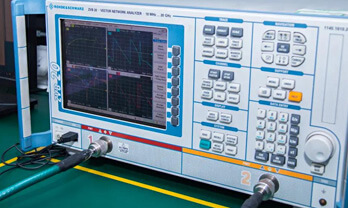
PCM1742KE/2K Datasheet PDF

Download PCM1742KE/2K pdf datasheets and Texas Instruments documentation for PCM1742KE/2K - Texas Instruments.

HTML Datasheet
PCM1742.pdf
PCN Assembly/Origin
PCM1x Site 28/Mar/2013.pdf

Customer Reviews

Evaluation: 10 Articles

  • Dani***alkerTech
    Jun 1, 2026

    Product works, but setup took more effort than expected. Once configured the MCU ran reliably, although documentation support felt older compared with newer platforms. Fine for maintenance projects.

  • Yuki***aka88
    May 26, 2026

    信号通信プロジェクトでこのRS-485トランシーバーを使用しました。設置は簡単で、長距離ケーブルでも通信は安定していました。消費電力も、以前使用していたものより低くなっています。

  • Stev***aker
    May 20, 2026

    Solid diode for power rectification. Works well in switching circuits.

  • Bran***Lewis
    May 11, 2026

    Compact FPGA with good performance. Suitable for basic signal processing tasks.

  • Oliv***arris
    May 7, 2026

    Reliable I/O expander. Works well in embedded control applications.

  • Jess***Jones
    Apr 17, 2026

    It offers good value for the price, and the specifications match the description. I’ve been using it for two days with no issues, and I’ll definitely buy it again if I need it in the future.

  • Mich***Smith
    Apr 17, 2026

    Shipping was on time, the component pins are neatly aligned, and I tested 10 of them with a multimeter—all readings were within the specified range. Highly recommended.

  • Aman***arris
    Apr 3, 2026

    It was great—the entire process, from placing the order to receiving the package, went very smoothly. The components were consistent, the price was fair, and I had a very pleasant shopping experience.

  • Mike***nch
    Apr 3, 2026

    Better than expected! The resistance and capacitance readings were spot-on, and it passed the test on the first try. The service was reliable, and the packaging was thoughtful—I highly recommend it.

  • Daic***K.
    Mar 23, 2026

    Very good. No issue after long time testing.

Write a Review

Your Email address will not be published.

Shipment

Delivery Time

In-stock items can be shipped within 24 hours. Some parts will be arranged for delivery within 1-2 days from the date all items arrive at our warehouse. And Allelco ships order once a day at about 17:00, except Sunday. Once the goods are shipped, the estimated delivery time depends on the shipping methods and Delivery destination. The table below shows are the logistic time for some common countries.

Delivery Cost

  1. Use your express account for shipment if you have one.
  2. Use our account for the shipment. Refer to the table below for the approximate charges.
(Different time frame / countries / package size has different price.)

Delivery Method

  1. Global Common Shipment by DHL / UPS / FedEx / TNT / EMS / SF we support.
  2. Others more shipping ways, please get in touch with your customer manager.

Common Countries Logistic Time Reference
Region Country Logistic Time(Day)
America United States 5
Brazil 7
Europe Germany 5
United Kingdom 4
Italy 5
Oceania Australia 6
New Zealand 5
Asia India 4
Japan 4
Middle East Israel 6
DHL & FedEx Shipment Charges Reference
Shipment charges(KG) Reference DHL(USD$)
0.00kg-1.00kg USD$30.00 - USD$60.00
1.00kg-2.00kg USD$40.00 - USD$80.00
2.00kg-3.00kg USD$50.00 - USD$100.00
Note:
The above table is for reference only. There may have some data bias for the uncontrollable factors.
Contact us if you have any questions.
  • QC (Quality Warranty)
  • Payment Support
  • Packaging
  • Certifications & Memberships

QC (Quality Warranty)

Allelco is committed to exceeding customer expectations through customer service excellence, order accuracy, and on-time delivery.
This is achieved through our commitment to the continual improvement of our processes, services, and products.


Strict quality inspection builds a solid foundation for electronic component quality.
  1. Visual inspection
  2. Performance testing and reliability verification
  3. Standardized full-process testing
  4. Precise control of every parameter
We eliminate defective components and ensure the stable operation of electronic devices through professional quality standards.

Payment Support

The payment method can be chosen from the methods shown below: Wire Transfer (T/T, Bank Transfer), Western Union, Credit card, PayPal.
  • HKBea
  • Paypal
  • MasterCard
  • Western-Union
  • VISA
Stable Delivery, Sincere Partnership — Your Faithful Supply Chain Partner
  • Efficient Supply Management
  • Cost-Saving Procurement
  • Fast Sourcing & Delivery
Contact us if you have any questions.

Packaging

Electrostatic Discharge Protection and Handling

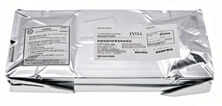
All electrostatic-sensitive components are handled in accordance with electrostatic discharge control procedures. The products are hermetically sealed in anti-static safe packaging to prevent electrostatic damage. Appropriate labeling is also applied for identification and traceability. This ensures product integrity during storage, handling and transportation.


ESD

Certifications & Memberships

Third-party certified, strict quality control. Our certification
  • ISO 9001: 2015
  • ISO 13485: 2016
  • ISO 14001: 2015
  • ISO 28000: 2007
  • ISO 45001: 2018
  • GB/T 27922-2011
  • SMTA
  • IPC
  • ESD
  • PSMA
PCM1742KE/2K Image

PCM1742KE/2K

Texas Instruments
32D-PCM1742KE/2K

Want a better price? Add to Cart and Submit RFQ now, we'll contact you immediately.

0 RFQ
Shopping cart (0 Items)
It is empty.
Compare List (0 Items)
It is empty.
Feedback

Your feedback matters! At Allelco, we value the user experience and strive to improve it constantly.
Please share your comments with us via our feedback form, and we'll respond promptly.
Thank you for choosing Allelco.

Subject
E-mail
Comments
Captcha
Drag or click to upload file
Upload File
types: .xls, .xlsx, .doc, .docx, .jpg, .png and .pdf.
Max file size: 10MB