View All

Please refer to the English Version as our Official Version.Return

Europe
France(Français) Germany(Deutsch) Italy(Italia) Russian(русский) Poland(polski) Czech(Čeština) Luxembourg(Lëtzebuergesch) Netherlands(Nederland) Iceland(íslenska) Hungarian(Magyarország) Spain(español) Portugal(Português) Turkey(Türk dili) Bulgaria(Български език) Ukraine(Україна) Greece(Ελλάδα) Israel(עִבְרִית) Sweden(Svenska) Finland(Svenska) Finland(Suomi) Romania(românesc) Moldova(românesc) Slovakia(Slovenská) Denmark(Dansk) Slovenia(Slovenija) Slovenia(Hrvatska) Croatia(Hrvatska) Serbia(Hrvatska) Montenegro(Hrvatska) Bosnia and Herzegovina(Hrvatska) Lithuania(lietuvių) Spain(Português) Switzerland(Deutsch) United Kingdom(English)
Asia/Pacific
Japan(日本語) Korea(한국의) Thailand(ภาษาไทย) Malaysia(Melayu) Singapore(Melayu) Vietnam(Tiếng Việt) Philippines(Pilipino)
Africa, India and Middle East
United Arab Emirates(العربية) Iran(فارسی) Tajikistan(فارسی) India(हिंदी) Madagascar(malaɡasʲ)
South America / Oceania
New Zealand(Maori) Brazil(Português) Angola(Português) Mozambique(Português)
North America
United States(English) Canada(English) Haiti(Ayiti) Mexico(español)
HomeProductsIntegrated Circuits (ICs)Logic - Universal Bus FunctionsSN74ABT16600DLR
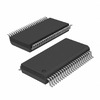
SN74ABT16600DLR Image
Image may be representation.
See specifications for product details.
EXPRESS OPTION
Payment method

SN74ABT16600DLR - Texas Instruments

Manufacturer Part Number
SN74ABT16600DLR
Manufacturer
Texas Instruments
Allelco Part Number
98D-SN74ABT16600DLR
Warranty
1 Year Allelco Warranty - Find out more
Stock Status:
13,723 pcs available, New & Original
Parts Description
IC UNIV BUS TXRX 18BIT 56SSOP
Package
56-SSOP
Data sheet
-
RoHs Status
ROHS3 Compliant
Our certification
In stock: 13723

Required fields are indicated by an asterisk (*)
Please send RFQ, we will respond immediately.

Quantity

Specifications

SN74ABT16600DLR Tech Specifications
Texas Instruments - SN74ABT16600DLR technical specifications, attributes, parameters and parts with similar specifications to Texas Instruments - SN74ABT16600DLR

Product Attribute Attribute Value
Manufacturer Texas Instruments
Voltage - Supply 4.5V ~ 5.5V
Supplier Device Package 56-SSOP
Series 74ABT
Package / Case 56-BSSOP (0.295', 7.50mm Width)
Package Tape & Reel (TR)
Product Attribute Attribute Value
Operating Temperature -40°C ~ 85°C
Number of Circuits 18-Bit
Mounting Type Surface Mount
Logic Type Universal Bus Transceiver
Current - Output High, Low 32mA, 64mA
Base Product Number 74ABT16600

Environmental & Export Classifications

ATTRIBUTE DESCRIPTION
RoHs Status ROHS3 Compliant
Moisture Sensitivity Level (MSL) 1 (Unlimited)
REACH Status REACH Unaffected
ECCN EAR99
HTSUS 8542.39.0001

Frequently Asked Questions(FAQ)

How does the SN74ABT16600DLR perform in terms of output drive capability when interfacing with high-capacitance loads, and what design considerations should be applied for signal integrity?
The SN74ABT16600DLR provides a current - Output High of 32mA and a current - Output Low of 64mA, which enables it to drive relatively heavy capacitive loads without significant degradation in rise or fall times. This asymmetric capability suggests that sinking current is stronger than sourcing, which can influence PCB trace routing and termination strategies. When driving long traces or distributed loads, designers may need to account for propagation delay skew across the 18-bit bus. Given the 5.5V maximum supply voltage and 4.5V minimum, the device operates reliably in standard 5V systems with some tolerance for voltage drops. For applications involving clocked bidirectional data transfer over backplanes or multi-drop buses, ensuring adequate pull-up or pull-down resistance on control lines (e.g., DIR and OE) becomes important to maintain stable direction and output states under noisy conditions.
What are the key differences between the SN74ABT16600DLR and similar universal bus transceiver devices like the SN74LVTH16245, particularly in terms of voltage compatibility and power consumption?
While both the SN74ABT16600DLR and SN74LVTH16245 serve as 16- or 18-bit bidirectional transceivers, the ABT series typically features higher output drive strength—such as the 64mA sink current in the SN74ABT16600DLR—compared to LVTH variants, which are optimized for lower power at the expense of drive capability. The ABT family also generally supports a wider input threshold range, enhancing noise immunity in mixed-voltage environments. In contrast, LVTH parts often operate at 2.5V to 5.5V and consume significantly less quiescent current, making them preferable for battery-powered or low-power systems. However, the SN74ABT16600DLR’s fixed 4.5V–5.5V supply window and higher I/O currents make it better suited for driving legacy 5V logic levels over longer distances where signal attenuation is a concern. Designers evaluating these alternatives must weigh switching speed, power budget, and compatibility with downstream logic families.
Can the SN74ABT16600DLR safely interface with 3.3V logic devices, and what level shifting mechanisms should be used if direct connection is not feasible?
Yes, the SN74ABT16600DLR can interface with 3.3V logic, but only under specific conditions. Its inputs are TTL-compatible and recognize valid logic high above approximately 2.0V, so 3.3V signals will be interpreted correctly as high. However, when configured to drive 5V outputs into 3.3V receivers, voltage overshoot or undershoot may occur unless proper series termination is implemented. Since the device outputs up to 5.5V, connecting directly to a 3.3V CMOS input without clamping diodes or level translation could risk exceeding the absolute maximum rating of -0.5V to VCC + 0.5V if not carefully managed. Therefore, while basic signal interpretation works, robust designs often use dedicated level shifters or resistive dividers for protection, especially in bidirectional scenarios where direction changes can cause transient mismatches.
What operating temperature range must be maintained for reliable functionality of the SN74ABT16600DLR, and how does this affect deployment in industrial or automotive environments?
The SN74ABT16600DLR is rated for operation from -40°C to 85°C, making it suitable for commercial and industrial applications but not full automotive-grade (-40°C to +125°C). Within its specified range, the device maintains stable propagation delays and output current characteristics across temperature variations. However, at elevated temperatures near 85°C, internal leakage currents may increase slightly, potentially affecting bus hold-up time during idle periods. In systems where ambient temperatures fluctuate widely—such as outdoor enclosures or motor control units—thermal management practices like derating output current or spacing components adequately become prudent. Although MSL 1 indicates unlimited shelf life before reflow, long-term reliability in harsh environments still depends on adherence to layout guidelines, such as minimizing stubs on high-speed buses driven by this transceiver.
How many channels does the SN74ABT16600DLR support, and how should the remaining unused pins be handled to prevent floating inputs and potential latch-up?
The SN74ABT16600DLR integrates 18 independent bidirectional transceiver channels, each capable of independent direction control via the DIR pin shared across all bits. Unused outputs should be tied low or high through appropriate pull-up or pull-down resistors (typically 1kΩ to 10kΩ) to avoid excessive input capacitance loading on adjacent active lines. Floating inputs on unused portions of the bus can lead to unpredictable state transitions, increased power draw, or electromagnetic interference due to oscillation. Additionally, the enable (OE) pin must be actively driven either high or low; leaving it unconnected risks partial activation and contention. Proper handling ensures compliance with ESD protection thresholds and prevents unnecessary current consumption during standby modes.
What packaging options are available for the SN74ABT16600DLR, and why might the 56-SSOP package influence PCB footprint selection?
The SN74ABT16600DLR is available in a 56-lead SSOP package with a body width of 7.50mm and a pitch of 0.65mm. This compact surface-mount format allows dense routing in space-constrained boards but requires careful attention to soldering profiles due to fine-pitch leads. The SSOP package offers a balance between thermal dissipation and board real estate, though its exposed pad may necessitate thermal vias if heat buildup occurs under continuous full-load operation. Compared to SOIC or TSSOP variants, the SSOP provides more I/Os per area, which benefits high-density backplane interfaces. However, layout engineers must ensure adequate creepage and clearance distances between adjacent signals to mitigate crosstalk, especially on fast edge-rate applications involving the 18-bit wide data path.
Is the SN74ABT16600DLR RoHS compliant, and what implications does this have for global manufacturing and material sourcing?
Yes, the SN74ABT16600DLR is fully RoHS3 compliant, meaning it adheres to Directive 2011/65/EU and subsequent amendments, restricting hazardous substances like lead, mercury, cadmium, and certain brominated flame retardants. This compliance ensures the device meets environmental standards required in Europe, North America, and other regulated markets. It also simplifies supply chain documentation and avoids customs complications related to restricted materials. Furthermore, the absence of halogens and lead-free finishes aligns with lead-free reflow processes common in modern SMT assembly lines. Manufacturers integrating this component into end products can confidently declare compliance without additional testing or material substitution efforts.
How does the Moisture Sensitivity Level (MSL) classification of MSL 1 impact storage and handling procedures for the SN74ABT16600DLR prior to PCB assembly?
With an MSL rating of 1, the SN74ABT16600DLR is considered non-hygroscopic and poses no risk of moisture-induced damage during normal handling. As such, it does not require bake-out cycles before reflow soldering, even after prolonged exposure to ambient humidity. This simplifies inventory management and reduces processing steps in high-volume production environments. Nevertheless, standard ESD precautions should still be followed during manual insertion or automated placement to prevent electrostatic discharge from damaging the sensitive gate oxides within the ABT family’s advanced CMOS process. Storage in sealed, static-dissipative bags remains recommended for traceability and quality assurance, though desiccant or humidity indicators are unnecessary given the MSL 1 designation.
What is the significance of the REACH status being “Unaffected” for the SN74ABT16600DLR, and how does this simplify regulatory reporting in international projects?
An “REACH Unaffected” status indicates that the SN74ABT16600DLR does not contain any substances of very high concern (SVHCs) exceeding 0.1% weight-by-weight as listed in Annex XIV of REACH regulations. Consequently, suppliers are exempt from the obligation to register candidate list items, and customers do not need to submit SCIP notifications upon placing the component into the EU market. This streamlines compliance workflows for OEMs producing electronics destined for European distribution. Combined with RoHS3 compliance, this status reduces administrative overhead and minimizes audit complexity, allowing engineering teams to focus on functional validation rather than chemical composition verification.
What ECCN code applies to the SN74ABT16600DLR, and how might this affect export controls for defense or aerospace applications?
The SN74ABT16600DLR falls under ECCN 5A991.c, which pertains to “other” integrated circuits not specifically designed for military use but subject to dual-use restrictions. While not classified under stricter categories like 3A001 (telecommunications) or 4A003 (computers), its inclusion in 5A991.c means that exports to embargoed regions may require licensing depending on end-user and end-use criteria. For most commercial or consumer applications, however, this classification poses minimal barrier. Aerospace or defense contractors sourcing this part should verify whether alternative parts with clearer civilian-only classifications (e.g., ECCN 5A002) exist if ITAR or similar restrictions apply. Always consult local export control authorities before deploying this component in sensitive systems.
How does the propagation delay variation across temperature impact system timing budgets when using multiple SN74ABT16600DLR devices in parallel on a shared bus?
The SN74ABT16600DLR exhibits typical propagation delays in the range of 3–6 ns under nominal 5V conditions, but these values can shift by ±10–15% across the -40°C to 85°C operational window due to carrier mobility changes in the underlying CMOS process. When cascading or paralleling multiple transceivers—especially in point-to-point or daisy-chained topologies—the cumulative skew between channels increases, potentially violating setup and hold margins in synchronous protocols like PCI Express, DDR memory interfaces, or custom backplanes. To mitigate this, designers should minimize trace length mismatches, use matched transmission line lengths, and reserve sufficient guard bands in clock-to-data alignment windows. Additionally, enabling slew rate control or using spread-spectrum clocks can reduce sensitivity to minor timing deviations introduced by temperature-induced delay shifts.
Can the SN74ABT16600DLR be used in hot-swap applications where live insertion into powered-backplane systems is required?
While the SN74ABT16600DLR itself lacks built-in hot-swap protection circuitry, it can participate in hot-swap scenarios if supplemented with external components. During live insertion, inrush current surges may momentarily forward-bias parasitic diodes at the input stage, causing uncontrolled current flow into the VCC rail. Without series resistors on data lines or dedicated hot-swap controllers managing soft-start ramps, repeated insertions could stress bond wires or degrade ESD protection layers over time. Therefore, even though the device tolerates brief overvoltage transients per its absolute maximum ratings, robust hot-swap implementations typically include current-limiting FETs, TVS diodes, and controlled enable sequencing. The OE pin should be asserted only after power rails stabilize to prevent glitching during insertion events.
What role does the DIR pin play in controlling data flow for the SN74ABT16600DLR, and how should it be synchronized with the clock domain in bidirectional communication?
The DIR pin on the SN74ABT16600DLR determines the direction of data transfer across all 18 bits simultaneously. When high, data flows from A to B; when low, data flows from B to A. To avoid metastability or bus contention, the DIR signal must be stable relative to the active edges of the data strobe or clock that latches information. In asynchronous handshaking schemes, DIR should settle well before valid data appears on either side. In synchronous systems, it’s advisable to register DIR within the same clock domain as the transceiver’s input buffers to prevent race conditions. Failure to synchronize DIR properly can result in corrupted transfers or undefined states, particularly when switching directions rapidly. Some designs incorporate a direction-change pipeline stage to decouple DIR transitions from data-critical paths.
How does the choice of termination strategy affect signal integrity when driving long traces with the SN74ABT16600DLR in a multipoint bus configuration?
Due to its 32mA/64mA output drive profile and moderate propagation delay, the SN74ABT16600DLR can drive moderately long traces (up to ~10–15 inches in FR4) without immediate reflection issues, but optimal signal integrity demands proper termination. In multipoint configurations, series termination (a resistor in series with the source) helps dampen reflections at the driver end, while parallel termination (at the receiver) absorbs energy at the far end. However, parallel termination increases DC power consumption and load capacitance. Alternatively, AC coupling with series termination offers a compromise for bidirectional signaling over medium distances. The 18-bit parallelism means all channels experience similar impedance mismatches; therefore, termination must be applied uniformly or partitioned logically to avoid skew-induced errors. Eye diagrams should be evaluated under worst-case load conditions to validate margin adequacy.
What precautions should be taken regarding power sequencing when integrating the SN74ABT16600DLR into a mixed-voltage system with staggered rail ramping?
The SN74ABT16600DLR requires stable 4.5V–5.5V on VCC before asserting the OE pin to ensure predictable operation. If VCC ramps up slower than I/O voltages (e.g., in systems with 3.3V microcontrollers powered later), input signals may temporarily exceed VCC + 0.5V, violating absolute maximum ratings and potentially triggering latch-up. To avoid this, implement power-good monitoring circuits that delay OE assertion until VCC stabilizes within tolerance. Similarly, during shutdown, OE should be deasserted before cutting off VCC to prevent reverse current flow through ESD structures. Conservative sequencing—ensuring VCC reaches 4.75V before any active I/O transitions—is strongly advised in fault-tolerant or redundant architectures where partial power failures are anticipated.
How does the base product number 74ABT16600 relate to derivative variants, and what functional differences might exist between the SN74ABT16600DLR and other packages like DW or PW?
The base product 74ABT16600 encompasses multiple package types—including SOIC (DW), TSSOP (PW), and SSOP (DL)—all sharing identical electrical characteristics but differing in thermal, mechanical, and routing footprints. The SN74ABT16600DLR specifically uses the 56-pin SSOP (DL suffix), which trades slightly inferior thermal performance compared to wider-body SOIC for compactness. All variants support the same 18-bit bidirectional transceiver logic, supply range (4.5V–5.5V), and temperature grade (-40°C to 85°C). Selection between them hinges on board density, solder joint inspection feasibility, and heat dissipation needs. For example, the DW package offers better heatsinking but consumes more area, whereas the DL version suits compact backplanes where height constraints dominate. No functional trade-offs exist beyond package-specific limitations in current sinking capability under sustained high-load conditions.
What HTSUS code applies to the SN74ABT16600DLR, and how might customs valuation differ based on this classification?
The SN74ABT16600DLR is classified under HTSUS 8542.39.0001, which covers “Electronic integrated circuits: Other: Other.” This harmonized tariff schedule code facilitates import/export declarations in the U.S. and aligns with WCO definitions for generic ICs lacking special military or cryptographic attributes. Because this code does not trigger heightened scrutiny or additional duties beyond standard rates, shipments containing this component benefit from streamlined clearance processes. However, importers should ensure accurate country-of-origin labeling, as misclassification could lead to audits or penalties. Additionally, when aggregating multiple semiconductor parts in a single shipment, proper disaggregation according to HTSUS headings remains critical for accurate duty assessment and statistical reporting.
In what types of embedded systems would the SN74ABT16600DLR provide tangible advantages over simpler buffer solutions, and when should designers consider migrating to higher-speed alternatives?
The SN74ABT16600DLR excels in systems requiring robust bidirectional buffering over medium-length buses—such as industrial Ethernet switches, programmable logic controllers (PLCs), legacy peripheral expansion hubs, or test equipment interfaces—where signal integrity and drive strength outweigh ultra-low latency requirements. Its balanced I/O currents and TTL-compatible thresholds make it ideal for extending communication links between ASICs, FPGAs, and older 5V peripherals without level-shifting overhead. However, in applications demanding sub-nanosecond propagation delays, jitter control, or gigabit-class throughput (e.g., SerDes links or DDR memory interfaces), designers should migrate to specialized SerDes transceivers or FPGA-integrated transceivers offering deterministic timing and equalization. The SN74ABT16600DLR remains a cost-effective solution for bridging domains where moderate speed suffices but ruggedness and compatibility are paramount.

Parts with Similar Specifications

The three parts on the right have similar specifications to Texas Instruments SN74ABT16600DLR

Product Attribute SN74ABT16600DLRG4 SN74ABT16601DLR SN74ABT16600DGGR SN74ABT16600DLG4
Part Number SN74ABT16600DLRG4 SN74ABT16601DLR SN74ABT16600DGGR SN74ABT16600DLG4
Manufacturer Texas Instruments Texas Instruments Texas Instruments Texas Instruments
Mounting Type - Surface Mount Through Hole Surface Mount
Supplier Device Package - 196-NFBGA (12x12) 16-PDIP 64-VQFN (9x9)
Package - Tape & Reel (TR) Tube Tape & Reel (TR)
Package / Case - 196-LFBGA 16-DIP (0.300', 7.62mm) 64-VFQFN Exposed Pad
Series - - - -
Number of Circuits - - - -
Voltage - Supply - - - -
Operating Temperature - -40°C ~ 85°C 0°C ~ 70°C -40°C ~ 85°C
Base Product Number - DAC34H84 MAX500 ADS62P42
Logic Type - - - -
Current - Output High, Low - - - -

Customer Reviews

Evaluation: 10 Articles

  • Dani***alkerTech
    Jun 1, 2026

    Product works, but setup took more effort than expected. Once configured the MCU ran reliably, although documentation support felt older compared with newer platforms. Fine for maintenance projects.

  • Yuki***aka88
    May 26, 2026

    信号通信プロジェクトでこのRS-485トランシーバーを使用しました。設置は簡単で、長距離ケーブルでも通信は安定していました。消費電力も、以前使用していたものより低くなっています。

  • Stev***aker
    May 20, 2026

    Solid diode for power rectification. Works well in switching circuits.

  • Bran***Lewis
    May 11, 2026

    Compact FPGA with good performance. Suitable for basic signal processing tasks.

  • Oliv***arris
    May 7, 2026

    Reliable I/O expander. Works well in embedded control applications.

  • Jess***Jones
    Apr 17, 2026

    It offers good value for the price, and the specifications match the description. I’ve been using it for two days with no issues, and I’ll definitely buy it again if I need it in the future.

  • Mich***Smith
    Apr 17, 2026

    Shipping was on time, the component pins are neatly aligned, and I tested 10 of them with a multimeter—all readings were within the specified range. Highly recommended.

  • Aman***arris
    Apr 3, 2026

    It was great—the entire process, from placing the order to receiving the package, went very smoothly. The components were consistent, the price was fair, and I had a very pleasant shopping experience.

  • Mike***nch
    Apr 3, 2026

    Better than expected! The resistance and capacitance readings were spot-on, and it passed the test on the first try. The service was reliable, and the packaging was thoughtful—I highly recommend it.

  • Daic***K.
    Mar 23, 2026

    Very good. No issue after long time testing.

Write a Review

Your Email address will not be published.

Shipment

Delivery Time

In-stock items can be shipped within 24 hours. Some parts will be arranged for delivery within 1-2 days from the date all items arrive at our warehouse. And Allelco ships order once a day at about 17:00, except Sunday. Once the goods are shipped, the estimated delivery time depends on the shipping methods and Delivery destination. The table below shows are the logistic time for some common countries.

Delivery Cost

  1. Use your express account for shipment if you have one.
  2. Use our account for the shipment. Refer to the table below for the approximate charges.
(Different time frame / countries / package size has different price.)

Delivery Method

  1. Global Common Shipment by DHL / UPS / FedEx / TNT / EMS / SF we support.
  2. Others more shipping ways, please get in touch with your customer manager.

Common Countries Logistic Time Reference
Region Country Logistic Time(Day)
America United States 5
Brazil 7
Europe Germany 5
United Kingdom 4
Italy 5
Oceania Australia 6
New Zealand 5
Asia India 4
Japan 4
Middle East Israel 6
DHL & FedEx Shipment Charges Reference
Shipment charges(KG) Reference DHL(USD$)
0.00kg-1.00kg USD$30.00 - USD$60.00
1.00kg-2.00kg USD$40.00 - USD$80.00
2.00kg-3.00kg USD$50.00 - USD$100.00
Note:
The above table is for reference only. There may have some data bias for the uncontrollable factors.
Contact us if you have any questions.
  • QC (Quality Warranty)
  • Payment Support
  • Packaging
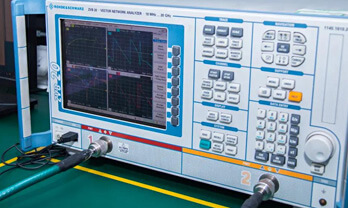
  • Certifications & Memberships

QC (Quality Warranty)

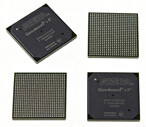
Allelco is committed to exceeding customer expectations through customer service excellence, order accuracy, and on-time delivery.
This is achieved through our commitment to the continual improvement of our processes, services, and products.


Strict quality inspection builds a solid foundation for electronic component quality.
  1. Visual inspection
  2. Performance testing and reliability verification
  3. Standardized full-process testing
  4. Precise control of every parameter
We eliminate defective components and ensure the stable operation of electronic devices through professional quality standards.

Payment Support

The payment method can be chosen from the methods shown below: Wire Transfer (T/T, Bank Transfer), Western Union, Credit card, PayPal.
  • HKBea
  • Paypal
  • MasterCard
  • Western-Union
  • VISA
Stable Delivery, Sincere Partnership — Your Faithful Supply Chain Partner
  • Efficient Supply Management
  • Cost-Saving Procurement
  • Fast Sourcing & Delivery
Contact us if you have any questions.

Packaging

Electrostatic Discharge Protection and Handling

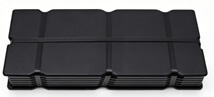
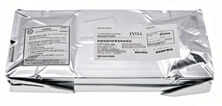
All electrostatic-sensitive components are handled in accordance with electrostatic discharge control procedures. The products are hermetically sealed in anti-static safe packaging to prevent electrostatic damage. Appropriate labeling is also applied for identification and traceability. This ensures product integrity during storage, handling and transportation.


ESD

Certifications & Memberships

Third-party certified, strict quality control. Our certification
  • ISO 9001: 2015
  • ISO 13485: 2016
  • ISO 14001: 2015
  • ISO 28000: 2007
  • ISO 45001: 2018
  • GB/T 27922-2011
  • SMTA
  • IPC
  • ESD
  • PSMA
SN74ABT16600DLR Image

SN74ABT16600DLR

Texas Instruments
98D-SN74ABT16600DLR

Want a better price? Add to Cart and Submit RFQ now, we'll contact you immediately.

0 RFQ
Shopping cart (0 Items)
It is empty.
Compare List (0 Items)
It is empty.
Feedback

Your feedback matters! At Allelco, we value the user experience and strive to improve it constantly.
Please share your comments with us via our feedback form, and we'll respond promptly.
Thank you for choosing Allelco.

Subject
E-mail
Comments
Captcha
Drag or click to upload file
Upload File
types: .xls, .xlsx, .doc, .docx, .jpg, .png and .pdf.
Max file size: 10MB