View All

Please refer to the English Version as our Official Version.Return

Europe
France(Français) Germany(Deutsch) Italy(Italia) Russian(русский) Poland(polski) Czech(Čeština) Luxembourg(Lëtzebuergesch) Netherlands(Nederland) Iceland(íslenska) Hungarian(Magyarország) Spain(español) Portugal(Português) Turkey(Türk dili) Bulgaria(Български език) Ukraine(Україна) Greece(Ελλάδα) Israel(עִבְרִית) Sweden(Svenska) Finland(Svenska) Finland(Suomi) Romania(românesc) Moldova(românesc) Slovakia(Slovenská) Denmark(Dansk) Slovenia(Slovenija) Slovenia(Hrvatska) Croatia(Hrvatska) Serbia(Hrvatska) Montenegro(Hrvatska) Bosnia and Herzegovina(Hrvatska) Lithuania(lietuvių) Spain(Português) Switzerland(Deutsch) United Kingdom(English)
Asia/Pacific
Japan(日本語) Korea(한국의) Thailand(ภาษาไทย) Malaysia(Melayu) Singapore(Melayu) Vietnam(Tiếng Việt) Philippines(Pilipino)
Africa, India and Middle East
United Arab Emirates(العربية) Iran(فارسی) Tajikistan(فارسی) India(हिंदी) Madagascar(malaɡasʲ)
South America / Oceania
New Zealand(Maori) Brazil(Português) Angola(Português) Mozambique(Português)
North America
United States(English) Canada(English) Haiti(Ayiti) Mexico(español)
HomeProductsIntegrated Circuits (ICs)Logic - Gates and InvertersSN74HC10NE4
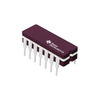
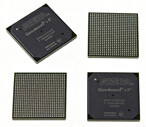
Image may be representation.
See specifications for product details.
EXPRESS OPTION
Payment method

SN74HC10NE4 - Texas Instruments

Manufacturer Part Number
SN74HC10NE4
Manufacturer
Texas Instruments
Allelco Part Number
98D-SN74HC10NE4
Warranty
1 Year Allelco Warranty - Find out more
Stock Status:
39,641 pcs available, New & Original
Parts Description
3-CH, 3-INPUT, 2-V TO 6-V NAND G
Package
14-PDIP
Data sheet
-
RoHs Status
ROHS3 Compliant
Our certification
In stock: 39641
  • Unit Price: $0.281
  • Subtotal: $0.00

Want a better price?
Add to Cart and Submit RFQ now, we'll contact you immediately.

Quantity Unit Price Ext. Price
1+ $0.281 $0.28
The above prices does not include taxes and freight rates, which will be calculated on the order pages.


Specifications

SN74HC10NE4 Tech Specifications
Texas Instruments - SN74HC10NE4 technical specifications, attributes, parameters and parts with similar specifications to Texas Instruments - SN74HC10NE4

Product Attribute Attribute Value
Manufacturer Texas Instruments
Voltage - Supply 2V ~ 6V
Supplier Device Package 14-PDIP
Series 74HC
Package / Case 14-DIP (0.300", 7.62mm)
Package Tube
Operating Temperature -40°C ~ 85°C
Number of Inputs 3
Number of Circuits 3
Product Attribute Attribute Value
Mounting Type Through Hole
Max Propagation Delay @ V, Max CL 16ns @ 6V, 50pF
Logic Type NAND Gate
Input Logic Level - Low 0.5V ~ 1.8V
Input Logic Level - High 1.5V ~ 4.2V
Features -
Current - Quiescent (Max) 2 µA
Current - Output High, Low 5.2mA, 5.2mA

Environmental & Export Classifications

ATTRIBUTE DESCRIPTION
RoHs Status ROHS3 Compliant
ECCN EAR99
HTSUS 8542.39.0001

Frequently Asked Questions(FAQ)

How does the propagation delay of the SN74HC10NE4 compare when operating at 2.5V versus 6V with a 50pF load, and what implications does this have for high-speed digital designs?
The SN74HC10NE4 exhibits a maximum propagation delay of 16ns at 6V and 50pF load. While exact values at 2.5V are not provided in the datasheet, HC logic families typically show reduced propagation delay as supply voltage decreases due to faster transistor switching speeds in lower-voltage regimes. However, this improvement is offset by reduced noise margins and output drive capability. For timing-critical applications such as clock distribution or high-frequency signal routing, designers should assume worst-case delays across the full voltage range and include margin in system timing budgets.
What is the recommended decoupling capacitor configuration for the SN74HC10NE4 when used in automotive-grade systems operating near -40°C, and how does bulk capacitance affect power integrity?
Although the SN74HC10NE4 operates from -40°C to 85°C, automotive applications require robust power delivery. A typical configuration includes a 100nF ceramic capacitor placed within 1cm of the VCC pin and a 10µF tantalum or ceramic bulk capacitor near the power entry point. The low quiescent current (2µA max) reduces dynamic noise contribution, but simultaneous switching of all three NAND gates can generate transient currents up to 15mA peak. Proper bulk capacitance ensures voltage droop remains below 5% during these transitions, preserving input logic thresholds defined between 0.5V (low) and 4.2V (high).
When cascading multiple SN74HC10NE4 chips to implement a 9-input NAND function, what fan-out considerations apply given the 5.2mA output drive strength and typical input leakage?
The SN74HC10NE4 provides ±5.2mA output current capability, which supports fan-outs of up to 10 standard HC loads under normal conditions. However, cascading nine inputs requires careful evaluation of loading effects. Each subsequent stage presents approximately 1pF input capacitance plus leakage current (~1µA). At 6V supply, driving eight additional SN74HC10NE4 inputs would draw over 80mA cumulative current if all outputs transition simultaneously—well within the device’s absolute maximum ratings but potentially straining board-level power distribution. Designers should verify that total capacitive load and sink/source requirements remain within safe operating limits using IBIS models or SPICE simulation.
In battery-powered IoT sensor nodes using the SN74HC10NE4, how does the quiescent current interact with sleep-mode duty cycles, and what impact does input hysteresis have on false triggering?
With a maximum quiescent current of 2µA at room temperature, the SN74HC10NE4 consumes negligible energy in idle states. Over a typical 1% active duty cycle (e.g., 1ms every 100ms), average current draw is approximately 0.02µAh per hour—insignificant for coin-cell longevity. However, without external pull-up/pull-down resistors, floating inputs may drift into undefined regions near threshold voltages (0.5–1.8V for low, 1.5–4.2V for high), increasing susceptibility to noise-induced glitches. Adding Schmitt-trigger behavior via an external RC network or choosing a Schmitt-input variant like the 74HC13 could improve immunity in unterminated lines.
Can the SN74HC10NE4 be safely used in hot-swap scenarios where backpowering might occur through its outputs, and what protection mechanisms are necessary?
The SN74HC10NE4 lacks built-in ESD protection diodes on outputs relative to VCC or GND, making it vulnerable to backpowering events. If one output is driven high while another is externally pulled above VCC (e.g., during module insertion), parasitic conduction paths may allow reverse current flow into the IC. To mitigate risk, series resistors (≥1kΩ) should be inserted between each output and its load, limiting current to <5mA even under fault conditions. Additionally, clamping diodes or transient voltage suppressors rated for ±12V provide further safeguard against electrostatic discharge common in industrial environments.
What layout guidelines ensure reliable operation of the SN74HC10NE4 in mixed-signal PCBs with analog subcircuits, particularly regarding ground plane segmentation?
Due to its 14-pin DIP package and through-hole mounting, the SN74HC10NE4 benefits from a solid ground plane directly beneath its leads. Segregating analog and digital grounds becomes critical only when both domains share a common return path. In most cases, connecting grounds at a single point near the power entry minimizes loop area and avoids ground bounce affecting logic levels. Keep input traces away from noisy signals (>1MHz switching) by at least five times their width, and avoid running parallel to clock lines to prevent crosstalk into sensitive input thresholds near 0.5V.
How does the operating temperature range (-40°C to 85°C) affect the guaranteed logic high/low voltage levels for the SN74HC10NE4, and why must design margins account for cold-start conditions?
Although the datasheet specifies input logic levels (VIL = 0.5–1.8V, VIH = 1.5–4.2V) over the full temperature range, actual output swing degrades at extremes. At -40°C, output high voltage (VOH) may drop by up to 0.1V compared to 25°C due to increased threshold shifts in CMOS transistors. Conversely, at 85°C, VOL rises slightly, reducing noise margin. For reliable operation near threshold boundaries—especially when interfacing with other logic families—designers should assume tighter tolerances and incorporate voltage headroom; e.g., ensure VOH ≥ 4.5V at minimum VCC to maintain compatibility with LVCMOS inputs.
What substitution risks exist when replacing the SN74HC10NE4 with alternative parts like the SN74HC10N, and how do package differences impact thermal performance?
The SN74HC10N shares identical electrical characteristics with the NE4 variant but uses a standard plastic DIP (PDIP) instead of the enhanced mold compound specified for the NE4. This results in marginally higher thermal resistance (typically 80°C/W vs. 70°C/W), reducing heat dissipation capability by about 14%. In high-ambient-temperature environments (>70°C ambient), this could elevate junction temperature under continuous switching, though still well below the 150°C absolute maximum. Layout considerations remain similar, but airflow optimization becomes more important for sustained high-load applications.
Given the SN74HC10NE4’s 3-channel NAND gate architecture, what partitioning strategy optimizes PCB real estate when implementing complex Boolean functions with minimal gate count?
Leveraging the fixed 3-input structure, complex expressions should be decomposed to maximize utilization per chip. For example, a 7-input NAND can be realized as two 3-input stages feeding into a third, using shared intermediate signals. Avoid wasting unused gates by buffering redundant paths—each inactive channel consumes only 2µA but may introduce unintended loading if left open. When cascading, place decoupling capacitors close to each IC and stagger enable timings to minimize simultaneous switching events, thereby reducing peak current spikes and electromagnetic interference.
How does moisture sensitivity level classification impact storage and handling of the SN74HC10NE4 in humid climates, despite being listed as "Not Applicable"?
Although the MSL rating is "Not Applicable" due to the sealed tube packaging, prolonged exposure to >60% RH without desiccant protection can lead to tin whisker formation on exposed copper leads over time, especially after soldering. This poses reliability risks in aerospace or military applications. Best practice dictates storing tubes in climate-controlled environments (<40% RH) and minimizing open time during assembly. Reflow profiles must follow JEDEC J-STD-020 standards to prevent delamination of internal die attach materials.
What are the consequences of exceeding the maximum propagation delay specification (16ns @ 6V, 50pF) when using the SN74HC10NE4 in synchronous data capture circuits?
Exceeding 16ns delay increases setup and hold time violations in flip-flops or latches receiving its output. For instance, capturing data at 100MHz (10ns period) leaves less than 2ns for signal stabilization before clock edge arrival—a tight margin even within spec. Skew accumulation across multiple SN74HC10NE4 stages compounds this risk. To maintain timing integrity, either reduce clock frequency, insert pipeline registers, or choose faster logic families (e.g., 74HCT or 74LVC) with lower propagation delays at comparable voltages.
Can the SN74HC10NE4 interface directly with 5V TTL signals without level shifting, and what input voltage compatibility issues arise?
No—the SN74HC10NE4 accepts inputs down to 2V, but 5V TTL outputs may exceed its maximum allowable input voltage of 6.5V (absolute max). Direct connection risks damaging the IC unless verified that output high never exceeds 5.25V. Even if within limits, noise margins degrade significantly: a 5V TTL HIGH (2.4V min) meets VIH requirement (1.5V–4.2V), but HC inputs recognize anything above ~3.5V as logic HIGH, creating ambiguity. Use of dedicated translators or resistive dividers is strongly advised for bidirectional 3.3V/5V interfaces.
What testing methodology best validates functional compliance of the SN74HC10NE4 in prototyping environments with limited equipment?
Implement boundary scan tests using JTAG if available, otherwise perform exhaustive truth table verification at corner supply voltages (2V, 4.5V, 6V). Monitor propagation delay with oscilloscope probes calibrated for <10pF loading. Validate fan-out by measuring voltage droop on downstream inputs while toggling all three channels simultaneously. Include thermal cycling tests (-40°C to +85°C) to confirm no parametric shift beyond datasheet limits. Automated test vectors covering all 2^3 = 8 input combinations per gate ensure coverage of rare race conditions in asynchronous control logic.
How does the choice of socket versus direct soldering affect long-term reliability when deploying the SN74HC10NE4 in production test fixtures?
Socketed SN74HC10NE4 units experience intermittent contact resistance due to oxidation or misalignment, introducing signal degradation and potential latch-up. Repeated insertions also fatigue DIP pins, leading to cracks in internal lead frames. Direct soldering provides superior mechanical stability and lower parasitic inductance, improving signal integrity for high-frequency operation. However, sockets remain acceptable for infrequent debugging if gold-plated contacts and spring-loaded designs are used. Always clean flux residues post-reflow to prevent electrochemical migration.
What environmental certifications (RoHS, REACH, ECCN) influence global distribution of the SN74HC10NE4, and how do they constrain material selection in manufacturing?
RoHS3 compliance mandates absence of six hazardous substances (lead, mercury, cadmium, etc.), requiring lead-free solder processes (SnAgCu alloys). REACH unaffected status indicates no SVHC content above 0.1%, simplifying regulatory filings. ECCN EAR99 classification means unrestricted export under U.S. regulations unless integrated into ITAR-controlled systems. These constraints affect procurement logistics but do not alter electrical performance; however, lead-free assembly introduces higher reflow temperatures (~240°C vs. 215°C), demanding careful thermal management during PCB processing to avoid package warpage.
When designing redundancy into safety-critical systems using SN74HC10NE4, how many parallel devices are needed to achieve fault tolerance against single-point failures?
Achieving deterministic fault tolerance requires architectural decisions beyond component duplication. Voting logic (e.g., triple modular redundancy) using three SN74HC10NE4 gates per function can mask transient faults but not permanent shorts. Redundancy adds cost and footprint without improving inherent reliability—MTBF remains governed by individual part failure rates (~1 FIT for commercial grade). Instead, focus on derating (operating at ≤4.5V to extend lifespan) and environmental controls rather than parallelization for non-mission-critical applications.
What documentation artifacts beyond the datasheet are essential for successful design-in of the SN74HC10NE4, particularly for certification purposes?
Critical supplementary documents include application notes from TI (e.g., SLVA637), IBIS behavioral models for simulation, and failure mode effect analysis (FMEA) reports. For ISO 26262 or IEC 61508 compliance, traceability matrices linking component selection to system requirements are mandatory. Additionally, supplier qualification records (SQAR) and batch traceability data ensure accountability during audits. While the SN74HC10NE4 itself is EAR99, integration into end systems may trigger additional export controls requiring detailed BOM documentation.

Parts with Similar Specifications

The three parts on the right have similar specifications to Texas Instruments SN74HC10NE4

Product Attribute SN74HC10NSRE4 SN74HC10PWRE4 SN74HC10DE4 SN74HC10DRE4
Part Number SN74HC10NSRE4 SN74HC10PWRE4 SN74HC10DE4 SN74HC10DRE4
Manufacturer Texas Instruments Luminary Micro / Texas Instruments Luminary Micro / Texas Instruments Luminary Micro / Texas Instruments
Current - Output High, Low - - - -
Number of Inputs - - - 2
Package - Tape & Reel (TR) Tube Tape & Reel (TR)
Logic Type - - - -
Current - Quiescent (Max) - - - -
Supplier Device Package - 196-NFBGA (12x12) 16-PDIP 64-VQFN (9x9)
Operating Temperature - -40°C ~ 85°C 0°C ~ 70°C -40°C ~ 85°C
Voltage - Supply - - - -
Input Logic Level - High - - - -
Features - - - Simultaneous Sampling
Mounting Type - Surface Mount Through Hole Surface Mount
Number of Circuits - - - -
Max Propagation Delay @ V, Max CL - - - -
Series - - - -
Package / Case - 196-LFBGA 16-DIP (0.300', 7.62mm) 64-VFQFN Exposed Pad
Input Logic Level - Low - - - -

Customer Reviews

Evaluation: 10 Articles

  • Dani***alkerTech
    Jun 1, 2026

    Product works, but setup took more effort than expected. Once configured the MCU ran reliably, although documentation support felt older compared with newer platforms. Fine for maintenance projects.

  • Yuki***aka88
    May 26, 2026

    信号通信プロジェクトでこのRS-485トランシーバーを使用しました。設置は簡単で、長距離ケーブルでも通信は安定していました。消費電力も、以前使用していたものより低くなっています。

  • Stev***aker
    May 20, 2026

    Solid diode for power rectification. Works well in switching circuits.

  • Bran***Lewis
    May 11, 2026

    Compact FPGA with good performance. Suitable for basic signal processing tasks.

  • Oliv***arris
    May 7, 2026

    Reliable I/O expander. Works well in embedded control applications.

  • Jess***Jones
    Apr 17, 2026

    It offers good value for the price, and the specifications match the description. I’ve been using it for two days with no issues, and I’ll definitely buy it again if I need it in the future.

  • Mich***Smith
    Apr 17, 2026

    Shipping was on time, the component pins are neatly aligned, and I tested 10 of them with a multimeter—all readings were within the specified range. Highly recommended.

  • Aman***arris
    Apr 3, 2026

    It was great—the entire process, from placing the order to receiving the package, went very smoothly. The components were consistent, the price was fair, and I had a very pleasant shopping experience.

  • Mike***nch
    Apr 3, 2026

    Better than expected! The resistance and capacitance readings were spot-on, and it passed the test on the first try. The service was reliable, and the packaging was thoughtful—I highly recommend it.

  • Daic***K.
    Mar 23, 2026

    Very good. No issue after long time testing.

Write a Review

Your Email address will not be published.

Shipment

Delivery Time

In-stock items can be shipped within 24 hours. Some parts will be arranged for delivery within 1-2 days from the date all items arrive at our warehouse. And Allelco ships order once a day at about 17:00, except Sunday. Once the goods are shipped, the estimated delivery time depends on the shipping methods and Delivery destination. The table below shows are the logistic time for some common countries.

Delivery Cost

  1. Use your express account for shipment if you have one.
  2. Use our account for the shipment. Refer to the table below for the approximate charges.
(Different time frame / countries / package size has different price.)

Delivery Method

  1. Global Common Shipment by DHL / UPS / FedEx / TNT / EMS / SF we support.
  2. Others more shipping ways, please get in touch with your customer manager.

Common Countries Logistic Time Reference
Region Country Logistic Time(Day)
America United States 5
Brazil 7
Europe Germany 5
United Kingdom 4
Italy 5
Oceania Australia 6
New Zealand 5
Asia India 4
Japan 4
Middle East Israel 6
DHL & FedEx Shipment Charges Reference
Shipment charges(KG) Reference DHL(USD$)
0.00kg-1.00kg USD$30.00 - USD$60.00
1.00kg-2.00kg USD$40.00 - USD$80.00
2.00kg-3.00kg USD$50.00 - USD$100.00
Note:
The above table is for reference only. There may have some data bias for the uncontrollable factors.
Contact us if you have any questions.
  • QC (Quality Warranty)
  • Payment Support
  • Packaging
  • Certifications & Memberships

QC (Quality Warranty)

Allelco is committed to exceeding customer expectations through customer service excellence, order accuracy, and on-time delivery.
This is achieved through our commitment to the continual improvement of our processes, services, and products.


Strict quality inspection builds a solid foundation for electronic component quality.
  1. Visual inspection
  2. Performance testing and reliability verification
  3. Standardized full-process testing
  4. Precise control of every parameter
We eliminate defective components and ensure the stable operation of electronic devices through professional quality standards.

Payment Support

The payment method can be chosen from the methods shown below: Wire Transfer (T/T, Bank Transfer), Western Union, Credit card, PayPal.
  • HKBea
  • Paypal
  • MasterCard
  • Western-Union
  • VISA
Stable Delivery, Sincere Partnership — Your Faithful Supply Chain Partner
  • Efficient Supply Management
  • Cost-Saving Procurement
  • Fast Sourcing & Delivery
Contact us if you have any questions.

Packaging

Electrostatic Discharge Protection and Handling

All electrostatic-sensitive components are handled in accordance with electrostatic discharge control procedures. The products are hermetically sealed in anti-static safe packaging to prevent electrostatic damage. Appropriate labeling is also applied for identification and traceability. This ensures product integrity during storage, handling and transportation.


ESD

Certifications & Memberships

Third-party certified, strict quality control. Our certification
  • ISO 9001: 2015
  • ISO 13485: 2016
  • ISO 14001: 2015
  • ISO 28000: 2007
  • ISO 45001: 2018
  • GB/T 27922-2011
  • SMTA
  • IPC
  • ESD
  • PSMA
Texas Instruments

SN74HC10NE4

Texas Instruments
98D-SN74HC10NE4

Want a better price? Add to Cart and Submit RFQ now, we'll contact you immediately.

0 RFQ
Shopping cart (0 Items)
It is empty.
Compare List (0 Items)
It is empty.
Feedback

Your feedback matters! At Allelco, we value the user experience and strive to improve it constantly.
Please share your comments with us via our feedback form, and we'll respond promptly.
Thank you for choosing Allelco.

Subject
E-mail
Comments
Captcha
Drag or click to upload file
Upload File
types: .xls, .xlsx, .doc, .docx, .jpg, .png and .pdf.
Max file size: 10MB