View All

Please refer to the English Version as our Official Version.Return

Europe
France(Français) Germany(Deutsch) Italy(Italia) Russian(русский) Poland(polski) Czech(Čeština) Luxembourg(Lëtzebuergesch) Netherlands(Nederland) Iceland(íslenska) Hungarian(Magyarország) Spain(español) Portugal(Português) Turkey(Türk dili) Bulgaria(Български език) Ukraine(Україна) Greece(Ελλάδα) Israel(עִבְרִית) Sweden(Svenska) Finland(Svenska) Finland(Suomi) Romania(românesc) Moldova(românesc) Slovakia(Slovenská) Denmark(Dansk) Slovenia(Slovenija) Slovenia(Hrvatska) Croatia(Hrvatska) Serbia(Hrvatska) Montenegro(Hrvatska) Bosnia and Herzegovina(Hrvatska) Lithuania(lietuvių) Spain(Português) Switzerland(Deutsch) United Kingdom(English)
Asia/Pacific
Japan(日本語) Korea(한국의) Thailand(ภาษาไทย) Malaysia(Melayu) Singapore(Melayu) Vietnam(Tiếng Việt) Philippines(Pilipino)
Africa, India and Middle East
United Arab Emirates(العربية) Iran(فارسی) Tajikistan(فارسی) India(हिंदी) Madagascar(malaɡasʲ)
South America / Oceania
New Zealand(Maori) Brazil(Português) Angola(Português) Mozambique(Português)
North America
United States(English) Canada(English) Haiti(Ayiti) Mexico(español)
HomeProductsIntegrated Circuits (ICs)Embedded - DSP (Digital Signal Processors)TMS320C28345ZHHT
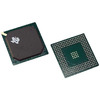
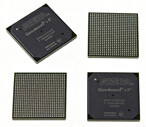
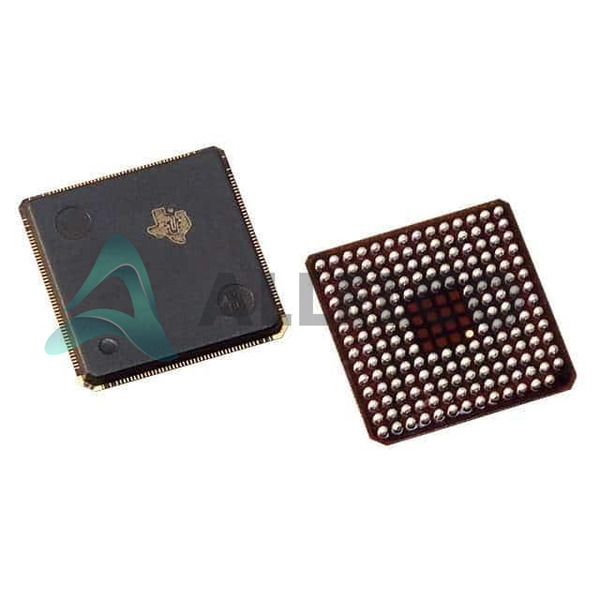
TMS320C28345ZHHT Image
Image may be representation.
See specifications for product details.
EXPRESS OPTION
Payment method

TMS320C28345ZHHT - Texas Instruments

Manufacturer Part Number
TMS320C28345ZHHT
Manufacturer
Texas Instruments
Allelco Part Number
32D-TMS320C28345ZHHT
Warranty
1 Year Allelco Warranty - Find out more
Stock Status:
15,780 pcs available, New & Original
Parts Description
IC DSP FLOATING POINT 179BGA
Package
179-BGA MicroStar (12x12)
Data sheet
TMS320C28345ZHH.pdf
RoHs Status
ROHS3 Compliant
Our certification
In stock: 15780
  • Unit Price: $18.00
  • Subtotal: $0.00

Want a better price?
Add to Cart and Submit RFQ now, we'll contact you immediately.

Quantity Unit Price Ext. Price
1+ $18.00 $18.00
200+ $6.97 $1,394.00
500+ $6.72 $3,360.00
1000+ $6.60 $6,600.00
The above prices does not include taxes and freight rates, which will be calculated on the order pages.

Specifications

TMS320C28345ZHHT Tech Specifications
Texas Instruments - TMS320C28345ZHHT technical specifications, attributes, parameters and parts with similar specifications to Texas Instruments - TMS320C28345ZHHT

Product Attribute Attribute Value
Manufacturer Texas Instruments
Voltage - I/O 3.30V
Voltage - Core 1.10V
Type Floating Point
Supplier Device Package 179-BGA MicroStar (12x12)
Series TMS320C2834x Delfino™
Package / Case 179-LFBGA
Package Tray
Product Attribute Attribute Value
Operating Temperature -40°C ~ 105°C (TJ)
On-Chip RAM 516kB
Non-Volatile Memory ROM (16kB)
Mounting Type Surface Mount
Interface CAN, EBI/EMI, I²C, McBSP, SCI, SPI
Clock Rate 200MHz
Base Product Number TMS320

Environmental & Export Classifications

ATTRIBUTE DESCRIPTION
RoHs Status ROHS3 Compliant
Moisture Sensitivity Level (MSL) 1 (Unlimited)
REACH Status REACH Unaffected
ECCN 3A991A2
HTSUS 8542.31.0001

Parts Introduction

TMS320C28345ZHHT Image
TMS320C28345ZHHT (1)

Manufacturer Part Number

TMS320C28345ZHHT

Manufacturer

Texas Instruments

Introduction

High-performance digital signal processor for advanced embedded control applications

Product Features and Performance

Floating Point processing for precision calculations

Clock Rate of 200MHz for high-speed processing

On-Chip RAM of 516kB for ample temporary data storage

Interface options including CAN, EBI/EMI, I2C, McBSP, SCI, SPI for versatile connectivity

179-LFBGA packaging for compact integration

Product Advantages

High integration reduces system complexity and board space

Advanced control capabilities for robust system design

Flexible interfacing for easier system integration

Key Technical Parameters

Type: Floating Point processor

Clock Rate: 200MHz

Non-Volatile Memory: ROM (16kB)

On-Chip RAM: 516kB

Voltage - I/O: 3.30V

Voltage - Core: 1.10V

Operating Temperature: -40°C ~ 105°C (TJ)

Quality and Safety Features

Extended operating temperature range ensures reliability in harsh environments

Lead-free and RoHS compliant package for environmental safety

Compatibility

Compatible with a wide range of communication protocols

Configurable pins for versatile system design

Application Areas

Industrial control systems

Automotive applications

Communication infrastructure

Robotics

Product Lifecycle

Obsolete status indicates end of production

Alternatives or upgrades may be available for new designs

Several Key Reasons to Choose This Product

Robust temperature range suitable for extreme environments

High-speed floating-point capabilities support demanding calculations

Extensive memory integration for advanced data handling

Texas Instruments' reputation for reliable and quality embedded processors

Flexible interfacing options simplify system design and expansion
Frequently Asked Questions(FAQ)

How does the TMS320C28345ZHHT compare to other devices in the TMS320C2834x series when evaluating core performance for high-speed digital signal processing applications?
The TMS320C28345ZHHT operates at a 200MHz clock rate, which is representative of the performance tier within the TMS320C2834x Delfino™ family. This frequency supports real-time execution of complex floating-point algorithms, making it suitable for motor control and power conversion tasks. While some members of the series may offer lower clock speeds or reduced memory resources, the C28345ZHHT provides balanced integration of on-chip RAM—516kB total—and ROM—16kB—to support both code storage and data buffering. When comparing across the series, designers must weigh the trade-offs between clock speed, memory size, and peripheral configuration against system requirements such as computational throughput, latency constraints, and power budget.
What are the key thermal considerations when integrating the TMS320C28345ZHHT into a high-reliability industrial power electronics system?
The TMS320C28345ZHHT has an operating junction temperature range of -40°C to 105°C, which aligns with industrial-grade reliability standards. However, sustained operation near the upper limit requires careful thermal management due to its 179-BGA package and high-density pinout. In power inverter or motor drive applications, where ambient temperatures can rise significantly, heat dissipation through the PCB and heatsinking becomes critical. The device’s low-voltage core supply (1.10V) reduces dynamic power consumption compared to older-generation DSPs, but switching activity and peripheral load still contribute to thermal output. Designers should ensure adequate airflow or conduction paths, especially since the package lacks an exposed thermal pad, limiting direct die attachment methods commonly used in higher-power ICs.
Can the TMS320C28345ZHHT interface directly with legacy serial communication protocols without additional transceivers?
Yes, the TMS320C28345ZHHT includes native interfaces such as SCI, SPI, I2C, McBSP, EBI/EMI, and CAN, enabling direct connection to many legacy systems. For example, the SCI module supports standard UART signaling levels, allowing straightforward integration with microcontrollers or sensors using asynchronous serial links. Similarly, the SPI and I2C interfaces facilitate communication with EEPROMs, ADCs, and sensor modules that adhere to widely adopted protocol standards. The presence of CAN adds robustness in automotive or industrial networks, though external transceivers may still be required depending on physical layer requirements like differential signaling and bus termination.
How does the on-chip memory architecture of the TMS320C28345ZHHT impact real-time algorithm development and code partitioning strategies?
The TMS320C28345ZHHT integrates 516kB of on-chip RAM and 16kB of ROM, distributed across multiple memory banks optimized for different access patterns. This structure allows critical control loops, interrupt service routines, and frequently accessed data tables to reside in fast-access memory, reducing dependency on external memory bandwidth. During development, this influences how software is partitioned: ISRs and time-critical functions should be placed in tightly coupled memory regions, while larger datasets or less latency-sensitive code may reside in program memory. The fixed ROM size means that all application code must fit within available flash alternatives or external memory, guiding decisions about whether to use internal boot ROM or rely on external NOR flash during initialization.
What design precautions are necessary to ensure stable voltage regulation for the TMS320C28345ZHHT’s dual-supply architecture?
The TMS320C28345ZHHT requires two distinct power rails: 1.10V for the core logic and 3.30V for I/O operations. Maintaining clean, well-regulated supplies is essential to prevent erratic behavior or latch-up. Decoupling capacitors must be placed close to each power pin group, with bulk capacitance on the board level and high-frequency bypass caps at the package side. Additionally, the ground plane integrity must be preserved to minimize ground bounce and crosstalk between analog and digital domains, especially in mixed-signal environments. Power sequencing is typically not mandated by the datasheet, but abrupt transitions between core and I/O voltages could cause undefined states; thus, designers often implement soft-start circuits or monitor reset signals to confirm stable conditions before releasing the processor from reset.
In what scenarios would the TMS320C28345ZHHT be preferred over a general-purpose microcontroller despite its higher cost?
The TMS320C28345ZHHT is advantageous when floating-point arithmetic, fast interrupt response, or deterministic execution timing is required. Unlike most microcontrollers that emulate floating-point operations in software with significant overhead, this DSP executes them natively at hardware speed, delivering up to several hundred million floating-point operations per second. Applications such as digital power conversion (e.g., three-phase inverters), advanced motor control (field-oriented control), and sensor fusion benefit from this capability. Even if the task seems simple, the ability to perform complex mathematical transformations in real time justifies the use of this part when performance predictability and computational intensity are critical factors.
How does the package type influence PCB layout complexity when routing signals to the TMS320C28345ZHHT?
The TMS320C28345ZHHT uses a 179-pin LFBGA package in a 12mm x 12mm MicroStar configuration, requiring fine-pitch traces and precise via placement. Signal integrity challenges arise due to the dense pin density, necessitating controlled impedance routing for high-speed interfaces like McBSP or EBI/EMI. Power and ground planes must be carefully partitioned to avoid coupling noise into sensitive analog inputs or clocks. Because the package lacks exposed thermal features, heat dissipation relies on conduction through the substrate and PCB copper layers, demanding solid ground planes and thermal vias beneath. These factors increase layout complexity compared to QFP or TQFP packages, requiring advanced design tools and experience with BGA breakout techniques.
What are the implications of the TMS320C28345ZHHT’s Moisture Sensitivity Level (MSL) rating for manufacturing and handling procedures?
With an MSL rating of 1, the TMS320C28345ZHHT is considered moisture-insensitive and can be stored indefinitely without baking prior to assembly. This simplifies inventory management and reduces pre-conditioning steps in reflow soldering processes, lowering overall production costs. Manufacturers do not need to track bake cycles or humidity exposure times, which is particularly beneficial in high-volume production environments. However, standard anti-static handling practices remain essential due to the sensitivity of semiconductor components to electrostatic discharge, regardless of moisture sensitivity classification.
How does the TMS320C28345ZHHT support safety-critical applications such as those governed by functional safety standards?
While the TMS320C28345ZHHT itself does not carry formal safety certifications like ISO 26262 or IEC 61508, its architectural features enable developers to implement safety mechanisms. Features such as ECC-protected on-chip memory, lockstep CPU cores (in certain configurations), and watchdog timers help detect runtime faults. The deterministic interrupt latency and predictable instruction timing support real-time monitoring required in safety-relevant systems. Designers can leverage these capabilities to meet functional safety goals through software-based redundancy, diagnostic routines, and fault containment strategies, provided they conduct thorough validation and compliance analysis aligned with applicable industry standards.
What role does the base product number TMS320 play in selecting compatible development tools and software stacks?
The TMS320C28345ZHHT belongs to the broader TMS320 ecosystem, indicated by its base product number. This ensures compatibility with Texas Instruments’ Code Composer Studio (CCS), Real-Time Operating Systems (RTOS) like SYS/BIOS, and driver libraries tailored for C2000 family processors. Developers benefit from shared toolchains, compiler optimizations, and debugging utilities that abstract hardware differences across variants. When migrating projects between devices in the same family, code portability increases significantly, accelerating development cycles. Support for legacy peripherals and backward-compatible APIs further enhances long-term maintainability, especially in embedded systems with evolving requirements.
How does the TMS320C28345ZHHT handle clock synchronization across multiple peripherals such as McBSP and EBI/EMI?
The TMS320C28345ZHHT uses a single system clock source derived from an internal oscillator or external crystal, which is then divided and distributed to various peripherals including McBSP and EBI/EMI. Each peripheral typically runs at a fraction of the core clock rate, allowing flexible timing for serial communication or memory access. However, asynchronous operation between peripherals can introduce skew in data transfer timing. Developers must configure clock dividers carefully and account for propagation delays when synchronizing events across modules. For applications requiring precise timing coordination—such as simultaneous ADC sampling and PWM generation—the integrated phase-locked loop (PLL) and clock management unit allow fine-grained adjustment to minimize jitter and ensure deterministic behavior.
What external components are typically needed alongside the TMS320C28345ZHHT to complete a functional system?
Beyond the DSP itself, a minimal functional system requires power supply circuitry (regulators for 1.10V and 3.3V), decoupling capacitors, a clock source (crystal or resonator), and pull-up/pull-down resistors for reset and debug pins. An external memory interface—such as parallel NOR flash or SDRAM—is often necessary due to the limited 16kB ROM, unless booting from external serial flash. Communication interfaces like CAN may require transceivers, and JTAG headers enable programming and debugging. Depending on application needs, analog front-ends, current sensors, or gate drivers may also be interfaced via the available GPIOs and ADCs.
How does the TMS320C28345ZHHT compare to ARM Cortex-M7 processors in terms of floating-point performance for control applications?
The TMS320C28345ZHHT delivers dedicated hardware-level floating-point execution, whereas ARM Cortex-M7 processors use a fused multiply-add (FMA) unit but still incur higher instruction overhead. In benchmarks involving trigonometric functions or matrix operations common in motor control algorithms, the C28345ZHHT typically achieves superior throughput due to its DSP-oriented architecture, including specialized instructions and register sets optimized for data flow. However, Cortex-M7 parts offer broader ecosystem support, richer peripherals, and lower power in battery-operated systems. The choice depends on whether raw floating-point performance or system integration flexibility is prioritized.
What impact does the absence of external memory on the TMS320C28345ZHHT have on system boot time and application loading?
With only 16kB of internal ROM, the TMS320C28345ZHHT cannot store large applications directly. Therefore, system booting usually involves reading firmware from an external flash memory chip connected via EBI/EMI or SPI. This adds latency to the startup sequence compared to devices with embedded flash. Application loading may require streaming code from external memory, which can bottleneck performance if not managed efficiently. Developers must optimize bootloaders to minimize wait states and consider caching strategies to reduce dependence on slow external accesses during runtime.
Is the TMS320C28345ZHHT suitable for battery-powered industrial equipment where power efficiency is paramount?
While the TMS320C28345ZHHT consumes relatively low power for its class—thanks to its 1.10V core voltage and advanced process technology—it is generally optimized for performance rather than ultra-low quiescent current. Devices with dynamic voltage and frequency scaling or deep sleep modes might be more appropriate for energy-constrained applications. That said, in intermittent-duty industrial equipment where processing bursts are followed by idle periods, the C28345ZHHT can still offer acceptable efficiency. System-level savings come from efficient power management around the DSP rather than intrinsic ultra-low-power characteristics of the chip itself.

Parts with Similar Specifications

The three parts on the right have similar specifications to Texas Instruments TMS320C28345ZHHT

Product Attribute TMS320C28343ZHHT TMS320C28345ZAYT TMS320C28345ZFET TMS320C28346ZFET
Part Number TMS320C28343ZHHT TMS320C28345ZAYT TMS320C28345ZFET TMS320C28346ZFET
Manufacturer Texas Instruments Texas Instruments Texas Instruments Texas Instruments
On-Chip RAM - - - -
Voltage - I/O - - - -
Package - Tape & Reel (TR) Tube Tape & Reel (TR)
Clock Rate - - - -
Non-Volatile Memory - - - -
Mounting Type - Surface Mount Through Hole Surface Mount
Interface - - - -
Voltage - Core - - - -
Type - - - -
Package / Case - 196-LFBGA 16-DIP (0.300', 7.62mm) 64-VFQFN Exposed Pad
Series - - - -
Supplier Device Package - 196-NFBGA (12x12) 16-PDIP 64-VQFN (9x9)
Operating Temperature - -40°C ~ 85°C 0°C ~ 70°C -40°C ~ 85°C
Base Product Number - DAC34H84 MAX500 ADS62P42

TMS320C28345ZHHT Datasheet PDF

Download TMS320C28345ZHHT pdf datasheets and Texas Instruments documentation for TMS320C28345ZHHT - Texas Instruments.

Datasheets
TMS320C28341-46.pdf
PCN Packaging
12x12 BGA Tray Change 21/Aug/2013.pdf
PCN Obsolescence/ EOL
DK OBS NOTICE.pdf
PCN Design/Specification
TMS320C28341/TMS320C28346 18/Sep/2018.pdf
Errata
TMS320C2834x Errata.pdf

Customer Reviews

Evaluation: 10 Articles

  • Emil***rperTech
    Jun 23, 2026

    Works exactly as described. I used it as a USB-to-SPI bridge in a small MCU development project and communication was stable from the first setup.

  • Liam***terTech
    Jun 15, 2026

    Used this CPLD in a logic control project. Programming was straightforward and signal timing matched the design requirements.

  • Nath***rooks
    Jun 11, 2026

    Installed this power component in a converter board. Output remained stable under different load conditions and thermal performance was better than expected.

  • Dani***alkerTech
    Jun 1, 2026

    Product works, but setup took more effort than expected. Once configured the MCU ran reliably, although documentation support felt older compared with newer platforms. Fine for maintenance projects.

  • Yuki***aka88
    May 26, 2026

    信号通信プロジェクトでこのRS-485トランシーバーを使用しました。設置は簡単で、長距離ケーブルでも通信は安定していました。消費電力も、以前使用していたものより低くなっています。

  • Stev***aker
    May 20, 2026

    Solid diode for power rectification. Works well in switching circuits.

  • Bran***Lewis
    May 11, 2026

    Compact FPGA with good performance. Suitable for basic signal processing tasks.

  • Oliv***arris
    May 7, 2026

    Reliable I/O expander. Works well in embedded control applications.

  • Jess***Jones
    Apr 17, 2026

    It offers good value for the price, and the specifications match the description. I’ve been using it for two days with no issues, and I’ll definitely buy it again if I need it in the future.

  • Mich***Smith
    Apr 17, 2026

    Shipping was on time, the component pins are neatly aligned, and I tested 10 of them with a multimeter—all readings were within the specified range. Highly recommended.

Write a Review

Your Email address will not be published.

Shipment

Delivery Time

In-stock items can be shipped within 24 hours. Some parts will be arranged for delivery within 1-2 days from the date all items arrive at our warehouse. And Allelco ships order once a day at about 17:00, except Sunday. Once the goods are shipped, the estimated delivery time depends on the shipping methods and Delivery destination. The table below shows are the logistic time for some common countries.

Delivery Cost

  1. Use your express account for shipment if you have one.
  2. Use our account for the shipment. Refer to the table below for the approximate charges.
(Different time frame / countries / package size has different price.)

Delivery Method

  1. Global Common Shipment by DHL / UPS / FedEx / TNT / EMS / SF we support.
  2. Others more shipping ways, please get in touch with your customer manager.

Common Countries Logistic Time Reference
Region Country Logistic Time(Day)
America United States 5
Brazil 7
Europe Germany 5
United Kingdom 4
Italy 5
Oceania Australia 6
New Zealand 5
Asia India 4
Japan 4
Middle East Israel 6
DHL & FedEx Shipment Charges Reference
Shipment charges(KG) Reference DHL(USD$)
0.00kg-1.00kg USD$30.00 - USD$60.00
1.00kg-2.00kg USD$40.00 - USD$80.00
2.00kg-3.00kg USD$50.00 - USD$100.00
Note:
The above table is for reference only. There may have some data bias for the uncontrollable factors.
Contact us if you have any questions.
  • QC (Quality Warranty)
  • Payment Support
  • Packaging
  • Certifications & Memberships

QC (Quality Warranty)

Allelco is committed to exceeding customer expectations through customer service excellence, order accuracy, and on-time delivery.
This is achieved through our commitment to the continual improvement of our processes, services, and products.


Strict quality inspection builds a solid foundation for electronic component quality.
  1. Visual inspection
  2. Performance testing and reliability verification
  3. Standardized full-process testing
  4. Precise control of every parameter
We eliminate defective components and ensure the stable operation of electronic devices through professional quality standards.

Payment Support

The payment method can be chosen from the methods shown below: Wire Transfer (T/T, Bank Transfer), Western Union, Credit card, PayPal.
  • HKBea
  • Paypal
  • MasterCard
  • Western-Union
  • VISA
Stable Delivery, Sincere Partnership — Your Faithful Supply Chain Partner
  • Efficient Supply Management
  • Cost-Saving Procurement
  • Fast Sourcing & Delivery
Contact us if you have any questions.

Packaging

Electrostatic Discharge Protection and Handling

All electrostatic-sensitive components are handled in accordance with electrostatic discharge control procedures. The products are hermetically sealed in anti-static safe packaging to prevent electrostatic damage. Appropriate labeling is also applied for identification and traceability. This ensures product integrity during storage, handling and transportation.


ESD

Certifications & Memberships

Third-party certified, strict quality control. Our certification
  • ISO 9001: 2015
  • ISO 13485: 2016
  • ISO 14001: 2015
  • ISO 28000: 2007
  • ISO 45001: 2018
  • GB/T 27922-2011
  • SMTA
  • IPC
  • ESD
  • PSMA
TMS320C28345ZHHT Image

TMS320C28345ZHHT

Texas Instruments
32D-TMS320C28345ZHHT

Want a better price? Add to Cart and Submit RFQ now, we'll contact you immediately.

0 RFQ
Shopping cart (0 Items)
It is empty.
Compare List (0 Items)
It is empty.
Feedback

Your feedback matters! At Allelco, we value the user experience and strive to improve it constantly.
Please share your comments with us via our feedback form, and we'll respond promptly.
Thank you for choosing Allelco.

Subject
E-mail
Comments
Captcha
Drag or click to upload file
Upload File
types: .xls, .xlsx, .doc, .docx, .jpg, .png and .pdf.
Max file size: 10MB