View All

Please refer to the English Version as our Official Version.Return

Europe
France(Français) Germany(Deutsch) Italy(Italia) Russian(русский) Poland(polski) Czech(Čeština) Luxembourg(Lëtzebuergesch) Netherlands(Nederland) Iceland(íslenska) Hungarian(Magyarország) Spain(español) Portugal(Português) Turkey(Türk dili) Bulgaria(Български език) Ukraine(Україна) Greece(Ελλάδα) Israel(עִבְרִית) Sweden(Svenska) Finland(Svenska) Finland(Suomi) Romania(românesc) Moldova(românesc) Slovakia(Slovenská) Denmark(Dansk) Slovenia(Slovenija) Slovenia(Hrvatska) Croatia(Hrvatska) Serbia(Hrvatska) Montenegro(Hrvatska) Bosnia and Herzegovina(Hrvatska) Lithuania(lietuvių) Spain(Português) Switzerland(Deutsch) United Kingdom(English)
Asia/Pacific
Japan(日本語) Korea(한국의) Thailand(ภาษาไทย) Malaysia(Melayu) Singapore(Melayu) Vietnam(Tiếng Việt) Philippines(Pilipino)
Africa, India and Middle East
United Arab Emirates(العربية) Iran(فارسی) Tajikistan(فارسی) India(हिंदी) Madagascar(malaɡasʲ)
South America / Oceania
New Zealand(Maori) Brazil(Português) Angola(Português) Mozambique(Português)
North America
United States(English) Canada(English) Haiti(Ayiti) Mexico(español)
HomeProductsIntegrated Circuits (ICs)Embedded - DSP (Digital Signal Processors)TMS320C31PQA50
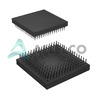
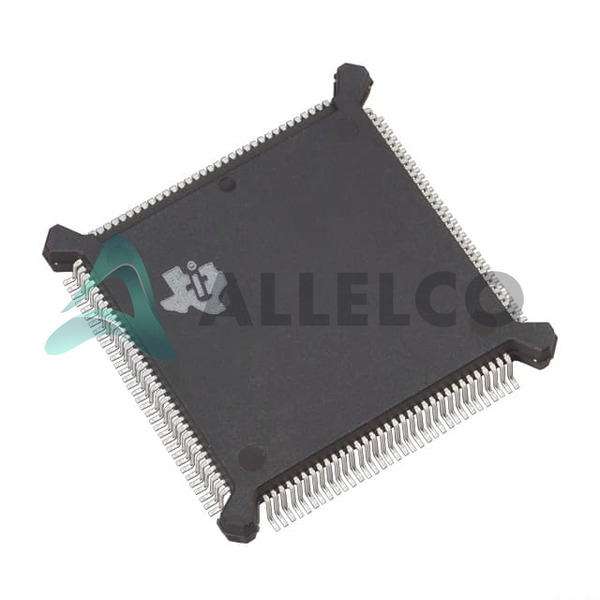
TMS320C31PQA50 Image
Image may be representation.
See specifications for product details.
EXPRESS OPTION
Payment method

TMS320C31PQA50 - Texas Instruments

Manufacturer Part Number
TMS320C31PQA50
Manufacturer
Texas Instruments
Allelco Part Number
32D-TMS320C31PQA50
Warranty
1 Year Allelco Warranty - Find out more
Stock Status:
14,570 pcs available, New & Original
Parts Description
IC TMS320C31 DSP 50MHZ 132-QFP
Package
132-BQFP (24.13x24.13)
Data sheet
-
RoHs Status
ROHS3 Compliant
Our certification
In stock: 14570

Required fields are indicated by an asterisk (*)
Please send RFQ, we will respond immediately.

Quantity

Specifications

TMS320C31PQA50 Tech Specifications
Texas Instruments - TMS320C31PQA50 technical specifications, attributes, parameters and parts with similar specifications to Texas Instruments - TMS320C31PQA50

Product Attribute Attribute Value
Manufacturer Texas Instruments
Voltage - I/O 5.00V
Voltage - Core 5.00V
Type Floating Point
Supplier Device Package 132-BQFP (24.13x24.13)
Series TMS320C3x
Package / Case 132-BQFP Bumpered
Package Tray
Product Attribute Attribute Value
Operating Temperature -40°C ~ 125°C (TC)
On-Chip RAM 8.25kB
Non-Volatile Memory External
Mounting Type Surface Mount
Interface Serial Port
Clock Rate 50MHz
Base Product Number TMS320

Environmental & Export Classifications

ATTRIBUTE DESCRIPTION
RoHs Status ROHS3 Compliant
Moisture Sensitivity Level (MSL) 4 (72 Hours)
REACH Status REACH Unaffected
ECCN 3A991A2
HTSUS 8542.31.0001

Parts Introduction

TMS320C31PQA50 Image
TMS320C31PQA50 (1)

Manufacturer Part Number

TMS320C31PQA50

Manufacturer

Texas Instruments

Introduction

The TMS320C31PQA50 is a high-performance, floating-point digital signal processor (DSP) designed for demanding processing tasks in embedded applications.

Product Features and Performance

Floating-point DSP enhances precision and dynamic range.

High-speed 50MHz clock rate for fast processing.

Serial port interface for communication.

External non-volatile memory support allows flexible memory management.

25kB on-chip RAM for efficient data handling.

Operates over a wide temperature range from -40°C to 125°C.

Product Advantages

Enhanced computation accuracy due to floating-point capability.

Suitable for real-time processing applications.

Robust I/O voltage levels of 5.00V.

Key Technical Parameters

Clock Rate: 50MHz

On-Chip RAM: 8.25kB

Voltage I/O: 5.00V

Voltage Core: 5.00V

Operating Temperature: -40°C ~ 125°C (TC)

Quality and Safety Features

Operates reliably in extreme temperatures.

Surface mount technology for secure and robust board mounting.

Compatibility

Integrates with systems requiring a serial port for data transfer.

Supports external memory for adaptable storage solutions.

Application Areas

Ideal for embedded signal processing tasks in industries such as telecommunications, aerospace, and industrial control systems.

Product Lifecycle

This product is classified as obsolete.

Alternatives or replacement models may be available; check for the latest updates on similar DSPs from Texas Instruments.

Several Key Reasons to Choose This Product

Exceptional processing power suitable for complex DSP tasks.

Supports expansive temperature range ensuring performance in harsh environments.

Floating point capabilities provide detailed data manipulation.

Continued manufacturer support despite the product being obsolete.

Compatibility with external memory enhances adaptable usage in various applications.

Frequently Asked Questions(FAQ)

How does the TMS320C31PQA50 compare to other floating-point DSPs in terms of core voltage and clock speed, and what design considerations arise from its 5.00V core supply requirement?
The TMS320C31PQA50 operates at a 5.00V core voltage, which is relatively high compared to modern low-voltage DSPs but typical for legacy embedded systems requiring robust noise margins and compatibility with older peripheral logic. At 50MHz, it delivers moderate processing throughput, suitable for control algorithms and signal processing tasks that do not require real-time performance beyond this frequency. The dual 5.00V I/O and core supply simplifies interface design with legacy components but increases power consumption and thermal load, especially in battery-powered or compact form-factor applications. Engineers must ensure proper power sequencing and consider voltage regulation stability when integrating into mixed-voltage environments.
What are the implications of the TMS320C31PQA50 having external non-volatile memory, and how does this affect system boot time and reliability in industrial environments?
The TMS320C31PQA50 relies on external non-volatile memory, meaning program code must be loaded from an off-chip device such as flash or ROM during initialization. This increases boot latency compared to devices with integrated flash, potentially delaying system readiness in time-critical applications. However, it offers greater flexibility in code size and updateability. In harsh industrial environments, the absence of on-chip storage also shifts fault tolerance responsibilities to the external memory subsystem, requiring robust ECC, watchdog timers, and error recovery mechanisms to maintain reliability over temperature extremes from -40°C to 125°C.
How should the TMS320C31PQA50's 8.25kB on-chip RAM be allocated when implementing a real-time control loop with multiple data buffers?
With only 8.25kB of internal RAM, the TMS320C31PQA50 imposes strict memory partitioning requirements. For a real-time control loop involving sensor data acquisition, filtering, and actuator output, engineers should allocate dedicated sections: one for input samples (e.g., 512B per channel), another for filter coefficients (e.g., 1.5kB for FIR taps), and a third for intermediate results. Given the limited space, fixed-point arithmetic may be preferred over floating-point to reduce coefficient precision and memory footprint. Careful stack management is essential to avoid overflow, particularly during interrupt service routines that may nest or access large local variables.
Can the TMS320C31PQA50 interface directly with modern 3.3V microcontrollers, and what precautions are necessary when using the serial port interface?
Direct interfacing between the TMS320C31PQA50 and 3.3V microcontrollers is not recommended due to the DSP’s 5.00V I/O levels. Without level shifting, 3.3V signals may not meet the DSP’s minimum HIGH input threshold, risking unreliable communication. Bi-directional level translators or open-drain configurations with pull-up resistors to 5.00V are required. Additionally, timing mismatches in serial protocols—such as SPI or McBSP—must be accounted for; the 50MHz system clock allows for precise baud rate generation, but asynchronous UART links need careful clock domain synchronization to prevent framing errors in long-distance or noisy channels.
How does the operating temperature range of -40°C to 125°C influence packaging choice and long-term reliability when using the TMS320C31PQA50?
The wide operating range necessitates rigorous thermal and mechanical stress management. Although the 132-BQFP package is standard, repeated thermal cycling across 165°C could induce solder joint fatigue at the 24.13x24.13 mm BGA footprint. Engineers should conduct accelerated life testing and consider conformal coating to mitigate moisture ingress, especially given the MSL 4 classification. The high-temperature limit also affects decoupling capacitor performance and PCB laminate selection, requiring materials with stable dielectric constants and low CTE mismatch to preserve signal integrity and prevent cracking during thermal excursions.
What are the trade-offs in selecting between the TMS320C31PQA50 and a RISC-based microcontroller for motor control applications requiring both floating-point math and deterministic response?
While modern ARM Cortex-M processors often outperform the TMS320C31PQA50 in raw floating-point operations and power efficiency, the latter provides specialized instruction sets optimized for digital signal algorithms like FFT and PID loops without software overhead. For motor control, where cycle-accurate PWM generation and encoder decoding are critical, the TMS320C31PQA50’s hardware peripherals and predictable timing can offer better determinism than general-purpose MCUs, albeit at higher power and cost. The decision hinges on whether algorithmic complexity or execution predictability dominates system requirements.
Why might a designer choose the TMS320C31PQA50 despite its limited on-chip resources, and what legacy system integration advantages does it offer?
The TMS320C31PQA50 remains viable in legacy industrial automation, telecommunications equipment, or military avionics where existing designs rely on its proven architecture and software ecosystem. Its floating-point unit enables rapid prototyping of advanced algorithms without extensive fixed-point optimization. Furthermore, familiarity with TI’s TMS320C3x toolchain reduces development time in maintenance or upgrade projects. However, this choice comes at the cost of obsolescence risk and reduced support, necessitating thorough lifecycle planning and inventory buffering given the ECCN 3A991A2 export classification.
How does the absence of built-in flash impact field updates when using the TMS320C31PQA50, and what strategies ensure firmware integrity during remote upgrades?
Since the TMS320C31PQA50 lacks internal flash, firmware updates require an external programmable memory device, introducing potential points of failure during reprogramming. A common strategy involves using a bootloader in external ROM that validates checksums before copying new code to active memory regions. Redundant storage—such as dual-bank external flash—can enable rollback in case of corruption. Additionally, secure boot mechanisms leveraging cryptographic signatures should be implemented if the application handles sensitive data, though this increases complexity and resource usage within the constrained 8.25kB RAM environment.
What role does the serial port interface play in debugging the TMS320C31PQA50, and how can developers maximize diagnostic capability under tight memory constraints?
The serial port—likely an enhanced serial port (ESP) or McBSP—enables real-time logging and command interaction without halting the processor. Given limited RAM, developers should minimize debug buffer sizes and use streaming output instead of storing full traces internally. Leveraging printf-style formatting with lightweight libraries or bit-packing sensor data reduces bandwidth demands. Alternatively, JTAG or boundary-scan interfaces provide deeper visibility into register states and memory contents, bypassing serial bottlenecks entirely for post-mortem analysis.
How does the 50MHz clock rate of the TMS320C31PQA50 constrain algorithm implementation, particularly in relation to interrupt latency and context switching overhead?
At 50MHz, each instruction cycle is 20ns, limiting loop unrolling and nested interrupt handling depth. Worst-case interrupt latency depends on ISR execution time and nesting policy; conservative designs assume up to 1–2μs for worst-case masking, reducing available CPU bandwidth for user tasks. Real-time kernels must prioritize task scheduling carefully, avoiding deep call stacks or dynamic allocations that exceed the 8.25kB RAM budget. Fixed-priority preemptive scheduling with static memory allocation helps maintain predictability, which is essential for safety-certified systems.
Can the TMS320C31PQA50 support multi-channel ADC sampling with simultaneous acquisition, and what hardware considerations are needed to achieve accurate timing?
The TMS320C31PQA50 itself does not include an ADC; instead, it typically interfaces with external ADCs via parallel or serial links. Achieving simultaneous multi-channel sampling requires careful coordination using external sample-and-hold circuits synchronized to a shared clock derived from the DSP’s 50MHz source. Timing jitter must be minimized through phase-locked loops or disciplined oscillators to preserve signal fidelity, especially in applications like vibration analysis or power monitoring where phase coherence between channels is critical.
What are the power dissipation characteristics of the TMS320C31PQA50 at maximum clock speed, and how do they influence heatsinking requirements in enclosed systems?
Although exact power numbers depend on activity factor and load conditions, historical data suggests the TMS320C31PQA50 consumes approximately 1–2W at full 50MHz operation with typical instruction mixes. In a 132-pin QFP package, this generates localized heat that may raise junction temperatures above ambient by 30–50°C without adequate cooling. Enclosed systems must incorporate ventilation, thermal vias, or small heatsinks, particularly near the center of the 24.13x24.13 mm footprint, to stay within the 125°C maximum rating during prolonged operation.
How does the RoHS3 compliance and REACH unaffected status of the TMS320C31PQA50 benefit global supply chain logistics, and are there any hidden restrictions?
RoHS3 compliance ensures halogen-free packaging and restricted substances below regulatory thresholds, facilitating market access in EU, China, and other jurisdictions. The REACH unaffected declaration indicates no SVHCs (Substances of Very High Concern) exceeding 0.1% w/w, simplifying compliance documentation for aerospace, medical, and automotive sectors. However, the ECCN 3A991A2 classification still subjects the device to U.S. export controls, requiring end-use verification even for commercial customers, which can delay deployment in certain international projects.
Is the TMS320C31PQA50 suitable for audio processing applications, and what limitations arise from its memory and computational throughput?
While capable of basic audio effects like filtering or mixing, the TMS320C31PQA50 falls short of modern standards for real-time voice coding or high-fidelity music processing. With only 8.25kB RAM, buffering a stereo 16-bit stream at 44.1kHz requires external memory. The 50MHz clock supports simple FIR filters with fewer than 200 taps efficiently, but more complex algorithms like MP3 decoding would demand significant software optimization or auxiliary coprocessors. Thus, it remains appropriate only for narrowband telephony or embedded voice recognition prototypes rather than consumer-grade audio systems.
How should decoupling capacitors be arranged around the TMS320C31PQA50 to ensure stable operation across the full temperature range?
Given the 5.00V core and I/O rails, bulk capacitance (e.g., 10μF tantalum or ceramic) should be placed near the VDD pins, supplemented by high-frequency 0.1μF X7R or NP0 capacitors at each power pin to suppress switching noise. Placement within 5mm minimizes inductive impedance at 50MHz. During cold startups at -40°C, ceramic capacitors exhibit lower capacitance; verifying DC bias derating and ESR stability is essential to maintain effective filtering throughout the operating envelope.
What impact does the 132-BQFP package size have on PCB routing density, and how does this influence high-speed design practices for the TMS320C31PQA50?
The 132-pin Bumpered Quad Flat Package occupies a 24.13x24.13 mm area, demanding careful layer stackup and trace routing to manage crosstalk and impedance control. High-speed signals such as clocks, serial data lines, and address buses require controlled impedance (typically 50Ω single-ended or 100Ω differential), necessitating stripline routing in inner layers with reference planes. The large pad array also complicates automated optical inspection (AOI), increasing manufacturing yield risk if solder paste volume or alignment tolerances deviate from process windows.

Parts with Similar Specifications

The three parts on the right have similar specifications to Texas Instruments TMS320C31PQA50

Product Attribute TMS320C31PQA40 TMS320C31PQL50 TMS320C31PQL40 TMS320C31PQL60
Part Number TMS320C31PQA40 TMS320C31PQL50 TMS320C31PQL40 TMS320C31PQL60
Manufacturer Texas Instruments Texas Instruments Texas Instruments Texas Instruments
Operating Temperature - -40°C ~ 85°C 0°C ~ 70°C -40°C ~ 85°C
Package / Case - 196-LFBGA 16-DIP (0.300', 7.62mm) 64-VFQFN Exposed Pad
Voltage - I/O - - - -
Supplier Device Package - 196-NFBGA (12x12) 16-PDIP 64-VQFN (9x9)
Clock Rate - - - -
Interface - - - -
Non-Volatile Memory - - - -
On-Chip RAM - - - -
Mounting Type - Surface Mount Through Hole Surface Mount
Voltage - Core - - - -
Type - - - -
Series - - - -
Package - Tape & Reel (TR) Tube Tape & Reel (TR)
Base Product Number - DAC34H84 MAX500 ADS62P42

Customer Reviews

Evaluation: 10 Articles

  • Dani***alkerTech
    Jun 1, 2026

    Product works, but setup took more effort than expected. Once configured the MCU ran reliably, although documentation support felt older compared with newer platforms. Fine for maintenance projects.

  • Yuki***aka88
    May 26, 2026

    信号通信プロジェクトでこのRS-485トランシーバーを使用しました。設置は簡単で、長距離ケーブルでも通信は安定していました。消費電力も、以前使用していたものより低くなっています。

  • Stev***aker
    May 20, 2026

    Solid diode for power rectification. Works well in switching circuits.

  • Bran***Lewis
    May 11, 2026

    Compact FPGA with good performance. Suitable for basic signal processing tasks.

  • Oliv***arris
    May 7, 2026

    Reliable I/O expander. Works well in embedded control applications.

  • Jess***Jones
    Apr 17, 2026

    It offers good value for the price, and the specifications match the description. I’ve been using it for two days with no issues, and I’ll definitely buy it again if I need it in the future.

  • Mich***Smith
    Apr 17, 2026

    Shipping was on time, the component pins are neatly aligned, and I tested 10 of them with a multimeter—all readings were within the specified range. Highly recommended.

  • Aman***arris
    Apr 3, 2026

    It was great—the entire process, from placing the order to receiving the package, went very smoothly. The components were consistent, the price was fair, and I had a very pleasant shopping experience.

  • Mike***nch
    Apr 3, 2026

    Better than expected! The resistance and capacitance readings were spot-on, and it passed the test on the first try. The service was reliable, and the packaging was thoughtful—I highly recommend it.

  • Daic***K.
    Mar 23, 2026

    Very good. No issue after long time testing.

Write a Review

Your Email address will not be published.

Shipment

Delivery Time

In-stock items can be shipped within 24 hours. Some parts will be arranged for delivery within 1-2 days from the date all items arrive at our warehouse. And Allelco ships order once a day at about 17:00, except Sunday. Once the goods are shipped, the estimated delivery time depends on the shipping methods and Delivery destination. The table below shows are the logistic time for some common countries.

Delivery Cost

  1. Use your express account for shipment if you have one.
  2. Use our account for the shipment. Refer to the table below for the approximate charges.
(Different time frame / countries / package size has different price.)

Delivery Method

  1. Global Common Shipment by DHL / UPS / FedEx / TNT / EMS / SF we support.
  2. Others more shipping ways, please get in touch with your customer manager.

Common Countries Logistic Time Reference
Region Country Logistic Time(Day)
America United States 5
Brazil 7
Europe Germany 5
United Kingdom 4
Italy 5
Oceania Australia 6
New Zealand 5
Asia India 4
Japan 4
Middle East Israel 6
DHL & FedEx Shipment Charges Reference
Shipment charges(KG) Reference DHL(USD$)
0.00kg-1.00kg USD$30.00 - USD$60.00
1.00kg-2.00kg USD$40.00 - USD$80.00
2.00kg-3.00kg USD$50.00 - USD$100.00
Note:
The above table is for reference only. There may have some data bias for the uncontrollable factors.
Contact us if you have any questions.
  • QC (Quality Warranty)
  • Payment Support
  • Packaging
  • Certifications & Memberships

QC (Quality Warranty)

Allelco is committed to exceeding customer expectations through customer service excellence, order accuracy, and on-time delivery.
This is achieved through our commitment to the continual improvement of our processes, services, and products.


Strict quality inspection builds a solid foundation for electronic component quality.
  1. Visual inspection
  2. Performance testing and reliability verification
  3. Standardized full-process testing
  4. Precise control of every parameter
We eliminate defective components and ensure the stable operation of electronic devices through professional quality standards.

Payment Support

The payment method can be chosen from the methods shown below: Wire Transfer (T/T, Bank Transfer), Western Union, Credit card, PayPal.
  • HKBea
  • Paypal
  • MasterCard
  • Western-Union
  • VISA
Stable Delivery, Sincere Partnership — Your Faithful Supply Chain Partner
  • Efficient Supply Management
  • Cost-Saving Procurement
  • Fast Sourcing & Delivery
Contact us if you have any questions.

Packaging

Electrostatic Discharge Protection and Handling

All electrostatic-sensitive components are handled in accordance with electrostatic discharge control procedures. The products are hermetically sealed in anti-static safe packaging to prevent electrostatic damage. Appropriate labeling is also applied for identification and traceability. This ensures product integrity during storage, handling and transportation.


ESD

Certifications & Memberships

Third-party certified, strict quality control. Our certification
  • ISO 9001: 2015
  • ISO 13485: 2016
  • ISO 14001: 2015
  • ISO 28000: 2007
  • ISO 45001: 2018
  • GB/T 27922-2011
  • SMTA
  • IPC
  • ESD
  • PSMA
TMS320C31PQA50 Image

TMS320C31PQA50

Texas Instruments
32D-TMS320C31PQA50

Want a better price? Add to Cart and Submit RFQ now, we'll contact you immediately.

0 RFQ
Shopping cart (0 Items)
It is empty.
Compare List (0 Items)
It is empty.
Feedback

Your feedback matters! At Allelco, we value the user experience and strive to improve it constantly.
Please share your comments with us via our feedback form, and we'll respond promptly.
Thank you for choosing Allelco.

Subject
E-mail
Comments
Captcha
Drag or click to upload file
Upload File
types: .xls, .xlsx, .doc, .docx, .jpg, .png and .pdf.
Max file size: 10MB