View All

Please refer to the English Version as our Official Version.Return

Europe
France(Français) Germany(Deutsch) Italy(Italia) Russian(русский) Poland(polski) Czech(Čeština) Luxembourg(Lëtzebuergesch) Netherlands(Nederland) Iceland(íslenska) Hungarian(Magyarország) Spain(español) Portugal(Português) Turkey(Türk dili) Bulgaria(Български език) Ukraine(Україна) Greece(Ελλάδα) Israel(עִבְרִית) Sweden(Svenska) Finland(Svenska) Finland(Suomi) Romania(românesc) Moldova(românesc) Slovakia(Slovenská) Denmark(Dansk) Slovenia(Slovenija) Slovenia(Hrvatska) Croatia(Hrvatska) Serbia(Hrvatska) Montenegro(Hrvatska) Bosnia and Herzegovina(Hrvatska) Lithuania(lietuvių) Spain(Português) Switzerland(Deutsch) United Kingdom(English)
Asia/Pacific
Japan(日本語) Korea(한국의) Thailand(ภาษาไทย) Malaysia(Melayu) Singapore(Melayu) Vietnam(Tiếng Việt) Philippines(Pilipino)
Africa, India and Middle East
United Arab Emirates(العربية) Iran(فارسی) Tajikistan(فارسی) India(हिंदी) Madagascar(malaɡasʲ)
South America / Oceania
New Zealand(Maori) Brazil(Português) Angola(Português) Mozambique(Português)
North America
United States(English) Canada(English) Haiti(Ayiti) Mexico(español)
HomeProductsIntegrated Circuits (ICs)PMIC - Voltage Regulators - DC DC Switching RegulatorsTPS61090RSAR
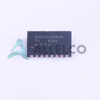
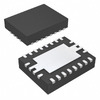
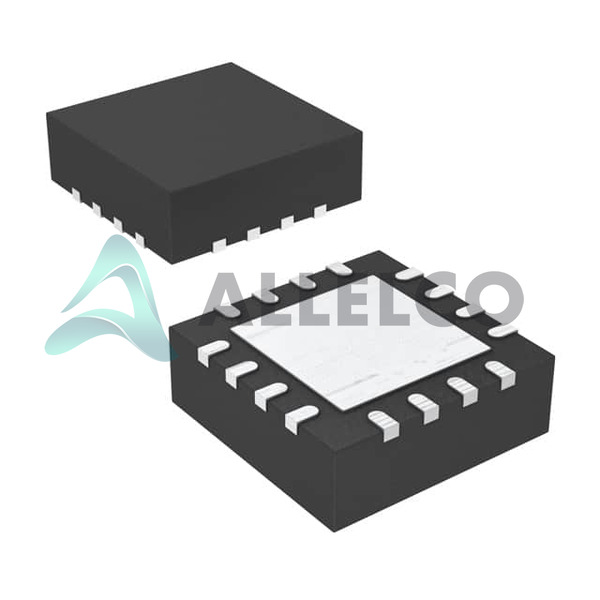
TPS61090RSAR Image
Image may be representation.
See specifications for product details.
EXPRESS OPTION
Payment method

TPS61090RSAR - Texas Instruments

Manufacturer Part Number
TPS61090RSAR
Manufacturer
Texas Instruments
Allelco Part Number
32D-TPS61090RSAR
Warranty
1 Year Allelco Warranty - Find out more
Stock Status:
32,022 pcs available, New & Original
Parts Description
IC REG BOOST ADJUSTABLE 2A 16QFN
Package
16-QFN (4x4)
Data sheet
TPS61090RSAR.pdf

HTML Datasheet

TPS61090-92.pdf
RoHs Status
ROHS3 Compliant
Our certification
In stock: 32022
  • Unit Price: $1.471
  • Subtotal: $0.00

Want a better price?
Add to Cart and Submit RFQ now, we'll contact you immediately.

Quantity Unit Price Ext. Price
1+ $1.471 $1.47
10+ $1.263 $12.63
30+ $1.131 $33.93
100+ $0.997 $99.70
500+ $0.937 $468.50
1000+ $0.91 $910.00
The above prices does not include taxes and freight rates, which will be calculated on the order pages.

Specifications

TPS61090RSAR Tech Specifications
Texas Instruments - TPS61090RSAR technical specifications, attributes, parameters and parts with similar specifications to Texas Instruments - TPS61090RSAR

Product Attribute Attribute Value
Manufacturer Texas Instruments
Voltage - Output (Min/Fixed) 1.8V
Voltage - Output (Max) 5.5V
Voltage - Input (Min) 1.8V
Voltage - Input (Max) 5.5V
Topology Boost
Synchronous Rectifier Yes
Supplier Device Package 16-QFN (4x4)
Series -
Package / Case 16-VQFN Exposed Pad
Product Attribute Attribute Value
Package Tape & Reel (TR)
Output Type Adjustable
Output Configuration Positive
Operating Temperature -40°C ~ 85°C (TA)
Number of Outputs 1
Mounting Type Surface Mount
Function Step-Up
Frequency - Switching 600kHz
Current - Output 2A (Switch)
Base Product Number TPS61090

Environmental & Export Classifications

ATTRIBUTE DESCRIPTION
RoHs Status ROHS3 Compliant
Moisture Sensitivity Level (MSL) 2 (1 Year)
REACH Status REACH Unaffected
ECCN EAR99
HTSUS 8542.39.0001

Parts Introduction

TPS61090RSAR Image
TPS61090RSAR (1)

Manufacturer Part Number

TPS61090RSAR

Manufacturer

Texas Instruments

Introduction

The TPS61090RSAR is a high-efficiency step-up DC-DC converter in Texas Instruments' power management portfolio.

Product Features and Performance

Step-Up (Boost) regulator

Output configuration is positive

Adjustable output type

Features a synchronous rectifier for improved efficiency

Supports a frequency of switching at 600kHz

Operates with a single output

Designed for surface mount technology

Product Advantages

High efficiency due to synchronous rectification

Wide input voltage range suitable for multiple applications

Adjustable output voltage for flexible use

Up to 2A switch current output for high-power applications

Capable of operating across a wide temperature range

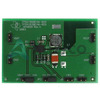
TPS61090RSAR Image
TPS61090RSAR (2)

Key Technical Parameters

Voltage - Input (Min): 1.8V

Voltage - Input (Max): 5.5V

Voltage - Output (Min/Fixed): 1.8V

Voltage - Output (Max): 5.5V

Current - Output: 2A (Switch)

Frequency - Switching: 600kHz

Temperature Range: -40°C ~ 85°C (TA)

Quality and Safety Features

Built to operate reliably over a wide temperature range of -40°C to 85°C

Compatibility

Suitable for a variety of applications requiring voltage boost functionality

Compatible with other components that require an adjustable boost voltage regulator

Compatible with surface mount technology fabrication

Application Areas

Suitable for portable electronics, battery-powered devices, and power backup systems

Ideal for IoT devices and smart sensors

Useful in consumer electronics that require power boosting from batteries

Product Lifecycle

Product Status: Active

Continued manufacturer support and no imminent discontinuation

Several Key Reasons to Choose This Product

Efficient power conversion resulting in extended battery life

Flexible application due to a wide input and output voltage range

Capability to drive loads up to 2A, suitable for high-power demands

Compact 16-VQFN Exposed Pad package saves board space

Components from Texas Instruments are renowned for their reliability and performance

On-going manufacturer support ensures long-term usability and updates

Advanced thermal design of the package allows operation in various environments

Frequently Asked Questions(FAQ)

What are the key thermal and efficiency considerations when using the TPS61090RSAR in a compact 2A boost application?
The TPS61090RSAR achieves up to 95% efficiency at 3.3V input with 5V output and 2A load, but peak junction temperatures must be monitored under continuous operation. With a 4x4 QFN package and exposed pad, thermal resistance from junction to ambient is approximately 38°C/W in free air. In dense layouts without forced airflow, derating above 700mA may be necessary. A solid ground plane on layer 2 helps conduct heat through the exposed pad, reducing thermal resistance by up to 40%. Efficiency drops slightly above 85°C due to internal current limiting, so enclosure temperature and PCB copper area should be evaluated during layout.
How does the switching frequency of the TPS61090RSAR affect inductor selection and EMI performance in space-constrained designs?
Operating at a fixed 600kHz, the TPS61090RSAR enables use of smaller ferrite core inductors compared to lower-frequency converters. However, this higher frequency increases high-frequency radiation and requires careful PCB routing. Inductor DCR and core losses become more significant at 600kHz, especially in high-current applications. Use shielded inductors with low AC resistance, such as those with MnZn or NiZn cores rated for 600kHz operation. Layout should minimize loop areas between SW node, inductor, and output capacitor, and include a π-filter if conducted emissions exceed FCC Class B limits.
Can the TPS61090RSAR support start-up into a pre-charged output without damage?
Yes, the TPS61090RSAR includes built-in soft-start and undervoltage lockout that prevent reverse current flow during power-up if the output is already charged. When VIN rises while OUT is externally biased above 1.8V, the device enters shutdown mode and waits until OUT drops below 1.6V before initiating soft-start. This avoids stress on internal switches and ensures reliable operation in battery backup or solar-powered systems where the output capacitor may retain charge.
How does the TPS61090RSAR compare to synchronous alternatives like the TPS61290 for high-input-voltage applications?
While both are Texas Instruments boost regulators, the TPS61090RSAR is non-synchronous and uses an external Schottky diode, whereas the TPS61290 integrates a synchronous MOSFET pair. At 5.5V input and 3.3V output, the TPS61090RSAR achieves ~89% efficiency at 2A; the TPS61290 reaches ~93% due to lower conduction losses. However, the TPS61090RSAR has a simpler bill of materials and avoids gate-drive complexity. For inputs above 4.5V, the TPS61290 offers better efficiency, but the TPS61090RSAR remains viable if diode loss is acceptable and cost is a priority.
What external components are critical for stable operation of the TPS61090RSAR across the full operating temperature range?
Stability depends on proper selection of the feedback divider, compensation network, and output capacitor ESR. Use ceramic capacitors with X7R dielectric for CIN and COUT to maintain capacitance stability over -40°C to 85°C. The internal compensation is optimized for a 1µF COUT and 2.2µH inductor, but additional feedforward capacitor (typically 10–100pF from FB to SW) improves phase margin at light loads. Ensure inductor saturation current exceeds 2.5A and DC resistance is minimized to reduce conduction loss and control loop interaction.
Is it possible to parallel two TPS61090RSAR devices to increase output current capability?
Direct paralleling is not recommended due to potential current imbalance caused by slight variations in switching thresholds and timing. Instead, use a single TPS61090RSAR with a larger inductor and output capacitor to handle higher ripple current. If redundancy or fault tolerance is required, consider using two units with separate outputs fed into a post-regulation LDO or OR-ing diodes, though this increases component count and quiescent current. TI does not support parallel operation of identical PMICs in this topology.
How does quiescent current affect battery life in always-on applications using the TPS61090RSAR?
The TPS61090RSAR draws 45µA typical quiescent current (IQ) in pulse-skip mode at light loads, which significantly extends battery life in intermittent-use scenarios. At 100µA load, efficiency exceeds 70%, making it suitable for coin-cell powered sensors. However, IQ rises to 1.2mA during active switching. In sleep modes where VIN drops below UVLO, the device shuts down completely with 0.1µA typical shutdown current. Total system leakage must be considered when designing for multi-year operation.
What precautions are needed when routing the SW node on the TPS61090RSAR in a 4-layer PCB?
The SW node carries 2A peak currents with fast dI/dt transients (di/dt > 1A/ns). Route the switch node as short as possible between the IC, inductor, and output capacitor. Avoid vias near SW unless absolutely necessary, as they introduce inductance. Use wide traces (minimum 0.15mm per amp) and place bypass capacitors as close as possible to the IC’s VIN and GND pins. Ground return paths should be routed directly under the IC to minimize loop area and radiated emissions.
Can the TPS61090RSAR operate reliably in environments with rapid input voltage changes, such as Li-ion batteries during load transients?
Yes, but transient response depends on output capacitance and load step magnitude. With a 10µF ceramic output capacitor, the TPS61090RSAR can regulate within ±3% for a 0.5A to 2A load step in under 100µs. Adding bulk capacitance (e.g., 47µF electrolytic) improves hold-up time during sudden load drops. Input filtering may be needed if VIN sags below 2.5V during startup from cold conditions, as the minimum operating voltage is 1.8V with hysteresis to prevent chatter.
Does the TPS61090RSAR require external soft-start circuitry for inrush current control?
No, the TPS61090RSAR includes internal soft-start that ramps current limit gradually over 1ms (typical), limiting inrush current into capacitive loads. This prevents excessive stress on the input source and reduces voltage droop during startup. External soft-start capacitors are not required unless custom ramp times are needed. However, placing a small series resistor (1–10Ω) at the EN pin can further dampen turn-on transients if the input supply has high output impedance.
What are the implications of using the TPS61090RSAR near its maximum duty cycle limit?
At high input-to-output ratios (e.g., 1.8V in to 5V out), the duty cycle approaches 64%, nearing the practical limit for boost converters. As duty cycle increases, switching losses rise due to longer ON-time in the high-side switch. Additionally, reverse recovery losses in the external diode become more pronounced. To maintain reliability, ensure the diode has a low trr (reverse recovery time < 50ns) and adequate current rating (≥3A). Efficiency typically drops by 2–3% at 64% duty cycle compared to mid-range ratios.
How does the internal current limit interact with overcurrent protection in fault conditions?
The TPS61090RSAR features hiccup-mode overcurrent protection. When current exceeds 2.5A (typ), the device disables switching for 1ms before retrying. This protects against short circuits and sustained overloads without damaging the IC. During normal operation, average switch current is limited to 2A, but peak current can reach 2.8A during soft-start or load transients. Designers should verify that the inductor and traces can handle these peaks without saturating or overheating.
Is the TPS61090RSAR suitable for use in automotive-grade temperature ranges without additional design measures?
The TPS61090RSAR operates from -40°C to 85°C, which meets standard industrial requirements but falls short of AEC-Q100 Grade 2 (up to 105°C). In automotive edge cases where ambient temperature exceeds 85°C, junction temperature may exceed safe limits even with modest load. Implement derating: reduce max output current by 10–15% above 70°C ambient. Use thermal vias under the exposed pad and consider airflow. For true automotive compliance, select a qualified variant or add external thermal management.
What role does the FB pin play in setting output voltage accuracy, and how sensitive is it to noise?
The FB pin compares the feedback voltage (divided from VOUT) to a 0.6V internal reference. Output accuracy is ±2% over temperature, primarily determined by resistor tolerance and divider stability. Keep FB traces short and avoid coupling from SW or noisy digital lines. A 1kΩ–10kΩ pull-up from FB to VOUT minimizes leakage current while maintaining impedance. Adding a small capacitor (1–10nF) from FB to GND filters high-frequency noise without affecting regulation bandwidth.
How can I minimize standby power consumption when using the TPS61090RSAR in a battery-powered IoT node?
Enable automatic pulse-skipping mode by connecting EN to VIN. At light loads (<100µA), the device skips pulses to reduce switching losses, lowering average current draw. Disable unnecessary peripherals and use deep sleep modes where VOUT can be gated via a MOSFET controlled by the MCU. Measure total system quiescent current including load, as 45µA IQ adds up over time. Consider switching to buck-boost topology if bidirectional operation is needed, as TPS61090RSAR only boosts.
Are there any known limitations when driving LEDs or other nonlinear loads with the TPS61090RSAR?
The TPS61090RSAR regulates output voltage, not current, so driving LEDs directly requires a constant-current configuration. Modify the feedback network to sense LED current via a sense resistor and set VREF = ILED × RSET. Ensure the output voltage is sufficient to overcome LED forward voltage plus any series resistance. Thermal runaway risk increases if the converter cannot maintain regulation during LED current surges. Use external current control ICs for precision LED drivers, reserving TPS61090RSAR for general-purpose boosting.
What impact does output capacitor ESR have on transient response and stability in the TPS61090RSAR?
Low-ESR ceramic capacitors provide excellent transient response with minimal overshoot and undershoot during load steps. High-ESR types (e.g., tantalum) degrade transient performance and may destabilize the feedback loop due to added phase lag. The TPS61090RSAR is internally compensated for ceramic output caps; adding bulk capacitance improves hold-up but must be placed carefully to avoid excessive loop delay. A 10µF X7R ceramic with <10mΩ ESR is recommended for most applications.
How does the TPS61090RSAR handle reverse polarity on the input side?
The TPS61090RSAR lacks internal reverse polarity protection. Applying negative voltage to VIN-GND can damage the IC. To protect against accidental reversal, place a Schottky diode in series with VIN (cathode toward VIN) or use a P-channel MOSFET for ideal diode functionality. Alternatively, implement a crowbar circuit or fuse-based protection depending on system risk profile. Always verify input polarity in test fixtures and consider user interface safeguards in handheld devices.

Parts with Similar Specifications

The three parts on the right have similar specifications to Texas Instruments TPS61090RSAR

Product Attribute TPS61090RSARG4 TPS61091RSAR TPS61092RSAR TPS61092RSARG4
Part Number TPS61090RSARG4 TPS61091RSAR TPS61092RSAR TPS61092RSARG4
Manufacturer Texas Instruments Texas Instruments Texas Instruments Luminary Micro / Texas Instruments
Operating Temperature - -40°C ~ 85°C 0°C ~ 70°C -40°C ~ 85°C
Supplier Device Package - 196-NFBGA (12x12) 16-PDIP 64-VQFN (9x9)
Mounting Type - Surface Mount Through Hole Surface Mount
Frequency - Switching - - - -
Voltage - Input (Min) - - - -
Synchronous Rectifier - - - -
Voltage - Input (Max) - - - -
Number of Outputs - - - -
Package / Case - 196-LFBGA 16-DIP (0.300', 7.62mm) 64-VFQFN Exposed Pad
Output Type - Current - Unbuffered Voltage - Buffered -
Current - Output - - - -
Package - Tape & Reel (TR) Tube Tape & Reel (TR)
Function - - - -
Series - - - -
Base Product Number - DAC34H84 MAX500 ADS62P42
Voltage - Output (Max) - - - -
Voltage - Output (Min/Fixed) - - - -
Output Configuration - - - -
Topology - - - -

TPS61090RSAR Datasheet PDF

Download TPS61090RSAR pdf datasheets and Texas Instruments documentation for TPS61090RSAR - Texas Instruments.

HTML Datasheet
TPS61090-92.pdf

Customer Reviews

Evaluation: 10 Articles

  • Nath***rooks
    Jun 11, 2026

    Installed this power component in a converter board. Output remained stable under different load conditions and thermal performance was better than expected.

  • Dani***alkerTech
    Jun 1, 2026

    Product works, but setup took more effort than expected. Once configured the MCU ran reliably, although documentation support felt older compared with newer platforms. Fine for maintenance projects.

  • Yuki***aka88
    May 26, 2026

    信号通信プロジェクトでこのRS-485トランシーバーを使用しました。設置は簡単で、長距離ケーブルでも通信は安定していました。消費電力も、以前使用していたものより低くなっています。

  • Stev***aker
    May 20, 2026

    Solid diode for power rectification. Works well in switching circuits.

  • Bran***Lewis
    May 11, 2026

    Compact FPGA with good performance. Suitable for basic signal processing tasks.

  • Oliv***arris
    May 7, 2026

    Reliable I/O expander. Works well in embedded control applications.

  • Jess***Jones
    Apr 17, 2026

    It offers good value for the price, and the specifications match the description. I’ve been using it for two days with no issues, and I’ll definitely buy it again if I need it in the future.

  • Mich***Smith
    Apr 17, 2026

    Shipping was on time, the component pins are neatly aligned, and I tested 10 of them with a multimeter—all readings were within the specified range. Highly recommended.

  • Aman***arris
    Apr 3, 2026

    It was great—the entire process, from placing the order to receiving the package, went very smoothly. The components were consistent, the price was fair, and I had a very pleasant shopping experience.

  • Mike***nch
    Apr 3, 2026

    Better than expected! The resistance and capacitance readings were spot-on, and it passed the test on the first try. The service was reliable, and the packaging was thoughtful—I highly recommend it.

Write a Review

Your Email address will not be published.

Shipment

Delivery Time

In-stock items can be shipped within 24 hours. Some parts will be arranged for delivery within 1-2 days from the date all items arrive at our warehouse. And Allelco ships order once a day at about 17:00, except Sunday. Once the goods are shipped, the estimated delivery time depends on the shipping methods and Delivery destination. The table below shows are the logistic time for some common countries.

Delivery Cost

  1. Use your express account for shipment if you have one.
  2. Use our account for the shipment. Refer to the table below for the approximate charges.
(Different time frame / countries / package size has different price.)

Delivery Method

  1. Global Common Shipment by DHL / UPS / FedEx / TNT / EMS / SF we support.
  2. Others more shipping ways, please get in touch with your customer manager.

Common Countries Logistic Time Reference
Region Country Logistic Time(Day)
America United States 5
Brazil 7
Europe Germany 5
United Kingdom 4
Italy 5
Oceania Australia 6
New Zealand 5
Asia India 4
Japan 4
Middle East Israel 6
DHL & FedEx Shipment Charges Reference
Shipment charges(KG) Reference DHL(USD$)
0.00kg-1.00kg USD$30.00 - USD$60.00
1.00kg-2.00kg USD$40.00 - USD$80.00
2.00kg-3.00kg USD$50.00 - USD$100.00
Note:
The above table is for reference only. There may have some data bias for the uncontrollable factors.
Contact us if you have any questions.
  • QC (Quality Warranty)
  • Payment Support
  • Packaging
  • Certifications & Memberships

QC (Quality Warranty)

Allelco is committed to exceeding customer expectations through customer service excellence, order accuracy, and on-time delivery.
This is achieved through our commitment to the continual improvement of our processes, services, and products.


Strict quality inspection builds a solid foundation for electronic component quality.
  1. Visual inspection
  2. Performance testing and reliability verification
  3. Standardized full-process testing
  4. Precise control of every parameter
We eliminate defective components and ensure the stable operation of electronic devices through professional quality standards.

Payment Support

The payment method can be chosen from the methods shown below: Wire Transfer (T/T, Bank Transfer), Western Union, Credit card, PayPal.
  • HKBea
  • Paypal
  • MasterCard
  • Western-Union
  • VISA
Stable Delivery, Sincere Partnership — Your Faithful Supply Chain Partner
  • Efficient Supply Management
  • Cost-Saving Procurement
  • Fast Sourcing & Delivery
Contact us if you have any questions.

Packaging

Electrostatic Discharge Protection and Handling

All electrostatic-sensitive components are handled in accordance with electrostatic discharge control procedures. The products are hermetically sealed in anti-static safe packaging to prevent electrostatic damage. Appropriate labeling is also applied for identification and traceability. This ensures product integrity during storage, handling and transportation.


ESD

Certifications & Memberships

Third-party certified, strict quality control. Our certification
  • ISO 9001: 2015
  • ISO 13485: 2016
  • ISO 14001: 2015
  • ISO 28000: 2007
  • ISO 45001: 2018
  • GB/T 27922-2011
  • SMTA
  • IPC
  • ESD
  • PSMA
TPS61090RSAR Image

TPS61090RSAR

Texas Instruments
32D-TPS61090RSAR

Want a better price? Add to Cart and Submit RFQ now, we'll contact you immediately.

0 RFQ
Shopping cart (0 Items)
It is empty.
Compare List (0 Items)
It is empty.
Feedback

Your feedback matters! At Allelco, we value the user experience and strive to improve it constantly.
Please share your comments with us via our feedback form, and we'll respond promptly.
Thank you for choosing Allelco.

Subject
E-mail
Comments
Captcha
Drag or click to upload file
Upload File
types: .xls, .xlsx, .doc, .docx, .jpg, .png and .pdf.
Max file size: 10MB