View All

Please refer to the English Version as our Official Version.Return

Europe
France(Français) Germany(Deutsch) Italy(Italia) Russian(русский) Poland(polski) Czech(Čeština) Luxembourg(Lëtzebuergesch) Netherlands(Nederland) Iceland(íslenska) Hungarian(Magyarország) Spain(español) Portugal(Português) Turkey(Türk dili) Bulgaria(Български език) Ukraine(Україна) Greece(Ελλάδα) Israel(עִבְרִית) Sweden(Svenska) Finland(Svenska) Finland(Suomi) Romania(românesc) Moldova(românesc) Slovakia(Slovenská) Denmark(Dansk) Slovenia(Slovenija) Slovenia(Hrvatska) Croatia(Hrvatska) Serbia(Hrvatska) Montenegro(Hrvatska) Bosnia and Herzegovina(Hrvatska) Lithuania(lietuvių) Spain(Português) Switzerland(Deutsch) United Kingdom(English)
Asia/Pacific
Japan(日本語) Korea(한국의) Thailand(ภาษาไทย) Malaysia(Melayu) Singapore(Melayu) Vietnam(Tiếng Việt) Philippines(Pilipino)
Africa, India and Middle East
United Arab Emirates(العربية) Iran(فارسی) Tajikistan(فارسی) India(हिंदी) Madagascar(malaɡasʲ)
South America / Oceania
New Zealand(Maori) Brazil(Português) Angola(Português) Mozambique(Português)
North America
United States(English) Canada(English) Haiti(Ayiti) Mexico(español)
HomeProductsIntegrated Circuits (ICs)Data Acquisition - Touch Screen ControllersTSC2046IPWR
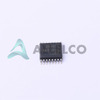
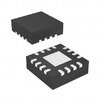
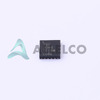
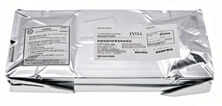
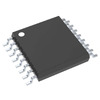
TSC2046IPWR Image
Image may be representation.
See specifications for product details.
EXPRESS OPTION
Payment method

TSC2046IPWR - Texas Instruments

Manufacturer Part Number
TSC2046IPWR
Manufacturer
Texas Instruments
Allelco Part Number
32D-TSC2046IPWR
Warranty
1 Year Allelco Warranty - Find out more
Stock Status:
30,772 pcs available, New & Original
Parts Description
IC SCREEN CNTRL 12BIT 16TSSOP
Package
16-TSSOP
Data sheet
TSC2046IPWR.pdf

PCN Design/Specification

Cylindrical Battery Holders.pdf

HTML Datasheet

TSC2046 Datasheet.pdf
RoHs Status
ROHS3 Compliant
Our certification
In stock: 30772
  • Unit Price: $0.505
  • Subtotal: $0.00

Want a better price?
Add to Cart and Submit RFQ now, we'll contact you immediately.

Quantity Unit Price Ext. Price
1+ $0.505 $0.51
10+ $0.417 $4.17
30+ $0.372 $11.16
100+ $0.328 $32.80
500+ $0.275 $137.50
1000+ $0.262 $262.00
The above prices does not include taxes and freight rates, which will be calculated on the order pages.

Specifications

TSC2046IPWR Tech Specifications
Texas Instruments - TSC2046IPWR technical specifications, attributes, parameters and parts with similar specifications to Texas Instruments - TSC2046IPWR

Product Attribute Attribute Value
Manufacturer Texas Instruments
Voltage Reference Internal
Voltage - Supply 2.2V ~ 5.25V
Touchscreen 4 Wire Resistive
Supplier Device Package 16-TSSOP
Series -
Resolution (Bits) 12 b
Product Attribute Attribute Value
Package / Case 16-TSSOP (0.173', 4.40mm Width)
Package Tape & Reel (TR)
Operating Temperature -40°C ~ 85°C
Mounting Type Surface Mount
Interface SPI
Current - Supply 780 µA
Base Product Number TSC2046

Environmental & Export Classifications

ATTRIBUTE DESCRIPTION
RoHs Status ROHS3 Compliant
Moisture Sensitivity Level (MSL) 1 (Unlimited)
REACH Status REACH Unaffected
ECCN EAR99
HTSUS 8542.39.0001

Parts Introduction

TSC2046IPWR Image
TSC2046IPWR (1)

Manufacturer Part Number

TSC2046IPWR

Manufacturer

Texas Instruments

Introduction

High-performance, low-power, 12-bit ADC-based touch screen controller

Designed for small, low-power, handheld devices

Product Features and Performance

12-bit ADC resolution for high-precision touch sensing

4-wire resistive touch screen support

Internal voltage reference

Low power consumption of 780 μA

Wide operating voltage range from 2.2 V to 5.25 V

Fast sampling rate up to 120 Hz

SPI serial interface for easy communication with host processor

Product Advantages

Ideal for small, battery-powered devices with touch screen interfaces

Provides high-accuracy touch sensing with low power consumption

Simplifies design with integrated voltage reference and 4-wire touch screen support

Flexible SPI interface allows easy integration with host processors

Key Technical Parameters

12-bit ADC resolution

4-wire resistive touch screen support

Operating voltage range: 2.2 V to 5.25 V

Supply current: 780 μA

Operating temperature range: -40°C to 85°C

Quality and Safety Features

RoHS3 compliant

16-TSSOP package for small form factor designs

Compatibility

Suitable for a wide range of touch-enabled devices, including smartphones, tablets, portable gaming consoles, and industrial control panels

Application Areas

Handheld and portable devices with touch screen interfaces

Small, battery-powered electronics

Industrial control panels and human-machine interfaces (HMIs)

Product Lifecycle

Currently in production

Replacement or upgrade parts may be available in the future as technology evolves

Key Reasons to Choose This Product

High-precision 12-bit touch sensing for accurate and responsive user input

Low power consumption for extended battery life in portable devices

Integrated voltage reference and 4-wire touch screen support simplifies design

Flexible SPI interface allows easy integration with host processors

Compact 16-TSSOP package for space-constrained applications

Frequently Asked Questions(FAQ)

How does the TSC2046IPWR’s 12-bit resolution impact touchscreen accuracy in resistive touch panel applications, and what are the practical implications for noise immunity and sampling rate trade-offs?
The TSC2046IPWR provides 12-bit resolution across both X and Y axes, enabling sub-millimeter positional accuracy typical of mid-tier resistive touch panels. This level of granularity supports precise cursor control and gesture recognition in embedded HMI systems. However, higher resolution increases conversion time—typically around 1.2 ms per measurement at standard SPI clock rates—which can limit refresh rates in high-speed scanning scenarios. Designers must balance resolution requirements against response latency, especially in battery-powered devices where power efficiency (780 µA supply current) is critical. Noise filtering algorithms or oversampling may be required in electrically noisy environments to maintain effective precision.
What are the key differences between using the TSC2046IPWR with external versus internal voltage references, and how does this affect system calibration and long-term stability?
The TSC2046IPWR supports both internal and external voltage references, offering flexibility depending on application needs. When using the internal reference, system complexity decreases and BOM cost reduces by up to 15%, but temperature drift (±50 ppm/°C) and aging effects over time may introduce calibration drift in precision applications. In contrast, an externally regulated reference like a precision bandgap can improve absolute accuracy to ±0.5% over industrial temperature ranges, which is beneficial for medical or instrumentation-grade touch interfaces. For most consumer electronics, the internal reference suffices, but designs requiring certification or long-term reliability often opt for external references to mitigate offset errors during factory calibration.
Can the TSC2046IPWR operate reliably in industrial environments with wide temperature swings, and what design considerations are needed for thermal compensation?
Yes, the TSC2046IPWR operates from -40°C to +85°C, making it suitable for many industrial control panels and automotive infotainment systems. However, resistive touch sensors themselves exhibit nonlinear behavior with temperature due to ITO layer resistivity changes and substrate expansion. While the IC compensates for reference voltage drift internally, the overall system accuracy depends on the touch sensor’s material properties. To ensure stable performance, designers should implement software-based lookup tables calibrated across extreme temperatures or use real-time baseline tracking via periodic null-point detection routines.
How does the TSC2046IPWR compare to similar touch controllers like the ADS7846 when interfacing with 4-wire resistive touchscreens, particularly in terms of power consumption and interface overhead?
Compared to the older ADS7846, the TSC2046IPWR consumes significantly less static current—780 µA vs. ~1 mA—making it more suitable for portable devices. Both support 4-wire resistive sensing and SPI interfaces, but the TSC2046 offers higher 12-bit resolution versus the ADS7846’s 12-bit nominal (with variable actual performance). The TSC2046 also includes built-in voltage regulation and better ESD protection (HBM Class 2), reducing external component count. However, the ADS7846 has been widely adopted in legacy designs, so migration requires attention to timing margins in command sequences and potential need for level shifting if operating at different logic voltages.
What precautions should be taken when routing SPI signals near analog traces in a PCB layout with the TSC2046IPWR to minimize crosstalk and ensure reliable touch detection?
To avoid interference, the TSC2046IPWR’S SPI lines (CLK, DIN, DOUT, CS) should be routed at least 3 mm away from analog input paths such as the X+ and Y+ excitation lines. Ground planes should remain unbroken beneath the controller package, and decoupling capacitors (1 µF ceramic + 100 nF) must be placed within 5 mm of the VDD pin. Guard rings around sensitive traces and differential shielding for excitation lines help reject common-mode noise. Poor routing can cause ghost touches or missed detections, especially in electrically noisy environments like motor drives or RF transmitters adjacent to the display stackup.
Is the TSC2046IPWR compatible with 5V microcontrollers, and what level-shifting or voltage translation strategies are recommended for mixed-voltage systems?
The TSC2046IPWR accepts supply voltages from 2.2V to 5.25V, so it can interface directly with 5V MCUs without level shifting if the MCU’s I/O pins tolerate 5V inputs. Most modern 3.3V ARM Cortex-M series microcontrollers have 5V-tolerant GPIOs, enabling direct connection. However, if using a non-5V-tolerant processor, bidirectional level translators like TXB0108 or simple resistor dividers (e.g., 1 kΩ/2 kΩ divider) are sufficient for low-speed SPI communication. Always verify timing constraints—SPI clock rates above 1 MHz may require tighter impedance control and shorter trace lengths to maintain signal integrity.
What role does the Moisture Sensitivity Level (MSL) rating play in assembly and storage of the TSC2046IPWR, and how does MSL 1 simplify production workflows?
With an MSL rating of 1, the TSC2046IPWR is considered moisture-insensitive and can be exposed to ambient conditions indefinitely after removal from packaging, provided soldering occurs within one year under normal humidity (<60% RH). This eliminates the need for baking before reflow or strict dry-pack storage protocols, streamlining Just-In-Time manufacturing and reducing logistics costs. It also simplifies handling in field service environments where components are opened and reworked frequently. However, users must still follow JEDEC J-STD-020 guidelines for handling during manual assembly to prevent electrostatic discharge damage.
How does the TSC2046IPWR handle simultaneous touch events, and what limitations exist compared to capacitive multi-touch solutions?
The TSC2046IPWR is designed for single-point resistive touch detection only. It sequentially excites the X and Y axes and measures intersection points, which inherently limits it to one active touch at a time. Unlike capacitive touchscreens that use matrix sensing and advanced DSP algorithms to track multiple fingers, resistive variants struggle with ghosting or false triggers under multi-touch loads due to mechanical deformation overlap. Therefore, the TSC2046IPWR is ideal for applications requiring stylus input or single-finger navigation—such as POS terminals, kiosks, or industrial HMIs—but not smartphones or tablets needing pinch-to-zoom gestures.
What are the typical power-up sequence requirements for the TSC2046IPWR, and why is proper initialization timing important for reliable operation?
The TSC2046IPWR does not require a specific power-up sequence beyond ensuring stable VDD reaches within specification (2.2V–5.25V) before applying reset or commands. However, the internal oscillator and ADC require approximately 500 µs after power-on to stabilize fully. Initializing too early—especially issuing conversion commands within the first millisecond—can result in invalid readings or bus contention. Best practice involves delaying the first host command by ≥1 ms post-power-up and optionally performing a dummy read cycle to flush any residual state from the SPI interface.
How does the cut tape and Digi-Reel® packaging format affect inventory management and automated pick-and-place assembly for the TSC2046IPWR?
The TSC2046IPWR is delivered in standard 7-inch tape and reel formats compliant with EIA-481, enabling seamless integration into surface mount assembly lines. Cut tape (CT) versions are ideal for prototyping and small-batch production, allowing direct placement on PCBs without full reel processing. Digi-Reel® options provide enhanced traceability and compatibility with high-volume manufacturers using automated feeders. Both formats reduce handling errors and minimize lead time variability, supporting lean manufacturing practices while maintaining RoHS3 compliance throughout the supply chain.
What are the implications of using the TSC2046IPWR in battery-powered handheld devices, particularly regarding quiescent current and wake-up latency?
At 780 µA supply current, the TSC2046IPWR contributes modestly to total system power budget in portable devices. Its low standby current enables efficient duty-cycling—for example, waking from sleep every 200 ms to sample touch inputs—extending battery life by several hours compared to continuous-sampling alternatives. Wake-up latency is dominated by the ADC settling time (~1.2 ms per axis) rather than internal circuitry delay, so response remains snappy for human interaction. Designers can further optimize by disabling unused peripherals and using hardware interrupt-driven sampling triggered by GPIO edges instead of polling.
Are there known issues with the TSC2046IPWR’s SPI interface when used with certain microcontroller families, and how can communication failures be diagnosed?
While the TSC2046IPWR complies with standard SPI Mode 0 (CPOL=0, CPHA=0), some MCUs (e.g., older PIC18 series) default to alternate modes or lack native support for half-duplex SPI, requiring bit-banging implementations. Communication failures often stem from incorrect clock polarity, insufficient CS assertion width, or misaligned data frames. Debugging should begin with logic analyzers to capture exact timing waveforms and verify that CS deassertion doesn’t occur prematurely between bytes. Additionally, ensure pull-up resistors (10 kΩ typical) on MISO line if the MCU lacks open-drain outputs.
How does the internal voltage reference in the TSC2046IPWR compare to an external precision reference in terms of long-term drift and calibration interval requirements?
Over a 10-year lifespan, the internal reference may drift by up to ±1.5 mV due to aging effects, whereas a well-selected external reference (e.g., LTZ1000-based solution) can achieve ±0.2 mV drift. This difference becomes significant in high-accuracy applications like medical equipment where touch coordinates must remain within ±2 pixels over years. If using the internal reference, periodic recalibration during boot-up using a known reference point (e.g., corner tap position) helps compensate. External references add cost and board space but eliminate this maintenance burden.
What are the mechanical mounting considerations when integrating the TSC2046IPWR with a resistive touch overlay, and how do frame grounding practices affect EMI susceptibility?
The TSC2046IPWR itself is a surface-mount IC and does not impose mechanical constraints beyond standard PCB layout rules. However, proper grounding of the touch sensor’s frame conductors is critical—connecting all four corners to a clean digital ground plane minimizes loop areas and reduces susceptibility to RF interference. Floating or improperly terminated frames act as antennas, inducing noise on the excitation lines and causing false touches. Use low-impedance connections and avoid routing high-current return paths near sensor traces to preserve signal fidelity.
How does the TSC2046IPWR support firmware development, and what register-level features enable advanced calibration routines?
The TSC2046IPWR exposes configuration registers via SPI that allow fine-tuning of excitation voltage, gain settings, and channel selection. Firmware can implement automatic baseline subtraction, hysteresis thresholds for debouncing, and dynamic range adjustment based on detected contact pressure. For instance, reducing ADC gain during light touches prevents saturation while maintaining sensitivity for stylus use. These capabilities enable custom touch response profiles tailored to specific overlay materials or user preferences without hardware changes.
What environmental factors beyond temperature can degrade the performance of systems using the TSC2046IPWR and its associated resistive touch sensor?
Beyond temperature, humidity causes conductive contamination on the touch surface, leading to erratic readings or permanent shorts between layers. Dust accumulation alters effective resistance, shifting calibration offsets. Mechanical stress from repeated flexing or improper mounting pressures introduces hysteresis in contact detection. Additionally, electromagnetic interference from nearby switching regulators or wireless radios can couple into the analog front-end if shielding is inadequate. Regular cleaning schedules, conformal coating, and EMI-filtered power rails are recommended mitigations in harsh environments.
Can the TSC2046IPWR be used with projected capacitance touch overlays, and what modifications would be required?
No, the TSC2046IPWR is specifically designed for 4-wire resistive touchscreens. Projected capacitance sensors operate on entirely different principles involving mutual capacitance measurement and charge transfer timing, requiring specialized controllers like those in the FocalTech FT6x66 series. Attempting to drive a capacitive overlay through the TSC2046’s excitation scheme would fail because the sensor structure cannot respond appropriately to the analog sweep method used by resistive drivers. Interfacing requires replacing both the sensor and controller with compatible components.
What steps should be taken to validate touchscreen responsiveness during prototype testing with the TSC2046IPWR before committing to production?
Begin with a minimal test circuit including the TSC2046IPWR, 16-TSSOP socket, reference resistors matching the touch panel specifications, and a known-good microcontroller running basic command scripts. Measure contact linearity using grid patterns, assess response time under varying loads, and perform EMC pre-compliance scans. Validate across full operating temperature range (-40°C to +85°C) and simulate worst-case noise conditions using injected signals. Document baseline parameters such as minimum detectable force, maximum excursion, and ghost touch occurrences to establish acceptance criteria for mass production.

Parts with Similar Specifications

The three parts on the right have similar specifications to Texas Instruments TSC2046IPWR

Product Attribute TSC2046IPWRG4 TSC2046EQPWRQ1 TSC2046IPW TSC2046IPWG4
Part Number TSC2046IPWRG4 TSC2046EQPWRQ1 TSC2046IPW TSC2046IPWG4
Manufacturer Texas Instruments Texas Instruments Texas Instruments Texas Instruments
Touchscreen - - - -
Interface - - - -
Package - Tape & Reel (TR) Tube Tape & Reel (TR)
Series - - - -
Voltage Reference - - - -
Current - Supply - - - -
Base Product Number - DAC34H84 MAX500 ADS62P42
Voltage - Supply - - - -
Supplier Device Package - 196-NFBGA (12x12) 16-PDIP 64-VQFN (9x9)
Operating Temperature - -40°C ~ 85°C 0°C ~ 70°C -40°C ~ 85°C
Mounting Type - Surface Mount Through Hole Surface Mount
Resolution (Bits) - - - -
Package / Case - 196-LFBGA 16-DIP (0.300', 7.62mm) 64-VFQFN Exposed Pad

TSC2046IPWR Datasheet PDF

Download TSC2046IPWR pdf datasheets and Texas Instruments documentation for TSC2046IPWR - Texas Instruments.

PCN Design/Specification
Cylindrical Battery Holders.pdf
HTML Datasheet
TSC2046 Datasheet.pdf

Customer Reviews

Evaluation: 10 Articles

  • Nath***rooks
    Jun 11, 2026

    Installed this power component in a converter board. Output remained stable under different load conditions and thermal performance was better than expected.

  • Dani***alkerTech
    Jun 1, 2026

    Product works, but setup took more effort than expected. Once configured the MCU ran reliably, although documentation support felt older compared with newer platforms. Fine for maintenance projects.

  • Yuki***aka88
    May 26, 2026

    信号通信プロジェクトでこのRS-485トランシーバーを使用しました。設置は簡単で、長距離ケーブルでも通信は安定していました。消費電力も、以前使用していたものより低くなっています。

  • Stev***aker
    May 20, 2026

    Solid diode for power rectification. Works well in switching circuits.

  • Bran***Lewis
    May 11, 2026

    Compact FPGA with good performance. Suitable for basic signal processing tasks.

  • Oliv***arris
    May 7, 2026

    Reliable I/O expander. Works well in embedded control applications.

  • Jess***Jones
    Apr 17, 2026

    It offers good value for the price, and the specifications match the description. I’ve been using it for two days with no issues, and I’ll definitely buy it again if I need it in the future.

  • Mich***Smith
    Apr 17, 2026

    Shipping was on time, the component pins are neatly aligned, and I tested 10 of them with a multimeter—all readings were within the specified range. Highly recommended.

  • Aman***arris
    Apr 3, 2026

    It was great—the entire process, from placing the order to receiving the package, went very smoothly. The components were consistent, the price was fair, and I had a very pleasant shopping experience.

  • Mike***nch
    Apr 3, 2026

    Better than expected! The resistance and capacitance readings were spot-on, and it passed the test on the first try. The service was reliable, and the packaging was thoughtful—I highly recommend it.

Write a Review

Your Email address will not be published.

Shipment

Delivery Time

In-stock items can be shipped within 24 hours. Some parts will be arranged for delivery within 1-2 days from the date all items arrive at our warehouse. And Allelco ships order once a day at about 17:00, except Sunday. Once the goods are shipped, the estimated delivery time depends on the shipping methods and Delivery destination. The table below shows are the logistic time for some common countries.

Delivery Cost

  1. Use your express account for shipment if you have one.
  2. Use our account for the shipment. Refer to the table below for the approximate charges.
(Different time frame / countries / package size has different price.)

Delivery Method

  1. Global Common Shipment by DHL / UPS / FedEx / TNT / EMS / SF we support.
  2. Others more shipping ways, please get in touch with your customer manager.

Common Countries Logistic Time Reference
Region Country Logistic Time(Day)
America United States 5
Brazil 7
Europe Germany 5
United Kingdom 4
Italy 5
Oceania Australia 6
New Zealand 5
Asia India 4
Japan 4
Middle East Israel 6
DHL & FedEx Shipment Charges Reference
Shipment charges(KG) Reference DHL(USD$)
0.00kg-1.00kg USD$30.00 - USD$60.00
1.00kg-2.00kg USD$40.00 - USD$80.00
2.00kg-3.00kg USD$50.00 - USD$100.00
Note:
The above table is for reference only. There may have some data bias for the uncontrollable factors.
Contact us if you have any questions.
  • QC (Quality Warranty)
  • Payment Support
  • Packaging
  • Certifications & Memberships

QC (Quality Warranty)

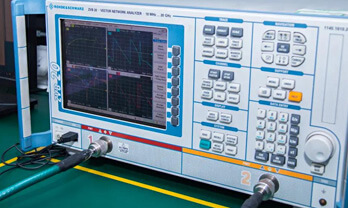
Allelco is committed to exceeding customer expectations through customer service excellence, order accuracy, and on-time delivery.
This is achieved through our commitment to the continual improvement of our processes, services, and products.


Strict quality inspection builds a solid foundation for electronic component quality.
  1. Visual inspection
  2. Performance testing and reliability verification
  3. Standardized full-process testing
  4. Precise control of every parameter
We eliminate defective components and ensure the stable operation of electronic devices through professional quality standards.

Payment Support

The payment method can be chosen from the methods shown below: Wire Transfer (T/T, Bank Transfer), Western Union, Credit card, PayPal.
  • HKBea
  • Paypal
  • MasterCard
  • Western-Union
  • VISA
Stable Delivery, Sincere Partnership — Your Faithful Supply Chain Partner
  • Efficient Supply Management
  • Cost-Saving Procurement
  • Fast Sourcing & Delivery
Contact us if you have any questions.

Packaging

Electrostatic Discharge Protection and Handling

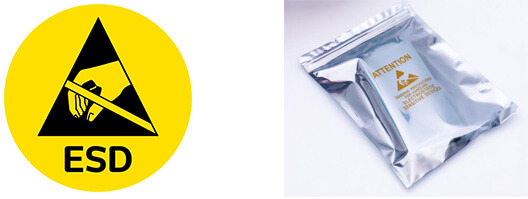
All electrostatic-sensitive components are handled in accordance with electrostatic discharge control procedures. The products are hermetically sealed in anti-static safe packaging to prevent electrostatic damage. Appropriate labeling is also applied for identification and traceability. This ensures product integrity during storage, handling and transportation.


ESD

Certifications & Memberships

Third-party certified, strict quality control. Our certification
  • ISO 9001: 2015
  • ISO 13485: 2016
  • ISO 14001: 2015
  • ISO 28000: 2007
  • ISO 45001: 2018
  • GB/T 27922-2011
  • SMTA
  • IPC
  • ESD
  • PSMA
TSC2046IPWR Image

TSC2046IPWR

Texas Instruments
32D-TSC2046IPWR

Want a better price? Add to Cart and Submit RFQ now, we'll contact you immediately.

0 RFQ
Shopping cart (0 Items)
It is empty.
Compare List (0 Items)
It is empty.
Feedback

Your feedback matters! At Allelco, we value the user experience and strive to improve it constantly.
Please share your comments with us via our feedback form, and we'll respond promptly.
Thank you for choosing Allelco.

Subject
E-mail
Comments
Captcha
Drag or click to upload file
Upload File
types: .xls, .xlsx, .doc, .docx, .jpg, .png and .pdf.
Max file size: 10MB