View All

Please refer to the English Version as our Official Version.Return

Europe
France(Français) Germany(Deutsch) Italy(Italia) Russian(русский) Poland(polski) Czech(Čeština) Luxembourg(Lëtzebuergesch) Netherlands(Nederland) Iceland(íslenska) Hungarian(Magyarország) Spain(español) Portugal(Português) Turkey(Türk dili) Bulgaria(Български език) Ukraine(Україна) Greece(Ελλάδα) Israel(עִבְרִית) Sweden(Svenska) Finland(Svenska) Finland(Suomi) Romania(românesc) Moldova(românesc) Slovakia(Slovenská) Denmark(Dansk) Slovenia(Slovenija) Slovenia(Hrvatska) Croatia(Hrvatska) Serbia(Hrvatska) Montenegro(Hrvatska) Bosnia and Herzegovina(Hrvatska) Lithuania(lietuvių) Spain(Português) Switzerland(Deutsch) United Kingdom(English)
Asia/Pacific
Japan(日本語) Korea(한국의) Thailand(ภาษาไทย) Malaysia(Melayu) Singapore(Melayu) Vietnam(Tiếng Việt) Philippines(Pilipino)
Africa, India and Middle East
United Arab Emirates(العربية) Iran(فارسی) Tajikistan(فارسی) India(हिंदी) Madagascar(malaɡasʲ)
South America / Oceania
New Zealand(Maori) Brazil(Português) Angola(Português) Mozambique(Português)
North America
United States(English) Canada(English) Haiti(Ayiti) Mexico(español)
HomeProductsIntegrated Circuits (ICs)Specialized ICsADC104S051CIMM/NOPB
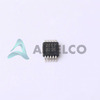
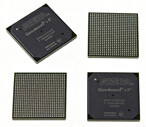
Image may be representation.
See specifications for product details.
EXPRESS OPTION
Payment method

ADC104S051CIMM/NOPB - Texas Instruments

Manufacturer Part Number
ADC104S051CIMM/NOPB
Manufacturer
Texas Instruments
Allelco Part Number
41D-ADC104S051CIMM/NOPB
Warranty
1 Year Allelco Warranty - Find out more
Stock Status:
10,150 pcs available, New & Original
Parts Description
VSSOP-10
Data sheet
-
Category
Integrated Circuits (ICs) > Specialized ICs
RoHs Status
Our certification
In stock: 10150
  • Unit Price: $3.739
  • Subtotal: $0.00

Want a better price?
Add to Cart and Submit RFQ now, we'll contact you immediately.

Quantity Unit Price Ext. Price
1+ $3.739 $3.74
10+ $3.278 $32.78
30+ $2.997 $89.91
100+ $2.762 $276.20
The above prices does not include taxes and freight rates, which will be calculated on the order pages.

Specifications

ADC104S051CIMM/NOPB Tech Specifications
Texas Instruments - ADC104S051CIMM/NOPB technical specifications, attributes, parameters and parts with similar specifications to Texas Instruments - ADC104S051CIMM/NOPB

Product Attribute Attribute Value
Part Number ADC104S051CIMM/NOPB
Package VSSOP-10
Description VSSOP-10
Stock Condition Get 10150 pcs available quantity at Allelco
Payment PayPal / TT / Credit Card / Western Union
Allelco Certifications ESD / ISO 9001 / ISO 13485 / ISO 28000
Product Attribute Attribute Value
Manufacturer Texas Instruments
RoHs Status -
Warranty 100% Perfect Functions
Transport port Hong Kong
Shipping by DHL / FedEx / UPS / TNT / SF Express
RFQ Email info@allelco.com

Parts Introduction

Manufacturer Part Number

ADC104S051CIMM/NOPB

Manufacturer

Texas Instruments

Introduction

The ADC104S051CIMM/NOPB is a high-performance, low-power 10-bit analog-to-digital converter (ADC) with four input channels. It features a successive approximation register (SAR) architecture, offering fast conversion rates, low power consumption, and a simple serial interface.

Product Features and Performance

10-bit resolution

500 kSPS sampling rate

4 single-ended input channels

SAR architecture for fast conversion

Low power consumption

SPI/DSP-compatible serial interface

Product Advantages

High sampling rate for demanding applications

Low power consumption for battery-operated devices

Compact 10-TFSOP/10-MSOP package

Key Reasons to Choose This Product

Excellent performance-to-power ratio

Versatile input configuration with 4 single-ended channels

Easy integration with microcontrollers and digital signal processors

Reliable and robust design from a trusted manufacturer

Quality and Safety Features

Industrial temperature range of -40°C to 85°C

Lead-free and RoHS-compliant construction

Compatibility

The ADC104S051CIMM/NOPB is compatible with a wide range of microcontrollers and digital signal processors supporting the SPI or DSP serial interface.

Application Areas

Industrial control systems

Portable and battery-powered devices

Instrumentation and measurement equipment

Automotive electronics

Medical devices

Product Lifecycle

The ADC104S051CIMM/NOPB is an active product, and Texas Instruments currently offers it as a standard part. There are no immediate plans for discontinuation, and customers can expect continued support and availability. If you have any questions or need assistance with alternative or equivalent models, please contact our sales team through our website.

Frequently Asked Questions(FAQ)

How does the ADC104S051CIMM/NOPB perform in terms of effective resolution when operating at its maximum sampling rate of 500kSPS, and what factors might limit its real-world accuracy?
At 500kSPS, the ADC104S051CIMM/NOPB achieves a nominal 10-bit conversion, but practical effective number of bits (ENOB) typically ranges from 8.5 to 9.2 depending on input signal conditions, reference stability, and PCB layout quality. The internal sample-and-hold amplifier shares bandwidth with the SAR core, creating a fixed 1:1 S/H-to-ADC ratio that becomes critical at higher speeds—improper hold time or settling can introduce aperture jitter and distortion. With a supply voltage tolerance of ±0.2V over temperature, even minor rail droop during conversion can degrade linearity. For stable performance near full scale, ensure clean analog supplies with <50mVpp ripple and use bypassing optimized for the 100MHz bandwidth of the device.
Can the ADC104S051CIMM/NOPB be used with a single-ended input configuration across all four channels, and are there any limitations in differential or pseudo-differential applications?
Yes, all four inputs on the ADC104S051CIMM/NOPB support single-ended operation using the internal multiplexer, which allows sequential sampling of each channel through the shared SAR engine. However, when configured for single-ended signals referenced to AGND, noise coupling onto the analog ground plane can directly affect measurement integrity due to the lack of common-mode rejection. While the device does not have dedicated differential inputs, you can implement pseudo-differential measurements by driving one input with the signal and another with a buffered copy of the reference—though this sacrifices channel independence and increases component count. For true differential sensing, consider external instrumentation amplifiers feeding into adjacent single-ended channels.
What is the impact of SPI clock frequency on conversion throughput and data integrity for the ADC104S051CIMM/NOPB, especially when interfacing with microcontrollers running at lower system clocks?
The ADC104S051CIMM/NOPB supports SPI clock frequencies up to 20MHz, allowing full-speed data transfers without wait states. At 500kSPS, each conversion requires 16 clock cycles (12 for conversion + 4 overhead), resulting in an effective SPI rate of 8MSPS. Even with a 16MHz microcontroller, you can achieve sustained throughput by using DMA or double-buffering. However, if the SPI clock exceeds the analog settling requirements—particularly when switching between high-impedance sensor inputs—timing mismatches may cause incomplete charge transfer in the sample capacitor, leading to gain error or missing codes. Ensure the SPI mode matches the required clock polarity and phase (typically Mode 0), and allow sufficient guard time after CS assertion before initiating the first clock edge.
How should power sequencing be managed when integrating the ADC104S051CIMM/NOPB into a mixed-signal system powered from a single 3.3V rail?
Since both analog and digital supplies on the ADC104S051CIMM/NOPB range from 2.7V to 5.25V, a 3.3V system is well within specification. However, simultaneous power-up of AVDD and DVDD must be avoided to prevent latch-up. A recommended approach is to use a power management IC that sequences both rails within 1ms while ensuring AVSS and DGND remain aligned at a single point near the ADC. Decoupling capacitors—one 10µF tantalum and two 0.1µF ceramic per supply—should be placed within 5mm of the package, with analog and digital returns separated only at the star ground. Avoid routing digital return currents under the ADC’s analog input traces, as crosstalk can manifest as offset errors exceeding 1LSB even with perfect calibration.
In comparison to the ADS7881, how does the ADC104S051CIMM/NOPB differ in architecture and suitability for low-power battery-operated data acquisition systems?
Unlike the ADS7881, which uses a parallel-output successive approximation register (SAR) design with fixed output formatting, the ADC104S051CIMM/NOPB features an integrated multiplexer and serial peripheral interface (SPI), enabling flexible multi-channel scanning without additional control logic. While the ADS7881 offers slightly better power efficiency (~1.2mW at 250kSPS), the ADC104S051CIMM/NOPB’s ability to operate down to 2.7V and its MUX-S/H-ADC configuration reduce external component count and simplify firmware—key advantages in space-constrained designs. Additionally, the ADC104S051CIMM/NOPB includes built-in channel selection via SPI commands, whereas the ADS7881 requires manual pin strapping. For most modern microcontrollers, the reduced GPIO usage and standardized communication protocol make the ADC104S051CIMM/NOPB preferable despite marginally higher quiescent current (~1.5mA vs ~0.8mA).
What layout considerations are critical when placing the ADC104S051CIMM/NOPB on a four-layer PCB to minimize noise susceptibility and maintain 10-bit linearity?
On a standard FR4 stackup, isolate the analog front end by routing analog inputs differentially away from digital traces, ideally using orthogonal routing beneath a solid AGND plane. The ADC104S051CIMM/NOPB’s 10-VSSOP package has exposed pads; solder them directly to the inner ground plane with multiple vias to minimize inductance. Keep analog input traces short (<10mm) and avoid stubs or splits in the ground return path. Place decoupling capacitors as close as possible to pins 1 (AVDD) and 5 (DVVD), with their ground connections routed under the package body. Use guard rings around high-impedance sensor inputs and ensure the reference bypass capacitor (if externally provided) sits no more than 2mm from the REFIN pin. Thermal relief patterns should not compromise thermal conductivity for the exposed pad.
How does temperature drift affect the ADC104S051CIMM/NOPB’s integral nonlinearity (INL) and differential nonlinearity (DNL), particularly near the upper operating limit of 85°C?
Over the industrial temperature range (-40°C to 85°C), the ADC104S051CIMM/NOPB maintains DNL within ±1.5LSB and INL within ±2LSB, though these values represent worst-case guarantees rather than typical performance. In practice, INL degradation above 60°C correlates strongly with reference voltage drift—most notably when using an unregulated LDO instead of a precision bandgap source. At 85°C, a 5V supply may droop to 4.8V due to internal leakage, shifting the full-scale range and introducing monotonicity errors in low-signal regions. Calibration routines that measure zero-scale and full-scale codes at runtime can compensate for this shift, but require stable excitation. For precision applications, pair the ADC104S051CIMM/NOPB with a low-drift reference like the REF5050, whose initial accuracy (±0.5%) dominates over the ADC’s inherent linearity budget.
Is it feasible to cascade multiple ADC104S051CIMM/NOPB devices on the same SPI bus for expanded channel counts, and what timing constraints apply?
Yes, multiple ADC104S051CIMM/NOPB units can share an SPI bus using separate chip-select lines, provided each device has unique CS control. The minimum time between conversions on different devices is governed by the tCSH (chip select high time), which must exceed 100ns to guarantee internal state reset. During rapid channel switching, ensure no overlap between CS assertions, as partial conversions may corrupt subsequent results. Daisy-chaining is not supported due to lack of daisy-chainable serial output; instead, use independent CS lines driven by GPIOs. Firmware overhead scales linearly with channel count, so for >16 channels, consider dedicated ADCs per group or multiplexers ahead of a single converter. Clock skew between devices is negligible at <5ns over 20MHz, but keep trace lengths matched within 5mm if sharing a common clock source.
In comparison to the MCP3204, how does the ADC104S051CIMM/NOPB handle simultaneous sampling versus interleaved sampling modes?
The MCP3204 supports true simultaneous sampling of all four channels through its internal crosspoint switch, making it ideal for capturing dynamic signals like bridge sensors or vibration analysis. In contrast, the ADC104S051CIMM/NOPB performs interleaved sampling—each channel is sampled sequentially after the previous one completes—introducing interchannel delay of approximately 2µs at 500kSPS. This makes the ADC104S051CIMM/NOPB unsuitable for applications requiring nanosecond-level alignment across channels, such as phased array radar or multi-axis accelerometer fusion. However, interleaving reduces pin count and simplifies PCB routing, while offering higher effective sampling rates per channel. If simultaneous acquisition is needed, add external analog switches or opt for a dedicated quad-sampling ADC like the LTC2440.
What external components are mandatory for reliable operation of the ADC104S051CIMM/NOPB beyond basic decoupling, and how do they influence dynamic performance?
Beyond the recommended 0.1µF decoupling caps, the ADC104S051CIMM/NOPB requires an external reference buffer if driving from a high-impedance source, since its internal reference presents 10kΩ impedance above 1kHz. A unity-gain opamp buffer (e.g., OPA333) ensures reference stability and prevents droop during conversion bursts. For capacitive sensor interfaces, adding a series resistor (10–100Ω) at each input dampens ringing caused by parasitic inductance in long traces. Input protection diodes are internal but limited to 5.5V; if signals exceed VDD by more than 0.3V, clamp them with Schottky diodes to VDD and AGND. These choices directly impact SNR: poor reference buffering degrades SFDR by 8–12dB, while inadequate input damping introduces peaking in the frequency response, masking true signal content.
How does the ADC104S051CIMM/NOPB compare to the ADS8325 in terms of power consumption versus speed trade-offs for portable medical monitoring devices?
The ADS8325 consumes significantly less power (~1mW at 200kSPS) but maxes out at 200kSPS versus the ADC104S051CIMM/NOPB’s 500kSPS capability. While both support single-supply operation down to 2.7V, the ADC104S051CIMM/NOPB draws ~3mA active current, nearly triple that of the ADS8325, making it less ideal for ultra-low-power sleep modes. However, its integrated multiplexer eliminates the need for external analog switches, saving board space and reducing leakage paths—critical in implantable or wearable designs. The ADC104S051CIMM/NOPB also supports higher-resolution modes through oversampling (not documented in datasheet), whereas the ADS8325 relies strictly on its 12-bit architecture. For ECG or pulse oximetry where 10-bit resolution suffices and channel switching matters, the ADC104S051CIMM/NOPB offers better integration density despite higher static draw.
What are the consequences of exceeding the maximum SPI clock frequency when communicating with the ADC104S051CIMM/NOPB, and how can firmware detect such errors?
Operating above 20MHz risks setup/hold violations on the SDI and SCLK lines, causing metastability in the internal shift register and unpredictable conversion outcomes—often appearing as random missing codes or stuck outputs. The ADC104S051CIMM/NOPB does not flag timing errors; detection relies on post-conversion validation. Implement a checksum test pattern (e.g., ramp from 0x000 to 0x3FF) and verify monotonicity across consecutive reads. Alternatively, monitor the DOUT line during idle periods: valid devices will float high or follow defined idle behavior. If glitches appear, reduce clock speed incrementally until stable operation resumes. Some MCUs include SPI timeout counters; enable these to abort stalled transactions automatically. Never assume SPI integrity without hardware or software verification at design margins.
How should the ADC104S051CIMM/NOPB be initialized before first use, and what initialization sequence ensures repeatable performance across power cycles?
Upon power-up, assert CS low for at least 100ns to reset the internal state machine, then send a dummy byte to flush any residual data. Afterward, configure the channel select register by writing 0x00 to initiate auto-increment mode, allowing continuous cycling through all four inputs. Wait 2µs after CS deassertion to allow internal settling before beginning conversions. Avoid issuing commands immediately after power-on without this delay, as incomplete bias generation can lead to skewed first-sample readings. Store calibration offsets in non-volatile memory during factory testing or periodic background tasks, applying them only after confirming the device is fully operational. This sequence ensures consistent behavior regardless of prior state, especially important after brownout events.
In a system where multiple ADCs share an SPI bus, how does the ADC104S051CIMM/NOPB handle bus contention, and what precautions prevent data corruption?
The ADC104S051CIMM/NOPB’s open-drain DOUT pin prevents electrical conflict during contention, but logical conflicts arise if two devices drive simultaneously. To avoid this, enforce strict CS arbitration: never assert multiple CS lines concurrently, and use hardware-based prioritization (e.g., dedicated GPIOs with interrupt-driven scheduling). When switching devices, deassert CS for at least 100ns before asserting another to meet tCSH requirements. If sharing a master clock, ensure propagation delays don’t cause overlapping edges; otherwise, use separate clock domains or buffer the SCLK line. Firmware should validate received data against expected ranges and implement retry logic with exponential backoff for failed reads. Physical isolation via tri-state buffers adds robustness but increases cost—reserve this for safety-critical systems.
How does the ADC104S051CIMM/NOPB handle input overvoltage conditions, and what external protection circuits are necessary for industrial environments?
Internally, the ADC104S051CIMM/NOPB clamps inputs to VDD + 0.3V and AGND - 0.3V using ESD diodes, but these are not rated for sustained overvoltage. In industrial settings where transients from relays or motors may exceed 6V, add external clamping with dual Schottky diodes (e.g., BAT54S) tied to VDD and AGND, limiting excursions to <5.5V. Series resistors (100Ω–1kΩ) further limit fault current into the protection network. For AC-coupled inputs, include a DC restore circuit to prevent latch-up from large negative swings. Always verify protection diode response time (<1ns) and ensure PCB creepage meets safety standards. Without proper hardening, repeated overvoltage events accelerate die degradation, eventually manifesting as increased INL or complete failure—even if individual samples appear valid.
What role does the internal sample-and-hold play in the ADC104S051CIMM/NOPB’s SAR architecture, and how does its interaction with the ADC core affect conversion accuracy at 500kSPS?
The internal sample-and-hold (S/H) precharges the ADC’s input capacitor to match the instantaneous input voltage before the SAR begins binary search. At 500kSPS, the S/H settles in one clock cycle, but its bandwidth (≈100MHz) creates a trade-off: faster settling improves linearity but increases power and noise. Improper source impedance (>1kΩ) causes charge injection and droop, degrading MSB transitions. The fixed 1:1 S/H-to-ADC ratio means every conversion depends on the previous hold phase, so rapid channel switching without settling time leads to crosstalk between inputs. For best results, keep source impedances <100Ω and use buffered sources when driving capacitive loads. External S/H circuits can override this, but add latency and complexity unless required for sub-100kSPS applications.
How does the ADC104S051CIMM/NOPB compare to the ADS7042 in terms of interface flexibility and scalability for modular sensor nodes?
The ADS7042 offers parallel output with configurable data formats and lower latency (<1µs), making it better suited for direct FPGA or ASIC integration. Conversely, the ADC104S051CIMM/NOPB’s SPI/DSP-compatible interface simplifies connection to microcontrollers lacking dedicated parallel buses, supporting daisy-chaining (via external logic) and easier firmware updates. While the ADS7042 scales better in high-throughput systems, the ADC104S051CIMM/NOPB wins in distributed sensing architectures where wiring simplicity outweighs raw speed. Its 10-bit resolution is sufficient for most environmental monitoring, whereas the ADS7042’s 12-bit depth benefits precision weighing or strain gauge bridges. Choose based on ecosystem compatibility: the ADC104S051CIMM/NOPB integrates seamlessly with ARM Cortex-M series MCUs commonly used in IoT endpoints.
What diagnostic techniques can verify the functional health of the ADC104S051CIMM/NOPB during manufacturing test or field maintenance?
Perform a self-test by applying known voltages (AGND and VREF) and verifying output codes (0x000 and 0x3FF ±1LSB). Inject a 1kHz sine wave at midscale and check for harmonic distortion below -60dBc using FFT analysis. Monitor power supply currents: quiescent draw should stabilize within 1ms of power-up, and active current during conversion bursts should average 3mA ±10%. Validate SPI timing with an oscilloscope: CS pulse width >100ns, SCLK duty cycle 45–55%, and DOUT transition aligned to falling edge. For production testing, automate code distribution checks across all four channels and reject devices showing inconsistent DNL (>1.5LSB variation). Field diagnostics benefit from embedded self-calibration routines that track offset drift over time, flagging aging effects before catastrophic failure occurs.

Customer Reviews

Evaluation: 10 Articles

  • Dani***alkerTech
    Jun 1, 2026

    Product works, but setup took more effort than expected. Once configured the MCU ran reliably, although documentation support felt older compared with newer platforms. Fine for maintenance projects.

  • Yuki***aka88
    May 26, 2026

    信号通信プロジェクトでこのRS-485トランシーバーを使用しました。設置は簡単で、長距離ケーブルでも通信は安定していました。消費電力も、以前使用していたものより低くなっています。

  • Stev***aker
    May 20, 2026

    Solid diode for power rectification. Works well in switching circuits.

  • Bran***Lewis
    May 11, 2026

    Compact FPGA with good performance. Suitable for basic signal processing tasks.

  • Oliv***arris
    May 7, 2026

    Reliable I/O expander. Works well in embedded control applications.

  • Jess***Jones
    Apr 17, 2026

    It offers good value for the price, and the specifications match the description. I’ve been using it for two days with no issues, and I’ll definitely buy it again if I need it in the future.

  • Mich***Smith
    Apr 17, 2026

    Shipping was on time, the component pins are neatly aligned, and I tested 10 of them with a multimeter—all readings were within the specified range. Highly recommended.

  • Aman***arris
    Apr 3, 2026

    It was great—the entire process, from placing the order to receiving the package, went very smoothly. The components were consistent, the price was fair, and I had a very pleasant shopping experience.

  • Mike***nch
    Apr 3, 2026

    Better than expected! The resistance and capacitance readings were spot-on, and it passed the test on the first try. The service was reliable, and the packaging was thoughtful—I highly recommend it.

  • Daic***K.
    Mar 23, 2026

    Very good. No issue after long time testing.

Write a Review

Your Email address will not be published.

Shipment

Delivery Time

In-stock items can be shipped within 24 hours. Some parts will be arranged for delivery within 1-2 days from the date all items arrive at our warehouse. And Allelco ships order once a day at about 17:00, except Sunday. Once the goods are shipped, the estimated delivery time depends on the shipping methods and Delivery destination. The table below shows are the logistic time for some common countries.

Delivery Cost

  1. Use your express account for shipment if you have one.
  2. Use our account for the shipment. Refer to the table below for the approximate charges.
(Different time frame / countries / package size has different price.)

Delivery Method

  1. Global Common Shipment by DHL / UPS / FedEx / TNT / EMS / SF we support.
  2. Others more shipping ways, please get in touch with your customer manager.

Common Countries Logistic Time Reference
Region Country Logistic Time(Day)
America United States 5
Brazil 7
Europe Germany 5
United Kingdom 4
Italy 5
Oceania Australia 6
New Zealand 5
Asia India 4
Japan 4
Middle East Israel 6
DHL & FedEx Shipment Charges Reference
Shipment charges(KG) Reference DHL(USD$)
0.00kg-1.00kg USD$30.00 - USD$60.00
1.00kg-2.00kg USD$40.00 - USD$80.00
2.00kg-3.00kg USD$50.00 - USD$100.00
Note:
The above table is for reference only. There may have some data bias for the uncontrollable factors.
Contact us if you have any questions.
  • QC (Quality Warranty)
  • Payment Support
  • Packaging
  • Certifications & Memberships

QC (Quality Warranty)

Allelco is committed to exceeding customer expectations through customer service excellence, order accuracy, and on-time delivery.
This is achieved through our commitment to the continual improvement of our processes, services, and products.


Strict quality inspection builds a solid foundation for electronic component quality.
  1. Visual inspection
  2. Performance testing and reliability verification
  3. Standardized full-process testing
  4. Precise control of every parameter
We eliminate defective components and ensure the stable operation of electronic devices through professional quality standards.

Payment Support

The payment method can be chosen from the methods shown below: Wire Transfer (T/T, Bank Transfer), Western Union, Credit card, PayPal.
  • HKBea
  • Paypal
  • MasterCard
  • Western-Union
  • VISA
Stable Delivery, Sincere Partnership — Your Faithful Supply Chain Partner
  • Efficient Supply Management
  • Cost-Saving Procurement
  • Fast Sourcing & Delivery
Contact us if you have any questions.

Packaging

Electrostatic Discharge Protection and Handling

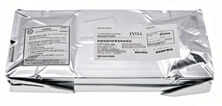
All electrostatic-sensitive components are handled in accordance with electrostatic discharge control procedures. The products are hermetically sealed in anti-static safe packaging to prevent electrostatic damage. Appropriate labeling is also applied for identification and traceability. This ensures product integrity during storage, handling and transportation.


ESD

Certifications & Memberships

Third-party certified, strict quality control. Our certification
  • ISO 9001: 2015
  • ISO 13485: 2016
  • ISO 14001: 2015
  • ISO 28000: 2007
  • ISO 45001: 2018
  • GB/T 27922-2011
  • SMTA
  • IPC
  • ESD
  • PSMA
Texas Instruments

ADC104S051CIMM/NOPB

Texas Instruments
41D-ADC104S051CIMM/NOPB

Want a better price? Add to Cart and Submit RFQ now, we'll contact you immediately.

0 RFQ
Shopping cart (0 Items)
It is empty.
Compare List (0 Items)
It is empty.
Feedback

Your feedback matters! At Allelco, we value the user experience and strive to improve it constantly.
Please share your comments with us via our feedback form, and we'll respond promptly.
Thank you for choosing Allelco.

Subject
E-mail
Comments
Captcha
Drag or click to upload file
Upload File
types: .xls, .xlsx, .doc, .docx, .jpg, .png and .pdf.
Max file size: 10MB