View All

Please refer to the English Version as our Official Version.Return

Europe
France(Français) Germany(Deutsch) Italy(Italia) Russian(русский) Poland(polski) Czech(Čeština) Luxembourg(Lëtzebuergesch) Netherlands(Nederland) Iceland(íslenska) Hungarian(Magyarország) Spain(español) Portugal(Português) Turkey(Türk dili) Bulgaria(Български език) Ukraine(Україна) Greece(Ελλάδα) Israel(עִבְרִית) Sweden(Svenska) Finland(Svenska) Finland(Suomi) Romania(românesc) Moldova(românesc) Slovakia(Slovenská) Denmark(Dansk) Slovenia(Slovenija) Slovenia(Hrvatska) Croatia(Hrvatska) Serbia(Hrvatska) Montenegro(Hrvatska) Bosnia and Herzegovina(Hrvatska) Lithuania(lietuvių) Spain(Português) Switzerland(Deutsch) United Kingdom(English)
Asia/Pacific
Japan(日本語) Korea(한국의) Thailand(ภาษาไทย) Malaysia(Melayu) Singapore(Melayu) Vietnam(Tiếng Việt) Philippines(Pilipino)
Africa, India and Middle East
United Arab Emirates(العربية) Iran(فارسی) Tajikistan(فارسی) India(हिंदी) Madagascar(malaɡasʲ)
South America / Oceania
New Zealand(Maori) Brazil(Português) Angola(Português) Mozambique(Português)
North America
United States(English) Canada(English) Haiti(Ayiti) Mexico(español)
HomeProductsIntegrated Circuits (ICs)Specialized ICsLM2672MX-ADJ/NOPB
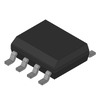
Image may be representation.
See specifications for product details.
EXPRESS OPTION
Payment method

LM2672MX-ADJ/NOPB - Texas Instruments

Manufacturer Part Number
LM2672MX-ADJ/NOPB
Manufacturer
Texas Instruments
Allelco Part Number
41D-LM2672MX-ADJ/NOPB
Warranty
1 Year Allelco Warranty - Find out more
Stock Status:
12,800 pcs available, New & Original
Parts Description
SOIC-8
Data sheet
-
Category
Integrated Circuits (ICs) > Specialized ICs
RoHs Status
Our certification
In stock: 12800
  • Unit Price: $1.496
  • Subtotal: $0.00

Want a better price?
Add to Cart and Submit RFQ now, we'll contact you immediately.

Quantity Unit Price Ext. Price
1+ $1.496 $1.50
10+ $1.317 $13.17
30+ $1.19 $35.70
100+ $1.074 $107.40
500+ $1.02 $510.00
1000+ $0.999 $999.00
The above prices does not include taxes and freight rates, which will be calculated on the order pages.

Specifications

LM2672MX-ADJ/NOPB Tech Specifications
Texas Instruments - LM2672MX-ADJ/NOPB technical specifications, attributes, parameters and parts with similar specifications to Texas Instruments - LM2672MX-ADJ/NOPB

Product Attribute Attribute Value
Part Number LM2672MX-ADJ/NOPB
Package SOIC-8
Description SOIC-8
Stock Condition Get 12800 pcs available quantity at Allelco
Payment PayPal / TT / Credit Card / Western Union
Allelco Certifications ESD / ISO 9001 / ISO 13485 / ISO 28000
Product Attribute Attribute Value
Manufacturer Texas Instruments
RoHs Status -
Warranty 100% Perfect Functions
Transport port Hong Kong
Shipping by DHL / FedEx / UPS / TNT / SF Express
RFQ Email info@allelco.com

Parts Introduction

Manufacturer Part Number

LM2672MX-ADJ/NOPB

Manufacturer

Texas Instruments

Introduction

The LM2672MX-ADJ/NOPB is a high-performance, low-cost, step-down DC-DC switching regulator from Texas Instruments. It is designed to provide a regulated output voltage from an unregulated input voltage, making it suitable for a wide range of applications that require a stable and efficient power supply.

Product Features and Performance

Adjustable output voltage from 1.21V to 37V

Output current up to 1A

Switching frequency of 260kHz

Wide input voltage range of 6.5V to 40V

Operates in both continuous and discontinuous conduction modes

Thermal shutdown and current limit protection

Product Advantages

High efficiency, up to 95%

Compact surface-mount package

Low external component count

Suitable for both low and high power applications

Stable operation over a wide range of input voltages and loads

Key Reasons to Choose This Product

Versatile and adaptable to various power supply requirements

Excellent power conversion efficiency for prolonged battery life

Reliable and robust design with built-in protection features

Cost-effective solution for a wide range of applications

Quality and Safety Features

Compliance with industry standards and regulations

Robust thermal management for reliable operation

Overcurrent, overvoltage, and short-circuit protection

Compatibility

The LM2672MX-ADJ/NOPB is compatible with a wide range of electronic devices and systems that require a regulated power supply, including:

Industrial equipment

Telecommunications infrastructure

Automotive electronics

Consumer electronics

Medical devices

Application Areas

Power supplies for industrial, automotive, and consumer electronics

Battery-powered devices and systems

Distributed power architectures

Portable electronics and handheld devices

Product Lifecycle

The LM2672MX-ADJ/NOPB is an active product and is currently in production. There are no immediate plans for discontinuation. Texas Instruments offers several equivalent or alternative models that may be suitable for your specific application needs. Please contact our website's sales team for more information and to discuss the best solution for your requirements.

Frequently Asked Questions(FAQ)

What are the key design constraints when using the LM2672MX-ADJ/NOPB in a high-input-voltage industrial application?
The LM2672MX-ADJ/NOPB supports an input voltage range of 6.5V to 40V, making it suitable for 24V and 36V industrial bus systems. However, at maximum input voltage, power dissipation in the internal switch increases significantly due to switching losses and conduction losses. With a 1A output current and 40V input, even a 5V output results in approximately 35W of switched power, requiring careful thermal layout and possibly a heatsink despite the 8-SOIC package’s limited thermal dissipation. The junction temperature must remain below 125°C, so ambient temperature and PCB copper area become critical design factors.
How does the 260kHz switching frequency of the LM2672MX-ADJ/NOPB influence external component selection and EMI considerations?
The fixed 260kHz switching frequency simplifies filter design compared to variable-frequency regulators, but it falls within a range that can interfere with AM radio bands (530–1700kHz) through harmonics. Engineers must ensure input and output filters adequately suppress conducted emissions, especially in EMI-sensitive environments. Additionally, the inductor value is inversely proportional to frequency—at 260kHz, a typical 100µH inductor suffices for most 1A applications, reducing physical size compared to lower-frequency alternatives, though core losses may increase with ferrite materials not optimized for this band.
Can the LM2672MX-ADJ/NOPB be used to generate output voltages below 1.21V, and what are the limitations?
No, the LM2672MX-ADJ/NOPB has a minimum output voltage of 1.21V, which is the reference voltage of its internal error amplifier. Attempting to set the output below this threshold using the standard resistor divider network will result in unstable regulation or failure to regulate. For sub-1.2V requirements, a different regulator with a lower reference voltage or a negative-referenced topology would be necessary.
What are the trade-offs between using the LM2672MX-ADJ/NOPB and a synchronous buck converter in a battery-powered system?
The LM2672MX-ADJ/NOPB uses a nonsynchronous topology with an external freewheeling diode, resulting in higher conduction losses during the off-phase of the switching cycle. At light loads, efficiency drops significantly—often below 70% at 100mA output—due to diode forward voltage and switching losses. In contrast, synchronous buck converters replace the diode with a low-RDS(on) MOSFET, improving light-load efficiency and extending battery life. However, the LM2672MX-ADJ/NOPB offers simpler layout, lower component count, and reduced risk of shoot-through, making it preferable in cost-sensitive or noise-tolerant designs where peak efficiency is less critical.
How should the feedback resistor network be designed for the LM2672MX-ADJ/NOPB to ensure stability and accuracy?
The feedback network must set the output voltage using the 1.21V reference with standard resistor values. For example, to achieve 5V output, R1 = 1.2kΩ and R2 = 3.3kΩ yield approximately 5.03V. Precision 1% resistors are recommended to maintain output accuracy within ±2–3%, especially under temperature variation. Additionally, placing the feedback trace close to the FB pin and away from switching nodes minimizes noise pickup. A small capacitor (10pF to 100pF) across the upper resistor can improve phase margin if the output capacitor has high ESR.
What output capacitor characteristics are critical for stable operation with the LM2672MX-ADJ/NOPB?
The LM2672MX-ADJ/NOPB requires an output capacitor with sufficient capacitance and low ESR to maintain loop stability and transient response. Ceramic capacitors (e.g., 10µF to 47µF X5R/X7R) are ideal due to their low ESR, but their effective capacitance drops under DC bias. When using ceramics, verify actual capacitance at the operating voltage. Alternatively, tantalum or polymer capacitors with ESR in the 0.1Ω to 0.5Ω range can be used, but avoid high-ESR aluminum electrolytics, which may cause subharmonic oscillation due to the regulator’s voltage-mode control.
How does the absence of a synchronous rectifier in the LM2672MX-ADJ/NOPB affect thermal performance under high step-down ratios?
Without synchronous rectification, the freewheeling diode (typically an external Schottky) conducts during the off-time, incurring a voltage drop of 0.3V to 0.5V. In high step-down applications—such as 40V to 3.3V at 1A—the diode conducts nearly 92% of the time, dissipating up to 0.46W. This loss increases junction temperature and reduces overall efficiency to around 78%, compared to >88% achievable with synchronous topologies. Thermal vias under the package and a ground plane on the PCB are essential to manage heat in the 8-SOIC package.
What protection features are inherently provided by the LM2672MX-ADJ/NOPB, and where might additional circuitry be needed?
The LM2672MX-ADJ/NOPB includes cycle-by-cycle current limiting and thermal shutdown, which protect against short circuits and overheating. However, it lacks input undervoltage lockout (UVLO), reverse polarity protection, or output overvoltage clamping. In automotive or industrial environments, adding an input fuse, reverse-blocking diode, or TVS diode is advisable. For loads sensitive to overvoltage, a crowbar circuit or supervisory IC may be necessary, as the regulator can enter a high-output state during fault conditions if the feedback path is disrupted.
How does the LM2672MX-ADJ/NOPB compare to the LM2596 in terms of performance and design complexity?
The LM2672MX-ADJ/NOPB operates at 260kHz versus the LM2596’s 150kHz, allowing smaller inductors and faster transient response. It also integrates the control logic and power switch more efficiently, reducing external component count. However, the LM2596 offers slightly better efficiency at very high input voltages due to optimized gate drive and lower quiescent current. The LM2672MX-ADJ/NOPB has a tighter reference voltage tolerance (±1.5%) compared to the LM2596 (±2%), improving output accuracy. For space-constrained designs requiring higher switching frequency and precision, the LM2672MX-ADJ/NOPB is preferable; for ultra-low-cost, high-voltage applications, the LM2596 may still be viable.
What layout practices are essential to minimize noise and ensure reliable operation of the LM2672MX-ADJ/NOPB?
A compact, star-ground layout is critical. The input capacitor must be placed within 5mm of the VIN and GND pins to minimize high-frequency loop area. The SW node should be as small as possible to reduce radiated EMI, and the diode, inductor, and output capacitor should form a tight loop. The feedback trace must be routed away from the inductor and SW pin to avoid coupling switching noise. A solid ground plane under the IC improves thermal performance and reduces ground bounce, especially important given the 8-SOIC package’s limited pin count and thermal resistance.
Can the LM2672MX-ADJ/NOPB be used in parallel configurations to increase output current beyond 1A?
No, the LM2672MX-ADJ/NOPB is not designed for current sharing or paralleling. It lacks synchronization capability and has no mechanism for load balancing. Attempting to parallel two devices without external current-sharing circuitry leads to uneven current distribution due to slight differences in feedback thresholds and switching timing, potentially causing one device to overheat. For higher current requirements, a dedicated multi-phase controller or a higher-current variant like the LM2673 should be used instead.

Customer Reviews

Evaluation: 10 Articles

  • Nath***rooks
    Jun 11, 2026

    Installed this power component in a converter board. Output remained stable under different load conditions and thermal performance was better than expected.

  • Dani***alkerTech
    Jun 1, 2026

    Product works, but setup took more effort than expected. Once configured the MCU ran reliably, although documentation support felt older compared with newer platforms. Fine for maintenance projects.

  • Yuki***aka88
    May 26, 2026

    信号通信プロジェクトでこのRS-485トランシーバーを使用しました。設置は簡単で、長距離ケーブルでも通信は安定していました。消費電力も、以前使用していたものより低くなっています。

  • Stev***aker
    May 20, 2026

    Solid diode for power rectification. Works well in switching circuits.

  • Bran***Lewis
    May 11, 2026

    Compact FPGA with good performance. Suitable for basic signal processing tasks.

  • Oliv***arris
    May 7, 2026

    Reliable I/O expander. Works well in embedded control applications.

  • Jess***Jones
    Apr 17, 2026

    It offers good value for the price, and the specifications match the description. I’ve been using it for two days with no issues, and I’ll definitely buy it again if I need it in the future.

  • Mich***Smith
    Apr 17, 2026

    Shipping was on time, the component pins are neatly aligned, and I tested 10 of them with a multimeter—all readings were within the specified range. Highly recommended.

  • Aman***arris
    Apr 3, 2026

    It was great—the entire process, from placing the order to receiving the package, went very smoothly. The components were consistent, the price was fair, and I had a very pleasant shopping experience.

  • Mike***nch
    Apr 3, 2026

    Better than expected! The resistance and capacitance readings were spot-on, and it passed the test on the first try. The service was reliable, and the packaging was thoughtful—I highly recommend it.

Write a Review

Your Email address will not be published.

Shipment

Delivery Time

In-stock items can be shipped within 24 hours. Some parts will be arranged for delivery within 1-2 days from the date all items arrive at our warehouse. And Allelco ships order once a day at about 17:00, except Sunday. Once the goods are shipped, the estimated delivery time depends on the shipping methods and Delivery destination. The table below shows are the logistic time for some common countries.

Delivery Cost

  1. Use your express account for shipment if you have one.
  2. Use our account for the shipment. Refer to the table below for the approximate charges.
(Different time frame / countries / package size has different price.)

Delivery Method

  1. Global Common Shipment by DHL / UPS / FedEx / TNT / EMS / SF we support.
  2. Others more shipping ways, please get in touch with your customer manager.

Common Countries Logistic Time Reference
Region Country Logistic Time(Day)
America United States 5
Brazil 7
Europe Germany 5
United Kingdom 4
Italy 5
Oceania Australia 6
New Zealand 5
Asia India 4
Japan 4
Middle East Israel 6
DHL & FedEx Shipment Charges Reference
Shipment charges(KG) Reference DHL(USD$)
0.00kg-1.00kg USD$30.00 - USD$60.00
1.00kg-2.00kg USD$40.00 - USD$80.00
2.00kg-3.00kg USD$50.00 - USD$100.00
Note:
The above table is for reference only. There may have some data bias for the uncontrollable factors.
Contact us if you have any questions.
  • QC (Quality Warranty)
  • Payment Support
  • Packaging
  • Certifications & Memberships

QC (Quality Warranty)

Allelco is committed to exceeding customer expectations through customer service excellence, order accuracy, and on-time delivery.
This is achieved through our commitment to the continual improvement of our processes, services, and products.


Strict quality inspection builds a solid foundation for electronic component quality.
  1. Visual inspection
  2. Performance testing and reliability verification
  3. Standardized full-process testing
  4. Precise control of every parameter
We eliminate defective components and ensure the stable operation of electronic devices through professional quality standards.

Payment Support

The payment method can be chosen from the methods shown below: Wire Transfer (T/T, Bank Transfer), Western Union, Credit card, PayPal.
  • HKBea
  • Paypal
  • MasterCard
  • Western-Union
  • VISA
Stable Delivery, Sincere Partnership — Your Faithful Supply Chain Partner
  • Efficient Supply Management
  • Cost-Saving Procurement
  • Fast Sourcing & Delivery
Contact us if you have any questions.

Packaging

Electrostatic Discharge Protection and Handling

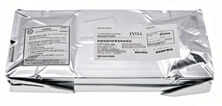
All electrostatic-sensitive components are handled in accordance with electrostatic discharge control procedures. The products are hermetically sealed in anti-static safe packaging to prevent electrostatic damage. Appropriate labeling is also applied for identification and traceability. This ensures product integrity during storage, handling and transportation.


ESD

Certifications & Memberships

Third-party certified, strict quality control. Our certification
  • ISO 9001: 2015
  • ISO 13485: 2016
  • ISO 14001: 2015
  • ISO 28000: 2007
  • ISO 45001: 2018
  • GB/T 27922-2011
  • SMTA
  • IPC
  • ESD
  • PSMA
Texas Instruments

LM2672MX-ADJ/NOPB

Texas Instruments
41D-LM2672MX-ADJ/NOPB

Want a better price? Add to Cart and Submit RFQ now, we'll contact you immediately.

0 RFQ
Shopping cart (0 Items)
It is empty.
Compare List (0 Items)
It is empty.
Feedback

Your feedback matters! At Allelco, we value the user experience and strive to improve it constantly.
Please share your comments with us via our feedback form, and we'll respond promptly.
Thank you for choosing Allelco.

Subject
E-mail
Comments
Captcha
Drag or click to upload file
Upload File
types: .xls, .xlsx, .doc, .docx, .jpg, .png and .pdf.
Max file size: 10MB