View All

Please refer to the English Version as our Official Version.Return

Europe
France(Français) Germany(Deutsch) Italy(Italia) Russian(русский) Poland(polski) Czech(Čeština) Luxembourg(Lëtzebuergesch) Netherlands(Nederland) Iceland(íslenska) Hungarian(Magyarország) Spain(español) Portugal(Português) Turkey(Türk dili) Bulgaria(Български език) Ukraine(Україна) Greece(Ελλάδα) Israel(עִבְרִית) Sweden(Svenska) Finland(Svenska) Finland(Suomi) Romania(românesc) Moldova(românesc) Slovakia(Slovenská) Denmark(Dansk) Slovenia(Slovenija) Slovenia(Hrvatska) Croatia(Hrvatska) Serbia(Hrvatska) Montenegro(Hrvatska) Bosnia and Herzegovina(Hrvatska) Lithuania(lietuvių) Spain(Português) Switzerland(Deutsch) United Kingdom(English)
Asia/Pacific
Japan(日本語) Korea(한국의) Thailand(ภาษาไทย) Malaysia(Melayu) Singapore(Melayu) Vietnam(Tiếng Việt) Philippines(Pilipino)
Africa, India and Middle East
United Arab Emirates(العربية) Iran(فارسی) Tajikistan(فارسی) India(हिंदी) Madagascar(malaɡasʲ)
South America / Oceania
New Zealand(Maori) Brazil(Português) Angola(Português) Mozambique(Português)
North America
United States(English) Canada(English) Haiti(Ayiti) Mexico(español)
HomeProductsIntegrated Circuits (ICs)Specialized ICsSN54LS623J/B
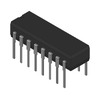
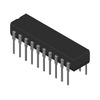
Image may be representation.
See specifications for product details.
EXPRESS OPTION
Payment method

SN54LS623J/B - Texas Instruments

Manufacturer Part Number
SN54LS623J/B
Manufacturer
Texas Instruments
Allelco Part Number
32D-SN54LS623J/B
Warranty
1 Year Allelco Warranty - Find out more
Stock Status:
12,350 pcs available, New & Original
Parts Description
DAC91001
Data sheet
-
Category
Integrated Circuits (ICs) > Specialized ICs
RoHs Status
Our certification
In stock: 12350

Required fields are indicated by an asterisk (*)
Please send RFQ, we will respond immediately.

Quantity

Specifications

SN54LS623J/B Tech Specifications
Texas Instruments - SN54LS623J/B technical specifications, attributes, parameters and parts with similar specifications to Texas Instruments - SN54LS623J/B

Product Attribute Attribute Value
Part Number SN54LS623J/B
Package DAC91001
Description DAC91001
Stock Condition Get 12350 pcs available quantity at Allelco
Payment PayPal / TT / Credit Card / Western Union
Allelco Certifications ESD / ISO 9001 / ISO 13485 / ISO 28000
Product Attribute Attribute Value
Manufacturer Texas Instruments
RoHs Status -
Warranty 100% Perfect Functions
Transport port Hong Kong
Shipping by DHL / FedEx / UPS / TNT / SF Express
RFQ Email info@allelco.com

Frequently Asked Questions(FAQ)

How does the propagation delay of the SN54LS623J/B compare to standard LS-series devices, and what implications does this have for synchronous system timing?
The SN54LS623J/B exhibits typical propagation delays consistent with the LS (Low-Power Schottky) logic family, generally in the 8–15 ns range depending on loading conditions. This is notably faster than earlier TTL families such as the original 7400 series but slightly slower than more modern low-voltage logic families like 74HC. For synchronous designs operating at moderate clock speeds—such as those below 50 MHz—this performance is adequate. However, in high-speed systems where tight setup and hold margins are critical, even small increases in propagation delay can affect maximum achievable clock rates or require longer bus turnaround times during register-to-register communication.
What supply voltage range should be used when integrating the SN54LS623J/B into a mixed-voltage design environment?
The SN54LS623J/B is designed to operate from a +5 V ± 0.25 V supply, corresponding to a nominal operating voltage of 5 V. While some LS-series components may tolerate brief excursions outside this range, sustained operation beyond 5.5 V risks exceeding absolute maximum ratings and damaging the device. In mixed-voltage environments where upstream or downstream logic uses lower voltages (e.g., 3.3 V), level-shifting circuits should be implemented before interfacing with the SN54LS623J/B. Direct connection between 3.3 V outputs and 5 V inputs is not recommended due to potential input threshold mismatches and reliability concerns.
Can the SN54LS623J/B drive multiple loads without additional buffering, and how does fan-out capability impact real-world circuit layout?
Yes, the SN54LS623J/B supports standard fan-out requirements typical of LS logic: it can reliably drive up to 10 equivalent LS inputs per output under normal conditions. However, this assumes balanced capacitive loading and proper termination. In practical layouts with long traces or distributed capacitance across PCB layers, effective fan-out may decrease significantly. Designers should account for parasitic capacitance in trace routing and consider using buffer stages if driving non-LS loads or high-capacitance signals. Oversizing driver strength unnecessarily increases power dissipation and may degrade rise/fall times due to RC time constants.
What are the thermal considerations when mounting the SN54LS623J/B in a CDIP-20 package on a printed circuit board?
As a ceramic dual-in-line package (CDIP-20), the SN54LS623J/B has limited thermal conductivity compared to surface-mount alternatives. Under continuous full-load operation at 5 V, junction temperatures may exceed 85°C in confined enclosures without adequate airflow. Thermal resistance from junction to ambient (θJA) typically ranges from 30°C/W to 50°C/W depending on board copper area and convection. Engineers should ensure sufficient clearance around the package and avoid placing heat-sensitive components nearby. If operating in harsh environments, derating output current or reducing switching frequency may be necessary to maintain safe junction temperatures.
How does input hysteresis behavior differ between high-level and low-level thresholds in the SN54LS623J/B, and what noise immunity benefits does this provide?
The SN54LS623J/B features defined input transition thresholds: VIH(min) ≈ 2.0 V and VIL(max) ≈ 0.8 V at 5 V supply. This creates an input hysteresis window of approximately 1.2 V, which enhances noise immunity by preventing false triggering from slow-varying glitches within the invalid region. The hysteresis margin reduces susceptibility to electromagnetic interference (EMI) or ground bounce effects common in industrial or automotive applications. However, unlike specialized Schmitt-trigger devices, this is not an intrinsic Schmitt input structure but rather a result of internal transistor biasing in the LS architecture.
What is the maximum allowable leakage current through unused inputs of the SN54LS623J/B, and why must they be terminated?
Each unused input on the SN54LS623J/B can exhibit input bias currents up to ±20 µA under worst-case conditions. When left floating, these inputs act as antennas for stray electromagnetic energy, potentially causing unpredictable logic states or increased power consumption. To prevent erratic behavior, all unused inputs should be tied to a valid logic level—either VCC via a pull-up resistor (~10 kΩ) or GND via a pull-down. This also stabilizes internal node voltages and ensures consistent noise margins across the entire operating temperature range.
In comparison to CMOS equivalents, what power consumption characteristics make the SN54LS623J/B suitable or unsuitable for battery-powered systems?
The SN54LS623J/B consumes static power on the order of tens of milliwatts per gate when active, primarily due to bipolar transistor switching and relatively high quiescent current. For example, at 5 V and room temperature, total supply current might reach 10–15 mA with multiple outputs toggling simultaneously. This makes it ill-suited for ultra-low-power applications where nanoamp-level sleep currents are essential. In contrast, CMOS variants like 74HCxx consume microamps or less. Thus, while the SN54LS623J/B offers speed and noise tolerance, it trades off efficiency—a key consideration when selecting logic families for portable or energy-constrained designs.
How reliable is the SN54LS623J/B over industrial temperature ranges, and what derating practices apply during environmental stress testing?
As an industrial-grade component, the SN54LS623J/B is specified for operation from -40°C to +85°C. However, its performance degrades at elevated temperatures: propagation delay increases by roughly 0.5 ns/°C near the upper limit, and output drive strength decreases slightly due to reduced carrier mobility. During qualification testing, engineers often derate input/output currents by 20% and reduce maximum clock frequency by 10–15% to maintain timing margins. Additionally, decoupling capacitors must be sized appropriately to handle increased dynamic current demands at high temperatures, ensuring stable voltage rails despite higher ripple sensitivity.
Can the SN54LS623J/B be used interchangeably with commercial-grade SN74LS623N in space-constrained embedded projects?
While functionally similar, the SN54LS623J/B (military/industrial grade) and SN74LS623N (commercial grade) are not fully interchangeable without qualification. The J variant undergoes stricter screening, operates over a wider temperature range, and may include extended burn-in testing. In space-constrained systems where board area is limited but environmental robustness is needed (e.g., industrial controls), the J variant’s reliability justifies its larger footprint. Conversely, in consumer electronics with strict BOM cost targets and controlled thermal environments, the N variant suffices. Always verify interface compatibility and regulatory compliance when substituting parts.
What precautions are required when handling the CDIP-20 package during manual assembly or rework of the SN54LS623J/B?
The ceramic dual-in-line package (CDIP-20) of the SN54LS623J/B is sensitive to mechanical stress and moisture absorption. During handling, avoid excessive bending or twisting of leads, which can crack internal die attach or bond wires. Use ESD-safe workstations with grounded wrist straps, as ceramic packages are prone to electrostatic discharge damage. Rework requires precise hot-air tools set to 350–400°C with minimal dwell time (<3 seconds per side) to prevent thermal shock. Preheating the PCB to 120°C helps reduce warpage and improves solder joint integrity. Failure to follow these guidelines risks latent defects that may manifest under operational stress.
How does output short-circuit current capability affect fault tolerance when using the SN54LS623J/B in fault-isolated subsystems?
The SN54LS623J/B can source/sink up to 8 mA per output under short-circuit conditions before current-limiting mechanisms engage. This provides modest protection against accidental shorts but is insufficient for driving inductive loads or large capacitive banks without external current limiting. In fault-tolerant designs, series resistors (typically 22–100 Ω) are often placed at outputs to absorb transient surges and isolate failures. Combined with open-collector configurations or external MOSFET drivers, this approach limits damage propagation while preserving system functionality in degraded modes.
What are the key differences between edge-triggered and level-sensitive modes in the SN54LS623J/B, and when would each be preferable?
The SN54LS623J/B contains three independent D-type flip-flops configured for edge-triggered operation on rising clock edges. Unlike level-sensitive latches, edge-triggered devices only sample input data at discrete transitions, reducing race conditions in asynchronous paths. This mode is ideal for synchronous counters or pipelined data processing where deterministic timing is critical. Level-sensitive behavior (if inadvertently created by improper clock gating) can lead to metastability or glitch propagation. Therefore, always ensure clean clock edges and adequate setup/hold times relative to the 8–15 ns propagation delays.
Is it acceptable to cascade multiple SN54LS623J/B devices without intermediate buffering, and what cumulative timing errors might arise?
Cascading SN54LS623J/B stages is feasible for shallow pipelines (≤3 levels), provided total propagation delay remains well below the clock period divided by safety margin (e.g., <20% of clock cycle). However, cumulative skew between clock paths and data paths introduces phase misalignment. For instance, two cascaded stages with 12 ns and 14 ns delays yield 26 ns total latency—potentially violating timing constraints at clocks above 30 MHz. Clock distribution networks should minimize skew, and output enable signals should be synchronized to prevent bus contention during transitions.
What role does decoupling capacitance play in stabilizing the SN54LS623J/B during rapid state changes, and how much is typically required?
Rapid output transitions cause transient current spikes as internal nodes charge/discharge parasitic capacitances. Without sufficient local decoupling, voltage droop on the 5 V rail can induce logic errors. A typical rule of thumb is one 0.1 µF ceramic capacitor per power pin (VCC and GND), placed within 5 mm of the SN54LS623J/B. Additional bulk capacitance (e.g., 10 µF tantalum) may be needed for boards with multiple high-speed ICs sharing the same power plane. Poor decoupling manifests as increased ground bounce and degraded noise margins, especially at temperatures near the upper specification limit.
How does aging and parametric drift affect long-term reliability of the SN54LS623J/B in continuous-operation systems?
Over years of operation, the SN54LS623J/B experiences gradual parameter shifts due to oxide wearout and junction degradation. Propagation delay may increase by 5–10% after 10,000 hours at elevated temperatures (e.g., 85°C), while input thresholds shift slightly toward mid-supply voltage. These changes slowly erode noise margins but rarely cause immediate failure. To mitigate risk in mission-critical systems, periodic functional tests or redundancy schemes are advised. Designers should allocate initial timing budgets with 20% overhead to accommodate long-term drift without compromising system stability.
What are the legal and export control implications of sourcing the SN54LS623J/B from certain regions, particularly regarding military or aerospace applications?
The SN54LS623J/B is classified as an industrial-grade component but carries U.S. export control classification number (ECCN) 1A995, which restricts its use in certain military or cryptographic systems without authorization. Sourcing from unauthorized distributors may violate international trade regulations, including ITAR or EAR. For aerospace or defense contracts, traceability and certification (e.g., MIL-PRF-38535) become mandatory. Always verify supplier credentials and request certificates of conformance aligned with applicable standards before deploying in regulated environments.
How does the absence of surface-mount packaging affect PCB design flexibility when implementing the SN54LS623J/B?
The CDIP-20 through-hole package of the SN54LS623J/B occupies significantly more board real estate than equivalent SOIC or TSSOP variants. Routing dense digital buses becomes challenging, and thermal vias cannot be efficiently integrated beneath the ceramic body. This limits miniaturization efforts and complicates automated assembly. In modern designs favoring high-density layouts, designers may opt for functionally equivalent surface-mount alternatives—provided they meet performance, power, and environmental requirements—to achieve smaller form factors and improved signal integrity.
What diagnostic features does the SN54LS623J/B offer for debugging timing violations in prototype hardware?
The SN54LS623J/B lacks built-in test structures or scan chains, so debugging relies on external instrumentation. Common strategies include using logic analyzers to capture clock/data relationships, probing outputs with high-impedance scopes to observe glitches, and inserting series resistors to dampen ringing. Since propagation delays are fixed and predictable within datasheet bounds, timing analysis must account for worst-case process corners and temperature extremes. Iterative prototyping with adjusted clock phases or added pipeline stages often resolves marginal cases without modifying the core SN54LS623J/B configuration.

Customer Reviews

Evaluation: 10 Articles

  • Nath***rooks
    Jun 11, 2026

    Installed this power component in a converter board. Output remained stable under different load conditions and thermal performance was better than expected.

  • Dani***alkerTech
    Jun 1, 2026

    Product works, but setup took more effort than expected. Once configured the MCU ran reliably, although documentation support felt older compared with newer platforms. Fine for maintenance projects.

  • Yuki***aka88
    May 26, 2026

    信号通信プロジェクトでこのRS-485トランシーバーを使用しました。設置は簡単で、長距離ケーブルでも通信は安定していました。消費電力も、以前使用していたものより低くなっています。

  • Stev***aker
    May 20, 2026

    Solid diode for power rectification. Works well in switching circuits.

  • Bran***Lewis
    May 11, 2026

    Compact FPGA with good performance. Suitable for basic signal processing tasks.

  • Oliv***arris
    May 7, 2026

    Reliable I/O expander. Works well in embedded control applications.

  • Jess***Jones
    Apr 17, 2026

    It offers good value for the price, and the specifications match the description. I’ve been using it for two days with no issues, and I’ll definitely buy it again if I need it in the future.

  • Mich***Smith
    Apr 17, 2026

    Shipping was on time, the component pins are neatly aligned, and I tested 10 of them with a multimeter—all readings were within the specified range. Highly recommended.

  • Aman***arris
    Apr 3, 2026

    It was great—the entire process, from placing the order to receiving the package, went very smoothly. The components were consistent, the price was fair, and I had a very pleasant shopping experience.

  • Mike***nch
    Apr 3, 2026

    Better than expected! The resistance and capacitance readings were spot-on, and it passed the test on the first try. The service was reliable, and the packaging was thoughtful—I highly recommend it.

Write a Review

Your Email address will not be published.

Shipment

Delivery Time

In-stock items can be shipped within 24 hours. Some parts will be arranged for delivery within 1-2 days from the date all items arrive at our warehouse. And Allelco ships order once a day at about 17:00, except Sunday. Once the goods are shipped, the estimated delivery time depends on the shipping methods and Delivery destination. The table below shows are the logistic time for some common countries.

Delivery Cost

  1. Use your express account for shipment if you have one.
  2. Use our account for the shipment. Refer to the table below for the approximate charges.
(Different time frame / countries / package size has different price.)

Delivery Method

  1. Global Common Shipment by DHL / UPS / FedEx / TNT / EMS / SF we support.
  2. Others more shipping ways, please get in touch with your customer manager.

Common Countries Logistic Time Reference
Region Country Logistic Time(Day)
America United States 5
Brazil 7
Europe Germany 5
United Kingdom 4
Italy 5
Oceania Australia 6
New Zealand 5
Asia India 4
Japan 4
Middle East Israel 6
DHL & FedEx Shipment Charges Reference
Shipment charges(KG) Reference DHL(USD$)
0.00kg-1.00kg USD$30.00 - USD$60.00
1.00kg-2.00kg USD$40.00 - USD$80.00
2.00kg-3.00kg USD$50.00 - USD$100.00
Note:
The above table is for reference only. There may have some data bias for the uncontrollable factors.
Contact us if you have any questions.
  • QC (Quality Warranty)
  • Payment Support
  • Packaging
  • Certifications & Memberships

QC (Quality Warranty)

Allelco is committed to exceeding customer expectations through customer service excellence, order accuracy, and on-time delivery.
This is achieved through our commitment to the continual improvement of our processes, services, and products.


Strict quality inspection builds a solid foundation for electronic component quality.
  1. Visual inspection
  2. Performance testing and reliability verification
  3. Standardized full-process testing
  4. Precise control of every parameter
We eliminate defective components and ensure the stable operation of electronic devices through professional quality standards.

Payment Support

The payment method can be chosen from the methods shown below: Wire Transfer (T/T, Bank Transfer), Western Union, Credit card, PayPal.
  • HKBea
  • Paypal
  • MasterCard
  • Western-Union
  • VISA
Stable Delivery, Sincere Partnership — Your Faithful Supply Chain Partner
  • Efficient Supply Management
  • Cost-Saving Procurement
  • Fast Sourcing & Delivery
Contact us if you have any questions.

Packaging

Electrostatic Discharge Protection and Handling

All electrostatic-sensitive components are handled in accordance with electrostatic discharge control procedures. The products are hermetically sealed in anti-static safe packaging to prevent electrostatic damage. Appropriate labeling is also applied for identification and traceability. This ensures product integrity during storage, handling and transportation.


ESD

Certifications & Memberships

Third-party certified, strict quality control. Our certification
  • ISO 9001: 2015
  • ISO 13485: 2016
  • ISO 14001: 2015
  • ISO 28000: 2007
  • ISO 45001: 2018
  • GB/T 27922-2011
  • SMTA
  • IPC
  • ESD
  • PSMA
Texas Instruments

SN54LS623J/B

Texas Instruments
32D-SN54LS623J/B

Want a better price? Add to Cart and Submit RFQ now, we'll contact you immediately.

0 RFQ
Shopping cart (0 Items)
It is empty.
Compare List (0 Items)
It is empty.
Feedback

Your feedback matters! At Allelco, we value the user experience and strive to improve it constantly.
Please share your comments with us via our feedback form, and we'll respond promptly.
Thank you for choosing Allelco.

Subject
E-mail
Comments
Captcha
Drag or click to upload file
Upload File
types: .xls, .xlsx, .doc, .docx, .jpg, .png and .pdf.
Max file size: 10MB