View All

Please refer to the English Version as our Official Version.Return

Europe
France(Français) Germany(Deutsch) Italy(Italia) Russian(русский) Poland(polski) Czech(Čeština) Luxembourg(Lëtzebuergesch) Netherlands(Nederland) Iceland(íslenska) Hungarian(Magyarország) Spain(español) Portugal(Português) Turkey(Türk dili) Bulgaria(Български език) Ukraine(Україна) Greece(Ελλάδα) Israel(עִבְרִית) Sweden(Svenska) Finland(Svenska) Finland(Suomi) Romania(românesc) Moldova(românesc) Slovakia(Slovenská) Denmark(Dansk) Slovenia(Slovenija) Slovenia(Hrvatska) Croatia(Hrvatska) Serbia(Hrvatska) Montenegro(Hrvatska) Bosnia and Herzegovina(Hrvatska) Lithuania(lietuvių) Spain(Português) Switzerland(Deutsch) United Kingdom(English)
Asia/Pacific
Japan(日本語) Korea(한국의) Thailand(ภาษาไทย) Malaysia(Melayu) Singapore(Melayu) Vietnam(Tiếng Việt) Philippines(Pilipino)
Africa, India and Middle East
United Arab Emirates(العربية) Iran(فارسی) Tajikistan(فارسی) India(हिंदी) Madagascar(malaɡasʲ)
South America / Oceania
New Zealand(Maori) Brazil(Português) Angola(Português) Mozambique(Português)
North America
United States(English) Canada(English) Haiti(Ayiti) Mexico(español)
HomeProductsIntegrated Circuits (ICs)Specialized ICsSN65HVD71DGKR
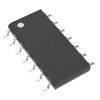
Image may be representation.
See specifications for product details.
EXPRESS OPTION
Payment method

SN65HVD71DGKR - Texas Instruments

Manufacturer Part Number
SN65HVD71DGKR
Manufacturer
Texas Instruments
Allelco Part Number
41D-SN65HVD71DGKR
Warranty
1 Year Allelco Warranty - Find out more
Stock Status:
4,410 pcs available, New & Original
Parts Description
VSSOP-8
Data sheet
-
Category
Integrated Circuits (ICs) > Specialized ICs
RoHs Status
Our certification
In stock: 4410

Required fields are indicated by an asterisk (*)
Please send RFQ, we will respond immediately.

Quantity

Specifications

SN65HVD71DGKR Tech Specifications
Texas Instruments - SN65HVD71DGKR technical specifications, attributes, parameters and parts with similar specifications to Texas Instruments - SN65HVD71DGKR

Product Attribute Attribute Value
Part Number SN65HVD71DGKR
Package VSSOP-8
Description VSSOP-8
Stock Condition Get 4410 pcs available quantity at Allelco
Payment PayPal / TT / Credit Card / Western Union
Allelco Certifications ESD / ISO 9001 / ISO 13485 / ISO 28000
Product Attribute Attribute Value
Manufacturer Texas Instruments
RoHs Status -
Warranty 100% Perfect Functions
Transport port Hong Kong
Shipping by DHL / FedEx / UPS / TNT / SF Express
RFQ Email info@allelco.com

Parts Introduction

Manufacturer Part Number

SN65HVD71DGKR

Manufacturer

Texas Instruments

Introduction

The SN65HVD71DGKR is a high-speed, low-power RS-422/RS-485 transceiver that supports full-duplex communication. It is designed to provide reliable data transmission in industrial, commercial, and transportation applications.

Product Features and Performance

Supports data rates up to 400kbps

Operates on a supply voltage range of 3V to 3.6V

Withstands ±15kV ESD protection on the bus pins

Features receiver input hysteresis of 70mV

Offers wide operating temperature range of -40°C to 125°C

Provides 1 driver and 1 receiver in a small 8-pin TSSOP/MSOP package

Product Advantages

Reliable and robust communication interface

Low power consumption for energy-efficient applications

Compact and space-saving package

Wide temperature range for diverse operating environments

Key Reasons to Choose This Product

High-performance data transmission capabilities

Exceptional ESD protection for reliable operation

Flexible power supply and compact package options

Suitability for a wide range of industrial and commercial applications

Quality and Safety Features

Complies with relevant industry standards for RS-422 and RS-485 protocols

Designed and manufactured to Texas Instruments' high-quality standards

Provides over-voltage, short-circuit, and thermal protection

Compatibility

The SN65HVD71DGKR is compatible with various RS-422 and RS-485 communication systems and can be used in a wide range of industrial, commercial, and transportation applications.

Application Areas

Industrial automation and control systems

Building and home automation

Telecommunications equipment

Transportation systems (e.g., trains, buses, and ships)

Medical equipment

Test and measurement devices

Product Lifecycle

The SN65HVD71DGKR is an active product in Texas Instruments' portfolio. There are no known plans for discontinuation at this time. If you have any questions or need further information, please contact our sales team through our website.

Frequently Asked Questions(FAQ)

What are the key electrical characteristics of the SN65HVD71DGKR transceiver that influence its performance in high-speed industrial communication systems, and how do they compare to alternatives like the SN75176B?
The SN65HVD71DGKR features a receiver hysteresis of 70 mV, which enhances noise immunity by providing a sharper threshold for signal detection compared to older devices like the SN75176B, which typically offers around 200 mV hysteresis. This lower hysteresis reduces susceptibility to false triggering in electrically noisy environments such as motor drives or variable frequency drives. Additionally, it supports data rates up to 400 kbps while operating from a tightly regulated 3.0 V to 3.6 V supply, making it suitable for low-power embedded applications where voltage headroom is limited. In contrast, the SN75176B operates at higher supply voltages (up to 5.5 V) but lacks the same level of input protection and failsafe biasing support built into the SN65HVD71DGKR, increasing design complexity when used over long cable runs.
How does the SN65HVD71DGKR handle bus contention scenarios, and what internal protections prevent damage during hot-plugging or short-circuit conditions on the RS-485 bus?
The SN65HVD71DGKR incorporates robust electrostatic discharge (ESD) protection with ±15 kV Human Body Model (HBM) ratings on all pins, significantly exceeding basic transceiver designs. It also includes integrated short-circuit current limiting and thermal shutdown circuitry, which prevent latch-up or thermal runaway during line faults such as accidental shorts between A and B lines. Unlike some legacy transceivers that rely solely on external TVS diodes, this device protects itself internally, reducing component count and improving reliability in harsh field deployments. These features make it well-suited for applications involving frequent node additions (hot-swapping) in multi-drop networks without requiring additional surge suppression components.
Can the SN65HVD71DGKR be used in half-duplex configurations, and if so, what considerations apply regarding driver/receiver enable sequencing and timing margins?
Yes, although the SN65HVD71DGKR is specified as a full-duplex transceiver, it can be operated in half-duplex mode by tying the DE (Driver Enable) and RE (Receiver Enable) pins together and driving them via a single control signal. However, this requires careful attention to turn-on and turn-off delays to avoid bus contention. The propagation delay skew between transmitter and receiver paths must be managed to ensure that the receiver remains disabled before the driver fully transitions to recessive state—typically requiring guard bands of several microseconds depending on cable length and capacitance. While not ideal for very high-speed or time-critical protocols, this configuration works reliably at data rates below 250 kbps over standard twisted-pair cables.
What impact does temperature variation have on the differential voltage thresholds of the SN65HVD71DGKR, and how does this affect system-level interoperability across automotive or industrial environments?
Over the full operating range of -40°C to 125°C, the SN65HVD71DGKR maintains consistent differential input voltage thresholds within ±5% of typical values, ensuring reliable edge detection even under extreme thermal stress. This stability arises from precision-matched internal comparators designed to meet RS-485 specification requirements across industrial and automotive grade ranges. In contrast, many commercial-grade transceivers exhibit threshold drift exceeding ±15% over temperature, leading to increased error rates at link margins. For mission-critical systems such as factory automation or vehicle diagnostics using the SN65HVD71DGKR, this predictability reduces debugging overhead and ensures compliance with stringent EMI and functional safety standards.
How does the supply voltage tolerance of the SN65HVD71DGKR compare to other members of the TI 65HVDxx family, and why might engineers choose this variant over the SN65HVD72 or SN65HVD75?
Unlike the SN65HVD72 (which supports 2.7 V to 5.5 V) or the SN65HVD75 (optimized for 5 V operation), the SN65HVD71DGKR is specifically tailored for ultra-low-voltage systems operating at 3.0 V to 3.6 V, aligning closely with modern ARM Cortex-M microcontrollers and battery-powered IoT nodes. This tight regulation minimizes power consumption while still delivering full RS-485 protocol compliance. Although the SN65HVD72 offers broader voltage flexibility, it draws slightly higher quiescent current (~5 mA vs. ~2.5 mA) and lacks the same level of ESD robustness. Engineers selecting the SN65HVD71DGKR often prioritize energy efficiency and space-constrained layouts where every millivolt of supply ripple matters.
What role does the 70 mV receiver hysteresis play in mitigating common-mode noise, and how should termination resistors be selected when using the SN65HVD71DGKR over long cable runs?
The 70 mV hysteresis creates a "window" around the nominal common-mode threshold (typically +200 mV to +6 V), allowing the receiver to ignore small fluctuations caused by ground potential differences or induced noise. This improves signal integrity in unbalanced wiring scenarios common in industrial settings. When deploying the SN65HVD71DGKR over cables longer than 10 meters, proper impedance matching using 120 Ω termination resistors at both ends of the bus is essential to eliminate reflections. Mismatched terminations can cause signal ringing that exceeds the hysteresis window, leading to erroneous bit decisions—especially problematic at sustained data rates approaching 400 kbps.
Is the SN65HVD71DGKR compatible with CAN bus signaling levels, and could it be misused as a substitute in mixed-protocol designs?
No, the SN65HVD71DGKR is not designed for CAN bus interfacing. Its differential output voltage swing (typically ±1.5 V minimum) falls outside the required 1.5 V to 3.0 V recessive and dominant ranges defined by ISO 11898, risking undetectable signal states or excessive electromagnetic emissions. Using it in place of a dedicated CAN transceiver like the SN65HVD230 would result in non-compliant hardware and potential failure in certification testing. While both use similar packaging and control logic, their electrical specifications are purpose-built for distinct physical layers, and cross-substitution introduces significant reliability risks.
What precautions should be taken when soldering the SN65HVD71DGKR in high-volume manufacturing, given its MSL rating and package type?
As an MSL 1 device, the SN65HVD71DGKR can be stored indefinitely in dry ambient conditions before reflow, eliminating the need for baking prior to assembly. However, due to its 8-VSSOP package geometry (3.0 mm width), precise solder paste deposition and controlled reflow profiles are critical to avoid bridging between adjacent leads. Reflow temperatures should not exceed 245°C peak for more than 10 seconds to prevent internal die stress. Manufacturers using lead-free processes benefit from this tolerance, but hand soldering requires fine-tip irons and flux management to preserve pin integrity during probing or rework.
How does the data rate capability of the SN65HVD71DGKR scale with cable length, and what practical limitations arise when targeting 350 kbps over 50 meters of unshielded twisted pair?
At 350 kbps, the SN65HVD71DGKR can reliably communicate over 50 meters of UTP cable only if the network adheres strictly to RS-485 best practices: proper termination, balanced wiring, and avoidance of stubs. Cable capacitance (typically 50 pF/m) introduces RC roll-off that limits bandwidth, so signal rise/fall times must remain under 1 µs to maintain eye diagram integrity. Deviations in twist rate, insulation material, or connector impedance further degrade performance. At 400 kbps, reliable operation beyond 30 meters becomes challenging without signal conditioning, underscoring the importance of margin analysis during pre-deployment validation.
Why might an engineer choose the SN65HVD71DGKR over SPI-based digital isolators for galvanic isolation in isolated RS-485 nodes?
While digital isolators offer complete electrical separation, integrating them with discrete transceivers increases board area and BOM cost. The SN65HVD71DGKR itself does not provide galvanic isolation, but pairing it with an isolated power supply and digital isolator for the UART interface yields a compact, cost-effective solution for moderate isolation needs (e.g., 1 kV RMS). Full transformer-isolated versions exist elsewhere in the TI portfolio, but for non-isolated topologies where ground loops are mitigated through layout and shielding, the SN65HVD71DGKR delivers superior noise performance and lower latency without added isolation layers.
What diagnostic features does the SN65HVD71DGKR include to aid fault detection in field-deployed systems, and how can developers leverage its control pins for loopback testing?
The SN65HVD71DGKR lacks built-in diagnostic registers, but its simple enable architecture allows straightforward loopback tests: connect DE to RE and drive them high to activate driver and receiver simultaneously. Transmitted data will echo back internally, enabling software-based verification of UART-to-bus path functionality without physical loop wires. For fail-safe operation, the receiver’s default state is high-impedance unless valid differential signals exceed the threshold, preventing erroneous wake-ups during power-up glitches—a behavior critical in battery-backed sensor networks using the SN65HVD71DGKR.
How does the choice of pull-up/pull-down resistors on the A and B lines affect the fail-safe behavior of the SN65HVD71DGKR in open-circuit conditions?
Without external biasing, the SN65HVD71DGKR’s receiver defaults to high-impedance mode, producing undefined logic levels when the bus is open or floating. To guarantee a known recessive state, a weak pull-up resistor (typically 5.1 kΩ) is placed between A and GND, and a pull-down (also ~5.1 kΩ) between B and VCC. This creates a differential bias voltage that keeps the receiver input near ground, ensuring a clean '1' state even when no device is transmitting. Incorrect biasing—such as mismatched resistor values or missing pulls—can cause false receptions on the SN65HVD71DGKR, especially at the extremes of its common-mode range.
Can the SN65HVD71DGKR operate in multi-master topologies without additional arbitration logic, and what bus loading constraints apply?
Yes, the SN65HVD71DGKR supports multi-master RS-485 networks provided collision detection is handled at the protocol layer (e.g., Modbus RTU). Each node drives the bus independently, and the tri-state nature of the driver ensures that multiple active transmitters create bus contention, resulting in destructive interference rather than clear arbitration. Therefore, physical layer design must assume at most one driver active at any time. Maximum number of receivers on a single bus is limited by input leakage current summation; per RS-485 spec, no more than 32 unit loads (375 Ω each) should be connected, though the SN65HVD71DGKR’s high-impedance inputs allow loading beyond that with reduced noise margin.
What considerations apply when cascading multiple SN65HVD71DGKR devices on a shared bus for daisy-chained monitoring applications?
In daisy-chaining, each SN65HVD71DGKR acts as both transmitter and receiver sequentially. Care must be taken to disable the receiver on nodes not currently transmitting to avoid feedback loops. Since the device turns off the receiver when driving, this self-isolation simplifies implementation. However, cumulative propagation delay across stages may limit maximum chain length at higher data rates. For 200 kbps operation over 100 meters, total end-to-end latency should stay below 1 ms to maintain synchronization, requiring careful PCB routing and minimizing stub lengths to preserve signal fidelity on the shared bus.
How does the power consumption profile of the SN65HVD71DGKR compare during transmit versus receive modes, and what implications does this have for battery life in remote sensing nodes?
Under 3.3 V supply, the SN65HVD71DGKR consumes approximately 2.8 mA in receive mode and 3.5 mA during active transmission at 400 kbps. This low static draw enables years of operation from coin-cell backups in intermittent-sampling sensors. Compared to older parts like the SP3485EEN, which consume over 10 mA due to higher bias currents and less efficient drivers, the SN65HVD71DGKR extends battery life by nearly threefold in duty-cycled applications—critical for solar-powered or wirelessly reported systems leveraging its minimal power footprint.
What steps should be taken to ensure EMC compliance when routing traces adjacent to the SN65HVD71DGKR on a 4-layer PCB?
Maintain strict return path continuity by placing a solid ground plane beneath the transceiver and keeping A/B traces as tightly coupled twisted pairs with characteristic impedance near 120 Ω. Avoid vias near the driver outputs to reduce radiation, and use series termination resistors (22–100 Ω) close to the SN65HVD71DGKR pins to dampen reflections. Decoupling capacitors (100 nF ceramic) should be placed within 2 mm of the VCC and GND pins to suppress high-frequency supply noise. These practices minimize conducted emissions and improve immunity to radiated fields, supporting EN 55022 Class B compliance in industrial enclosures.
Is the SN65HVD71DGKR suitable for use in intrinsically safe (IS) environments, and what certification-related limitations should designers consider?
The SN65HVD71DGKR is not certified for intrinsic safety (e.g., IECEx or ATEX), primarily due to its inability to limit fault-current energy below hazardous thresholds in explosive atmospheres. Devices in IS circuits must inherently restrict spark or thermal ignition risks, which requires specialized circuitry absent in standard transceivers. While the SN65HVD71DGKR itself poses no inherent hazard under normal operation, integrating it into an IS-certified subsystem mandates additional isolation barriers, current-limiting components, and rigorous fault modeling to meet zone-specific requirements—making it unsuitable out-of-the-box for such applications without supplemental safeguards.
How does the base product number 65HVD71 inform lifecycle planning when sourcing the SN65HVD71DGKR from multiple distributors, and are there any planned obsolescence concerns?
The base number 65HVD71 indicates a mature, production-proven family with over a decade of deployment history, suggesting strong supplier commitment and availability. Texas Instruments typically provides 10+ years of visibility for automotive-qualified variants, though the industrial-grade SN65HVD71DGKR benefits from continuous manufacturing support. Engineers should verify current status via TI’s lifecycle tool, but given its widespread adoption in networking, test equipment, and white goods, the SN65HVD71DGKR is unlikely to face abrupt discontinuation. Cross-referencing with alternative packages like MSOP or SOIC ensures continuity if form-factor constraints change.

Customer Reviews

Evaluation: 10 Articles

  • Dani***alkerTech
    Jun 1, 2026

    Product works, but setup took more effort than expected. Once configured the MCU ran reliably, although documentation support felt older compared with newer platforms. Fine for maintenance projects.

  • Yuki***aka88
    May 26, 2026

    信号通信プロジェクトでこのRS-485トランシーバーを使用しました。設置は簡単で、長距離ケーブルでも通信は安定していました。消費電力も、以前使用していたものより低くなっています。

  • Stev***aker
    May 20, 2026

    Solid diode for power rectification. Works well in switching circuits.

  • Bran***Lewis
    May 11, 2026

    Compact FPGA with good performance. Suitable for basic signal processing tasks.

  • Oliv***arris
    May 7, 2026

    Reliable I/O expander. Works well in embedded control applications.

  • Jess***Jones
    Apr 17, 2026

    It offers good value for the price, and the specifications match the description. I’ve been using it for two days with no issues, and I’ll definitely buy it again if I need it in the future.

  • Mich***Smith
    Apr 17, 2026

    Shipping was on time, the component pins are neatly aligned, and I tested 10 of them with a multimeter—all readings were within the specified range. Highly recommended.

  • Aman***arris
    Apr 3, 2026

    It was great—the entire process, from placing the order to receiving the package, went very smoothly. The components were consistent, the price was fair, and I had a very pleasant shopping experience.

  • Mike***nch
    Apr 3, 2026

    Better than expected! The resistance and capacitance readings were spot-on, and it passed the test on the first try. The service was reliable, and the packaging was thoughtful—I highly recommend it.

  • Daic***K.
    Mar 23, 2026

    Very good. No issue after long time testing.

Write a Review

Your Email address will not be published.

Shipment

Delivery Time

In-stock items can be shipped within 24 hours. Some parts will be arranged for delivery within 1-2 days from the date all items arrive at our warehouse. And Allelco ships order once a day at about 17:00, except Sunday. Once the goods are shipped, the estimated delivery time depends on the shipping methods and Delivery destination. The table below shows are the logistic time for some common countries.

Delivery Cost

  1. Use your express account for shipment if you have one.
  2. Use our account for the shipment. Refer to the table below for the approximate charges.
(Different time frame / countries / package size has different price.)

Delivery Method

  1. Global Common Shipment by DHL / UPS / FedEx / TNT / EMS / SF we support.
  2. Others more shipping ways, please get in touch with your customer manager.

Common Countries Logistic Time Reference
Region Country Logistic Time(Day)
America United States 5
Brazil 7
Europe Germany 5
United Kingdom 4
Italy 5
Oceania Australia 6
New Zealand 5
Asia India 4
Japan 4
Middle East Israel 6
DHL & FedEx Shipment Charges Reference
Shipment charges(KG) Reference DHL(USD$)
0.00kg-1.00kg USD$30.00 - USD$60.00
1.00kg-2.00kg USD$40.00 - USD$80.00
2.00kg-3.00kg USD$50.00 - USD$100.00
Note:
The above table is for reference only. There may have some data bias for the uncontrollable factors.
Contact us if you have any questions.
  • QC (Quality Warranty)
  • Payment Support
  • Packaging
  • Certifications & Memberships

QC (Quality Warranty)

Allelco is committed to exceeding customer expectations through customer service excellence, order accuracy, and on-time delivery.
This is achieved through our commitment to the continual improvement of our processes, services, and products.


Strict quality inspection builds a solid foundation for electronic component quality.
  1. Visual inspection
  2. Performance testing and reliability verification
  3. Standardized full-process testing
  4. Precise control of every parameter
We eliminate defective components and ensure the stable operation of electronic devices through professional quality standards.

Payment Support

The payment method can be chosen from the methods shown below: Wire Transfer (T/T, Bank Transfer), Western Union, Credit card, PayPal.
  • HKBea
  • Paypal
  • MasterCard
  • Western-Union
  • VISA
Stable Delivery, Sincere Partnership — Your Faithful Supply Chain Partner
  • Efficient Supply Management
  • Cost-Saving Procurement
  • Fast Sourcing & Delivery
Contact us if you have any questions.

Packaging

Electrostatic Discharge Protection and Handling

All electrostatic-sensitive components are handled in accordance with electrostatic discharge control procedures. The products are hermetically sealed in anti-static safe packaging to prevent electrostatic damage. Appropriate labeling is also applied for identification and traceability. This ensures product integrity during storage, handling and transportation.


ESD

Certifications & Memberships

Third-party certified, strict quality control. Our certification
  • ISO 9001: 2015
  • ISO 13485: 2016
  • ISO 14001: 2015
  • ISO 28000: 2007
  • ISO 45001: 2018
  • GB/T 27922-2011
  • SMTA
  • IPC
  • ESD
  • PSMA
Texas Instruments

SN65HVD71DGKR

Texas Instruments
41D-SN65HVD71DGKR

Want a better price? Add to Cart and Submit RFQ now, we'll contact you immediately.

0 RFQ
Shopping cart (0 Items)
It is empty.
Compare List (0 Items)
It is empty.
Feedback

Your feedback matters! At Allelco, we value the user experience and strive to improve it constantly.
Please share your comments with us via our feedback form, and we'll respond promptly.
Thank you for choosing Allelco.

Subject
E-mail
Comments
Captcha
Drag or click to upload file
Upload File
types: .xls, .xlsx, .doc, .docx, .jpg, .png and .pdf.
Max file size: 10MB