View All

Please refer to the English Version as our Official Version.Return

Europe
France(Français) Germany(Deutsch) Italy(Italia) Russian(русский) Poland(polski) Czech(Čeština) Luxembourg(Lëtzebuergesch) Netherlands(Nederland) Iceland(íslenska) Hungarian(Magyarország) Spain(español) Portugal(Português) Turkey(Türk dili) Bulgaria(Български език) Ukraine(Україна) Greece(Ελλάδα) Israel(עִבְרִית) Sweden(Svenska) Finland(Svenska) Finland(Suomi) Romania(românesc) Moldova(românesc) Slovakia(Slovenská) Denmark(Dansk) Slovenia(Slovenija) Slovenia(Hrvatska) Croatia(Hrvatska) Serbia(Hrvatska) Montenegro(Hrvatska) Bosnia and Herzegovina(Hrvatska) Lithuania(lietuvių) Spain(Português) Switzerland(Deutsch) United Kingdom(English)
Asia/Pacific
Japan(日本語) Korea(한국의) Thailand(ภาษาไทย) Malaysia(Melayu) Singapore(Melayu) Vietnam(Tiếng Việt) Philippines(Pilipino)
Africa, India and Middle East
United Arab Emirates(العربية) Iran(فارسی) Tajikistan(فارسی) India(हिंदी) Madagascar(malaɡasʲ)
South America / Oceania
New Zealand(Maori) Brazil(Português) Angola(Português) Mozambique(Português)
North America
United States(English) Canada(English) Haiti(Ayiti) Mexico(español)
HomeProductsIntegrated Circuits (ICs)Specialized ICsTLC3548CDWR
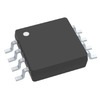
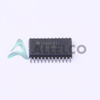
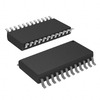
Image may be representation.
See specifications for product details.
EXPRESS OPTION
Payment method

TLC3548CDWR - Texas Instruments

Manufacturer Part Number
TLC3548CDWR
Manufacturer
Texas Instruments
Allelco Part Number
41D-TLC3548CDWR
Warranty
1 Year Allelco Warranty - Find out more
Stock Status:
4,570 pcs available, New & Original
Parts Description
SOIC-24
Data sheet
-
Category
Integrated Circuits (ICs) > Specialized ICs
RoHs Status
Our certification
In stock: 4570

Required fields are indicated by an asterisk (*)
Please send RFQ, we will respond immediately.

Quantity

Specifications

TLC3548CDWR Tech Specifications
Texas Instruments - TLC3548CDWR technical specifications, attributes, parameters and parts with similar specifications to Texas Instruments - TLC3548CDWR

Product Attribute Attribute Value
Part Number TLC3548CDWR
Package SOIC-24
Description SOIC-24
Stock Condition Get 4570 pcs available quantity at Allelco
Payment PayPal / TT / Credit Card / Western Union
Allelco Certifications ESD / ISO 9001 / ISO 13485 / ISO 28000
Product Attribute Attribute Value
Manufacturer Texas Instruments
RoHs Status -
Warranty 100% Perfect Functions
Transport port Hong Kong
Shipping by DHL / FedEx / UPS / TNT / SF Express
RFQ Email info@allelco.com

Parts Introduction

Manufacturer Part Number

TLC3548CDWR

Manufacturer

Texas Instruments

Introduction

The TLC3548CDWR is a high-performance, 14-bit analog-to-digital converter (ADC) with a sampling rate of up to 200kHz. It features a multi-channel input configuration, flexibility in reference voltage sources, and a SPI digital interface, making it suitable for a wide range of data acquisition and control applications.

Product Features and Performance

14-bit resolution

Sampling rate up to 200kSPS

4 or 8 input channels

Pseudo-differential and single-ended input types

SPI digital interface

Internal or external reference voltage

1:1 sample-and-hold to ADC architecture

Integrated multiplexer

Product Advantages

High-resolution data conversion

Flexible multi-channel input configuration

Compatibility with a variety of reference voltage sources

Efficient SPI digital interface for easy system integration

Optimal performance-to-power ratio

Key Reasons to Choose This Product

Reliable and high-performance data acquisition solution

Versatile input options to accommodate diverse application needs

Seamless integration with microcontrollers and other digital systems

Cost-effective and power-efficient design

Quality and Safety Features

Robust industrial-grade packaging and construction

Compliance with relevant safety and environmental standards

Extensive testing and quality control measures

Compatibility

Suitable for a wide range of industrial, medical, and consumer electronics applications

Compatible with various microcontrollers and digital systems supporting SPI interface

Application Areas

Industrial process control and automation

Medical instrumentation and patient monitoring

Consumer electronics and portable devices

Test and measurement equipment

Product Lifecycle

The TLC3548CDWR is currently in the Last Time Buy phase, which means it is nearing discontinuation. However, Texas Instruments may have equivalent or alternative models available. Customers are advised to contact our website's sales team for the latest product information and availability.
Frequently Asked Questions(FAQ)

How does the TLC3548CDWR compare to other 14-bit SAR ADCs in terms of power consumption and sampling rate for industrial sensor monitoring applications?
The TLC3548CDWR delivers a sampling rate of 200 kSPS with a supply voltage of 5V on the analog side and 2.7V to 5.5V for digital operation, which positions it well for moderate-speed data acquisition systems. While not the absolute lowest-power option available, its combination of resolution and speed is balanced for applications such as pressure or temperature sensing where signal bandwidth requirements are under 50 kHz. Compared to higher-speed alternatives, it avoids unnecessary power overhead from faster conversion clocks, making it suitable for battery-backed or energy-constrained monitoring nodes.
Can the TLC3548CDWR be used with single-ended sensor inputs, and what considerations apply when interfacing it to unipolar transducers like strain gauges or thermocouples?
Yes, the TLC3548CDWR supports both pseudo-differential and single-ended input modes, allowing compatibility with common unipolar sensors such as strain gauges or certain types of RTDs. When using single-ended mode, the reference voltage must be carefully managed relative to the input range to avoid negative differential voltages, which could saturate the ADC. For example, a 2.5V reference paired with a 0–5V transducer output requires level-shifting or scaling if the sensor operates below 2.5V. The internal sample-and-hold ensures accurate capture during conversion, but layout parasitics near input pins should be minimized to maintain linearity.
What are the key differences between the TLC3548CDWR and the ADS7951SDBTR in terms of architecture and interface when selecting an ADC for a space-constrained PCB design?
The TLC3548CDWR uses a standard SPI interface and offers either 4 or 8 multiplexed inputs in a 24-pin SOIC package, while the ADS7951SDBTR typically features a parallel output bus and may require more routing layers due to wider data lines. In footprint-limited designs, the TLC3548CDWR’s compact SOIC form factor and serial communication reduce pin count significantly compared to parallel variants. However, the ADS7951 may offer slightly higher throughput at similar resolutions. Designers choosing between them must weigh serial protocol overhead against board real estate and trace complexity, especially in multi-ADC systems.
Is the TLC3548CDWR suitable for automotive-grade applications requiring extended temperature ranges, and what modifications might be needed?
No, the TLC3548CDWR is rated for 0°C to 70°C, which falls short of most automotive specifications requiring operation down to −40°C or up to +125°C. Therefore, it is not recommended for direct use in automotive environments without additional thermal management or environmental controls. If deployed in industrial or consumer equipment exposed to ambient temperatures beyond its rating, derating of performance parameters—such as effective resolution due to clock instability or reduced linearity—should be anticipated. For harsh environments, alternative TI devices with industrial or automotive grades should be considered instead.
How does noise performance scale with input configuration in the TLC3548CDWR, particularly when using pseudo-differential versus single-ended sensing over long traces?
Pseudo-differential mode improves rejection of common-mode noise by comparing two adjacent channels with opposite polarities, making it advantageous when inputs are routed over shared traces subject to electromagnetic interference. This configuration effectively doubles the useful channel count without increasing pin usage. Single-ended mode, while simpler to implement, is more susceptible to ground bounce and crosstalk, especially over longer cables. At 14 bits, the TLC3548CDWR exhibits an SNR around 80 dB typical, but actual performance drops if the reference or ground plane degrades under high-impedance loads—common in single-ended setups with poor shielding.
What happens to conversion accuracy if the external reference voltage drifts by ±1% during operation in a battery-powered TLC3548CDWR system?
A 1% drift in the external reference directly translates into proportional errors in the LSB weight across all conversions. For the TLC3548CDWR, a 1 LSB error equals approximately 98 µV at a 5V reference (assuming full-scale range). With a 1% change, this becomes about 980 µV uncertainty, potentially introducing nonlinearity beyond the specified ±2 LSB DNL. Over time, as battery voltage decays, if the reference relies on the same supply rail, the cumulative effect can degrade effective resolution below 13 bits. Using an independent low-drift reference IC helps maintain stability.
Can multiple TLC3548CDWR ADCs share the same SPI bus without contention, and what timing constraints must be observed?
Yes, multiple TLC3548CDWR devices can coexist on a single SPI bus provided each has a unique chip select line. The serial interface uses standard MOSI/MISO/CLK signals, so no address decoding is required. However, propagation delays and setup times must be respected—especially when chaining conversions across units. The minimum clock high/low time is 20 ns at 200 kSPS, limiting maximum SPI frequency to 25 MHz. Additionally, ensure that CS-to-first-clock timing meets the device’s tCS setup requirement (~10 ns), and account for MISO turn-around time when switching direction.
What impact does improper grounding have on the TLC3548CDWR’s performance, and how should analog and digital grounds be handled in mixed-signal layouts?
Poor grounding introduces noise coupling through shared impedance paths, degrading the TLC3548CDWR’s integral nonlinearity (INL) and spurious-free dynamic range (SFDR). In mixed-signal boards, splitting the ground plane at the ADC’s analog reference pin and connecting it via a single point reduces digital return currents from switching logic from interfering with sensitive analog nodes. Avoid routing digital traces beneath the ADC or near reference bypass capacitors. Use star grounding for analog supplies and keep decoupling capacitors within 5 mm of the VDD pins to minimize inductance-induced transients.
Does the TLC3548CDWR support simultaneous sampling of all eight inputs, or is sequential sampling the only available mode?
Sequential sampling is the only supported mode for all eight inputs on the TLC3548CDWR. Unlike dedicated simultaneous-sampling ADCs, this device employs a multiplexer followed by a single sample-and-hold stage, meaning only one input is captured per conversion cycle. This limits its suitability for applications requiring precise time-aligned measurements across channels, such as three-phase motor current monitoring. For such cases, alternative architectures like delta-sigma with internal demultiplexing or separate ADCs are preferable.
What role does the internal sample-and-hold play in maintaining conversion accuracy when scanning multiple TLC3548CDWR channels rapidly?
The internal sample-and-hold ensures that each selected input voltage remains stable throughout the conversion process, even if the source impedance varies across channels. When scanning at full 200 kSPS rate across eight channels, each acquisition window lasts approximately 5 µs. If source impedance exceeds ~1 kΩ, settling time may become significant, leading to droop or attenuation. Proper buffer amplifiers or low-output-impedance sources are essential for maintaining full 14-bit accuracy during fast multiplexing. Without buffering, errors increase nonlinearly beyond the first few microseconds after sampling begins.
How does the TLC3548CDWR handle overrange conditions, and what protection mechanisms exist against transient voltage spikes on analog inputs?
The TLC3548CDWR clamps inputs to within 0.3V of the supply rails, but exceeding these limits risks latch-up or permanent damage. It does not include built-in ESD diodes capable of handling large transient events like IEC 61000-4-2 surges. To protect against overvoltage, series resistors combined with TVS diodes or Zener clamp circuits should be placed at each input. Additionally, ensure the reference voltage does not exceed the analog supply by more than 0.5V to prevent reverse biasing internal structures. Input protection networks must be designed conservatively to avoid loading the signal path.
Can the TLC3548CDWR operate with a 3.3V logic supply while driving a 5V microcontroller, and what interface level translation is required?
Yes, the TLC3548CDWR accepts digital supply voltages from 2.7V to 5.5V, so it can run on a 3.3V core logic rail while communicating with a 5V microcontroller. However, since the device outputs CMOS levels compatible with its own supply, a 3.3V output will not reliably trigger 5V-high inputs. A bidirectional level translator or open-drain configuration with pull-ups to 5V is necessary on the MISO line. MOSI and SCK can often interface directly if the 5V MCU tolerates 3.3V inputs, but verification against the specific MCU’s VIH(min) is advised.
What is the expected lifespan and reliability of the TLC3548CDWR under continuous 200 kSPS operation at elevated ambient temperatures near 70°C?
While Texas Instruments provides no explicit lifetime projection for this commercial-grade part, typical CMOS ICs like the TLC3548CDWR exhibit high MTBF under steady-state conditions. Continuous operation at 70°C is within the rated junction temperature range if proper thermal dissipation is maintained. However, prolonged exposure to maximum ambient temperature accelerates electromigration in bond wires and interconnects, potentially reducing long-term reliability. Derating usage below full speed or adding margin to operating temperature improves field failure rates, though formal qualification testing would be required for mission-critical deployment.
How does the TLC3548CDWR perform in terms of aperture jitter when used with precision time-stamped data logging applications?
As a SAR ADC, the TLC3548CDWR does not suffer from aperture jitter in the same way as oversampling converters, because each conversion starts immediately after the previous one completes. The sample-and-hold acquires the signal just before conversion begins, and the internal clock drives the successive approximation register deterministically. However, clock phase noise can still affect high-frequency signals; for inputs above 100 kHz, ensure the system clock has low phase jitter. At 200 kSPS, timing consistency is adequate for most non-coherent sampling applications, including event-triggered logging with millisecond-level timestamps.
Are there any known limitations in using the TLC3548CDWR for low-amplitude sensor signals requiring gain stages prior to digitization?
Yes, the TLC3548CDWR lacks programmable gain amplification, so weak signals from piezoelectric elements or capacitive sensors often require an external instrumentation amplifier or PGA before reaching the ADC. Gain must be applied before the sample-and-hold to preserve signal integrity. Excessive gain before the ADC can saturate the input range prematurely, while insufficient gain wastes the ADC’s dynamic range. Careful design of the front-end amplifier’s offset, drift, and noise characteristics is critical to preserving the full 14-bit resolution, particularly when measuring sub-millivolt changes.
What steps should be taken to validate the TLC3548CDWR’s performance in a prototype before committing to production, especially regarding linearity and offset calibration?
Initial validation should include measuring INL/DNL using a precision voltage source swept across the full input range, verifying code transitions at mid-scale and endpoints. Offset error should be recorded with zero input applied, and gain error determined by comparing actual vs. expected codes at full-scale. Calibration routines can compensate for initial offset and gain mismatches in firmware, but dynamic effects like temperature drift or aging may require periodic re-calibration. Automated test scripts using SPI-controlled stimulus and response logging help quantify repeatability under varying conditions.
How does the TLC3548CDWR handle discontinuous clock signals during SPI transfers, and what are the consequences for missed conversions?
The TLC3548CDWR expects clean, uninterrupted clock pulses during conversion phases. Missing clock edges or excessive gaps between bytes disrupt the internal state machine, potentially causing incomplete conversions or corrupted data. If the master fails to sustain the clock during readback, the ADC may enter an undefined mode until a hardware reset or power cycle occurs. Design practices should enforce consistent SPI timing, avoid bus contention, and use DMA or interrupt-driven transfers to minimize latency between samples. Always confirm successful completion of each transaction with status checks or timeout safeguards.
What environmental factors beyond temperature could affect the TLC3548CDWR’s accuracy in outdoor instrumentation, and how can they be mitigated?
Humidity and mechanical stress are indirect concerns, but moisture ingress near soldered joints or cracked PCBs can alter parasitic capacitances affecting input bias currents. Vibration may loosen connections, changing contact resistance at input terminals. To mitigate, use conformal coating sparingly near high-impedance nodes, avoid sharp bends in input traces, and secure connectors with strain relief. Shielding against RF fields is also important, as nearby switching regulators or wireless modules can couple noise into the analog section, manifesting as increased effective resolution loss or spur levels in FFT analysis.

Customer Reviews

Evaluation: 10 Articles

  • Nath***rooks
    Jun 11, 2026

    Installed this power component in a converter board. Output remained stable under different load conditions and thermal performance was better than expected.

  • Dani***alkerTech
    Jun 1, 2026

    Product works, but setup took more effort than expected. Once configured the MCU ran reliably, although documentation support felt older compared with newer platforms. Fine for maintenance projects.

  • Yuki***aka88
    May 26, 2026

    信号通信プロジェクトでこのRS-485トランシーバーを使用しました。設置は簡単で、長距離ケーブルでも通信は安定していました。消費電力も、以前使用していたものより低くなっています。

  • Stev***aker
    May 20, 2026

    Solid diode for power rectification. Works well in switching circuits.

  • Bran***Lewis
    May 11, 2026

    Compact FPGA with good performance. Suitable for basic signal processing tasks.

  • Oliv***arris
    May 7, 2026

    Reliable I/O expander. Works well in embedded control applications.

  • Jess***Jones
    Apr 17, 2026

    It offers good value for the price, and the specifications match the description. I’ve been using it for two days with no issues, and I’ll definitely buy it again if I need it in the future.

  • Mich***Smith
    Apr 17, 2026

    Shipping was on time, the component pins are neatly aligned, and I tested 10 of them with a multimeter—all readings were within the specified range. Highly recommended.

  • Aman***arris
    Apr 3, 2026

    It was great—the entire process, from placing the order to receiving the package, went very smoothly. The components were consistent, the price was fair, and I had a very pleasant shopping experience.

  • Mike***nch
    Apr 3, 2026

    Better than expected! The resistance and capacitance readings were spot-on, and it passed the test on the first try. The service was reliable, and the packaging was thoughtful—I highly recommend it.

Write a Review

Your Email address will not be published.

Shipment

Delivery Time

In-stock items can be shipped within 24 hours. Some parts will be arranged for delivery within 1-2 days from the date all items arrive at our warehouse. And Allelco ships order once a day at about 17:00, except Sunday. Once the goods are shipped, the estimated delivery time depends on the shipping methods and Delivery destination. The table below shows are the logistic time for some common countries.

Delivery Cost

  1. Use your express account for shipment if you have one.
  2. Use our account for the shipment. Refer to the table below for the approximate charges.
(Different time frame / countries / package size has different price.)

Delivery Method

  1. Global Common Shipment by DHL / UPS / FedEx / TNT / EMS / SF we support.
  2. Others more shipping ways, please get in touch with your customer manager.

Common Countries Logistic Time Reference
Region Country Logistic Time(Day)
America United States 5
Brazil 7
Europe Germany 5
United Kingdom 4
Italy 5
Oceania Australia 6
New Zealand 5
Asia India 4
Japan 4
Middle East Israel 6
DHL & FedEx Shipment Charges Reference
Shipment charges(KG) Reference DHL(USD$)
0.00kg-1.00kg USD$30.00 - USD$60.00
1.00kg-2.00kg USD$40.00 - USD$80.00
2.00kg-3.00kg USD$50.00 - USD$100.00
Note:
The above table is for reference only. There may have some data bias for the uncontrollable factors.
Contact us if you have any questions.
  • QC (Quality Warranty)
  • Payment Support
  • Packaging
  • Certifications & Memberships

QC (Quality Warranty)

Allelco is committed to exceeding customer expectations through customer service excellence, order accuracy, and on-time delivery.
This is achieved through our commitment to the continual improvement of our processes, services, and products.


Strict quality inspection builds a solid foundation for electronic component quality.
  1. Visual inspection
  2. Performance testing and reliability verification
  3. Standardized full-process testing
  4. Precise control of every parameter
We eliminate defective components and ensure the stable operation of electronic devices through professional quality standards.

Payment Support

The payment method can be chosen from the methods shown below: Wire Transfer (T/T, Bank Transfer), Western Union, Credit card, PayPal.
  • HKBea
  • Paypal
  • MasterCard
  • Western-Union
  • VISA
Stable Delivery, Sincere Partnership — Your Faithful Supply Chain Partner
  • Efficient Supply Management
  • Cost-Saving Procurement
  • Fast Sourcing & Delivery
Contact us if you have any questions.

Packaging

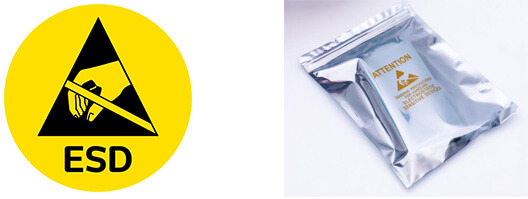
Electrostatic Discharge Protection and Handling

All electrostatic-sensitive components are handled in accordance with electrostatic discharge control procedures. The products are hermetically sealed in anti-static safe packaging to prevent electrostatic damage. Appropriate labeling is also applied for identification and traceability. This ensures product integrity during storage, handling and transportation.


ESD

Certifications & Memberships

Third-party certified, strict quality control. Our certification
  • ISO 9001: 2015
  • ISO 13485: 2016
  • ISO 14001: 2015
  • ISO 28000: 2007
  • ISO 45001: 2018
  • GB/T 27922-2011
  • SMTA
  • IPC
  • ESD
  • PSMA
Texas Instruments

TLC3548CDWR

Texas Instruments
41D-TLC3548CDWR

Want a better price? Add to Cart and Submit RFQ now, we'll contact you immediately.

0 RFQ
Shopping cart (0 Items)
It is empty.
Compare List (0 Items)
It is empty.
Feedback

Your feedback matters! At Allelco, we value the user experience and strive to improve it constantly.
Please share your comments with us via our feedback form, and we'll respond promptly.
Thank you for choosing Allelco.

Subject
E-mail
Comments
Captcha
Drag or click to upload file
Upload File
types: .xls, .xlsx, .doc, .docx, .jpg, .png and .pdf.
Max file size: 10MB