View All

Please refer to the English Version as our Official Version.Return

Europe
France(Français) Germany(Deutsch) Italy(Italia) Russian(русский) Poland(polski) Czech(Čeština) Luxembourg(Lëtzebuergesch) Netherlands(Nederland) Iceland(íslenska) Hungarian(Magyarország) Spain(español) Portugal(Português) Turkey(Türk dili) Bulgaria(Български език) Ukraine(Україна) Greece(Ελλάδα) Israel(עִבְרִית) Sweden(Svenska) Finland(Svenska) Finland(Suomi) Romania(românesc) Moldova(românesc) Slovakia(Slovenská) Denmark(Dansk) Slovenia(Slovenija) Slovenia(Hrvatska) Croatia(Hrvatska) Serbia(Hrvatska) Montenegro(Hrvatska) Bosnia and Herzegovina(Hrvatska) Lithuania(lietuvių) Spain(Português) Switzerland(Deutsch) United Kingdom(English)
Asia/Pacific
Japan(日本語) Korea(한국의) Thailand(ภาษาไทย) Malaysia(Melayu) Singapore(Melayu) Vietnam(Tiếng Việt) Philippines(Pilipino)
Africa, India and Middle East
United Arab Emirates(العربية) Iran(فارسی) Tajikistan(فارسی) India(हिंदी) Madagascar(malaɡasʲ)
South America / Oceania
New Zealand(Maori) Brazil(Português) Angola(Português) Mozambique(Português)
North America
United States(English) Canada(English) Haiti(Ayiti) Mexico(español)
HomeProductsIntegrated Circuits (ICs)Specialized ICsTMS320DM6446AZWTA
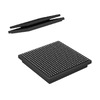
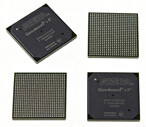
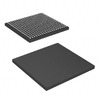
Image may be representation.
See specifications for product details.
EXPRESS OPTION
Payment method

TMS320DM6446AZWTA - Texas Instruments

Manufacturer Part Number
TMS320DM6446AZWTA
Manufacturer
Texas Instruments
Allelco Part Number
41D-TMS320DM6446AZWTA
Warranty
1 Year Allelco Warranty - Find out more
Stock Status:
4,680 pcs available, New & Original
Parts Description
NFBGA-361
Data sheet
-
Category
Integrated Circuits (ICs) > Specialized ICs
RoHs Status
Our certification
In stock: 4680

Required fields are indicated by an asterisk (*)
Please send RFQ, we will respond immediately.

Quantity

Specifications

TMS320DM6446AZWTA Tech Specifications
Texas Instruments - TMS320DM6446AZWTA technical specifications, attributes, parameters and parts with similar specifications to Texas Instruments - TMS320DM6446AZWTA

Product Attribute Attribute Value
Part Number TMS320DM6446AZWTA
Package NFBGA-361
Description NFBGA-361
Stock Condition Get 4680 pcs available quantity at Allelco
Payment PayPal / TT / Credit Card / Western Union
Allelco Certifications ESD / ISO 9001 / ISO 13485 / ISO 28000
Product Attribute Attribute Value
Manufacturer Texas Instruments
RoHs Status -
Warranty 100% Perfect Functions
Transport port Hong Kong
Shipping by DHL / FedEx / UPS / TNT / SF Express
RFQ Email info@allelco.com

Parts Introduction

Manufacturer Part Number

TMS320DM6446AZWTA

Manufacturer

texas-instruments

Introduction

The TMS320DM6446AZWTA is a high-performance digital media system-on-chip (DMSoC) that integrates a powerful ARM Cortex-A8 processor and a high-performance C64x+ DSP core. This device is designed for a wide range of digital media applications, including video surveillance, video conferencing, and multimedia playback.

Product Features and Performance

513MHz DSP and 256.5MHz ARM Cortex-A8 processor

160kB of on-chip RAM

8kB of ROM

Supports various interfaces, including ASP, EBI/EMI, Host Interface, I2C, SPI, UART, and USB

Operates at -40°C to 105°C temperature range

361-LFBGA package

Product Advantages

High-performance processing capabilities for demanding digital media applications

Flexible interface options for easy integration into various systems

Wide operating temperature range for use in diverse environments

Compact and efficient package design

Key Reasons to Choose This Product

Powerful processing performance for advanced digital media applications

Extensive interface support for seamless system integration

Wide operating temperature range for reliable operation in challenging environments

Compact and efficient package design for space-constrained applications

Quality and Safety Features

Rigorous quality control and testing processes

Compliance with industry standards and regulations

Compatibility

The TMS320DM6446AZWTA is compatible with other devices in the TMS320DM644x and DaVinci™ series.

Application Areas

Video surveillance systems

Video conferencing equipment

Multimedia playback devices

Other digital media applications

Product Lifecycle

The TMS320DM6446AZWTA is currently not recommended for new designs, as it is nearing the end of its product lifecycle. However, there are several equivalent or alternative models available, such as the TMS320DM6447 and TMS320DM6467. Customers are advised to contact our website's sales team for more information on the available options and recommendations for their specific applications.
Frequently Asked Questions(FAQ)

How does the TMS320DM6446AZWTA compare to other DaVinci™ series processors in terms of ARM® and DSP core performance, and what implications does this have for real-time media processing applications?
The TMS320DM6446AZWTA features a dual-core architecture with an ARM926EJ-S running at 256.5 MHz and a C64x+ DSP operating at 513 MHz, which positions it above earlier DaVinci models that typically used single-core or lower-frequency configurations. This asymmetric design enables efficient offloading of signal processing tasks from the ARM core while maintaining responsive system control. In practical media applications like video encoding or audio decoding, the higher DSP clock rate allows for more concurrent execution of fixed-point algorithms compared to predecessors, reducing latency in real-time pipelines. However, designers must still consider memory bandwidth limitations due to the shared architecture when scaling performance across multiple channels.
What are the key power management considerations when integrating the TMS320DM6446AZWTA into a portable media device, given its core voltage specifications?
With a core voltage of 1.20V, the TMS320DM6446AZWTA requires careful power sequencing and regulation to prevent instability during dynamic load transitions common in battery-powered systems. The combination of 1.8V/3.3V I/O rails means separate LDOs or switching regulators may be needed depending on peripheral interfaces. At typical operating loads, the device consumes approximately 1.5–2.0 W under full DSP utilization based on TI's reference designs, making thermal management critical in compact enclosures. Designers should avoid aggressive DVFS strategies without validating stability across all temperature extremes (-40°C to 105°C), as suboptimal regulation can lead to functional failures during burst operations.
Can the TMS320DM6446AZWTA support simultaneous operation of USB 2.0 host and peripheral modes, and how does this affect system resource allocation?
Yes, the TMS320DM6446AZWTA includes dual USB ports capable of functioning simultaneously as host and device through internal multiplexing logic. This capability is essential for applications like digital cameras that need to both transfer files to a PC (device mode) and read SD cards (host mode). However, each USB instance requires dedicated endpoint buffers in the 160kB on-chip RAM, limiting available memory for application code. Real-world implementations often reserve ~30% of RAM specifically for USB DMA descriptors and packet buffers, which constrains multitasking complexity unless external SDRAM is added.
How does the absence of external memory controllers impact system design choices when using the TMS320DM6446AZWTA for data-intensive applications?
Unlike some contemporaries with integrated DDR2 interfaces, the TMS320DM6446AZWTA lacks built-in external memory controllers, requiring designers to implement discrete memory subsystems using companion chips like the AS4C32M16SA. This increases PCB layer count and routing complexity but offers flexibility in selecting memory technologies. For high-throughput scenarios such as uncompressed video playback, external SDRAM becomes mandatory due to bandwidth requirements exceeding the internal bus capacity. The trade-off is higher BOM cost and footprint versus simplified integration in low-memory applications leveraging only internal RAM and ROM.
What are the implications of the TMS320DM6446AZWTA’s Moisture Sensitivity Level (MSL) rating of 3 for industrial manufacturing environments?
With an MSL 3 classification indicating sensitivity beyond 85°C/60% RH after 168 hours, the TMS320DM6446AZWTA demands strict handling protocols during assembly. Boards must undergo dry-pack storage with desiccants and bake-out cycles if stored longer than one year before soldering. Industrial manufacturers using wave or reflow processes must ensure peak temperatures stay within JEDEC J-STD-020 limits to avoid popcorn cracking. Failure to comply risks latent moisture-induced failures during field operation, particularly in humid climates or automotive applications where thermal cycling accelerates delamination.
How should developers approach debugging embedded software on the TMS320DM6446AZWTA given its limited non-volatile memory size?
With only 8kB of ROM, the TMS320DM6446AZWTA cannot accommodate large bootloaders or debug monitors natively, necessitating external flash or serial boot configurations. Developers typically partition firmware into small boot stages followed by larger application images loaded via SPI/I2C. Debugging strategies must leverage JTAG interfaces with emulation tools like XDS100v2, focusing on register-level inspection rather than full-stack analysis. Given the constrained environment, profiling tools should target specific DSP kernels with minimal overhead to identify bottlenecks without consuming precious internal RAM.
What are the primary differences between the TMS320DM6446AZWTA and newer DaVinci variants regarding peripheral integration and scalability?
Compared to modern DaVinci devices featuring Ethernet MACs or advanced video accelerators, the TMS320DM6446AZWTA relies heavily on basic peripherals such as UART, I2C, and SPI, making it suitable for legacy interface bridging rather than network-centric applications. Its lack of hardware H.264 encoding blocks forces software-based compression, increasing CPU load on the ARM core. While this simplifies algorithm portability, it limits throughput in high-definition video scenarios—unlike successors that integrate dedicated coprocessors for common codecs, reducing host processor burden.
How does the package configuration of the TMS320DM6446AZWTA influence PCB layout decisions for mass production?
The 361-ball FBGA package measures just 16×16 mm but demands precise pad alignment within ±2 mil tolerances to ensure reliable solder joints. Mass production requires stencil printing optimization to prevent bridging, especially around fine-pitch balls near edges. Thermal vias under the die attach must be filled or capped to avoid voids affecting heat dissipation to the PCB ground plane. Automated optical inspection (AOI) systems must be calibrated to detect subtle misalignments missed by manual probing, as rework costs escalate rapidly with board density in high-volume consumer electronics manufacturing.
What are the recommended decoupling strategies for stable operation of the TMS320DM6446AZWTA across its full temperature range?
Stable performance across -40°C to 105°C requires multilayer ceramic capacitors (MLCCs) with X7R/X8R dielectrics placed within 2 mm of each power pin, including separate networks for core (1.2V), I/O (1.8V), and analog supplies. High-frequency noise from the 513 MHz DSP demands ferrite beads in series with bulk capacitors (>10 µF tantalum) to isolate switching transients. During cold starts, ESR characteristics of electrolytic caps can cause voltage droop below minimum thresholds; thus, designers often add parallel MLCCs to maintain transient response integrity in harsh environments.
How does the TMS320DM6446AZWTA handle clock synchronization between the ARM and DSP cores during mixed-signal applications?
Both cores share a common PLL derived from an external crystal input, ensuring deterministic timing relationships critical for synchronized data transfers between ARM-managed peripherals and DSP signal chains. However, phase noise on the reference clock directly impacts jitter-sensitive functions like audio ADC/DAC interfaces. Designers must use low-phase-noise oscillators (<50 ps RMS) and minimize trace lengths from clock sources to avoid skew accumulation. In multi-device systems, asynchronous sampling may occur without additional hardware timestamping, requiring software compensation for drift accumulation over time.
What are the risks associated with using the TMS320DM6446AZWTA in safety-critical medical devices without additional architectural safeguards?
As a commercial-grade DMSoC without ISO 26262 or IEC 62304 compliance certifications, the TMS320DM6446AZWTA cannot be used standalone in life-support equipment without redundant error detection mechanisms. Single-event upsets (SEUs) from cosmic rays or EMI could corrupt program flow in unprotected code regions, leading to undetected failures. Mitigation requires watchdog timers, ECC-protected memory regions, and periodic self-tests—adding complexity that may exceed the device’s capabilities without external co-processors. Most medical regulators mandate fail-operational behavior unavailable in standard configurations of this part.
How does the absence of floating-point units in the TMS320DM6446AZWTA affect algorithm development for audio processing workloads?
The lack of FPU in both ARM926EJ-S and C64x+ cores forces all floating-point operations to execute via software libraries, significantly increasing cycle counts for complex filters or transforms. For example, a 48 kHz stereo FIR filter might require 15–20% more CPU time compared to FPU-equipped alternatives, reducing headroom for real-time adaptation. Developers must either accept lower filter orders or implement Q-format fixed-point arithmetic with careful scaling to avoid overflow—a process demanding extensive simulation across worst-case inputs to maintain SNR specifications.
What are the compatibility considerations when interfacing the TMS320DM6446AZWTA with legacy parallel LCD panels requiring direct memory access?
Since the TMS320DM6446AZWTA lacks native LCD controllers, driving parallel displays demands either bit-banging via GPIO or use of external bridge chips like TI’s TFP410. Bit-banging introduces software overhead incompatible with high-refresh-rate panels, while external bridges consume valuable PCIe lanes if present. Workarounds include pre-rendering frames into internal RAM buffers and transferring them via EDMA channels, though bandwidth constraints limit resolution to WVGA (800×480) or lower at 60 Hz. Designers must also manage color depth trade-offs between framebuffer size and refresh rate due to limited DRAM bandwidth.
How does the TMS320DM6446AZWTA’s EMC performance compare to modern SoCs when exposed to RF interference in wireless-enabled devices?
Older generation designs like the TMS320DM6446AZWTA exhibit higher susceptibility to conducted emissions due to less robust substrate shielding and fewer internal ESD clamps versus newer nodes. In environments with Wi-Fi or Bluetooth radios operating nearby, crosstalk into analog inputs (e.g., audio ADCs) may manifest as audible artifacts or DC offset shifts. Mitigation requires careful partitioning of RF and sensitive analog sections on the PCB, use of guard rings around critical nets, and filtering on power rails feeding mixed-signal blocks—increasing design iteration cycles during certification testing.
What are the implications of the TMS320DM6446AZWTA’s lack of integrated security features for IoT edge devices?
Absence of hardware crypto engines or secure boot ROM renders the TMS320DM6446AZWTA unsuitable for end-to-end encrypted communications without external tamper-resistant modules. All cryptographic operations become software-based, creating attack surfaces vulnerable to side-channel analysis or firmware extraction. Even basic AES encryption could expose timing leaks exploitable by physical probing. For low-security applications like sensor logging, this may suffice, but any requirement for TLS handshakes or device authentication demands additional silicon, negating space and cost advantages of monolithic integration.

Customer Reviews

Evaluation: 10 Articles

  • Dani***alkerTech
    Jun 1, 2026

    Product works, but setup took more effort than expected. Once configured the MCU ran reliably, although documentation support felt older compared with newer platforms. Fine for maintenance projects.

  • Yuki***aka88
    May 26, 2026

    信号通信プロジェクトでこのRS-485トランシーバーを使用しました。設置は簡単で、長距離ケーブルでも通信は安定していました。消費電力も、以前使用していたものより低くなっています。

  • Stev***aker
    May 20, 2026

    Solid diode for power rectification. Works well in switching circuits.

  • Bran***Lewis
    May 11, 2026

    Compact FPGA with good performance. Suitable for basic signal processing tasks.

  • Oliv***arris
    May 7, 2026

    Reliable I/O expander. Works well in embedded control applications.

  • Jess***Jones
    Apr 17, 2026

    It offers good value for the price, and the specifications match the description. I’ve been using it for two days with no issues, and I’ll definitely buy it again if I need it in the future.

  • Mich***Smith
    Apr 17, 2026

    Shipping was on time, the component pins are neatly aligned, and I tested 10 of them with a multimeter—all readings were within the specified range. Highly recommended.

  • Aman***arris
    Apr 3, 2026

    It was great—the entire process, from placing the order to receiving the package, went very smoothly. The components were consistent, the price was fair, and I had a very pleasant shopping experience.

  • Mike***nch
    Apr 3, 2026

    Better than expected! The resistance and capacitance readings were spot-on, and it passed the test on the first try. The service was reliable, and the packaging was thoughtful—I highly recommend it.

  • Daic***K.
    Mar 23, 2026

    Very good. No issue after long time testing.

Write a Review

Your Email address will not be published.

Shipment

Delivery Time

In-stock items can be shipped within 24 hours. Some parts will be arranged for delivery within 1-2 days from the date all items arrive at our warehouse. And Allelco ships order once a day at about 17:00, except Sunday. Once the goods are shipped, the estimated delivery time depends on the shipping methods and Delivery destination. The table below shows are the logistic time for some common countries.

Delivery Cost

  1. Use your express account for shipment if you have one.
  2. Use our account for the shipment. Refer to the table below for the approximate charges.
(Different time frame / countries / package size has different price.)

Delivery Method

  1. Global Common Shipment by DHL / UPS / FedEx / TNT / EMS / SF we support.
  2. Others more shipping ways, please get in touch with your customer manager.

Common Countries Logistic Time Reference
Region Country Logistic Time(Day)
America United States 5
Brazil 7
Europe Germany 5
United Kingdom 4
Italy 5
Oceania Australia 6
New Zealand 5
Asia India 4
Japan 4
Middle East Israel 6
DHL & FedEx Shipment Charges Reference
Shipment charges(KG) Reference DHL(USD$)
0.00kg-1.00kg USD$30.00 - USD$60.00
1.00kg-2.00kg USD$40.00 - USD$80.00
2.00kg-3.00kg USD$50.00 - USD$100.00
Note:
The above table is for reference only. There may have some data bias for the uncontrollable factors.
Contact us if you have any questions.
  • QC (Quality Warranty)
  • Payment Support
  • Packaging
  • Certifications & Memberships

QC (Quality Warranty)

Allelco is committed to exceeding customer expectations through customer service excellence, order accuracy, and on-time delivery.
This is achieved through our commitment to the continual improvement of our processes, services, and products.


Strict quality inspection builds a solid foundation for electronic component quality.
  1. Visual inspection
  2. Performance testing and reliability verification
  3. Standardized full-process testing
  4. Precise control of every parameter
We eliminate defective components and ensure the stable operation of electronic devices through professional quality standards.

Payment Support

The payment method can be chosen from the methods shown below: Wire Transfer (T/T, Bank Transfer), Western Union, Credit card, PayPal.
  • HKBea
  • Paypal
  • MasterCard
  • Western-Union
  • VISA
Stable Delivery, Sincere Partnership — Your Faithful Supply Chain Partner
  • Efficient Supply Management
  • Cost-Saving Procurement
  • Fast Sourcing & Delivery
Contact us if you have any questions.

Packaging

Electrostatic Discharge Protection and Handling

All electrostatic-sensitive components are handled in accordance with electrostatic discharge control procedures. The products are hermetically sealed in anti-static safe packaging to prevent electrostatic damage. Appropriate labeling is also applied for identification and traceability. This ensures product integrity during storage, handling and transportation.


ESD

Certifications & Memberships

Third-party certified, strict quality control. Our certification
  • ISO 9001: 2015
  • ISO 13485: 2016
  • ISO 14001: 2015
  • ISO 28000: 2007
  • ISO 45001: 2018
  • GB/T 27922-2011
  • SMTA
  • IPC
  • ESD
  • PSMA
Texas Instruments

TMS320DM6446AZWTA

Texas Instruments
41D-TMS320DM6446AZWTA

Want a better price? Add to Cart and Submit RFQ now, we'll contact you immediately.

0 RFQ
Shopping cart (0 Items)
It is empty.
Compare List (0 Items)
It is empty.
Feedback

Your feedback matters! At Allelco, we value the user experience and strive to improve it constantly.
Please share your comments with us via our feedback form, and we'll respond promptly.
Thank you for choosing Allelco.

Subject
E-mail
Comments
Captcha
Drag or click to upload file
Upload File
types: .xls, .xlsx, .doc, .docx, .jpg, .png and .pdf.
Max file size: 10MB