View All

Please refer to the English Version as our Official Version.Return

Europe
France(Français) Germany(Deutsch) Italy(Italia) Russian(русский) Poland(polski) Czech(Čeština) Luxembourg(Lëtzebuergesch) Netherlands(Nederland) Iceland(íslenska) Hungarian(Magyarország) Spain(español) Portugal(Português) Turkey(Türk dili) Bulgaria(Български език) Ukraine(Україна) Greece(Ελλάδα) Israel(עִבְרִית) Sweden(Svenska) Finland(Svenska) Finland(Suomi) Romania(românesc) Moldova(românesc) Slovakia(Slovenská) Denmark(Dansk) Slovenia(Slovenija) Slovenia(Hrvatska) Croatia(Hrvatska) Serbia(Hrvatska) Montenegro(Hrvatska) Bosnia and Herzegovina(Hrvatska) Lithuania(lietuvių) Spain(Português) Switzerland(Deutsch) United Kingdom(English)
Asia/Pacific
Japan(日本語) Korea(한국의) Thailand(ภาษาไทย) Malaysia(Melayu) Singapore(Melayu) Vietnam(Tiếng Việt) Philippines(Pilipino)
Africa, India and Middle East
United Arab Emirates(العربية) Iran(فارسی) Tajikistan(فارسی) India(हिंदी) Madagascar(malaɡasʲ)
South America / Oceania
New Zealand(Maori) Brazil(Português) Angola(Português) Mozambique(Português)
North America
United States(English) Canada(English) Haiti(Ayiti) Mexico(español)
HomeProductsIntegrated Circuits (ICs)Embedded - MicrocontrollersATMEGA88V-10AU
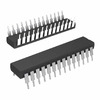
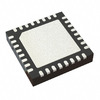
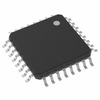
ATMEGA88V-10AU Image
Image may be representation.
See specifications for product details.
EXPRESS OPTION
Payment method

ATMEGA88V-10AU - Microchip Technology

Manufacturer Part Number
ATMEGA88V-10AU
Manufacturer
Microchip Technology
Allelco Part Number
32D-ATMEGA88V-10AU
Warranty
1 Year Allelco Warranty - Find out more
Stock Status:
14,260 pcs available, New & Original
Parts Description
IC MCU 8BIT 8KB FLASH 32TQFP
Package
32-TQFP (7x7)
Data sheet
ATMEGA88V-10AU.pdf
RoHs Status
ROHS3 Compliant
Our certification
In stock: 14260

Required fields are indicated by an asterisk (*)
Please send RFQ, we will respond immediately.

Quantity

Specifications

ATMEGA88V-10AU Tech Specifications
Microchip Technology - ATMEGA88V-10AU technical specifications, attributes, parameters and parts with similar specifications to Microchip Technology - ATMEGA88V-10AU

Product Attribute Attribute Value
Manufacturer Microchip Technology
Voltage - Supply (Vcc/Vdd) 1.8V ~ 5.5V
Supplier Device Package 32-TQFP (7x7)
Speed 10MHz
Series AVR® ATmega
RAM Size 1K x 8
Program Memory Type FLASH
Program Memory Size 8KB (4K x 16)
Peripherals Brown-out Detect/Reset, POR, PWM, WDT
Package / Case 32-TQFP
Package Tray
Product Attribute Attribute Value
Oscillator Type Internal
Operating Temperature -40°C ~ 85°C (TA)
Number of I/O 23
Mounting Type Surface Mount
EEPROM Size 512 x 8
Data Converters A/D 8x10b
Core Size 8-Bit
Core Processor AVR
Connectivity I²C, SPI, UART/USART
Base Product Number ATMEGA88

Environmental & Export Classifications

ATTRIBUTE DESCRIPTION
RoHs Status ROHS3 Compliant
Moisture Sensitivity Level (MSL) 1 (Unlimited)
REACH Status REACH Unaffected
ECCN EAR99
HTSUS 8542.31.0001

Parts Introduction

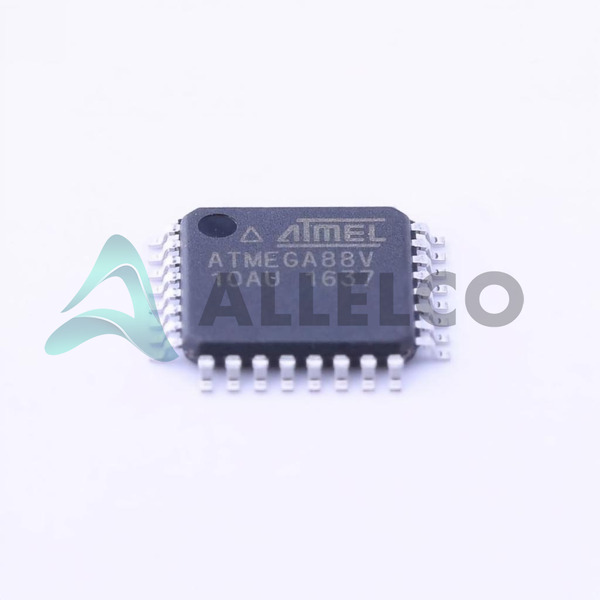
ATMEGA88V-10AU Image
ATMEGA88V-10AU (1)

Manufacturer Part Number

ATMEGA88V-10AU

Manufacturer

Microchip Technology

Introduction

ATMEGA88V-10AU is an 8-bit high-performance microcontroller from the AVR ATmega series designed to offer a balance of power efficiency and processing capability.

Product Features and Performance

Core Processor: AVR

Core Size: 8-Bit

Speed: 10MHz

Connectivity options include I2C, SPI, UART/USART

Peripherals include Brown-out Detect/Reset, POR, PWM, WDT

Number of I/O: 23

Program Memory Size: 8KB (4K x 16)

Program Memory Type: FLASH

EEPROM Size: 512x8

RAM Size: 1Kx8

Voltage Supply: 1.8V to 5.5V

Data Converters: A/D 8x10b

Oscillator Type: Internal

Operational Temperature range: -40°C to 85°C

Product Advantages

Offers robust interface options

Flexible voltage supply range

Equipped with advanced control and safety peripherals
ATMEGA88V-10AU Image
ATMEGA88V-10AU (2)

Key Technical Parameters

Speed: 10MHz

Program Memory: 8KB FLASH

I/O number: 23

Voltage - Supply: 1.8V ~ 5.5V

Data Converter: A/D 8x10b

EEPROM: 512x8

RAM: 1Kx8

Quality and Safety Features

Incorporates Brown-out Detect/Reset and Power-on Reset

Watchdog Timer for system stability

Compatibility

Compatible with various communication protocols including I2C, SPI, and UART/USART

Application Areas

Consumer Electronics

Industrial Automation

Automotive systems

Internet of Things

Product Lifecycle

Status: Active

Not nearing discontinuation, with long-term availability assured

Several Key Reasons to Choose This Product

Extended operational temperature range suitable for harsh environments

Flexible power supply compatibility enhances application versatility

Robust set of peripherals supports comprehensive system control and monitoring capabilities

High integration reduces system component count and design complexity

Long lifecycle product with stable supply
Frequently Asked Questions(FAQ)

How does the ATMEGA88V-10AU’s power consumption profile compare when operating at 3.3V versus 5V, and what implications does this have for battery-powered embedded designs?
The ATMEGA88V-10AU supports a voltage range of 1.8V to 5.5V, enabling operation at both 3.3V and 5V, but power consumption scales non-linearly with supply voltage due to dynamic switching losses and leakage effects. At 1MHz, typical active current is approximately 1mA/MHz at 2.7V, so at 3.3V it may draw around 1.2mA/MHz, while at 5V it could approach 1.8mA/MHz under similar conditions. This increase affects battery life significantly; a design using 5V from an external regulator may consume nearly twice the power compared to a 3.3V implementation, especially in sleep modes where leakage current becomes more pronounced. For low-power applications like sensor nodes, operating near the lower end of the voltage range—such as 3.3V or even 2.5V—can extend battery life by up to 40% depending on duty cycle and peripheral usage.
What are the key differences between the ATMEGA88V-10AU and the standard ATMEGA88PA-AU in terms of I/O availability and peripheral support?
While both devices share the same core AVR architecture, pinout, and package (32-TQFP), the ATMEGA88V-10AU features a reduced maximum operating frequency of 10MHz due to its lower-voltage variant design, whereas the ATMEGA88PA-AU can run up to 20MHz at full voltage. Both offer identical program memory (8KB FLASH), EEPROM (512 bytes), and RAM (1KB). However, the V-variant is optimized for 1.8–5.5V operation, making it suitable for mixed-voltage systems, while the PA version targets higher-speed applications requiring faster execution. Peripherals such as SPI, UART, I²C, ADC, and PWM are present in both, but timing-sensitive designs should verify oscillator stability and clock accuracy across temperature and voltage variations inherent in the V-series.
Can the ATMEGA88V-10AU reliably interface with 5V logic peripherals without level shifting, given its minimum operating voltage of 1.8V?
Yes, the ATMEGA88V-10AU can accept 5V inputs on most GPIO pins when powered at 4.5V–5.5V, thanks to its built-in 5V-tolerant input buffers. This means that 5V signals from sensors or external controllers can be connected directly without additional level shifters, simplifying PCB layout and reducing component count. However, care must be taken not to exceed the absolute maximum rating of 6V on any pin. When operating below 4.5V (e.g., at 3.3V), the device loses 5V tolerance, and external clamping diodes or level translators become necessary for reliable communication. Therefore, the decision to omit level shifting depends on the system’s supply strategy and whether all I/O operates within compatible voltage thresholds.
What considerations apply when selecting an external crystal oscillator for the ATMEGA88V-10AU, given its internal RC oscillator has ±10% accuracy?
Although the ATMEGA88V-10AU includes an internal calibrated RC oscillator providing ±10% accuracy—sufficient for UART baud rates and basic timing—precision-critical tasks like high-speed data logging, RF synchronization, or real-time clock functions require an external crystal. If using a 16MHz crystal, load capacitance matching (typically 20pF) and proper PCB grounding are essential to ensure startup reliability. Additionally, the V-series’ extended voltage range allows compatibility with both 3.3V and 5V crystals, though crystal manufacturers often specify optimal drive levels per voltage. Using an external oscillator also reduces power consumption during sleep states since the internal oscillator can be disabled, improving efficiency in battery-operated designs.
How much current does the ATMEGA88V-10AU typically draw in active mode versus sleep mode, and how does this affect thermal management in compact enclosures?
In active mode at 1MHz and 2.7V, the ATMEGA88V-10AU draws about 1mA, rising to roughly 1.5mA at 5V due to increased switching losses. During sleep modes—such as Power-down or Standby—current drops to microamps: approximately 0.1µA in Power-down and 2.5µA in Standby with the watchdog enabled. These low idle currents enable long battery life but do not eliminate heat generation entirely under sustained load. In tightly sealed enclosures, continuous operation at full speed and high ambient temperatures (up to 85°C) may cause self-heating if junction temperatures exceed limits. Proper decoupling, short traces, and adequate airflow mitigate thermal buildup, but designers should avoid prolonged 100% CPU utilization unless cooling is explicitly managed.
Is the ATMEGA88V-10AU suitable for automotive-grade applications requiring extended temperature ranges beyond -40°C to +85°C?
No, the ATMEGA88V-10AU is rated only for industrial temperatures from -40°C to +85°C, which excludes full automotive qualification (typically -40°C to +125°C). While it performs reliably within its specified range, exposure to higher temperatures may degrade flash memory retention, increase leakage current, and reduce oscillator stability. Automotive systems often require AEC-Q100 certification, which the ATMEGA88V-10AU does not provide. For automotive use, Microchip offers other AVR models such as the ATmega328PB-AU with extended temperature support. Designers should evaluate whether their application truly demands automotive robustness or if industrial-grade components suffice with environmental protections like conformal coating or thermal shielding.
How does the ATMEGA88V-10AU’s EEPROM endurance compare to modern alternatives, and what write strategies optimize longevity?
The ATMEGA88V-10AU offers 100,000 write cycles per byte to its 512-byte EEPROM, which aligns with traditional AVR expectations. Modern microcontrollers often double or triple this endurance through wear-leveling algorithms and hardware enhancements. To maximize lifespan, minimize frequent writes by buffering data in RAM and writing only when necessary. Implementing exponential backoff—writing after accumulating several changes—reduces wear significantly. Additionally, avoiding power loss during erase/write operations prevents corruption; using a brown-out detection circuit ensures stable power before critical operations. For high-write scenarios, consider moving persistent data to external FRAM or flash, though this adds complexity and cost.
What are the limitations of the ATMEGA88V-10AU’s internal analog-to-digital converter (ADC) when measuring slow-changing sensor signals?
The ATMEGA88V-10AU integrates an 8-channel, 10-bit successive approximation ADC capable of up to 13k samples per second. While sufficient for many applications, slow-changing signals benefit from oversampling or averaging to improve effective resolution. Without proper anti-aliasing filtering, noise and quantization errors can obscure subtle sensor readings. Additionally, the ADC reference voltage defaults to AVCC but can be switched to internal 1.1V bandgap for fixed gains. However, the lack of built-in calibration registers means gain and offset errors must be characterized empirically. For precision measurements, external amplifiers and precision references are recommended, as the internal ADC exhibits typical INL/DNL of ±2 LSB and limited linearity compared to dedicated data converters.
Can the ATMEGA88V-10AU drive capacitive loads directly from its PWM outputs without additional buffering?
Generally no. The ATMEGA88V-10AU’s GPIO pins are designed for digital switching and can source/sink up to 40mA, but driving large capacitive loads—such as unterminated cables or LED strings—without series resistance causes excessive rise/fall times and EMI issues. High-frequency PWM signals may ring or overshoot, potentially violating noise margins or damaging the MCU. For capacitive loads above ~10nF, add a small series resistor (e.g., 22Ω–100Ω) between the pin and load. Alternatively, use external drivers like MOSFETs or buffer ICs for inductive-capacitive combinations. Always simulate or measure edge rates in final layouts to ensure signal integrity and electromagnetic compliance.
How does the ATMEGA88V-10AU handle interrupt latency during high-priority events, and what factors influence response time?
The ATMEGA88V-10AU responds to interrupts within one instruction cycle if the Global Interrupt Flag is enabled and the ISR is already running, or within four cycles otherwise, assuming no nested context save overhead. However, latency increases significantly if the processor is executing a multi-cycle instruction (like MUL or DIV) or handling another interrupt. Real-world worst-case latency can reach dozens of cycles depending on code flow. To minimize jitter, structure ISRs to execute quickly and defer processing to main loop tasks. Also, disabling interrupts briefly during critical sections may be needed for time-sensitive protocols like I²C arbitration. Unlike Cortex-M parts, AVRs do not support tail-chaining, so nested interrupts require careful stack management.
What precautions should be taken when programming the ATMEGA88V-10AU via ISP, particularly regarding power sequencing and reset behavior?
The ATMEGA88V-10AU requires stable power at 1.8V–5.5V during In-System Programming (ISP); voltage dips below 1.7V may corrupt flash contents. Ensure the target board provides clean power before connecting the programmer. The RESET pin must be pulled high during normal operation but driven low during programming. Some programmers automatically manage this, but standalone setups need explicit control. Avoid rapid toggling of RESET or power cycling mid-program, as partial writes can leave the device in an unrecoverable state. Always verify fuse settings post-programming, especially the BODLEVEL and WDTON bits, which affect system recovery and security. Using a regulated supply with bulk capacitors (>10µF) improves reliability during long programming sessions.
How does the ATMEGA88V-10AU’s wake-up time from sleep modes impact real-time responsiveness in event-driven systems?
Wake-up latency varies by sleep mode: from Power-down, the device resumes in approximately 65µs after releasing RESET or triggering an external interrupt; from Standby, it’s faster at ~10µs. These times include clock stabilization delays. In contrast, modern MCUs with faster oscillators achieve sub-microsecond wake-up. For applications requiring millisecond-scale event response (e.g., button presses), the delay is acceptable, but for high-speed sampling or motor control loops, it introduces dead time. Designers should account for this in state machines by either anticipating wake-up duration or using shorter sleep intervals with periodic timer interrupts instead of deep sleep. Balancing power savings against responsiveness dictates appropriate sleep selection.
What are the trade-offs between using the ATMEGA88V-10AU’s internal oscillator versus an external resonator for battery-powered IoT nodes?
The internal oscillator consumes less power (negligible in sleep) and eliminates external components, reducing bill-of-materials cost and board space—ideal for simple, low-data-rate sensors. However, its ±10% tolerance risks UART framing errors over temperature and voltage drift, especially at higher baud rates (>115200). External 32.768kHz resonators offer superior accuracy (±20ppm typical) for RTC functions without significant quiescent current penalty. For moderate-speed communication (≤9600 baud), the internal oscillator suffices, but for robust serial links, an external crystal paired with clock recovery techniques (e.g., bit-banging with error correction) may be preferable despite added cost. Ultimately, the choice hinges on required reliability versus minimalist design goals.
Does the ATMEGA88V-10AU support secure boot or cryptographic operations natively, and what alternatives exist for firmware protection?
The ATMEGA88V-10AU lacks native cryptographic accelerators, secure bootloaders, or hardware random number generators available in some ARM-based MCUs. Firmware protection relies on software-based obfuscation and Microchip’s CodeGuard technology, which encrypts user code during programming and decrypts it on-the-fly—but only if the device is programmed via certified tools and never reflashed improperly. Once locked, the entire flash becomes read-protected. For stronger security, offload encryption to external chips or upgrade to newer AVR models like the ATmega4809 with AES engines. Physical tamper resistance (e.g., epoxy coating, mesh layers) complements logical safeguards but cannot prevent skilled reverse engineering once access is gained.

Parts with Similar Specifications

The three parts on the right have similar specifications to Microchip Technology ATMEGA88V-10AU

Product Attribute ATMEGA88V-10AUR ATMEGA88V-10AUR ATMEGA88PV-10AU ATMEGA88PV-10AUR
Part Number ATMEGA88V-10AUR ATMEGA88V-10AUR ATMEGA88PV-10AU ATMEGA88PV-10AUR
Manufacturer Microchip Technology Atmel Microchip Technology Microchip Technology
Core Processor - - - -
Supplier Device Package - 196-NFBGA (12x12) 16-PDIP 64-VQFN (9x9)
Base Product Number - DAC34H84 MAX500 ADS62P42
EEPROM Size - - - -
Operating Temperature - -40°C ~ 85°C 0°C ~ 70°C -40°C ~ 85°C
Voltage - Supply (Vcc/Vdd) - - - -
Connectivity - - - -
Speed - - - -
Mounting Type - Surface Mount Through Hole Surface Mount
RAM Size - - - -
Core Size - - - -
Data Converters - - - -
Peripherals - - - -
Oscillator Type - - - -
Program Memory Size - - - -
Package / Case - 196-LFBGA 16-DIP (0.300', 7.62mm) 64-VFQFN Exposed Pad
Series - - - -
Number of I/O - - - -
Package - Tape & Reel (TR) Tube Tape & Reel (TR)
Program Memory Type - - - -

ATMEGA88V-10AU Datasheet PDF

Download ATMEGA88V-10AU pdf datasheets and Microchip Technology documentation for ATMEGA88V-10AU - Microchip Technology.

Datasheets
ATmega48_88_168(V) Complete.pdf
PCN Design/Specification
ATMEGA Datasheet 13/Dec/2018.pdf Die Rev & Add MFG Location 17/Nov/2015.pdf
HTML Datasheet
Cylindrical Battery Holders.pdf
PCN Packaging
2.73KHz.pdf
PCN Assembly/Origin
Test Site 15/Jul/2022.pdf

Customer Reviews

Evaluation: 10 Articles

  • Nath***rooks
    Jun 11, 2026

    Installed this power component in a converter board. Output remained stable under different load conditions and thermal performance was better than expected.

  • Dani***alkerTech
    Jun 1, 2026

    Product works, but setup took more effort than expected. Once configured the MCU ran reliably, although documentation support felt older compared with newer platforms. Fine for maintenance projects.

  • Yuki***aka88
    May 26, 2026

    信号通信プロジェクトでこのRS-485トランシーバーを使用しました。設置は簡単で、長距離ケーブルでも通信は安定していました。消費電力も、以前使用していたものより低くなっています。

  • Stev***aker
    May 20, 2026

    Solid diode for power rectification. Works well in switching circuits.

  • Bran***Lewis
    May 11, 2026

    Compact FPGA with good performance. Suitable for basic signal processing tasks.

  • Oliv***arris
    May 7, 2026

    Reliable I/O expander. Works well in embedded control applications.

  • Jess***Jones
    Apr 17, 2026

    It offers good value for the price, and the specifications match the description. I’ve been using it for two days with no issues, and I’ll definitely buy it again if I need it in the future.

  • Mich***Smith
    Apr 17, 2026

    Shipping was on time, the component pins are neatly aligned, and I tested 10 of them with a multimeter—all readings were within the specified range. Highly recommended.

  • Aman***arris
    Apr 3, 2026

    It was great—the entire process, from placing the order to receiving the package, went very smoothly. The components were consistent, the price was fair, and I had a very pleasant shopping experience.

  • Mike***nch
    Apr 3, 2026

    Better than expected! The resistance and capacitance readings were spot-on, and it passed the test on the first try. The service was reliable, and the packaging was thoughtful—I highly recommend it.

Write a Review

Your Email address will not be published.

Shipment

Delivery Time

In-stock items can be shipped within 24 hours. Some parts will be arranged for delivery within 1-2 days from the date all items arrive at our warehouse. And Allelco ships order once a day at about 17:00, except Sunday. Once the goods are shipped, the estimated delivery time depends on the shipping methods and Delivery destination. The table below shows are the logistic time for some common countries.

Delivery Cost

  1. Use your express account for shipment if you have one.
  2. Use our account for the shipment. Refer to the table below for the approximate charges.
(Different time frame / countries / package size has different price.)

Delivery Method

  1. Global Common Shipment by DHL / UPS / FedEx / TNT / EMS / SF we support.
  2. Others more shipping ways, please get in touch with your customer manager.

Common Countries Logistic Time Reference
Region Country Logistic Time(Day)
America United States 5
Brazil 7
Europe Germany 5
United Kingdom 4
Italy 5
Oceania Australia 6
New Zealand 5
Asia India 4
Japan 4
Middle East Israel 6
DHL & FedEx Shipment Charges Reference
Shipment charges(KG) Reference DHL(USD$)
0.00kg-1.00kg USD$30.00 - USD$60.00
1.00kg-2.00kg USD$40.00 - USD$80.00
2.00kg-3.00kg USD$50.00 - USD$100.00
Note:
The above table is for reference only. There may have some data bias for the uncontrollable factors.
Contact us if you have any questions.
  • QC (Quality Warranty)
  • Payment Support
  • Packaging
  • Certifications & Memberships

QC (Quality Warranty)

Allelco is committed to exceeding customer expectations through customer service excellence, order accuracy, and on-time delivery.
This is achieved through our commitment to the continual improvement of our processes, services, and products.


Strict quality inspection builds a solid foundation for electronic component quality.
  1. Visual inspection
  2. Performance testing and reliability verification
  3. Standardized full-process testing
  4. Precise control of every parameter
We eliminate defective components and ensure the stable operation of electronic devices through professional quality standards.

Payment Support

The payment method can be chosen from the methods shown below: Wire Transfer (T/T, Bank Transfer), Western Union, Credit card, PayPal.
  • HKBea
  • Paypal
  • MasterCard
  • Western-Union
  • VISA
Stable Delivery, Sincere Partnership — Your Faithful Supply Chain Partner
  • Efficient Supply Management
  • Cost-Saving Procurement
  • Fast Sourcing & Delivery
Contact us if you have any questions.

Packaging

Electrostatic Discharge Protection and Handling

All electrostatic-sensitive components are handled in accordance with electrostatic discharge control procedures. The products are hermetically sealed in anti-static safe packaging to prevent electrostatic damage. Appropriate labeling is also applied for identification and traceability. This ensures product integrity during storage, handling and transportation.


ESD

Certifications & Memberships

Third-party certified, strict quality control. Our certification
  • ISO 9001: 2015
  • ISO 13485: 2016
  • ISO 14001: 2015
  • ISO 28000: 2007
  • ISO 45001: 2018
  • GB/T 27922-2011
  • SMTA
  • IPC
  • ESD
  • PSMA
ATMEGA88V-10AU Image

ATMEGA88V-10AU

Microchip Technology
32D-ATMEGA88V-10AU

Want a better price? Add to Cart and Submit RFQ now, we'll contact you immediately.

0 RFQ
Shopping cart (0 Items)
It is empty.
Compare List (0 Items)
It is empty.
Feedback

Your feedback matters! At Allelco, we value the user experience and strive to improve it constantly.
Please share your comments with us via our feedback form, and we'll respond promptly.
Thank you for choosing Allelco.

Subject
E-mail
Comments
Captcha
Drag or click to upload file
Upload File
types: .xls, .xlsx, .doc, .docx, .jpg, .png and .pdf.
Max file size: 10MB