View All

Please refer to the English Version as our Official Version.Return

Europe
France(Français) Germany(Deutsch) Italy(Italia) Russian(русский) Poland(polski) Czech(Čeština) Luxembourg(Lëtzebuergesch) Netherlands(Nederland) Iceland(íslenska) Hungarian(Magyarország) Spain(español) Portugal(Português) Turkey(Türk dili) Bulgaria(Български език) Ukraine(Україна) Greece(Ελλάδα) Israel(עִבְרִית) Sweden(Svenska) Finland(Svenska) Finland(Suomi) Romania(românesc) Moldova(românesc) Slovakia(Slovenská) Denmark(Dansk) Slovenia(Slovenija) Slovenia(Hrvatska) Croatia(Hrvatska) Serbia(Hrvatska) Montenegro(Hrvatska) Bosnia and Herzegovina(Hrvatska) Lithuania(lietuvių) Spain(Português) Switzerland(Deutsch) United Kingdom(English)
Asia/Pacific
Japan(日本語) Korea(한국의) Thailand(ภาษาไทย) Malaysia(Melayu) Singapore(Melayu) Vietnam(Tiếng Việt) Philippines(Pilipino)
Africa, India and Middle East
United Arab Emirates(العربية) Iran(فارسی) Tajikistan(فارسی) India(हिंदी) Madagascar(malaɡasʲ)
South America / Oceania
New Zealand(Maori) Brazil(Português) Angola(Português) Mozambique(Português)
North America
United States(English) Canada(English) Haiti(Ayiti) Mexico(español)
HomeProductsIntegrated Circuits (ICs)Interface - Drivers, Receivers, TransceiversKSZ9031RNXCA-TR
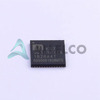
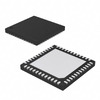
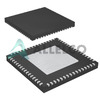
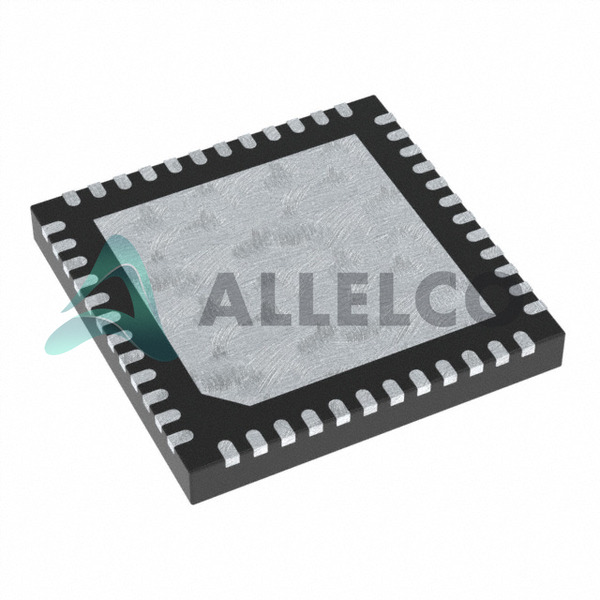
KSZ9031RNXCA-TR Image
Image may be representation.
See specifications for product details.
EXPRESS OPTION
Payment method

KSZ9031RNXCA-TR - Microchip Technology

Manufacturer Part Number
KSZ9031RNXCA-TR
Manufacturer
Microchip Technology
Allelco Part Number
32D-KSZ9031RNXCA-TR
Warranty
1 Year Allelco Warranty - Find out more
Stock Status:
14,450 pcs available, New & Original
Parts Description
IC TRANSCEIVER FULL 4/4 48QFN
Package
48-QFN (7x7)
Data sheet
KSZ9031RNXCA-TR.pdf
RoHs Status
ROHS3 Compliant
Our certification
In stock: 14450
  • Unit Price: $3.283
  • Subtotal: $0.00

Want a better price?
Add to Cart and Submit RFQ now, we'll contact you immediately.

Quantity Unit Price Ext. Price
1+ $3.283 $3.28
10+ $2.863 $28.63
30+ $2.613 $78.39
100+ $2.359 $235.90
500+ $2.243 $1,121.50
1000+ $2.191 $2,191.00
The above prices does not include taxes and freight rates, which will be calculated on the order pages.

Specifications

KSZ9031RNXCA-TR Tech Specifications
Microchip Technology - KSZ9031RNXCA-TR technical specifications, attributes, parameters and parts with similar specifications to Microchip Technology - KSZ9031RNXCA-TR

Product Attribute Attribute Value
Manufacturer Microchip Technology
Voltage - Supply 1.8V, 2.5V, 3.3V
Type Transceiver
Supplier Device Package 48-QFN (7x7)
Series -
Protocol Ethernet
Package / Case 48-VFQFN Exposed Pad
Product Attribute Attribute Value
Package Tape & Reel (TR)
Operating Temperature 0°C ~ 70°C
Number of Drivers/Receivers 4/4
Mounting Type Surface Mount
Duplex Full
Data Rate -
Base Product Number KSZ9031

Environmental & Export Classifications

ATTRIBUTE DESCRIPTION
RoHs Status ROHS3 Compliant
Moisture Sensitivity Level (MSL) 3 (168 Hours)
REACH Status REACH Unaffected
ECCN 5A991B1
HTSUS 8542.39.0001

Parts Introduction

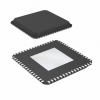
KSZ9031RNXCA-TR Image
KSZ9031RNXCA-TR (1)

Manufacturer Part Number

KSZ9031RNXCA-TR

Manufacturer

Microchip Technology

Introduction

Ethernet Transceiver with Enhanced Features for Network Connectivity

Product Features and Performance

Transceiver for Ethernet Connectivity

Compliant with Numerous Ethernet Protocols

4 Transmitter and 4 Receiver Channels (4/4)

Supports Full Duplex Operation

Adaptable Voltage Supply Options (1.8V, 2.5V, 3.3V)

Surface Mount, 48-VFQFN Exposed Pad

Designed for High-Speed Network Communication

Product Advantages

High Integration for Reduced System Complexity

Energy Efficient for Low Power Consumption

Robust against Network Noise and Electromagnetic Interference

Optimized for Thermal Performance
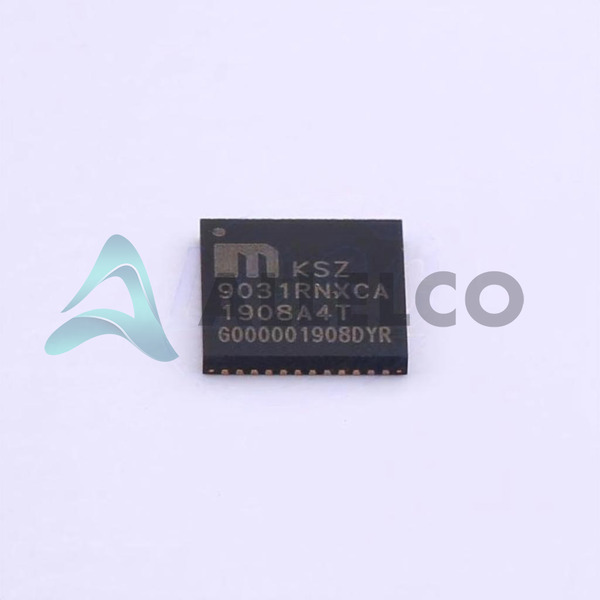
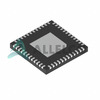
KSZ9031RNXCA-TR Image
KSZ9031RNXCA-TR (2)

Key Technical Parameters

Data Rate: Up to 1 Gigabit per second

Operating Temperature Range: 0°C to 70°C

Voltage Supply Flexibility: 1.8V, 2.5V, 3.3V

Mounting Type: 48-Pin Surface Mount

Dimensions: QFN 7x7 mm Package

Quality and Safety Features

Built to Industrial Quality Standards

Integrated Fault Protection Circuits

Meeting Regulatory Compliance

Compatibility

Compliant with IEEE 802.3 Standard

Interoperable with Major Ethernet Hardware

Application Areas

Networking Equipment

Consumer Electronics

Computer Peripherals

Industrial Control Systems

Product Lifecycle

Active Product Status

Supported with Long-Term Supply Commitment

Several Key Reasons to Choose This Product

Reliable High-Speed Data Transmission

Energy Efficient Design for Greener Operations

Proven Microchip Technology Quality and Reliability

Broad Compatibility with Networking Equipment

Long-Term Availability for Lifecycle Management
Frequently Asked Questions(FAQ)

What are the key electrical characteristics of the KSZ9031RNXCA-TR transceiver that influence power consumption in low-voltage industrial applications?
The KSZ9031RNXCA-TR operates across a supply voltage range of 1.8V, 2.5V, and 3.3V, enabling flexible integration into systems with mixed-voltage architectures. At 1.8V, the core logic typically draws less than 100 mW under full duplex load, which significantly reduces dynamic power compared to higher-voltage variants. However, switching between voltage rails during link training may introduce transient current spikes up to 50 mA. Designers must account for these transitions when sizing decoupling networks and estimating total system power, especially in battery-powered edge devices where steady-state quiescent current below 5 mA is critical.
How does the operating temperature range of the KSZ9031RNXCA-TR affect its reliability in harsh environments, and what design precautions should be taken?
The KSZ9031RNXCA-TR is rated from 0°C to 70°C, which aligns with standard commercial-grade operation but excludes extended-temperature industrial or automotive use cases. In ambient temperatures approaching 60°C, internal thermal resistance can cause junction temperatures to exceed 85°C under sustained high packet rates, potentially degrading signal integrity over time. Engineers should implement adequate PCB copper pour for heat spreading, avoid placing adjacent high-power components directly beneath the 48-QFN package, and ensure airflow or thermal vias do not compromise EMI shielding. For applications exceeding 70°C, external heatsinks or forced convection may be necessary despite the lack of official derating curves.
Can the KSZ9031RNXCA-TR support gigabit Ethernet over copper, and how does it compare to PHYs with integrated magnetics?
Yes, the KSZ9031RNXCA-TR supports Gigabit Ethernet (1000BASE-T) full-duplex communication via its four independent transceiver channels. Unlike some alternative solutions that integrate transformers on-package, this device requires discrete magnetics due to its open architecture. This separation allows designers to select magnetics optimized for specific cable lengths, environmental conditions, or cost targets—such as using lower-capacitance transformers for short-reach backplane applications. Compared to fully integrated PHYs, this approach adds two to three layers of component count but offers superior flexibility in impedance matching and ESD protection design.
What considerations apply when routing differential pairs near the KSZ9031RNXCA-TR’s MDI interfaces to maintain signal integrity at 1 Gbps?
Differential pair routing for the KSZ9031RNXCA-TR’s MDI lines demands controlled impedance of 100 Ω ±10% on both twisted-pair interfaces. Trace length matching within 5 mm between TX+/TX– and RX+/RX– pairs minimizes skew-induced jitter, particularly important given the 802.3ab compliance requirements. Maintain a minimum clearance of 3× trace width from noisy digital signals like MDIO clocks or GPIO toggling. Avoid vias in the primary return path; if unavoidable, pair them symmetrically. Termination resistors should be placed as close as possible to the connector or magnetics module to damp reflections before they reach sensitive receiver inputs.
How does the Moisture Sensitivity Level (MSL) rating of 3 for the KSZ9031RNXCA-TR impact reflow soldering processes, and what storage protocols are recommended?
With an MSL3 classification requiring bake-out after 168 hours beyond floor life, the KSZ9031RNXCA-TR mandates careful handling during assembly. If exposed to ambient humidity beyond this window without baking, popcorning risk increases significantly during lead-free reflow profiles peaking at 245°C. Manufacturers recommend storing unpackaged devices in dry cabinets at <10% RH or baking at 125°C for 24 hours prior to soldering. Post-reflow, immediate resealing in moisture barrier bags with desiccant is advised to prevent future degradation—especially critical in long-lifecycle embedded systems where board replacement is impractical.
What trade-offs exist between using the KSZ9031RNXCA-TR versus a switch-based solution when implementing a point-to-point Gigabit Ethernet link?
The KSZ9031RNXCA-TR offers direct MAC-to-PHY interfacing with minimal latency and pin count overhead, ideal for microcontroller-based designs needing simple connectivity. In contrast, a managed switch integrates multiple transceivers, routing intelligence, and management features but consumes more power and area. For single-link applications, the KSZ9031 reduces BOM complexity by eliminating switch fabric logic and reducing software stack burden. However, if future expansion to multi-port topologies is anticipated, investing in a switch IC early may yield better long-term scalability despite higher initial NRE and power costs.
How should clocking be handled when cascading multiple KSZ9031RNXCA-TR devices in a daisy-chain configuration?
While the KSZ9031RNXCA-TR does not natively support daisy-chained data transmission, clock synchronization can be achieved using its recovered clock outputs (e.g., REF_CLK) routed to input reference clocks on downstream devices. Each instance must independently lock to the incoming data stream; thus, phase alignment across hops depends heavily on PCB trace length consistency and oscillator stability. Deviations exceeding 1 ns accumulate quickly at 1 Gbps, leading to bit errors. Instead of relying solely on clock chaining, designers often prefer a centralized oscillator feeding all units via low-jitter distribution networks to maintain sub-ps timing accuracy across the system.
What role does the base product number KSZ9031 play in selecting compatible evaluation boards or development tools?
The base part KSZ9031 encompasses all variants including the KSZ9031RNXCA-TR, ensuring backward compatibility across packaging options (TQFN vs. QFN). When sourcing evaluation kits or reference designs, referencing the base number guarantees access to validated schematics, layout guidelines, and firmware examples tailored for the core functionality—regardless of minor package differences. This simplifies prototyping phases where footprint migration occurs between development stages and production runs, reducing redesign effort and accelerating time-to-market for certified designs.
Are there any known limitations in using the KSZ9031RNXCA-TR with legacy Fast Ethernet (10/100 Mbps) equipment?
No fundamental limitations exist; the KSZ9031RNXCA-TR auto-negotiates seamlessly down to 10BASE-T and 100BASE-TX modes, maintaining full compatibility with older hubs, switches, and embedded controllers. However, performance degrades slightly at lower speeds due to fixed internal equalization settings tuned for Gigabit operation. In noisy environments, this may manifest as occasional CRC errors during 100 Mbps bursts. To mitigate, ensure adequate grounding, use shielded cabling, and verify magnetics selection supports lower-frequency attenuation requirements. Most legacy deployments function reliably, but proactive noise margin testing is advisable in electrically harsh installations.
How does the RoHS3 compliance status of the KSZ9031RNXCA-TR influence global regulatory submissions and supply chain logistics?
RoHS3 compliance confirms the absence of restricted substances including lead, mercury, cadmium, hexavalent chromium, PBB, PBDE, and four phthalates above specified thresholds. This facilitates market access across Europe, North America, and Asia without additional testing or documentation burdens. Suppliers can confidently declare conformance in EC declarations of incorporation, simplifying export procedures and reducing customs delays. It also aligns with corporate sustainability goals, supporting tenders that mandate strict environmental standards—particularly relevant for defense, medical, and consumer electronics sectors with stringent lifecycle management policies.
What precautions are essential when configuring the KSZ9031RNXCA-TR’s LED indicators in low-power embedded designs?
The KSZ9031RNXCA-TR provides programmable LEDs for link status, activity, and speed indication, but driving them directly from 3.3V GPIOs risks exceeding absolute maximum ratings if not current-limited. Use series resistors of 1 kΩ to 10 kΩ depending on LED forward voltage and desired brightness. Alternatively, employ open-drain outputs with pull-up resistors to isolate the PHY from digital noise coupling. Disable unused LED functions in sleep modes to conserve energy—each active LED channel can draw up to 2 mA, impacting overall system power budget in battery-operated IoT endpoints.
How does the package size (48-QFN, 7x7 mm) affect thermal dissipation and routing density in compact PCBs?
The compact 7x7 mm QFN package enables dense layouts but poses thermal challenges due to limited exposed pad contact area. Without proper thermal management, self-heating under continuous Gigabit traffic can elevate case temperature by 15–20°C above ambient. Engineers should maximize copper coverage under the exposed pad, connect it to a solid ground plane via multiple thermal vias (at least eight, 0.3 mm diameter), and avoid placing high-current traces near the perimeter to prevent solder wicking during reflow. Routing density benefits are offset by stricter clearance rules around peripheral pins, especially for high-speed differential pairs carrying MDI signals.
What are the implications of the ECCN code 5A991B1 for international shipments involving the KSZ9031RNXCA-TR?
Classified under ECCN 5A991B1, this device falls under Category 5—Information Technology Equipment—and is subject to export controls under U.S. regulations, particularly affecting transfers to embargoed destinations or entities on denied party lists. Exporters must obtain licenses when shipping to certain countries or end users, even for non-sensitive commercial applications. Compliance requires accurate declaration of technical specifications and end-use statements. Consulting with logistics providers familiar with Wassenaar Arrangement guidelines is strongly advised to avoid shipment holds or penalties during customs clearance.
How should the KSZ9031RNXCA-TR be tested during manufacturing to ensure reliable Gigabit link establishment?
Automated test setups should include loopback modes (line-side and system-side) to validate transmitter and receiver paths independently. Use protocol-aware testers capable of generating and verifying IEEE 802.3 frames with varying inter-frame gaps and payload sizes. Monitor eye diagrams at the MDI interface to confirm compliance with 1000BASE-T eye masks—defects often arise from poor magnetics selection or inadequate PCB impedance control. Additionally, stress-test link negotiation by cycling power rapidly and verifying recovery within 2 seconds, as mandated by the specification. Include environmental chambers to verify operation at temperature extremes if deployed in uncontrolled settings.
What distinguishes the KSZ9031RNXCA-TR from other Microchip Ethernet PHYs in terms of low-power modes?
Unlike some competitors offering deep sleep states with wake-on-LAN via magic packet detection, the KSZ9031RNXCA-TR primarily supports reduced-power modes during idle periods rather than complete shutdown. Its Energy Efficient Ethernet (EEE) implementation complies with IEEE 802.3az, dynamically scaling transmit power during low utilization. However, it lacks true standby mode where core circuits are powered off. This makes it less suitable for ultra-low-power battery applications but still advantageous over non-EEE PHYs in always-connected infrastructure gear where partial activity detection suffices. Always consult errata sheets for version-specific power-down sequence requirements.
Can the KSZ9031RNXCA-TR operate reliably in environments with high electromagnetic interference (EMI) without additional filtering?
While designed with integrated termination and slew rate control to reduce emissions, the KSZ9031RNXCA-TR alone cannot guarantee immunity against severe EMI. In electrically noisy industrial settings, supplemental filtering—such as common-mode chokes or ferrite beads on MDI lines—is often necessary to meet FCC Part 15 or CISPR 32 radiated limits. Layout plays a critical role: keep analog sections isolated from switching regulators, avoid crossing split planes under high-speed traces, and use ground stitching vias around the periphery of the QFN package. Pre-compliance testing with spectrum analyzers is recommended before final enclosure sealing.
How does the choice of magnetics affect jitter performance when using the KSZ9031RNXCA-TR in backplane or vertical interconnects?
Magnetics selection directly impacts jitter accumulation due to insertion loss and group delay variation across frequencies. For backplane links exceeding 50 cm, use magnetics with optimized frequency response up to 625 MHz and tight tolerance on common-mode inductance (>300 µH). Poor magnetics introduce baseline wander and inter-symbol interference, forcing the KSZ9031RNXCA-TR’s adaptive equalizer to compensate excessively, which increases error rates under temperature drift. Always pair magnetics with datasheet-recommended PCB footprints and ensure center taps are properly terminated to ground through 100 Ω resistors per IEEE 802.3 standards.
What documentation resources accompany the KSZ9031RNXCA-TR to aid in regulatory certification and safety validation?
Full technical documentation includes the datasheet, application notes (e.g., AN1087 for layout), reference schematic, IBIS models, and SPICE simulations for power integrity analysis. Regulatory artifacts such as TCB reports for FCC/CE compliance, UL certifications (if applicable), and IEC 62368-1 safety assessments are typically available through Microchip’s portal. These materials streamline certification processes by providing pre-validated design assumptions, EMC mitigation strategies, and environmental test summaries. Engineers should cross-reference revision levels of all documents against the specific device batch to ensure alignment with latest errata and calibration data.

Parts with Similar Specifications

The three parts on the right have similar specifications to Microchip Technology KSZ9031RNXCA-TR

Product Attribute KSZ9031RNXIC-TR KSZ9031RNXIA-TR KSZ9031RNXCC-TR KSZ9031MNXIA-TR
Part Number KSZ9031RNXIC-TR KSZ9031RNXIA-TR KSZ9031RNXCC-TR KSZ9031MNXIA-TR
Manufacturer Microchip Technology Microchip Technology Microchip Technology Microchip Technology
Supplier Device Package - 196-NFBGA (12x12) 16-PDIP 64-VQFN (9x9)
Base Product Number - DAC34H84 MAX500 ADS62P42
Type - - - -
Protocol - - - -
Duplex - - - -
Mounting Type - Surface Mount Through Hole Surface Mount
Series - - - -
Operating Temperature - -40°C ~ 85°C 0°C ~ 70°C -40°C ~ 85°C
Number of Drivers/Receivers - - - -
Package / Case - 196-LFBGA 16-DIP (0.300', 7.62mm) 64-VFQFN Exposed Pad
Data Rate - - - -
Voltage - Supply - - - -
Package - Tape & Reel (TR) Tube Tape & Reel (TR)

KSZ9031RNXCA-TR Datasheet PDF

Download KSZ9031RNXCA-TR pdf datasheets and Microchip Technology documentation for KSZ9031RNXCA-TR - Microchip Technology.

Datasheets
KSZ9031RNX Datasheet.pdf
PCN Design/Specification
KSZ9031MNX 06/May/2022.pdf KSZ9031RNX 20/Sep/2021.pdf
PCN Assembly/Origin
KSZ9031RNx/USB7206x/USB7216x/USB7252x 13/Oct/2022.pdf
PCN Packaging
MBB/Label Chgs 16/Nov/2018.pdf
PCN Part Number
Micrel to Microchip PN Changes 7/Oct/2015.pdf

Customer Reviews

Evaluation: 10 Articles

  • Emil***rperTech
    Jun 23, 2026

    Works exactly as described. I used it as a USB-to-SPI bridge in a small MCU development project and communication was stable from the first setup.

  • Liam***terTech
    Jun 15, 2026

    Used this CPLD in a logic control project. Programming was straightforward and signal timing matched the design requirements.

  • Nath***rooks
    Jun 11, 2026

    Installed this power component in a converter board. Output remained stable under different load conditions and thermal performance was better than expected.

  • Dani***alkerTech
    Jun 1, 2026

    Product works, but setup took more effort than expected. Once configured the MCU ran reliably, although documentation support felt older compared with newer platforms. Fine for maintenance projects.

  • Yuki***aka88
    May 26, 2026

    信号通信プロジェクトでこのRS-485トランシーバーを使用しました。設置は簡単で、長距離ケーブルでも通信は安定していました。消費電力も、以前使用していたものより低くなっています。

  • Stev***aker
    May 20, 2026

    Solid diode for power rectification. Works well in switching circuits.

  • Bran***Lewis
    May 11, 2026

    Compact FPGA with good performance. Suitable for basic signal processing tasks.

  • Oliv***arris
    May 7, 2026

    Reliable I/O expander. Works well in embedded control applications.

  • Jess***Jones
    Apr 17, 2026

    It offers good value for the price, and the specifications match the description. I’ve been using it for two days with no issues, and I’ll definitely buy it again if I need it in the future.

  • Mich***Smith
    Apr 17, 2026

    Shipping was on time, the component pins are neatly aligned, and I tested 10 of them with a multimeter—all readings were within the specified range. Highly recommended.

Write a Review

Your Email address will not be published.

Shipment

Delivery Time

In-stock items can be shipped within 24 hours. Some parts will be arranged for delivery within 1-2 days from the date all items arrive at our warehouse. And Allelco ships order once a day at about 17:00, except Sunday. Once the goods are shipped, the estimated delivery time depends on the shipping methods and Delivery destination. The table below shows are the logistic time for some common countries.

Delivery Cost

  1. Use your express account for shipment if you have one.
  2. Use our account for the shipment. Refer to the table below for the approximate charges.
(Different time frame / countries / package size has different price.)

Delivery Method

  1. Global Common Shipment by DHL / UPS / FedEx / TNT / EMS / SF we support.
  2. Others more shipping ways, please get in touch with your customer manager.

Common Countries Logistic Time Reference
Region Country Logistic Time(Day)
America United States 5
Brazil 7
Europe Germany 5
United Kingdom 4
Italy 5
Oceania Australia 6
New Zealand 5
Asia India 4
Japan 4
Middle East Israel 6
DHL & FedEx Shipment Charges Reference
Shipment charges(KG) Reference DHL(USD$)
0.00kg-1.00kg USD$30.00 - USD$60.00
1.00kg-2.00kg USD$40.00 - USD$80.00
2.00kg-3.00kg USD$50.00 - USD$100.00
Note:
The above table is for reference only. There may have some data bias for the uncontrollable factors.
Contact us if you have any questions.
  • QC (Quality Warranty)
  • Payment Support
  • Packaging
  • Certifications & Memberships

QC (Quality Warranty)

Allelco is committed to exceeding customer expectations through customer service excellence, order accuracy, and on-time delivery.
This is achieved through our commitment to the continual improvement of our processes, services, and products.


Strict quality inspection builds a solid foundation for electronic component quality.
  1. Visual inspection
  2. Performance testing and reliability verification
  3. Standardized full-process testing
  4. Precise control of every parameter
We eliminate defective components and ensure the stable operation of electronic devices through professional quality standards.

Payment Support

The payment method can be chosen from the methods shown below: Wire Transfer (T/T, Bank Transfer), Western Union, Credit card, PayPal.
  • HKBea
  • Paypal
  • MasterCard
  • Western-Union
  • VISA
Stable Delivery, Sincere Partnership — Your Faithful Supply Chain Partner
  • Efficient Supply Management
  • Cost-Saving Procurement
  • Fast Sourcing & Delivery
Contact us if you have any questions.

Packaging

Electrostatic Discharge Protection and Handling

All electrostatic-sensitive components are handled in accordance with electrostatic discharge control procedures. The products are hermetically sealed in anti-static safe packaging to prevent electrostatic damage. Appropriate labeling is also applied for identification and traceability. This ensures product integrity during storage, handling and transportation.


ESD

Certifications & Memberships

Third-party certified, strict quality control. Our certification
  • ISO 9001: 2015
  • ISO 13485: 2016
  • ISO 14001: 2015
  • ISO 28000: 2007
  • ISO 45001: 2018
  • GB/T 27922-2011
  • SMTA
  • IPC
  • ESD
  • PSMA
KSZ9031RNXCA-TR Image

KSZ9031RNXCA-TR

Microchip Technology
32D-KSZ9031RNXCA-TR

Want a better price? Add to Cart and Submit RFQ now, we'll contact you immediately.

0 RFQ
Shopping cart (0 Items)
It is empty.
Compare List (0 Items)
It is empty.
Feedback

Your feedback matters! At Allelco, we value the user experience and strive to improve it constantly.
Please share your comments with us via our feedback form, and we'll respond promptly.
Thank you for choosing Allelco.

Subject
E-mail
Comments
Captcha
Drag or click to upload file
Upload File
types: .xls, .xlsx, .doc, .docx, .jpg, .png and .pdf.
Max file size: 10MB