View All

Please refer to the English Version as our Official Version.Return

Europe
France(Français) Germany(Deutsch) Italy(Italia) Russian(русский) Poland(polski) Czech(Čeština) Luxembourg(Lëtzebuergesch) Netherlands(Nederland) Iceland(íslenska) Hungarian(Magyarország) Spain(español) Portugal(Português) Turkey(Türk dili) Bulgaria(Български език) Ukraine(Україна) Greece(Ελλάδα) Israel(עִבְרִית) Sweden(Svenska) Finland(Svenska) Finland(Suomi) Romania(românesc) Moldova(românesc) Slovakia(Slovenská) Denmark(Dansk) Slovenia(Slovenija) Slovenia(Hrvatska) Croatia(Hrvatska) Serbia(Hrvatska) Montenegro(Hrvatska) Bosnia and Herzegovina(Hrvatska) Lithuania(lietuvių) Spain(Português) Switzerland(Deutsch) United Kingdom(English)
Asia/Pacific
Japan(日本語) Korea(한국의) Thailand(ภาษาไทย) Malaysia(Melayu) Singapore(Melayu) Vietnam(Tiếng Việt) Philippines(Pilipino)
Africa, India and Middle East
United Arab Emirates(العربية) Iran(فارسی) Tajikistan(فارسی) India(हिंदी) Madagascar(malaɡasʲ)
South America / Oceania
New Zealand(Maori) Brazil(Português) Angola(Português) Mozambique(Português)
North America
United States(English) Canada(English) Haiti(Ayiti) Mexico(español)
HomeProductsIntegrated Circuits (ICs)Clock/Timing - Real Time ClocksMCP79410T-I/SN
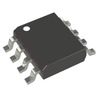
MCP79410T-I/SN Image
Image may be representation.
See specifications for product details.
EXPRESS OPTION
Payment method

MCP79410T-I/SN - Microchip Technology

Manufacturer Part Number
MCP79410T-I/SN
Manufacturer
Microchip Technology
Allelco Part Number
32D-MCP79410T-I/SN
Warranty
1 Year Allelco Warranty - Find out more
Stock Status:
40,454 pcs available, New & Original
Parts Description
IC RTC CLK/CALENDAR I2C 8SOIC
Package
8-SOIC
Data sheet
MCP79410T-I/SN.pdf
RoHs Status
ROHS3 Compliant
Our certification
In stock: 40454
  • Unit Price: $1.327
  • Subtotal: $0.00

Want a better price?
Add to Cart and Submit RFQ now, we'll contact you immediately.

Quantity Unit Price Ext. Price
1+ $1.327 $1.33
10+ $1.136 $11.36
30+ $1.018 $30.54
100+ $0.896 $89.60
500+ $0.842 $421.00
1000+ $0.818 $818.00
The above prices does not include taxes and freight rates, which will be calculated on the order pages.

Specifications

MCP79410T-I/SN Tech Specifications
Microchip Technology - MCP79410T-I/SN technical specifications, attributes, parameters and parts with similar specifications to Microchip Technology - MCP79410T-I/SN

Product Attribute Attribute Value
Manufacturer Microchip Technology
Voltage - Supply, Battery 1.3V ~ 5.5V
Voltage - Supply 1.8V ~ 5.5V
Type Clock/Calendar
Time Format HH:MM:SS (12/24 hr)
Supplier Device Package 8-SOIC
Series -
Package / Case 8-SOIC (0.154", 3.90mm Width)
Package Tape & Reel (TR)
Product Attribute Attribute Value
Operating Temperature -40°C ~ 85°C
Mounting Type Surface Mount
Memory Size 64B, 1Kb
Interface I²C, 2-Wire Serial
Features Alarm, Leap Year, Square Wave Output, SRAM, Unique ID
Date Format YY-MM-DD-dd
Current - Timekeeping (Max) 1.2µA @ 3.3V
Base Product Number MCP79410

Environmental & Export Classifications

ATTRIBUTE DESCRIPTION
RoHs Status ROHS3 Compliant
Moisture Sensitivity Level (MSL) 1 (Unlimited)
REACH Status REACH Unaffected
ECCN EAR99
HTSUS 8542.39.0001

Parts Introduction

MCP79410T-I/SN Image
MCP79410T-I/SN (1)

Manufacturer Part Number

MCP79410T-I/SN

Manufacturer

microchip-technology

Introduction

The MCP79410T-I/SN is a highly integrated real-time clock/calendar (RTC) with additional features such as an alarm, leap year compensation, square wave output, SRAM, and a unique ID, designed for timekeeping applications in a wide range of electronic devices.

Product Features and Performance

Clock/Calendar functionality for time tracking HH:MM:SS (12/24 hr) and YY-MM-DD-dd

Alarm feature for scheduling reminders or triggering events

Leap Year compensation for accurate date keeping

Square Wave Output for peripheral device control

Embedded SRAM for additional data storage

Unique ID for device identification and security applications

Interfaces with microcontrollers via I2C, 2-Wire Serial communication

Low power consumption (1.2µA @ 3.3V) for timekeeping

Product Advantages

Comprehensive timekeeping solution with alarm and calendar features

Flexible power supply options (1.8V ~ 5.5V, Battery: 1.3V ~ 5.5V)

Minimal power needs enhance battery life in portable applications

Versatile for broad range of applications thanks to serial interface and square wave output

Additional SRAM and unique ID offer value beyond basic timekeeping

Key Technical Parameters

Memory Size: 64B, 1Kb

Time Format: HH:MM:SS (12/24 hr)

Date Format: YY-MM-DD-dd

Interface: I2C, 2-Wire Serial

Voltage Supply: 1.8V ~ 5.5V

Voltage Supply, Battery: 1.3V ~ 5.5V

Current Timekeeping (Max): 1.2µA @ 3.3V

Operating Temperature: -40°C ~ 85°C

Quality and Safety Features

Designed for robust performance in various operating conditions with a wide operating temperature range. Compliance with industry safety and quality standards.

Compatibility

Compatible with a wide range of microcontrollers and devices requiring accurate timekeeping, thanks to its I2C, 2-Wire Serial interface and standard 8-SOIC package.

Application Areas

Widely used in embedded systems, consumer electronics, office automation, industrial control systems, and Internet of Things (IoT) devices.

Product Lifecycle

Active - Continuously supported with no current plan for discontinuation. Manufacturers often provide updates or replacements for future product enhancements.

Several Key Reasons to Choose This Product

Comprehensive timekeeping and alarm functionalities integrated into a single device.

Flexible and easy to integrate with existing designs thanks to its serial communication interface and wide voltage supply range.

Low power consumption makes it ideal for battery-operated devices.

The additional SRAM and unique ID support complex application requirements.

Supported and actively produced by Microchip Technology, ensuring long-term availability and support.
Frequently Asked Questions(FAQ)

How does the MCP79410T-I/SN compare to other Microchip RTC solutions in terms of power consumption during timekeeping, and what design considerations should be made when operating from a battery-backed supply?
The MCP79410T-I/SN draws only 1.2µA at 3.3V during timekeeping, which is notably lower than many competing RTCs that often consume 2–5µA under similar conditions. This efficiency makes it suitable for long-life battery-powered applications such as metering systems or portable medical devices. However, when operating with a backup battery in the 1.3V–5.5V range, designers must ensure the main supply voltage remains within the 1.8V–5.5V operating window to maintain reliable I²C communication and prevent unintended resets. Additionally, the device supports automatic switching between main and backup supplies, but layout parasitics and decoupling near the VDD and VBAT pins are critical to avoid voltage dips that could corrupt real-time data or trigger false alarms.
What are the implications of using the MCP79410T-I/SN’s internal SRAM for non-volatile data storage, and how does its retention behavior differ from traditional EEPROM-based approaches?
The MCP79410T-I/SN includes 64 bytes of SRAM accessible via I²C, but this memory is volatile and not inherently non-volatile. Unlike external EEPROMs, which retain data across power cycles, the SRAM contents will be lost unless periodically backed up by writing to an external non-volatile memory or using software techniques like periodic save-and-restore. In contrast, some competing RTCs integrate small EEPROM arrays specifically for configuration retention. For mission-critical settings, relying solely on the SRAM introduces risk; thus, designers often pair the MCP79410T-I/SN with a low-power serial flash or use the alarm feature to trigger periodic saves. The trade-off is reduced component count and cost, but at the expense of robustness in brownout-prone environments.
Can the MCP79410T-I/SN generate precise timing signals for synchronization in distributed sensor networks, and how accurate is its square wave output over temperature?
Yes, the MCP79410T-I/SN provides a programmable square wave output (1Hz, 32.768kHz, or 1kHz) intended for clock distribution. Over the full industrial temperature range of -40°C to 85°C, the accuracy depends primarily on the external 32.768kHz crystal oscillator. Assuming a typical ±20ppm crystal, the accumulated timing error over one month would be approximately ±1.7 seconds—within acceptable limits for most embedded systems. However, this degrades significantly if a lower-cost ±50ppm crystal is used. Compared to oscillators integrated into microcontrollers, the MCP79410T-I/SN offers superior long-term stability due to its dedicated RTC architecture, making it preferable for applications requiring decentralized time stamping without a central master clock.
When selecting between the MCP79410T-I/SN and alternative 8-pin SOIC RTCs, what key electrical characteristics should influence the decision for low-voltage, battery-operated designs?
Key differentiators include supply range and quiescent current. The MCP79410T-I/SN operates from 1.8V to 5.5V with only 1.2µA timekeeping current at 3.3V, outperforming alternatives like the DS3231M+ (which requires 2.3V minimum and draws ~200µA). For sub-2.5V operation, the MCP79410T-I/SN maintains full functionality down to 1.8V on VDD, whereas many competitors drop out earlier. Additionally, the MCP79410T-I/SN supports both VDD and VBAT inputs independently, enabling seamless transition during power loss. Designers must verify compatibility with their MCU’s I²C voltage levels and assess whether features like leap year correction and unique ID outweigh marginal savings from higher-current alternatives.
How does the MCP79410T-I/SN handle leap year calculations, and what impact does this have on date tracking in long-duration logging applications?
The MCP79410T-I/SN automatically accounts for leap years according to the Gregorian calendar rules (divisible by 4, excluding centuries unless divisible by 400), ensuring correct date progression through February 29. This eliminates manual intervention required in software-based timestamping and reduces firmware complexity. In multi-year logging systems, this prevents off-by-one errors in day counts or misaligned monthly rollovers. While some simpler RTCs require external logic or periodic updates for leap year handling, the MCP79410T-I/SN embeds this logic internally, enhancing reliability over decades-long deployments. This makes it well-suited for environmental monitoring or asset tracking where unattended operation is essential.
What precautions should be taken when interfacing the MCP79410T-I/SN with 5V microcontrollers using I²C, given its 1.8V–5.5V VDD range?
Although the MCP79410T-I/SN accepts up to 5.5V on VDD, direct connection to a 5V I²C bus without level shifting can stress the device if the SDA/SCL lines exceed 5.5V during transients. Since most 5V MCUs operate at 5V logic levels, bidirectional voltage translators or open-drain buffers with pull-ups to 5V are recommended. Alternatively, using the MCP79410T-I/SN at 3.3V while running the host MCU at 5V requires careful attention to noise margins—though the device tolerates up to 5.5V on inputs, sustained overvoltage may degrade performance over time. Always include series resistors (22–100Ω) on SDA/SCL lines to dampen reflections and protect against ESD events.
Is the MCP79410T-I/SN suitable for automotive applications, and what limitations exist regarding temperature grade and qualification?
The MCP79410T-I/SN operates from -40°C to 85°C, meeting industrial-grade requirements, but it is not qualified to automotive AEC-Q100 standards. While it can function reliably in harsh environments, customers requiring functional safety or extended temperature ranges beyond 85°C must select alternative parts. Additionally, automotive systems often demand stricter long-term reliability metrics and fault tolerance not guaranteed by the standard commercial grade. For non-automotive industrial use—such as factory automation or medical instrumentation—the MCP79410T-I/SN is appropriate, but substitution into safety-critical vehicular designs would necessitate additional validation and possibly redesign.
How does the presence of a unique 64-bit ID in the MCP79410T-I/SN benefit system identification, and what protocols support secure access to this identifier?
Each MCP79410T-I/SN contains a factory-programmed, unalterable 64-bit serial number burned into OTP memory, useful for hardware fingerprinting in multi-device networks. This enables secure device authentication without requiring external PUF or eFuse circuitry. During boot-up, a master controller can read this ID via I²C to enforce licensing, prevent cloning, or enable dynamic addressing in large-scale deployments. However, since I²C lacks native encryption, the ID transmission should be protected against eavesdropping using application-layer security (e.g., TLS over UART bridge or MAC verification). Unlike software-based UUID generation, this physical identity offers tamper-resistant traceability, though it cannot replace cryptographic keys for end-to-end protection.
What is the effect of disabling the square wave output on the MCP79410T-I/SN’s power consumption, and how might this influence battery life in intermittent-use scenarios?
Disabling the square wave output typically reduces current draw by several hundred nanoamps compared to enabling it, depending on frequency. At 1Hz, the load is minimal (~0.1nA additional), but enabling a 32.768kHz signal increases dynamic current by tens of nanoamps due to internal oscillator activity. In battery-backed systems where wake-up intervals are sparse, disabling SQW and using interrupt-driven polling via the alarm pin instead conserves energy more effectively. This optimization is particularly valuable in sleep-dominated designs where every microamp-hour matters, extending operational life from months to years.
How does the MCP79410T-I/SN’s Moisture Sensitivity Level (MSL) of 1 affect PCB assembly and storage, and what handling procedures apply before soldering?
With an MSL rating of 1, the MCP79410T-I/SN has unlimited shelf life and does not require baking prior to reflow soldering, even after exposure to ambient humidity. It can be stored indefinitely at <30°C/80% RH without risk of moisture-induced defects like popcorning. However, standard IPC/JEDEC Class 3 handling practices still apply during assembly: avoid prolonged exposure to high-humidity environments (>60% RH) for extended periods, and use conformal coating sparingly near leads to prevent electrochemical migration. These characteristics simplify inventory management and reduce pre-processing steps, beneficial for just-in-time manufacturing workflows.
Can the MCP79410T-I/SN coexist on the same I²C bus with multiple slave devices without address conflicts, and how are its default addresses configured?
Yes, the MCP79410T-I/SN uses a fixed 7-bit I²C address of 0x6F (1101111b) in write mode and 0x6E (1101110b) in read mode, which is uncommon enough to minimize collision risks in typical 2–4 slave configurations. However, in dense bus topologies with many slaves, alternative addressing schemes or multiplexers may be needed. The address is hardwired and cannot be changed via registers, so designers must ensure no other device on the bus uses conflicting addresses. Some variants allow ADR pin selection for secondary addressing, but this feature is absent in the MCP79410T-I/SN, necessitating careful bill-of-materials planning early in the design cycle.
What role does the backup battery play in maintaining calendar accuracy during main power interruptions with the MCP79410T-I/SN, and what failure modes should be anticipated?
The backup battery (VBAT input) powers the RTC core and retains RAM when VDD drops below ~1.8V, preserving timekeeping and alarm states. A properly sized lithium cell (e.g., CR2032) ensures continuous operation for years. Failure modes include battery depletion, reverse polarity damage, or insufficient voltage causing reset during brief brownouts. To mitigate, use a Schottky diode to isolate VBAT from VDD and implement voltage monitoring via GPIO if possible. Also, avoid frequent power cycling with weak batteries, as repeated deep discharges accelerate aging. Proper decoupling and layout minimize leakage paths that drain the backup supply prematurely.

Parts with Similar Specifications

The three parts on the right have similar specifications to Microchip Technology MCP79410T-I/SN

Product Attribute MCP79410T-I/ST MCP79410T-I/MNY MCP7940NT-I/SN MCP79410-I/SN
Part Number MCP79410T-I/ST MCP79410T-I/MNY MCP7940NT-I/SN MCP79410-I/SN
Manufacturer Microchip Technology Microchip Technology Microchip Technology Microchip Technology
Date Format - - - -
Package / Case - 196-LFBGA 16-DIP (0.300', 7.62mm) 64-VFQFN Exposed Pad
Operating Temperature - -40°C ~ 85°C 0°C ~ 70°C -40°C ~ 85°C
Package - Tape & Reel (TR) Tube Tape & Reel (TR)
Features - - - Simultaneous Sampling
Memory Size - - - -
Mounting Type - Surface Mount Through Hole Surface Mount
Time Format - - - -
Series - - - -
Current - Timekeeping (Max) - - - -
Supplier Device Package - 196-NFBGA (12x12) 16-PDIP 64-VQFN (9x9)
Base Product Number - DAC34H84 MAX500 ADS62P42
Voltage - Supply, Battery - - - -
Voltage - Supply - - - -
Type - - - -
Interface - - - -

MCP79410T-I/SN Datasheet PDF

Download MCP79410T-I/SN pdf datasheets and Microchip Technology documentation for MCP79410T-I/SN - Microchip Technology.

Datasheets
I²C™ & SPI Family Brochure.pdf MCP79410-12 Datasheet.pdf MCP794xx Brochure.pdf
PCN Packaging
Label and Packing Changes 23/Sep/2015.pdf Packing Changes 10/Oct/2016.pdf
PCN Assembly/Origin
Manufacturing Change 07/Apr/2022.pdf
PCN Design/Specification
MCP7941x Errata Update 25/Mar/2014.pdf

Customer Reviews

Evaluation: 10 Articles

  • Emil***rperTech
    Jun 23, 2026

    Works exactly as described. I used it as a USB-to-SPI bridge in a small MCU development project and communication was stable from the first setup.

  • Liam***terTech
    Jun 15, 2026

    Used this CPLD in a logic control project. Programming was straightforward and signal timing matched the design requirements.

  • Nath***rooks
    Jun 11, 2026

    Installed this power component in a converter board. Output remained stable under different load conditions and thermal performance was better than expected.

  • Dani***alkerTech
    Jun 1, 2026

    Product works, but setup took more effort than expected. Once configured the MCU ran reliably, although documentation support felt older compared with newer platforms. Fine for maintenance projects.

  • Yuki***aka88
    May 26, 2026

    信号通信プロジェクトでこのRS-485トランシーバーを使用しました。設置は簡単で、長距離ケーブルでも通信は安定していました。消費電力も、以前使用していたものより低くなっています。

  • Stev***aker
    May 20, 2026

    Solid diode for power rectification. Works well in switching circuits.

  • Bran***Lewis
    May 11, 2026

    Compact FPGA with good performance. Suitable for basic signal processing tasks.

  • Oliv***arris
    May 7, 2026

    Reliable I/O expander. Works well in embedded control applications.

  • Jess***Jones
    Apr 17, 2026

    It offers good value for the price, and the specifications match the description. I’ve been using it for two days with no issues, and I’ll definitely buy it again if I need it in the future.

  • Mich***Smith
    Apr 17, 2026

    Shipping was on time, the component pins are neatly aligned, and I tested 10 of them with a multimeter—all readings were within the specified range. Highly recommended.

Write a Review

Your Email address will not be published.

Shipment

Delivery Time

In-stock items can be shipped within 24 hours. Some parts will be arranged for delivery within 1-2 days from the date all items arrive at our warehouse. And Allelco ships order once a day at about 17:00, except Sunday. Once the goods are shipped, the estimated delivery time depends on the shipping methods and Delivery destination. The table below shows are the logistic time for some common countries.

Delivery Cost

  1. Use your express account for shipment if you have one.
  2. Use our account for the shipment. Refer to the table below for the approximate charges.
(Different time frame / countries / package size has different price.)

Delivery Method

  1. Global Common Shipment by DHL / UPS / FedEx / TNT / EMS / SF we support.
  2. Others more shipping ways, please get in touch with your customer manager.

Common Countries Logistic Time Reference
Region Country Logistic Time(Day)
America United States 5
Brazil 7
Europe Germany 5
United Kingdom 4
Italy 5
Oceania Australia 6
New Zealand 5
Asia India 4
Japan 4
Middle East Israel 6
DHL & FedEx Shipment Charges Reference
Shipment charges(KG) Reference DHL(USD$)
0.00kg-1.00kg USD$30.00 - USD$60.00
1.00kg-2.00kg USD$40.00 - USD$80.00
2.00kg-3.00kg USD$50.00 - USD$100.00
Note:
The above table is for reference only. There may have some data bias for the uncontrollable factors.
Contact us if you have any questions.
  • QC (Quality Warranty)
  • Payment Support
  • Packaging
  • Certifications & Memberships

QC (Quality Warranty)

Allelco is committed to exceeding customer expectations through customer service excellence, order accuracy, and on-time delivery.
This is achieved through our commitment to the continual improvement of our processes, services, and products.


Strict quality inspection builds a solid foundation for electronic component quality.
  1. Visual inspection
  2. Performance testing and reliability verification
  3. Standardized full-process testing
  4. Precise control of every parameter
We eliminate defective components and ensure the stable operation of electronic devices through professional quality standards.

Payment Support

The payment method can be chosen from the methods shown below: Wire Transfer (T/T, Bank Transfer), Western Union, Credit card, PayPal.
  • HKBea
  • Paypal
  • MasterCard
  • Western-Union
  • VISA
Stable Delivery, Sincere Partnership — Your Faithful Supply Chain Partner
  • Efficient Supply Management
  • Cost-Saving Procurement
  • Fast Sourcing & Delivery
Contact us if you have any questions.

Packaging

Electrostatic Discharge Protection and Handling

All electrostatic-sensitive components are handled in accordance with electrostatic discharge control procedures. The products are hermetically sealed in anti-static safe packaging to prevent electrostatic damage. Appropriate labeling is also applied for identification and traceability. This ensures product integrity during storage, handling and transportation.


ESD

Certifications & Memberships

Third-party certified, strict quality control. Our certification
  • ISO 9001: 2015
  • ISO 13485: 2016
  • ISO 14001: 2015
  • ISO 28000: 2007
  • ISO 45001: 2018
  • GB/T 27922-2011
  • SMTA
  • IPC
  • ESD
  • PSMA
MCP79410T-I/SN Image

MCP79410T-I/SN

Microchip Technology
32D-MCP79410T-I/SN

Want a better price? Add to Cart and Submit RFQ now, we'll contact you immediately.

0 RFQ
Shopping cart (0 Items)
It is empty.
Compare List (0 Items)
It is empty.
Feedback

Your feedback matters! At Allelco, we value the user experience and strive to improve it constantly.
Please share your comments with us via our feedback form, and we'll respond promptly.
Thank you for choosing Allelco.

Subject
E-mail
Comments
Captcha
Drag or click to upload file
Upload File
types: .xls, .xlsx, .doc, .docx, .jpg, .png and .pdf.
Max file size: 10MB