View All

Please refer to the English Version as our Official Version.Return

Europe
France(Français) Germany(Deutsch) Italy(Italia) Russian(русский) Poland(polski) Czech(Čeština) Luxembourg(Lëtzebuergesch) Netherlands(Nederland) Iceland(íslenska) Hungarian(Magyarország) Spain(español) Portugal(Português) Turkey(Türk dili) Bulgaria(Български език) Ukraine(Україна) Greece(Ελλάδα) Israel(עִבְרִית) Sweden(Svenska) Finland(Svenska) Finland(Suomi) Romania(românesc) Moldova(românesc) Slovakia(Slovenská) Denmark(Dansk) Slovenia(Slovenija) Slovenia(Hrvatska) Croatia(Hrvatska) Serbia(Hrvatska) Montenegro(Hrvatska) Bosnia and Herzegovina(Hrvatska) Lithuania(lietuvių) Spain(Português) Switzerland(Deutsch) United Kingdom(English)
Asia/Pacific
Japan(日本語) Korea(한국의) Thailand(ภาษาไทย) Malaysia(Melayu) Singapore(Melayu) Vietnam(Tiếng Việt) Philippines(Pilipino)
Africa, India and Middle East
United Arab Emirates(العربية) Iran(فارسی) Tajikistan(فارسی) India(हिंदी) Madagascar(malaɡasʲ)
South America / Oceania
New Zealand(Maori) Brazil(Português) Angola(Português) Mozambique(Português)
North America
United States(English) Canada(English) Haiti(Ayiti) Mexico(español)
HomeProductsIntegrated Circuits (ICs)Specialized ICsPIC18F248T-I/SO
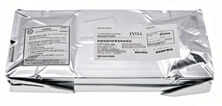
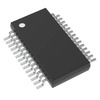
Image may be representation.
See specifications for product details.
EXPRESS OPTION
Payment method

PIC18F248T-I/SO - Microchip

Manufacturer Part Number
PIC18F248T-I/SO
Manufacturer
Microchip Technology
Allelco Part Number
41D-PIC18F248T-I/SO
Warranty
1 Year Allelco Warranty - Find out more
Stock Status:
5,170 pcs available, New & Original
Parts Description
-
Data sheet
-
Category
Integrated Circuits (ICs) > Specialized ICs
RoHs Status
Our certification
In stock: 5170

Required fields are indicated by an asterisk (*)
Please send RFQ, we will respond immediately.

Quantity

Specifications

PIC18F248T-I/SO Tech Specifications
Microchip - PIC18F248T-I/SO technical specifications, attributes, parameters and parts with similar specifications to Microchip - PIC18F248T-I/SO

Product Attribute Attribute Value
Part Number PIC18F248T-I/SO
Package -
Description -
Stock Condition Get 5170 pcs available quantity at Allelco
Payment PayPal / TT / Credit Card / Western Union
Allelco Certifications ESD / ISO 9001 / ISO 13485 / ISO 28000
Product Attribute Attribute Value
Manufacturer Microchip Technology
RoHs Status -
Warranty 100% Perfect Functions
Transport port Hong Kong
Shipping by DHL / FedEx / UPS / TNT / SF Express
RFQ Email info@allelco.com

Parts Introduction

Manufacturer Part Number

PIC18F248T-I/SO

Manufacturer

microchip-technology

Introduction

The PIC18F248T-I/SO is a high-performance, 8-bit microcontroller from Microchip Technology. It features a PIC core, with a flash program memory of 16KB and an EEPROM size of 256 bytes. The device operates at a maximum speed of 40MHz and supports various peripherals and communication interfaces.

Product Features and Performance

8-bit PIC core

16KB flash program memory

256 bytes EEPROM

768 bytes RAM

Operates at a maximum speed of 40MHz

Supports CAN bus, I2C, SPI, and UART/USART communication interfaces

Includes peripherals such as brown-out detect/reset, LVD, POR, PWM, and watchdog timer

22 I/O pins

Product Advantages

High-performance 8-bit microcontroller

Flexible communication interfaces

Integrated peripheral features

Wide operating temperature range (-40°C to 85°C)

Key Reasons to Choose This Product

Reliable and proven PIC architecture

Versatile communication capabilities

Efficient power management with integrated peripherals

Suitable for a wide range of embedded applications

Quality and Safety Features

Designed for reliable operation

Meets industrial temperature range requirements

Undergoes rigorous quality control and testing

Compatibility

This microcontroller is compatible with other PIC18F series devices and can be used in a variety of embedded systems.

Application Areas

Suitable for a wide range of embedded applications, including industrial automation, motor control, home automation, and more.

Product Lifecycle

The PIC18F248T-I/SO is an obsolete product, meaning it is no longer in active production. However, there are equivalent and alternative models available from Microchip Technology. Customers are advised to contact our website's sales team for more information on compatible and recommended products.
Frequently Asked Questions(FAQ)

What are the key design considerations when selecting the PIC18F248T-I/SO for a battery-powered automotive control module operating in extreme temperature environments?
The PIC18F248T-I/SO supports an operating temperature range of -40°C to 85°C (TA), making it suitable for under-hood or exterior automotive applications. Its 4.2V to 5.5V supply range allows compatibility with regulated vehicle power systems, while the integrated Brown-out Detect/Reset and Power-on Reset (POR) help maintain reliable operation during voltage transients. With 768 x 8 bytes of RAM and 16KB of flash, the device can handle moderate real-time control algorithms without external memory, reducing overall power consumption. The built-in Low-Voltage Detect (LVD) further enhances system safety by triggering a reset before critical undervoltage conditions compromise firmware execution.
How does the PIC18F248T-I/SO compare to the PIC18F2480T-I/SO in terms of peripheral integration and firmware migration effort?
While both microcontrollers share the same core architecture and package, the PIC18F248T-I/SO includes a full CAN 2.0B controller, which the PIC18F2480T-I/SO lacks. This makes the PIC18F248T-I/SO better suited for legacy automotive networks requiring CAN communication without external transceivers. However, the PIC18F2480T-I/SO offers enhanced features such as more PWM channels and a higher-resolution ADC, which may benefit precision motor control applications. Firmware migration between the two is generally feasible due to register-level compatibility, but code leveraging the CAN module on the PIC18F248T-I/SO would require significant modification if ported to the 2480 variant.
Can the PIC18F248T-I/SO support real-time sensor data acquisition and CAN message transmission simultaneously without performance degradation?
Yes, the PIC18F248T-I/SO’s 40MHz operation allows sufficient headroom for concurrent execution of 10-bit A/D conversions on up to five channels and CAN bus communication. The A/D converter can complete a conversion in approximately 12 instruction cycles (300 ns at 40 MHz), enabling sampling rates up to 200 kSPS in burst mode. The CAN module operates independently via dedicated buffers and interrupt handling, minimizing CPU overhead during message transmission. With proper interrupt prioritization and efficient ISR design, the device can maintain deterministic response times for both analog input processing and network communication.
What oscillator configuration is recommended for the PIC18F248T-I/SO in a cost-sensitive industrial application requiring ±1% clock accuracy?
For ±1% accuracy, an external 4–10 MHz ceramic resonator or a low-cost crystal oscillator is recommended. The PIC18F248T-I/SO supports external clock sources through its OSC1/OSC2 pins, and using a 4 MHz crystal with load capacitors tuned to the manufacturer’s specifications typically achieves ±0.5% stability over the full temperature range. This avoids the need for a more expensive TCXO while meeting industrial timing requirements for UART, I2C, and CAN protocols. Internal oscillator options are not available on this model, so external timing components are mandatory.
How does the memory architecture of the PIC18F248T-I/SO impact firmware development for applications requiring frequent data logging?
The PIC18F248T-I/SO provides 16KB of flash program memory and 256 x 8 bytes of EEPROM. While the flash is suitable for storing application code, the limited EEPROM restricts frequent data logging unless wear-leveling algorithms are implemented. For logging intervals exceeding a few writes per minute, consider using external serial EEPROM or leveraging unused flash sectors with software-managed page rotation. The 768-byte RAM also constrains buffer sizes for data aggregation, so streaming or compression techniques may be necessary for high-frequency sensor logging before transmission over CAN or UART.
Is the PIC18F248T-I/SO suitable for use in safety-critical systems requiring hardware-based fault detection mechanisms?
The PIC18F248T-I/SO includes several hardware safety features such as a Watchdog Timer (WDT), Brown-out Reset, and Power-on Reset, which help detect and recover from power and execution faults. However, it lacks advanced functional safety certifications (e.g., ISO 26262 ASIL) and built-in redundancy mechanisms. For safety-critical applications, these features must be supplemented with external monitoring circuits and robust software diagnostics. The device is appropriate for non-safety automotive or industrial systems where fail-safe behavior is achieved through system-level design rather than MCU-level certification.
What are the trade-offs between using the PIC18F248T-I/SO and a modern 32-bit ARM Cortex-M0+ MCU in a CAN-enabled embedded design?
The PIC18F248T-I/SO offers lower unit cost, simpler development tools, and proven reliability in legacy automotive systems, with native CAN support eliminating the need for external controllers. However, 32-bit Cortex-M0+ devices typically provide higher computational throughput, larger memory addressing, and advanced low-power modes. For applications requiring complex protocol stacks or floating-point operations, the ARM alternative may be preferable. The PIC18F248T-I/SO remains advantageous in designs prioritizing deterministic 8-bit performance, minimal BOM, and compatibility with existing PIC toolchains and firmware ecosystems.
How should the I/O pins on the PIC18F248T-I/SO be managed when interfacing with 3.3V logic devices in a mixed-voltage system?
The PIC18F248T-I/SO operates at 4.2V to 5.5V, and its I/O pins are 5V-tolerant but not 3.3V-safe when powered. To interface with 3.3V logic, use level-shifting circuitry or series resistors (e.g., 1kΩ) on input lines to limit current during voltage mismatches. Outputs driving 3.3V inputs should be buffered through a level translator to prevent overvoltage stress. Alternatively, design the system so that the PIC18F248T-I/SO and 3.3V devices share a common 3.3V rail, though this requires verifying that the microcontroller’s performance at lower voltages meets timing requirements, particularly for 40MHz operation.
What development and debugging tools are compatible with the PIC18F248T-I/SO, and how do they impact time-to-market?
The PIC18F248T-I/SO is supported by Microchip’s MPLAB X IDE and compatible debuggers such as the PICkit 4 and ICD 4. These tools enable in-circuit debugging and programming via the ICSP interface, allowing real-time register inspection and breakpoint setting. The device’s mature architecture ensures extensive community support, code examples, and verified firmware libraries—especially for CAN and UART communication—which can significantly reduce development time. However, the absence of modern debugging features like SWD or trace capabilities may limit visibility in complex timing scenarios compared to newer MCUs.
Can the PIC18F248T-I/SO be used in a multi-drop I2C network with multiple slave devices operating at different supply voltages?
Yes, the PIC18F248T-I/SO can function as an I2C master in a multi-drop network, but voltage compatibility must be carefully managed. Since the device operates at 4.2V–5.5V, its I2C pins (SDA/SCL) will output high levels near VDD. When interfacing with 3.3V slaves, use bidirectional level translators on the I2C lines to prevent damage and ensure proper logic thresholds. Pull-up resistors should be connected to the appropriate voltage rail for each segment. The open-drain nature of I2C helps mitigate contention, but timing margins may degrade with long buses; keep trace lengths under 1 meter and limit capacitance to <400 pF for reliable 100 kHz operation.
How does the power consumption of the PIC18F248T-I/SO compare under active and sleep modes, and what implications does this have for energy-sensitive designs?
In active mode at 5V and 40MHz, the PIC18F248T-I/SO typically draws 5–7 mA, depending on peripheral usage. In sleep mode, current drops to less than 1 µA when only the WDT is active. This makes it suitable for intermittent operation in energy-constrained systems, such as remote sensors that wake periodically to sample data and transmit via CAN. However, the lack of deep sleep modes with peripheral wake-up (e.g., CAN activity detection) means the CPU must be fully active to monitor bus traffic, limiting power savings in always-listening applications. Designers should use timer-based wake-ups and minimize active duty cycles to optimize battery life.
What are the implications of the 28-SOIC package on PCB layout and thermal management for the PIC18F248T-I/SO?
The 28-SOIC (0.295", 7.50mm width) package is compact and suitable for space-constrained designs, but its limited thermal dissipation requires careful PCB layout. Use a solid ground plane beneath the device and connect exposed thermal pads (if present) to ground. For continuous high-load operation, ensure adequate copper pour around the package to act as a heat spreader. The package’s pitch (1.27mm) allows hand-soldering in prototypes but demands precise stencil design for reflow in production. Moisture sensitivity level 1 (MSL 1) eliminates the need for dry packing, simplifying storage and handling in manufacturing environments.

Customer Reviews

Evaluation: 10 Articles

  • Nath***rooks
    Jun 11, 2026

    Installed this power component in a converter board. Output remained stable under different load conditions and thermal performance was better than expected.

  • Dani***alkerTech
    Jun 1, 2026

    Product works, but setup took more effort than expected. Once configured the MCU ran reliably, although documentation support felt older compared with newer platforms. Fine for maintenance projects.

  • Yuki***aka88
    May 26, 2026

    信号通信プロジェクトでこのRS-485トランシーバーを使用しました。設置は簡単で、長距離ケーブルでも通信は安定していました。消費電力も、以前使用していたものより低くなっています。

  • Stev***aker
    May 20, 2026

    Solid diode for power rectification. Works well in switching circuits.

  • Bran***Lewis
    May 11, 2026

    Compact FPGA with good performance. Suitable for basic signal processing tasks.

  • Oliv***arris
    May 7, 2026

    Reliable I/O expander. Works well in embedded control applications.

  • Jess***Jones
    Apr 17, 2026

    It offers good value for the price, and the specifications match the description. I’ve been using it for two days with no issues, and I’ll definitely buy it again if I need it in the future.

  • Mich***Smith
    Apr 17, 2026

    Shipping was on time, the component pins are neatly aligned, and I tested 10 of them with a multimeter—all readings were within the specified range. Highly recommended.

  • Aman***arris
    Apr 3, 2026

    It was great—the entire process, from placing the order to receiving the package, went very smoothly. The components were consistent, the price was fair, and I had a very pleasant shopping experience.

  • Mike***nch
    Apr 3, 2026

    Better than expected! The resistance and capacitance readings were spot-on, and it passed the test on the first try. The service was reliable, and the packaging was thoughtful—I highly recommend it.

Write a Review

Your Email address will not be published.

Shipment

Delivery Time

In-stock items can be shipped within 24 hours. Some parts will be arranged for delivery within 1-2 days from the date all items arrive at our warehouse. And Allelco ships order once a day at about 17:00, except Sunday. Once the goods are shipped, the estimated delivery time depends on the shipping methods and Delivery destination. The table below shows are the logistic time for some common countries.

Delivery Cost

  1. Use your express account for shipment if you have one.
  2. Use our account for the shipment. Refer to the table below for the approximate charges.
(Different time frame / countries / package size has different price.)

Delivery Method

  1. Global Common Shipment by DHL / UPS / FedEx / TNT / EMS / SF we support.
  2. Others more shipping ways, please get in touch with your customer manager.

Common Countries Logistic Time Reference
Region Country Logistic Time(Day)
America United States 5
Brazil 7
Europe Germany 5
United Kingdom 4
Italy 5
Oceania Australia 6
New Zealand 5
Asia India 4
Japan 4
Middle East Israel 6
DHL & FedEx Shipment Charges Reference
Shipment charges(KG) Reference DHL(USD$)
0.00kg-1.00kg USD$30.00 - USD$60.00
1.00kg-2.00kg USD$40.00 - USD$80.00
2.00kg-3.00kg USD$50.00 - USD$100.00
Note:
The above table is for reference only. There may have some data bias for the uncontrollable factors.
Contact us if you have any questions.
  • QC (Quality Warranty)
  • Payment Support
  • Packaging
  • Certifications & Memberships

QC (Quality Warranty)

Allelco is committed to exceeding customer expectations through customer service excellence, order accuracy, and on-time delivery.
This is achieved through our commitment to the continual improvement of our processes, services, and products.


Strict quality inspection builds a solid foundation for electronic component quality.
  1. Visual inspection
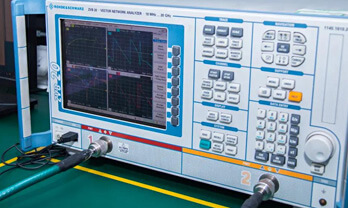
  2. Performance testing and reliability verification
  3. Standardized full-process testing
  4. Precise control of every parameter
We eliminate defective components and ensure the stable operation of electronic devices through professional quality standards.

Payment Support

The payment method can be chosen from the methods shown below: Wire Transfer (T/T, Bank Transfer), Western Union, Credit card, PayPal.
  • HKBea
  • Paypal
  • MasterCard
  • Western-Union
  • VISA
Stable Delivery, Sincere Partnership — Your Faithful Supply Chain Partner
  • Efficient Supply Management
  • Cost-Saving Procurement
  • Fast Sourcing & Delivery
Contact us if you have any questions.

Packaging

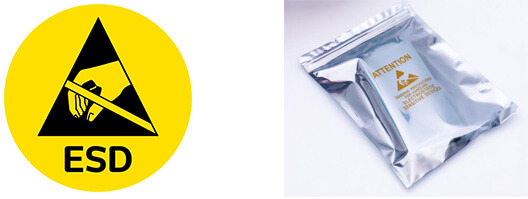
Electrostatic Discharge Protection and Handling

All electrostatic-sensitive components are handled in accordance with electrostatic discharge control procedures. The products are hermetically sealed in anti-static safe packaging to prevent electrostatic damage. Appropriate labeling is also applied for identification and traceability. This ensures product integrity during storage, handling and transportation.


ESD

Certifications & Memberships

Third-party certified, strict quality control. Our certification
  • ISO 9001: 2015
  • ISO 13485: 2016
  • ISO 14001: 2015
  • ISO 28000: 2007
  • ISO 45001: 2018
  • GB/T 27922-2011
  • SMTA
  • IPC
  • ESD
  • PSMA
Microchip

PIC18F248T-I/SO

Microchip
41D-PIC18F248T-I/SO

Want a better price? Add to Cart and Submit RFQ now, we'll contact you immediately.

0 RFQ
Shopping cart (0 Items)
It is empty.
Compare List (0 Items)
It is empty.
Feedback

Your feedback matters! At Allelco, we value the user experience and strive to improve it constantly.
Please share your comments with us via our feedback form, and we'll respond promptly.
Thank you for choosing Allelco.

Subject
E-mail
Comments
Captcha
Drag or click to upload file
Upload File
types: .xls, .xlsx, .doc, .docx, .jpg, .png and .pdf.
Max file size: 10MB