View All

Please refer to the English Version as our Official Version.Return

Europe
France(Français) Germany(Deutsch) Italy(Italia) Russian(русский) Poland(polski) Czech(Čeština) Luxembourg(Lëtzebuergesch) Netherlands(Nederland) Iceland(íslenska) Hungarian(Magyarország) Spain(español) Portugal(Português) Turkey(Türk dili) Bulgaria(Български език) Ukraine(Україна) Greece(Ελλάδα) Israel(עִבְרִית) Sweden(Svenska) Finland(Svenska) Finland(Suomi) Romania(românesc) Moldova(românesc) Slovakia(Slovenská) Denmark(Dansk) Slovenia(Slovenija) Slovenia(Hrvatska) Croatia(Hrvatska) Serbia(Hrvatska) Montenegro(Hrvatska) Bosnia and Herzegovina(Hrvatska) Lithuania(lietuvių) Spain(Português) Switzerland(Deutsch) United Kingdom(English)
Asia/Pacific
Japan(日本語) Korea(한국의) Thailand(ภาษาไทย) Malaysia(Melayu) Singapore(Melayu) Vietnam(Tiếng Việt) Philippines(Pilipino)
Africa, India and Middle East
United Arab Emirates(العربية) Iran(فارسی) Tajikistan(فارسی) India(हिंदी) Madagascar(malaɡasʲ)
South America / Oceania
New Zealand(Maori) Brazil(Português) Angola(Português) Mozambique(Português)
North America
United States(English) Canada(English) Haiti(Ayiti) Mexico(español)
HomeProductsIntegrated Circuits (ICs)Specialized ICsPIC24F16KA101T-I/SS
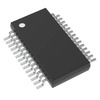
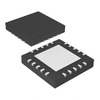
Image may be representation.
See specifications for product details.
EXPRESS OPTION
Payment method

PIC24F16KA101T-I/SS - Microchip

Manufacturer Part Number
PIC24F16KA101T-I/SS
Manufacturer
Microchip Technology
Allelco Part Number
41D-PIC24F16KA101T-I/SS
Warranty
1 Year Allelco Warranty - Find out more
Stock Status:
10,770 pcs available, New & Original
Parts Description
SSOP-20
Data sheet
-
Category
Integrated Circuits (ICs) > Specialized ICs
RoHs Status
Our certification
In stock: 10770

Required fields are indicated by an asterisk (*)
Please send RFQ, we will respond immediately.

Quantity

Specifications

PIC24F16KA101T-I/SS Tech Specifications
Microchip - PIC24F16KA101T-I/SS technical specifications, attributes, parameters and parts with similar specifications to Microchip - PIC24F16KA101T-I/SS

Product Attribute Attribute Value
Part Number PIC24F16KA101T-I/SS
Package SSOP-20
Description SSOP-20
Stock Condition Get 10770 pcs available quantity at Allelco
Payment PayPal / TT / Credit Card / Western Union
Allelco Certifications ESD / ISO 9001 / ISO 13485 / ISO 28000
Product Attribute Attribute Value
Manufacturer Microchip Technology
RoHs Status -
Warranty 100% Perfect Functions
Transport port Hong Kong
Shipping by DHL / FedEx / UPS / TNT / SF Express
RFQ Email info@allelco.com

Parts Introduction

Manufacturer Part Number

PIC24F16KA101T-I/SS

Manufacturer

microchip-technology

Introduction

The PIC24F16KA101T-I/SS is a high-performance, low-power 16-bit PIC® microcontroller that offers a range of advanced features and capabilities. It is part of the PIC® XLP™ 24F series, designed for applications that require efficient power management and high performance.

Product Features and Performance

32MHz operating speed

Variety of communication interfaces including I2C, IrDA, SPI, and UART/USART

Integrated peripherals such as Brown-out Detect/Reset, POR, PWM, and Watchdog Timer

18 I/O pins

16KB of FLASH program memory

5KB of RAM

512 bytes of EEPROM

9-channel 10-bit ADC

Product Advantages

Optimized for low-power applications with the PIC® XLP™ technology

Wide operating voltage range of 1.8V to 3.6V

Extended temperature range of -40°C to 85°C

Compact 20-SSOP package

Key Reasons to Choose This Product

Excellent performance-to-power ratio for efficient power management

Versatile communication interfaces for seamless integration

Robust set of peripherals for comprehensive system control

Flexible and scalable architecture for a wide range of applications

Quality and Safety Features

Rigorous quality control and testing processes

Compliance with industry standards and regulations

Compatibility

Pin-compatible with other PIC24F microcontrollers in the same series

Supported by Microchip's comprehensive development tools and software ecosystem

Application Areas

Industrial automation and control systems

Home and building automation

Portable and battery-powered devices

Sensor and monitoring applications

Medical and healthcare equipment

Product Lifecycle

The PIC24F16KA101T-I/SS is an active product in Microchip's portfolio. There are several equivalent or alternative models available, including the PIC24F16KA102, PIC24F16KA301, and PIC24F16KA302. For the latest information on product availability and alternative options, please contact our website's sales team.
Frequently Asked Questions(FAQ)

How does the PIC24F16KA101T-I/SS compare to other PIC24F family devices in terms of power efficiency and program memory capacity when targeting battery-powered IoT sensor nodes?
The PIC24F16KA101T-I/SS delivers ultra-low power consumption typical of Microchip’s XLP (eXtreme Low Power) series, making it well-suited for energy-constrained applications like wireless sensor networks. With a 16-bit core running up to 32MHz and a 16KB FLASH program memory, it provides sufficient code space for sensor data processing and communication protocols without requiring external memory. Compared to higher-capacity variants such as the PIC24F32KA101, which offers 32KB FLASH, this device trades memory headroom for reduced active current—approximately 30µA/MHz in Run mode versus around 35µA/MHz for larger siblings. For simple sensor tasks with limited algorithmic complexity, the 16KB allocation is adequate while preserving longer battery life.
What are the key trade-offs between using the internal oscillator versus an external crystal on the PIC24F16KA101T-I/SS, particularly in terms of system stability and power budget?
The PIC24F16KA101T-I/SS supports multiple internal clock sources including a ±1% accurate 8MHz FRC (Fast RC Oscillator) with PLL options, enabling operation from a single chip without external components. While convenient and reducing BOM cost, the internal oscillators exhibit greater frequency drift over temperature and voltage variations compared to precision crystals. An external 32.768kHz crystal improves timing accuracy for RTC functions but increases quiescent current slightly due to oscillator loading circuits. For time-critical applications requiring ±50ppm stability, an external crystal is preferred despite marginally higher power draw.
In what scenarios would the 9-channel 10-bit ADC on the PIC24F16KA101T-I/SS be insufficient, and how might designers compensate within the constraints of its 1.5KB RAM and 16KB FLASH?
The PIC24F16KA101T-I/SS integrates nine 10-bit successive approximation ADCs capable of sampling at up to 100ksps per channel, suitable for moderate-resolution analog front-ends such as temperature, pressure, or light sensing. However, simultaneous sampling across all channels exceeds real-time processing bandwidth given the CPU throughput and available RAM. Designers often multiplex inputs or use DMA-like techniques via timer-driven triggers to stagger conversions. When higher resolution (>12 bits) or faster update rates are needed, external SAR ADCs with I²C or SPI interfaces become necessary, increasing pin count and software overhead.
Can the PIC24F16KA101T-I/SS reliably drive inductive loads such as relays or solenoids directly, and what precautions should be taken regarding ESD protection and flyback diodes?
Direct driving of inductive loads from GPIO pins of the PIC24F16KA101T-I/SS is not recommended due to limited sink/source current capability (~25mA per pin) and lack of built-in protection. Without external flyback diodes, back EMF can damage output transistors during deactivation. A common solution uses a discrete transistor or MOSFET stage controlled by one of the 18 available I/O lines, with the load isolated from the microcontroller. Additionally, transient voltage suppressors (TVS) near the connector mitigate ESD risks in industrial environments, aligning with IEC 61000-4-2 standards.
How does the voltage supply range of 1.8V to 3.6V on the PIC24F16KA101T-I/SS influence interfacing with 5V legacy systems, and what level-shifting strategies preserve signal integrity?
Operating at 1.8–3.6V means the PIC24F16KA101T-I/SS cannot tolerate 5V logic high signals directly on its GPIO pins, risking latch-up or permanent damage. To interface with 5V peripherals, bidirectional voltage translators or unidirectional level shifters are required. Devices like the TXB0108 or dedicated buffers with open-drain outputs ensure safe translation while maintaining signal rise/fall times compatible with the MCU’s maximum slew rate. Care must be taken to match propagation delays, especially in SPI or UART handshaking scenarios.
What role does the Watchdog Timer (WDT) play in robust firmware design on the PIC24F16KA101T-I/SS, and how should its configuration interact with sleep modes to avoid unintended resets?
The WDT on the PIC24F16KA101T-I/SS serves as a critical fail-safe mechanism, automatically resetting the device if software hangs due to stack overflow, infinite loops, or peripheral faults. Configured via software, it typically operates at 1ms to 64s intervals depending on prescaler settings. During low-power sleep states, the WDT continues running from the internal LFINTOSC, ensuring recovery even when main clocks are disabled. Proper practice involves clearing the WDT flag only after successful task completion, avoiding premature reset cycles that could mask intermittent bugs.
How does the choice between I²C and SPI affect performance when connecting multiple sensors to the PIC24F16KA101T-I/SS, considering its limited number of dedicated peripherals?
The PIC24F16KA101T-I/SS includes one dedicated I²C module and one SPI module, limiting parallel expansion unless pins are repurposed carefully. SPI allows full-duplex communication at higher speeds (up to 32MHz with PLL), ideal for memory-mapped or fast ADC/DAC interfaces, but requires separate chip select lines per slave. I²C uses fewer pins but trades speed for addressing flexibility—up to 127 devices on two wires—though slower than SPI above ~100kHz. Given the part’s 18 I/O pins, designers may share SPI CS lines through demultiplexers or use bit-banging for additional I²C slaves when hardware modules are exhausted.
What considerations apply to PCB layout when mounting the PIC24F16KA101T-I/SS in high-noise environments, especially concerning decoupling capacitors and ground plane segmentation?
The 20-SSOP package of the PIC24F16KA101T-I/SS places power and ground pins close together, necessitating careful decoupling strategy: place 100nF ceramic capacitors as close as possible to VDD/VSS pairs, ideally within 5mm. In noisy industrial settings, adding bulk capacitance (10µF tantalum or ceramic) near the IC improves transient response. Avoid splitting ground planes under the MCU footprint; instead, use a solid ground return path with multiple stitching vias to reduce impedance. Analog input traces should be shielded from digital switching noise using guard rings or routing away from clock lines.
Is it feasible to upgrade existing designs using PIC24F16KA101T-I/SS to support Bluetooth Low Energy (BLE), and what architectural changes would be required?
Native BLE support is absent in the PIC24F16KA101T-I/SS, which lacks integrated RF transceivers and antenna interfaces. Integration would require pairing with an external BLE SoC or module via UART/USART, consuming significant RAM and FLASH resources—potentially exceeding the 1.5KB RAM and 16KB FLASH limits. Firmware complexity increases due to protocol stack handling, requiring careful memory partitioning. Alternatively, consider Microchip’s newer PIC32MZ EF or SAM L2x families with native wireless capabilities for future-proofing.
How does the Moisture Sensitivity Level (MSL) rating of MSL 1 on the PIC24F16KA101T-I/SS simplify manufacturing processes compared to higher-risk packages?
Rated MSL 1 means the PIC24F16KA101T-I/SS can withstand unlimited storage time before reflow soldering without baking, simplifying supply chain logistics and reducing handling costs. This contrasts sharply with parts rated MSL 3 or higher, which require dry storage and controlled humidity cabinets. For mass production using Tape & Reel packaging, MSL 1 ensures compatibility with standard SMT lines and automated pick-and-place equipment, minimizing yield loss due to moisture-induced defects like popcorning during thermal cycling.
What are the implications of the RoHS3 and REACH compliance status on the PIC24F16KA101T-I/SS for global market deployment, particularly in automotive or medical sectors?
Full RoHS3 compliance confirms absence of restricted substances such as lead, mercury, cadmium, and specific phthalates, meeting stringent regulations in EU, China, and California. REACH unaffected status further indicates no SVHC (Substance of Very High Concern) content exceeding 0.1% weight thresholds. These attributes facilitate certification in regulated industries including automotive (ISO 13485) and medical devices (IEC 60601), where material traceability and environmental responsibility are mandatory. Distributors like Digi-Key list these certifications transparently, supporting audit trails for OEMs.
How should developers approach debugging timing-sensitive routines on the PIC24F16KA101T-I/SS when using in-circuit emulators versus logic analyzers?
Due to its 16-bit architecture and 32MHz maximum clock, precise timing analysis demands synchronized tools. Logic analyzers capture waveform behavior across multiple I/O lines with microsecond resolution, revealing protocol violations or setup/hold violations missed by software breakpoints alone. In-circuit emulators provide single-stepping but introduce variable latency, distorting real-time timing measurements. Best practice combines both: emulate normal flow first, then validate with analyzer captures during edge cases, ensuring firmware meets worst-case execution time budgets.
What impact does selecting a different SSOP variant (e.g., commercial vs. industrial grade) have on reliability and long-term field performance for the PIC24F16KA101T-I/SS?
The PIC24F16KA101T-I/SS is specified over -40°C to +85°C, covering most industrial applications. Choosing the industrial-grade version ensures consistent parametric performance across temperature extremes, avoiding drift in ADC linearity or oscillator frequency. Commercial variants (-0°C to +70°C) suffice for consumer electronics but may degrade faster in harsh conditions. Long-term reliability metrics such as FIT (Failures In Time) rates differ slightly between grades; industrial units undergo extended burn-in and accelerated life testing, translating to lower infant mortality rates in deployed systems.
How can designers leverage the IrDA peripheral on the PIC24F16KA101T-I/SS for infrared communication without adding external optical components?
The integrated IrDA transceiver module supports half-duplex infrared data transfer at standard baud rates up to 115.2kbps, compliant with IrDA specifications. It includes automatic pulse width modulation and decoding, eliminating need for discrete IR LEDs or photodiodes beyond basic optics. Typical implementations pair the IrDA output with a simple LED and lens assembly, while the receiver side uses a phototransistor or photodiode behind a bandpass filter. Firmware handles framing, parity, and collision avoidance, enabling point-to-point communication for proximity-based applications like remote controls or short-range data exchange.
What are the limitations of using the internal Flash memory on the PIC24F16KA101T-I/SS for frequent data logging, and how might wear-leveling strategies mitigate endurance concerns?
Although the 16KB FLASH on the PIC24F16KA101T-I/SS offers 10,000 write cycles minimum, direct repeated erasing/writing degrades specific memory sectors over time. For continuous data logging exceeding this endurance, raw FLASH becomes unreliable. Instead, implement a circular buffer with wear-leveling logic: distribute writes across multiple Flash blocks, aging them evenly. Reserve a portion of Flash for metadata tracking block usage history, swapping active segments periodically. Alternatively, offload persistent data to external EEPROM or FRAM if available, preserving internal Flash for code and volatile variables.
How does the PIC24F16KA101T-I/SS handle brown-out detection (BOD) thresholds during voltage sags, and what impact does this have on system resilience in unstable power environments?
The PIC24F16KA101T-I/SS features user-configurable BOD thresholds at 2.2V, 2.7V, and 3.2V (typical), triggering a reset when VDD falls below the selected level. This prevents erratic behavior during brownouts, such as corrupted flash writes or misinterpreted I/O states. In solar-powered or battery-backed systems experiencing gradual voltage decay, the BOD ensures clean shutdown rather than undefined operation. However, aggressive thresholds (<2.2V) may cause unnecessary resets during brief dips, so tuning depends on load characteristics and acceptable downtime tolerance.
Can the PIC24F16KA101T-I/SS support USB On-The-Go (OTG) functionality, and if not, what alternative communication protocols offer similar plug-and-play connectivity?
No, the PIC24F16KA101T-I/SS lacks USB hardware peripherals, ruling out native USB host or device modes including OTG. Instead, designers use UART-to-USB bridges (e.g., FTDI chips) or SPI/I²C-connected USB hubs for PC connectivity. For embedded peer-to-peer links, CAN bus or Ethernet MACs (if available on other variants) provide robust alternatives. Given resource constraints, serial protocols remain dominant for low-pin-count designs requiring moderate-speed data exchange.
What steps are necessary to migrate legacy code written for PIC24FJxx devices to run efficiently on the PIC24F16KA101T-I/SS, particularly regarding peripheral register compatibility and clock configurations?
While both belong to Microchip’s 24-bit PIC24 family, the PIC24F16KA101T-I/SS uses a distinct core variant (PIC24F) with modified interrupt vectors and peripheral base addresses compared to PIC24FJ parts. Direct binary porting often fails due to register mismatches and altered SFR layouts. Successful migration requires updating header files, adjusting vector tables, and verifying oscillator initialization sequences—especially since internal PLL settings differ. Use Microchip’s MPLAB Harmony framework to abstract hardware differences, enabling modular, portable firmware across related MCUs while maintaining performance parity.

Customer Reviews

Evaluation: 10 Articles

  • Nath***rooks
    Jun 11, 2026

    Installed this power component in a converter board. Output remained stable under different load conditions and thermal performance was better than expected.

  • Dani***alkerTech
    Jun 1, 2026

    Product works, but setup took more effort than expected. Once configured the MCU ran reliably, although documentation support felt older compared with newer platforms. Fine for maintenance projects.

  • Yuki***aka88
    May 26, 2026

    信号通信プロジェクトでこのRS-485トランシーバーを使用しました。設置は簡単で、長距離ケーブルでも通信は安定していました。消費電力も、以前使用していたものより低くなっています。

  • Stev***aker
    May 20, 2026

    Solid diode for power rectification. Works well in switching circuits.

  • Bran***Lewis
    May 11, 2026

    Compact FPGA with good performance. Suitable for basic signal processing tasks.

  • Oliv***arris
    May 7, 2026

    Reliable I/O expander. Works well in embedded control applications.

  • Jess***Jones
    Apr 17, 2026

    It offers good value for the price, and the specifications match the description. I’ve been using it for two days with no issues, and I’ll definitely buy it again if I need it in the future.

  • Mich***Smith
    Apr 17, 2026

    Shipping was on time, the component pins are neatly aligned, and I tested 10 of them with a multimeter—all readings were within the specified range. Highly recommended.

  • Aman***arris
    Apr 3, 2026

    It was great—the entire process, from placing the order to receiving the package, went very smoothly. The components were consistent, the price was fair, and I had a very pleasant shopping experience.

  • Mike***nch
    Apr 3, 2026

    Better than expected! The resistance and capacitance readings were spot-on, and it passed the test on the first try. The service was reliable, and the packaging was thoughtful—I highly recommend it.

Write a Review

Your Email address will not be published.

Shipment

Delivery Time

In-stock items can be shipped within 24 hours. Some parts will be arranged for delivery within 1-2 days from the date all items arrive at our warehouse. And Allelco ships order once a day at about 17:00, except Sunday. Once the goods are shipped, the estimated delivery time depends on the shipping methods and Delivery destination. The table below shows are the logistic time for some common countries.

Delivery Cost

  1. Use your express account for shipment if you have one.
  2. Use our account for the shipment. Refer to the table below for the approximate charges.
(Different time frame / countries / package size has different price.)

Delivery Method

  1. Global Common Shipment by DHL / UPS / FedEx / TNT / EMS / SF we support.
  2. Others more shipping ways, please get in touch with your customer manager.

Common Countries Logistic Time Reference
Region Country Logistic Time(Day)
America United States 5
Brazil 7
Europe Germany 5
United Kingdom 4
Italy 5
Oceania Australia 6
New Zealand 5
Asia India 4
Japan 4
Middle East Israel 6
DHL & FedEx Shipment Charges Reference
Shipment charges(KG) Reference DHL(USD$)
0.00kg-1.00kg USD$30.00 - USD$60.00
1.00kg-2.00kg USD$40.00 - USD$80.00
2.00kg-3.00kg USD$50.00 - USD$100.00
Note:
The above table is for reference only. There may have some data bias for the uncontrollable factors.
Contact us if you have any questions.
  • QC (Quality Warranty)
  • Payment Support
  • Packaging
  • Certifications & Memberships

QC (Quality Warranty)

Allelco is committed to exceeding customer expectations through customer service excellence, order accuracy, and on-time delivery.
This is achieved through our commitment to the continual improvement of our processes, services, and products.


Strict quality inspection builds a solid foundation for electronic component quality.
  1. Visual inspection
  2. Performance testing and reliability verification
  3. Standardized full-process testing
  4. Precise control of every parameter
We eliminate defective components and ensure the stable operation of electronic devices through professional quality standards.

Payment Support

The payment method can be chosen from the methods shown below: Wire Transfer (T/T, Bank Transfer), Western Union, Credit card, PayPal.
  • HKBea
  • Paypal
  • MasterCard
  • Western-Union
  • VISA
Stable Delivery, Sincere Partnership — Your Faithful Supply Chain Partner
  • Efficient Supply Management
  • Cost-Saving Procurement
  • Fast Sourcing & Delivery
Contact us if you have any questions.

Packaging

Electrostatic Discharge Protection and Handling

All electrostatic-sensitive components are handled in accordance with electrostatic discharge control procedures. The products are hermetically sealed in anti-static safe packaging to prevent electrostatic damage. Appropriate labeling is also applied for identification and traceability. This ensures product integrity during storage, handling and transportation.


ESD

Certifications & Memberships

Third-party certified, strict quality control. Our certification
  • ISO 9001: 2015
  • ISO 13485: 2016
  • ISO 14001: 2015
  • ISO 28000: 2007
  • ISO 45001: 2018
  • GB/T 27922-2011
  • SMTA
  • IPC
  • ESD
  • PSMA
Microchip

PIC24F16KA101T-I/SS

Microchip
41D-PIC24F16KA101T-I/SS

Want a better price? Add to Cart and Submit RFQ now, we'll contact you immediately.

0 RFQ
Shopping cart (0 Items)
It is empty.
Compare List (0 Items)
It is empty.
Feedback

Your feedback matters! At Allelco, we value the user experience and strive to improve it constantly.
Please share your comments with us via our feedback form, and we'll respond promptly.
Thank you for choosing Allelco.

Subject
E-mail
Comments
Captcha
Drag or click to upload file
Upload File
types: .xls, .xlsx, .doc, .docx, .jpg, .png and .pdf.
Max file size: 10MB