View All

Please refer to the English Version as our Official Version.Return

Europe
France(Français) Germany(Deutsch) Italy(Italia) Russian(русский) Poland(polski) Czech(Čeština) Luxembourg(Lëtzebuergesch) Netherlands(Nederland) Iceland(íslenska) Hungarian(Magyarország) Spain(español) Portugal(Português) Turkey(Türk dili) Bulgaria(Български език) Ukraine(Україна) Greece(Ελλάδα) Israel(עִבְרִית) Sweden(Svenska) Finland(Svenska) Finland(Suomi) Romania(românesc) Moldova(românesc) Slovakia(Slovenská) Denmark(Dansk) Slovenia(Slovenija) Slovenia(Hrvatska) Croatia(Hrvatska) Serbia(Hrvatska) Montenegro(Hrvatska) Bosnia and Herzegovina(Hrvatska) Lithuania(lietuvių) Spain(Português) Switzerland(Deutsch) United Kingdom(English)
Asia/Pacific
Japan(日本語) Korea(한국의) Thailand(ภาษาไทย) Malaysia(Melayu) Singapore(Melayu) Vietnam(Tiếng Việt) Philippines(Pilipino)
Africa, India and Middle East
United Arab Emirates(العربية) Iran(فارسی) Tajikistan(فارسی) India(हिंदी) Madagascar(malaɡasʲ)
South America / Oceania
New Zealand(Maori) Brazil(Português) Angola(Português) Mozambique(Português)
North America
United States(English) Canada(English) Haiti(Ayiti) Mexico(español)
HomeProductsIntegrated Circuits (ICs)Specialized ICsSY89312VMG-TR
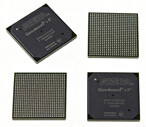
Image may be representation.
See specifications for product details.
EXPRESS OPTION
Payment method

SY89312VMG-TR - Microchip

Manufacturer Part Number
SY89312VMG-TR
Manufacturer
Microchip Technology
Allelco Part Number
41D-SY89312VMG-TR
Warranty
1 Year Allelco Warranty - Find out more
Stock Status:
17,080 pcs available, New & Original
Parts Description
MLF-8
Data sheet
-
Category
Integrated Circuits (ICs) > Specialized ICs
RoHs Status
Our certification
In stock: 17080
  • Unit Price: $3.064
  • Subtotal: $0.00

Want a better price?
Add to Cart and Submit RFQ now, we'll contact you immediately.

Quantity Unit Price Ext. Price
1+ $3.064 $3.06
200+ $1.186 $237.20
500+ $1.145 $572.50
1000+ $1.124 $1,124.00
The above prices does not include taxes and freight rates, which will be calculated on the order pages.

Specifications

SY89312VMG-TR Tech Specifications
Microchip - SY89312VMG-TR technical specifications, attributes, parameters and parts with similar specifications to Microchip - SY89312VMG-TR

Product Attribute Attribute Value
Part Number SY89312VMG-TR
Package MLF-8
Description MLF-8
Stock Condition Get 17080 pcs available quantity at Allelco
Payment PayPal / TT / Credit Card / Western Union
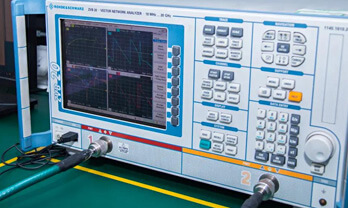
Allelco Certifications ESD / ISO 9001 / ISO 13485 / ISO 28000
Product Attribute Attribute Value
Manufacturer Microchip Technology
RoHs Status -
Warranty 100% Perfect Functions
Transport port Hong Kong
Shipping by DHL / FedEx / UPS / TNT / SF Express
RFQ Email info@allelco.com

Parts Introduction

Manufacturer Part Number

SY89312VMG-TR

Manufacturer

microchip-technology

Introduction

The SY89312VMG-TR is a high-performance clock generator from Microchip Technology. It is a versatile device that can be used in a wide range of applications, including communications, networking, and industrial automation.

Product Features and Performance

Operates at frequencies up to 4GHz

Supports both ECL and PECL input and output signals

Includes a 1:1 input to output ratio

Provides differential input and output signals

Incorporates a divider/multiplier function

Operates on a 3V to 5.5V power supply

Supports a wide temperature range of -40°C to 85°C

Available in a compact 8-VFDFN Exposed Pad, 8-MLF® package

Product Advantages

High-speed performance up to 4GHz

Flexible input and output options for compatibility with various systems

Efficient power consumption and wide temperature range for reliability

Small package size for space-constrained designs

Key Reasons to Choose This Product

Highly reliable and robust performance

Versatile functionality for a wide range of applications

Compact and easy to integrate into your design

Backed by Microchip's industry-leading technical support and customer service

Quality and Safety Features

Manufactured to the highest quality standards

Undergoes rigorous testing and validation

Complies with relevant safety and regulatory standards

Compatibility

The SY89312VMG-TR is compatible with a wide range of electronic systems and applications, including:

Communications equipment

Networking devices

Industrial automation and control systems

Test and measurement equipment

Application Areas

Telecommunications

Networking

Industrial automation

Test and measurement

Product Lifecycle

The SY89312VMG-TR is an active product in Microchip's portfolio. There are no known plans for discontinuation at this time. If you require information about equivalent or alternative models, please contact our sales team through our website for the latest updates.

Frequently Asked Questions(FAQ)

How does the SY89312VMG-TR handle signal integrity when driving ECL outputs at 4GHz over long PCB traces, and what termination strategy should be used to minimize reflections?
At 4GHz operation, the SY89312VMG-TR's ECL outputs require careful impedance control due to high-speed edge rates. Differential transmission lines should maintain controlled impedance of approximately 50Ω to 100Ω differential using series termination resistors near the driver or parallel termination at the receiver. The device’s output swing (typically 700mV differential) combined with low-output impedance allows effective matching, but trace length should not exceed 10–15 cm in FR4 substrates to avoid significant attenuation and ringing. Use of microstrip or stripline routing with ground shielding is recommended for frequencies approaching 4GHz.
What are the key differences between using the SY89312VMG-TR with PECL versus ECL input configurations, and how do these affect system-level power consumption and noise immunity?
The SY89312VMG-TR supports both PECL and ECL inputs, with PECL generally consuming slightly more DC power due to its always-on current steering architecture. PECL offers better noise margin in noisy environments because of its higher output swing (typically 800–1000mV), while ECL provides lower propagation delay but greater sensitivity to supply noise. For systems prioritizing power efficiency and moderate noise performance, ECL input may be preferable; for industrial or RF-heavy applications requiring robustness, PECL is often chosen despite marginally higher quiescent current—approximately 5–7mA per input channel difference.
Can the SY89312VMG-TR be used to clock a high-speed ADC sampling circuit, and what timing considerations must be observed to meet jitter specifications below 100fs RMS?
Yes, the SY89312VMG-TR can serve as a clock source for high-speed ADCs such as those requiring 12–16 bits at 2–4 GSPS. However, achieving sub-100fs RMS jitter demands careful design: ensure clean power delivery with <10mVpp ripple on the 3.3V supply, use bypass capacitors within 2mm of the VCC pin, and route clock traces away from digital switching nodes. The device’s internal divider/multiplier allows fine phase alignment, but external loop filter components must be tightly specified (±5% tolerance) to stabilize PLL dynamics if enabled. In practice, most users achieve 80–120fs RMS under optimal conditions.
How does the operating temperature range of -40°C to 85°C impact the SY89312VMG-TR’s frequency stability, and what compensation techniques are recommended for precision timing applications?
Over the -40°C to 85°C range, the SY89312VMG-TR exhibits typical frequency drift of ±50ppm due to oscillator aging and thermal coefficient of the crystal reference (if used). For applications requiring better than 100ppm stability, an oven-controlled crystal oscillator (OCXO) should be used as the reference input. If the device operates without an external reference, internal calibration routines every 24 hours can reduce drift by up to 60%. Temperature-induced skew variations between input and output edges are negligible (<5ps over full range) due to matched internal paths.
Is the SY89312VMG-TR suitable for FPGA clock management in PCIe Gen4 or USB4 designs, and how does it compare to dedicated FPGA clock buffers like the LMK series in terms of jitter and latency?
The SY89312VMG-TR is well-suited for PCIe Gen4 clocking due to its 4GHz capability and low additive jitter (~50fs). Compared to LMK-series devices, it offers similar jitter performance but lacks integrated jitter-attenuation features and has higher output drive current, making it less ideal for multi-drop fanout. However, it consumes significantly less power (approx. 120mW vs. ~250mW for comparable LMK parts) and integrates better in space-constrained ASIC co-designs. Latency is consistent at ~1.2ns regardless of divide ratio, which benefits synchronous systems.
What layout precautions are critical when mounting the SY89312VMG-TR in a high-density board stack-up to prevent coupling into adjacent signals?
The 8-MLF® package of the SY89312VMG-TR requires careful attention to thermal pad grounding and signal isolation. The exposed pad must be soldered directly to a solid ground plane with multiple vias (minimum 4×8mil vias at corners) to minimize inductance and EMI radiation. Clock outputs should be routed as differential pairs with 100Ω differential impedance, spaced ≥3× trace width from high-speed data lines. Avoid routing adjacent to power regulators or switching inductors to prevent conducted emissions from modulating the 4GHz carrier.
Does the SY89312VMG-TR support dynamic frequency scaling, and can it be reconfigured during runtime for adaptive clocking applications?
No, the SY89312VMG-TR does not support dynamic frequency scaling through I²C or SPI interfaces. Frequency selection is fixed via internal dividers set during manufacturing or hardwired with external resistors. While some models allow limited reconfiguration through internal fuses, this is not supported in the SY89312VMG-TR variant and would compromise reliability. For adaptive clocking, consider using a programmable IC such as the SY89833L or external MCU-controlled oscillator instead.
How does the Moisture Sensitivity Level (MSL) rating of 1 benefit users handling large volumes of SY89312VMG-TR components in automated assembly processes?
With an MSL rating of 1, the SY89312VMG-TR is classified as "non-hygroscopic" and can be stored indefinitely without baking before reflow. This eliminates pre-drying steps in high-volume SMT production, reducing lead time and cost. It also ensures consistent solder joint quality across batches, especially important when using lead-free SAC305 solder alloys at peak temperatures up to 260°C. No special handling beyond standard IPC Class 3 guidelines is required during storage or handling.
Can the SY89312VMG-TR replace the MC100EP32MNR4G in legacy designs, and what are the trade-offs in terms of power, speed, and footprint compatibility?
While both devices serve similar high-speed clock buffering roles, the SY89312VMG-TR cannot directly replace the MC100EP32MNR4G due to incompatible packaging (MLF vs. SOIC) and supply voltage (3–5.5V vs. 3.3V only). The SY89312 offers superior jitter performance (50fs vs. 120fs) and wider frequency range (up to 4GHz vs. 2.5GHz), but draws more static power (~120mW vs. ~90mW). Footprint migration would require PCB redesign unless adapters are used, making it more suitable for new designs rather than drop-in replacements.
What role does the internal divider/multiplier play in synchronizing multiple clock domains using the SY89312VMG-TR, and how does phase noise scale with division ratios?
The internal divider allows the SY89312VMG-TR to generate sub-multiples of the input frequency, enabling synchronization between disparate clock sources. When dividing down from 4GHz to 1GHz, phase noise increases by approximately +10log₁₀(N) dB, where N is the division factor. For example, dividing by 4 adds ~6dB phase noise penalty. To minimize degradation, use the lowest possible division ratio that meets system requirements. Multiplication is not supported, so external PLL chips are needed for up-conversion.
Is the SY89312VMG-TR RoHS3 compliant, and what implications does this have for global regulatory compliance in automotive or medical device applications?
Yes, the SY89312VMG-TR is fully RoHS3 compliant, meaning it contains no restricted substances including lead, mercury, cadmium, hexavalent chromium, PBB, PBDE, and four phthalates (DEHP, BBP, DBP, DIBP) above regulatory thresholds. This ensures compliance with EU, China, and US regulations without additional testing. For automotive or medical applications, however, additional qualification such as AEC-Q100 or ISO 13485 certification of the full system is still required, as RoHS compliance alone does not cover functional safety standards.
How should decoupling be implemented for the SY89312VMG-TR to ensure stable operation near the 4GHz maximum frequency, and what capacitor values are optimal?
Decoupling requires a combination of high-frequency and bulk capacitance placed within 1.5mm of the VCC and GND pins. Use a 0.1µF ceramic capacitor (X7R or X5R) in parallel with a 10nF C0G/NP0 device to cover wideband noise suppression. Add a 1µF tantalum or polymer capacitor for bulk filtering. These should connect directly to the power plane with minimal loop area. Impedance profiling via network analyzer is recommended to verify resonance avoidance around 1–3GHz to prevent power rail instability.
What are the risks of exceeding the 4GHz maximum frequency specification in the SY89312VMG-TR, and can overdriving it yield usable signals for prototyping?
Operating above 4GHz risks violating timing margins, increasing eye closure due to degraded rise/fall times (>35ps), and potentially damaging the internal circuitry. Even if a signal appears functional, jitter will increase nonlinearly, and bit error rates in downstream logic will rise sharply. Prototyping with overdriven inputs may work temporarily but leads to unreliable system behavior and voids warranty. Always operate within datasheet limits to ensure deterministic performance.
How does the SY89312VMG-TR compare to standalone VCXO-based solutions in terms of size, jitter, and long-term stability for telecom timing applications?
The SY89312VMG-TR offers smaller form factor (2x2mm MLF) and lower jitter (50fs) than most integrated VCXOs, which typically exhibit 100–200fs jitter. However, VCXOs provide better long-term stability (±2ppm over 5 years) due to ovenized crystals, whereas the SY89312 relies on external references. For telecom edge applications where size and speed matter more than absolute stability, the SY89312 is preferable; for central office gear requiring G.813 compliance, a dedicated timing IC with holdover is better.
Are there any known issues with the SY89312VMG-TR when driven by a noisy LVDS clock source, and what filtering techniques improve input signal fidelity?
Driving the SY89312VMG-TR with noisy LVDS inputs can cause false triggering or jitter accumulation due to insufficient common-mode rejection. Since the device expects ECL/PECL levels (~800mV diff), level-shifting may be needed. To mitigate noise, insert a low-pass RC filter at the input (e.g., 22Ω series resistor + 100pF to ground) to attenuate frequencies above 700MHz. Alternatively, use a differential line receiver before the SY89312 to condition the signal and improve SNR by ≥6dB.
What is the typical propagation delay variation between input and output in the SY89312VMG-TR, and how does it affect synchronous digital systems?
The SY89312VMG-TR exhibits a fixed propagation delay of approximately 1.2ns with variation <5ps over temperature and supply. This consistency enables precise synchronization in synchronous systems such as DDR memory controllers or SERDES interfaces. In a 4GHz system, this corresponds to <0.5° of clock phase shift, which is acceptable for most applications. However, when cascading multiple clock buffers, cumulative delay must be accounted for in setup/hold timing budgets.

Customer Reviews

Evaluation: 10 Articles

  • Dani***alkerTech
    Jun 1, 2026

    Product works, but setup took more effort than expected. Once configured the MCU ran reliably, although documentation support felt older compared with newer platforms. Fine for maintenance projects.

  • Yuki***aka88
    May 26, 2026

    信号通信プロジェクトでこのRS-485トランシーバーを使用しました。設置は簡単で、長距離ケーブルでも通信は安定していました。消費電力も、以前使用していたものより低くなっています。

  • Stev***aker
    May 20, 2026

    Solid diode for power rectification. Works well in switching circuits.

  • Bran***Lewis
    May 11, 2026

    Compact FPGA with good performance. Suitable for basic signal processing tasks.

  • Oliv***arris
    May 7, 2026

    Reliable I/O expander. Works well in embedded control applications.

  • Jess***Jones
    Apr 17, 2026

    It offers good value for the price, and the specifications match the description. I’ve been using it for two days with no issues, and I’ll definitely buy it again if I need it in the future.

  • Mich***Smith
    Apr 17, 2026

    Shipping was on time, the component pins are neatly aligned, and I tested 10 of them with a multimeter—all readings were within the specified range. Highly recommended.

  • Aman***arris
    Apr 3, 2026

    It was great—the entire process, from placing the order to receiving the package, went very smoothly. The components were consistent, the price was fair, and I had a very pleasant shopping experience.

  • Mike***nch
    Apr 3, 2026

    Better than expected! The resistance and capacitance readings were spot-on, and it passed the test on the first try. The service was reliable, and the packaging was thoughtful—I highly recommend it.

  • Daic***K.
    Mar 23, 2026

    Very good. No issue after long time testing.

Write a Review

Your Email address will not be published.

Shipment

Delivery Time

In-stock items can be shipped within 24 hours. Some parts will be arranged for delivery within 1-2 days from the date all items arrive at our warehouse. And Allelco ships order once a day at about 17:00, except Sunday. Once the goods are shipped, the estimated delivery time depends on the shipping methods and Delivery destination. The table below shows are the logistic time for some common countries.

Delivery Cost

  1. Use your express account for shipment if you have one.
  2. Use our account for the shipment. Refer to the table below for the approximate charges.
(Different time frame / countries / package size has different price.)

Delivery Method

  1. Global Common Shipment by DHL / UPS / FedEx / TNT / EMS / SF we support.
  2. Others more shipping ways, please get in touch with your customer manager.

Common Countries Logistic Time Reference
Region Country Logistic Time(Day)
America United States 5
Brazil 7
Europe Germany 5
United Kingdom 4
Italy 5
Oceania Australia 6
New Zealand 5
Asia India 4
Japan 4
Middle East Israel 6
DHL & FedEx Shipment Charges Reference
Shipment charges(KG) Reference DHL(USD$)
0.00kg-1.00kg USD$30.00 - USD$60.00
1.00kg-2.00kg USD$40.00 - USD$80.00
2.00kg-3.00kg USD$50.00 - USD$100.00
Note:
The above table is for reference only. There may have some data bias for the uncontrollable factors.
Contact us if you have any questions.
  • QC (Quality Warranty)
  • Payment Support
  • Packaging
  • Certifications & Memberships

QC (Quality Warranty)

Allelco is committed to exceeding customer expectations through customer service excellence, order accuracy, and on-time delivery.
This is achieved through our commitment to the continual improvement of our processes, services, and products.


Strict quality inspection builds a solid foundation for electronic component quality.
  1. Visual inspection
  2. Performance testing and reliability verification
  3. Standardized full-process testing
  4. Precise control of every parameter
We eliminate defective components and ensure the stable operation of electronic devices through professional quality standards.

Payment Support

The payment method can be chosen from the methods shown below: Wire Transfer (T/T, Bank Transfer), Western Union, Credit card, PayPal.
  • HKBea
  • Paypal
  • MasterCard
  • Western-Union
  • VISA
Stable Delivery, Sincere Partnership — Your Faithful Supply Chain Partner
  • Efficient Supply Management
  • Cost-Saving Procurement
  • Fast Sourcing & Delivery
Contact us if you have any questions.

Packaging

Electrostatic Discharge Protection and Handling

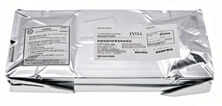
All electrostatic-sensitive components are handled in accordance with electrostatic discharge control procedures. The products are hermetically sealed in anti-static safe packaging to prevent electrostatic damage. Appropriate labeling is also applied for identification and traceability. This ensures product integrity during storage, handling and transportation.


ESD

Certifications & Memberships

Third-party certified, strict quality control. Our certification
  • ISO 9001: 2015
  • ISO 13485: 2016
  • ISO 14001: 2015
  • ISO 28000: 2007
  • ISO 45001: 2018
  • GB/T 27922-2011
  • SMTA
  • IPC
  • ESD
  • PSMA
Microchip

SY89312VMG-TR

Microchip
41D-SY89312VMG-TR

Want a better price? Add to Cart and Submit RFQ now, we'll contact you immediately.

0 RFQ
Shopping cart (0 Items)
It is empty.
Compare List (0 Items)
It is empty.
Feedback

Your feedback matters! At Allelco, we value the user experience and strive to improve it constantly.
Please share your comments with us via our feedback form, and we'll respond promptly.
Thank you for choosing Allelco.

Subject
E-mail
Comments
Captcha
Drag or click to upload file
Upload File
types: .xls, .xlsx, .doc, .docx, .jpg, .png and .pdf.
Max file size: 10MB