View All

Please refer to the English Version as our Official Version.Return

Europe
France(Français) Germany(Deutsch) Italy(Italia) Russian(русский) Poland(polski) Czech(Čeština) Luxembourg(Lëtzebuergesch) Netherlands(Nederland) Iceland(íslenska) Hungarian(Magyarország) Spain(español) Portugal(Português) Turkey(Türk dili) Bulgaria(Български език) Ukraine(Україна) Greece(Ελλάδα) Israel(עִבְרִית) Sweden(Svenska) Finland(Svenska) Finland(Suomi) Romania(românesc) Moldova(românesc) Slovakia(Slovenská) Denmark(Dansk) Slovenia(Slovenija) Slovenia(Hrvatska) Croatia(Hrvatska) Serbia(Hrvatska) Montenegro(Hrvatska) Bosnia and Herzegovina(Hrvatska) Lithuania(lietuvių) Spain(Português) Switzerland(Deutsch) United Kingdom(English)
Asia/Pacific
Japan(日本語) Korea(한국의) Thailand(ภาษาไทย) Malaysia(Melayu) Singapore(Melayu) Vietnam(Tiếng Việt) Philippines(Pilipino)
Africa, India and Middle East
United Arab Emirates(العربية) Iran(فارسی) Tajikistan(فارسی) India(हिंदी) Madagascar(malaɡasʲ)
South America / Oceania
New Zealand(Maori) Brazil(Português) Angola(Português) Mozambique(Português)
North America
United States(English) Canada(English) Haiti(Ayiti) Mexico(español)
HomeProductsIntegrated Circuits (ICs)Embedded - MicrocontrollersSTM32F101RCT6TR
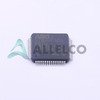
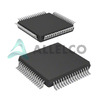
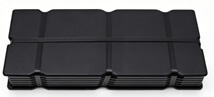
STM32F101RCT6TR Image
Image may be representation.
See specifications for product details.
EXPRESS OPTION
Payment method

STM32F101RCT6TR - STMicroelectronics

Manufacturer Part Number
STM32F101RCT6TR
Manufacturer
STMicroelectronics
Allelco Part Number
32D-STM32F101RCT6TR
Warranty
1 Year Allelco Warranty - Find out more
Stock Status:
8,732 pcs available, New & Original
Parts Description
IC MCU 32BIT 256KB FLASH 64LQFP
Package
64-LQFP (10x10)
Data sheet
STM32F101RCT6TR.pdf
RoHs Status
ROHS3 Compliant
Our certification
In stock: 8732
  • Unit Price: $4.229
  • Subtotal: $0.00

Want a better price?
Add to Cart and Submit RFQ now, we'll contact you immediately.

Quantity Unit Price Ext. Price
1+ $4.229 $4.23
10+ $4.126 $41.26
30+ $4.057 $121.71
100+ $3.99 $399.00
The above prices does not include taxes and freight rates, which will be calculated on the order pages.

Specifications

STM32F101RCT6TR Tech Specifications
STMicroelectronics - STM32F101RCT6TR technical specifications, attributes, parameters and parts with similar specifications to STMicroelectronics - STM32F101RCT6TR

Product Attribute Attribute Value
Manufacturer STMicroelectronics
Voltage - Supply (Vcc/Vdd) 2V ~ 3.6V
Supplier Device Package 64-LQFP (10x10)
Speed 36MHz
Series STM32F1
RAM Size 32K x 8
Program Memory Type FLASH
Program Memory Size 256KB (256K x 8)
Peripherals DMA, PDR, POR, PVD, PWM, Temp Sensor, WDT
Package / Case 64-LQFP
Package Tape & Reel (TR)
Product Attribute Attribute Value
Oscillator Type Internal
Operating Temperature -40°C ~ 85°C (TA)
Number of I/O 51
Mounting Type Surface Mount
EEPROM Size -
Data Converters A/D 16x12b; D/A 2x12b
Core Size 32-Bit Single-Core
Core Processor ARM® Cortex®-M3
Connectivity I²C, IrDA, LINbus, SPI, UART/USART
Base Product Number STM32F101

Environmental & Export Classifications

ATTRIBUTE DESCRIPTION
RoHs Status ROHS3 Compliant
Moisture Sensitivity Level (MSL) 3 (168 Hours)
REACH Status REACH Unaffected
ECCN 3A991A2
HTSUS 8542.31.0001

Parts Introduction

STM32F101RCT6TR Image
STM32F101RCT6TR (1)

Manufacturer Part Number

STM32F101RCT6TR

Manufacturer

STMicroelectronics

Introduction

The STM32F101RCT6TR is a robust embedded microcontroller by STMicroelectronics, designed for real-time applications.

Product Features and Performance

32-Bit Single-Core ARM Cortex-M3 Processor

Speed of 36MHz

Flash Program Memory of 256KB

32K x 8 bits of RAM

Operates from 2V to 3.6V Supply Voltage

16x12-bit Analog-to-Digital Converters

2x12-bit Digital-to-Analog Converters

Internal Oscillator

Product Advantages

Energy-efficient ARM Cortex-M3 core

Enhanced peripheral set for versatile applications

Ample program memory and RAM for complex programs

Integrated analog peripherals for accurate sensor interfacing

Suitable for operating in extreme temperature conditions

Key Technical Parameters

Core Processor: ARM Cortex-M3

Core Size: 32-Bit

Speed: 36MHz

Program Memory Size: 256KB

RAM Size: 32KB

Voltage - Supply: 2V to 3.6V

Operating Temperature: -40°C to 85°C

Quality and Safety Features

Power-on Reset (POR)

Programmable Voltage Detector (PVD)

Watchdog Timer (WDT)

Temperature Sensor for system safety monitoring

Compatibility

Standard I2C, SPI, UART/USART, IrDA, and LINbus interfaces

64-LQFP (10x10) Surface Mount - compatible with widely used PCB technologies

Application Areas

Industrial control

Medical devices

Consumer electronics

Home automation

Automotive applications

Product Lifecycle

Currently Active status

Not indicated as nearing discontinuation

Alternatives or replacements may be available in STM32F1 Series

Reasons to Choose This Product

High-performance ARM Cortex-M3 core for advanced systems

Generous memory ensures support for feature-rich applications

Extensive connectivity options enable versatile system design

An array of integrated peripherals simplifies circuit complexity

Low power consumption enhances battery lifetime for portable devices

STMicroelectronics' reliability and wide industry adoption

Built-in quality and safety features ensure a stable operation

Easy integration with various systems due to standard mounting type

Support from STMicroelectronics for development and application notes

Frequently Asked Questions(FAQ)

How does the STM32F101RCT6TR handle brownout reset protection in low-voltage industrial environments, and what is the typical threshold voltage for its Power-Down Reset (PDR) feature?
The STM32F101RCT6TR includes a Power-Down Reset (PDR) circuit designed to trigger a system reset when the supply voltage drops below approximately 1.85V, ensuring reliable operation during power fluctuations common in industrial applications. This threshold provides a safety margin below the minimum operating voltage of 2.0V, preventing erratic behavior or data corruption. When combined with the Programmable Voltage Detector (PVD), which allows software-configurable thresholds from 1.7V to 2.9V, designers can fine-tune protection based on system sensitivity. For applications using batteries or unstable power sources, enabling both PDR and PVD ensures clean shutdowns before undervoltage conditions degrade performance.
What are the key differences between the STM32F101RCT6TR and the STM32F103RET6 in terms of memory architecture and peripheral connectivity for motor control applications?
While both devices use the ARM Cortex-M3 core, the STM32F101RCT6TR offers 256KB flash and 48 I/O pins, whereas the STM32F103RET6 provides 512KB flash and 64 I/O pins, making it more suitable for complex motor control algorithms requiring larger code space. Additionally, the F103 series typically includes advanced peripherals like USB OTG and CAN controllers absent in the F101 line. The F101’s maximum speed remains at 36MHz versus up to 72MHz in the F103, impacting real-time response capabilities. For simpler brushless DC motor drives with moderate computational load, the STM32F101RCT6TR may suffice, but high-precision field-oriented control would benefit from the additional resources of the F103 variant.
Can the STM32F101RCT6TR be used in automotive-grade temperature ranges, and if not, what environmental limitations should be considered during outdoor sensor node deployment?
No, the STM32F101RCT6TR is specified for commercial and industrial temperatures ranging from -40°C to +85°C, which excludes full automotive qualification under AEC-Q100 standards. In outdoor deployments exposed to direct sunlight or cold climates, thermal management becomes critical. Above 85°C, internal leakage currents increase and flash programming reliability may decrease. Below -40°C, oscillator stability degrades significantly—critical since this device relies on an internal RC oscillator by default. For such environments, external crystal oscillators or compensated clock sources should be implemented, and enclosure design must ensure airflow or passive cooling to maintain junction temperatures within safe limits.
How does the STM32F101RCT6TR manage power consumption during sleep modes, and what wake-up latency should be expected when transitioning from Stop mode to full execution?
In Stop mode, the STM32F101RCT6TR draws approximately 1.7 µA while retaining SRAM and register contents, with wake-up time typically around 6 µs when using the internal HSI oscillator. This enables efficient battery-powered applications like remote sensors. However, switching from Stop to Run mode requires reconfiguring clocks and peripherals, adding several hundred microseconds of initialization overhead. During Standby mode, current drops to about 2 µA, but all RAM content is lost. Designers must weigh memory retention needs against power savings; for frequent wake-ups with preserved context, Stop mode is preferable despite slightly higher quiescent current than Standby.
What impact does flash memory endurance have on long-term firmware updates for devices using the STM32F101RCT6TR, and how many program/erase cycles can be reliably expected?
The STM32F101RCT6TR supports up to 10,000 program/erase cycles per flash sector under typical operating conditions, which suffices for most over-the-air update scenarios. However, aggressive write-heavy applications—such as logging systems that frequently save timestamped entries—may approach this limit over years of operation. To extend lifespan, wear leveling algorithms should distribute writes across multiple sectors rather than repeatedly modifying the same location. Additionally, disabling debug interfaces after production programming prevents accidental reprogramming that could accelerate wear. With proper management, flash endurance poses minimal risk for standard embedded systems using periodic, infrequent firmware updates.
How does the internal voltage regulator affect start-up time and power integrity when using the STM32F101RCT6TR with mixed analog-digital loads?
The STM32F101RCT6TR features an integrated low-dropout (LDO) regulator that powers the internal logic from VDD when operating above 2.4V, reducing external component count. However, this regulator has limited output current capability (~30 mA) and poor transient response under sudden digital load changes, potentially causing glitches in analog subsystems like the 12-bit ADC. During start-up, the LDO introduces a delay of ~1 ms before stable regulation, affecting timing-sensitive boot sequences. For precision measurement applications, bypassing the regulator via hardware configuration or using an external linear regulator improves noise immunity and ensures consistent ADC performance.
Is it possible to run the STM32F101RCT6TR without any external clock source, and what are the trade-offs in terms of accuracy and system reliability?
Yes, the STM32F101RCT6TR can operate solely using its internal 8 MHz HSI oscillator, eliminating the need for crystals or resonators. However, the HSI frequency drifts by ±1% over temperature and aging, leading to timing inaccuracies in communication protocols like UART or SPI if baud rates are not compensated. In time-critical applications such as motor commutation or sampled-data control loops, this drift introduces phase error and instability. While acceptable for simple LED blinking or basic sensor polling, mission-critical systems should employ an external 8–16 MHz crystal with capacitors for ±50 ppm accuracy, trading cost and PCB area for deterministic behavior.
What considerations apply when interfacing the STM32F101RCT6TR with 5V logic devices using its 3.3V I/O pins, and how can signal integrity be maintained across long traces?
Direct connection between 5V logic and the STM32F101RCT6TR’s 3.3V tolerant inputs risks exceeding absolute maximum ratings unless level shifting is implemented. Although some I/O pins tolerate up to 5.5V briefly, sustained exposure degrades protection diodes. A bidirectional logic-level converter or resistive divider (e.g., two 1 kΩ resistors forming a 3.3V tap from 5V) provides safe translation. For long traces (>10 cm), series termination resistors (22–100 Ω) at the MCU side reduce ringing caused by impedance mismatches. Additionally, minimizing trace length and avoiding parallel routing near noisy lines mitigates crosstalk, preserving signal integrity in mixed-voltage environments typical of legacy industrial equipment integration.
How does the DMA controller in the STM32F101RCT6TR improve real-time performance in data acquisition systems, and what bandwidth constraints exist due to bus arbitration?
The STM32F101RCT6TR integrates a 7-channel DMA controller that offloads data transfers between peripherals (e.g., ADC, UART) and memory without CPU intervention, enabling continuous sampling at up to 1 Msps during ADC conversions. However, DMA accesses compete with the CPU for AHB bus bandwidth, limiting effective throughput to roughly 20 MB/s under full utilization. In burst-mode transfers exceeding 32 bytes, priority settings determine whether high-speed peripherals preempt lower-priority tasks. Proper channel assignment and buffer sizing prevent overflow in streaming applications like audio capture or high-speed logging, where double-buffering strategies ensure no data loss even during interrupt servicing delays.
What role does the built-in watchdog timer play in preventing system hangs in battery-operated devices using the STM32F101RCT6TR, and how should it be configured for optimal reliability?
The independent watchdog (IWDG) in the STM32F101RCT6TR runs from a dedicated 40 kHz RC oscillator, allowing operation even if the main clock fails, thus providing robust fault detection in unattended deployments. With a configurable timeout range of 125 ms to 32 seconds, it forces a reset if software stalls beyond expected intervals. However, failure to periodically reload the counter during normal operation causes unintended resets. Best practice involves initializing the IWDG early in startup code and setting reload values slightly longer than worst-case task durations. Avoid disabling it permanently unless debugging, as temporary suppression increases vulnerability to soft errors in harsh electromagnetic environments.
How do the available PWM channels and resolution compare across different packages of the STM32F101 series, and does the STM32F101RCT6TR support complementary PWM outputs for half-bridge drivers?
The STM32F101RCT6TR, housed in a 64-pin LQFP package, includes seven general-purpose timers offering up to 16 PWM channels with 16-bit resolution, sufficient for generating precise gate drive signals in half-bridge configurations. Unlike some lower-pin variants, it supports advanced timer modes including center-aligned and edge-aligned PWM, but does not include hardware dead-time insertion, requiring software compensation or external circuitry for MOSFET shoot-through prevention. When driving inductive loads like BLDC motors, pairing PWM outputs with complementary signals reduces cross-conduction losses, though additional filtering may be needed to suppress EMI from rapid switching edges.
What steps are necessary to securely erase flash memory on the STM32F101RCT6TR before mass production, and how does this affect subsequent programming operations?
Before first programming, the entire flash array must be erased to clear factory calibration data and previous customer code. The STM32F101RCT6TR supports full-chip erase via ST-Link utility or bootloader commands, taking approximately 2 seconds at 8 MHz. Partial sector erasure is also possible, allowing selective updates during development. After erasure, new code can be written in pages of 2 KB, with each page requiring a separate erase-write cycle. To optimize longevity, avoid erasing unused sectors unnecessarily, as repeated erasure shortens flash life. Post-production, disabling readback protection prevents extraction of sensitive algorithms stored in flash.
How does the internal temperature sensor behave across the rated -40°C to 85°C range, and what correction factors should be applied for accurate thermal monitoring?
The STM32F101RCT6TR incorporates an on-chip temperature sensor with a typical accuracy of ±3°C across the full operating range, but its output requires empirical calibration. At room temperature (25°C), the ADC reading corresponds closely to actual die temperature, but deviation increases toward extremes. For precise measurements, perform two-point calibration: measure ambient temperature with a reference sensor while reading the internal value, then adjust offset and slope accordingly. Linear interpolation between calibration points yields better results than relying solely on datasheet curves. This method enables closed-loop thermal throttling in fanless designs where overheating threatens stability.
Can the STM32F101RCT6TR drive multiple LEDs directly without external transistors, and what are the implications for power supply design?
Yes, the STM32F101RCT6TR can sink up to 25 mA per GPIO pin (with a total bank limit of 100 mA), enabling direct driving of standard 20 mA LEDs when using appropriate current-limiting resistors. However, cascading multiple bright LEDs across adjacent pins risks exceeding cumulative current budgets, necessitating external NPN transistors or MOSFETs for higher loads. Additionally, inductive kickback from long LED traces may couple noise into sensitive analog paths. Decoupling capacitors near the MCU and star grounding minimize ripple, while limiting individual branch currents preserves I/O reliability in prototyping or low-cost consumer products.
What precautions should be taken when using the STM32F101RCT6TR in environments with high electromagnetic interference, and how does layout influence signal integrity?
In EMC-sensitive settings like wireless sensor networks or motor-driven systems, unshielded PCBs near the STM32F101RCT6TR exhibit radiated emissions exceeding regulatory limits. Key mitigation strategies include placing decoupling capacitors within 5 mm of each VDD/VSS pair, routing clock lines differentially or keeping them short, and enclosing analog traces in ground planes. Avoid running digital signals parallel to ADC input paths, and use guard rings around high-impedance nodes. Ferrite beads on power rails suppress conducted noise, while conformal coating prevents arcing in humid conditions. These practices collectively enhance robustness against transient disturbances common in industrial automation.
How does the bootloader implementation affect firmware security on the STM32F101RCT6TR, and what measures prevent unauthorized access to protected memory regions?
The STM32F101RCT6TR supports a built-in system memory bootloader accessible via USART, I2C, or SPI, enabling field updates but exposing attack vectors if left enabled. To secure firmware, disable bootloader entry by setting BOOT0/BOOT1 pins appropriately and locking RDP (Read Protection) Level 1, which prevents flash readout while allowing programming. For higher security, combine with WRP (Write Protection) to lock critical sectors. However, note that Level 1 RDP cannot be reverted without chip erase. Always validate checksums of downloaded images using CRC modules integrated into the MCU, ensuring only authenticated code executes post-deployment.
What is the recommended approach for managing stack overflow in interrupt-intensive applications using the STM32F101RCT6TR, and how can memory usage be optimized?
In deeply nested interrupt scenarios, excessive local variables or recursive calls risk corrupting return addresses stored on the main stack, especially since the STM32F101RCT6TR only allocates 32 KB of RAM. To prevent overflow, reserve a dedicated stack segment using linker scripts or place large buffers in static allocation. Tools like GCC’s -fstack-usage flag estimate consumption per function. Alternatively, move interrupt service routines (ISRs) to smaller handlers that defer processing to background tasks via queues, reducing ISR depth. Monitoring SP values at runtime during debugging identifies problematic functions early, while aligning structures to word boundaries minimizes padding waste in constrained environments.
Does the STM32F101RCT6TR support dynamic frequency scaling, and how does clock configuration flexibility influence power-performance trade-offs?
No, the STM32F101RCT6TR lacks dynamic voltage and frequency scaling (DVFS); instead, it uses fixed PLL multipliers to generate 72 MHz from an external crystal or 36 MHz from HSI. Clock selection is software-controlled but requires manual adjustment of APB prescalers to meet peripheral timing requirements at higher speeds. Running at 72 MHz consumes ~30 mA at 3.3V, doubling power draw compared to 36 MHz operation. Designers must balance responsiveness against energy efficiency—for example, slowing clocks during idle periods via software toggles between HSI and PLL enables significant power savings without hardware complexity, albeit with added latency during transitions.

Parts with Similar Specifications

The three parts on the right have similar specifications to STMicroelectronics STM32F101RCT6TR

Product Attribute STM32F101RET6TR STM32F101RBT6TR STM32F101RDT6TR STM32F101RGT6TR
Part Number STM32F101RET6TR STM32F101RBT6TR STM32F101RDT6TR STM32F101RGT6TR
Manufacturer STMicroelectronics STMicroelectronics STMicroelectronics STMicroelectronics
Series - - - -
Program Memory Size - - - -
Supplier Device Package - 196-NFBGA (12x12) 16-PDIP 64-VQFN (9x9)
Connectivity - - - -
Peripherals - - - -
Package / Case - 196-LFBGA 16-DIP (0.300', 7.62mm) 64-VFQFN Exposed Pad
Voltage - Supply (Vcc/Vdd) - - - -
Number of I/O - - - -
RAM Size - - - -
Speed - - - -
EEPROM Size - - - -
Operating Temperature - -40°C ~ 85°C 0°C ~ 70°C -40°C ~ 85°C
Oscillator Type - - - -
Base Product Number - DAC34H84 MAX500 ADS62P42
Program Memory Type - - - -
Mounting Type - Surface Mount Through Hole Surface Mount
Core Size - - - -
Core Processor - - - -
Package - Tape & Reel (TR) Tube Tape & Reel (TR)
Data Converters - - - -

STM32F101RCT6TR Datasheet PDF

Download STM32F101RCT6TR pdf datasheets and STMicroelectronics documentation for STM32F101RCT6TR - STMicroelectronics.

PCN Packaging
Box Label Chg 28/Jul/2016.pdf Material Barrier Bag 17/Dec/2020.pdf
PCN Design/Specification
Mult Dev 03/Nov/2022.pdf Mult Dev Assembly Chg 2/Jul/2019.pdf
PCN Assembly/Origin
STM8/STM32 10/Mar/2020.pdf

Customer Reviews

Evaluation: 10 Articles

  • Dani***alkerTech
    Jun 1, 2026

    Product works, but setup took more effort than expected. Once configured the MCU ran reliably, although documentation support felt older compared with newer platforms. Fine for maintenance projects.

  • Yuki***aka88
    May 26, 2026

    信号通信プロジェクトでこのRS-485トランシーバーを使用しました。設置は簡単で、長距離ケーブルでも通信は安定していました。消費電力も、以前使用していたものより低くなっています。

  • Stev***aker
    May 20, 2026

    Solid diode for power rectification. Works well in switching circuits.

  • Bran***Lewis
    May 11, 2026

    Compact FPGA with good performance. Suitable for basic signal processing tasks.

  • Oliv***arris
    May 7, 2026

    Reliable I/O expander. Works well in embedded control applications.

  • Jess***Jones
    Apr 17, 2026

    It offers good value for the price, and the specifications match the description. I’ve been using it for two days with no issues, and I’ll definitely buy it again if I need it in the future.

  • Mich***Smith
    Apr 17, 2026

    Shipping was on time, the component pins are neatly aligned, and I tested 10 of them with a multimeter—all readings were within the specified range. Highly recommended.

  • Aman***arris
    Apr 3, 2026

    It was great—the entire process, from placing the order to receiving the package, went very smoothly. The components were consistent, the price was fair, and I had a very pleasant shopping experience.

  • Mike***nch
    Apr 3, 2026

    Better than expected! The resistance and capacitance readings were spot-on, and it passed the test on the first try. The service was reliable, and the packaging was thoughtful—I highly recommend it.

  • Daic***K.
    Mar 23, 2026

    Very good. No issue after long time testing.

Write a Review

Your Email address will not be published.

Shipment

Delivery Time

In-stock items can be shipped within 24 hours. Some parts will be arranged for delivery within 1-2 days from the date all items arrive at our warehouse. And Allelco ships order once a day at about 17:00, except Sunday. Once the goods are shipped, the estimated delivery time depends on the shipping methods and Delivery destination. The table below shows are the logistic time for some common countries.

Delivery Cost

  1. Use your express account for shipment if you have one.
  2. Use our account for the shipment. Refer to the table below for the approximate charges.
(Different time frame / countries / package size has different price.)

Delivery Method

  1. Global Common Shipment by DHL / UPS / FedEx / TNT / EMS / SF we support.
  2. Others more shipping ways, please get in touch with your customer manager.

Common Countries Logistic Time Reference
Region Country Logistic Time(Day)
America United States 5
Brazil 7
Europe Germany 5
United Kingdom 4
Italy 5
Oceania Australia 6
New Zealand 5
Asia India 4
Japan 4
Middle East Israel 6
DHL & FedEx Shipment Charges Reference
Shipment charges(KG) Reference DHL(USD$)
0.00kg-1.00kg USD$30.00 - USD$60.00
1.00kg-2.00kg USD$40.00 - USD$80.00
2.00kg-3.00kg USD$50.00 - USD$100.00
Note:
The above table is for reference only. There may have some data bias for the uncontrollable factors.
Contact us if you have any questions.
  • QC (Quality Warranty)
  • Payment Support
  • Packaging
  • Certifications & Memberships

QC (Quality Warranty)

Allelco is committed to exceeding customer expectations through customer service excellence, order accuracy, and on-time delivery.
This is achieved through our commitment to the continual improvement of our processes, services, and products.


Strict quality inspection builds a solid foundation for electronic component quality.
  1. Visual inspection
  2. Performance testing and reliability verification
  3. Standardized full-process testing
  4. Precise control of every parameter
We eliminate defective components and ensure the stable operation of electronic devices through professional quality standards.

Payment Support

The payment method can be chosen from the methods shown below: Wire Transfer (T/T, Bank Transfer), Western Union, Credit card, PayPal.
  • HKBea
  • Paypal
  • MasterCard
  • Western-Union
  • VISA
Stable Delivery, Sincere Partnership — Your Faithful Supply Chain Partner
  • Efficient Supply Management
  • Cost-Saving Procurement
  • Fast Sourcing & Delivery
Contact us if you have any questions.

Packaging

Electrostatic Discharge Protection and Handling

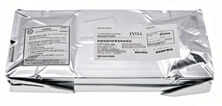
All electrostatic-sensitive components are handled in accordance with electrostatic discharge control procedures. The products are hermetically sealed in anti-static safe packaging to prevent electrostatic damage. Appropriate labeling is also applied for identification and traceability. This ensures product integrity during storage, handling and transportation.


ESD

Certifications & Memberships

Third-party certified, strict quality control. Our certification
  • ISO 9001: 2015
  • ISO 13485: 2016
  • ISO 14001: 2015
  • ISO 28000: 2007
  • ISO 45001: 2018
  • GB/T 27922-2011
  • SMTA
  • IPC
  • ESD
  • PSMA
STM32F101RCT6TR Image

STM32F101RCT6TR

STMicroelectronics
32D-STM32F101RCT6TR

Want a better price? Add to Cart and Submit RFQ now, we'll contact you immediately.

0 RFQ
Shopping cart (0 Items)
It is empty.
Compare List (0 Items)
It is empty.
Feedback

Your feedback matters! At Allelco, we value the user experience and strive to improve it constantly.
Please share your comments with us via our feedback form, and we'll respond promptly.
Thank you for choosing Allelco.

Subject
E-mail
Comments
Captcha
Drag or click to upload file
Upload File
types: .xls, .xlsx, .doc, .docx, .jpg, .png and .pdf.
Max file size: 10MB