View All

Please refer to the English Version as our Official Version.Return

Europe
France(Français) Germany(Deutsch) Italy(Italia) Russian(русский) Poland(polski) Czech(Čeština) Luxembourg(Lëtzebuergesch) Netherlands(Nederland) Iceland(íslenska) Hungarian(Magyarország) Spain(español) Portugal(Português) Turkey(Türk dili) Bulgaria(Български език) Ukraine(Україна) Greece(Ελλάδα) Israel(עִבְרִית) Sweden(Svenska) Finland(Svenska) Finland(Suomi) Romania(românesc) Moldova(românesc) Slovakia(Slovenská) Denmark(Dansk) Slovenia(Slovenija) Slovenia(Hrvatska) Croatia(Hrvatska) Serbia(Hrvatska) Montenegro(Hrvatska) Bosnia and Herzegovina(Hrvatska) Lithuania(lietuvių) Spain(Português) Switzerland(Deutsch) United Kingdom(English)
Asia/Pacific
Japan(日本語) Korea(한국의) Thailand(ภาษาไทย) Malaysia(Melayu) Singapore(Melayu) Vietnam(Tiếng Việt) Philippines(Pilipino)
Africa, India and Middle East
United Arab Emirates(العربية) Iran(فارسی) Tajikistan(فارسی) India(हिंदी) Madagascar(malaɡasʲ)
South America / Oceania
New Zealand(Maori) Brazil(Português) Angola(Português) Mozambique(Português)
North America
United States(English) Canada(English) Haiti(Ayiti) Mexico(español)
HomeProductsIntegrated Circuits (ICs)Linear - Amplifiers - Instrumentation, OP Amps, Buffer AmpsTS271BIDT
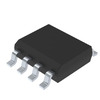
TS271BIDT Image
Image may be representation.
See specifications for product details.
EXPRESS OPTION
Payment method

TS271BIDT - STMicroelectronics

Manufacturer Part Number
TS271BIDT
Manufacturer
STMicroelectronics
Allelco Part Number
32D-TS271BIDT
Warranty
1 Year Allelco Warranty - Find out more
Stock Status:
11,170 pcs available, New & Original
Parts Description
IC OPAMP GP 1 CIRCUIT 8SOIC
Package
8-SOIC
Data sheet
TS271BIDT.pdf

Datasheets

TS271.pdf
RoHs Status
ROHS3 Compliant
Our certification
In stock: 11170

Required fields are indicated by an asterisk (*)
Please send RFQ, we will respond immediately.

Quantity

Specifications

TS271BIDT Tech Specifications
STMicroelectronics - TS271BIDT technical specifications, attributes, parameters and parts with similar specifications to STMicroelectronics - TS271BIDT

Product Attribute Attribute Value
Manufacturer STMicroelectronics
Voltage - Supply Span (Min) 3 V
Voltage - Supply Span (Max) 16 V
Voltage - Input Offset 250 µV
Supplier Device Package 8-SOIC
Slew Rate 0.04V/µs
Series -
Package / Case 8-SOIC (0.154", 3.90mm Width)
Package Tape & Reel (TR)
Output Type -
Product Attribute Attribute Value
Operating Temperature -40°C ~ 125°C
Number of Circuits 1
Mounting Type Surface Mount
Gain Bandwidth Product 100 kHz
Current - Supply 10µA
Current - Output / Channel 45 mA
Current - Input Bias 1 pA
Base Product Number TS271
Amplifier Type General Purpose

Environmental & Export Classifications

ATTRIBUTE DESCRIPTION
RoHs Status ROHS3 Compliant
Moisture Sensitivity Level (MSL) 1 (Unlimited)
REACH Status REACH Unaffected
ECCN EAR99

Parts Introduction

TS271BIDT Image
TS271BIDT (1)

Manufacturer Part Number

TS271BIDT

Manufacturer

STMicroelectronics

Introduction

The TS271BIDT is a general-purpose operational amplifier (op-amp) integrated circuit (IC) designed for a wide range of applications.

Product Features and Performance

Gain bandwidth product of 100 kHz

Supply voltage range of 3V to 16V

Output current of up to 45mA per channel

Input bias current of only 1pA

Slew rate of 0.04V/μs

Input offset voltage of 250μV

Product Advantages

Wide supply voltage range

High output current capability

Extremely low input bias current

Stable performance across a wide temperature range

Key Technical Parameters

Package: 8-SOIC (0.154", 3.90mm Width)

Mounting Type: Surface Mount

Operating Temperature: -40°C to 125°C

Number of Circuits: 1

Quality and Safety Features

RoHS3 compliant

Manufacturer's packaging: Tape & Reel (TR)

Compatibility

Can be used in a variety of electronic systems and applications

Application Areas

Suitable for general-purpose amplification and buffering applications

Product Lifecycle

This product is currently in production and readily available.

Replacement or upgraded versions may become available in the future.

Key Reasons to Choose This Product

Wide supply voltage range accommodates a variety of system requirements

High output current capability enables driving of larger loads

Extremely low input bias current allows for high-impedance input applications

Stable performance across a wide temperature range makes it suitable for harsh environments
Frequently Asked Questions(FAQ)

How does the TS271BIDT's input bias current compare to other general-purpose op-amps in its class, and what implications does this have for high-impedance sensor interface designs?
The TS271BIDT features an exceptionally low input bias current of just 1 pA, which is significantly better than many competing general-purpose amplifiers such as the LM358 or even some precision types like the MCP6002. This ultra-low bias current reduces loading errors in high-impedance sensor applications—such as piezoelectric sensors or pH probes—where traditional op-amps with higher bias currents (often in the nA range) can cause measurable signal attenuation. For example, when interfacing with a 1 GΩ source impedance, the TS271BIDT introduces less than 1 µV of offset due to bias current, whereas a typical op-amp might produce tens of millivolts of error. This characteristic makes it particularly suitable for precision measurement front ends where long-term stability and minimal signal loss are critical.
What is the maximum allowable supply voltage for the TS271BIDT, and how should designers account for margin when integrating it into battery-powered systems?
The TS271BIDT supports a supply voltage span from 3 V up to 16 V, making it compatible with both single-supply and dual-supply configurations. In battery-powered applications—such as those using a 3.7 V Li-ion cell—designers typically operate near the lower end of the rail but must consider voltage drops under load and temperature variations. For instance, if the system draws 10 µA quiescent current from a fully charged 4.2 V battery, the op-amp will consume only 42 µW of power, contributing minimally to overall drain. However, to ensure reliable operation across discharge cycles, it’s prudent to derate the maximum supply by at least 10–15%, meaning a 16 V-rated device may be used conservatively up to 14 V in high-reliability environments.
How does the TS271BIDT handle output swing limitations compared to rail-to-rail output stages, especially at low supply voltages?
Unlike rail-to-rail output (RRO) op-amps, the TS271BIDT does not guarantee output swing close to either supply rail. At a 5 V supply, for example, the output may swing approximately 1 V away from each rail, yielding usable output between roughly 1 V and 4 V. This limitation becomes relevant in low-voltage systems where headroom is limited. When comparing with RRO alternatives like the MCP6401, the TS271BIDT trades output flexibility for superior DC precision and lower power consumption. Designers must therefore verify that the required output swing fits within the available range based on load conditions and reference levels—especially important in ADC driver stages where full-scale accuracy depends on undistorted output amplitude.
Is the TS271BIDT suitable for driving capacitive loads directly, and what stability considerations apply?
Yes, the TS271BIDT can drive moderate capacitive loads, though its slew rate of 0.04 V/µs imposes practical limits. Driving a large capacitor (e.g., >100 pF) without series resistance can lead to instability or ringing due to insufficient phase margin. In such cases, adding a small series resistor (typically 10–50 Ω) between the op-amp output and the load capacitor improves phase response and damping. This technique is common in filter applications or long PCB traces. Given the 45 mA output current capability, the device remains capable of handling transient demands even with added isolation resistance, balancing stability with dynamic performance.
How does the gain bandwidth product (GBW) of the TS271BIDT affect closed-loop frequency response in unity-gain buffer configurations?
With a gain bandwidth product of 100 kHz, the TS271BIDT exhibits limited bandwidth in unity-gain buffering. While sufficient for slow-varying signals or DC amplification, this restricts use in high-speed signal paths requiring greater bandwidth. For instance, amplifying a 50 kHz sine wave in non-inverting configuration with a gain of 2 results in a closed-loop bandwidth of approximately 50 kHz, as GBW = Gain × Bandwidth. Thus, while the part excels in precision DC applications, it is ill-suited for video or RF-like processing where wider bandwidth is essential. Careful trade-off analysis against power budget and noise performance is necessary before selecting it for active filter topologies demanding higher loop gains.
Can the TS271BIDT be used in single-supply configurations below 5 V, and what impact does input common-mode range have in such setups?
Yes, the TS271BIDT supports single-supply operation down to 3 V, making it viable for low-voltage systems. However, the input common-mode voltage range typically extends only slightly above ground (often within 1 V in most SOIC packages), so signals near 0 V require careful biasing. If measuring a sensor referenced to ground that outputs 0–10 mV, a virtual ground or offsetting reference may be needed. In contrast, some newer rail-to-rail input devices allow inputs all the way to GND, simplifying design. The TS271BIDT’s 250 µV input offset voltage further necessitates calibration or trimming in precision DC-coupled applications to maintain accuracy under these constraints.
How does the TS271BIDT compare thermally and electrically to the TS271BI variant, and what design factors justify choosing one over the other?
The TS271BIDT and TS271BI share the same core architecture but differ in packaging and possibly thermal characteristics. Both offer identical electrical specifications: 100 kHz GBW, 1 pA input bias, and 10 µA supply current. However, the D suffix indicates an industrial-temperature-range version (-40°C to +125°C), while the I suffix may denote a commercial grade (-0°C to +70°C). The choice hinges on environmental requirements rather than electrical differences. For automotive or industrial sensing nodes exposed to wide ambient swings, the D-grade ensures reliability across extremes. Thermal modeling shows negligible difference in junction-to-ambient resistance between SOIC packages, so power dissipation remains the dominant factor in layout planning.
What precautions should engineers take when using the TS271BIDT in parallel to increase output drive capability?
Parallel operation of op-amps like the TS271BIDT requires careful matching of output impedances and potential current sharing issues. While each channel can source/sink 45 mA, connecting two devices in parallel doubles current capacity but introduces imbalance risks due to slight mismatches in offset voltage (250 µV typical) and output stage thresholds. Without external balancing resistors, one amplifier may dominate under light loads. A safer approach involves using dedicated multi-channel drivers or implementing active load sharing circuits. Additionally, since the TS271BIDT lacks internal shoot-through protection, fast switching transients could cause latch-up if not decoupled properly. Therefore, paralleling is generally discouraged unless supported by simulation and empirical validation under worst-case operating conditions.
How does the operating temperature range affect long-term drift and offset stability in precision applications using the TS271BIDT?
The TS271BIDT operates from -40°C to +125°C, enabling deployment in harsh environments. Over this span, the input offset voltage may vary by several hundred microvolts depending on manufacturing lot and aging effects. For example, a 250 µV initial offset could shift by ±50 µV over temperature, introducing nonlinearity in sensor gain stages. To mitigate this, designers often employ chopper-stabilized or auto-zero techniques, though the TS271BIDT uses conventional bipolar input transistors without such features. Consequently, in high-accuracy systems (e.g., medical instrumentation), periodic recalibration or selection of lower-drift variants may be preferable unless compensated through software or hardware trimming routines.
What is the significance of the Moisture Sensitivity Level (MSL) rating for the TS271BIDT, and how does it influence assembly process control?
The TS271BIDT has an MSL rating of 1, indicating unlimited shelf life and no special handling requirements prior to soldering. This simplifies procurement logistics and reduces risk of moisture-induced defects during reflow. In contrast, components rated MSL 3 or higher demand bake-out procedures if stored beyond 168 hours. For mass production lines assembling PCBs with lead-free profiles (e.g., 260°C peak), MSL 1 parts can proceed directly to SMT placement and reflow without pre-conditioning. This reliability eases supply chain coordination and minimizes downtime, especially beneficial for prototyping or low-volume batches where controlled storage infrastructure may not exist.
How does the TS271BIDT perform in terms of power consumption versus speed trade-offs compared to faster, higher-power op-amps?
The TS271BIDT consumes only 10 µA of supply current while delivering modest slew and bandwidth performance, placing it firmly in the ultra-low-power category. Alternatives like the TLV2462 draw 2.2 mA but achieve 10× faster slew rates and wider bandwidth. In battery-operated IoT nodes monitoring analog sensors intermittently, the TS271BIDT’s energy efficiency enables months-long operation on a coin cell. However, if the application demands rapid settling after enable (e.g., triggered data acquisition), the slower response may introduce dead time. Designers must evaluate duty cycle, wake-up latency tolerance, and average current consumption holistically rather than optimizing solely for peak speed.
Can the TS271BIDT drive inductive loads such as relays or solenoids directly, and what protective measures are recommended?
Directly driving inductive loads is not advisable due to back-EMF risks. When the TS271BIDT switches off a relay coil, inductive kick can exceed its absolute maximum ratings unless clamped externally. Standard practice includes placing a flyback diode (e.g., 1N4148) across the coil in reverse polarity, ensuring the op-amp sees only forward voltage spikes. Alternatively, MOSFETs or dedicated driver ICs should buffer the output to isolate the op-amp from high dv/dt transients. Given the 45 mA output current, short-circuit protection is inherent, but sustained overloads may stress the ESD diodes inside the package. Proper PCB layout with ground planes and decoupling capacitors near the pin further enhances robustness.
How does the 8-SOIC package footprint of the TS271BIDT influence high-density board layouts, and what thermal management strategies apply?
The 8-SOIC (3.9 mm width) occupies minimal real estate, facilitating compact designs. Its exposed pad option (if present) allows heat spreading via copper pours, though the TS271BIDT’s 10 µA quiescent current generates negligible thermal load (<100 mW even at 16 V). Therefore, thermal vias or large solder pads are unnecessary unless sourcing 45 mA continuously—rare in general-purpose amplifier roles. Still, adjacent high-current components should be spaced adequately to avoid coupling interference through shared planes. The standard JEDEC footprint aligns with automated pick-and-place machines, supporting scalable manufacturing for consumer electronics or embedded systems where space and yield are prioritized.
What role does the input offset voltage of 250 µV play in closed-loop gain accuracy, and how can it be mitigated in critical measurements?
A 250 µV input offset translates to a fixed error at the output scaled by the closed-loop gain. For a gain of 100 in a strain gauge amplifier, this results in a 25 mV output error—potentially saturating a 3.3 V ADC or masking subtle changes in small signals. Mitigation strategies include using external offset null pins (if available), software calibration routines, or selecting lower-offset variants (though the TS271BIDT doesn’t offer trimming features). In differential configurations with matched resistors, common-mode rejection helps, but absolute accuracy still suffers from this inherent offset. For sub-millivolt resolution tasks, alternative architectures like instrumentation amplifiers with laser-trimmed resistors may be more appropriate despite higher cost.
How does the TS271BIDT’s RoHS compliance status impact regulatory acceptance in global markets, particularly in Europe and North America?
The TS271BIDT is fully RoHS3 compliant, satisfying hazardous substance restrictions under EU Directive 2011/65/EU and similar regulations in California and Japan. This eliminates lead, mercury, cadmium, and other restricted materials, easing compliance documentation for OEMs exporting finished goods. Unlike legacy parts requiring exemption clauses for certain alloys, RoHS3 compliance ensures uninterrupted market access without additional testing or paperwork. Combined with REACH unaffected status and EAR99 classification, the component poses minimal export control complexity, streamlining supply chains for defense-adjacent or aerospace-adjacent applications requiring ITAR-free sourcing.
In what scenarios would the TS271BIDT outperform a rail-to-rail input/output amplifier despite its narrower dynamic range?
The TS271BIDT excels in applications where ultra-low input bias current, low supply current, and stable DC performance outweigh the need for rail-to-rail operation. For example, in battery-powered environmental monitors using thermistors or humidity sensors with high source impedance, its 1 pA bias current preserves signal integrity over years of operation. Rail-to-rail devices often sacrifice precision to achieve wider ranges, increasing flicker noise and offset variability. Similarly, in photodiode transimpedance amplifiers, where feedback resistors exceed 1 MΩ, the TS271BIDT’s low bias minimizes dark current contribution, whereas RRIAs may exhibit higher leakage. Thus, in precision, low-power, DC-dominant systems, the TS271BIDT offers superior fidelity despite architectural compromises.
How should designers validate the TS271BIDT’s performance under actual load conditions during prototype development?
Validation should include bench tests simulating real-world loads: measure output swing vs. load current, check transient response to square waves (e.g., 10 kHz, 2 Vpp), and assess phase margin with representative capacitive loads. Use oscilloscope probes with low capacitance (<15 pF) to avoid distorting high-frequency behavior. Also, monitor supply current under dynamic conditions to confirm no excessive ripple or oscillation occurs. For long-term reliability, run accelerated life tests at elevated temperatures (e.g., 85°C or 125°C) while logging offset voltage drift. Comparing measured values against datasheet curves validates whether the specific batch meets advertised specs, catching early deviations that might emerge only under stress.

Parts with Similar Specifications

The three parts on the right have similar specifications to STMicroelectronics TS271BIDT

Product Attribute TS271AIDT TS271BID TS271IDT TS271CDT
Part Number TS271AIDT TS271BID TS271IDT TS271CDT
Manufacturer STMicroelectronics STMicroelectronics STMicroelectronics STMicroelectronics
Voltage - Input Offset - - - -
Package / Case - 196-LFBGA 16-DIP (0.300', 7.62mm) 64-VFQFN Exposed Pad
Operating Temperature - -40°C ~ 85°C 0°C ~ 70°C -40°C ~ 85°C
Mounting Type - Surface Mount Through Hole Surface Mount
Slew Rate - - - -
Package - Tape & Reel (TR) Tube Tape & Reel (TR)
Output Type - Current - Unbuffered Voltage - Buffered -
Voltage - Supply Span (Min) - - - -
Base Product Number - DAC34H84 MAX500 ADS62P42
Current - Input Bias - - - -
Gain Bandwidth Product - - - -
Number of Circuits - - - -
Series - - - -
Supplier Device Package - 196-NFBGA (12x12) 16-PDIP 64-VQFN (9x9)
Amplifier Type - - - -
Current - Supply - - - -
Voltage - Supply Span (Max) - - - -
Current - Output / Channel - - - -

TS271BIDT Datasheet PDF

Download TS271BIDT pdf datasheets and STMicroelectronics documentation for TS271BIDT - STMicroelectronics.

Datasheets
TS271.pdf

Customer Reviews

Evaluation: 10 Articles

  • Nath***rooks
    Jun 11, 2026

    Installed this power component in a converter board. Output remained stable under different load conditions and thermal performance was better than expected.

  • Dani***alkerTech
    Jun 1, 2026

    Product works, but setup took more effort than expected. Once configured the MCU ran reliably, although documentation support felt older compared with newer platforms. Fine for maintenance projects.

  • Yuki***aka88
    May 26, 2026

    信号通信プロジェクトでこのRS-485トランシーバーを使用しました。設置は簡単で、長距離ケーブルでも通信は安定していました。消費電力も、以前使用していたものより低くなっています。

  • Stev***aker
    May 20, 2026

    Solid diode for power rectification. Works well in switching circuits.

  • Bran***Lewis
    May 11, 2026

    Compact FPGA with good performance. Suitable for basic signal processing tasks.

  • Oliv***arris
    May 7, 2026

    Reliable I/O expander. Works well in embedded control applications.

  • Jess***Jones
    Apr 17, 2026

    It offers good value for the price, and the specifications match the description. I’ve been using it for two days with no issues, and I’ll definitely buy it again if I need it in the future.

  • Mich***Smith
    Apr 17, 2026

    Shipping was on time, the component pins are neatly aligned, and I tested 10 of them with a multimeter—all readings were within the specified range. Highly recommended.

  • Aman***arris
    Apr 3, 2026

    It was great—the entire process, from placing the order to receiving the package, went very smoothly. The components were consistent, the price was fair, and I had a very pleasant shopping experience.

  • Mike***nch
    Apr 3, 2026

    Better than expected! The resistance and capacitance readings were spot-on, and it passed the test on the first try. The service was reliable, and the packaging was thoughtful—I highly recommend it.

Write a Review

Your Email address will not be published.

Shipment

Delivery Time

In-stock items can be shipped within 24 hours. Some parts will be arranged for delivery within 1-2 days from the date all items arrive at our warehouse. And Allelco ships order once a day at about 17:00, except Sunday. Once the goods are shipped, the estimated delivery time depends on the shipping methods and Delivery destination. The table below shows are the logistic time for some common countries.

Delivery Cost

  1. Use your express account for shipment if you have one.
  2. Use our account for the shipment. Refer to the table below for the approximate charges.
(Different time frame / countries / package size has different price.)

Delivery Method

  1. Global Common Shipment by DHL / UPS / FedEx / TNT / EMS / SF we support.
  2. Others more shipping ways, please get in touch with your customer manager.

Common Countries Logistic Time Reference
Region Country Logistic Time(Day)
America United States 5
Brazil 7
Europe Germany 5
United Kingdom 4
Italy 5
Oceania Australia 6
New Zealand 5
Asia India 4
Japan 4
Middle East Israel 6
DHL & FedEx Shipment Charges Reference
Shipment charges(KG) Reference DHL(USD$)
0.00kg-1.00kg USD$30.00 - USD$60.00
1.00kg-2.00kg USD$40.00 - USD$80.00
2.00kg-3.00kg USD$50.00 - USD$100.00
Note:
The above table is for reference only. There may have some data bias for the uncontrollable factors.
Contact us if you have any questions.
  • QC (Quality Warranty)
  • Payment Support
  • Packaging
  • Certifications & Memberships

QC (Quality Warranty)

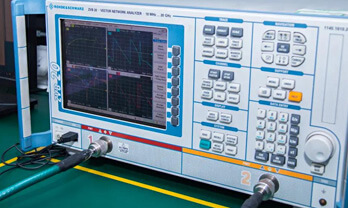
Allelco is committed to exceeding customer expectations through customer service excellence, order accuracy, and on-time delivery.
This is achieved through our commitment to the continual improvement of our processes, services, and products.


Strict quality inspection builds a solid foundation for electronic component quality.
  1. Visual inspection
  2. Performance testing and reliability verification
  3. Standardized full-process testing
  4. Precise control of every parameter
We eliminate defective components and ensure the stable operation of electronic devices through professional quality standards.

Payment Support

The payment method can be chosen from the methods shown below: Wire Transfer (T/T, Bank Transfer), Western Union, Credit card, PayPal.
  • HKBea
  • Paypal
  • MasterCard
  • Western-Union
  • VISA
Stable Delivery, Sincere Partnership — Your Faithful Supply Chain Partner
  • Efficient Supply Management
  • Cost-Saving Procurement
  • Fast Sourcing & Delivery
Contact us if you have any questions.

Packaging

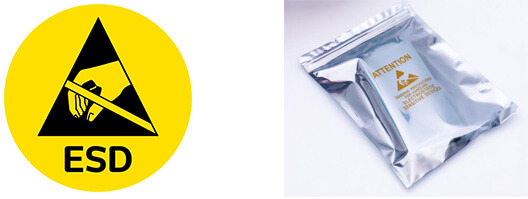
Electrostatic Discharge Protection and Handling

All electrostatic-sensitive components are handled in accordance with electrostatic discharge control procedures. The products are hermetically sealed in anti-static safe packaging to prevent electrostatic damage. Appropriate labeling is also applied for identification and traceability. This ensures product integrity during storage, handling and transportation.


ESD

Certifications & Memberships

Third-party certified, strict quality control. Our certification
  • ISO 9001: 2015
  • ISO 13485: 2016
  • ISO 14001: 2015
  • ISO 28000: 2007
  • ISO 45001: 2018
  • GB/T 27922-2011
  • SMTA
  • IPC
  • ESD
  • PSMA
TS271BIDT Image

TS271BIDT

STMicroelectronics
32D-TS271BIDT

Want a better price? Add to Cart and Submit RFQ now, we'll contact you immediately.

0 RFQ
Shopping cart (0 Items)
It is empty.
Compare List (0 Items)
It is empty.
Feedback

Your feedback matters! At Allelco, we value the user experience and strive to improve it constantly.
Please share your comments with us via our feedback form, and we'll respond promptly.
Thank you for choosing Allelco.

Subject
E-mail
Comments
Captcha
Drag or click to upload file
Upload File
types: .xls, .xlsx, .doc, .docx, .jpg, .png and .pdf.
Max file size: 10MB