View All

Please refer to the English Version as our Official Version.Return

Europe
France(Français) Germany(Deutsch) Italy(Italia) Russian(русский) Poland(polski) Czech(Čeština) Luxembourg(Lëtzebuergesch) Netherlands(Nederland) Iceland(íslenska) Hungarian(Magyarország) Spain(español) Portugal(Português) Turkey(Türk dili) Bulgaria(Български език) Ukraine(Україна) Greece(Ελλάδα) Israel(עִבְרִית) Sweden(Svenska) Finland(Svenska) Finland(Suomi) Romania(românesc) Moldova(românesc) Slovakia(Slovenská) Denmark(Dansk) Slovenia(Slovenija) Slovenia(Hrvatska) Croatia(Hrvatska) Serbia(Hrvatska) Montenegro(Hrvatska) Bosnia and Herzegovina(Hrvatska) Lithuania(lietuvių) Spain(Português) Switzerland(Deutsch) United Kingdom(English)
Asia/Pacific
Japan(日本語) Korea(한국의) Thailand(ภาษาไทย) Malaysia(Melayu) Singapore(Melayu) Vietnam(Tiếng Việt) Philippines(Pilipino)
Africa, India and Middle East
United Arab Emirates(العربية) Iran(فارسی) Tajikistan(فارسی) India(हिंदी) Madagascar(malaɡasʲ)
South America / Oceania
New Zealand(Maori) Brazil(Português) Angola(Português) Mozambique(Português)
North America
United States(English) Canada(English) Haiti(Ayiti) Mexico(español)
HomeProductsIntegrated Circuits (ICs)Linear - Amplifiers - AudioTS4890IDT
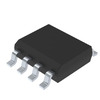
TS4890IDT Image
Image may be representation.
See specifications for product details.
EXPRESS OPTION
Payment method

TS4890IDT - STMicroelectronics

Manufacturer Part Number
TS4890IDT
Manufacturer
STMicroelectronics
Allelco Part Number
32D-TS4890IDT
Warranty
1 Year Allelco Warranty - Find out more
Stock Status:
10,730 pcs available, New & Original
Parts Description
IC AMP CLASS AB MONO 1W 8SO
Package
8-SOIC
Data sheet
TS4890IDT.pdf

Datasheets

TS4890.pdf

PCN Obsolescence/ EOL

Mult Dev OBS 3/Mar/2020.pdf
RoHs Status
ROHS3 Compliant
Our certification
In stock: 10730

Required fields are indicated by an asterisk (*)
Please send RFQ, we will respond immediately.

Quantity

Specifications

TS4890IDT Tech Specifications
STMicroelectronics - TS4890IDT technical specifications, attributes, parameters and parts with similar specifications to STMicroelectronics - TS4890IDT

Product Attribute Attribute Value
Manufacturer STMicroelectronics
Voltage - Supply 2.5V ~ 5.5V
Type Class AB
Supplier Device Package 8-SOIC
Series -
Package / Case 8-SOIC (0.154", 3.90mm Width)
Package Tape & Reel (TR)
Product Attribute Attribute Value
Output Type 1-Channel (Mono)
Operating Temperature -40°C ~ 85°C (TA)
Mounting Type Surface Mount
Max Output Power x Channels @ Load 1W x 1 @ 8Ohm
Features Depop, Standby, Thermal Protection
Base Product Number TS4890

Environmental & Export Classifications

ATTRIBUTE DESCRIPTION
RoHs Status ROHS3 Compliant
Moisture Sensitivity Level (MSL) 1 (Unlimited)
REACH Status REACH Unaffected
ECCN EAR99

Parts Introduction

TS4890IDT Image
TS4890IDT (1)

Manufacturer Part Number

TS4890IDT

Manufacturer

STMicroelectronics

Introduction

The TS4890IDT is a high-performance, low-noise, low-distortion, single-channel audio amplifier.

Product Features and Performance

1W x 1 channel output power @ 8Ω

Low noise and distortion

Thermal protection and depop circuits

Operates from 2.5V to 5.5V supply

Class AB operation

Surface mount 8-SOIC package

Product Advantages

Efficient and reliable performance

Compact and space-saving design

Comprehensive protection features

Wide operating voltage range

Key Technical Parameters

Output Power: 1W x 1 channel @ 8Ω

Supply Voltage Range: 2.5V to 5.5V

Operating Temperature: -40°C to 85°C

Packaging: 8-SOIC, Tape & Reel

Quality and Safety Features

RoHS3 compliant

Thermal protection

Depop and standby features

Compatibility

Surface mount 8-SOIC package

Application Areas

Audio amplification in portable devices

Multimedia systems

Consumer electronics

Product Lifecycle

The TS4890IDT is a current product and is not nearing discontinuation.

Replacement or upgrade options may be available from the manufacturer.

Key Reasons to Choose This Product

Efficient and reliable 1W audio amplification

Low noise and distortion performance

Comprehensive protection features

Wide operating voltage range

Compact and space-saving design

RoHS3 compliance for environmental safety.
Frequently Asked Questions(FAQ)

How does the TS4890IDT compare to other Class AB amplifiers in terms of output power efficiency and thermal performance under continuous 8Ω load conditions?
The TS4890IDT delivers 1W of output power into an 8Ω load with a supply voltage between 2.5V and 5.5V, which positions it as a compact solution for low-power audio applications. While its absolute output power is modest compared to higher-gain alternatives like the TS4990IDT, the device incorporates internal thermal protection that helps prevent damage during prolonged operation. However, due to its Class AB architecture, efficiency remains moderate—typical Class AB amplifiers operate at 50–60% efficiency under full load, so heat dissipation increases significantly when delivering sustained power near 1W. Designers should ensure adequate PCB layout for thermal relief and consider ambient temperature limits (-40°C to +85°C) to avoid throttling or shutdown.
What are the key design considerations when integrating the TS4890IDT into a battery-powered portable device where quiescent current and standby functionality are critical?
The TS4890IDT features a dedicated standby mode that reduces quiescent current to a minimal level, making it suitable for energy-constrained designs such as Bluetooth speakers or voice-enabled devices. When active, the amplifier draws more current depending on output level and supply voltage, but the inclusion of depop circuitry minimizes audible turn-on/off transients—important for user experience. Since the device operates down to 2.5V, it can interface directly with single-cell Li-ion batteries without requiring additional boost regulators. However, designers must account for the slight increase in quiescent current during normal operation (typically tens of microamps), which may impact battery life if the device spends extended periods in standby with periodic wake-ups.
In what scenarios would the TS4890IDT be preferred over a Class D amplifier despite lower efficiency, and how does its SOIC packaging influence board integration?
The TS4890IDT may be favored over Class D alternatives in noise-sensitive environments such as medical audio equipment or hearing aid interfaces, where electromagnetic interference (EMI) from switching topologies can disrupt nearby sensors or wireless receivers. Although Class D amplifiers typically achieve 80–90% efficiency and higher power densities, they generate broadband noise that can couple into analog signals. The TS4890IDT’s linear operation avoids this issue. Its 8-SOIC package (3.90mm width) enables compact layouts, but the relatively large footprint compared to modern QFN packages may limit space savings in densely populated PCBs. Still, the SOIC form factor offers excellent solder joint reliability and ease of hand soldering during prototyping, which benefits small-batch development teams.
Can the TS4890IDT drive capacitive loads such as piezoelectric buzzers, and what precautions are necessary to ensure stability?
Yes, the TS4890IDT can drive capacitive loads including piezoelectric transducers, thanks to its internal compensation network designed for inductive or reactive loads common in speaker applications. However, driving purely capacitive devices like ceramic buzzers may require careful attention to feedback loop dynamics. Excessive capacitance beyond what the amplifier’s output stage can handle might lead to ringing or oscillation, especially at high frequencies. For typical 10–100nF capacitive loads, the device remains stable, but engineers should verify transient response using a scope during initial bring-up. Avoid placing long traces between the output and load; instead, use short, direct connections and minimize parasitic inductance or resistance in the path.
How does the operating temperature range of the TS4890IDT affect its performance in automotive or industrial edge-case environments, and what derating guidelines apply?
The TS4890IDT specifies operation from -40°C to +85°C, which covers most commercial and some industrial applications, but not extreme automotive environments exceeding 125°C junction temperatures. Within this range, output power may decrease slightly as supply voltage drops toward 2.5V, and internal bias currents shift with temperature, potentially affecting distortion at low amplitudes. To maintain reliability, STMicroelectronics recommends derating power delivery by approximately 10–15% when operating near the upper end of the temperature window, particularly in enclosed spaces with poor airflow. Thermal resistance from junction to ambient for the 8-SOIC package is not explicitly listed, but typical values hover around 150°C/W, implying rapid heat rise if heatsinking is inadequate—hence, conservative layout practices are advised.
What role does the depop feature play in real-world audio playback, and how does it interact with the amplifier’s startup sequence?
Depop circuitry suppresses the transient voltage spikes that occur when the amplifier powers up or shuts down, preventing audible "popping" sounds from connected loudspeakers. This feature is essential in battery-powered systems where sudden current surges could otherwise stress speaker coils or create user discomfort. On the TS4890IDT, the depop function activates gradually during enable transitions, smoothing the ramp-in of the output signal. It works independently of the standby pin but shares control logic with the thermal shutdown mechanism—ensuring that if overheating occurs, both pop suppression and safe disablement occur seamlessly. This integrated approach enhances system robustness without requiring external filtering components.
Are there any known limitations when cascading multiple TS4890IDTs for stereo amplification, and how does channel isolation affect crosstalk performance?
Cascading two TS4890IDTs to form a stereo pair is feasible since each channel is fully independent, but crosstalk levels depend heavily on physical separation, shared power rails, and ground plane integrity. While the datasheet does not specify channel-to-channel isolation metrics, typical monolithic stereo amplifiers exhibit crosstalk below -60dB at mid-frequencies, though this degrades with proximity and shared supply noise. Using separate decoupling capacitors per channel and maintaining symmetrical trace lengths improves balance. Additionally, simultaneous high-level outputs from both channels can cause supply droop, leading to reduced headroom and increased distortion—designers should evaluate PSRR (power supply rejection ratio) under worst-case load conditions when implementing stereo configurations.
What impact does the 8-SOIC package’s moisture sensitivity level (MSL 1) have on manufacturing handling, and how should assembly processes be managed to avoid defects?
With an MSL rating of 1, the TS4890IDT has unlimited floor life at 30°C/60% relative humidity, meaning it can sit unopened on a production line indefinitely without special storage requirements. This simplifies inventory logistics and reduces risk of moisture-induced popcorning during reflow soldering. Nonetheless, best practice dictates keeping parts in original packaging until use, especially in humid climates or extended lead times. Assembly facilities should follow standard IPC-J-STD-033 guidelines for handling, baking, and drying if exposure exceeds recommended limits—though for MSL 1, such measures are rarely needed. Proper stencils, solder paste application, and reflow profiles aligned with JEDEC standards will ensure reliable solder joints across the entire operating temperature range.
How does the TS4890IDT compare to the TS4990IDT in terms of gain structure and application suitability, particularly in variable-voltage systems?
The TS4990IDT offers higher gain and greater output swing compared to the TS4890IDT, making it more suitable for driving larger speakers or higher-impedance loads without external feedback networks. Both share similar supply ranges and protection features, but the TS4890IDT prioritizes simplicity and low quiescent current, whereas the TS4990IDT trades off some efficiency for higher performance. In systems where supply voltage fluctuates (e.g., battery drain in Li-ion cells), the TS4890IDT maintains consistent clipping thresholds down to 2.5V, while the TS4990IDT may require higher headroom to deliver rated power. Thus, for compact, low-cost designs targeting subwoofer drivers or auxiliary inputs, the TS4890IDT provides sufficient capability without unnecessary complexity.
What precautions should be taken when replacing the TS4890IDT with substitute models like the TS4990IDT in existing circuit layouts?
Substituting the TS4890IDT with the TS4990IDT requires evaluating differences in pin compatibility, gain bandwidth product, and thermal characteristics. While both use the same 8-SOIC package and share key pins (VCC, GND, IN+, IN-, OUT, STBY), the TS4990IDT often includes adjustable gain via feedback resistors and higher output current capability. This means input coupling capacitors, biasing networks, and load impedance matching may need adjustment to prevent overdrive or instability. Additionally, the TS4990IDT’s higher quiescent current and potential for increased self-heating necessitate revisiting thermal management. Always simulate or prototype the new configuration under worst-case conditions before committing to mass production.
How does the absence of an explicit PSRR specification for the TS4890IDT affect power supply noise sensitivity in mixed-signal systems?
Although the datasheet does not list Power Supply Rejection Ratio (PSRR) values, Class AB amplifiers like the TS4890IDT generally exhibit moderate PSRR, typically degrading at low frequencies (<100Hz) and improving above 1kHz. In mixed-signal boards where digital switching noise couples onto analog supplies, this limitation implies that bulk decoupling (e.g., 10µF tantalum + 100nF ceramic per IC) becomes essential. Without sufficient filtering, supply ripple above 50mV peak-to-peak can introduce audible artifacts or DC offset shifts in the output. Designers should assume PSRR is insufficient for rejecting high-frequency switching noise alone and implement localized LDO regulators or ferrite beads if clean audio quality is required.
What are the implications of the TS4890IDT’s RoHS3 compliance and EAR99 classification for international supply chain and export control?
RoHS3 compliance confirms the TS4890IDT meets EU Directive 2015/863 restrictions on hazardous substances including phthalates and cadmium, facilitating CE marking and global market access. The EAR99 classification indicates the part is not subject to U.S. export licensing requirements under the Export Administration Regulations, simplifying procurement from North American suppliers. These attributes support streamlined customs clearance and reduce regulatory overhead in defense, aerospace, and consumer electronics sectors. However, users should still verify local chemical and import regulations, as some countries impose stricter limits than RoHS3 mandates.
How does the base product number relationship between the TS4890IDT and TS4890 inform legacy design migration strategies?
The TS4890IDT is the industrial-grade variant of the base TS4890 family, differing primarily in packaging (SOIC vs. possible TSSOP or DIP options in earlier revisions). Understanding this lineage helps engineers anticipate availability risks and plan transitions to newer packages without redesigning entire schematics. If future obsolescence occurs, substituting within the same base family often preserves pinout and electrical behavior, reducing qualification effort. However, always validate thermal, mechanical, and environmental performance across all parameters, as minor revisions may include process improvements or enhanced protection circuits not reflected in the base number alone.
What testing methodology would you recommend to validate the TS4890IDT’s THD+N performance across its full supply voltage range?
To assess Total Harmonic Distortion plus Noise (THD+N), conduct measurements at multiple supply voltages (2.5V, 3.3V, 5V), with a fixed 8Ω resistive load and sinusoidal input signals at 1kHz. Maintain room temperature (25°C) initially, then repeat near the maximum operating temperature (+85°C) to observe thermal compression effects. Use a precision signal generator and spectrum analyzer or audio analyzer with flat frequency response to capture harmonic content. Drive the amplifier to 1W output and measure THD+N—expect typical values around 0.5% at 1kHz, worsening at higher frequencies or lower supply voltages due to reduced headroom. Ensure all test fixtures match production PCB parasitics to avoid skewed results.
In battery-backed alarm systems, how does the TS4890IDT’s standby feature improve reliability compared to hard-wired shutdown circuits?
The TS4890IDT’s integrated standby control allows software-driven power cycling without requiring discrete MOSFET switches or additional control logic. When activated via the STBY pin, the device enters a low-current state (<1µA typical), preserving battery life while maintaining instant readiness. Unlike external shutdown schemes that introduce propagation delay or component failure points, this feature ensures predictable recovery times and eliminates risk of latch-up during brownout events. Combined with thermal protection, it creates a fault-tolerant audio subsystem ideal for emergency notification devices where reliability outweighs cost constraints.
How does the TS4890IDT’s single-supply operation simplify design compared to dual-supply configurations, and what biasing considerations arise?
Operating from a single rail (2.5V–5.5V) eliminates the need for negative voltage generation, reducing component count and board complexity. The TS4890IDT internally biases the input stage to handle AC-coupled signals centered around VCC/2, enabling direct drive of speakers through series coupling capacitors. However, this requires careful selection of input coupling capacitors to pass low-frequency content without attenuation—typically 10µF or larger for sub-100Hz response. Also, ensure that no DC offset appears at the speaker terminals, as this could saturate the output stage; the internal circuitry prevents this, but improper grounding or floating inputs may still cause issues.
Given its limited output power, what types of applications are best suited for the TS4890IDT, and why might it outperform alternatives in niche use cases?
The TS4890IDT excels in applications requiring clean, quiet amplification at low power levels: voice announcement systems, IoT status indicators, wearable audio alerts, and educational kits. Its low noise floor, depop feature, and robust protection make it ideal where user comfort and durability matter more than volume. Compared to ultra-low-power Class D chips optimized for efficiency, the TS4890IDT sacrifices some battery life for linearity and EMI immunity—a worthwhile trade-off in human-interactive devices. Similarly, in environments with strict regulatory EMI limits, its spectral purity gives it an edge over switching topologies, justifying its use despite lower peak output.

Parts with Similar Specifications

The three parts on the right have similar specifications to STMicroelectronics TS4890IDT

Product Attribute TS4890IQT TS4890IST TS4902IDT TS489IST
Part Number TS4890IQT TS4890IST TS4902IDT TS489IST
Manufacturer STMicroelectronics STMicroelectronics STMicroelectronics STMicroelectronics
Package / Case - 196-LFBGA 16-DIP (0.300', 7.62mm) 64-VFQFN Exposed Pad
Operating Temperature - -40°C ~ 85°C 0°C ~ 70°C -40°C ~ 85°C
Output Type - Current - Unbuffered Voltage - Buffered -
Package - Tape & Reel (TR) Tube Tape & Reel (TR)
Features - - - Simultaneous Sampling
Mounting Type - Surface Mount Through Hole Surface Mount
Series - - - -
Supplier Device Package - 196-NFBGA (12x12) 16-PDIP 64-VQFN (9x9)
Type - - - -
Max Output Power x Channels @ Load - - - -
Voltage - Supply - - - -
Base Product Number - DAC34H84 MAX500 ADS62P42

TS4890IDT Datasheet PDF

Download TS4890IDT pdf datasheets and STMicroelectronics documentation for TS4890IDT - STMicroelectronics.

Datasheets
TS4890.pdf
PCN Obsolescence/ EOL
Mult Dev OBS 3/Mar/2020.pdf
PCN Packaging
Mult Dev Inner Pkg Chg 30/Oct/2019.pdf

Customer Reviews

Evaluation: 10 Articles

  • Nath***rooks
    Jun 11, 2026

    Installed this power component in a converter board. Output remained stable under different load conditions and thermal performance was better than expected.

  • Dani***alkerTech
    Jun 1, 2026

    Product works, but setup took more effort than expected. Once configured the MCU ran reliably, although documentation support felt older compared with newer platforms. Fine for maintenance projects.

  • Yuki***aka88
    May 26, 2026

    信号通信プロジェクトでこのRS-485トランシーバーを使用しました。設置は簡単で、長距離ケーブルでも通信は安定していました。消費電力も、以前使用していたものより低くなっています。

  • Stev***aker
    May 20, 2026

    Solid diode for power rectification. Works well in switching circuits.

  • Bran***Lewis
    May 11, 2026

    Compact FPGA with good performance. Suitable for basic signal processing tasks.

  • Oliv***arris
    May 7, 2026

    Reliable I/O expander. Works well in embedded control applications.

  • Jess***Jones
    Apr 17, 2026

    It offers good value for the price, and the specifications match the description. I’ve been using it for two days with no issues, and I’ll definitely buy it again if I need it in the future.

  • Mich***Smith
    Apr 17, 2026

    Shipping was on time, the component pins are neatly aligned, and I tested 10 of them with a multimeter—all readings were within the specified range. Highly recommended.

  • Aman***arris
    Apr 3, 2026

    It was great—the entire process, from placing the order to receiving the package, went very smoothly. The components were consistent, the price was fair, and I had a very pleasant shopping experience.

  • Mike***nch
    Apr 3, 2026

    Better than expected! The resistance and capacitance readings were spot-on, and it passed the test on the first try. The service was reliable, and the packaging was thoughtful—I highly recommend it.

Write a Review

Your Email address will not be published.

Shipment

Delivery Time

In-stock items can be shipped within 24 hours. Some parts will be arranged for delivery within 1-2 days from the date all items arrive at our warehouse. And Allelco ships order once a day at about 17:00, except Sunday. Once the goods are shipped, the estimated delivery time depends on the shipping methods and Delivery destination. The table below shows are the logistic time for some common countries.

Delivery Cost

  1. Use your express account for shipment if you have one.
  2. Use our account for the shipment. Refer to the table below for the approximate charges.
(Different time frame / countries / package size has different price.)

Delivery Method

  1. Global Common Shipment by DHL / UPS / FedEx / TNT / EMS / SF we support.
  2. Others more shipping ways, please get in touch with your customer manager.

Common Countries Logistic Time Reference
Region Country Logistic Time(Day)
America United States 5
Brazil 7
Europe Germany 5
United Kingdom 4
Italy 5
Oceania Australia 6
New Zealand 5
Asia India 4
Japan 4
Middle East Israel 6
DHL & FedEx Shipment Charges Reference
Shipment charges(KG) Reference DHL(USD$)
0.00kg-1.00kg USD$30.00 - USD$60.00
1.00kg-2.00kg USD$40.00 - USD$80.00
2.00kg-3.00kg USD$50.00 - USD$100.00
Note:
The above table is for reference only. There may have some data bias for the uncontrollable factors.
Contact us if you have any questions.
  • QC (Quality Warranty)
  • Payment Support
  • Packaging
  • Certifications & Memberships

QC (Quality Warranty)

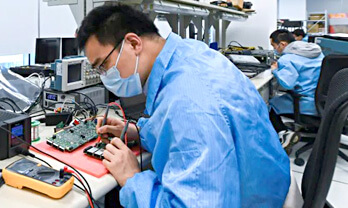
Allelco is committed to exceeding customer expectations through customer service excellence, order accuracy, and on-time delivery.
This is achieved through our commitment to the continual improvement of our processes, services, and products.


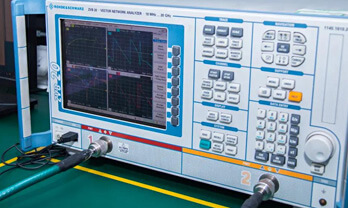
Strict quality inspection builds a solid foundation for electronic component quality.
  1. Visual inspection
  2. Performance testing and reliability verification
  3. Standardized full-process testing
  4. Precise control of every parameter
We eliminate defective components and ensure the stable operation of electronic devices through professional quality standards.

Payment Support

The payment method can be chosen from the methods shown below: Wire Transfer (T/T, Bank Transfer), Western Union, Credit card, PayPal.
  • HKBea
  • Paypal
  • MasterCard
  • Western-Union
  • VISA
Stable Delivery, Sincere Partnership — Your Faithful Supply Chain Partner
  • Efficient Supply Management
  • Cost-Saving Procurement
  • Fast Sourcing & Delivery
Contact us if you have any questions.

Packaging

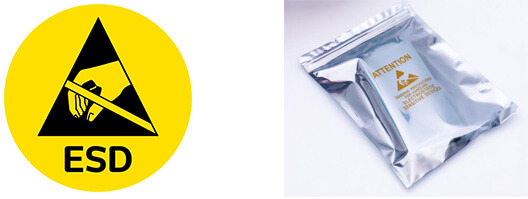
Electrostatic Discharge Protection and Handling

All electrostatic-sensitive components are handled in accordance with electrostatic discharge control procedures. The products are hermetically sealed in anti-static safe packaging to prevent electrostatic damage. Appropriate labeling is also applied for identification and traceability. This ensures product integrity during storage, handling and transportation.


ESD

Certifications & Memberships

Third-party certified, strict quality control. Our certification
  • ISO 9001: 2015
  • ISO 13485: 2016
  • ISO 14001: 2015
  • ISO 28000: 2007
  • ISO 45001: 2018
  • GB/T 27922-2011
  • SMTA
  • IPC
  • ESD
  • PSMA
TS4890IDT Image

TS4890IDT

STMicroelectronics
32D-TS4890IDT

Want a better price? Add to Cart and Submit RFQ now, we'll contact you immediately.

0 RFQ
Shopping cart (0 Items)
It is empty.
Compare List (0 Items)
It is empty.
Feedback

Your feedback matters! At Allelco, we value the user experience and strive to improve it constantly.
Please share your comments with us via our feedback form, and we'll respond promptly.
Thank you for choosing Allelco.

Subject
E-mail
Comments
Captcha
Drag or click to upload file
Upload File
types: .xls, .xlsx, .doc, .docx, .jpg, .png and .pdf.
Max file size: 10MB