View All

Please refer to the English Version as our Official Version.Return

Europe
France(Français) Germany(Deutsch) Italy(Italia) Russian(русский) Poland(polski) Czech(Čeština) Luxembourg(Lëtzebuergesch) Netherlands(Nederland) Iceland(íslenska) Hungarian(Magyarország) Spain(español) Portugal(Português) Turkey(Türk dili) Bulgaria(Български език) Ukraine(Україна) Greece(Ελλάδα) Israel(עִבְרִית) Sweden(Svenska) Finland(Svenska) Finland(Suomi) Romania(românesc) Moldova(românesc) Slovakia(Slovenská) Denmark(Dansk) Slovenia(Slovenija) Slovenia(Hrvatska) Croatia(Hrvatska) Serbia(Hrvatska) Montenegro(Hrvatska) Bosnia and Herzegovina(Hrvatska) Lithuania(lietuvių) Spain(Português) Switzerland(Deutsch) United Kingdom(English)
Asia/Pacific
Japan(日本語) Korea(한국의) Thailand(ภาษาไทย) Malaysia(Melayu) Singapore(Melayu) Vietnam(Tiếng Việt) Philippines(Pilipino)
Africa, India and Middle East
United Arab Emirates(العربية) Iran(فارسی) Tajikistan(فارسی) India(हिंदी) Madagascar(malaɡasʲ)
South America / Oceania
New Zealand(Maori) Brazil(Português) Angola(Português) Mozambique(Português)
North America
United States(English) Canada(English) Haiti(Ayiti) Mexico(español)
HomeProductsIntegrated Circuits (ICs)Specialized ICsSTM32H742ZIT6
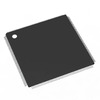
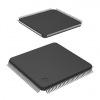
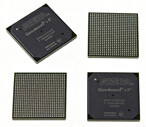
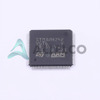
Image may be representation.
See specifications for product details.
EXPRESS OPTION
Payment method

STM32H742ZIT6 - STMicroelectronics

Manufacturer Part Number
STM32H742ZIT6
Manufacturer
STMicroelectronics
Allelco Part Number
41D-STM32H742ZIT6
Warranty
1 Year Allelco Warranty - Find out more
Stock Status:
12,190 pcs available, New & Original
Parts Description
LQFP-144
Data sheet
-
Category
Integrated Circuits (ICs) > Specialized ICs
RoHs Status
Our certification
In stock: 12190

Required fields are indicated by an asterisk (*)
Please send RFQ, we will respond immediately.

Quantity

Specifications

STM32H742ZIT6 Tech Specifications
STMicroelectronics - STM32H742ZIT6 technical specifications, attributes, parameters and parts with similar specifications to STMicroelectronics - STM32H742ZIT6

Product Attribute Attribute Value
Part Number STM32H742ZIT6
Package LQFP-144
Description LQFP-144
Stock Condition Get 12190 pcs available quantity at Allelco
Payment PayPal / TT / Credit Card / Western Union
Allelco Certifications ESD / ISO 9001 / ISO 13485 / ISO 28000
Product Attribute Attribute Value
Manufacturer STMicroelectronics
RoHs Status -
Warranty 100% Perfect Functions
Transport port Hong Kong
Shipping by DHL / FedEx / UPS / TNT / SF Express
RFQ Email info@allelco.com

Parts Introduction

Manufacturer Part Number

STM32H742ZIT6

Manufacturer

stmicroelectronics

Introduction

The STM32H742ZIT6 is a high-performance, 32-bit ARM Cortex-M7 based microcontroller from STMicroelectronics. It offers a wide range of advanced features and peripherals, making it suitable for a variety of embedded applications that require high-speed processing, robust performance, and low power consumption.

Product Features and Performance

ARM Cortex-M7 core operating at up to 480MHz

2MB of Flash memory and 688KB of RAM

Extensive peripheral set including DMA, I2S, LCD, PWM, and Watchdog Timer

36 channels of 16-bit ADC and 2 channels of 12-bit DAC

Embedded brown-out detection and power-on reset

Wide operating voltage range of 1.62V to 3.6V

Operating temperature range of -40°C to 85°C

Product Advantages

High-performance 32-bit ARM Cortex-M7 core

Generous on-chip memory for complex applications

Comprehensive peripheral set for versatile functionality

Low power consumption for battery-powered designs

Wide operating temperature range for industrial environments

Key Reasons to Choose This Product

Powerful processing capability for demanding applications

Flexible peripheral options for diverse design requirements

Robust and reliable performance for critical systems

Ease of integration and development with STM32 ecosystem

Cost-effective solution for high-volume production

Quality and Safety Features

Rigorous quality control and testing

Compliance with industry safety standards

Robust brown-out detection and power-on reset

Compatibility

Designed to be compatible with the STM32 family of microcontrollers

Supports a wide range of development tools and software libraries

Application Areas

Industrial automation and control

Medical devices and equipment

Automotive electronics

Home appliances and consumer electronics

Robotics and drones

Product Lifecycle

The STM32H742ZIT6 is an active product, and there are no plans for discontinuation. There are several equivalent or alternative models available within the STM32H7 series, such as the STM32H743ZIT6 and STM32H745ZIT6, which offer similar features and performance. If you require more information or assistance, please contact our sales team through our website.
Frequently Asked Questions(FAQ)

How does the STM32H742ZIT6 compare to other STM32H7 series microcontrollers in terms of core performance and memory capacity when used in high-speed data acquisition systems?
The STM32H742ZIT6 features a 480 MHz ARM Cortex-M7 core with 2 MB of embedded Flash memory and 688 KB of RAM, which positions it among the higher-performance members of the STM32H7 family. While lower-end variants such as the STM32H723 or H730 may offer reduced clock speeds or smaller memories, the H742ZIT6 provides sufficient bandwidth and storage for real-time processing in data acquisition applications. Its dual-bank Flash architecture supports background execution during programming, improving system responsiveness. In comparison to the STM32H750 or H743, the H742ZIT6 maintains similar core specifications but may lack certain advanced peripherals like Chrom-ART accelerator found in higher-tier models.
What are the key considerations when selecting an external crystal oscillator for the STM32H742ZIT6 to ensure stable operation across its full operating temperature range of -40°C to 85°C?
Although the STM32H742ZIT6 has an internal high-precision PLL capable of generating the required 480 MHz system clock, using an external crystal can improve long-term stability and reduce power consumption in time-critical or low-jitter applications. When selecting a crystal, designers must consider load capacitance matching (typically 10–20 pF), frequency tolerance (±20 ppm or better for precision timing), and aging characteristics. For operation over -40°C to 85°C, a temperature-compensated crystal oscillator (OCXO) or a high-stability fundamental-mode crystal with appropriate compensation circuitry is recommended. Additionally, layout parasitics around the OSC_IN/OSC_OUT pins should be minimized to prevent oscillation issues at extreme temperatures.
Can the STM32H742ZIT6 support real-time operating systems (RTOS) like FreeRTOS or Zephyr effectively given its memory architecture and peripheral set?
Yes, the STM32H742ZIT6 is well-suited for RTOS-based applications due to its large 688 KB SRAM, which allows multiple task stacks, dynamic memory allocation, and efficient interrupt handling. The Cortex-M7’s nested vectored interrupt controller (NVIC) and memory protection unit (MPU), though optional in software configuration, enhance deterministic behavior essential for RTOS environments. With 2 MB of Flash, there is ample space for both application code and OS binaries, including middleware such as TCP/IP stacks or file systems. However, careful attention to heap management and stack size tuning is necessary to avoid fragmentation or overflow in deeply nested ISRs.
What voltage regulation requirements exist when powering the STM32H742ZIT6 from a 3.3V supply, and how does this affect board-level design decisions?
The STM32H742ZIT6 operates from 1.62V to 3.6V, allowing direct connection to 3.3V logic levels without level shifting. However, internal regulators—specifically the main internal regulator (MR) and backup domain regulator (BDCR)—must be configured appropriately via the VDDCORE pin. At 3.3V input, the device typically runs in run mode with MR enabled, providing optimal balance between power efficiency and performance. Designers must ensure clean power delivery with adequate decoupling capacitors near VDD/VSS pads, especially given the high switching frequency of the internal PLL. Poor regulation may lead to clock instability or reset events under transient loads.
How does the STM32H742ZIT6 handle concurrent access to its dual-bank Flash memory, and what implications does this have for firmware update mechanisms?
The STM32H742ZIT6 implements a true dual-bank Flash architecture that enables one bank to be erased and programmed while the other executes code in parallel. This feature significantly reduces downtime during firmware updates by allowing seamless bank switching. However, developers must manage bootloader logic carefully to avoid corruption during power loss mid-update. The STM32CubeProgrammer tool supports safe bank swapping, but custom implementations require atomic operations and status flag checks. Unlike some single-bank MCUs where flash writes block execution entirely, this capability makes the H742ZIT6 suitable for field-upgradable devices with minimal interruption.
In what scenarios would the STM32H742ZIT6 be preferred over the STM32H743ZGT6 despite having identical core and memory specs but different package options?
The STM32H742ZIT6 uses a 144-pin LQFP package compared to the STM32H743ZGT6’s 169-pin BGA configuration. While functionally equivalent in terms of processor speed and memory size, the choice depends on board constraints. The LQFP variant offers easier manual assembly and inspection, making it ideal for prototyping or production volumes where automated assembly is limited. Conversely, the BGA package saves PCB real estate but requires advanced fabrication and rework capabilities. Thus, the H742ZIT6 is often selected for cost-sensitive designs prioritizing testability over density.
What are the limitations of the STM32H742ZIT6’s analog-to-digital converter (ADC) when sampling fast-changing signals above 100 kHz?
The STM32H742ZIT6 integrates 36 16-bit ADCs capable of up to 3.6 MSPS per channel in dual interleaved mode. However, effective resolution degrades with higher input frequencies due to aperture jitter and settling time constraints. For signals exceeding 100 kHz, anti-aliasing filters become critical to prevent spectral leakage. Additionally, simultaneous sampling of multiple channels introduces skew that must be calibrated if phase accuracy matters. While suitable for most industrial sensing applications, precision waveform capture may require external ADCs with dedicated high-speed interfaces like LVDS or SPI.
How does thermal performance impact the maximum achievable clock speed of the STM32H742ZIT6 in compact enclosures without active cooling?
Operating the STM32H742ZIT6 at sustained 480 MHz generates significant dynamic power dissipation, estimated around 120–150 mW under typical workloads. Without adequate heat sinking or airflow, junction temperatures can rise rapidly in sealed enclosures. According to STMicroelectronics' guidelines, continuous operation above 85°C ambient may force clock throttling or reliability degradation. Therefore, designers should simulate power profiles early and consider reducing CPU frequency or enabling sleep modes during idle periods to maintain safe operating conditions in thermally constrained environments.
What precautions should be taken when interfacing the STM32H742ZIT6’s I/O pins to 5V logic levels, and which GPIO banks support Schmitt-trigger inputs?
Most GPIO pins on the STM32H742ZIT6 are 3.3V-tolerant only, so direct connection to 5V signals risks damage. Level shifters such as bidirectional translators (e.g., TXS0108E) are strongly recommended. Regarding Schmitt triggers, all general-purpose I/Os include configurable input hysteresis via the SYSCFG register, but not all banks offer full compliance with standard Schmitt thresholds across temperature extremes. Consult the reference manual for exact V_IH/V_IL curves; typically, ports A–E and H exhibit robust noise immunity suitable for pushbuttons or sensor inputs in noisy environments.
Can the STM32H742ZIT6 drive a standard LCD display directly without additional controllers, and what bus width is required for optimal performance?
Yes, the STM32H742ZIT6 includes a dedicated LCD-TFT controller capable of driving up to 800x480 pixel displays at 60 Hz refresh rates. It supports parallel RGB, 18/16/8-bit interfaces, and serial protocols like DCS over DSI. To achieve maximum throughput, a 16-bit or 18-bit parallel interface is advised to minimize CPU overhead. However, complex GUIs may still benefit from DMA-assisted framebuffer transfers and Chrom-ART accelerator offloading (if available in specific variants). Note that the H742ZIT6 lacks the Chrom-ART feature present in H743/ZGT6 parts, so rendering performance relies more heavily on CPU cycles.
What are the trade-offs between using the internal vs. external oscillators for the STM32H742ZIT6 in battery-powered edge devices?
The internal HSI16 oscillator provides 16 MHz output with ±1% accuracy, sufficient for many applications and consuming less power than an external crystal. However, it lacks precision for USB or Ethernet PHY synchronization. External crystals offer better stability (±20 ppm) and lower phase noise but add component count, PCB area, and initial calibration overhead. In ultra-low-power designs, disabling unused clocks and using STOP mode with RTC wakeup minimizes current draw regardless of oscillator source. Ultimately, the decision hinges on required accuracy versus development time and bill-of-materials cost.
How does the STM32H742ZIT6’s watchdog timer configuration differ from basic windowed watchdogs in ensuring system robustness?
The STM32H742ZIT6 features independent watchdog (IWDG) and window watchdog (WWDG) timers. The IWDG runs from a slow internal RC oscillator (~32 kHz) and cannot be paused, making it ideal for detecting catastrophic hangs. The WWDG, derived from the APB1 clock, allows software to define a valid servicing window, preventing accidental resets during critical loops. Unlike simple periodic reset schemes, this combination ensures both broad coverage and fine-grained control. Proper initialization sequences and periodic feed calls within defined windows are essential to avoid unintended resets during normal operation.
Is it possible to use the STM32H742ZIT6 for cryptographic operations securely, and what hardware acceleration modules are available?
Yes, the STM32H742ZIT6 includes cryptographic accelerators such as AES, DES/TDES, SHA-1/SHA-2, and RNG modules, all compliant with NIST standards. These operate independently of the CPU, enabling secure boot, encrypted firmware updates, and authenticated communication. Keys must be stored in protected sectors of Flash or dedicated OTP memory to prevent extraction. While lacking ECC or PUF hardware, the presence of these modules makes the H742ZIT6 suitable for IoT endpoints requiring TLS/DTLS or secure key exchange protocols. Software implementations should avoid storing secrets in RAM without proper zeroization.
What factors determine whether the STM32H742ZIT6 can support CAN FD (Flexible Data-Rate) communication natively?
The STM32H742ZIT6 integrates multiple CAN-FD controllers supporting up to 5 Mbps arbitration phase and 2 Mbps data phase, meeting automotive and industrial standards. Native support depends on correct peripheral clocking, baud rate configuration via BDCR registers, and proper termination resistors on the bus. Unlike software bit-banging solutions, hardware CAN-FD ensures deterministic timing and error handling. However, achieving full compliance requires adherence to ISO 11898-1/-2 standards, including EMI mitigation and signal integrity on the PCB traces.
How should designers approach debugging high-frequency SPI transactions involving the STM32H742ZIT6’s QUADSPI interface?
The STM32H742ZIT6 features a QUADSPI module enabling octal SPI up to 100 MHz with memory-mapped access to external NOR/NAND flash. Debugging such interfaces requires attention to signal integrity: trace length matching, impedance control, and pull-up/pull-down resistor placement affect reliability at high speeds. Use logic analyzers or oscilloscopes to verify CS# assertion timing relative to SCLK edges. Additionally, enable debug breakpoints only after confirming stable communication to avoid corrupting external memory contents. STM32CubeIDE’s integrated logic analyzer can streamline this process during development phases.
What role does the STM32H742ZIT6’s power-on reset (POR) and brown-out detection (BOD) play in maintaining reliable startup sequences?
The STM32H742ZIT6 employs multiple supervisory circuits including POR, BOR, and programmable voltage thresholds. POR ensures clean initialization after power stabilization, while BOD monitors VDD and triggers reset if voltage drops below ~2.5V (configurable). This prevents erratic behavior during brownout conditions common in automotive or solar-powered systems. Developers can customize BOD levels through RCC_CFGR but must ensure firmware handles partial power failures gracefully. Combined with the internal LDO regulators, these features enhance robustness against voltage sags and transients.
How does the STM32H742ZIT6’s DMA architecture facilitate efficient data movement between peripherals and memory without CPU intervention?
The STM32H742ZIT6 features a high-bandwidth DMA controller supporting up to 12 streams with circular buffer and double buffering modes. Peripherals like ADC, DAC, UART, and SDMMC can initiate transfers directly into SRAM or Flash via DMA, freeing the Cortex-M7 core for computation. Memory-to-memory transfers are also supported, enabling rapid image processing or packet forwarding. Careful arbitration and priority assignment are necessary when multiple peripherals compete for bandwidth, particularly in real-time audio or video pipelines. STM32CubeMX simplifies DMA channel allocation during project setup.
What are the implications of the STM32H742ZIT6’s Moisture Sensitivity Level (MSL) 3 classification for manufacturing and shelf life management?
As an MSL 3 component (168-hour limit after unpacking), the STM32H742ZIT6 absorbs moisture if exposed to ambient humidity beyond this threshold, risking solder joint defects during reflow soldering (popcorning). Manufacturers must follow JEDEC J-STD-020 guidelines: store parts in dry cabinets (<10% RH) before assembly, use humidity indicator cards, and bake if needed before use. End-users should track open-package duration and avoid long-term exposure in humid climates. Proper handling extends shelf life and ensures yield consistency in mass production environments.

Customer Reviews

Evaluation: 10 Articles

  • Dani***alkerTech
    Jun 1, 2026

    Product works, but setup took more effort than expected. Once configured the MCU ran reliably, although documentation support felt older compared with newer platforms. Fine for maintenance projects.

  • Yuki***aka88
    May 26, 2026

    信号通信プロジェクトでこのRS-485トランシーバーを使用しました。設置は簡単で、長距離ケーブルでも通信は安定していました。消費電力も、以前使用していたものより低くなっています。

  • Stev***aker
    May 20, 2026

    Solid diode for power rectification. Works well in switching circuits.

  • Bran***Lewis
    May 11, 2026

    Compact FPGA with good performance. Suitable for basic signal processing tasks.

  • Oliv***arris
    May 7, 2026

    Reliable I/O expander. Works well in embedded control applications.

  • Jess***Jones
    Apr 17, 2026

    It offers good value for the price, and the specifications match the description. I’ve been using it for two days with no issues, and I’ll definitely buy it again if I need it in the future.

  • Mich***Smith
    Apr 17, 2026

    Shipping was on time, the component pins are neatly aligned, and I tested 10 of them with a multimeter—all readings were within the specified range. Highly recommended.

  • Aman***arris
    Apr 3, 2026

    It was great—the entire process, from placing the order to receiving the package, went very smoothly. The components were consistent, the price was fair, and I had a very pleasant shopping experience.

  • Mike***nch
    Apr 3, 2026

    Better than expected! The resistance and capacitance readings were spot-on, and it passed the test on the first try. The service was reliable, and the packaging was thoughtful—I highly recommend it.

  • Daic***K.
    Mar 23, 2026

    Very good. No issue after long time testing.

Write a Review

Your Email address will not be published.

Shipment

Delivery Time

In-stock items can be shipped within 24 hours. Some parts will be arranged for delivery within 1-2 days from the date all items arrive at our warehouse. And Allelco ships order once a day at about 17:00, except Sunday. Once the goods are shipped, the estimated delivery time depends on the shipping methods and Delivery destination. The table below shows are the logistic time for some common countries.

Delivery Cost

  1. Use your express account for shipment if you have one.
  2. Use our account for the shipment. Refer to the table below for the approximate charges.
(Different time frame / countries / package size has different price.)

Delivery Method

  1. Global Common Shipment by DHL / UPS / FedEx / TNT / EMS / SF we support.
  2. Others more shipping ways, please get in touch with your customer manager.

Common Countries Logistic Time Reference
Region Country Logistic Time(Day)
America United States 5
Brazil 7
Europe Germany 5
United Kingdom 4
Italy 5
Oceania Australia 6
New Zealand 5
Asia India 4
Japan 4
Middle East Israel 6
DHL & FedEx Shipment Charges Reference
Shipment charges(KG) Reference DHL(USD$)
0.00kg-1.00kg USD$30.00 - USD$60.00
1.00kg-2.00kg USD$40.00 - USD$80.00
2.00kg-3.00kg USD$50.00 - USD$100.00
Note:
The above table is for reference only. There may have some data bias for the uncontrollable factors.
Contact us if you have any questions.
  • QC (Quality Warranty)
  • Payment Support
  • Packaging
  • Certifications & Memberships

QC (Quality Warranty)

Allelco is committed to exceeding customer expectations through customer service excellence, order accuracy, and on-time delivery.
This is achieved through our commitment to the continual improvement of our processes, services, and products.


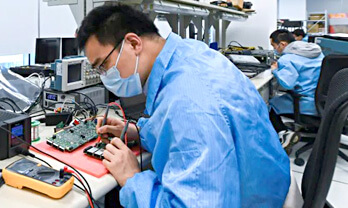
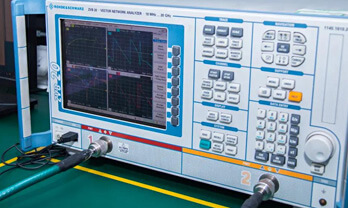
Strict quality inspection builds a solid foundation for electronic component quality.
  1. Visual inspection
  2. Performance testing and reliability verification
  3. Standardized full-process testing
  4. Precise control of every parameter
We eliminate defective components and ensure the stable operation of electronic devices through professional quality standards.

Payment Support

The payment method can be chosen from the methods shown below: Wire Transfer (T/T, Bank Transfer), Western Union, Credit card, PayPal.
  • HKBea
  • Paypal
  • MasterCard
  • Western-Union
  • VISA
Stable Delivery, Sincere Partnership — Your Faithful Supply Chain Partner
  • Efficient Supply Management
  • Cost-Saving Procurement
  • Fast Sourcing & Delivery
Contact us if you have any questions.

Packaging

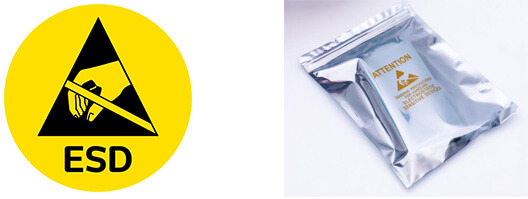
Electrostatic Discharge Protection and Handling

All electrostatic-sensitive components are handled in accordance with electrostatic discharge control procedures. The products are hermetically sealed in anti-static safe packaging to prevent electrostatic damage. Appropriate labeling is also applied for identification and traceability. This ensures product integrity during storage, handling and transportation.


ESD

Certifications & Memberships

Third-party certified, strict quality control. Our certification
  • ISO 9001: 2015
  • ISO 13485: 2016
  • ISO 14001: 2015
  • ISO 28000: 2007
  • ISO 45001: 2018
  • GB/T 27922-2011
  • SMTA
  • IPC
  • ESD
  • PSMA
STMicroelectronics

STM32H742ZIT6

STMicroelectronics
41D-STM32H742ZIT6

Want a better price? Add to Cart and Submit RFQ now, we'll contact you immediately.

0 RFQ
Shopping cart (0 Items)
It is empty.
Compare List (0 Items)
It is empty.
Feedback

Your feedback matters! At Allelco, we value the user experience and strive to improve it constantly.
Please share your comments with us via our feedback form, and we'll respond promptly.
Thank you for choosing Allelco.

Subject
E-mail
Comments
Captcha
Drag or click to upload file
Upload File
types: .xls, .xlsx, .doc, .docx, .jpg, .png and .pdf.
Max file size: 10MB