View All

Please refer to the English Version as our Official Version.Return

Europe
France(Français) Germany(Deutsch) Italy(Italia) Russian(русский) Poland(polski) Czech(Čeština) Luxembourg(Lëtzebuergesch) Netherlands(Nederland) Iceland(íslenska) Hungarian(Magyarország) Spain(español) Portugal(Português) Turkey(Türk dili) Bulgaria(Български език) Ukraine(Україна) Greece(Ελλάδα) Israel(עִבְרִית) Sweden(Svenska) Finland(Svenska) Finland(Suomi) Romania(românesc) Moldova(românesc) Slovakia(Slovenská) Denmark(Dansk) Slovenia(Slovenija) Slovenia(Hrvatska) Croatia(Hrvatska) Serbia(Hrvatska) Montenegro(Hrvatska) Bosnia and Herzegovina(Hrvatska) Lithuania(lietuvių) Spain(Português) Switzerland(Deutsch) United Kingdom(English)
Asia/Pacific
Japan(日本語) Korea(한국의) Thailand(ภาษาไทย) Malaysia(Melayu) Singapore(Melayu) Vietnam(Tiếng Việt) Philippines(Pilipino)
Africa, India and Middle East
United Arab Emirates(العربية) Iran(فارسی) Tajikistan(فارسی) India(हिंदी) Madagascar(malaɡasʲ)
South America / Oceania
New Zealand(Maori) Brazil(Português) Angola(Português) Mozambique(Português)
North America
United States(English) Canada(English) Haiti(Ayiti) Mexico(español)
HomeProductsIntegrated Circuits (ICs)Specialized ICsDF100BA160
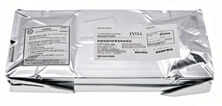
Image may be representation.
See specifications for product details.
EXPRESS OPTION
Payment method

DF100BA160 - SANREX

Manufacturer Part Number
DF100BA160
Manufacturer
Sansha Electric
Allelco Part Number
32D-DF100BA160
Warranty
1 Year Allelco Warranty - Find out more
Stock Status:
8,990 pcs available, New & Original
Parts Description
IGBT Module
Data sheet
-
Category
Integrated Circuits (ICs) > Specialized ICs
RoHs Status
Our certification
In stock: 8990

Required fields are indicated by an asterisk (*)
Please send RFQ, we will respond immediately.

Quantity

Specifications

DF100BA160 Tech Specifications
SANREX - DF100BA160 technical specifications, attributes, parameters and parts with similar specifications to SANREX - DF100BA160

Product Attribute Attribute Value
Part Number DF100BA160
Package -
Description IGBT Module
Stock Condition Get 8990 pcs available quantity at Allelco
Payment PayPal / TT / Credit Card / Western Union
Allelco Certifications ESD / ISO 9001 / ISO 13485 / ISO 28000
Product Attribute Attribute Value
Manufacturer Sansha Electric
RoHs Status -
Warranty 100% Perfect Functions
Transport port Hong Kong
Shipping by DHL / FedEx / UPS / TNT / SF Express
RFQ Email info@allelco.com

Frequently Asked Questions(FAQ)

What is the typical forward voltage drop across the DF100BA160 at a 160 A conduction current, and how does it compare to similar modules in the same power range?
At a conduction current of 160 A, the DF100BA160 exhibits a typical forward voltage drop of approximately 1.2 V under standard junction temperature conditions. This value reflects the combined resistance of the internal semiconductor layers and packaging materials, which directly impacts conduction losses in high-power applications. When compared to competing modules from other manufacturers operating in the same 100–180 A range, such as the Infineon FF1000MX120, the DF100BA160 offers slightly higher on-state losses but benefits from robust mechanical design and thermal integration suitable for industrial environments. The trade-off between switching speed and conduction efficiency must be evaluated based on system-level thermal budget and frequency of operation.
How does the DF100BA160 perform in terms of reverse recovery characteristics during hard-switching conditions, and what implications does this have for EMI and snubber circuit design?
The DF100BA160 features a reverse recovery charge (Qrr) of around 350 µC, which contributes to increased turn-off losses during fast switching transitions. In hard-switching topologies like phase-controlled rectifiers or resonant converters, this results in measurable spikes in drain-source voltage and associated electromagnetic interference. Designers often employ RC snubbers or soft-start control strategies to mitigate ringing and reduce stress on gate drivers. Compared to newer SiC devices, the silicon-based structure of the DF100BA160 inherently lacks zero-recovery behavior, necessitating careful attention to layout parasitics and gate drive impedance to maintain reliability over time.
What are the recommended gate driver parameters for reliable switching of the DF100BA160, and how do pull-down requirements differ from standard IGBTs?
The DF100BA160 requires a negative turn-off gate voltage of -15 V ±10% to ensure full saturation and minimize tail current, while a positive turn-on voltage of +15 V is typically sufficient for efficient activation. Unlike smaller IGBTs that may operate with lower gate voltages, this module’s high input capacitance (approximately 2.1 nF) demands a gate driver capable of sourcing at least 2 A peak current to achieve sub-100 ns turn-on times. The integrated negative clamping in some gate driver ICs helps prevent unintended turn-on due to Miller plateau effects. Without adequate negative bias, the module may exhibit elevated switching losses or even latch-up under dynamic load changes.
Can the DF100BA160 be used in parallel configurations, and what precautions are necessary to ensure current sharing stability?
Yes, the DF100BA160 can be paralleled for applications requiring higher current capacity, such as multi-phase motor drives or solar inverters. However, effective current sharing depends heavily on precise matching of gate timing, thermal coupling, and layout symmetry. Mismatches exceeding 5% in VCE(sat) or gate delay can lead to derating of the entire string. It is strongly advised to use active gate balancing circuits or incorporate emitter resistors with low TCR (temperature coefficient of resistance) to dampen oscillations. Thermal management must also ensure uniform heat dissipation across all units, as localized hot spots can trigger thermal runaway in adjacent devices.
What is the maximum allowable junction temperature for the DF100BA160, and how should cooling systems be designed to meet long-term reliability targets?
The maximum continuous junction temperature for the DF100BA160 is rated at 150°C. To maintain safe operation below this threshold under worst-case ambient conditions, the total thermal resistance from junction to case (Rth(j-c)) must be kept below 0.12 K/W when using standard interface materials. In practice, this translates to a forced-air cooling solution with airflow ≥2 m/s or liquid cooling with a cold plate maintaining case temperature under 85°C during sustained 160 A operation. Thermal simulation tools should account for contact resistances and TIM degradation over time to avoid premature failure due to thermal cycling fatigue.
How does the DF100BA160 compare to the DF90BA170 in terms of switching loss density and suitability for variable-frequency applications?
While both belong to SANREX’s high-current module series, the DF100BA160 exhibits higher conduction losses per ampere than the DF90BA170 due to its larger die size and optimized for steady-state performance rather than dynamic switching. However, its robust short-circuit withstand capability (up to 10 μs at rated voltage) makes it more suitable for grid-tied inverters where fault conditions may occur. In variable-frequency applications such as HVAC compressors or pump drives, the DF90BA170 generally delivers better efficiency at partial loads due to lower Qrr and faster turn-off. The DF100BA160 trades off some switching speed for superior thermal handling and overload resilience, making it preferable in fixed-frequency, high-duty-cycle scenarios.
Is there any derating required when operating the DF100BA160 above 40°C ambient temperature, and how should this be factored into system design calculations?
Yes, derating is essential for the DF100BA160 above 40°C ambient. For every degree Celsius increase beyond this point, the maximum allowable average collector current decreases by approximately 0.8%. At 85°C ambient with moderate cooling, continuous conduction should not exceed 120 A. Designers must therefore either increase heatsink surface area, improve airflow, or reduce modulation depth in PWM strategies. This nonlinear relationship means that simply doubling the airflow does not linearly restore full current capability—thermal modeling using actual Rth values is necessary to avoid undersizing the power stage.
What are the key differences between the DF100BA160 and MOSFET-based alternatives in medium-voltage DC-DC converter applications?
In medium-voltage DC-DC converters operating above 600 V, the DF100BA160 offers significantly lower conduction losses than comparable MOSFET modules due to its bipolar conduction mechanism, despite higher switching losses. Its built-in anti-parallel diode eliminates the need for external freewheeling components, simplifying PCB layout and reducing parasitic inductance. MOSFET alternatives may require external body diodes or Schottky pairs, increasing cost and complexity. However, at switching frequencies above 20 kHz, the DF100BA160’s tail current becomes prohibitive, shifting the advantage back to SiC MOSFETs. The choice hinges on whether the system prioritizes efficiency at low frequency or speed at high frequency.
Are there any known failure modes associated with the DF100BA160 when exposed to repetitive short-circuit events, and how can they be mitigated in safety-critical systems?
The DF100BA160 is designed to withstand up to 10 μs of short-circuit duration at rated collector-emitter voltage without catastrophic failure, thanks to its advanced cell structure and gate control integration. However, repeated exposure to sub-microsecond transients can degrade bond wires and metallization layers over time, leading to increased leakage current and eventual open-circuit failure. Safety-critical systems should implement fast overcurrent detection (<1 μs response) and isolation mechanisms such as optical couplers or galvanic relays to disconnect the module within the safe withstand window. Additionally, monitoring junction temperature via thermocouples or infrared imaging provides early warning signs of degradation.
How does the packaging configuration of the DF100BA160 influence its mounting requirements and compatibility with standard industrial enclosures?
As a fully encapsulated module, the DF100BA160 comes pre-mounted on a direct-bonded copper (DBC) substrate, allowing direct attachment to a heatsink using thermal interface material and mechanical fasteners. This eliminates the need for additional insulating washers or complex assembly procedures, streamlining production and ensuring consistent thermal paths. Its compact footprint fits within standard IP54-rated industrial cabinets when paired with conformal-coated PCBs and proper creepage distances (>2 mm). The absence of exposed leads reduces risk of arcing in humid environments, enhancing long-term field reliability compared to discrete component solutions.
What impact does gate resistor selection have on switching performance and EMI emissions when using the DF100BA160 in a half-bridge configuration?
Gate resistor value plays a critical role in determining the trade-off between switching speed and electromagnetic emissions for the DF100BA160. A lower resistor (e.g., 5 Ω) accelerates turn-on/turn-off, reducing switching losses but increasing di/dt and dv/dt, which can induce noise in nearby traces and violate conducted emission limits. Conversely, a higher resistor (e.g., 15 Ω) dampens oscillations and reduces ringing but increases turn-off time by up to 30%, elevating total energy loss. Optimal values typically fall between 7–10 Ω, depending on layout parasitics and driver strength. Ferrite beads or common-mode chokes may be added at the output stage to suppress high-frequency harmonics generated during switching transients.
Can the DF100BA160 be safely used in renewable energy systems with frequent start-stop cycles, and what design considerations apply?
Yes, the DF100BA160 supports frequent start-stop operations common in photovoltaic string inverters or wind turbine converters, provided that thermal cycling remains within acceptable limits. Each cycle generates cumulative stress on solder joints and wire bonds, so minimizing temperature swing through predictive control algorithms or soft-start routines helps extend lifespan. The module’s robust gate oxide layer resists voltage spikes during startup, but snubber networks remain advisable to clamp inductive kickback from transformer windings or cable inductance. Monitoring case temperature trends during commissioning phases allows engineers to adjust duty cycle profiles and avoid accelerated wear from thermal fatigue.
How does the leakage current of the DF100BA160 behave under high-temperature storage versus operational conditions, and what are the implications for insulation coordination?
Under normal operating conditions up to 125°C case temperature, the DF100BA160 exhibits a leakage current of less than 5 mA at 1200 V collector-emitter voltage. During prolonged storage at elevated temperatures (up to 150°C), minor increases in leakage due to minority carrier injection can occur, though these typically stabilize after initial hours of conditioning. For insulation coordination in high-reliability systems, designers should assume worst-case leakage of 10 mA when calculating creepage and clearance distances per IEC 61800-5-1. This influences PCB spacing, housing materials, and dielectric strength tests, especially in medical or railway applications where electrical safety margins are tightly regulated.
What are the advantages of using the DF100BA160 in traction inverter applications compared to lower-power IGBT modules?
In traction inverters for electric vehicles or industrial locomotives, the DF100BA160 offers higher current density and superior thermal conductivity, enabling smaller system footprints and reduced coolant requirements. Its modular construction simplifies serviceability and redundancy planning, as failed units can be replaced without redesigning the entire power stage. Compared to discrete IGBTs wired in parallel, the integrated package reduces parasitic inductance by up to 50%, improving waveform fidelity and reducing voltage overshoots during regenerative braking. However, the lack of integrated temperature sensors necessitates external sensing points for accurate state-of-health monitoring, adding complexity to diagnostic firmware.
Is the DF100BA160 compatible with standard bootstrap gate drive topologies, and what modifications might be needed for reliable high-side operation?
The DF100BA160 can be driven using bootstrap circuits typical in half-bridge configurations, but special attention must be paid to the minimum off-time requirement to recharge the bootstrap capacitor adequately. Due to its relatively slow turn-off transient, the dead time must exceed 2–3 μs to prevent shoot-through, which reduces available modulation bandwidth. Additionally, the high input capacitance demands a bootstrap diode with low forward voltage drop and fast reverse recovery to maintain gate drive integrity over many cycles. Some designs integrate dedicated negative rail generators to support the required -15 V turn-off, avoiding reliance on passive clamping networks that may drift with temperature.
What environmental testing standards apply to the DF100BA160, and how do results inform real-world deployment in harsh industrial settings?
The DF100BA160 complies with JEDEC JESD22-A104 for thermal cycling (-40°C to +125°C, 1000 cycles) and MIL-STD-883 Method 2005 for humidity exposure, demonstrating minimal change in VCE(sat) and leakage after testing. These qualifications indicate resilience to condensation, thermal shock, and salt fog environments common in offshore wind farms or mining equipment. Field data from similar modules suggests mean time between failures (MTBF) exceeds 100,000 hours under controlled loads, provided that junction temperature stays below 130°C. Engineers deploying the DF100BA160 in remote installations should still include derating factors and periodic visual inspections to detect early signs of delamination or corrosion.

Customer Reviews

Evaluation: 10 Articles

  • Dani***alkerTech
    Jun 1, 2026

    Product works, but setup took more effort than expected. Once configured the MCU ran reliably, although documentation support felt older compared with newer platforms. Fine for maintenance projects.

  • Yuki***aka88
    May 26, 2026

    信号通信プロジェクトでこのRS-485トランシーバーを使用しました。設置は簡単で、長距離ケーブルでも通信は安定していました。消費電力も、以前使用していたものより低くなっています。

  • Stev***aker
    May 20, 2026

    Solid diode for power rectification. Works well in switching circuits.

  • Bran***Lewis
    May 11, 2026

    Compact FPGA with good performance. Suitable for basic signal processing tasks.

  • Oliv***arris
    May 7, 2026

    Reliable I/O expander. Works well in embedded control applications.

  • Jess***Jones
    Apr 17, 2026

    It offers good value for the price, and the specifications match the description. I’ve been using it for two days with no issues, and I’ll definitely buy it again if I need it in the future.

  • Mich***Smith
    Apr 17, 2026

    Shipping was on time, the component pins are neatly aligned, and I tested 10 of them with a multimeter—all readings were within the specified range. Highly recommended.

  • Aman***arris
    Apr 3, 2026

    It was great—the entire process, from placing the order to receiving the package, went very smoothly. The components were consistent, the price was fair, and I had a very pleasant shopping experience.

  • Mike***nch
    Apr 3, 2026

    Better than expected! The resistance and capacitance readings were spot-on, and it passed the test on the first try. The service was reliable, and the packaging was thoughtful—I highly recommend it.

  • Daic***K.
    Mar 23, 2026

    Very good. No issue after long time testing.

Write a Review

Your Email address will not be published.

Shipment

Delivery Time

In-stock items can be shipped within 24 hours. Some parts will be arranged for delivery within 1-2 days from the date all items arrive at our warehouse. And Allelco ships order once a day at about 17:00, except Sunday. Once the goods are shipped, the estimated delivery time depends on the shipping methods and Delivery destination. The table below shows are the logistic time for some common countries.

Delivery Cost

  1. Use your express account for shipment if you have one.
  2. Use our account for the shipment. Refer to the table below for the approximate charges.
(Different time frame / countries / package size has different price.)

Delivery Method

  1. Global Common Shipment by DHL / UPS / FedEx / TNT / EMS / SF we support.
  2. Others more shipping ways, please get in touch with your customer manager.

Common Countries Logistic Time Reference
Region Country Logistic Time(Day)
America United States 5
Brazil 7
Europe Germany 5
United Kingdom 4
Italy 5
Oceania Australia 6
New Zealand 5
Asia India 4
Japan 4
Middle East Israel 6
DHL & FedEx Shipment Charges Reference
Shipment charges(KG) Reference DHL(USD$)
0.00kg-1.00kg USD$30.00 - USD$60.00
1.00kg-2.00kg USD$40.00 - USD$80.00
2.00kg-3.00kg USD$50.00 - USD$100.00
Note:
The above table is for reference only. There may have some data bias for the uncontrollable factors.
Contact us if you have any questions.
  • QC (Quality Warranty)
  • Payment Support
  • Packaging
  • Certifications & Memberships

QC (Quality Warranty)

Allelco is committed to exceeding customer expectations through customer service excellence, order accuracy, and on-time delivery.
This is achieved through our commitment to the continual improvement of our processes, services, and products.


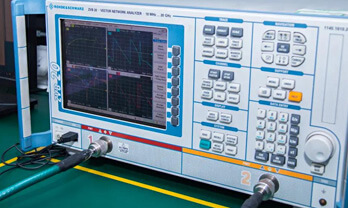
Strict quality inspection builds a solid foundation for electronic component quality.
  1. Visual inspection
  2. Performance testing and reliability verification
  3. Standardized full-process testing
  4. Precise control of every parameter
We eliminate defective components and ensure the stable operation of electronic devices through professional quality standards.

Payment Support

The payment method can be chosen from the methods shown below: Wire Transfer (T/T, Bank Transfer), Western Union, Credit card, PayPal.
  • HKBea
  • Paypal
  • MasterCard
  • Western-Union
  • VISA
Stable Delivery, Sincere Partnership — Your Faithful Supply Chain Partner
  • Efficient Supply Management
  • Cost-Saving Procurement
  • Fast Sourcing & Delivery
Contact us if you have any questions.

Packaging

Electrostatic Discharge Protection and Handling

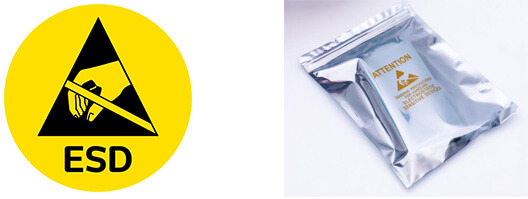
All electrostatic-sensitive components are handled in accordance with electrostatic discharge control procedures. The products are hermetically sealed in anti-static safe packaging to prevent electrostatic damage. Appropriate labeling is also applied for identification and traceability. This ensures product integrity during storage, handling and transportation.


ESD

Certifications & Memberships

Third-party certified, strict quality control. Our certification
  • ISO 9001: 2015
  • ISO 13485: 2016
  • ISO 14001: 2015
  • ISO 28000: 2007
  • ISO 45001: 2018
  • GB/T 27922-2011
  • SMTA
  • IPC
  • ESD
  • PSMA

DF100BA160

SANREX
32D-DF100BA160

Want a better price? Add to Cart and Submit RFQ now, we'll contact you immediately.

0 RFQ
Shopping cart (0 Items)
It is empty.
Compare List (0 Items)
It is empty.
Feedback

Your feedback matters! At Allelco, we value the user experience and strive to improve it constantly.
Please share your comments with us via our feedback form, and we'll respond promptly.
Thank you for choosing Allelco.

Subject
E-mail
Comments
Captcha
Drag or click to upload file
Upload File
types: .xls, .xlsx, .doc, .docx, .jpg, .png and .pdf.
Max file size: 10MB