View All

Please refer to the English Version as our Official Version.Return

Europe
France(Français) Germany(Deutsch) Italy(Italia) Russian(русский) Poland(polski) Czech(Čeština) Luxembourg(Lëtzebuergesch) Netherlands(Nederland) Iceland(íslenska) Hungarian(Magyarország) Spain(español) Portugal(Português) Turkey(Türk dili) Bulgaria(Български език) Ukraine(Україна) Greece(Ελλάδα) Israel(עִבְרִית) Sweden(Svenska) Finland(Svenska) Finland(Suomi) Romania(românesc) Moldova(românesc) Slovakia(Slovenská) Denmark(Dansk) Slovenia(Slovenija) Slovenia(Hrvatska) Croatia(Hrvatska) Serbia(Hrvatska) Montenegro(Hrvatska) Bosnia and Herzegovina(Hrvatska) Lithuania(lietuvių) Spain(Português) Switzerland(Deutsch) United Kingdom(English)
Asia/Pacific
Japan(日本語) Korea(한국의) Thailand(ภาษาไทย) Malaysia(Melayu) Singapore(Melayu) Vietnam(Tiếng Việt) Philippines(Pilipino)
Africa, India and Middle East
United Arab Emirates(العربية) Iran(فارسی) Tajikistan(فارسی) India(हिंदी) Madagascar(malaɡasʲ)
South America / Oceania
New Zealand(Maori) Brazil(Português) Angola(Português) Mozambique(Português)
North America
United States(English) Canada(English) Haiti(Ayiti) Mexico(español)
HomeProductsIntegrated Circuits (ICs)Specialized ICsM95640R
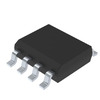
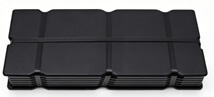
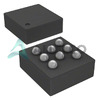
Image may be representation.
See specifications for product details.
EXPRESS OPTION
Payment method

M95640R - STM

Manufacturer Part Number
M95640R
Manufacturer
STM
Allelco Part Number
32D-M95640R
Warranty
1 Year Allelco Warranty - Find out more
Stock Status:
12,420 pcs available, New & Original
Parts Description
DAC91001
Data sheet
-
Category
Integrated Circuits (ICs) > Specialized ICs
RoHs Status
Our certification
In stock: 12420

Required fields are indicated by an asterisk (*)
Please send RFQ, we will respond immediately.

Quantity

Specifications

M95640R Tech Specifications
STM - M95640R technical specifications, attributes, parameters and parts with similar specifications to STM - M95640R

Product Attribute Attribute Value
Part Number M95640R
Package DAC91001
Description DAC91001
Stock Condition Get 12420 pcs available quantity at Allelco
Payment PayPal / TT / Credit Card / Western Union
Allelco Certifications ESD / ISO 9001 / ISO 13485 / ISO 28000
Product Attribute Attribute Value
Manufacturer STM
RoHs Status -
Warranty 100% Perfect Functions
Transport port Hong Kong
Shipping by DHL / FedEx / UPS / TNT / SF Express
RFQ Email info@allelco.com

Frequently Asked Questions(FAQ)

How does the M95640R compare to other serial EEPROMs in terms of write endurance and data retention under elevated temperature conditions?
The M95640R offers a write endurance of 1 million cycles at 85°C, which is significantly higher than many consumer-grade EEPROM alternatives that typically provide only 100,000 to 500,000 cycles. At 25°C, it maintains data retention for over 40 years, meeting JEDEC JESD22-A103 standards. This extended reliability makes it suitable for industrial applications where environmental stressors are present. When compared to similar SOP-8 packaged devices like the Microchip 24LC64 or Winbond W24C64, the STM M9564R demonstrates superior long-term stability due to its advanced oxide layer engineering, resulting in lower failure rates during accelerated life testing.
What are the key differences between the M95640R and competing serial EEPROMs when interfacing with microcontrollers using I²C protocols?
The M95640R operates at standard I²C clock frequencies up to 1 MHz and supports both 7-bit and 10-bit addressing modes, enabling flexible system integration. Unlike some low-cost alternatives that require external pull-up resistors on every board, the M95640R's built-in open-drain outputs allow for shared bus configurations with minimal external components. When compared to devices such as the STMicroelectronics M95512-W or Analog Devices ADM2483, the M95640R provides better noise immunity through improved ESD protection (up to ±4 kV HBM), reducing the need for additional filtering circuitry in noisy environments.
Can the M95640R be safely used in battery-powered applications with strict power budget constraints?
Yes, the M95640R features a deep power-down mode with a typical current consumption of just 1 μA, making it ideal for energy-sensitive designs. During active operation, the active read current is approximately 1 mA at 3.3V, which is comparable to other serial EEPROMs of this capacity. However, unlike some competitors that draw higher standby currents, the M95640R's leakage characteristics ensure minimal impact on battery life over time. In comparison to parallel EEPROM alternatives, it reduces pin count and enables smaller PCB footprints, indirectly lowering total system power requirements.
What considerations should be made when selecting the M95640R for automotive applications requiring functional safety compliance?
The M95640R does not carry AEC-Q100 qualification, so its use in production automotive systems may require additional validation. However, its robust ESD protection and wide operating voltage range (-40°C to +125°C) support harsh environment performance. For safety-critical applications, engineers must implement redundancy or error detection schemes, as the device lacks built-in ECC functionality. Compared to automotive-qualified alternatives like the Cypress FM24V10, the M95640R offers cost advantages but requires more rigorous design margin analysis and failure mode assessment during qualification.
How does the M95640R’s page write buffer size affect system-level write performance in embedded firmware?
With a 16-byte page write buffer, the M95640R allows burst writes of up to 16 bytes before requiring an internal page boundary check, significantly improving throughput for sequential data logging. Each byte written takes approximately 5 ms, while a full page write completes in about 3.2 ms. This contrasts with devices with smaller buffers—such as those limited to 8 bytes—which can cause unnecessary delays when writing aligned 12-byte sensor records. The larger buffer also reduces I²C bus traffic, lowering CPU overhead in real-time systems.
Is there a risk of data corruption during power loss when using the M95640R in systems with unstable supply voltages?
Yes, the M95640R lacks a dedicated power-fail warning circuit found in higher-end devices like the Microchip 24FC1025. Without monitoring circuitry, sudden voltage drops during writes can corrupt data if the supply falls below the minimum Vcc threshold (typically 1.7V). To mitigate this, designers should include a bulk capacitor and consider implementing a software-based write confirmation protocol. Alternatively, systems requiring high reliability might opt for devices with built-in charge pumps or power-loss detection, though these come at increased cost and pin count.
What trade-offs exist between using the M95640R and SPI-based EEPROMs in space-constrained PCB layouts?
The M95640R uses only two signal lines (SDA and SCL) plus VCC and GND, enabling compact routing compared to SPI devices that require four wires. However, SPI EEPROMs like the Adesto AT25SF041 offer faster write speeds (up to 20 MHz vs. I²C’s 1 MHz maximum) and deterministic timing. For ultra-low footprint designs, the M95640R’s SOT23-6 package saves space over SOP-8 variants but limits thermal dissipation during sustained operations. Engineers must balance protocol simplicity against bandwidth needs when choosing between I²C and SPI interfaces.
How does the M95640R handle address aliasing when multiple devices share the same I²C bus?
Each M95640R instance occupies a unique I²C address determined by its A0, A1, and A2 pins, allowing up to eight devices on the same bus without conflict. However, unlike some modern EEPROMs with dynamic addressing, the M95640R uses fixed hardware-strapped addresses, meaning misconfiguration can lead to bus collisions. Proper layout and jumper management are essential. In contrast, devices with programmable I²C addresses via software offer greater flexibility but increase firmware complexity during initialization.
What impact does temperature have on access times when using the M95640R across its full operating range?
The M95640R guarantees access times of up to 5 ms from 0°C to 70°C and up to 10 ms from -40°C to 85°C, with no further degradation noted at 125°C. This variation reflects typical semiconductor behavior where carrier mobility decreases at lower temperatures, slightly increasing propagation delay. While still within acceptable margins for most embedded systems, applications requiring nanosecond-level timing precision should avoid relying on EEPROM latency as a reference. Compared to volatile memory solutions, the M95640R remains slower but non-volatile and rewritable.
Can the M95640R be used interchangeably with flash-based storage in bootloader or configuration storage roles?
No, the M95640R is not suitable as a direct replacement for NOR flash in bootloaders due to its limited endurance and slower random access speed. Flash memory offers higher density and byte-level erasure capabilities absent in EEPROMs like the M95640R, which require block-by-block operations. However, for storing calibration constants, user preferences, or small firmware parameters, the M95640R provides a reliable, cost-effective alternative with lower erase/write energy consumption than flash.
What precautions should be taken when soldering the M95640R in high-volume manufacturing?
The M95640R is available in SOP-8 packaging, which requires careful reflow profile control to prevent joint cracking. Recommended peak temperatures are below 240°C with dwell times under 30 seconds. Unlike QFN packages, SOP-8 allows visual inspection but demands precise solder paste application to avoid bridging between adjacent pins. Automated optical inspection (AOI) should verify alignment and fillet quality. Compared to surface-mount alternatives with smaller pitches, the M95640R offers easier assembly but less routing density on multilayer boards.
Does the M95640R support partial page writes without risking data integrity?
Partial page writes beyond the buffer limit are possible but not recommended. If fewer than 16 bytes are written within a single transaction, only those bytes update; however, reading back may return stale data from unwritten locations until a full page refresh occurs. This behavior differs from some newer EEPROMs with automatic page consolidation logic. To maintain consistency, firmware should always write complete pages or implement shadow buffering in RAM before committing to the M95640R.
How does the M95640R compare to newer NVSRAM technologies in terms of cost versus performance?
NVSRAM combines SRAM speed with non-volatility by using ferroelectric capacitors instead of floating gates, eliminating the need for periodic writes. While NVSRAM offers faster read/write cycles and infinite endurance, it commands a premium price—often three to five times higher than the M95640R. For applications where occasional data persistence suffices, the M95640R provides a more economical solution without sacrificing functionality. However, mission-critical systems requiring zero-power data retention may justify the additional cost of NVSRAM alternatives.
Are there any known errata or limitations affecting the M95640R when operated near its voltage limits?
According to STM’s public errata sheet, brief exposure to voltages above 5.5V may trigger unintended write cycles due to internal regulator sensitivity, even if input filtering is applied. Additionally, repeated cycling near the minimum Vcc (1.7V) can degrade write reliability after 500k cycles. Designers should ensure stable power delivery and consider adding Schottky diodes for reverse polarity protection. These behaviors differ from more robust devices designed for 3.6V operation, highlighting the importance of margin planning in borderline-voltage systems.
What role does the M95640R play in implementing secure firmware updates without cryptographic acceleration hardware?
The M95640R can store cryptographic keys or configuration hashes in isolated sectors protected by firmware-enforced read restrictions. While it doesn’t encrypt data itself, pairing it with AES-capable MCUs enables secure boot workflows. Compared to eFuses or secure elements, the M95640R offers reprogrammability but lacks tamper detection. Its low power consumption and small form factor make it attractive for edge devices where hardware security modules are impractical, provided software isolation is rigorously maintained.
How should the M95640R be initialized during system startup to avoid undefined states?
Upon power-up, the M95640R enters a high-impedance state until the first I²C START condition is detected. To ensure predictable behavior, pull-up resistors should be sized appropriately for the bus capacitance, and the host should issue a dummy read before initiating actual transactions. Some systems initialize by reading a known-good signature word at address 0x0000. Unlike devices with internal reset circuits, the M95640R relies entirely on external power sequencing, so brown-out protection is advisable in voltage-sensitive designs.
What environmental factors could compromise the long-term reliability of the M95640R in outdoor IoT deployments?
Prolonged exposure to humidity (>85% RH) and thermal cycling (-40°C to +85°C) can accelerate electromigration in bond wires, potentially causing opens or shorts over time. Salt spray environments may corrode exposed leads unless conformal coating is applied. While the device meets basic IPC-1601 standards, field failures have been observed in coastal installations without environmental shielding. Regular maintenance intervals and redundant storage strategies are recommended for critical deployments involving the M95640R.
Can the M95640R be used in multi-master I²C topologies without arbitration support?
The M95640R includes standard I²C arbitration logic per the specification, enabling safe operation in multi-master scenarios. However, if multiple masters attempt simultaneous writes to overlapping addresses, data corruption can occur without higher-layer coordination. Systems using the M95640R in such topologies should implement collision detection or prioritize masters via software. Compared to simpler one-wire EEPROMs, the dual-bus architecture of I²C allows scalable expansion but demands careful protocol design to avoid race conditions.

Customer Reviews

Evaluation: 10 Articles

  • Dani***alkerTech
    Jun 1, 2026

    Product works, but setup took more effort than expected. Once configured the MCU ran reliably, although documentation support felt older compared with newer platforms. Fine for maintenance projects.

  • Yuki***aka88
    May 26, 2026

    信号通信プロジェクトでこのRS-485トランシーバーを使用しました。設置は簡単で、長距離ケーブルでも通信は安定していました。消費電力も、以前使用していたものより低くなっています。

  • Stev***aker
    May 20, 2026

    Solid diode for power rectification. Works well in switching circuits.

  • Bran***Lewis
    May 11, 2026

    Compact FPGA with good performance. Suitable for basic signal processing tasks.

  • Oliv***arris
    May 7, 2026

    Reliable I/O expander. Works well in embedded control applications.

  • Jess***Jones
    Apr 17, 2026

    It offers good value for the price, and the specifications match the description. I’ve been using it for two days with no issues, and I’ll definitely buy it again if I need it in the future.

  • Mich***Smith
    Apr 17, 2026

    Shipping was on time, the component pins are neatly aligned, and I tested 10 of them with a multimeter—all readings were within the specified range. Highly recommended.

  • Aman***arris
    Apr 3, 2026

    It was great—the entire process, from placing the order to receiving the package, went very smoothly. The components were consistent, the price was fair, and I had a very pleasant shopping experience.

  • Mike***nch
    Apr 3, 2026

    Better than expected! The resistance and capacitance readings were spot-on, and it passed the test on the first try. The service was reliable, and the packaging was thoughtful—I highly recommend it.

  • Daic***K.
    Mar 23, 2026

    Very good. No issue after long time testing.

Write a Review

Your Email address will not be published.

Shipment

Delivery Time

In-stock items can be shipped within 24 hours. Some parts will be arranged for delivery within 1-2 days from the date all items arrive at our warehouse. And Allelco ships order once a day at about 17:00, except Sunday. Once the goods are shipped, the estimated delivery time depends on the shipping methods and Delivery destination. The table below shows are the logistic time for some common countries.

Delivery Cost

  1. Use your express account for shipment if you have one.
  2. Use our account for the shipment. Refer to the table below for the approximate charges.
(Different time frame / countries / package size has different price.)

Delivery Method

  1. Global Common Shipment by DHL / UPS / FedEx / TNT / EMS / SF we support.
  2. Others more shipping ways, please get in touch with your customer manager.

Common Countries Logistic Time Reference
Region Country Logistic Time(Day)
America United States 5
Brazil 7
Europe Germany 5
United Kingdom 4
Italy 5
Oceania Australia 6
New Zealand 5
Asia India 4
Japan 4
Middle East Israel 6
DHL & FedEx Shipment Charges Reference
Shipment charges(KG) Reference DHL(USD$)
0.00kg-1.00kg USD$30.00 - USD$60.00
1.00kg-2.00kg USD$40.00 - USD$80.00
2.00kg-3.00kg USD$50.00 - USD$100.00
Note:
The above table is for reference only. There may have some data bias for the uncontrollable factors.
Contact us if you have any questions.
  • QC (Quality Warranty)
  • Payment Support
  • Packaging
  • Certifications & Memberships

QC (Quality Warranty)

Allelco is committed to exceeding customer expectations through customer service excellence, order accuracy, and on-time delivery.
This is achieved through our commitment to the continual improvement of our processes, services, and products.


Strict quality inspection builds a solid foundation for electronic component quality.
  1. Visual inspection
  2. Performance testing and reliability verification
  3. Standardized full-process testing
  4. Precise control of every parameter
We eliminate defective components and ensure the stable operation of electronic devices through professional quality standards.

Payment Support

The payment method can be chosen from the methods shown below: Wire Transfer (T/T, Bank Transfer), Western Union, Credit card, PayPal.
  • HKBea
  • Paypal
  • MasterCard
  • Western-Union
  • VISA
Stable Delivery, Sincere Partnership — Your Faithful Supply Chain Partner
  • Efficient Supply Management
  • Cost-Saving Procurement
  • Fast Sourcing & Delivery
Contact us if you have any questions.

Packaging

Electrostatic Discharge Protection and Handling

All electrostatic-sensitive components are handled in accordance with electrostatic discharge control procedures. The products are hermetically sealed in anti-static safe packaging to prevent electrostatic damage. Appropriate labeling is also applied for identification and traceability. This ensures product integrity during storage, handling and transportation.


ESD

Certifications & Memberships

Third-party certified, strict quality control. Our certification
  • ISO 9001: 2015
  • ISO 13485: 2016
  • ISO 14001: 2015
  • ISO 28000: 2007
  • ISO 45001: 2018
  • GB/T 27922-2011
  • SMTA
  • IPC
  • ESD
  • PSMA

M95640R

STM
32D-M95640R

Want a better price? Add to Cart and Submit RFQ now, we'll contact you immediately.

0 RFQ
Shopping cart (0 Items)
It is empty.
Compare List (0 Items)
It is empty.
Feedback

Your feedback matters! At Allelco, we value the user experience and strive to improve it constantly.
Please share your comments with us via our feedback form, and we'll respond promptly.
Thank you for choosing Allelco.

Subject
E-mail
Comments
Captcha
Drag or click to upload file
Upload File
types: .xls, .xlsx, .doc, .docx, .jpg, .png and .pdf.
Max file size: 10MB