View All

Please refer to the English Version as our Official Version.Return

Europe
France(Français) Germany(Deutsch) Italy(Italia) Russian(русский) Poland(polski) Czech(Čeština) Luxembourg(Lëtzebuergesch) Netherlands(Nederland) Iceland(íslenska) Hungarian(Magyarország) Spain(español) Portugal(Português) Turkey(Türk dili) Bulgaria(Български език) Ukraine(Україна) Greece(Ελλάδα) Israel(עִבְרִית) Sweden(Svenska) Finland(Svenska) Finland(Suomi) Romania(românesc) Moldova(românesc) Slovakia(Slovenská) Denmark(Dansk) Slovenia(Slovenija) Slovenia(Hrvatska) Croatia(Hrvatska) Serbia(Hrvatska) Montenegro(Hrvatska) Bosnia and Herzegovina(Hrvatska) Lithuania(lietuvių) Spain(Português) Switzerland(Deutsch) United Kingdom(English)
Asia/Pacific
Japan(日本語) Korea(한국의) Thailand(ภาษาไทย) Malaysia(Melayu) Singapore(Melayu) Vietnam(Tiếng Việt) Philippines(Pilipino)
Africa, India and Middle East
United Arab Emirates(العربية) Iran(فارسی) Tajikistan(فارسی) India(हिंदी) Madagascar(malaɡasʲ)
South America / Oceania
New Zealand(Maori) Brazil(Português) Angola(Português) Mozambique(Português)
North America
United States(English) Canada(English) Haiti(Ayiti) Mexico(español)
HomeProductsIntegrated Circuits (ICs)Specialized ICsSKT10/12E
Image may be representation.
See specifications for product details.
EXPRESS OPTION
Payment method

SKT10/12E - SEMIKRON

Manufacturer Part Number
SKT10/12E
Manufacturer
SEMIKRON
Allelco Part Number
32D-SKT10/12E
Warranty
1 Year Allelco Warranty - Find out more
Stock Status:
5,250 pcs available, New & Original
Parts Description
IGBT Module
Data sheet
-
Category
Integrated Circuits (ICs) > Specialized ICs
RoHs Status
Our certification
In stock: 5250

Required fields are indicated by an asterisk (*)
Please send RFQ, we will respond immediately.

Quantity

Specifications

SKT10/12E Tech Specifications
SEMIKRON - SKT10/12E technical specifications, attributes, parameters and parts with similar specifications to SEMIKRON - SKT10/12E

Product Attribute Attribute Value
Part Number SKT10/12E
Package -
Description IGBT Module
Stock Condition Get 5250 pcs available quantity at Allelco
Payment PayPal / TT / Credit Card / Western Union
Allelco Certifications ESD / ISO 9001 / ISO 13485 / ISO 28000
Product Attribute Attribute Value
Manufacturer SEMIKRON
RoHs Status -
Warranty 100% Perfect Functions
Transport port Hong Kong
Shipping by DHL / FedEx / UPS / TNT / SF Express
RFQ Email info@allelco.com

Frequently Asked Questions(FAQ)

How does the thermal performance of the SKT10/12E compare when operating at full load versus partial load conditions, and what are the implications for heatsink selection in a 400V DC bus inverter application?
The SKT10/12E, a SEMIKRON module rated for 10A continuous current and 1200V blocking voltage, exhibits a junction-to-case thermal resistance (Rth_JC) typically around 0.8°C/W under steady-state conditions. At full load (10A), power dissipation reaches approximately 15–20W depending on switching frequency and bus voltage, necessitating a low thermal resistance interface with an adequately sized heatsink to maintain junction temperature below 125°C. In contrast, at 50% load (5A), conduction losses drop by roughly 75%, resulting in significantly lower thermal stress and allowing for a smaller or more passive cooling solution. However, switching losses remain a concern at higher frequencies regardless of load, so total system efficiency must be evaluated over the entire operating profile. For a 400V DC bus inverter, derating the module to 80% of rated current improves reliability and reduces thermal cycling.
What gate drive requirements should be considered when using the SKT10/12E in a high-frequency switching application, and how do these impact the choice of driver IC versus discrete implementation?
The SKT10/12E is designed for robust gate control with a typical gate-emitter threshold voltage (VGE(th)) of 5–6V. To ensure fast turn-on and minimize switching losses, especially in high dv/dt environments common in 400V systems, a dedicated gate driver such as the SEMIKRON SKHI series is recommended. Discrete gate resistors must be carefully selected—values between 5–15Ω help dampen oscillations without excessively slowing turn-off. Compared to a generic op-amp-based driver, a purpose-built isolated driver offers better noise immunity, precise timing, and integrated protection features like desaturation detection, which is critical for preventing secondary breakdown in the SKT10/12E during fault transients.
Is it feasible to parallel multiple SKT10/12E modules for increased current capacity in a three-phase motor drive, and what design challenges must be addressed to achieve balanced current sharing?
While paralleling SKT10/12E modules can theoretically increase current handling, it introduces significant challenges due to their inherent parameter mismatches—such as VCE(sat), gate charge (Qg), and junction capacitance. Without active current balancing circuitry, even minor variations can cause one module to carry disproportionate current, leading to localized heating and reduced lifespan. Passive balancing via emitter/source resistors (typically 0.1–0.5Ω) may provide marginal improvement but is often insufficient above 20A per leg. Additionally, parasitic inductance differences in layout can exacerbate dynamic imbalance during turn-on/off transitions. For reliable operation, a single higher-current module or a different topology with matched devices should be preferred over paralleled SKT10/12Es unless stringent redundancy and scalability requirements justify the added complexity.
How does the reverse recovery behavior of the freewheeling diode integrated in the SKT10/12E affect snubber circuit design in inductive load switching applications?
The SKT10/12E contains a built-in PN diode with a typical reverse recovery charge (Qrr) of 1.2–1.8µC and a softness factor (IRRM/Qrr) indicating moderately fast switching characteristics. This results in relatively high di/dt during commutation of inductive loads, generating voltage spikes that demand effective snubber networks. A simple RC snubber across each phase leg may suffice for low-frequency (<10kHz) operation, but at higher frequencies, energy dissipation becomes excessive. Alternatively, active clamping or RCD snubbers tuned to dampen ringing while minimizing loss offer better efficiency. The diode’s soft recovery also reduces electromagnetic interference compared to hard-switching diodes, but careful PCB layout remains essential to manage loop inductance and prevent false triggering due to ground bounce.
What derating guidelines should be applied to the SKT10/12E when used in ambient temperatures exceeding 40°C, and how does this influence long-term reliability in industrial automation environments?
SEMIKRON specifies a maximum case temperature (TC) of 125°C for the SKT10/12E, with a typical power derating curve showing a linear reduction beyond 80°C case temperature. In an environment where the heatsink operates at 60°C, continuous current should not exceed 9A; at 70°C case temp, cap it at 7.5A. For ambient temperatures above 40°C, additional margin—typically 10–20%—should be allocated to account for dust accumulation, airflow variability, and seasonal fluctuations. In industrial settings with frequent start/stop cycles, thermal fatigue accelerates with higher delta-T across the module. Therefore, maintaining junction temperature excursions below 50°C during transient events enhances MTBF. Using thermal interface materials with <0.15°C/W thermal impedance and ensuring unobstructed airflow over the heatsink are practical steps to preserve reliability.
Can the SKT10/12E be safely operated near its maximum blocking voltage under transient conditions such as lightning strikes or capacitor discharge, and what protective measures are necessary?
The SKT10/12E has a guaranteed non-repetitive peak off-state voltage (VDSM) of 1800V, providing some margin above its rated 1200V. However, this rating applies only to brief, non-repetitive transients lasting less than 10ms. Exposure to repeated or prolonged overvoltages—such as those from inductive kickback or grid surges—can degrade the device through cumulative damage to the silicon structure. To protect against such events, external snubbers, TVS diodes, or RC networks should be placed close to the module inputs. Additionally, proper creepage and clearance distances (>8mm per IEC 60664-1 for 1200V) must be maintained on the PCB. Monitoring VCE during turn-off with a Kelvin probe can detect early signs of avalanche degradation, enabling predictive maintenance.
What are the key differences between the SKT10/12E and alternative modules like the SEMIKRON SKM50GB123D in terms of package construction and suitability for high-power density designs?
Unlike the compact press-pack or screw-terminal SKM50GB123D, the SKT10/12E employs a bolted module design optimized for moderate power levels with ease of assembly and serviceability. The SKT10/12E uses a ceramic substrate (Al2O3 or AlN) with direct copper bonding, offering good thermal conductivity but limited integration density. In contrast, the SKM50GB123D features a larger footprint and higher current capability (50A vs. 10A), making it more appropriate for kilowatt-range inverters. The SKT10/12E’s simpler construction makes it preferable for prototyping and lower-volume applications where cost and flexibility outweigh absolute size constraints. However, for high-power density systems requiring forced air cooling and high reliability under vibration, the SKM series may offer superior mechanical robustness despite higher BOM cost.
How does the gate capacitance (Ciss, Coss, Crss) of the SKT10/12E influence switching speed optimization in a resonant LLC converter topology?
The input capacitance (Ciss ≈ 1200pF) and output capacitance (Coss ≈ 650pF) of the SKT10/12E define the energy required to charge and discharge the gate during switching. In a resonant LLC converter operating near resonance, minimizing turn-on delay reduces circulating current and improves efficiency. Driving the gate with sufficient peak current (e.g., 2–3A) enables faster rise times (<100ns), which lowers overlap between voltage and current during switching—reducing conduction and switching losses. However, excessive gate slew rate increases EMI due to high di/dt. A trade-off exists between efficiency gains and noise compliance. Matching the gate driver’s source/sink capability to the module’s Qg (~150nC) ensures symmetrical switching, which is critical in half-bridge configurations where shoot-through must be avoided.
Are there any known limitations regarding the use of the SKT10/12E in bidirectional power flow applications such as regenerative braking systems?
The SKT10/12E supports bidirectional current flow through both the main switch and internal diode, enabling full bridge rectification or inversion. However, its symmetric turn-on/turn-off characteristics are asymmetric due to differing gate drive requirements for n-channel IGBTs in forward and reverse modes. Reverse conduction occurs primarily through the diode path, which has higher forward voltage drop and slower recovery than the IGBT mode. In regenerative systems, this leads to increased losses during freewheeling phases. Additionally, negative gate pulses must be sufficiently deep (–5V to –15V) to ensure complete turn-off, particularly at elevated temperatures where leakage currents rise. Proper dead-time management and shoot-through prevention logic in the controller are essential to avoid damaging the module during mode transitions.
What environmental and mounting considerations should be taken into account when integrating the SKT10/12E into a sealed enclosure for outdoor photovoltaic inverters?
Operating the SKT10/12E in a sealed enclosure demands careful attention to thermal management. Since convection cooling is restricted, natural conduction through the heatsink baseplate becomes primary. Mounting torque must be within SEMIKRON’s specified range (typically 2–3 Nm) to ensure optimal contact pressure and avoid cracking the ceramic substrate. Thermal grease with dielectric properties and low viscosity should be used sparingly to fill micro-gaps without bridging adjacent terminals. Ambient humidity above 90% RH risks condensation if temperature drops below dew point, potentially causing arcing across creepage paths. Applying conformal coating to non-heat-spreading areas can mitigate this, but care must be taken to avoid insulating the heatsink interface. Periodic inspection for oxidation or corrosion at bolt joints is advisable in coastal or industrial environments.
How does the SKT10/12E perform under repetitive short-circuit conditions, and what fault detection mechanisms should be implemented to prevent catastrophic failure?
The SKT10/12E includes an integrated desaturation (DESAT) detection pin capable of identifying overcurrent events within 5–10µs after a short-circuit occurs. Upon detection, the gate signal is immediately disabled, allowing the device to transition to safe shutdown mode before thermal runaway ensues. However, the DESAT circuit has a minimum holding time (~10µs) during which the module cannot reactivate until reset externally. This limits automatic restart capability and necessitates a controller with fault-latching logic. In practice, sustained short circuits still generate extreme heat; therefore, current-limiting fuses or fast-acting circuit breakers upstream are recommended. Monitoring collector-emitter saturation voltage (VCE(sat)) trends can also serve as an early warning indicator of increasing losses due to aging or contamination.
What is the expected lifetime of the SKT10/12E under typical switching conditions, and how do parameters like switching frequency and load cycle affect endurance?
Based on Arrhenius models and SEMIKRON’s reliability data, the SKT10/12E is projected to exceed 100,000 hours of operation at 25kHz switching frequency and 80% load with proper thermal management. Each doubling of switching frequency typically halves the estimated lifetime due to increased thermal cycling and electromigration. Similarly, frequent load transients induce mechanical stress at the wire bonds and solder joints, accelerating fatigue. Operating above 15kHz in variable-speed drives significantly reduces MTBF unless active cooling maintains low ΔT. For applications with infrequent switching (e.g., battery chargers), lifetime extends considerably. Regular monitoring of junction temperature ripple and periodic inspection for solder joint cracking can further extend usable life beyond datasheet projections.
How does the SKT10/12E compare to MOSFET-based solutions in terms of conduction and switching losses for PWM motor control at 20kHz?
At 20kHz and 400V bus voltage, the SKT10/12E exhibits lower conduction losses than comparable MOSFETs at 10A due to its bipolar conduction mechanism, but higher switching losses arise from tail current during turn-off. In contrast, Si MOSFETs like the Infineon IKW40N65EH5 show negligible tail current but suffer from higher on-resistance (RDS(on) ~0.3Ω vs. VCE(sat) ~1.8V at 10A). For hard-switched topologies, the MOSFET generally offers better efficiency above 15kW. However, the SKT10/12E remains competitive in medium-power applications where simplicity, ruggedness, and lower gate drive power outweigh absolute efficiency. Soft-switching techniques or SiC alternatives may be preferable if minimizing losses is paramount.
What precautions should be observed when storing or shipping the SKT10/12E to prevent electrostatic discharge (ESD) damage, especially given its ceramic construction?
Although IGBTs like the SKT10/12E are less vulnerable to ESD than MOSFETs, the fragile ceramic substrate and sensitive bond wires still require careful handling. Storage in anti-static bags with conductive foam is mandatory. Avoid exposing the module to voltages above 100V static potential, particularly during manual soldering or probing. Before installation, ensure all tools and workstations are properly grounded. The module should be mounted only after power supplies are disconnected and capacitors fully discharged. Handling by the baseplate—not the pins—prevents mechanical stress that could compromise internal integrity. Following JEDEC JESD22-A114 standards for HBM ESD testing helps validate robustness in production environments.
Can the SKT10/12E be used in conjunction with optocouplers for gate isolation in safety-critical systems, and what latency considerations apply?
Yes, optocouplers such as the HCPL-316J or ACPL-P347 can drive the SKT10/12E’s gate while providing electrical isolation up to several kilovolts. These devices typically introduce propagation delays of 1–3µs, which must be compensated in PWM timing algorithms to maintain accurate duty cycle delivery. Additionally, asymmetric turn-on/turn-off delays require separate pull-up/pull-down resistors and possibly adjustable dead time in the firmware. For high-side drivers, bootstrap circuits or isolated supplies add complexity. While acceptable for many industrial applications, optocouplers degrade over time due to LED aging, reducing CTR and increasing skew. Digital isolators with higher bandwidth and longer lifetime may offer superior performance in demanding control loops.
What impact does moisture absorption have on the SKT10/12E during high-temperature operation, and how does this affect conformal coating choices?
The ceramic substrate of the SKT10/12E resists moisture ingress effectively, but organic materials in the encapsulant or PCB laminate can absorb humidity, leading to popcorning during rapid heating (e.g., reflow soldering or thermal shock). During operation, absorbed moisture vaporizes at high temperatures, causing internal pressure buildup and delamination. Selecting conformal coatings with low water vapor permeability—such as acrylic or parylene—is advisable. However, thick coatings over large surface areas can impede heat transfer and trap moisture near the junction. Application should avoid covering the heatsink interface or terminal regions. Pre-baking the module before coating and using nitrogen purging during cure processes minimizes residual stress and enhances adhesion.
How does the SKT10/12E behave under partial discharge conditions, and what insulation design practices are recommended for 1200V DC-link applications?
Partial discharge in the SKT10/12E arises mainly from surface tracking along contaminated or humid interfaces. At 1200V, creeping distances must exceed 8mm on the PCB according to IEC 60664-1. Using slotting, barriers, or creepage-enhancing substrates helps mitigate risk. The module’s internal insulation withstands partial discharges up to 1.8kV RMS for 60 seconds, but repeated events accelerate degradation. Maintaining clean contacts and avoiding conductive debris near high-voltage nodes prevents initiation sites. In DC-link applications, ripple voltage and fast transients can excite parasitic capacitances, increasing displacement currents. Snubbing these with appropriately rated capacitors (X7R or NP0 dielectrics) reduces stress. Regular insulation resistance testing (>1GΩ at 500VDC) provides early indication of contamination or aging.
What are the recommended practices for validating the thermal model of a system using the SKT10/12E, including simulation vs. empirical measurement approaches?
Validating thermal performance begins with extracting accurate Rth values from the datasheet (junction-to-case, case-to-sink, sink-to-ambient) and incorporating them into finite-element analysis (FEA) tools like ANSYS Icepak or COMSOL. Simulations predict hotspot locations and temperature gradients but often overestimate performance due to idealized boundary conditions. Empirical validation requires infrared thermography or thermocouples attached directly to the heatsink and baseplate under actual load profiles. Power cycling tests reveal thermal impedance transients and hysteresis effects not captured in steady-state models. Comparing simulated junction temperature rise against measured values allows calibration of interface resistances and convection coefficients. Iterative refinement ensures reliable prediction of worst-case operating points, especially in compact enclosures with restricted airflow where local hotspots may develop unexpectedly.

Customer Reviews

Evaluation: 10 Articles

  • Dani***alkerTech
    Jun 1, 2026

    Product works, but setup took more effort than expected. Once configured the MCU ran reliably, although documentation support felt older compared with newer platforms. Fine for maintenance projects.

  • Yuki***aka88
    May 26, 2026

    信号通信プロジェクトでこのRS-485トランシーバーを使用しました。設置は簡単で、長距離ケーブルでも通信は安定していました。消費電力も、以前使用していたものより低くなっています。

  • Stev***aker
    May 20, 2026

    Solid diode for power rectification. Works well in switching circuits.

  • Bran***Lewis
    May 11, 2026

    Compact FPGA with good performance. Suitable for basic signal processing tasks.

  • Oliv***arris
    May 7, 2026

    Reliable I/O expander. Works well in embedded control applications.

  • Jess***Jones
    Apr 17, 2026

    It offers good value for the price, and the specifications match the description. I’ve been using it for two days with no issues, and I’ll definitely buy it again if I need it in the future.

  • Mich***Smith
    Apr 17, 2026

    Shipping was on time, the component pins are neatly aligned, and I tested 10 of them with a multimeter—all readings were within the specified range. Highly recommended.

  • Aman***arris
    Apr 3, 2026

    It was great—the entire process, from placing the order to receiving the package, went very smoothly. The components were consistent, the price was fair, and I had a very pleasant shopping experience.

  • Mike***nch
    Apr 3, 2026

    Better than expected! The resistance and capacitance readings were spot-on, and it passed the test on the first try. The service was reliable, and the packaging was thoughtful—I highly recommend it.

  • Daic***K.
    Mar 23, 2026

    Very good. No issue after long time testing.

Write a Review

Your Email address will not be published.

Shipment

Delivery Time

In-stock items can be shipped within 24 hours. Some parts will be arranged for delivery within 1-2 days from the date all items arrive at our warehouse. And Allelco ships order once a day at about 17:00, except Sunday. Once the goods are shipped, the estimated delivery time depends on the shipping methods and Delivery destination. The table below shows are the logistic time for some common countries.

Delivery Cost

  1. Use your express account for shipment if you have one.
  2. Use our account for the shipment. Refer to the table below for the approximate charges.
(Different time frame / countries / package size has different price.)

Delivery Method

  1. Global Common Shipment by DHL / UPS / FedEx / TNT / EMS / SF we support.
  2. Others more shipping ways, please get in touch with your customer manager.

Common Countries Logistic Time Reference
Region Country Logistic Time(Day)
America United States 5
Brazil 7
Europe Germany 5
United Kingdom 4
Italy 5
Oceania Australia 6
New Zealand 5
Asia India 4
Japan 4
Middle East Israel 6
DHL & FedEx Shipment Charges Reference
Shipment charges(KG) Reference DHL(USD$)
0.00kg-1.00kg USD$30.00 - USD$60.00
1.00kg-2.00kg USD$40.00 - USD$80.00
2.00kg-3.00kg USD$50.00 - USD$100.00
Note:
The above table is for reference only. There may have some data bias for the uncontrollable factors.
Contact us if you have any questions.
  • QC (Quality Warranty)
  • Payment Support
  • Packaging
  • Certifications & Memberships

QC (Quality Warranty)

Allelco is committed to exceeding customer expectations through customer service excellence, order accuracy, and on-time delivery.
This is achieved through our commitment to the continual improvement of our processes, services, and products.


Strict quality inspection builds a solid foundation for electronic component quality.
  1. Visual inspection
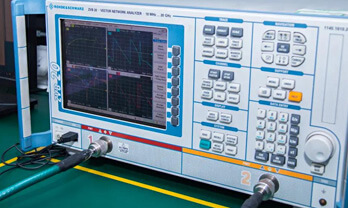
  2. Performance testing and reliability verification
  3. Standardized full-process testing
  4. Precise control of every parameter
We eliminate defective components and ensure the stable operation of electronic devices through professional quality standards.

Payment Support

The payment method can be chosen from the methods shown below: Wire Transfer (T/T, Bank Transfer), Western Union, Credit card, PayPal.
  • HKBea
  • Paypal
  • MasterCard
  • Western-Union
  • VISA
Stable Delivery, Sincere Partnership — Your Faithful Supply Chain Partner
  • Efficient Supply Management
  • Cost-Saving Procurement
  • Fast Sourcing & Delivery
Contact us if you have any questions.

Packaging

Electrostatic Discharge Protection and Handling

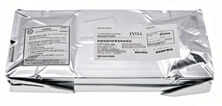
All electrostatic-sensitive components are handled in accordance with electrostatic discharge control procedures. The products are hermetically sealed in anti-static safe packaging to prevent electrostatic damage. Appropriate labeling is also applied for identification and traceability. This ensures product integrity during storage, handling and transportation.


ESD

Certifications & Memberships

Third-party certified, strict quality control. Our certification
  • ISO 9001: 2015
  • ISO 13485: 2016
  • ISO 14001: 2015
  • ISO 28000: 2007
  • ISO 45001: 2018
  • GB/T 27922-2011
  • SMTA
  • IPC
  • ESD
  • PSMA

SKT10/12E

SEMIKRON
32D-SKT10/12E

Want a better price? Add to Cart and Submit RFQ now, we'll contact you immediately.

0 RFQ
Shopping cart (0 Items)
It is empty.
Compare List (0 Items)
It is empty.
Feedback

Your feedback matters! At Allelco, we value the user experience and strive to improve it constantly.
Please share your comments with us via our feedback form, and we'll respond promptly.
Thank you for choosing Allelco.

Subject
E-mail
Comments
Captcha
Drag or click to upload file
Upload File
types: .xls, .xlsx, .doc, .docx, .jpg, .png and .pdf.
Max file size: 10MB