View All

Please refer to the English Version as our Official Version.Return

Europe
France(Français) Germany(Deutsch) Italy(Italia) Russian(русский) Poland(polski) Czech(Čeština) Luxembourg(Lëtzebuergesch) Netherlands(Nederland) Iceland(íslenska) Hungarian(Magyarország) Spain(español) Portugal(Português) Turkey(Türk dili) Bulgaria(Български език) Ukraine(Україна) Greece(Ελλάδα) Israel(עִבְרִית) Sweden(Svenska) Finland(Svenska) Finland(Suomi) Romania(românesc) Moldova(românesc) Slovakia(Slovenská) Denmark(Dansk) Slovenia(Slovenija) Slovenia(Hrvatska) Croatia(Hrvatska) Serbia(Hrvatska) Montenegro(Hrvatska) Bosnia and Herzegovina(Hrvatska) Lithuania(lietuvių) Spain(Português) Switzerland(Deutsch) United Kingdom(English)
Asia/Pacific
Japan(日本語) Korea(한국의) Thailand(ภาษาไทย) Malaysia(Melayu) Singapore(Melayu) Vietnam(Tiếng Việt) Philippines(Pilipino)
Africa, India and Middle East
United Arab Emirates(العربية) Iran(فارسی) Tajikistan(فارسی) India(हिंदी) Madagascar(malaɡasʲ)
South America / Oceania
New Zealand(Maori) Brazil(Português) Angola(Português) Mozambique(Português)
North America
United States(English) Canada(English) Haiti(Ayiti) Mexico(español)
HomeProductsIntegrated Circuits (ICs)Specialized ICsSP231AET
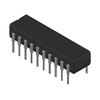
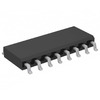
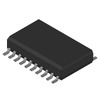
Image may be representation.
See specifications for product details.
EXPRESS OPTION
Payment method

SP231AET - SIPEX

Manufacturer Part Number
SP231AET
Manufacturer
SIPEX
Allelco Part Number
32D-SP231AET
Warranty
1 Year Allelco Warranty - Find out more
Stock Status:
3,610 pcs available, New & Original
Parts Description
DAC91001
Data sheet
-
Category
Integrated Circuits (ICs) > Specialized ICs
RoHs Status
Our certification
In stock: 3610

Required fields are indicated by an asterisk (*)
Please send RFQ, we will respond immediately.

Quantity

Specifications

SP231AET Tech Specifications
SIPEX - SP231AET technical specifications, attributes, parameters and parts with similar specifications to SIPEX - SP231AET

Product Attribute Attribute Value
Part Number SP231AET
Package DAC91001
Description DAC91001
Stock Condition Get 3610 pcs available quantity at Allelco
Payment PayPal / TT / Credit Card / Western Union
Allelco Certifications ESD / ISO 9001 / ISO 13485 / ISO 28000
Product Attribute Attribute Value
Manufacturer SIPEX
RoHs Status -
Warranty 100% Perfect Functions
Transport port Hong Kong
Shipping by DHL / FedEx / UPS / TNT / SF Express
RFQ Email info@allelco.com

Frequently Asked Questions(FAQ)

How does the SP231AET's operating temperature range impact reliability in industrial control systems, and what derating practices should be considered for long-term operation above 85°C ambient?
The SP231AET is specified for operation across a broad junction temperature range, which allows deployment in environments typical of industrial automation equipment. However, sustained exposure to high ambient temperatures—particularly above 85°C—can accelerate degradation of internal passivation layers and increase electromigration risk in bond wires, especially under continuous full-load conditions. Designers should apply conservative derating by limiting maximum power dissipation through heatsinking or airflow management, and by avoiding prolonged periods at peak current output. Thermal resistance from junction to ambient must be factored into layout decisions, as inadequate PCB copper area can elevate die temperature significantly during transient loads. In high-reliability applications, monitoring junction temperature via external sensors and implementing thermal shutdown logic may further enhance robustness.
What are the key differences between the SP230 and SP231 series in terms of ESD protection levels and clamping performance, and how do these affect board-level immunity in automotive sensor interfaces?
While both the SP230 and SP231 series target low-voltage communication lines, the SP231AET typically features higher integrated ESD protection levels, often rated to ±15 kV contact discharge per IEC 61000-4-2, compared to the SP230’s more modest ±8 kV capability. This difference arises from enhanced internal TVS diode structures and improved parasitic capacitance matching in the SP231 family. For automotive sensor interfaces exposed to electrostatic events near connectors or human handling, the SP231AET provides superior transient immunity without requiring external protection devices. Its lower clamping voltage under surge conditions also reduces stress on downstream ICs, making it preferable for CAN bus, LIN, or LIN-flexray nodes where space and cost are constrained.
Can the SP231AET be used in bidirectional UART communication links without additional signal conditioning, and what limitations exist regarding propagation delay and skew?
Yes, the SP231AET supports bidirectional UART signaling with built-in direction control, eliminating the need for discrete FET-based switching circuits. However, its propagation delay asymmetry—typically around 10–20 ns between rising and falling edges—can introduce timing skew in multi-drop configurations or high-speed protocols exceeding 1 Mbps. In such cases, careful PCB trace length matching and controlled impedance routing become essential to maintain signal integrity. Additionally, the device’s input threshold levels are optimized for 3.3 V logic families; interfacing with 5 V microcontrollers may require level shifting unless the target MCU tolerates 3.3 V inputs. Designers should verify compatibility using oscilloscope measurements of edge rates and eye diagrams if data rates exceed 500 kbps.
What layout considerations are critical when placing the SP231AET near sensitive analog circuitry to prevent digital noise coupling, and how does its package influence grounding strategy?
The SOT23-6 package of the SP231AET features multiple ground pins, which must be connected directly to the system’s analog ground plane to minimize return path inductance and suppress ground bounce. A common pitfall is splitting the ground plane under the component, which creates loop antennas that couple switching noise from digital drivers into adjacent analog traces. Instead, use a solid ground pour beneath the device and connect all ground pads via multiple vias to ensure low-impedance return paths. Keep high-current digital traces (e.g., TX/RX lines) routed away from analog inputs, and place decoupling capacitors as close as possible to the VCC and GND pins to filter conducted emissions. The compact footprint also necessitates attention to solder joint parasitics, which can affect high-frequency performance in RF-susceptible environments.
How does the SP231AET handle hot-plug insertion events, and what external components are recommended to protect against inrush current and inductive kickback?
The SP231AET includes internal slew rate control and short-circuit protection, but it does not inherently manage inrush current during hot insertion. Without mitigation, connecting a powered peripheral to an active UART line can cause momentary overcurrent due to voltage differentials across the transceiver’s input stages. To address this, series resistors (typically 22–100 Ω) are commonly added on each line to limit peak currents while minimally impacting signal rise times. Additionally, flyback diodes or transient clamps may be required if the interface connects to inductive loads like relays or motors, though this depends on the specific application topology. Always simulate or test hot-plug behavior under worst-case supply mismatches (e.g., 5 V host driving 3.3 V peripheral).
Is the SP231AET suitable for use in battery-powered IoT edge nodes consuming less than 1 mA average current, and what factors determine its quiescent power draw?
Yes, the SP231AET is well-suited for low-power IoT applications, provided the system minimizes active transmission time. Its typical quiescent current ranges from 1–5 µA in standby mode, depending on termination resistor configuration and bias conditions. However, enabling internal pull-up/pull-down resistors increases static power consumption by tens of microamperes. For ultra-low-power designs, disable unused terminations and configure the device for tri-state output during sleep intervals. Wake-up latency from shutdown modes is generally under 1 µs, allowing rapid response to interrupt-driven events. Battery life calculations must account for both idle and active states, including driver current during data transmission and receiver activation overhead.
What are the consequences of exceeding the absolute maximum rating of 5.5 V on the SP231AET’s ESD protection circuitry, and how can input overvoltage be safely managed?
Exceeding 5.5 V absolute maximum ratings risks permanent damage to the internal ESD diodes and gate oxide structures, particularly if the overvoltage event exceeds the breakdown voltage by more than 10%. Even brief excursions above this threshold can degrade long-term reliability without immediate failure. To safely manage overvoltage scenarios, use external TVS diodes rated for 5.5 V clamping or implement series current-limiting resistors combined with Zener diodes. Alternatively, optocouplers or dedicated level-shifting ICs can isolate voltage domains entirely. When designing for automotive environments where load dump transients up to 40 V are possible, the SP231AET alone is insufficient—it must be complemented with external protection circuitry meeting ISO 7637-2 requirements.
How does the SP231AET compare to the MAX232 in terms of single-supply operation and rail-to-rail signaling, and why might one choose the SP231AET over legacy RS-232 transceivers?
Unlike the MAX232, which requires dual ±5 V supplies for proper RS-232 level generation, the SP231AET operates from a single 2.7–5.5 V supply and generates compatible logic levels directly, eliminating the need for charge pumps. This makes it ideal for modern 3.3 V microcontroller systems. Additionally, the SP231AET supports half-duplex communication with integrated direction control, whereas the MAX232 is strictly full-duplex and lacks intelligent bus arbitration. The SP231AET also offers lower quiescent current and smaller footprint, reducing BOM complexity in space-constrained designs. However, the MAX232 remains relevant in legacy systems requiring true RS-232 (±12 V) signaling over long distances, which the SP231AET cannot support.
What testing methodology should be followed to validate the SP231AET’s performance under repeated ESD strikes, and how does aging affect its protection characteristics?
To validate ESD resilience, conduct HBM (Human Body Model) or CDM (Charged Device Model) tests according to IEC 61000-4-2 standards, applying multiple strike sequences (e.g., 10 positive and 10 negative pulses) at specified voltages (typically 4 kV or 8 kV). Monitor functional integrity after each event, including bit error rates and driver/receiver responsiveness. Over time, repeated ESD exposure can shift clamping thresholds and increase leakage current due to dielectric wear in internal protection diodes. Accelerated aging tests simulating 10 years of field operation show gradual degradation in ESD performance, so warranty claims should consider cumulative exposure history. For mission-critical applications, periodic recalibration or redundancy may be warranted.
Can the SP231AET drive open-collector loads directly, and what resistor values are appropriate for pull-up applications in I²C-compatible UART bridges?
The SP231AET outputs are push-pull CMOS, not open-drain, so they cannot interface directly with open-collector networks without external transistors. However, for simple pull-up applications—such as bridging between 3.3 V UART and a 5 V I²C bus—an external pull-up resistor to 5 V may suffice if the SP231AET’s output high voltage exceeds the target logic threshold. Typical values range from 4.7 kΩ to 10 kΩ, depending on bus capacitance and desired rise time. Ensure the pull-up voltage does not exceed the SP231AET’s absolute maximum input rating. Alternatively, use a dedicated level translator like the PCA9306 for bidirectional isolation and better noise margin.
What impact does PCB parasitic capacitance have on the SP231AET’s slew rate control, and how should track geometry be optimized for 1 Mbps data rates?
Parasitic capacitance from long traces or unshielded routing near the SP231AET can slow edge transitions beyond the intended slew rate, leading to intersymbol interference and reduced noise margins at 1 Mbps. To mitigate this, keep signal paths short (< 5 cm), avoid parallel routing with clock lines, and maintain consistent impedance (ideally 50–100 Ω differential). Use controlled-dimension traces with minimal stubs, and place termination resistors as close to the driver as possible. Ground planes beneath signal layers help stabilize voltage references and reduce crosstalk. Simulation tools like SPICE can model worst-case RC delays, ensuring the total channel delay remains below 10% of the bit period.
Is the SP231AET compatible with 1-Wire or single-wire protocols, and what modifications are needed to support them?
No, the SP231AET is designed for standard UART framing and cannot natively decode or generate 1-Wire protocol timing. Attempting to repurpose it would require precise software control of GPIOs with tight timing constraints, defeating the purpose of hardware acceleration. Instead, dedicate a microcontroller pin to 1-Wire communication using internal timers or external peripherals. If galvanic isolation is needed for 1-Wire sensors, consider using an isolated transceiver module rather than adapting the SP231AET. Its strength lies in conventional asynchronous serial communication, not proprietary single-line protocols.
What are the implications of using the SP231AET in a multi-node CAN bus environment, and how does its driver strength compare to dedicated CAN transceivers?
The SP231AET is not designed for CAN physical layer compliance and lacks the required differential drive strength, common-mode range, and fault tolerance mandated by ISO 11898. Using it on a CAN bus risks non-compliance with bus arbitration rules, EMI emissions, and susceptibility to ground shifts. Dedicated CAN transceivers like the MCP2551 provide robust ±58 V fault protection, precise recessive/dominant voltage thresholds, and guaranteed propagation delay matching. If UART-to-CAN bridging is needed, use a protocol converter IC instead. The SP231AET should remain confined to point-to-point UART links where simplicity and low cost outweigh bus standardization requirements.
How does temperature variation affect the SP231AET’s input threshold levels, and what compensation techniques improve signal detection accuracy over wide ambient ranges?
Input thresholds for the SP231AET exhibit moderate drift with temperature—typically ±50 mV over -40°C to +85°C—due to semiconductor bandgap variations in comparator stages. This can cause false wake-ups or missed detections in precision timing applications. To compensate, calibrate threshold windows during production testing and use reference voltage buffers with low TC (temperature coefficient). Alternatively, implement adaptive hysteresis in firmware based on measured ambient temperature via an onboard sensor. Avoid relying solely on datasheet nominal values; always validate corner cases (-40°C and +85°C) in lab conditions with realistic load capacitances.
What soldering profile parameters are recommended for reflow assembly of the SP231AET in lead-free processes, and how does warpage affect yield?
The SP231AET in SOT23-6 packaging requires a standard JEDEC J-STD-020D lead-free reflow profile: peak temperature of 240–250°C, dwell time above 217°C of 60–90 seconds, and ramp rates below 3°C/s. Excessive peak temperature (>260°C) can delaminate epoxy mold compound, while insufficient soak phase causes solder balls. Warpage under 150 µm is acceptable, but larger deformations may lift pads during placement. Use vacuum-assisted pick-and-place tools and ensure adequate support under the device during reflow. Post-assembly X-ray inspection helps detect tombstoning or insufficient wetting, especially with fine-pitch leads.
Can the SP231AET be used in isolated USB-to-UART bridge applications, and what isolation architecture provides adequate creepage distance?
No, the SP231AET lacks electrical isolation between its input and output sides, making it unsuitable for direct USB-to-UART bridging where galvanic separation is required for safety certification (e.g., UL, IEC). Instead, pair it with an isolated power supply and digital isolator (e.g., Si86xx series) to achieve >5 kV isolation. Maintain minimum creepage and clearance distances of 3 mm between primary and secondary sides per IEC 60950-1. Use reinforced insulation materials in PCB stackup and avoid routing high-speed signals across the isolation barrier without proper shielding. The SP231AET can then serve as the UART layer within a larger isolated subsystem.
What diagnostic features does the SP231AET provide for fault detection, and how can designers monitor for shorted or open-circuit conditions?
The SP231AET includes internal short-circuit protection and thermal shutdown, but it offers no built-in diagnostic feedback pins. To detect faults externally, monitor supply current draw: a sudden drop indicates a shorted output stage, while excessive current suggests an open circuit with unintended loading. Implement window comparators on the VCC rail to detect brownout conditions that could mask faults. Alternatively, use a microcontroller to periodically toggle the transmit enable pin and measure echo responses on the receive line. For automated test setups, inject known patterns and verify error-free transmission over multiple cycles to establish baseline performance before deployment.
How does the SP231AET perform in noisy environments with simultaneous switching regulators nearby, and what filtering strategies reduce radiated interference?
Switching regulators near the SP231AET can induce conducted noise through shared power rails, causing bit errors even with proper ESD protection. Radiated coupling from high-di/dt loops exacerbates this issue. Effective mitigation includes adding π-filters (100 nF ceramic + ferrite bead + 10 µF bulk capacitor) at the VCC pin, keeping feedback traces short, and enclosing noisy components in grounded shields. Use twisted-pair cabling for UART lines if routed near inductors or transformers. Ground planes should be unbroken beneath the SP231AET, and return paths for digital signals must avoid crossing split planes. Pre-compliance EMI scans at 30 MHz–1 GHz help identify resonant frequencies that correlate with data corruption events.

Customer Reviews

Evaluation: 10 Articles

  • Dani***alkerTech
    Jun 1, 2026

    Product works, but setup took more effort than expected. Once configured the MCU ran reliably, although documentation support felt older compared with newer platforms. Fine for maintenance projects.

  • Yuki***aka88
    May 26, 2026

    信号通信プロジェクトでこのRS-485トランシーバーを使用しました。設置は簡単で、長距離ケーブルでも通信は安定していました。消費電力も、以前使用していたものより低くなっています。

  • Stev***aker
    May 20, 2026

    Solid diode for power rectification. Works well in switching circuits.

  • Bran***Lewis
    May 11, 2026

    Compact FPGA with good performance. Suitable for basic signal processing tasks.

  • Oliv***arris
    May 7, 2026

    Reliable I/O expander. Works well in embedded control applications.

  • Jess***Jones
    Apr 17, 2026

    It offers good value for the price, and the specifications match the description. I’ve been using it for two days with no issues, and I’ll definitely buy it again if I need it in the future.

  • Mich***Smith
    Apr 17, 2026

    Shipping was on time, the component pins are neatly aligned, and I tested 10 of them with a multimeter—all readings were within the specified range. Highly recommended.

  • Aman***arris
    Apr 3, 2026

    It was great—the entire process, from placing the order to receiving the package, went very smoothly. The components were consistent, the price was fair, and I had a very pleasant shopping experience.

  • Mike***nch
    Apr 3, 2026

    Better than expected! The resistance and capacitance readings were spot-on, and it passed the test on the first try. The service was reliable, and the packaging was thoughtful—I highly recommend it.

  • Daic***K.
    Mar 23, 2026

    Very good. No issue after long time testing.

Write a Review

Your Email address will not be published.

Shipment

Delivery Time

In-stock items can be shipped within 24 hours. Some parts will be arranged for delivery within 1-2 days from the date all items arrive at our warehouse. And Allelco ships order once a day at about 17:00, except Sunday. Once the goods are shipped, the estimated delivery time depends on the shipping methods and Delivery destination. The table below shows are the logistic time for some common countries.

Delivery Cost

  1. Use your express account for shipment if you have one.
  2. Use our account for the shipment. Refer to the table below for the approximate charges.
(Different time frame / countries / package size has different price.)

Delivery Method

  1. Global Common Shipment by DHL / UPS / FedEx / TNT / EMS / SF we support.
  2. Others more shipping ways, please get in touch with your customer manager.

Common Countries Logistic Time Reference
Region Country Logistic Time(Day)
America United States 5
Brazil 7
Europe Germany 5
United Kingdom 4
Italy 5
Oceania Australia 6
New Zealand 5
Asia India 4
Japan 4
Middle East Israel 6
DHL & FedEx Shipment Charges Reference
Shipment charges(KG) Reference DHL(USD$)
0.00kg-1.00kg USD$30.00 - USD$60.00
1.00kg-2.00kg USD$40.00 - USD$80.00
2.00kg-3.00kg USD$50.00 - USD$100.00
Note:
The above table is for reference only. There may have some data bias for the uncontrollable factors.
Contact us if you have any questions.
  • QC (Quality Warranty)
  • Payment Support
  • Packaging
  • Certifications & Memberships

QC (Quality Warranty)

Allelco is committed to exceeding customer expectations through customer service excellence, order accuracy, and on-time delivery.
This is achieved through our commitment to the continual improvement of our processes, services, and products.


Strict quality inspection builds a solid foundation for electronic component quality.
  1. Visual inspection
  2. Performance testing and reliability verification
  3. Standardized full-process testing
  4. Precise control of every parameter
We eliminate defective components and ensure the stable operation of electronic devices through professional quality standards.

Payment Support

The payment method can be chosen from the methods shown below: Wire Transfer (T/T, Bank Transfer), Western Union, Credit card, PayPal.
  • HKBea
  • Paypal
  • MasterCard
  • Western-Union
  • VISA
Stable Delivery, Sincere Partnership — Your Faithful Supply Chain Partner
  • Efficient Supply Management
  • Cost-Saving Procurement
  • Fast Sourcing & Delivery
Contact us if you have any questions.

Packaging

Electrostatic Discharge Protection and Handling

All electrostatic-sensitive components are handled in accordance with electrostatic discharge control procedures. The products are hermetically sealed in anti-static safe packaging to prevent electrostatic damage. Appropriate labeling is also applied for identification and traceability. This ensures product integrity during storage, handling and transportation.


ESD

Certifications & Memberships

Third-party certified, strict quality control. Our certification
  • ISO 9001: 2015
  • ISO 13485: 2016
  • ISO 14001: 2015
  • ISO 28000: 2007
  • ISO 45001: 2018
  • GB/T 27922-2011
  • SMTA
  • IPC
  • ESD
  • PSMA

SP231AET

SIPEX
32D-SP231AET

Want a better price? Add to Cart and Submit RFQ now, we'll contact you immediately.

0 RFQ
Shopping cart (0 Items)
It is empty.
Compare List (0 Items)
It is empty.
Feedback

Your feedback matters! At Allelco, we value the user experience and strive to improve it constantly.
Please share your comments with us via our feedback form, and we'll respond promptly.
Thank you for choosing Allelco.

Subject
E-mail
Comments
Captcha
Drag or click to upload file
Upload File
types: .xls, .xlsx, .doc, .docx, .jpg, .png and .pdf.
Max file size: 10MB