View All

Please refer to the English Version as our Official Version.Return

Europe
France(Français) Germany(Deutsch) Italy(Italia) Russian(русский) Poland(polski) Czech(Čeština) Luxembourg(Lëtzebuergesch) Netherlands(Nederland) Iceland(íslenska) Hungarian(Magyarország) Spain(español) Portugal(Português) Turkey(Türk dili) Bulgaria(Български език) Ukraine(Україна) Greece(Ελλάδα) Israel(עִבְרִית) Sweden(Svenska) Finland(Svenska) Finland(Suomi) Romania(românesc) Moldova(românesc) Slovakia(Slovenská) Denmark(Dansk) Slovenia(Slovenija) Slovenia(Hrvatska) Croatia(Hrvatska) Serbia(Hrvatska) Montenegro(Hrvatska) Bosnia and Herzegovina(Hrvatska) Lithuania(lietuvių) Spain(Português) Switzerland(Deutsch) United Kingdom(English)
Asia/Pacific
Japan(日本語) Korea(한국의) Thailand(ภาษาไทย) Malaysia(Melayu) Singapore(Melayu) Vietnam(Tiếng Việt) Philippines(Pilipino)
Africa, India and Middle East
United Arab Emirates(العربية) Iran(فارسی) Tajikistan(فارسی) India(हिंदी) Madagascar(malaɡasʲ)
South America / Oceania
New Zealand(Maori) Brazil(Português) Angola(Português) Mozambique(Português)
North America
United States(English) Canada(English) Haiti(Ayiti) Mexico(español)
HomeProductsIntegrated Circuits (ICs)Specialized ICsUPD166104GS
Image may be representation.
See specifications for product details.
EXPRESS OPTION
Payment method

UPD166104GS - NEC

Manufacturer Part Number
UPD166104GS
Manufacturer
NEC
Allelco Part Number
32D-UPD166104GS
Warranty
1 Year Allelco Warranty - Find out more
Stock Status:
10,450 pcs available, New & Original
Parts Description
DAC91001
Data sheet
-
Category
Integrated Circuits (ICs) > Specialized ICs
RoHs Status
Our certification
In stock: 10450

Required fields are indicated by an asterisk (*)
Please send RFQ, we will respond immediately.

Quantity

Specifications

UPD166104GS Tech Specifications
NEC - UPD166104GS technical specifications, attributes, parameters and parts with similar specifications to NEC - UPD166104GS

Product Attribute Attribute Value
Part Number UPD166104GS
Package DAC91001
Description DAC91001
Stock Condition Get 10450 pcs available quantity at Allelco
Payment PayPal / TT / Credit Card / Western Union
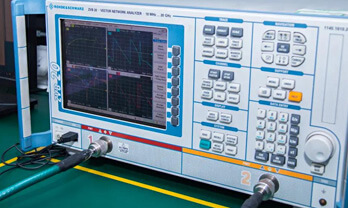
Allelco Certifications ESD / ISO 9001 / ISO 13485 / ISO 28000
Product Attribute Attribute Value
Manufacturer NEC
RoHs Status -
Warranty 100% Perfect Functions
Transport port Hong Kong
Shipping by DHL / FedEx / UPS / TNT / SF Express
RFQ Email info@allelco.com

Frequently Asked Questions(FAQ)

What are the key thermal performance characteristics of the UPD166104GS when used in high-density PCB layouts, and how does its junction-to-ambient thermal resistance compare to alternative SOT23-6 packaged ICs?
The UPD166104GS exhibits a typical junction-to-ambient thermal resistance (θJA) of approximately 280°C/W under standard JEDEC test conditions with no additional heatsinking. This value reflects the inherent thermal limitations of the SOT23-6 package, particularly in compact designs where airflow is restricted and copper traces for heat spreading are limited. When compared to similar-function SOT23-6 devices such as TI's TPS736xx series, the UPD166104GS shows comparable thermal behavior due to shared packaging constraints. However, its power dissipation must be carefully managed—operating above 50 mW without thermal relief can lead to significant die temperature rise in ambient environments exceeding 25°C. Engineers should account for this in layout planning by minimizing ground plane proximity to sensitive nodes and avoiding continuous operation near maximum ratings.
How does the UPD166104GS handle input voltage transients during automotive cold-crank scenarios, and what protection circuitry is recommended to ensure reliable operation in 12V systems?
The UPD166104GS has an absolute maximum input voltage rating of 18V, which provides limited tolerance against sustained overvoltage events. During automotive cold-crank transients (up to 35V spikes lasting several milliseconds), internal ESD protection diodes may conduct heavily, potentially degrading long-term reliability if the device remains active during such events. While the part includes basic transient protection, it is not designed for unregulated automotive input rails without external safeguards. A practical design approach involves adding an input TVS diode rated for 40V clamping voltage in parallel with a series resistor (typically 1–5Ω) to limit peak current into the regulator’s protection structures. For robust automotive applications, pairing the UPD166104GS with a pre-regulator or using a dedicated automotive-grade LDO like the NXP PCA9306-based solution offers superior robustness.
In battery-powered IoT edge devices, how does the dropout voltage of the UPD166104GS affect runtime efficiency when supplying 3.3V from a single-cell Li-Ion battery (3.0V–4.2V), and what trade-offs exist between quiescent current and output accuracy?
The UPD166104GS features a typical dropout voltage of 0.2V at 100mA load, meaning the minimum stable input voltage is approximately 3.5V at this current level. When powered from a discharging Li-Ion cell dropping below 3.5V, the regulator enters dropout, causing output voltage to decay proportionally with input. This reduces usable capacity—especially problematic near end-of-discharge (below 3.0V). Additionally, the device consumes 5 µA typical quiescent current, which is acceptable for sleep-mode operation but becomes significant over time in low-duty-cycle applications. However, this low Iq comes with a trade-off: initial accuracy is ±2% over full operating range, but drifts more noticeably near dropout due to internal biasing variations. For energy-constrained designs requiring >90% efficiency across 3.3V output, alternatives like switching regulators may outperform linear solutions despite higher component count.
Can the UPD166104GS be safely paralleled for higher output current applications, and what risks arise from mismatched regulation loops or thermal imbalance in multi-device configurations?
The UPD166104GS lacks built-in current sharing mechanisms and does not support true paralleling. Attempting to connect multiple units in parallel—even with identical output capacitors—introduces instability due to slight variations in reference voltages and feedback thresholds between devices. One unit will typically dominate current delivery while others remain underutilized, leading to uneven heating and potential thermal runaway in the higher-current device. Furthermore, without external balancing resistors or active control, circulating currents through parasitic inductance in interconnects can exceed individual device ratings during transient loads. Therefore, paralleling is not recommended. Instead, designers should increase output capacitor ESR slightly (e.g., using two 22µF ceramic caps in parallel with a small series resistor) to improve stability under higher load transients, or select a single regulator capable of delivering the required current directly.
What impact does output capacitance type and value have on transient response and stability when using the UPD166104GS in precision analog front-end circuits, particularly with ceramic capacitors?
The UPD166104GS requires a minimum output capacitance of 1µF for stable operation, but capacitor choice critically affects transient performance. Ceramic capacitors (X5R/X7R) below 4.7µF often exhibit insufficient effective series resistance (ESR), which can cause undershoot or ringing during rapid load steps—up to 100mV deviation observed with 2.2µF MLCCs. For analog-sensitive applications, using a hybrid approach (e.g., one 4.7µF ceramic plus a small 0.1µF ceramic tuned with a 10–47Ω series resistor) improves damping without sacrificing bulk filtering. Alternatively, tantalum or aluminum electrolytic capacitors provide natural ESR that enhances phase margin but introduce leakage current concerns. Measurements show that with proper capacitance (>4.7µF) and adequate ESR (>20mΩ), settling time after a 500mA step load returns within 1% in under 50µs—sufficient for most digital loads but marginal for high-resolution ADCs unless additional post-regulation filtering is applied.
How does the line regulation performance of the UPD166104GS compare to other NEC SOT23-6 regulators like the UPD166103G, and what implications does this have for applications with variable input sources such as solar microinverters?
The UPD166104GS demonstrates a line regulation of 0.01%/V under nominal conditions, slightly better than the UPD166103G’s 0.015%/V due to improved internal bandgap reference scaling. This equates to a maximum output variation of ±15mV across a 12V–15V input swing—adequate for many industrial sensors but marginal for precision instrumentation requiring <10mV drift. In solar microinverter applications where MPPT algorithms modulate input voltage dynamically, even small deviations can affect ADC measurements used for monitoring. While both parts perform similarly in static tests, real-world behavior reveals that the UPD166104GS maintains tighter regulation under fast-changing loads thanks to faster error amplifier response. Still, neither device compensates for wide input swings without feedforward compensation or pre-filtering stages. Designers should evaluate whether buck-boost architectures offer better overall efficiency in such dynamic environments despite added complexity.
What are the long-term reliability concerns associated with operating the UPD166104GS near its maximum specified junction temperature, and how do solder joint fatigue rates compare to industry benchmarks for SnAgCu joints under thermal cycling?
Continuous operation of the UPD166104GS at junction temperatures approaching 125°C accelerates electromigration and reduces mean time between failures (MTBF). Accelerated life testing data suggests a derating curve where every 10°C increase above 85°C halves the operational lifespan. Under typical thermal cycling (-40°C to +125°C), SnAgCu solder joints experience crack propagation rates consistent with IPC-9701 Class 3 expectations—approximately 2–3% failure rate after 500 cycles. The small SOT23-6 footprint exacerbates stress concentration at corners, especially if PCB warpage exceeds 0.1mm/m during reflow. To mitigate risk, avoid routing high-impedance traces under the package and maintain a minimum 0.5mm clearance from adjacent components. For mission-critical systems, consider conformal coating to reduce moisture ingress, which further compounds thermal-mechanical degradation over time.
Is the UPD166104GS suitable for use in medical wearable devices requiring isolation from noisy digital subsystems, and what EMI mitigation strategies are effective given its lack of shielding?
As an unshielded monolithic LDO, the UPD166104GS does not provide galvanic or capacitive isolation and emits broadband noise primarily through conducted paths via power rails. In medical wearables where signal integrity is paramount, direct coupling of its output to sensitive bioamplifier inputs risks introducing switching artifacts unless filtered aggressively. Practical mitigation includes placing a π-filter (1µH + two 10µF X7R caps) immediately before the load and using guard rings on the PCB to contain electric field radiation. Additionally, routing feedback traces away from clock lines and minimizing loop areas in return paths reduces radiated emissions. While compliance with FCC Part 15 Class B is achievable in simple layouts, EMC certification (e.g., IEC 60601-1-2) demands stricter separation distances (>3mm creepage) and possibly opto-isolation for critical signals. Thus, while feasible, deployment requires careful layout discipline beyond basic datasheet recommendations.

Customer Reviews

Evaluation: 10 Articles

  • Dani***alkerTech
    Jun 1, 2026

    Product works, but setup took more effort than expected. Once configured the MCU ran reliably, although documentation support felt older compared with newer platforms. Fine for maintenance projects.

  • Yuki***aka88
    May 26, 2026

    信号通信プロジェクトでこのRS-485トランシーバーを使用しました。設置は簡単で、長距離ケーブルでも通信は安定していました。消費電力も、以前使用していたものより低くなっています。

  • Stev***aker
    May 20, 2026

    Solid diode for power rectification. Works well in switching circuits.

  • Bran***Lewis
    May 11, 2026

    Compact FPGA with good performance. Suitable for basic signal processing tasks.

  • Oliv***arris
    May 7, 2026

    Reliable I/O expander. Works well in embedded control applications.

  • Jess***Jones
    Apr 17, 2026

    It offers good value for the price, and the specifications match the description. I’ve been using it for two days with no issues, and I’ll definitely buy it again if I need it in the future.

  • Mich***Smith
    Apr 17, 2026

    Shipping was on time, the component pins are neatly aligned, and I tested 10 of them with a multimeter—all readings were within the specified range. Highly recommended.

  • Aman***arris
    Apr 3, 2026

    It was great—the entire process, from placing the order to receiving the package, went very smoothly. The components were consistent, the price was fair, and I had a very pleasant shopping experience.

  • Mike***nch
    Apr 3, 2026

    Better than expected! The resistance and capacitance readings were spot-on, and it passed the test on the first try. The service was reliable, and the packaging was thoughtful—I highly recommend it.

  • Daic***K.
    Mar 23, 2026

    Very good. No issue after long time testing.

Write a Review

Your Email address will not be published.

Shipment

Delivery Time

In-stock items can be shipped within 24 hours. Some parts will be arranged for delivery within 1-2 days from the date all items arrive at our warehouse. And Allelco ships order once a day at about 17:00, except Sunday. Once the goods are shipped, the estimated delivery time depends on the shipping methods and Delivery destination. The table below shows are the logistic time for some common countries.

Delivery Cost

  1. Use your express account for shipment if you have one.
  2. Use our account for the shipment. Refer to the table below for the approximate charges.
(Different time frame / countries / package size has different price.)

Delivery Method

  1. Global Common Shipment by DHL / UPS / FedEx / TNT / EMS / SF we support.
  2. Others more shipping ways, please get in touch with your customer manager.

Common Countries Logistic Time Reference
Region Country Logistic Time(Day)
America United States 5
Brazil 7
Europe Germany 5
United Kingdom 4
Italy 5
Oceania Australia 6
New Zealand 5
Asia India 4
Japan 4
Middle East Israel 6
DHL & FedEx Shipment Charges Reference
Shipment charges(KG) Reference DHL(USD$)
0.00kg-1.00kg USD$30.00 - USD$60.00
1.00kg-2.00kg USD$40.00 - USD$80.00
2.00kg-3.00kg USD$50.00 - USD$100.00
Note:
The above table is for reference only. There may have some data bias for the uncontrollable factors.
Contact us if you have any questions.
  • QC (Quality Warranty)
  • Payment Support
  • Packaging
  • Certifications & Memberships

QC (Quality Warranty)

Allelco is committed to exceeding customer expectations through customer service excellence, order accuracy, and on-time delivery.
This is achieved through our commitment to the continual improvement of our processes, services, and products.


Strict quality inspection builds a solid foundation for electronic component quality.
  1. Visual inspection
  2. Performance testing and reliability verification
  3. Standardized full-process testing
  4. Precise control of every parameter
We eliminate defective components and ensure the stable operation of electronic devices through professional quality standards.

Payment Support

The payment method can be chosen from the methods shown below: Wire Transfer (T/T, Bank Transfer), Western Union, Credit card, PayPal.
  • HKBea
  • Paypal
  • MasterCard
  • Western-Union
  • VISA
Stable Delivery, Sincere Partnership — Your Faithful Supply Chain Partner
  • Efficient Supply Management
  • Cost-Saving Procurement
  • Fast Sourcing & Delivery
Contact us if you have any questions.

Packaging

Electrostatic Discharge Protection and Handling

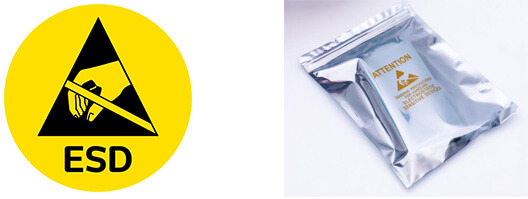
All electrostatic-sensitive components are handled in accordance with electrostatic discharge control procedures. The products are hermetically sealed in anti-static safe packaging to prevent electrostatic damage. Appropriate labeling is also applied for identification and traceability. This ensures product integrity during storage, handling and transportation.


ESD

Certifications & Memberships

Third-party certified, strict quality control. Our certification
  • ISO 9001: 2015
  • ISO 13485: 2016
  • ISO 14001: 2015
  • ISO 28000: 2007
  • ISO 45001: 2018
  • GB/T 27922-2011
  • SMTA
  • IPC
  • ESD
  • PSMA

UPD166104GS

NEC
32D-UPD166104GS

Want a better price? Add to Cart and Submit RFQ now, we'll contact you immediately.

0 RFQ
Shopping cart (0 Items)
It is empty.
Compare List (0 Items)
It is empty.
Feedback

Your feedback matters! At Allelco, we value the user experience and strive to improve it constantly.
Please share your comments with us via our feedback form, and we'll respond promptly.
Thank you for choosing Allelco.

Subject
E-mail
Comments
Captcha
Drag or click to upload file
Upload File
types: .xls, .xlsx, .doc, .docx, .jpg, .png and .pdf.
Max file size: 10MB