EEPROM vs Flash: Which Memory Type Should You Use
You often come across different types of memory when working with electronic devices, and understanding how they differ can help you make better choices. EEPROM and Flash memory are both used to store data without power, but they handle data in different ways. One focuses on small and precise updates, while the other is built for larger storage and frequent use. Knowing how each works and where it fits can make it easier to choose the right option for your needs.Catalog
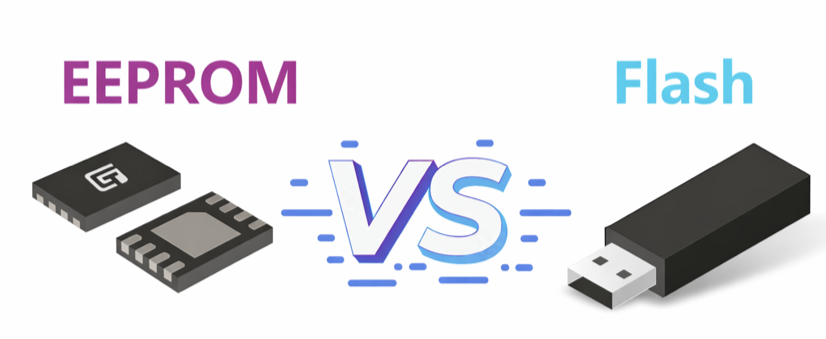
Figure 1. EEPROM vs Flash Memory
What Is EEPROM
EEPROM, or Electrically Erasable Programmable Read-Only Memory, is a type of memory that stores data even when power is removed. It is used in electronic systems where certain information must remain available after the device is turned off.
Data in EEPROM can be written, erased, and updated using electrical signals, with changes applied directly to specific data locations instead of the entire memory. This allows small amounts of data to be modified without affecting the rest of the stored information, making it suitable for cases where updates are needed but not done frequently.
EEPROM is commonly used to store configuration settings, calibration data, and system parameters. These values must remain accurate and accessible whenever the device is powered on, ensuring consistent operation across different uses.
What Is Flash Memory
Flash memory is a type of non-volatile memory designed to store larger amounts of data while retaining that data even when power is removed. It is widely used in modern electronic devices where reliable and high-capacity storage is required.
This type of memory is commonly found in USB drives, solid-state drives, smartphones, memory cards, and other digital systems. Its structure allows data to be stored in grouped sections rather than as individual units, which makes it more efficient for handling large volumes of data.
Flash memory operates using block-level data handling, where data is written and erased in fixed-size blocks instead of single bytes. This approach supports higher storage density and makes it suitable for applications that involve frequent data storage and retrieval in everyday electronic devices.
How EEPROM and Flash Memory Work
Both EEPROM and Flash memory store data by controlling electrical charge inside a structure called a floating gate. The presence or absence of this charge determines whether a bit is read as 0 or 1. Data is written by applying voltage to move electrons into the floating gate, while erasing removes the stored charge to reset the cell.
EEPROM Working Principle
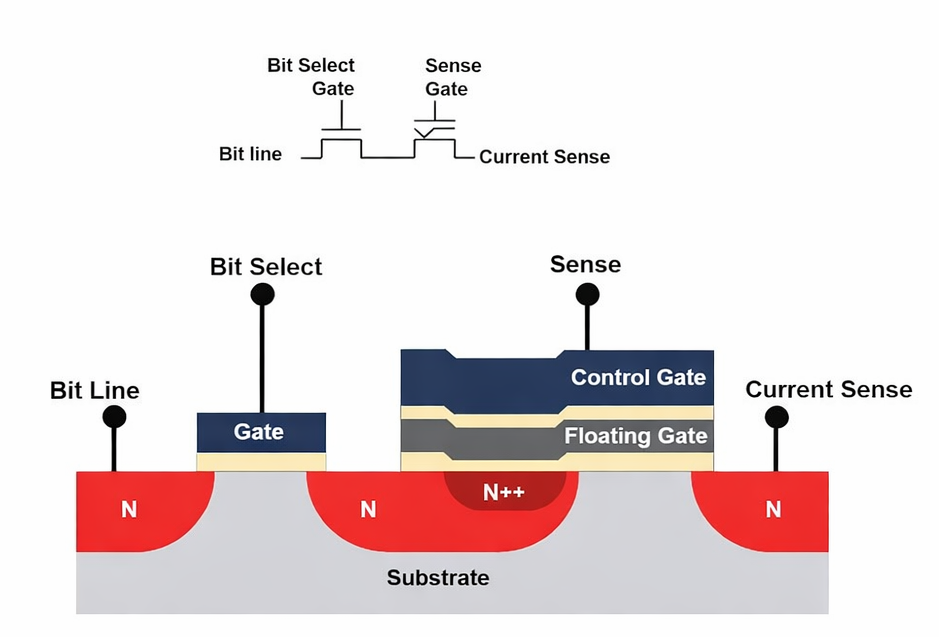
Figure 2. EEPROM Working Principle
EEPROM operates by allowing electrical changes to be applied to individual memory cells. Each cell can be written or erased independently by adjusting the charge stored in its floating gate. This means that only the required data location is updated, while the rest of the stored data remains unchanged.
This level of control makes EEPROM suitable for situations where small amounts of data need to be modified carefully. Since changes are done at a very fine level, the process is more precise, which supports reliable updates for specific values stored in the memory.
Flash Memory Working Principle
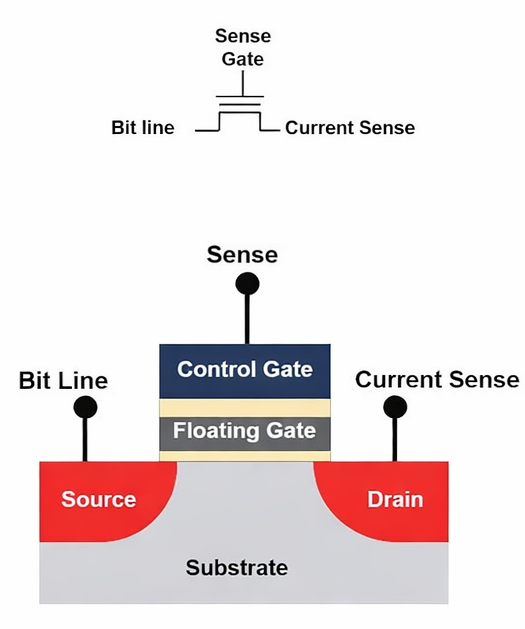
Figure 3. Flash Memory Working Principle
Flash memory uses a similar floating gate structure, but it handles data in grouped sections rather than individual cells. Before new data can be written, an entire block of memory must first be erased. This process clears all the cells in that block at once, even if only a small portion needs to be updated.
Because of this approach, Flash memory is more efficient when working with large amounts of data. However, it is less flexible for small changes, since modifying a single value may require rewriting a larger section. This behavior influences how it performs in different applications, especially those that involve frequent or large-scale data storage.
EEPROM vs Flash Memory Comparison
| EEPROM | Flash Memory |
| Erases and writes data at the byte level, allowing direct updates to specific locations | Erases data in blocks before writing, affecting a group of memory cells at once |
| Faster for small updates since only selected bytes are modified | Slower for small updates due to block erase requirement, but efficient for large data transfers |
| Generally stable and consistent for small data access | Optimized for fast reading of large data blocks |
| Limited capacity, typically used for small data storage | High capacity, suitable for storing large amounts of data |
| Maintains stored data reliably for long periods under normal conditions | Also offers long data retention, with optimization for large-scale storage systems |
| High endurance for repeated byte-level updates within limited memory size | High overall endurance supported by wear-leveling across memory blocks |
| Higher cost due to lower storage density | Lower cost due to higher density and scalable storage |
| Commonly uses serial interfaces such as I2C or SPI for communication | Uses a wider range of interfaces, including parallel and serial, depending on design |
| Used for storing configuration data, calibration values, and system parameters | Used in mass storage devices such as SSDs, USB drives, and embedded storage |
| Highly flexible for small and precise data changes | Less flexible for small updates, but efficient for bulk data operations |
Advantages and Disadvantages of EEPROM and Flash
|
Type |
Advantages |
Limitations |
|
EEPROM |
Allows
precise byte-level updates |
Limited
storage capacity |
|
Supports
reliable small data modification |
Higher
cost per bit |
|
|
Does
not require block erase before writing |
Slower
for large data writes |
|
|
Stable
data retention for critical values |
Limited
write endurance per cell |
|
|
Suitable
for low-frequency updates |
Inefficient
for bulk data storage |
|
|
Flash |
Supports
high storage capacity |
Requires
block erase before writing |
|
Lower
cost per bit |
Less
flexible for small data changes |
|
|
Fast
read performance for large data |
Slower
for small updates |
|
|
High
data density |
Performance
affected by frequent small writes |
|
|
Wear-leveling
extends lifespan |
Requires
complex memory management |
|
|
Suitable
for frequent data storage |
Sensitive
to repeated erase cycles |
|
|
Scalable
and compact storage design |
Risk
of data issues during power loss writes |
Applications of EEPROM and Flash Memory
EEPROM and Flash memory are used in electronic systems based on how data is stored and updated, with EEPROM handling small and precise data, while Flash memory supports larger storage and frequent data use.
Applications of EEPROM
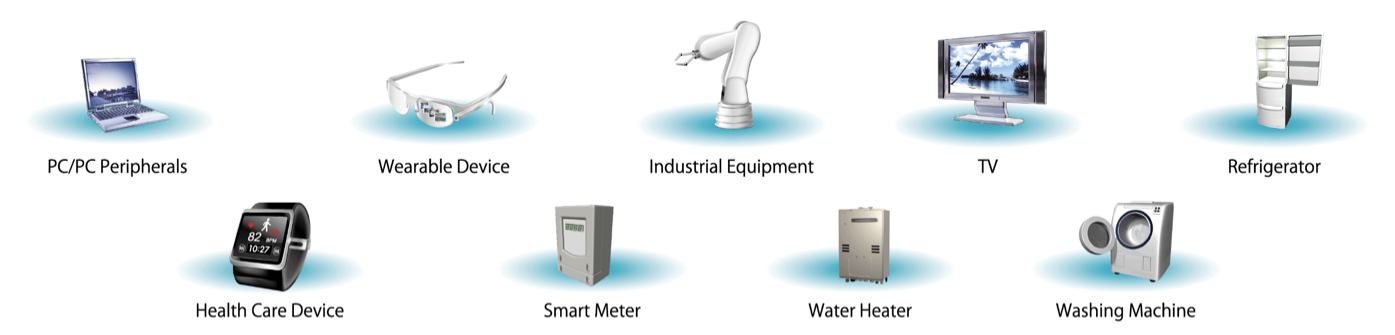
Figure 4. EEPROM Applications
EEPROM is widely used in embedded systems and control-based devices where small but critical data must be stored reliably. It is commonly found in microcontroller-based systems that manage device settings, calibration values, and operational parameters. These include industrial equipment, smart meters, and healthcare devices where stored values must remain accurate over time.
It is also used in consumer electronics and appliances such as televisions, washing machines, and refrigerators to store system configurations and user-defined settings. In wearable and peripheral devices, EEPROM helps retain essential data needed for proper operation, especially in systems that require consistent behavior after power cycling.
Applications of Flash Memory
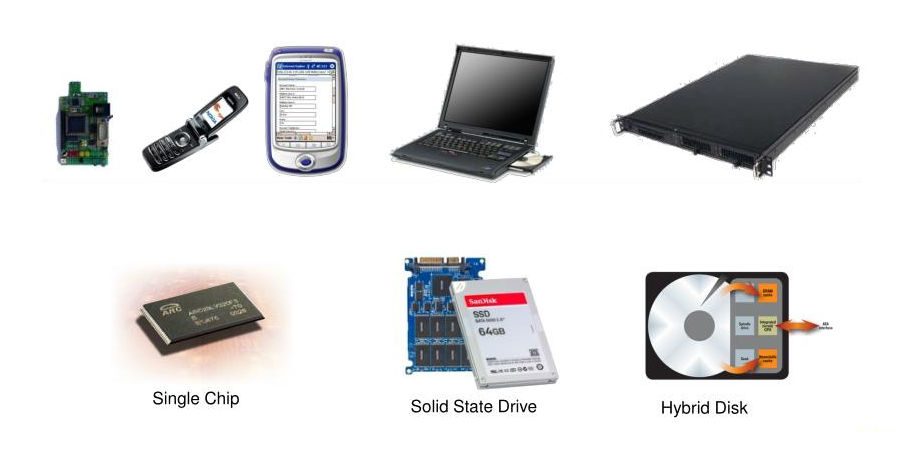
Figure 5. Flash Memory Applications
Flash memory is used in systems that require high storage capacity and frequent data access. It is commonly used in storage devices such as USB drives, solid-state drives, memory cards, and smartphones, where it holds operating systems, applications, and user data.
It is also used in embedded systems for storing firmware and application code, especially in devices that need reliable and scalable storage. Flash memory is present in laptops, servers, and hybrid storage systems, where it supports fast data access and efficient handling of large data volumes.
How To Choose Between EEPROM and Flash Memory
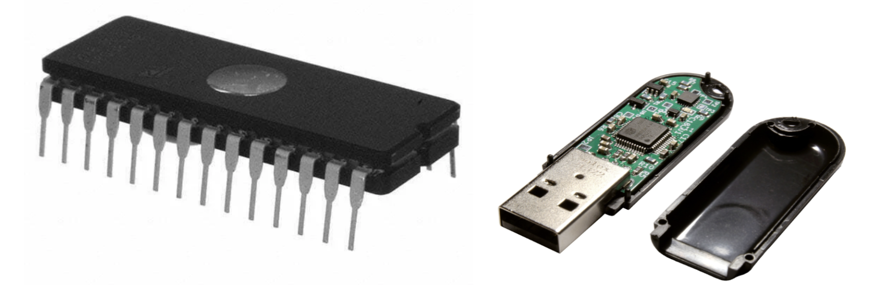
Figure 6. EEPROM and Flash Device Examples
When choosing between EEPROM and Flash memory, the decision can be simplified by budget and use case. If the budget is more flexible and the system requires frequent, small data updates such as configuration settings, calibration data, or parameters, EEPROM is the better option due to its byte-level write capability and higher write endurance. If the budget is limited or the design needs to store larger amounts of data such as firmware or logs, Flash memory is more suitable because it provides higher density and lower cost per bit.
In practical designs, also consider write speed, erase method (byte vs. block), power consumption, and system complexity. EEPROM is easier to manage for small updates, while Flash is more efficient for bulk storage and less frequent writes.
Conclusion
EEPROM and Flash memory both store data without power, but they are designed for different tasks. EEPROM works well for small, precise updates, while Flash memory handles larger storage and frequent data use. Each type has its own strengths, which makes them suitable for specific applications. Understanding how they differ helps you decide which one fits your needs. By looking at how data is stored, updated, and accessed, you can choose the right memory for better performance and reliability.
About us
ALLELCO LIMITED
Read more
Quick inquiry
Please send an inquiry, we will respond immediately.
Frequently Asked Questions [FAQ]
1. What is the main difference between EEPROM and Flash memory?
EEPROM updates data one byte at a time, while Flash memory works with blocks of data.
2. Which memory type is better for large data storage?
Flash memory is better because it supports higher storage capacity and faster handling of large data.
3. Why is EEPROM used for configuration data?
EEPROM allows precise updates to small data without affecting other stored values.
4. Can Flash memory replace EEPROM?
It depends on the use case, as Flash is less suitable for small, frequent updates.
5. Do EEPROM and Flash memory retain data without power?
Yes, both are non-volatile memory types and keep data even when power is removed.
Power over Ethernet (PoE) Explained: How It Powers Devices and Data
on April 7th
What Is MEMS and Why It Matters in Modern Electronics
on April 5th
Popular Posts
-

Complex Instruction Set Computers: How They Changed Computing?
on April 17th 147713
-

USB-C Pinout and Features
on April 17th 111738
-
Using Xilinx Unified Simulation Primitives: A Comprehensive Guide to FPGA Design and Simulation
on April 17th 111322
-

Power Supply Voltages in Electronics: Meaning of VCC, VDD, VEE, VSS, and GND
on April 17th 83624
-

RJ45 Connector Guide: Pinout, Wiring, Cable Types, and Uses
on January 1th 79279
-

The Ultimate Guide to Wire Color Codes in Modern Electrical Systems
The way our electrical systems use colors isn’t just for looks. Each wire color now indicates a specific function, making it easier to identify and handle electrical components correctly during ins...on January 1th 66784
-

Quality (Q) Factor: Equations and Applications
The quality factor, or 'Q', is important when checking how well inductors and resonators work in electronic systems that use radio frequencies (RF). 'Q' measures how well a circuit minimizes energy...on January 1th 62949
-
Purge Valve Guide: Function, Symptoms, Testing, and Replacement for Optimal Engine Performance
The purge valve is a key part of a car’s system that helps keep the air clean by managing fuel vapors before they can escape into the atmosphere. This not only helps the environment by reducing pol...on January 1th 62836
-

Achieving Peak Performance with the Maximum Power Transfer Theorem
The Maximum Power Transfer Theorem explains how energy from a source, such as a battery or generator, flows to a connected load. It shows the exact condition where the load receives the most power....on January 1th 54034
-

A23 Battery Specifications and Compatibility
The A23 battery is a small, cylinder-shaped battery with high voltage. Also called 23A, 23AE, or MN21, it runs at 12 volts and much higher than AA or AAA batteries. Its special design make...on January 1th 52003
HOT Part Number
-

RMPA0959
onsemi
IC RF AMP CELL 824-849MHZ 11LCC
TK2P90E,RQ
Toshiba Semiconductor and Storage
PB-F POWER MOSFET TRANSISTOR DPA
IXFX66N50Q2
IXYS
MOSFET N-CH 500V 66A PLUS247-3
LTC6241HVIS8#PBF
Analog Devices Inc.
IC CMOS 2 CIRCUIT 8SO
TSSD20L100SW
Taiwan Semiconductor Corporation
20A, 100V, TRENCH SCHOTTKY
CM453232-R47KL
Bourns Inc.
FIXED IND 470NH 545MA 320MOHM SM
744028002
Würth Elektronik
FIXED IND 2.2UH 1.3A 155MOHM SMD
CL21C820JBANNNL
Samsung Electro-Mechanics
CAP CER 82PF 50V NP0 0805
MM70-314-310B1-2-R300
JAE Electronics
CONN MXM 3.0 FMALE 314POS 0.020
BZX84C8V2
Taiwan Semiconductor Corporation
SOT-23, 300MW, 5%, SMALL SIGNAL
AONS36302
Alpha & Omega Semiconductor Inc.
MOSFET N-CH 30V 146A 8DFN
BF5020WH6327
Infineon Technologies
N-CHANNEL POWER MOSFET
XAZU3EG-1SFVC784Q
AMD
IC SOC CORTEX-A53 784FCBGA
TPS71525QDCKRQ1
Texas Instruments
IC REG LINEAR 2.5V 50MA SC70-5
BD46281G-TR
Rohm Semiconductor
IC SUPERVISOR 1 CHANNEL 5SSOP
CPDQC5V0CSP-HF
Comchip Technology
TVS DIODE 5VWM 20VC 0402/SOD923F
SN74LV1T32DCKR
Texas Instruments
IC GATE OR 1CH 2-INP SC70-5
PIC16F1575-E/JQ
Microchip Technology
IC MCU 8BIT 14KB FLASH 16UQFN -

OPA4354AIPWR
Texas Instruments
IC CMOS 4 CIRCUIT 14TSSOP
VE-230-MX
Vicor Corporation
DC DC CONVERTER 5V 75W
MC33178D
onsemi
IC OPAMP DUAL LOW PWR/NS 8-SOIC
DDA143TU-7-F
Diodes Incorporated
TRANS 2PNP PREBIAS 0.2W SOT363
CL05C010BB5NNND
Samsung Electro-Mechanics
CAP CER 1PF 50V NP0 0402
BCM8742BKFBG
Broadcom Limited
QUAD-CHANNEL 10-GBE SFI-TO-XAUI
R5F100LGAFB#10
Renesas Electronics America Inc
IC MCU 16BIT 128KB FLASH 64LFQFP
STM32H753ZIT6
STMicroelectronics
IC MCU 32BIT 2MB FLASH 144LQFP
TC621CCOA
Microchip Technology
THERMOSTAT PROG ACTIVE LOW 8SOIC
MICROSMD175F-2
Littelfuse Inc.
PTC RESET FUSE 6V 1.75A 1210
AC0603KRX7R8BB222
YAGEO
CAP CER 2200PF 25V X7R 0603
GRM2165C1H471JA01D
Murata Electronics
CAP CER 470PF 50V C0G/NP0 0805
DS1858E-050
Analog Devices Inc./Maxim Integrated
IC DGT POT 50KOHM 256TAP 16TSSOP
OPA4202IDR
Texas Instruments
IC OPAMP GP 4 CIRCUIT 14SOIC
MB90F362TESPMCR-GN9E1
Cypress Semiconductor
IC MCU 16BIT
INA330AIDGST
Texas Instruments
IC OPAMP GP 1 CIRCUIT 10VSSOP
LV4906V-TLM-H
onsemi
CLASS-D AUDIO POWER AMPLIFIER 15
ADAU1450WBCPZ-RL
Analog Devices Inc.
IC AUDIO PROCESSOR 72LFCSP -
TPS65232A0RHAR
Texas Instruments
IC REG CTRLR/CONV 3OUT 40VQFN
MCP130T-450I/TT
Microchip Technology
IC SUPERVISOR 1 CHANNEL SOT23-3
74LX1G70CTR
STMicroelectronics
IC BUF NON-INVERT 5.5V SOT323-5
SN74ALS805ADWR
Texas Instruments
IC GATE NOR 6CH 2-INP 20SOIC
SMK316B7223KLHT
Taiyo Yuden
CAP CER 0.022UF 630V X7R 1206
R9G01612XX
Powerex Inc.
DIODE GP 1.6KV 1200A DO200AB
NCV4276DS50R4
onsemi
IC REG LINEAR 5V 400MA D2PAK-5
STW16N65M5
STMicroelectronics
MOSFET N-CH 650V 12A TO247-3
GRM1555C1H7R7BZ01D
Murata Electronics
CAP CER 7.7PF 50V C0G/NP0 0402
HZB6.8MWATL-E
Renesas Electronics America Inc
TVS DIODE 3.5VWM 3CMPAK
P0111MA 1AA3
STMicroelectronics
SCR 600V 800MA TO92-3
PGA2310UA/1KG4
Texas Instruments
IC VOLUME CONTROL 16SOIC
CYAT817AZS98-42002
Infineon Technologies
PSOC BASED - TRUETOUCH
NTCLE100E3333JB0
Vishay Beyschlag/Draloric/BC Components
THERMISTOR NTC 33KOHM 4090K BEAD
ADS1014IDGST
Texas Instruments
IC ADC 12BIT SIGMA-DELTA 10VSSOP
MIC4422YM
Microchip Technology
IC GATE DRVR LOW-SIDE 8SOIC
BU2510-E3/51
Vishay General Semiconductor - Diodes Division
BRIDGE RECT 1P 1KV 3.5A BU
AD8205WYRZ-R7
Analog Devices Inc.
IC OPAMP DIFF 1 CIRCUIT 8SOIC