View All

Please refer to the English Version as our Official Version.Return

Europe
France(Français) Germany(Deutsch) Italy(Italia) Russian(русский) Poland(polski) Czech(Čeština) Luxembourg(Lëtzebuergesch) Netherlands(Nederland) Iceland(íslenska) Hungarian(Magyarország) Spain(español) Portugal(Português) Turkey(Türk dili) Bulgaria(Български език) Ukraine(Україна) Greece(Ελλάδα) Israel(עִבְרִית) Sweden(Svenska) Finland(Svenska) Finland(Suomi) Romania(românesc) Moldova(românesc) Slovakia(Slovenská) Denmark(Dansk) Slovenia(Slovenija) Slovenia(Hrvatska) Croatia(Hrvatska) Serbia(Hrvatska) Montenegro(Hrvatska) Bosnia and Herzegovina(Hrvatska) Lithuania(lietuvių) Spain(Português) Switzerland(Deutsch) United Kingdom(English)
Asia/Pacific
Japan(日本語) Korea(한국의) Thailand(ภาษาไทย) Malaysia(Melayu) Singapore(Melayu) Vietnam(Tiếng Việt) Philippines(Pilipino)
Africa, India and Middle East
United Arab Emirates(العربية) Iran(فارسی) Tajikistan(فارسی) India(हिंदी) Madagascar(malaɡasʲ)
South America / Oceania
New Zealand(Maori) Brazil(Português) Angola(Português) Mozambique(Português)
North America
United States(English) Canada(English) Haiti(Ayiti) Mexico(español)
HomeProductsIntegrated Circuits (ICs)MemoryS25FL128LAGNFV010
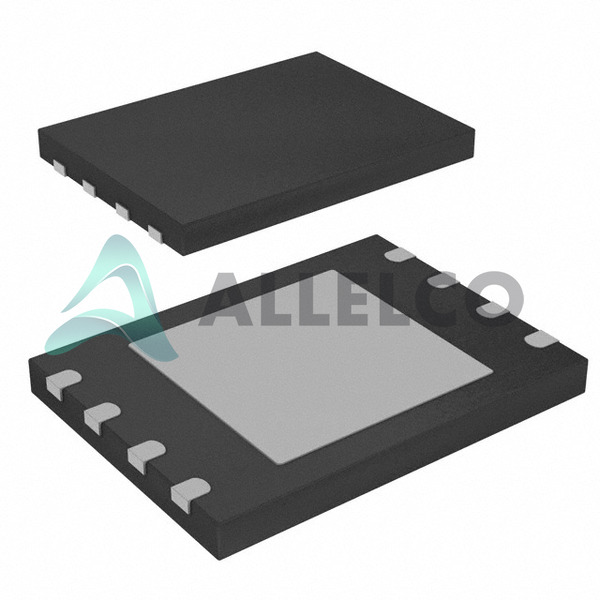
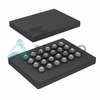
S25FL128LAGNFV010 Image
Image may be representation.
See specifications for product details.
EXPRESS OPTION
Payment method

S25FL128LAGNFV010 - Infineon Technologies

Manufacturer Part Number
S25FL128LAGNFV010
Manufacturer
Infineon Technologies
Allelco Part Number
32D-S25FL128LAGNFV010
Warranty
1 Year Allelco Warranty - Find out more
Stock Status:
14,624 pcs available, New & Original
Parts Description
IC FLASH 128MBIT SPI/QUAD 8WSON
Package
8-WSON (5x6)
Data sheet
S25FL128LAGNFV0.pdf
RoHs Status
ROHS3 Compliant
Our certification
In stock: 14624

Required fields are indicated by an asterisk (*)
Please send RFQ, we will respond immediately.

Quantity

Specifications

S25FL128LAGNFV010 Tech Specifications
Infineon Technologies - S25FL128LAGNFV010 technical specifications, attributes, parameters and parts with similar specifications to Infineon Technologies - S25FL128LAGNFV010

Product Attribute Attribute Value
Manufacturer Infineon Technologies
Write Cycle Time - Word, Page -
Voltage - Supply 2.7V ~ 3.6V
Technology FLASH - NOR
Supplier Device Package 8-WSON (5x6)
Series FL-L
Package / Case 8-WDFN Exposed Pad
Package Tray
Operating Temperature -40°C ~ 105°C (TA)
Product Attribute Attribute Value
Mounting Type Surface Mount
Memory Type Non-Volatile
Memory Size 128Mbit
Memory Organization 16M x 8
Memory Interface SPI - Quad I/O, QPI
Memory Format FLASH
Clock Frequency 133 MHz
Base Product Number S25FL128

Environmental & Export Classifications

ATTRIBUTE DESCRIPTION
RoHs Status ROHS3 Compliant
Moisture Sensitivity Level (MSL) 3 (168 Hours)
REACH Status REACH Unaffected
ECCN 3A991B1A
HTSUS 8542.32.0071

Parts Introduction

S25FL128LAGNFV010 Image
S25FL128LAGNFV010 (1)

Manufacturer Part Number

S25FL128LAGNFV010

Manufacturer

Infineon Technologies

Introduction

High-performance, low-power SPI NOR Flash memory

Product Features and Performance

128Mbit (16M x 8) memory capacity

SPI Quad I/O and QPI interface

Operating voltage: 2.7V to 3.6V

Operating temperature range: -40°C to 105°C

Clock frequency up to 133MHz

Fast read/write speeds

Low power consumption

Product Advantages

Reliable and energy-efficient NOR Flash memory

Supports advanced SPI interface modes for high-speed data transfer

Wide operating temperature range for versatile applications

Small 8-WDFN package for compact design

Key Technical Parameters

Memory type: NOR Flash

Memory size: 128Mbit

Memory organization: 16M x 8

Interface: SPI Quad I/O, QPI

Operating voltage: 2.7V to 3.6V

Operating temperature: -40°C to 105°C

Clock frequency: up to 133MHz

Quality and Safety Features

RoHS3 compliant

Manufactured in Infineon's high-quality facilities

Compatibility

Compatible with a wide range of SPI-based microcontrollers and processors

Application Areas

Embedded systems

Industrial automation

Consumer electronics

Automotive electronics

Product Lifecycle

Currently in production

Replacements and upgrades may be available in the future

Key Reasons to Choose This Product

High-performance, reliable, and energy-efficient NOR Flash memory

Supports advanced SPI interface modes for high-speed data transfer

Wide operating temperature range for versatile applications

Small package size for compact design

RoHS3 compliance for environmental sustainability
Frequently Asked Questions(FAQ)

What are the key electrical and timing characteristics of the S25FL128LAGNFV010 flash memory that influence its use in high-speed embedded systems, and how do these compare to typical SPI NOR flash devices?
The S25FL128LAGNFV010 operates with a supply voltage range of 2.7V to 3.6V, making it suitable for low-power and battery-operated applications where voltage scaling is critical. Its maximum clock frequency of 133 MHz enables fast read operations, which is essential for boot code execution and real-time data access. Compared to standard SPI NOR flashes that typically support up to 66–80 MHz, this device supports double the bandwidth, enabling more efficient firmware loading. Additionally, the device supports Quad I/O and QPI modes, which reduce instruction overhead by allowing four or eight data lines per transaction, improving throughput by up to four times over single-bit transfers. This combination of higher frequency and parallel data transfer makes it well-suited for applications requiring rapid system initialization and sustained data streaming.
How does the pin count and package footprint of the S25FL128LAGNFV010 affect PCB layout decisions, and what design considerations should be made when integrating it into compact form-factor devices?
The S25FL128LAGNFV010 comes in an 8-WSON (5x6 mm) package with an exposed thermal pad, which reduces the overall board space compared to larger SOIC or PDIP packages. This small footprint supports miniaturized designs such as wearables, IoT nodes, and industrial controllers. However, the compact size requires careful attention to thermal management due to the exposed pad acting as a heat spreader; proper soldering and thermal vias under the pad are necessary to ensure reliability. The limited number of pins (eight plus an optional reset pin in some variants) simplifies routing but constrains signal accessibility during debugging and programming. Designers must also consider the increased risk of solder bridging during reflow due to the fine pitch and close proximity of adjacent pads, necessitating tight manufacturing tolerances and conformal coating if needed.
What are the differences between the S25FL128LAGNFV010 and other members of the S25FL128 series, particularly regarding performance, voltage compatibility, and application suitability?
The base product S25FL128 includes multiple derivatives differing primarily in packaging, speed grades, and voltage ranges. For example, the LAGNFV010 variant specifically targets industrial temperature ranges (-40°C to +105°C) and operates from 2.7V to 3.6V, distinguishing it from lower-temperature or higher-voltage versions like the S25FL128LPGMFB25E, which may support wider temperature ranges or different power rails. While all share the same 128Mb density and SPI/Quad I/O interface, only certain variants include features such as hardware write protection or enhanced security registers. The LAGNFV010’s 133 MHz operation and industrial-grade qualification make it ideal for automotive and ruggedized environments, whereas other variants may prioritize cost or extended endurance instead of speed.
In what scenarios would the S25FL128LAGNFV010 be preferred over parallel NOR flash, and what trade-offs exist in terms of speed, pin count, and software complexity?
The S25FL128LAGNFV010 is often favored over parallel NOR flash in systems where reduced pin count and simplified PCB routing are priorities, especially in microcontrollers with limited GPIO availability. SPI-based interfaces require only two or four data lines plus chip select and clock signals, whereas parallel NOR flash demands multiple address and data lines—typically doubling the pin usage. Although parallel NOR can achieve faster burst read speeds (often exceeding 50 MHz), the S25FL128LAGNFV010 compensates with Quad I/O and QPI modes to deliver competitive throughput. Software-wise, SPI requires less complex controller logic but introduces protocol overhead due to command framing and latency per byte. Thus, the choice depends on system balance: the S25FL128LAGNFV010 offers better scalability and integration at the expense of peak bandwidth, while parallel NOR suits high-throughput image or video buffering applications.
What factors determine whether the S25FL128LAGNFV010 can reliably support XIP (Execute-in-Place) functionality in safety-critical systems, and what verification steps are recommended?
XIP capability depends on several parameters: sufficient read speed, stable clocking under temperature extremes, and correct command sequencing. The S25FL128LAGNFV010 supports continuous high-speed reads at up to 133 MHz, enabling direct firmware execution without copying to RAM. However, XIP reliability requires validating that the memory can maintain consistent timing across its full operating temperature range (-40°C to 105°C). Designers must ensure the microcontroller’s SPI controller can sustain the required clock rate and that the PCB trace lengths minimize skew. Additionally, the presence of block protection bits and write-cycle latency must be considered—though the device has no specified page-write time, bulk erase operations can take seconds, necessitating non-volatile storage of configuration data. Functional safety assessments, including fault injection and environmental stress testing, are strongly advised before deploying XIP in certified systems.
How does the endurance and data retention specification of the S25FL128LAGNFV010 impact long-term system reliability, and what design practices mitigate potential degradation?
While the datasheet does not specify explicit program/erase (P/E) cycle counts, Infineon typically provides endurance ratings of 100k cycles for consumer-grade NOR flashes and up to 1M cycles for industrial variants. Assuming the LAGNFV010 follows the latter due to its industrial rating, it can endure tens of thousands of updates to critical configuration sectors. Data retention is generally rated at 20+ years at 85°C, but elevated junction temperatures accelerate charge leakage in floating-gate cells. To extend lifespan, designers should avoid frequent writes by implementing wear-leveling algorithms for logging data and reserving small, static configuration areas for infrequent updates. Monitoring write counts via counters in onboard RAM or another non-volatile memory helps predict failures. Additionally, using error correction codes (ECC) or redundant boot sectors enhances resilience against bit errors arising from aging effects.
Can the S25FL128LAGNFV010 operate safely in harsh environments, and what environmental certifications or derating guidelines apply beyond standard industrial specifications?
Yes, the S25FL128LAGNFV010 is qualified for industrial temperatures (-40°C to +105°C), which covers most outdoor, automotive edge cases, and complies with RoHS3 and REACH regulations, ensuring compliance with global environmental standards. Moisture sensitivity level 3 (MSL3) indicates it withstands brief exposure to ambient humidity before assembly, provided storage conditions follow JEDEC guidelines. For extreme environments—such as high-vibration automotive installations or high-altitude aerospace systems—additional mechanical reinforcement (e.g., conformal coating or strain relief) may be necessary to prevent solder joint fatigue. Thermal cycling tests simulating full operational temperature swings should be conducted to validate long-term solder integrity. Note that while the component itself meets industrial specs, the entire system must account for PCB expansion mismatches and connector durability.
What role does the QPI (Quad Peripheral Interface) mode play in optimizing performance when using the S25FL128LAGNFV010, and how does it compare to traditional SPI in real-world firmware loading scenarios?
QPI mode allows eight-bit data transfers per clock cycle by activating all four I/O lines simultaneously, effectively doubling the data rate compared to standard SPI. When combined with the 133 MHz clock, QPI can theoretically achieve 266 Mbps effective bandwidth, though actual gains depend on protocol efficiency. In practice, firmware loading benefits significantly: boot sequences that previously took milliseconds in SPI mode can complete nearly twice as fast in QPI. However, QPI requires both the host controller and flash device to support the mode, and software stacks must be adapted accordingly. Additionally, QPI increases pin utilization, limiting flexibility in systems where GPIOs are scarce. Therefore, while QPI improves throughput, it trades off simplicity and compatibility—making it optimal for fixed-function devices where performance is prioritized over adaptability.
How should system designers handle potential interoperability issues between the S25FL128LAGNFV010 and third-party SPI controllers, and what validation methodology ensures robust communication?
Interoperability risks arise from differences in SPI timing models, command sets, and voltage thresholds. The S25FL128LAGNFV010 accepts 2.7–3.6V logic levels, so interfacing with 1.8V or 1.2V microcontrollers requires level shifters unless the MCU supports 2.7V inputs. Timing margins must be verified: setup and hold times for commands like Fast Read Quad I/O are typically a few nanoseconds, which may challenge slow MCUs or noisy environments. A recommended validation approach includes: (1) capturing SPI waveforms with an oscilloscope to confirm signal integrity, (2) testing command sequences across the full temperature range, and (3) verifying reset behavior after power-up. Using a boundary-scan tool or JTAG debugger can help diagnose protocol mismatches early. Reference Infineon’s application notes for compatible MCUs and known errata to preemptively address common pitfalls.
What are the implications of the S25FL128LAGNFV010’s lack of a dedicated status register polling mechanism for real-time monitoring, and how can designers work around this limitation?
Unlike some modern serial flash devices that offer continuous status monitoring via hardware interrupts or ready/busy pins, the S25FL128LAGNFV010 relies solely on software-based polling of internal status registers. This means after issuing an erase or program command, the host must periodically read the Write-in-Progress (WIP) bit before proceeding. In time-sensitive applications, excessive polling can introduce latency or CPU overhead. To mitigate this, designers can batch operations, minimize erase/write frequency, or offload polling to a background task. Alternatively, if the microcontroller supports DMA-triggered completion events based on external flags (even if not directly supported here), creative use of GPIO toggling or timer interrupts can approximate asynchronous notification. Ultimately, the absence of a hardware busy pin necessitates careful scheduling to avoid race conditions during critical boot stages.
How does the memory organization (16M x 8) of the S25FL128LAGNFV010 influence partitioning strategies for firmware, configuration data, and user storage, and what alignment constraints must be observed?
The 16M x 8 organization defines the device as a single-byte-addressable memory array of 16 megabytes total. This granularity allows flexible partitioning: one sector might store bootloader code, another factory calibration data, and others user applications or logs. However, erase operations occur at the block level (typically 64KB or 256KB), so any modification requires erasing the entire block even if only one byte changes. Therefore, designers must align data boundaries to block sizes to avoid wasting space or increasing erase cycles. Firmware images should be padded to sector boundaries, and wear-leveling algorithms should map logical blocks to physical ones dynamically. Misaligned accesses may trigger unintended erasures or corruption, so runtime checks or metadata headers with versioning help maintain consistency across updates.
What precautions should be taken during production programming of the S25FL128LAGNFV010 to avoid accidental overwrites or corruption, and how can configuration security be enforced?
During mass production, improper handling can lead to partial writes, locked sectors, or corrupted firmware. First, enable hardware write protection (if available) by setting status register bits or using WP# pin control during critical phases. Ensure power stability during erase/program cycles—brownout events can leave the device in an undefined state. Use checksums or cryptographic signatures on firmware images to detect corruption post-programming. For secure applications, leverage the device’s OTP (One-Time Programmable) regions or unique device IDs to bind firmware authenticity. Avoid repeated reprogramming of the same blocks; instead, reserve separate partitions for updates. Finally, verify successful programming by reading back programmed data and comparing hashes, especially in safety-certified products where traceability is mandatory.
Why might the S25FL128LAGNFV010 be chosen despite higher unit costs compared to commodity SPI flash alternatives, and what value does its feature set provide in professional designs?
Although the S25FL128LAGNFV010 commands premium pricing due to Infineon’s quality processes and industrial-grade qualification, its advantages justify the cost in mission-critical applications. Features like extended temperature operation, robust ESD protection, long-term supply assurance, and proven reliability in field deployments reduce total cost of ownership through fewer returns and maintenance cycles. The inclusion of advanced protocols like QPI and compatibility with legacy SPI modes offers future-proofing, allowing incremental performance upgrades without redesign. Furthermore, Infineon’s strong ecosystem support—including driver libraries, reference schematics, and technical assistance—accelerates development timelines. For OEMs building branded products with SLAs or certification requirements, investing in validated components like this one mitigates legal and reputational risks associated with failure.
How do the ECCN (3A991B1A) and HTSUS (8542.32.0071) classifications of the S25FL128LAGNFV010 affect import/export logistics, and what documentation is typically required for international shipments?
The ECCN 3A991B1A places this device under "specially designed" category for civil end-uses, implying export controls may apply depending on destination country and intended application. While not classified as dual-use military technology, exporters must still comply with local regulations such as BIS in the US or EU Dual-Use Regulation. Importers will require commercial invoices, packing lists, and potentially end-user certificates. The HTSUS 8542.32.0071 classification designates it as an integrated circuit memory device, which influences customs valuation and duty rates. Proper classification ensures compliance and avoids shipment delays. It’s advisable to consult customs brokers or legal experts when shipping to jurisdictions with strict semiconductor import rules, especially if the final product incorporates the IC into medical, avionics, or telecommunications equipment.
How do the ECCN (3A991B1A) and HTSUS (8542.32.0071) classifications of the S25FL128LAGNFV010 affect import/export logistics, and what documentation is typically required for international shipments?
The ECCN 3A991B1A classification indicates that the S25FL128LAGNFV010 falls under U.S. export control regulations, specifically the Commerce Control List Category 3, which governs electronics and computers. This designation means that exports outside the U.S. may require a license depending on the destination country, end-user, and intended application—particularly if used in defense, surveillance, or high-reliability systems. Exporters must file Shipper’s Export Declarations (SEDs) with the Bureau of Industry and Security (BIS) and maintain records for five years. Concurrently, the HTSUS code 8542.32.0071 identifies the item as a "static random access memory or static read-only memory," which determines customs duties and entry procedures at ports of import. Accurate classification prevents penalties and shipment holds. Documentation usually includes commercial invoices, bill of lading, certificates of origin, and, in some cases, end-user statements verifying non-military use.
What considerations apply when replacing the S25FL128LAGNFV010 with a functionally equivalent alternative in existing designs, and how should substitution be validated?
Substituting the S25FL128LAGNFV010 requires matching key electrical and functional parameters: identical memory size (128Mb), SPI/Quad I/O interface, voltage range (2.7–3.6V), and temperature grade (-40°C to +105°C). Even minor deviations—such as a different clock tolerance or lack of QPI support—can break compatibility. Before replacement, verify that the new part’s command set, addressing modes, and status register layout match exactly. Hardware validation should include testing across temperature extremes, confirming boot sequence success, and measuring current consumption during active reads. Software validation involves checking firmware behavior under all expected use cases, including error recovery and secure update flows. Ideally, perform accelerated life testing or reliability screening to ensure long-term interchangeability, especially in production environments where supply chain resilience is critical.

Parts with Similar Specifications

The three parts on the right have similar specifications to Infineon Technologies S25FL128LAGNFV010

Product Attribute S25FL128LAGNFI010 S25FL128LAGNFM010 S25FL128LAGNFV013 S25FL128LAGNFM013
Part Number S25FL128LAGNFI010 S25FL128LAGNFM010 S25FL128LAGNFV013 S25FL128LAGNFM013
Manufacturer Infineon Technologies Infineon Technologies Infineon Technologies Infineon Technologies
Memory Type - - - -
Series - - - -
Memory Size - - - -
Memory Organization - - - -
Base Product Number - DAC34H84 MAX500 ADS62P42
Voltage - Supply - - - -
Package - Tape & Reel (TR) Tube Tape & Reel (TR)
Memory Interface - - - -
Operating Temperature - -40°C ~ 85°C 0°C ~ 70°C -40°C ~ 85°C
Package / Case - 196-LFBGA 16-DIP (0.300', 7.62mm) 64-VFQFN Exposed Pad
Write Cycle Time - Word, Page - - - -
Supplier Device Package - 196-NFBGA (12x12) 16-PDIP 64-VQFN (9x9)
Clock Frequency - - - -
Technology - - - -
Memory Format - - - -
Mounting Type - Surface Mount Through Hole Surface Mount

S25FL128LAGNFV010 Datasheet PDF

Download S25FL128LAGNFV010 pdf datasheets and Infineon Technologies documentation for S25FL128LAGNFV010 - Infineon Technologies.

PCN Packaging
Date Code/Shelf Life Chgs 18/Jul/2019.pdf Ship Label REV.pdf

Customer Reviews

Evaluation: 10 Articles

  • Nath***rooks
    Jun 11, 2026

    Installed this power component in a converter board. Output remained stable under different load conditions and thermal performance was better than expected.

  • Dani***alkerTech
    Jun 1, 2026

    Product works, but setup took more effort than expected. Once configured the MCU ran reliably, although documentation support felt older compared with newer platforms. Fine for maintenance projects.

  • Yuki***aka88
    May 26, 2026

    信号通信プロジェクトでこのRS-485トランシーバーを使用しました。設置は簡単で、長距離ケーブルでも通信は安定していました。消費電力も、以前使用していたものより低くなっています。

  • Stev***aker
    May 20, 2026

    Solid diode for power rectification. Works well in switching circuits.

  • Bran***Lewis
    May 11, 2026

    Compact FPGA with good performance. Suitable for basic signal processing tasks.

  • Oliv***arris
    May 7, 2026

    Reliable I/O expander. Works well in embedded control applications.

  • Jess***Jones
    Apr 17, 2026

    It offers good value for the price, and the specifications match the description. I’ve been using it for two days with no issues, and I’ll definitely buy it again if I need it in the future.

  • Mich***Smith
    Apr 17, 2026

    Shipping was on time, the component pins are neatly aligned, and I tested 10 of them with a multimeter—all readings were within the specified range. Highly recommended.

  • Aman***arris
    Apr 3, 2026

    It was great—the entire process, from placing the order to receiving the package, went very smoothly. The components were consistent, the price was fair, and I had a very pleasant shopping experience.

  • Mike***nch
    Apr 3, 2026

    Better than expected! The resistance and capacitance readings were spot-on, and it passed the test on the first try. The service was reliable, and the packaging was thoughtful—I highly recommend it.

Write a Review

Your Email address will not be published.

Shipment

Delivery Time

In-stock items can be shipped within 24 hours. Some parts will be arranged for delivery within 1-2 days from the date all items arrive at our warehouse. And Allelco ships order once a day at about 17:00, except Sunday. Once the goods are shipped, the estimated delivery time depends on the shipping methods and Delivery destination. The table below shows are the logistic time for some common countries.

Delivery Cost

  1. Use your express account for shipment if you have one.
  2. Use our account for the shipment. Refer to the table below for the approximate charges.
(Different time frame / countries / package size has different price.)

Delivery Method

  1. Global Common Shipment by DHL / UPS / FedEx / TNT / EMS / SF we support.
  2. Others more shipping ways, please get in touch with your customer manager.

Common Countries Logistic Time Reference
Region Country Logistic Time(Day)
America United States 5
Brazil 7
Europe Germany 5
United Kingdom 4
Italy 5
Oceania Australia 6
New Zealand 5
Asia India 4
Japan 4
Middle East Israel 6
DHL & FedEx Shipment Charges Reference
Shipment charges(KG) Reference DHL(USD$)
0.00kg-1.00kg USD$30.00 - USD$60.00
1.00kg-2.00kg USD$40.00 - USD$80.00
2.00kg-3.00kg USD$50.00 - USD$100.00
Note:
The above table is for reference only. There may have some data bias for the uncontrollable factors.
Contact us if you have any questions.
  • QC (Quality Warranty)
  • Payment Support
  • Packaging
  • Certifications & Memberships

QC (Quality Warranty)

Allelco is committed to exceeding customer expectations through customer service excellence, order accuracy, and on-time delivery.
This is achieved through our commitment to the continual improvement of our processes, services, and products.


Strict quality inspection builds a solid foundation for electronic component quality.
  1. Visual inspection
  2. Performance testing and reliability verification
  3. Standardized full-process testing
  4. Precise control of every parameter
We eliminate defective components and ensure the stable operation of electronic devices through professional quality standards.

Payment Support

The payment method can be chosen from the methods shown below: Wire Transfer (T/T, Bank Transfer), Western Union, Credit card, PayPal.
  • HKBea
  • Paypal
  • MasterCard
  • Western-Union
  • VISA
Stable Delivery, Sincere Partnership — Your Faithful Supply Chain Partner
  • Efficient Supply Management
  • Cost-Saving Procurement
  • Fast Sourcing & Delivery
Contact us if you have any questions.

Packaging

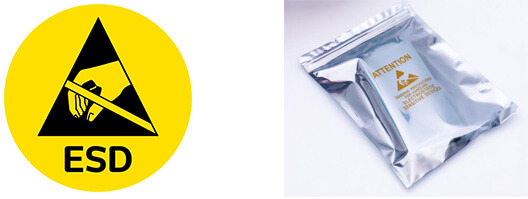
Electrostatic Discharge Protection and Handling

All electrostatic-sensitive components are handled in accordance with electrostatic discharge control procedures. The products are hermetically sealed in anti-static safe packaging to prevent electrostatic damage. Appropriate labeling is also applied for identification and traceability. This ensures product integrity during storage, handling and transportation.


ESD

Certifications & Memberships

Third-party certified, strict quality control. Our certification
  • ISO 9001: 2015
  • ISO 13485: 2016
  • ISO 14001: 2015
  • ISO 28000: 2007
  • ISO 45001: 2018
  • GB/T 27922-2011
  • SMTA
  • IPC
  • ESD
  • PSMA
S25FL128LAGNFV010 Image

S25FL128LAGNFV010

Infineon Technologies
32D-S25FL128LAGNFV010

Want a better price? Add to Cart and Submit RFQ now, we'll contact you immediately.

0 RFQ
Shopping cart (0 Items)
It is empty.
Compare List (0 Items)
It is empty.
Feedback

Your feedback matters! At Allelco, we value the user experience and strive to improve it constantly.
Please share your comments with us via our feedback form, and we'll respond promptly.
Thank you for choosing Allelco.

Subject
E-mail
Comments
Captcha
Drag or click to upload file
Upload File
types: .xls, .xlsx, .doc, .docx, .jpg, .png and .pdf.
Max file size: 10MB