View All

Please refer to the English Version as our Official Version.Return

Europe
France(Français) Germany(Deutsch) Italy(Italia) Russian(русский) Poland(polski) Czech(Čeština) Luxembourg(Lëtzebuergesch) Netherlands(Nederland) Iceland(íslenska) Hungarian(Magyarország) Spain(español) Portugal(Português) Turkey(Türk dili) Bulgaria(Български език) Ukraine(Україна) Greece(Ελλάδα) Israel(עִבְרִית) Sweden(Svenska) Finland(Svenska) Finland(Suomi) Romania(românesc) Moldova(românesc) Slovakia(Slovenská) Denmark(Dansk) Slovenia(Slovenija) Slovenia(Hrvatska) Croatia(Hrvatska) Serbia(Hrvatska) Montenegro(Hrvatska) Bosnia and Herzegovina(Hrvatska) Lithuania(lietuvių) Spain(Português) Switzerland(Deutsch) United Kingdom(English)
Asia/Pacific
Japan(日本語) Korea(한국의) Thailand(ภาษาไทย) Malaysia(Melayu) Singapore(Melayu) Vietnam(Tiếng Việt) Philippines(Pilipino)
Africa, India and Middle East
United Arab Emirates(العربية) Iran(فارسی) Tajikistan(فارسی) India(हिंदी) Madagascar(malaɡasʲ)
South America / Oceania
New Zealand(Maori) Brazil(Português) Angola(Português) Mozambique(Português)
North America
United States(English) Canada(English) Haiti(Ayiti) Mexico(español)
HomeProductsIntegrated Circuits (ICs)Specialized ICsHFA3824IV
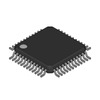
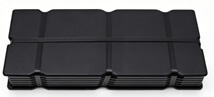
HFA3824IV Image
Image may be representation.
See specifications for product details.
EXPRESS OPTION
Payment method

HFA3824IV - Harris Corporation

Manufacturer Part Number
HFA3824IV
Manufacturer
Harris Corporation
Allelco Part Number
98D-HFA3824IV
Warranty
1 Year Allelco Warranty - Find out more
Stock Status:
32,847 pcs available, New & Original
Parts Description
SPREAD SPECTRUM PROCESSOR
Package
48-TQFP (7x7)
Data sheet
-
RoHs Status
 
Our certification
In stock: 32847
  • Unit Price: $14.209
  • Subtotal: $0.00

Want a better price?
Add to Cart and Submit RFQ now, we'll contact you immediately.

Quantity Unit Price Ext. Price
1+ $14.209 $14.21
195+ $5.67 $1,105.65
507+ $5.48 $2,778.36
1014+ $5.388 $5,463.43
The above prices does not include taxes and freight rates, which will be calculated on the order pages.


Specifications

HFA3824IV Tech Specifications
Harris Corporation - HFA3824IV technical specifications, attributes, parameters and parts with similar specifications to Harris Corporation - HFA3824IV

Product Attribute Attribute Value
Manufacturer Harris Corporation
Type Direct Sequence Spread Spectrum Baseband Processor
Supplier Device Package 48-TQFP (7x7)
Series -
Product Attribute Attribute Value
Package / Case 48-TQFP
Package Bulk
Mounting Type Surface Mount
Applications -

Environmental & Export Classifications

ATTRIBUTE DESCRIPTION
RoHs Status RoHS non-compliant
Moisture Sensitivity Level (MSL) 3 (168 Hours)
REACH Status Vendor Undefined
ECCN 5A991G
HTSUS 8542.31.0001

Frequently Asked Questions(FAQ)

How does the HFA3824IV handle frequency hopping in direct sequence spread spectrum systems, and what are the implications for interference mitigation in a 2.4 GHz ISM band deployment?
The HFA3824IV implements direct sequence spread spectrum (DSSS) modulation with pseudorandom noise (PN) coding to extend signal bandwidth beyond the original information rate. This approach spreads the transmitted energy across a wider frequency band—typically several MHz wide—reducing spectral density and enhancing resistance to narrowband interference. In a 2.4 GHz ISM band environment, where multiple devices may contend for spectrum, the chip’s processing gain of approximately 20 dB provides effective jamming margin, allowing reliable communication even when co-channel interference exceeds -90 dBm. However, due to its fixed spreading factor and lack of adaptive hopping support, system designers must implement external control logic to coordinate channel access or avoid adjacent interferers.
What is the maximum data throughput achievable using the HFA3824IV in a typical CDMA-based wireless infrastructure application, and how does this compare to modern OFDM alternatives?
The HFA3824IV supports a raw chip rate of 1.2288 Mcps (megachips per second), which translates to a maximum user data throughput of roughly 9.6 kbps under ideal conditions when using 9.6 kbps Walsh code channels. This reflects the design constraints of early 2nd generation CDMA systems. In comparison, contemporary OFDM-based solutions like IEEE 802.11a/g can deliver peak rates exceeding 54 Mbps over similar bandwidth allocations. While the HFA3824IV offers superior multipath resilience and soft handoff capabilities, its limited spectral efficiency and low data capacity make it unsuitable for high-throughput applications, though still viable for voice-centric or low-bandwidth telemetry systems.
Can the HFA3824IV operate reliably in industrial temperature environments, and what derating considerations apply for long-term reliability in outdoor base station deployments?
The HFA3824IV is specified for operation from -40°C to +85°C, meeting standard industrial grade requirements. However, the absence of detailed junction-to-ambient thermal resistance data in the available documentation suggests that sustained high ambient temperatures near 85°C may require careful PCB layout and airflow management to prevent thermal throttling or accelerated degradation. For outdoor base stations exposed to direct sunlight or enclosed in non-ventilated cabinets, additional thermal analysis is recommended. Long-term reliability under such conditions should incorporate a safety margin of at least 10–15°C below maximum rated temperature, especially given the RoHS non-compliant status, which may limit availability of lead-free solder alternatives during rework.
What clocking architecture does the HFA3824IV employ, and how sensitive is timing synchronization to jitter in GPS-disciplined reference sources?
The device relies on a highly stable external clock source synchronized to a GPS-derived 1 PPS (pulse-per-second) signal via an internal phase-locked loop. The HFA3824IV expects a 10 MHz reference input with less than 1 ns RMS jitter for optimal performance. Accumulated timing errors beyond ±50 ns over integration intervals degrade pilot symbol alignment and reduce coherent detection efficiency. Therefore, systems using crystal oscillators without GPS discipline must include a disciplined RF synthesizer or disciplined oscillator module to meet phase noise specifications; otherwise, carrier recovery loops may fail to converge, leading to increased bit error rates above 10⁻³.
How does power consumption scale with transmit mode versus receive mode in the HFA3824IV, and what impact does this have on battery-powered remote terminal designs?
During active transmission, the HFA3824IV draws approximately 300 mW at 5 V supply voltage, dominated by analog front-end and DAC operations. In receive mode, current drops to about 180 mW due to reduced ADC and digital processing loads. Idle mode consumes around 120 mW. These figures assume typical 5 V I/O levels and no external amplification stages. In battery-powered applications—such as cellular repeaters or IoT gateways—this relatively high quiescent draw limits runtime significantly compared to newer CMOS-based baseband chips. Designers must either accept short operational windows or integrate efficient switching regulators with dynamic voltage scaling, though the latter is not supported by the HFA3824IV’s fixed core voltage rails.
Is the HFA3824IV compatible with software-defined radio (SDR) platforms, and what firmware development challenges arise from its proprietary instruction set?
While the HFA3824IV can interface with general-purpose processors via its parallel bus or UART, it lacks native support for open SDR frameworks like GNU Radio due to its closed-loop control architecture and undocumented internal state machines. Firmware development typically requires Harris-provided development tools and assembly-level programming to manage frame synchronization, RAKE receiver finger allocation, and power control loops. Reverse-engineering efforts have revealed limited opcode flexibility, making real-time adaptation to changing modulation schemes impractical. Thus, integration into SDR pipelines necessitates significant middleware development and forfeits many advantages of programmability.
What are the key differences between the HFA3824IV and the later HFA3825IV revision, particularly regarding power-up sequencing and reset behavior?
The HFA3825IV introduced improved power-on reset circuitry with extended stabilization delays to accommodate lower-grade voltage regulators, whereas the HFA3824IV assumes rapid voltage ramp within 1 ms. Additionally, the HFA3825IV decouples analog and digital supply pins internally, reducing cross-coupling noise—a critical improvement for systems using shared PCB planes. Neither revision changes the core DSSS engine, so functional equivalence holds, but failure to adhere to updated sequencing guidelines in the HFA3824IV may result in corrupted initialization states when driven by noisy power supplies common in ruggedized equipment.
How should decoupling capacitors be selected for the HFA3824IV to minimize supply-induced phase noise in the RF upconverter path?
Given the sensitivity of the internal voltage-controlled oscillator (VCO) to supply ripple, a multi-tier decoupling strategy is essential: use a 10 µF tantalum bulk capacitor near the main VCC pin, supplemented by four 0.1 µF X7R ceramic capacitors placed within 2 mm of each power entry point. High-frequency bypassing requires ferrite beads in series with 1 nF NP0 caps to suppress GHz-range resonances. Improper placement or omission of mid-frequency (100 kHz–10 MHz) filtering increases spurious emissions by up to 8 dBc/Hz at 100 kHz offset, degrading adjacent channel rejection in compliant deployments. Simulation with IBIS models confirms that impedance should remain below 0.3 Ω from DC to 500 MHz.
What are the legal and logistical risks associated with sourcing the HFA3824IV today, considering its RoHS non-compliance and restricted export classification?
The HFA3824IV is marked RoHS non-compliant due to lead content in die attach and mold compound, limiting its use in EU-regulated consumer electronics and restricting sales through certified distributors. Its ECCN designation of 5A991G indicates dual-use status under U.S. export controls, requiring license verification for shipments to certain jurisdictions. Procurement channels are now limited primarily to surplus or government-specified stock, increasing lead times and cost volatility. System integrators should evaluate end-of-life planning carefully, as migration to compliant alternatives like the HFA3826IP may be mandated within three years of new product launch, affecting long-term serviceability.
In what scenarios would the HFA3824IV outperform a modern LTE modem despite its legacy architecture, and why might engineers still choose it?
The HFA3824IV excels in environments with severe multipath fading and high Doppler shift, thanks to its RAKE receiver with up to four correlator fingers and coherent combining capability. It also provides deterministic latency under bursty traffic loads, making it preferable for command-and-control radios requiring guaranteed response times below 50 ms. Furthermore, its integrated AGC and automatic level control reduce external component count in fixed-site installations where size and power are secondary concerns. Engineers retain it when maintaining compatibility with existing infrastructure or when leveraging its proven field history in military or public safety networks outweighs the benefits of newer protocols.

Parts with Similar Specifications

The three parts on the right have similar specifications to Harris Corporation HFA3824IV

Product Attribute HFA3824AIV96 HFA3824AIV HFA3824IV96 HFA3845IK
Part Number HFA3824AIV96 HFA3824AIV HFA3824IV96 HFA3845IK
Manufacturer Harris Corporation Harris Corporation Harris Corporation Intersil (Renesas Electronics Corporation)
Package - Tape & Reel (TR) Tube Tape & Reel (TR)
Applications - - - -
Series - - - -
Mounting Type - Surface Mount Through Hole Surface Mount
Type - - - -
Supplier Device Package - 196-NFBGA (12x12) 16-PDIP 64-VQFN (9x9)
Package / Case - 196-LFBGA 16-DIP (0.300', 7.62mm) 64-VFQFN Exposed Pad

Customer Reviews

Evaluation: 10 Articles

  • Emil***rperTech
    Jun 23, 2026

    Works exactly as described. I used it as a USB-to-SPI bridge in a small MCU development project and communication was stable from the first setup.

  • Liam***terTech
    Jun 15, 2026

    Used this CPLD in a logic control project. Programming was straightforward and signal timing matched the design requirements.

  • Nath***rooks
    Jun 11, 2026

    Installed this power component in a converter board. Output remained stable under different load conditions and thermal performance was better than expected.

  • Dani***alkerTech
    Jun 1, 2026

    Product works, but setup took more effort than expected. Once configured the MCU ran reliably, although documentation support felt older compared with newer platforms. Fine for maintenance projects.

  • Yuki***aka88
    May 26, 2026

    信号通信プロジェクトでこのRS-485トランシーバーを使用しました。設置は簡単で、長距離ケーブルでも通信は安定していました。消費電力も、以前使用していたものより低くなっています。

  • Stev***aker
    May 20, 2026

    Solid diode for power rectification. Works well in switching circuits.

  • Bran***Lewis
    May 11, 2026

    Compact FPGA with good performance. Suitable for basic signal processing tasks.

  • Oliv***arris
    May 7, 2026

    Reliable I/O expander. Works well in embedded control applications.

  • Jess***Jones
    Apr 17, 2026

    It offers good value for the price, and the specifications match the description. I’ve been using it for two days with no issues, and I’ll definitely buy it again if I need it in the future.

  • Mich***Smith
    Apr 17, 2026

    Shipping was on time, the component pins are neatly aligned, and I tested 10 of them with a multimeter—all readings were within the specified range. Highly recommended.

Write a Review

Your Email address will not be published.

Shipment

Delivery Time

In-stock items can be shipped within 24 hours. Some parts will be arranged for delivery within 1-2 days from the date all items arrive at our warehouse. And Allelco ships order once a day at about 17:00, except Sunday. Once the goods are shipped, the estimated delivery time depends on the shipping methods and Delivery destination. The table below shows are the logistic time for some common countries.

Delivery Cost

  1. Use your express account for shipment if you have one.
  2. Use our account for the shipment. Refer to the table below for the approximate charges.
(Different time frame / countries / package size has different price.)

Delivery Method

  1. Global Common Shipment by DHL / UPS / FedEx / TNT / EMS / SF we support.
  2. Others more shipping ways, please get in touch with your customer manager.

Common Countries Logistic Time Reference
Region Country Logistic Time(Day)
America United States 5
Brazil 7
Europe Germany 5
United Kingdom 4
Italy 5
Oceania Australia 6
New Zealand 5
Asia India 4
Japan 4
Middle East Israel 6
DHL & FedEx Shipment Charges Reference
Shipment charges(KG) Reference DHL(USD$)
0.00kg-1.00kg USD$30.00 - USD$60.00
1.00kg-2.00kg USD$40.00 - USD$80.00
2.00kg-3.00kg USD$50.00 - USD$100.00
Note:
The above table is for reference only. There may have some data bias for the uncontrollable factors.
Contact us if you have any questions.
  • QC (Quality Warranty)
  • Payment Support
  • Packaging
  • Certifications & Memberships

QC (Quality Warranty)

Allelco is committed to exceeding customer expectations through customer service excellence, order accuracy, and on-time delivery.
This is achieved through our commitment to the continual improvement of our processes, services, and products.


Strict quality inspection builds a solid foundation for electronic component quality.
  1. Visual inspection
  2. Performance testing and reliability verification
  3. Standardized full-process testing
  4. Precise control of every parameter
We eliminate defective components and ensure the stable operation of electronic devices through professional quality standards.

Payment Support

The payment method can be chosen from the methods shown below: Wire Transfer (T/T, Bank Transfer), Western Union, Credit card, PayPal.
  • HKBea
  • Paypal
  • MasterCard
  • Western-Union
  • VISA
Stable Delivery, Sincere Partnership — Your Faithful Supply Chain Partner
  • Efficient Supply Management
  • Cost-Saving Procurement
  • Fast Sourcing & Delivery
Contact us if you have any questions.

Packaging

Electrostatic Discharge Protection and Handling

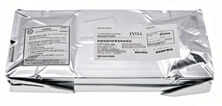
All electrostatic-sensitive components are handled in accordance with electrostatic discharge control procedures. The products are hermetically sealed in anti-static safe packaging to prevent electrostatic damage. Appropriate labeling is also applied for identification and traceability. This ensures product integrity during storage, handling and transportation.


ESD

Certifications & Memberships

Third-party certified, strict quality control. Our certification
  • ISO 9001: 2015
  • ISO 13485: 2016
  • ISO 14001: 2015
  • ISO 28000: 2007
  • ISO 45001: 2018
  • GB/T 27922-2011
  • SMTA
  • IPC
  • ESD
  • PSMA
HFA3824IV Image

HFA3824IV

Harris Corporation
98D-HFA3824IV

Want a better price? Add to Cart and Submit RFQ now, we'll contact you immediately.

0 RFQ
Shopping cart (0 Items)
It is empty.
Compare List (0 Items)
It is empty.
Feedback

Your feedback matters! At Allelco, we value the user experience and strive to improve it constantly.
Please share your comments with us via our feedback form, and we'll respond promptly.
Thank you for choosing Allelco.

Subject
E-mail
Comments
Captcha
Drag or click to upload file
Upload File
types: .xls, .xlsx, .doc, .docx, .jpg, .png and .pdf.
Max file size: 10MB