View All

Please refer to the English Version as our Official Version.Return

Europe
France(Français) Germany(Deutsch) Italy(Italia) Russian(русский) Poland(polski) Czech(Čeština) Luxembourg(Lëtzebuergesch) Netherlands(Nederland) Iceland(íslenska) Hungarian(Magyarország) Spain(español) Portugal(Português) Turkey(Türk dili) Bulgaria(Български език) Ukraine(Україна) Greece(Ελλάδα) Israel(עִבְרִית) Sweden(Svenska) Finland(Svenska) Finland(Suomi) Romania(românesc) Moldova(românesc) Slovakia(Slovenská) Denmark(Dansk) Slovenia(Slovenija) Slovenia(Hrvatska) Croatia(Hrvatska) Serbia(Hrvatska) Montenegro(Hrvatska) Bosnia and Herzegovina(Hrvatska) Lithuania(lietuvių) Spain(Português) Switzerland(Deutsch) United Kingdom(English)
Asia/Pacific
Japan(日本語) Korea(한국의) Thailand(ภาษาไทย) Malaysia(Melayu) Singapore(Melayu) Vietnam(Tiếng Việt) Philippines(Pilipino)
Africa, India and Middle East
United Arab Emirates(العربية) Iran(فارسی) Tajikistan(فارسی) India(हिंदी) Madagascar(malaɡasʲ)
South America / Oceania
New Zealand(Maori) Brazil(Português) Angola(Português) Mozambique(Português)
North America
United States(English) Canada(English) Haiti(Ayiti) Mexico(español)
HomeProductsIntegrated Circuits (ICs)PMIC - Battery ChargersBQ25611RTWR
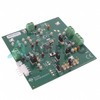
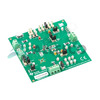
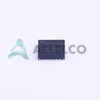
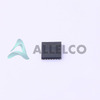
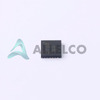
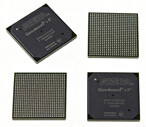
Image may be representation.
See specifications for product details.
EXPRESS OPTION
Payment method

BQ25611RTWR - Texas Instruments

Manufacturer Part Number
BQ25611RTWR
Manufacturer
Texas Instruments
Allelco Part Number
98D-BQ25611RTWR
Warranty
1 Year Allelco Warranty - Find out more
Stock Status:
9,877 pcs available, New & Original
Parts Description
PROTOTYPE
Package
Bulk
Data sheet
-
RoHs Status
ROHS3 Compliant
Our certification
In stock: 9877

Required fields are indicated by an asterisk (*)
Please send RFQ, we will respond immediately.

Quantity

Specifications

BQ25611RTWR Tech Specifications
Texas Instruments - BQ25611RTWR technical specifications, attributes, parameters and parts with similar specifications to Texas Instruments - BQ25611RTWR

Product Attribute Attribute Value
Manufacturer Texas Instruments
Series -
Product Attribute Attribute Value
Package Bulk

Environmental & Export Classifications

ATTRIBUTE DESCRIPTION
RoHs Status ROHS3 Compliant
Moisture Sensitivity Level (MSL) 2 (1 Year)

Frequently Asked Questions(FAQ)

How does the BQ25611RTWR handle thermal regulation during fast-charging of a lithium-ion battery at high ambient temperatures, and what design precautions are necessary to ensure reliable operation?
The BQ25611RTWR incorporates an internal thermal regulation loop that dynamically reduces charging current when the IC or its surrounding environment approaches thermal limits. This feature is particularly important during high-current charging scenarios in elevated ambient conditions, such as above 40°C. Designers should ensure adequate PCB copper area for heat dissipation near the device, especially if operating in continuous fast-charge mode. Thermal vias under the package can improve junction-to-ambient thermal resistance. While the IC is designed to operate safely within specified limits, sustained high-power operation without sufficient cooling may trigger current throttling, extending charge time.
What are the key differences between the BQ25611RTWR and the BQ25703A in terms of input voltage range, maximum charge current capability, and safety features for industrial battery management systems?
The BQ25611RTWR supports an input voltage range from 3.9V to 14V, enabling compatibility with USB PD and legacy adapters, while the BQ25703A operates over a narrower range of 3.9V to 12V. The BQ25611RTWR offers higher programmable charge current up to 5A with integrated FETs, whereas the BQ25703A provides up to 4A but requires external pass transistors. Both support I2C-based configuration, but only the BQ25611RTWR includes built-in protection against reverse current flow and enhanced thermal shutdown with automatic recovery. For industrial applications requiring robust input flexibility and high power delivery, the BQ25611RTWR presents a more versatile solution.
Can the BQ25611RTWR be used with non-rechargeable primary cells, and if so, which charging profiles must be avoided to prevent irreversible damage?
While the BQ25611RTWR is optimized for rechargeable lithium-based chemistries (e.g., Li-Ion, Li-Po), it can technically charge certain primary cells under strict limitations. However, the constant-voltage stage and trickle-charge algorithms are unsuitable for non-rechargeable types like alkaline or lithium-sulfur dioxide cells. Attempting to use these profiles may cause overdischarge, leakage, or thermal runaway. If primary cell charging is required, the device’s CV and CC regulation must be disabled via I2C commands, and only low-current pre-conditioning should be applied—always verifying cell specifications against TI’s application notes.
In a system where multiple batteries are charged sequentially, how does the BQ25611RTWR coordinate charging timing and fault reporting through its I2C interface, and what register settings optimize synchronization across channels?
The BQ25611RTWR supports multi-battery sequencing by allowing independent monitoring and control of charge status via its I2C-configurable registers. Each battery channel can be polled for state-of-charge (SOC) data, charge termination flags, and fault conditions such as overvoltage or thermal shutdown. To synchronize charging phases, designers can program staggered start times using the charge enable bits and monitor completion via the INT pin. Critical registers include STATUS_REG for real-time fault detection and CHARGE_CONFIG for setting individual charge parameters. Proper use of interrupt masking ensures timely responses without bus congestion, enabling scalable battery management architectures.
What are the consequences of exceeding the absolute maximum input voltage of 14V on the BQ25611RTWR, and how should transient spikes from inductive loads be mitigated in automotive environments?
Exceeding 14V on the VBUS pin risks permanent damage to internal ESD structures and voltage regulation circuits due to oxide breakdown. In automotive systems exposed to load dump events (e.g., sudden alternator disconnection), transient voltages can reach 40V. The BQ25611RTWR lacks built-in transient protection beyond standard ESD ratings, so an external TVS diode rated for 18–20V clamping voltage must be placed close to the connector. A series ferrite bead combined with bulk capacitance helps dampen high-frequency components. Layout considerations include short traces and ground plane stitching to minimize parasitic inductance and ensure effective clamping.
How does the BQ25611RTWR implement charge termination logic, and what role do battery temperature sensors play in ensuring safe full-charge conditions for long-term battery health?
The device terminates charging based on a combination of factors: reaching the programmed voltage threshold (typically 4.2V per cell), dropping below a set current floor (e.g., 10% of C-rate), and optionally confirming temperature stability. Integrated thermistor monitoring uses the TS pin with a precision bias circuit; the IC suspends charging if temperature falls outside the valid window (commonly 0°C to 45°C). This prevents overcharging in cold environments and avoids lithium plating. For optimal longevity, users should configure the termination current to ≤10% of capacity and avoid frequent shallow discharges, as the IC cannot compensate for user-defined usage patterns.
When integrating the BQ25611RTWR into a portable medical device, how should EMI performance be evaluated given its switching behavior and proximity to sensitive analog circuitry?
The BQ25611RTWR employs fixed-frequency PWM modulation for inductor current control, generating switching harmonics typically below 2MHz. In medical devices with ECG or patient-monitoring circuits, radiated and conducted emissions must be assessed per IEC 60601-1-2 standards. Keep switching loops small by placing input/output capacitors close to the IC, use shielded inductors, and route high-current paths away from analog sections. Adding RC snubbers across MOSFETs can reduce ringing. Pre-compliance testing with a spectrum analyzer or LISN helps identify problematic frequencies early, though final certification requires full system-level evaluation.
What is the significance of the Moisture Sensitivity Level 1 classification for the BQ25611RTWR, and how does this impact storage and handling in high-humidity manufacturing environments?
MSL 1 indicates the BQ25611RTWR is not susceptible to moisture-induced failures during normal assembly processes. There is no requirement for baking prior to reflow soldering, and exposure to ambient humidity poses negligible risk. This simplifies supply chain logistics, especially in regions with elevated humidity levels. Nevertheless, prolonged storage in uncontrolled environments could lead to condensation if the device is moved suddenly to a colder location—though unlikely given its plastic packaging and hermetic sealing. Standard IPC Class 3 handling procedures suffice, reducing production delays and cost overhead.
How does the BQ25611RTWR support dynamic power path management, and what benefits does this provide in systems with simultaneous charging and discharging demands?
The BQ25611RTWR integrates a power-path controller that allows the system load to draw power directly from the input source (e.g., USB) even while charging the battery. This enables true “pass-through” operation, where the battery charges independently without interrupting system functionality. During brownout conditions, the IC prioritizes system supply over charging, preventing unexpected shutdowns. By monitoring VBUS and battery voltage, it seamlessly switches between sources based on availability. This is critical in always-on devices like IoT gateways or handheld tools, where uninterrupted operation outweighs optimal charge speed.
What I2C addressing and communication protocol details must be considered when cascading multiple BQ25611RTWR units on the same bus for multi-cell battery packs?
Each BQ25611RTWR defaults to a unique 7-bit I2C address (0x6B) but can be reconfigured via the ADDR pin to one of four alternate addresses (0x6A, 0x69, 0x68, 0x67) using pull-up resistors. When managing multiple devices, ensure proper address assignment to avoid bus contention. Communication follows standard SMBus conventions with 10-bit addressing not supported. Clock stretching is handled internally, but total bus capacitance must remain under 400pF for 100kHz operation. Pull-up resistor values (typically 4.7kΩ) should balance rise time and power consumption. Isolating interrupt lines or using dedicated GPIOs for per-device signaling enhances fault diagnosis in complex topologies.
How does the BQ25611RTWR compare to discrete charger solutions in terms of bill-of-materials (BOM) cost and board space efficiency for compact consumer electronics?
Compared to discrete implementations requiring multiple comparators, op-amps, and discrete FETs, the BQ25611RTWR reduces BOM count by approximately 60% and saves 40–50% in PCB real estate. Its integrated pass elements eliminate external drivers and sense resistors, lowering component count and simplifying layout. Although unit cost is higher than a bare microcontroller + discrete circuit, the net reduction in assembly labor and test time often results in lower total system cost. For space-constrained designs like wearables or thin tablets, the integration advantage outweighs marginal cost differences, especially when considering reliability and compliance certifications.
What precautions should be taken when replacing the BQ25611RTWR in legacy designs originally using the BQ24192, particularly regarding input filtering and output capacitor selection?
The BQ25611RTWR has stricter requirements for input stability due to its wide input range and adaptive input current limiting. Unlike the BQ24192, it expects tighter output capacitance tolerance (X5R or X7R preferred) and recommends ≥22μF on VOUT with low ESR. Input bulk capacitance should exceed 47μF to support fast transients from USB PD negotiation. Additionally, the BQ25611RTWR uses a different soft-start algorithm, so bypassing startup delays may cause inrush issues. Replacing without updating the filter network or adding input TVS protection risks instability or false fault triggers during plug-in events.
How does the BQ25611RTWR handle reverse current protection, and why is this feature essential in bidirectional power systems?
Reverse current protection is inherent in the BQ25611RTWR due to its synchronous buck-boost architecture and internal body diodes oriented to block backflow from battery to input under normal conditions. If the input voltage drops below battery voltage (e.g., during system shutdown), the IC automatically isolates the load path unless explicitly enabled via configuration registers. This prevents unintended discharge and protects upstream regulators. In solar-powered or energy-harvesting systems, this ensures stored energy remains available until needed, improving overall efficiency and simplifying system-level power routing logic.
What diagnostic capabilities does the BQ25611RTWR offer for field maintenance, and how can engineers extract meaningful health metrics from its status registers?
The IC exposes comprehensive diagnostics through readable status registers accessible via I2C, including battery voltage, input current, charge current, and fault flags. Engineers can derive battery state-of-health (SOH) by comparing actual charge termination current to initial capacity estimates, though the IC itself does not perform cycle counting. Fault history can be captured by logging STATUS_REG contents after error events. For predictive maintenance, periodic polling of NTC thermistor readings and input voltage dips helps detect degradation in adapter performance or poor thermal interfaces. These data points enable condition-based servicing rather than fixed-interval replacements.
How does the RoHS3 compliance of the BQ25611RTWR influence material choices in global supply chains, and are there any hidden constraints beyond lead-free soldering?
RoHS3 compliance extends beyond lead elimination to restrict additional substances, including DEHP, BBP, DBP, and DIBP in plastics. While the BQ25611RTWR’s packaging materials meet these thresholds, assemblers must verify third-party certifications from suppliers to avoid batch rejection at customs. Unlike earlier RoHS versions, RoHS3 also mandates clear labeling and documentation for electrical equipment, affecting traceability. This impacts procurement strategies, as some regional distributors may stock non-compliant inventory. Designers should request full material declarations (IMDS or similar) to ensure end-of-life recyclability and avoid regulatory penalties in markets like Europe or China.
What are the implications of using the BQ25611RTWR in high-altitude aerospace applications, particularly regarding creepage and clearance requirements?
At altitudes above 2,000 meters, reduced air pressure lowers dielectric strength, increasing the risk of arcing between adjacent conductors. The BQ25611RTWR’s exposed pads and internal structure assume standard atmospheric conditions, so designers must adhere to IPC-2221 derating rules when placing traces near high-voltage nodes. Minimum creepage distance between VBUS and GND should exceed 0.8mm, and clearance must account for altitude-induced ionization effects. Using conformal coating adds insulation but introduces outgassing concerns in vacuum environments—thus, selection depends on mission profile. Consult TI’s aerospace application note for qualified design practices.

Parts with Similar Specifications

The three parts on the right have similar specifications to Texas Instruments BQ25611RTWR

Product Attribute BQ25611DRTWR BQ25616JRTWR BQ25611DRTWT BQ25611RTWT
Part Number BQ25611DRTWR BQ25616JRTWR BQ25611DRTWT BQ25611RTWT
Manufacturer Texas Instruments Texas Instruments Texas Instruments Texas Instruments
Series - - - -
Package - Tape & Reel (TR) Tube Tape & Reel (TR)

Customer Reviews

Evaluation: 10 Articles

  • Dani***alkerTech
    Jun 1, 2026

    Product works, but setup took more effort than expected. Once configured the MCU ran reliably, although documentation support felt older compared with newer platforms. Fine for maintenance projects.

  • Yuki***aka88
    May 26, 2026

    信号通信プロジェクトでこのRS-485トランシーバーを使用しました。設置は簡単で、長距離ケーブルでも通信は安定していました。消費電力も、以前使用していたものより低くなっています。

  • Stev***aker
    May 20, 2026

    Solid diode for power rectification. Works well in switching circuits.

  • Bran***Lewis
    May 11, 2026

    Compact FPGA with good performance. Suitable for basic signal processing tasks.

  • Oliv***arris
    May 7, 2026

    Reliable I/O expander. Works well in embedded control applications.

  • Jess***Jones
    Apr 17, 2026

    It offers good value for the price, and the specifications match the description. I’ve been using it for two days with no issues, and I’ll definitely buy it again if I need it in the future.

  • Mich***Smith
    Apr 17, 2026

    Shipping was on time, the component pins are neatly aligned, and I tested 10 of them with a multimeter—all readings were within the specified range. Highly recommended.

  • Aman***arris
    Apr 3, 2026

    It was great—the entire process, from placing the order to receiving the package, went very smoothly. The components were consistent, the price was fair, and I had a very pleasant shopping experience.

  • Mike***nch
    Apr 3, 2026

    Better than expected! The resistance and capacitance readings were spot-on, and it passed the test on the first try. The service was reliable, and the packaging was thoughtful—I highly recommend it.

  • Daic***K.
    Mar 23, 2026

    Very good. No issue after long time testing.

Write a Review

Your Email address will not be published.

Shipment

Delivery Time

In-stock items can be shipped within 24 hours. Some parts will be arranged for delivery within 1-2 days from the date all items arrive at our warehouse. And Allelco ships order once a day at about 17:00, except Sunday. Once the goods are shipped, the estimated delivery time depends on the shipping methods and Delivery destination. The table below shows are the logistic time for some common countries.

Delivery Cost

  1. Use your express account for shipment if you have one.
  2. Use our account for the shipment. Refer to the table below for the approximate charges.
(Different time frame / countries / package size has different price.)

Delivery Method

  1. Global Common Shipment by DHL / UPS / FedEx / TNT / EMS / SF we support.
  2. Others more shipping ways, please get in touch with your customer manager.

Common Countries Logistic Time Reference
Region Country Logistic Time(Day)
America United States 5
Brazil 7
Europe Germany 5
United Kingdom 4
Italy 5
Oceania Australia 6
New Zealand 5
Asia India 4
Japan 4
Middle East Israel 6
DHL & FedEx Shipment Charges Reference
Shipment charges(KG) Reference DHL(USD$)
0.00kg-1.00kg USD$30.00 - USD$60.00
1.00kg-2.00kg USD$40.00 - USD$80.00
2.00kg-3.00kg USD$50.00 - USD$100.00
Note:
The above table is for reference only. There may have some data bias for the uncontrollable factors.
Contact us if you have any questions.
  • QC (Quality Warranty)
  • Payment Support
  • Packaging
  • Certifications & Memberships

QC (Quality Warranty)

Allelco is committed to exceeding customer expectations through customer service excellence, order accuracy, and on-time delivery.
This is achieved through our commitment to the continual improvement of our processes, services, and products.


Strict quality inspection builds a solid foundation for electronic component quality.
  1. Visual inspection
  2. Performance testing and reliability verification
  3. Standardized full-process testing
  4. Precise control of every parameter
We eliminate defective components and ensure the stable operation of electronic devices through professional quality standards.

Payment Support

The payment method can be chosen from the methods shown below: Wire Transfer (T/T, Bank Transfer), Western Union, Credit card, PayPal.
  • HKBea
  • Paypal
  • MasterCard
  • Western-Union
  • VISA
Stable Delivery, Sincere Partnership — Your Faithful Supply Chain Partner
  • Efficient Supply Management
  • Cost-Saving Procurement
  • Fast Sourcing & Delivery
Contact us if you have any questions.

Packaging

Electrostatic Discharge Protection and Handling

All electrostatic-sensitive components are handled in accordance with electrostatic discharge control procedures. The products are hermetically sealed in anti-static safe packaging to prevent electrostatic damage. Appropriate labeling is also applied for identification and traceability. This ensures product integrity during storage, handling and transportation.


ESD

Certifications & Memberships

Third-party certified, strict quality control. Our certification
  • ISO 9001: 2015
  • ISO 13485: 2016
  • ISO 14001: 2015
  • ISO 28000: 2007
  • ISO 45001: 2018
  • GB/T 27922-2011
  • SMTA
  • IPC
  • ESD
  • PSMA
Texas Instruments

BQ25611RTWR

Texas Instruments
98D-BQ25611RTWR

Want a better price? Add to Cart and Submit RFQ now, we'll contact you immediately.

0 RFQ
Shopping cart (0 Items)
It is empty.
Compare List (0 Items)
It is empty.
Feedback

Your feedback matters! At Allelco, we value the user experience and strive to improve it constantly.
Please share your comments with us via our feedback form, and we'll respond promptly.
Thank you for choosing Allelco.

Subject
E-mail
Comments
Captcha
Drag or click to upload file
Upload File
types: .xls, .xlsx, .doc, .docx, .jpg, .png and .pdf.
Max file size: 10MB