View All

Please refer to the English Version as our Official Version.Return

Europe
France(Français) Germany(Deutsch) Italy(Italia) Russian(русский) Poland(polski) Czech(Čeština) Luxembourg(Lëtzebuergesch) Netherlands(Nederland) Iceland(íslenska) Hungarian(Magyarország) Spain(español) Portugal(Português) Turkey(Türk dili) Bulgaria(Български език) Ukraine(Україна) Greece(Ελλάδα) Israel(עִבְרִית) Sweden(Svenska) Finland(Svenska) Finland(Suomi) Romania(românesc) Moldova(românesc) Slovakia(Slovenská) Denmark(Dansk) Slovenia(Slovenija) Slovenia(Hrvatska) Croatia(Hrvatska) Serbia(Hrvatska) Montenegro(Hrvatska) Bosnia and Herzegovina(Hrvatska) Lithuania(lietuvių) Spain(Português) Switzerland(Deutsch) United Kingdom(English)
Asia/Pacific
Japan(日本語) Korea(한국의) Thailand(ภาษาไทย) Malaysia(Melayu) Singapore(Melayu) Vietnam(Tiếng Việt) Philippines(Pilipino)
Africa, India and Middle East
United Arab Emirates(العربية) Iran(فارسی) Tajikistan(فارسی) India(हिंदी) Madagascar(malaɡasʲ)
South America / Oceania
New Zealand(Maori) Brazil(Português) Angola(Português) Mozambique(Português)
North America
United States(English) Canada(English) Haiti(Ayiti) Mexico(español)
HomeProductsIntegrated Circuits (ICs)Embedded - MicroprocessorsOMAPL137BZKB3
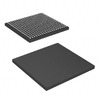
Image may be representation.
See specifications for product details.
EXPRESS OPTION
Payment method

OMAPL137BZKB3 - Texas Instruments

Manufacturer Part Number
OMAPL137BZKB3
Manufacturer
Texas Instruments
Allelco Part Number
32D-OMAPL137BZKB3
Warranty
1 Year Allelco Warranty - Find out more
Stock Status:
9,670 pcs available, New & Original
Parts Description
IC MPU OMAP-L1X 375MHZ 256BGA
Package
256-BGA (17x17)
Data sheet
OMAPL137BZKB3.pdf
RoHs Status
ROHS3 Compliant
Our certification
In stock: 9670

Required fields are indicated by an asterisk (*)
Please send RFQ, we will respond immediately.

Quantity

Specifications

OMAPL137BZKB3 Tech Specifications
Texas Instruments - OMAPL137BZKB3 technical specifications, attributes, parameters and parts with similar specifications to Texas Instruments - OMAPL137BZKB3

Product Attribute Attribute Value
Manufacturer Texas Instruments
Voltage - I/O 1.8V, 3.3V
USB USB 1.1 + PHY (1), USB 2.0 + PHY (1)
Supplier Device Package 256-BGA (17x17)
Speed 375MHz
Series OMAP-L1x
Security Features -
SATA -
RAM Controllers SDRAM
Package / Case 256-BGA
Package Tray
Product Attribute Attribute Value
Operating Temperature 0°C ~ 90°C (TJ)
Number of Cores/Bus Width 1 Core, 32-Bit
Mounting Type Surface Mount
Graphics Acceleration No
Ethernet 10/100Mbps (1)
Display & Interface Controllers LCD
Core Processor ARM926EJ-S
Co-Processors/DSP Signal Processing; C674x, System Control; CP15
Base Product Number OMAPL137
Additional Interfaces HPI, I²C, McASP, MMC/SD, SPI, UART

Environmental & Export Classifications

ATTRIBUTE DESCRIPTION
RoHs Status ROHS3 Compliant
Moisture Sensitivity Level (MSL) 3 (168 Hours)
REACH Status REACH Unaffected
ECCN 3A991A2
HTSUS 8542.31.0001

Parts Introduction

Manufacturer Part Number

OMAPL137BZKB3

Manufacturer

Texas Instruments

Introduction

Embedded microprocessor based on ARM architecture, part of the OMAP-L1x series, tailored for signal processing and industrial applications.

Product Features and Performance

ARM926EJ-S Core Processor

C674x Digital Signal Processor for enhanced signal processing

System Control through CP15 co-processor

32-Bit bus width for efficient data handling

375MHz processor speed for robust performance

Support for SDRAM memory controllers

Integrated 10/100Mbps Ethernet for networking capabilities

USB interfaces, including USB 1.1 and USB 2.0 support

Surface Mount 256-BGA packaging for compact design

Various additional interfaces like HPI, I2C, McASP, MMC/SD, SPI, and UART for extensive peripheral connectivity

Product Advantages

Integration of ARM and DSP cores for flexibility in signal processing and control tasks

Low-power consumption supporting battery-powered applications

Supports a wide range of I/O voltage levels for system design flexibility

Key Technical Parameters

Core Processor: ARM926EJ-S

Number of Cores/Bus Width: 1 Core, 32-Bit

Speed: 375MHz

Ethernet: 10/100Mbps

USB: USB 1.1 and USB 2.0

Voltage - I/O: 1.8V, 3.3V

Operating Temperature Range: 0°C ~ 90°C

Quality and Safety Features

Operating temperature range suited for industrial environments

Robust BGA packaging for secure mounting and reliability

Compatibility

Supports a variety of industrial interfaces and standards for broad device compatibility

Application Areas

Industrial control

Medical equipment

Audio processing

Embedded computing

Product Lifecycle

Obsolete status indicates discontinuation in production

Replacement parts or upgrades may be limited or unavailable

Several Key Reasons to Choose This Product

Combination of ARM and DSP cores suitable for versatile embedded processing tasks

High-speed Ethernet and USB interfaces for excellent connectivity options

Wide operating temperature supports challenging industrial environments

Supports a diverse range of external interfaces for multifaceted application designs

Energy-efficient design suitable for power-sensitive applications

Frequently Asked Questions(FAQ)

How does the OMAPL137BZKB3 compare to other processors in Texas Instruments' OMAP-L1x series when considering power efficiency and peripheral integration for industrial control applications?
The OMAPL137BZKB3 operates at 375MHz with a single ARM926EJ-S core and integrates a C674x DSP subsystem, enabling efficient signal processing alongside general-purpose tasks. This dual-core architecture allows workload partitioning that can reduce overall system power consumption compared to running equivalent processing on a standalone microcontroller or FPGA. In contrast, higher-performance members of the OMAP-L1x family may offer faster clock speeds but consume more power due to additional peripherals and enhanced memory controllers. The OMAPL137BZKB3 provides a balanced profile with integrated USB, Ethernet, LCD, and McASP interfaces, minimizing the need for external components and thus lowering total board-level power draw in space-constrained industrial designs.
What are the key thermal and electrical considerations when integrating the OMAPL137BZKB3 into a high-reliability embedded system operating across its full temperature range?
The OMAPL137BZKB3 is rated for junction temperatures from 0°C to 90°C, which aligns with commercial and industrial environments but excludes extreme cold or hot applications without additional thermal management. At 375MHz, typical dynamic power consumption is approximately 0.8–1.2W under nominal loads, depending on bus activity and peripheral usage. Combined with static leakage currents, total power dissipation must be evaluated in relation to PCB copper area and heatsinking capability. Since the device uses both 1.8V and 3.3V I/O rails, voltage regulators must maintain tight tolerance (±3%) to avoid timing violations during clock transitions, especially critical given the ARM926EJ-S’s synchronous design requirements.
Can the OMAPL137BZKB3 support real-time audio processing using its McASP interface while simultaneously managing network traffic over Ethernet?
Yes, the OMAPL137BZKB3 includes a configurable Multichannel Audio Serial Port (McASP) capable of supporting up to 8 stereo audio channels at 96kHz sample rates, paired with a dedicated C674x DSP engine optimized for floating-point operations. The Ethernet MAC runs independently via the RGMII interface, allowing concurrent data flow. However, shared memory bandwidth between the ARM926EJ-S and C674x cores means peak performance depends on effective software partitioning—typically achieved through TI’s SYS/BIOS RTOS or similar frameworks. Careful buffer sizing and interrupt prioritization are necessary to prevent audio glitches during sustained network bursts.
How does the memory controller on the OMAPL137BZKB3 affect system latency and throughput when interfacing with modern SDRAM modules?
The OMAPL137BZKB3 features an integrated SDRAM controller supporting up to 16-bit or 32-bit wide memories with burst access capabilities. Typical read/write latencies range from 15 to 25 ns depending on CAS settings and row activation delays. While sufficient for most embedded applications, accessing large datasets or executing complex algorithms on the C674x core may saturate available bandwidth if not managed properly. Designers should align memory accesses to cache lines and use DMA transfers where possible to minimize CPU overhead and maintain deterministic response times.
Is it feasible to upgrade firmware or debug the OMAPL137BZKB3 in production units using only USB interfaces without JTAG?
The OMAPL137BZKB3 supports booting from internal flash or external devices via multiple interfaces, including USB. It can enter ROM-based USB boot mode using specific GPIO pin configurations, enabling field updates through DFU (Device Firmware Upgrade) protocols. However, full debugging—such as setting breakpoints, inspecting CPU state, or tracing execution—requires JTAG access via the standard IEEE 1149.1 interface. While USB offers convenient update paths, developers must ensure robust error handling and rollback mechanisms during over-the-air updates to prevent bricking in deployed systems.
What trade-offs exist between using the OMAPL137BZKB3 with internal vs. external flash for boot code storage, and how do they impact system startup time?
Internal boot ROM on the OMAPL137BZKB3 executes first-stage bootloaders directly from SPI-connected NOR/NAND flashes, bypassing external memory initialization. This approach reduces boot time significantly—often under 100ms for small images—and avoids DRAM training overhead. Alternatively, loading from external SDRAM increases startup latency by several hundred milliseconds due to DDR initialization sequences. For safety-critical applications, internal boot ensures consistent behavior even if external memory fails, though it limits code size and flexibility. Developers must weigh these factors based on application reliability requirements and user experience expectations.
Does the OMAPL137BZKB3 require external PHY devices for its Ethernet and USB ports, or are they fully integrated?
The OMAPL137BZKB3 includes embedded USB 2.0 and USB 1.1 transceivers with built-in PHY layers, eliminating the need for discrete USB transceivers. However, its Ethernet MAC lacks an integrated PHY; instead, it interfaces via RGMII to an external Ethernet transceiver such as the DP83848 or LAN8720. Similarly, USB host or device operation requires pull-up/pull-down resistors and crystal circuits per USB specifications. This distinction affects PCB layout complexity and BOM cost—designers must allocate space and routing resources accordingly while adhering to impedance-controlled traces near high-speed differential pairs.
How does the absence of hardware graphics acceleration in the OMAPL137BZKB3 influence UI development compared to ARM Cortex-A series processors?
Unlike modern Cortex-A processors with Mali GPUs or dedicated 2D/3D accelerators, the OMAPL137BZKB3 relies solely on software rendering for GUI elements. Drawing operations consume significant CPU cycles on the ARM926EJ-S, limiting frame rates to 15–30 FPS for basic widgets and complicating animation smoothness. While acceptable for simple menus or data dashboards, richer interfaces demand optimization techniques like partial redraws or off-screen buffering. The lack of GPU also means no hardware compositing or alpha blending support, pushing rendering logic entirely onto the main core and increasing software complexity for visual feedback.
Can the OMAPL137BZKB3 run Linux effectively, and what kernel version or configuration is recommended for optimal performance?
Yes, the OMAPL137BZKB3 supports Linux distributions such as TI’s Processor SDK Linux, which includes patches and drivers tailored for the ARM926EJ-S architecture. Recommended kernels span versions 2.6.32 to 3.14, with newer SDK releases favoring 3.14+ for improved power management and peripheral support. Performance is constrained by the ARM926EJ-S’s lack of NEON SIMD instructions and limited L2 cache (typically 32KB), making compute-intensive workloads better suited to the co-processor. Developers should disable unnecessary services and leverage the C674x for offloading math-heavy tasks to maintain responsiveness.
What level of ESD protection is expected when handling the OMAPL137BZKB3 in manufacturing, and how should PCB design accommodate this?
As a surface-mount BGA package, the OMAPL137BZKB3 requires careful handling due to its fine-pitch 256-pin configuration. While the die itself has inherent ESD immunity (usually >2kV HBM), printed circuit boards must incorporate adequate protection: TVS diodes on high-speed lines (USB, Ethernet), proper grounding planes, and controlled impedance routing near I/O pins. MSL 3 classification indicates it can withstand one reflow cycle but demands dry storage conditions prior to assembly. Designers should avoid long unterminated stubs and ensure decoupling capacitors are placed within 2mm of power pins to mitigate transient-induced latch-up risks.
How does the OMAPL137BZKB3 handle clock domain crossings, and what precautions are needed for reliable operation with asynchronous peripherals?
Clock domains on the OMAPL137BZKB3 include the ARM926EJ-S core clock, C674x DSP clock, and independent peripheral clocks (e.g., UART, I2C). Cross-domain signals—especially those involving interrupts or status registers—must be synchronized using double-flop techniques or FIFOs to prevent metastability. For example, reading a GPIO input asserted in a different clock domain requires sampling into the local clock before interpretation. Failure to do so can lead to missed interrupts or incorrect state reads, particularly problematic in time-sensitive control loops. Software-based synchronization primitives and careful timing analysis are essential during porting efforts.
What are the implications of using the OMAPL137BZKB3 in military or aerospace applications despite its RoHS compliance?
Although RoHS3 compliant, the OMAPL137BZKB3 is not qualified for MIL-STD-883 or DO-213 environments, nor does it meet radiation-tolerant criteria. Its silicon process is commercial-grade, making it unsuitable for direct deployment in harsh space or avionics systems without extensive derating and environmental shielding. However, in terrestrial industrial or defense edge nodes with controlled environments, it may serve if failure modes are mitigated through redundancy, watchdog timers, and rigorous testing. Always consult TI for alternative radiation-hardened equivalents if mission-critical reliability is required.

Parts with Similar Specifications

The three parts on the right have similar specifications to Texas Instruments OMAPL137BZKB3

Product Attribute OMAPL137BZKBT3 OMAPL137BZKBA3 OMAPL137CZKB3 OMAPL137AZKB3
Part Number OMAPL137BZKBT3 OMAPL137BZKBA3 OMAPL137CZKB3 OMAPL137AZKB3
Manufacturer Texas Instruments Texas Instruments Texas Instruments Texas Instruments
Series - - - -
USB - - - -
Package - Tape & Reel (TR) Tube Tape & Reel (TR)
Base Product Number - DAC34H84 MAX500 ADS62P42
Speed - - - -
Supplier Device Package - 196-NFBGA (12x12) 16-PDIP 64-VQFN (9x9)
Mounting Type - Surface Mount Through Hole Surface Mount
Core Processor - - - -
Graphics Acceleration - - - -
Security Features - - - -
Display & Interface Controllers - - - -
Package / Case - 196-LFBGA 16-DIP (0.300', 7.62mm) 64-VFQFN Exposed Pad
RAM Controllers - - - -
Voltage - I/O - - - -
Number of Cores/Bus Width - - - -
SATA - - - -
Operating Temperature - -40°C ~ 85°C 0°C ~ 70°C -40°C ~ 85°C
Ethernet - - - -
Additional Interfaces - - - -
Co-Processors/DSP - - - -

OMAPL137BZKB3 Datasheet PDF

Download OMAPL137BZKB3 pdf datasheets and Texas Instruments documentation for OMAPL137BZKB3 - Texas Instruments.

PCN Obsolescence/ EOL
C6747,5,3, OMAPL137, AM17x, D(A,H)8xx Series 17/12.pdf

Customer Reviews

Evaluation: 10 Articles

  • Nath***rooks
    Jun 11, 2026

    Installed this power component in a converter board. Output remained stable under different load conditions and thermal performance was better than expected.

  • Dani***alkerTech
    Jun 1, 2026

    Product works, but setup took more effort than expected. Once configured the MCU ran reliably, although documentation support felt older compared with newer platforms. Fine for maintenance projects.

  • Yuki***aka88
    May 26, 2026

    信号通信プロジェクトでこのRS-485トランシーバーを使用しました。設置は簡単で、長距離ケーブルでも通信は安定していました。消費電力も、以前使用していたものより低くなっています。

  • Stev***aker
    May 20, 2026

    Solid diode for power rectification. Works well in switching circuits.

  • Bran***Lewis
    May 11, 2026

    Compact FPGA with good performance. Suitable for basic signal processing tasks.

  • Oliv***arris
    May 7, 2026

    Reliable I/O expander. Works well in embedded control applications.

  • Jess***Jones
    Apr 17, 2026

    It offers good value for the price, and the specifications match the description. I’ve been using it for two days with no issues, and I’ll definitely buy it again if I need it in the future.

  • Mich***Smith
    Apr 17, 2026

    Shipping was on time, the component pins are neatly aligned, and I tested 10 of them with a multimeter—all readings were within the specified range. Highly recommended.

  • Aman***arris
    Apr 3, 2026

    It was great—the entire process, from placing the order to receiving the package, went very smoothly. The components were consistent, the price was fair, and I had a very pleasant shopping experience.

  • Mike***nch
    Apr 3, 2026

    Better than expected! The resistance and capacitance readings were spot-on, and it passed the test on the first try. The service was reliable, and the packaging was thoughtful—I highly recommend it.

Write a Review

Your Email address will not be published.

Shipment

Delivery Time

In-stock items can be shipped within 24 hours. Some parts will be arranged for delivery within 1-2 days from the date all items arrive at our warehouse. And Allelco ships order once a day at about 17:00, except Sunday. Once the goods are shipped, the estimated delivery time depends on the shipping methods and Delivery destination. The table below shows are the logistic time for some common countries.

Delivery Cost

  1. Use your express account for shipment if you have one.
  2. Use our account for the shipment. Refer to the table below for the approximate charges.
(Different time frame / countries / package size has different price.)

Delivery Method

  1. Global Common Shipment by DHL / UPS / FedEx / TNT / EMS / SF we support.
  2. Others more shipping ways, please get in touch with your customer manager.

Common Countries Logistic Time Reference
Region Country Logistic Time(Day)
America United States 5
Brazil 7
Europe Germany 5
United Kingdom 4
Italy 5
Oceania Australia 6
New Zealand 5
Asia India 4
Japan 4
Middle East Israel 6
DHL & FedEx Shipment Charges Reference
Shipment charges(KG) Reference DHL(USD$)
0.00kg-1.00kg USD$30.00 - USD$60.00
1.00kg-2.00kg USD$40.00 - USD$80.00
2.00kg-3.00kg USD$50.00 - USD$100.00
Note:
The above table is for reference only. There may have some data bias for the uncontrollable factors.
Contact us if you have any questions.
  • QC (Quality Warranty)
  • Payment Support
  • Packaging
  • Certifications & Memberships

QC (Quality Warranty)

Allelco is committed to exceeding customer expectations through customer service excellence, order accuracy, and on-time delivery.
This is achieved through our commitment to the continual improvement of our processes, services, and products.


Strict quality inspection builds a solid foundation for electronic component quality.
  1. Visual inspection
  2. Performance testing and reliability verification
  3. Standardized full-process testing
  4. Precise control of every parameter
We eliminate defective components and ensure the stable operation of electronic devices through professional quality standards.

Payment Support

The payment method can be chosen from the methods shown below: Wire Transfer (T/T, Bank Transfer), Western Union, Credit card, PayPal.
  • HKBea
  • Paypal
  • MasterCard
  • Western-Union
  • VISA
Stable Delivery, Sincere Partnership — Your Faithful Supply Chain Partner
  • Efficient Supply Management
  • Cost-Saving Procurement
  • Fast Sourcing & Delivery
Contact us if you have any questions.

Packaging

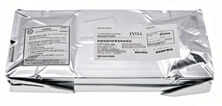
Electrostatic Discharge Protection and Handling

All electrostatic-sensitive components are handled in accordance with electrostatic discharge control procedures. The products are hermetically sealed in anti-static safe packaging to prevent electrostatic damage. Appropriate labeling is also applied for identification and traceability. This ensures product integrity during storage, handling and transportation.


ESD

Certifications & Memberships

Third-party certified, strict quality control. Our certification
  • ISO 9001: 2015
  • ISO 13485: 2016
  • ISO 14001: 2015
  • ISO 28000: 2007
  • ISO 45001: 2018
  • GB/T 27922-2011
  • SMTA
  • IPC
  • ESD
  • PSMA
Texas Instruments

OMAPL137BZKB3

Texas Instruments
32D-OMAPL137BZKB3

Want a better price? Add to Cart and Submit RFQ now, we'll contact you immediately.

0 RFQ
Shopping cart (0 Items)
It is empty.
Compare List (0 Items)
It is empty.
Feedback

Your feedback matters! At Allelco, we value the user experience and strive to improve it constantly.
Please share your comments with us via our feedback form, and we'll respond promptly.
Thank you for choosing Allelco.

Subject
E-mail
Comments
Captcha
Drag or click to upload file
Upload File
types: .xls, .xlsx, .doc, .docx, .jpg, .png and .pdf.
Max file size: 10MB