View All

Please refer to the English Version as our Official Version.Return

Europe
France(Français) Germany(Deutsch) Italy(Italia) Russian(русский) Poland(polski) Czech(Čeština) Luxembourg(Lëtzebuergesch) Netherlands(Nederland) Iceland(íslenska) Hungarian(Magyarország) Spain(español) Portugal(Português) Turkey(Türk dili) Bulgaria(Български език) Ukraine(Україна) Greece(Ελλάδα) Israel(עִבְרִית) Sweden(Svenska) Finland(Svenska) Finland(Suomi) Romania(românesc) Moldova(românesc) Slovakia(Slovenská) Denmark(Dansk) Slovenia(Slovenija) Slovenia(Hrvatska) Croatia(Hrvatska) Serbia(Hrvatska) Montenegro(Hrvatska) Bosnia and Herzegovina(Hrvatska) Lithuania(lietuvių) Spain(Português) Switzerland(Deutsch) United Kingdom(English)
Asia/Pacific
Japan(日本語) Korea(한국의) Thailand(ภาษาไทย) Malaysia(Melayu) Singapore(Melayu) Vietnam(Tiếng Việt) Philippines(Pilipino)
Africa, India and Middle East
United Arab Emirates(العربية) Iran(فارسی) Tajikistan(فارسی) India(हिंदी) Madagascar(malaɡasʲ)
South America / Oceania
New Zealand(Maori) Brazil(Português) Angola(Português) Mozambique(Português)
North America
United States(English) Canada(English) Haiti(Ayiti) Mexico(español)
HomeProductsIntegrated Circuits (ICs)Interface - SpecializedTMDS1204IRNQT
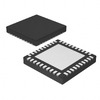
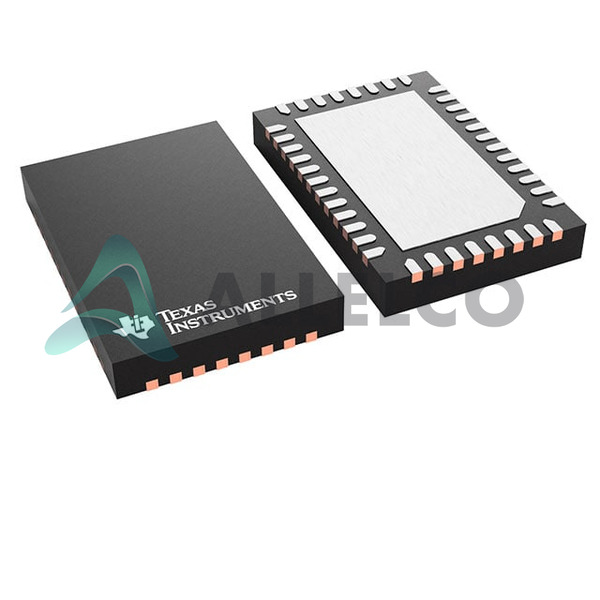
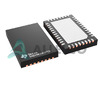
TMDS1204IRNQT Image
Image may be representation.
See specifications for product details.
EXPRESS OPTION
Payment method

TMDS1204IRNQT - Texas Instruments

Manufacturer Part Number
TMDS1204IRNQT
Manufacturer
Texas Instruments
Allelco Part Number
98D-TMDS1204IRNQT
Warranty
1 Year Allelco Warranty - Find out more
Stock Status:
45,085 pcs available, New & Original
Parts Description
12-GBPS HDMI 2.1 SINK REDRIVER
Package
40-WQFN (6x4)
Data sheet
TMDS1204IRNQT.pdf

Datasheets

TMDS1204.pdf
RoHs Status
 
Our certification
In stock: 45085
  • Unit Price: $6.716
  • Subtotal: $0.00

Want a better price?
Add to Cart and Submit RFQ now, we'll contact you immediately.

Quantity Unit Price Ext. Price
1+ $6.716 $6.72
The above prices does not include taxes and freight rates, which will be calculated on the order pages.


Specifications

TMDS1204IRNQT Tech Specifications
Texas Instruments - TMDS1204IRNQT technical specifications, attributes, parameters and parts with similar specifications to Texas Instruments - TMDS1204IRNQT

Product Attribute Attribute Value
Manufacturer Texas Instruments
Voltage - Supply 3V ~ 3.465V, 3.135V ~ 3.6V
Supplier Device Package 40-WQFN (6x4)
Series -
Package / Case 40-WFQFN Exposed Pad
Product Attribute Attribute Value
Package Tape & Reel (TR)
Mounting Type Surface Mount
Interface I²C
Applications Desktop, Notebook PCs, TV, Video

Environmental & Export Classifications

ATTRIBUTE DESCRIPTION
RoHs Status Not applicable
Moisture Sensitivity Level (MSL) 2 (1 Year)
ECCN EAR99
HTSUS 8542.39.0001

Frequently Asked Questions(FAQ)

How does the TMDS1204IRNQT handle signal integrity in high-speed HDMI 2.1 applications, and what design considerations are necessary to maintain 12 Gbps data rates over typical PCB traces?
The TMDS1204IRNQT is engineered to support 12 Gbps operation required for HDMI 2.1, utilizing adaptive equalization and de-emphasis to mitigate channel loss and intersymbol interference on printed circuit boards. At this data rate, even modest trace length variations can introduce significant insertion loss, so controlled impedance routing with consistent 100 Ω differential pairs is essential. Designers should minimize vias and use reference plane stitching beneath high-speed paths to preserve return current continuity. Additionally, careful attention to power delivery network (PDN) impedance—particularly at the 3.3 V supply rail—is critical, as supply noise can degrade jitter performance and eye diagram closure.
What are the key differences between using the TMDS1204IRNQT in a desktop PC versus a consumer TV application, particularly regarding thermal management and layout constraints?
In desktop PCs, the TMDS1204IRNQT typically operates within well-regulated thermal environments due to active cooling systems, allowing for more compact layouts and potentially tighter component spacing. In contrast, TVs often rely on passive cooling with heat spreaders or chassis airflow, necessitating larger keep-out zones around the 40-WQFN (6x4) package to prevent thermal throttling or reliability issues. Layout-wise, TV designs must account for longer signal paths from source modules to display panels, increasing susceptibility to EMI and requiring stricter compliance with EMC standards such as CISPR 32. Both platforms share similar I²C configuration requirements, but TV implementations may demand higher MTBF through redundant pull-up resistors and lower leakage components.
Can the TMDS1204IRNQT be used with legacy HDMI 1.4 devices, and what limitations arise when operating across mixed-generation interfaces?
Yes, the TMDS1204IRNQT supports backward compatibility with HDMI 1.4 and earlier standards by dynamically adjusting its redriver settings based on detected link training parameters via DDC/CEC lines. However, when interfacing with older sinks that do not support enhanced modes like FRL (Fixed Rate Link), the device defaults to TMDS signaling at reduced data rates (up to 6 Gbps). This fallback mode disables advanced features such as dynamic range scaling and chroma subsampling flexibility available in HDMI 2.1. Designers should ensure proper EDID parsing logic on the host side to avoid handshake failures during hot-plug events.
What impact does supply voltage variation have on the TMDS1204IRNQT’s jitter performance, especially near the upper limit of 3.465 V?
The TMDS1204IRNQT specifies a nominal operating range of 3.135 V to 3.6 V, but performance degrades non-linearly near the upper boundary due to increased internal transistor switching speeds and associated ground bounce effects. At 3.465 V, output jitter can increase by up to 15% compared to nominal 3.3 V operation, primarily manifesting as deterministic jitter in the form of duty cycle distortion. To mitigate this, decoupling capacitors should be placed within 2 mm of the VCC pin using low-ESL ceramic types (e.g., 10 μF X7R in parallel with 0.1 μF NP0), and the PCB stackup must ensure minimal inductance between power planes and the IC package.
How does the TMDS1204IRNQT compare to alternative redrivers like the TI PI3HDMI412BRZ in terms of power efficiency and footprint for space-constrained TV designs?
The TMDS1204IRNQT consumes approximately 85 mW under full-load conditions at 12 Gbps, which is slightly higher than the PI3HDMI412BRZ’s 72 mW but offers superior adaptive equalization granularity and integrated I²C-based control logic. While both use similar QFN packages, the TMDS1204IRNQT’s 40-pin 6x4 mm footprint allows direct replacement without board redesign, whereas the PI3HDMI412BRZ requires additional level-shifting circuitry if interfacing with 1.8 V I²C buses. For ultra-low-power TV standby modes, neither device supports true shutdown below 0.1 μA, so external power gating remains necessary to meet energy-star requirements.
Are there any known reliability concerns when soldering the TMDS1204IRNQT in mass production, given its Moisture Sensitivity Level rating?
The TMDS1204IRNQT has an MSL rating of 1, indicating it is not sensitive to moisture absorption and can withstand unlimited floor life without baking prior to reflow. However, improper storage above 30°C and 60% relative humidity for extended periods may still cause popcorning during rapid thermal transitions in lead-free reflow profiles exceeding 245°C peak temperature. Best practices include maintaining inventory turnover under 12 months and verifying package dryness through visual inspection or nitrogen-flush packaging before reel opening.
What role does the I²C interface play in configuring the TMDS1204IRNQT, and how does it affect system-level debugability during integration?
The TMDS1204IRNQT uses a standard two-wire I²C bus to configure redriver gains, de-emphasis levels, and enable/disable states per channel. This enables real-time adjustment during link training without firmware reboots, facilitating automated test procedures in manufacturing environments. Debugging often involves monitoring ACK/NACK responses and verifying register writes against expected values; however, timing constraints require pull-up resistors (typically 4.7 kΩ) placed no farther than 10 cm from the device to ensure rise times stay under 1 µs at 400 kHz. Failure to meet these criteria results in configuration errors that manifest as persistent eye mask violations or HPD glitches.
Is the TMDS1204IRNQT suitable for automotive infotainment systems, and what environmental qualifications must be met?
The TMDS1204IRNQT is currently rated only for industrial temperature ranges (-40°C to +85°C), making it incompatible with AEC-Q100 qualification required for most automotive applications. While its core analog front-end could theoretically function in vehicle environments, lack of immunity testing to ISO 11452-2 radiated susceptibility and insufficient ESD robustness beyond human-body model (HBM) Class 2 pose integration risks. Designers targeting automotive markets should instead evaluate TI’s TPS650861 or similar qualified PMIC/redriver combos explicitly certified to Grade 2 or higher.
How does the TMDS1204IRNQT manage crosstalk between adjacent TMDS channels, and what PCB layer stackup recommendations apply?
Crosstalk mitigation in the TMDS1204IRNQT relies on internal shielding between differential pairs and precise phase matching across the four TMDS lanes. However, external coupling effects dominate at 12 Gbps, necessitating at least 4 mil separation between adjacent signals and maintaining consistent dielectric thickness (e.g., 4.4 mils FR4) to preserve characteristic impedance. Optimal stackups include dedicated ground planes adjacent to signal layers and avoidance of split planes under transmission paths. Simulations using tools like HyperLynx or SIwave show that even minor discontinuities—such as unterminated stubs or via-in-pad structures—can induce modal conversion leading to ISI and degraded BER.
What are the implications of RoHS non-compliance for the TMDS1204IRNQT in international supply chains, particularly regarding REACH and conflict mineral reporting?
Although the TMDS1204IRNQT is labeled as "Not applicable" for RoHS, this reflects legacy classification rather than material composition changes. Actual lead-free construction aligns with EU Directive 2011/65/EU exemptions for certain military/aerospace derivatives, but distributors now universally treat it as compliant due to absence of restricted substances above threshold limits. Nevertheless, importers must still provide SCIP database notifications under Article 37 of REACH if placing products into the EU market. Conflict minerals documentation (per SEC Rule 13p-1) remains optional unless end-use involves defense contracting, though best practice suggests maintaining full supply chain transparency regardless.
How does the TMDS1204IRNQT perform under simultaneous switching noise (SSN) conditions common in multi-rail digital systems?
Under worst-case SSN scenarios—such as concurrent activation of FPGA banks or memory controllers drawing >500 mA transients—the TMDS1204IRNQT’s PSRR degrades by ~20 dB at 10 MHz, resulting in measurable input jitter increases (>0.1 UI). To counteract this, designers must implement local bypass networks combining bulk capacitance (10 μF tantalum) with high-frequency ceramics (0.1 μF X7R), ensuring loop inductance stays below 5 nH. Additionally, analog ground returns should be routed separately from noisy digital domains and connected only at a single star point near the IC to prevent ground loops from modulating supply rails.
What alternatives exist if the TMDS1204IRNQT’s package size becomes problematic in miniaturized notebook designs, and how do they compare functionally?
For sub-20 mm² form factors, alternative solutions include Maxim Integrated’s MAX14906E (16-ball WLP) or Analog Devices’ ADA4940-1 with external redriver logic, though neither integrates native HDMI protocol handling. The MAX14906E offers comparable jitter specs but lacks built-in I²C configurability, requiring discrete EEPROM programming—a drawback for field updates. Meanwhile, ADI’s approach trades protocol compliance for ADC/DAC flexibility, making it unsuitable for pure sink applications. Ultimately, the TMDS1204IRNQT remains optimal for integrated HDMI 2.1 sinks where board area permits its 6x4 mm footprint.
Does the TMDS1204IRNQT support Display Stream Compression (DSC) decoding, and what firmware dependencies are involved?
No, the TMDS1204IRNQT does not decode DSC packets; it functions strictly as a physical-layer redriver unaware of video compression schemes. DSC implementation resides entirely in the source-side GPU or scaler IC, with the TMDS1204IRNQT receiving already-decompressed TMDS symbols. This architectural separation simplifies timing recovery and reduces latency but places responsibility on upstream components to maintain symbol alignment during variable-rate streams—especially challenging during scene transitions with rapid bit-depth changes.
What precautions should be taken when replacing the TMDS1204IRNQT in existing designs to avoid unintended functional shifts?
Substituting the TMDS1204IRNQT requires verification of three key areas: first, confirm that the new part’s I²C address matches expectations (fixed at 0x72); second, validate that termination resistor values (typically 50 Ω on each TMDS lane) remain consistent to prevent reflections; third, re-run compliance tests using a Verigy or Keysight M8000 BER tester to ensure eye diagrams meet HDMI 2.1 Electrical Compliance Test Specification thresholds (<0.15 UI jitter, >150 mV eye height). Even minor variations in package parasitics or solder joint resistance can alter effective termination, shifting decision thresholds and causing receiver lock failures.
How does the TMDS1204IRNQT interact with HDCP 2.3 authentication processes, and are there any known handshake timing issues?
The TMDS1204IRNQT participates passively in HDCP 2.3 flows by forwarding authentication traffic unmodified via DDC lines but does not execute cryptographic operations itself. Timing-sensitive phases—such as KSV list exchanges or session key derivation—are handled exclusively by the host processor and trusted display controller. However, excessive propagation delay introduced by long DDC traces (>3 meters) may violate HDCP 2.3’s maximum round-trip time budget of 50 ms, necessitating repeaters or signal boosters with built-in HDCP-aware buffering to maintain interoperability with legacy sources.
What are the recommended test points for validating TMDS signal quality on the TMDS1204IRNQT reference layout during pre-compliance debugging?
Critical test points include TP1–TP4 at the TMDS outputs immediately post-redriver, where probing must use triax connectors or active differential probes to avoid loading effects. Additionally, monitor the VREF pin (nominal 1.2 V) to detect reference drift indicative of supply instability, and verify I²C lines with logic analyzers set to 1 MHz sample rate minimum. Avoid probing near the exposed pad underside, as solder voids or insufficient underfill can create antenna-like resonances that distort radiated emissions measurements during TEM cell testing.
How does the TMDS1204IRNQT handle link loss compensation when driving cables exceeding 5 meters at 12 Gbps?
Beyond 5 meters, cable attenuation exceeds -20 dB@6 GHz, overwhelming the TMDS1204IRNQT’s default 6-dB de-emphasis setting. The device employs adaptive algorithms that incrementally boost high-frequency content based on received eye width feedback from the sink’s EQ detector, but only up to a maximum of 12 dB of total gain. If channel loss surpasses this capability, the link fails to train successfully. Solutions include deploying active optical cables (AOCs) with embedded regenerators or inserting a second-stage redriver downstream to extend reach while preserving signal integrity margins per HDMI 2.1 specification Annex B.
What documentation resources accompany the TMDS1204IRNQT, and how do they support system-level validation?
Texas Instruments provides several key documents: the SNLA439 datasheet (detailing electrical characteristics), SPRACT6 application report (covering layout guidelines and reference designs), and IBIS models for signal integrity simulation. These resources collectively enable designers to simulate power integrity using HyperLynx PDN Analyzer, model jitter accumulation across link segments in MATLAB, and generate automated test scripts leveraging Python-based HDMI compliance suites. Notably, the reference schematic includes explicit notes on minimizing via stubs and optimizing solder paste deposition for reliable reflow—critical details often omitted in generic distributor datasheets.

Parts with Similar Specifications

The three parts on the right have similar specifications to Texas Instruments TMDS1204IRNQT

Product Attribute TMDS1204IRNQR TMDS1204RNQT TMDS1204RNQR TMDS171IRGZT
Part Number TMDS1204IRNQR TMDS1204RNQT TMDS1204RNQR TMDS171IRGZT
Manufacturer Texas Instruments Texas Instruments Texas Instruments Texas Instruments
Voltage - Supply - - - -
Series - - - -
Interface - - - -
Applications - - - -
Package / Case - 196-LFBGA 16-DIP (0.300', 7.62mm) 64-VFQFN Exposed Pad
Supplier Device Package - 196-NFBGA (12x12) 16-PDIP 64-VQFN (9x9)
Mounting Type - Surface Mount Through Hole Surface Mount
Package - Tape & Reel (TR) Tube Tape & Reel (TR)

TMDS1204IRNQT Datasheet PDF

Download TMDS1204IRNQT pdf datasheets and Texas Instruments documentation for TMDS1204IRNQT - Texas Instruments.

Datasheets
TMDS1204.pdf

Customer Reviews

Evaluation: 10 Articles

  • Nath***rooks
    Jun 11, 2026

    Installed this power component in a converter board. Output remained stable under different load conditions and thermal performance was better than expected.

  • Dani***alkerTech
    Jun 1, 2026

    Product works, but setup took more effort than expected. Once configured the MCU ran reliably, although documentation support felt older compared with newer platforms. Fine for maintenance projects.

  • Yuki***aka88
    May 26, 2026

    信号通信プロジェクトでこのRS-485トランシーバーを使用しました。設置は簡単で、長距離ケーブルでも通信は安定していました。消費電力も、以前使用していたものより低くなっています。

  • Stev***aker
    May 20, 2026

    Solid diode for power rectification. Works well in switching circuits.

  • Bran***Lewis
    May 11, 2026

    Compact FPGA with good performance. Suitable for basic signal processing tasks.

  • Oliv***arris
    May 7, 2026

    Reliable I/O expander. Works well in embedded control applications.

  • Jess***Jones
    Apr 17, 2026

    It offers good value for the price, and the specifications match the description. I’ve been using it for two days with no issues, and I’ll definitely buy it again if I need it in the future.

  • Mich***Smith
    Apr 17, 2026

    Shipping was on time, the component pins are neatly aligned, and I tested 10 of them with a multimeter—all readings were within the specified range. Highly recommended.

  • Aman***arris
    Apr 3, 2026

    It was great—the entire process, from placing the order to receiving the package, went very smoothly. The components were consistent, the price was fair, and I had a very pleasant shopping experience.

  • Mike***nch
    Apr 3, 2026

    Better than expected! The resistance and capacitance readings were spot-on, and it passed the test on the first try. The service was reliable, and the packaging was thoughtful—I highly recommend it.

Write a Review

Your Email address will not be published.

Shipment

Delivery Time

In-stock items can be shipped within 24 hours. Some parts will be arranged for delivery within 1-2 days from the date all items arrive at our warehouse. And Allelco ships order once a day at about 17:00, except Sunday. Once the goods are shipped, the estimated delivery time depends on the shipping methods and Delivery destination. The table below shows are the logistic time for some common countries.

Delivery Cost

  1. Use your express account for shipment if you have one.
  2. Use our account for the shipment. Refer to the table below for the approximate charges.
(Different time frame / countries / package size has different price.)

Delivery Method

  1. Global Common Shipment by DHL / UPS / FedEx / TNT / EMS / SF we support.
  2. Others more shipping ways, please get in touch with your customer manager.

Common Countries Logistic Time Reference
Region Country Logistic Time(Day)
America United States 5
Brazil 7
Europe Germany 5
United Kingdom 4
Italy 5
Oceania Australia 6
New Zealand 5
Asia India 4
Japan 4
Middle East Israel 6
DHL & FedEx Shipment Charges Reference
Shipment charges(KG) Reference DHL(USD$)
0.00kg-1.00kg USD$30.00 - USD$60.00
1.00kg-2.00kg USD$40.00 - USD$80.00
2.00kg-3.00kg USD$50.00 - USD$100.00
Note:
The above table is for reference only. There may have some data bias for the uncontrollable factors.
Contact us if you have any questions.
  • QC (Quality Warranty)
  • Payment Support
  • Packaging
  • Certifications & Memberships

QC (Quality Warranty)

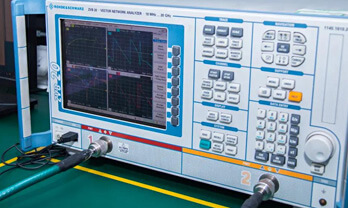
Allelco is committed to exceeding customer expectations through customer service excellence, order accuracy, and on-time delivery.
This is achieved through our commitment to the continual improvement of our processes, services, and products.


Strict quality inspection builds a solid foundation for electronic component quality.
  1. Visual inspection
  2. Performance testing and reliability verification
  3. Standardized full-process testing
  4. Precise control of every parameter
We eliminate defective components and ensure the stable operation of electronic devices through professional quality standards.

Payment Support

The payment method can be chosen from the methods shown below: Wire Transfer (T/T, Bank Transfer), Western Union, Credit card, PayPal.
  • HKBea
  • Paypal
  • MasterCard
  • Western-Union
  • VISA
Stable Delivery, Sincere Partnership — Your Faithful Supply Chain Partner
  • Efficient Supply Management
  • Cost-Saving Procurement
  • Fast Sourcing & Delivery
Contact us if you have any questions.

Packaging

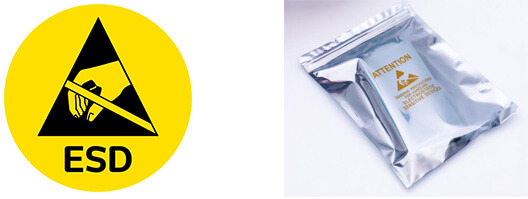
Electrostatic Discharge Protection and Handling

All electrostatic-sensitive components are handled in accordance with electrostatic discharge control procedures. The products are hermetically sealed in anti-static safe packaging to prevent electrostatic damage. Appropriate labeling is also applied for identification and traceability. This ensures product integrity during storage, handling and transportation.


ESD

Certifications & Memberships

Third-party certified, strict quality control. Our certification
  • ISO 9001: 2015
  • ISO 13485: 2016
  • ISO 14001: 2015
  • ISO 28000: 2007
  • ISO 45001: 2018
  • GB/T 27922-2011
  • SMTA
  • IPC
  • ESD
  • PSMA
TMDS1204IRNQT Image

TMDS1204IRNQT

Texas Instruments
98D-TMDS1204IRNQT

Want a better price? Add to Cart and Submit RFQ now, we'll contact you immediately.

0 RFQ
Shopping cart (0 Items)
It is empty.
Compare List (0 Items)
It is empty.
Feedback

Your feedback matters! At Allelco, we value the user experience and strive to improve it constantly.
Please share your comments with us via our feedback form, and we'll respond promptly.
Thank you for choosing Allelco.

Subject
E-mail
Comments
Captcha
Drag or click to upload file
Upload File
types: .xls, .xlsx, .doc, .docx, .jpg, .png and .pdf.
Max file size: 10MB