View All

Please refer to the English Version as our Official Version.Return

Europe
France(Français) Germany(Deutsch) Italy(Italia) Russian(русский) Poland(polski) Czech(Čeština) Luxembourg(Lëtzebuergesch) Netherlands(Nederland) Iceland(íslenska) Hungarian(Magyarország) Spain(español) Portugal(Português) Turkey(Türk dili) Bulgaria(Български език) Ukraine(Україна) Greece(Ελλάδα) Israel(עִבְרִית) Sweden(Svenska) Finland(Svenska) Finland(Suomi) Romania(românesc) Moldova(românesc) Slovakia(Slovenská) Denmark(Dansk) Slovenia(Slovenija) Slovenia(Hrvatska) Croatia(Hrvatska) Serbia(Hrvatska) Montenegro(Hrvatska) Bosnia and Herzegovina(Hrvatska) Lithuania(lietuvių) Spain(Português) Switzerland(Deutsch) United Kingdom(English)
Asia/Pacific
Japan(日本語) Korea(한국의) Thailand(ภาษาไทย) Malaysia(Melayu) Singapore(Melayu) Vietnam(Tiếng Việt) Philippines(Pilipino)
Africa, India and Middle East
United Arab Emirates(العربية) Iran(فارسی) Tajikistan(فارسی) India(हिंदी) Madagascar(malaɡasʲ)
South America / Oceania
New Zealand(Maori) Brazil(Português) Angola(Português) Mozambique(Português)
North America
United States(English) Canada(English) Haiti(Ayiti) Mexico(español)
HomeProductsIntegrated Circuits (ICs)PMIC - Hot Swap ControllersTPS23525PWR
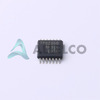
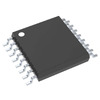
TPS23525PWR Image
Image may be representation.
See specifications for product details.
EXPRESS OPTION
Payment method

TPS23525PWR - Texas Instruments

Manufacturer Part Number
TPS23525PWR
Manufacturer
Texas Instruments
Allelco Part Number
32D-TPS23525PWR
Warranty
1 Year Allelco Warranty - Find out more
Stock Status:
8,418 pcs available, New & Original
Parts Description
IC HOT SWAP CTRLR -48V 16TSSOP
Package
16-TSSOP
Data sheet
TPS23525PWR.pdf

HTML Datasheet

TPS23525 Datasheet.pdf
RoHs Status
ROHS3 Compliant
Our certification
In stock: 8418

Required fields are indicated by an asterisk (*)
Please send RFQ, we will respond immediately.

Quantity

Specifications

TPS23525PWR Tech Specifications
Texas Instruments - TPS23525PWR technical specifications, attributes, parameters and parts with similar specifications to Texas Instruments - TPS23525PWR

Product Attribute Attribute Value
Manufacturer Texas Instruments
Voltage - Supply 0V ~ 20V
Type Hot Swap Controller, OR Controller
Supplier Device Package 16-TSSOP
Series -
Programmable Features Current Limit, Fault Timeout, OVP, UVLO
Package / Case 16-TSSOP (0.173", 4.40mm Width)
Package Tape & Reel (TR)
Operating Temperature -40°C ~ 125°C
Product Attribute Attribute Value
Number of Channels 1
Mounting Type Surface Mount
Internal Switch(s) No
Features Auto Retry
Current - Supply 1.1 mA
Current - Output (Max) -
Base Product Number TPS23525
Applications -48V, Network Routers and Switches

Environmental & Export Classifications

ATTRIBUTE DESCRIPTION
RoHs Status ROHS3 Compliant
Moisture Sensitivity Level (MSL) 1 (Unlimited)
REACH Status REACH Unaffected
ECCN 5A991B1
HTSUS 8542.39.0001

Parts Introduction

TPS23525PWR Image
TPS23525PWR (1)

Manufacturer Part Number

TPS23525PWR

Manufacturer

Texas Instruments

Introduction

The TPS23525PWR is a Hot Swap Controller and OR Controller designed for power management, specifically in network routers and switches that operate at -48V.

Product Features and Performance

Hot Swap Controller and OR Controller type

Operates without internal switches

Features Automatic Retry

Programmable settings include Current Limit, Fault Timeout, Overvoltage Protection (OVP), and Undervoltage Lockout (UVLO)

Product Advantages

Provides efficient power management

Enhances system reliability with programmable features for protection

Key Technical Parameters

Voltage Supply Range: 0V to 20V

Operating Temperature: -40°C to 125°C

Current Supply: 1.1 mA

Surface mount, 16-TSSOP package

Quality and Safety Features

Includes Fault Timeout and Auto Retry for safety

Overvoltage and Undervoltage protection to safeguard against voltage anomalies

Compatibility

Specifically designed for -48V network routers and switches

Application Areas

Power Management in Network Infrastructure such as Routers and Switches

Product Lifecycle

Currently in Active production

No indication of discontinuation

Several Key Reasons to Choose This Product

Tailored for network power management needs at -48V

Offers customizable protection features ensuring adaptability to system requirements

Low supply current facilitates power efficiency

Wide operating temperature range makes it suitable for various environments

Compact 16-TSSOP package simplifies PCB design and product integration
Frequently Asked Questions(FAQ)

How does the TPS23525PWR manage inrush current during hot insertion of a -48V backplane, and what are the key programmable parameters that influence this behavior in network switch applications?
The TPS23525PWR regulates inrush current by controlling the gate drive to an external FET, enabling soft-start functionality tailored to the load capacitance and line resistance. Critical programmable parameters include the current limit threshold, which sets the maximum allowable sourcing current before initiating foldback; the fault timeout, which determines how long the controller waits for the overcurrent condition to clear before retrying or locking out; and the slew rate of the output voltage ramp, which directly affects peak inrush. In a typical 100μF load with 10mΩ source impedance, a properly configured soft-start can limit inrush to below 25A, minimizing stress on connectors and downstream components while meeting telecom reliability standards.
What is the difference between using the TPS23525PWR as a hot swap controller versus an ORing controller in redundant power systems, and how do their respective configurations affect system availability?
When used as a hot swap controller, the TPS23525PWR manages the sequential turn-on of a single power rail to protect against inrush current and overvoltage transients. As an ORing controller, it compares two input voltages (e.g., from primary and backup supplies) and selects the higher one while blocking reverse current flow. The key distinction lies in topology: ORing requires external comparators or diodes for ideal diode operation, whereas hot swap relies on a series pass FET and gate control. In redundancy applications, the TPS23525PWR’s auto-retry feature allows automatic recovery after fault conditions, improving mean time between failures compared to manual reset solutions, especially critical in carrier-grade switches where uptime exceeds 99.999%.
Can the TPS23525PWR operate reliably in high-humidity environments, and what design precautions should be taken when deploying it in outdoor networking equipment?
Yes, the TPS23525PWR has an MSL rating of 1, indicating it is not sensitive to moisture and can withstand unlimited exposure to ambient humidity without requiring baking prior to reflow. However, PCB layout practices remain essential—ensure adequate creepage and clearance around the -48V input traces, use conformal coating if deployed in corrosive atmospheres, and avoid placing sensitive analog nodes near high-voltage switching paths. These measures mitigate long-term degradation risks, even though the device itself meets industrial temperature and humidity specifications per JEDEC standards.
What supply voltage range must be maintained at the VCC pin of the TPS23525PWR to ensure stable operation across all protection features, including UVLO and OVP?
The TPS23525PWR operates reliably within a supply voltage range of 0V to 20V, with internal undervoltage lockout (UVLO) ensuring proper initialization only when VCC rises above approximately 3.5V. At this threshold, internal logic powers up and begins monitoring input conditions. If VCC drops below the UVLO setpoint during operation, the controller disables the gate drive to prevent false triggering. For robust system integration, designers should maintain VCC ≥ 4.5V under worst-case transient conditions to guarantee access to all diagnostic pins and fault reporting, particularly important when interfacing with microcontrollers over I²C or GPIO-based status lines.
How does the TPS23525PWR implement overvoltage protection (OVP), and what external components are required to define the trip threshold for -48V systems?
The TPS23525PWR supports external OVP via its dedicated OV pin, which monitors the -48V input through a resistive divider relative to ground. When the voltage exceeds a user-defined threshold, the controller asserts a fault signal and disables the output. To set the OVP level, two resistors are placed between -48V, OV, and GND. For example, selecting Rtop = 100kΩ and Rbot = 10kΩ yields a trip point at approximately -43.6V (assuming 0.1V hysteresis). This allows precise coordination with downstream regulators or fuses, ensuring catastrophic damage is avoided even during lightning-induced transients common in telecom installations.
What is the typical quiescent current consumption of the TPS23525PWR, and how does this impact power budgeting in energy-efficient edge devices?
The TPS23525PWR draws a steady-state supply current of just 1.1 mA from its VCC input, making it suitable for always-on infrastructure such as small form-factor routers or IoT gateways. This low draw minimizes wasted energy in standby mode and simplifies thermal design since no heatsinking is required for the IC itself. When combined with sleep modes in host processors, total system current can drop below 5mA during idle periods, supporting compliance with green computing initiatives and reducing operational costs in large-scale deployments like campus networks.
Is the TPS23525PWR compatible with lead-free assembly processes, and what solder reflow profile considerations apply given its packaging?
Yes, the TPS23525PWR is fully RoHS3 compliant and designed for lead-free manufacturing, utilizing NiPdAu plating on its 16-TSSOP leads. It tolerates standard industrial reflow profiles up to 260°C peak temperature with a dwell time of 30–40 seconds above 217°C (Pb-free SAC alloy melting point). Care should be taken to avoid thermal shock; therefore, preheating ramps should not exceed 3°C/s to prevent delamination of the epoxy mold compound. Most AOI systems also recognize the part’s laser-marked code for traceability without affecting performance.
What distinguishes the fault response strategy of the TPS23525PWR from simpler hot swap controllers lacking retry logic, and why might this matter during field diagnostics?
Unlike basic hot swap ICs that latch off permanently after an overcurrent event, the TPS23525PWR incorporates auto-retry capability, allowing automatic attempts to restore power after a configurable delay following a fault. This reduces downtime in mission-critical systems where manual intervention is impractical. For instance, if a short occurs momentarily due to connector arcing, the controller may cycle the load three times before entering a locked state, providing visibility into intermittent issues via status flags. This behavior aids remote diagnostics in managed switches but requires firmware to interpret repeated fault codes rather than assuming permanent failure.
How should the TPS23525PWR be laid out on a PCB to minimize noise coupling from the -48V side into sensitive analog circuits, and what grounding strategy is recommended?
Minimize noise coupling by physically separating the high-current return path from low-impedance analog grounds. Place the TPS23525PWR close to the power entry point, with the gate driver loop kept compact to reduce inductive emissions. Use a star ground configuration where the analog and digital sections meet at a single point near the controller, avoiding daisy-chained returns that could inject switching artifacts. Additionally, route feedback traces away from the -48V plane and consider adding a π-filter (LC network) at the input if conducted emissions are a concern. These practices preserve signal integrity in mixed-signal designs such as PoE++ endpoints.
What environmental certifications or compliance marks apply to the TPS23525PWR, and how do they influence deployment in international telecommunications equipment?
The TPS23525PWR complies with RoHS3 directives, ensuring restricted substance levels (e.g., Pb, Cd, Hg) are below regulatory limits for EU markets. It is also REACH unaffected, meaning no SVHCs (Substances of Very High Concern) are present in concentrations exceeding 0.1% by weight. ECCN classification (5A991B1) indicates it is subject to export controls under U.S. regulations but generally available for commercial use in most regions. These attributes simplify global certification efforts for OEMs targeting ETSI, FCC Part 15, or CE marking, reducing time-to-market for telecom-grade products.
Can the TPS23525PWR support multiple hot swap rails in parallel without additional isolation components, and what synchronization challenges arise?
No, the TPS23525PWR is a single-channel device and cannot directly control multiple rails. Attempting to share a single controller across parallel loads risks uneven current distribution and potential race conditions during startup. Instead, each rail requires its own controller or a multi-channel PMIC. Synchronization is unnecessary for independent loads but becomes relevant if coordinated sequencing is needed—such as in redundant PSUs—where delays between channels must be carefully tuned to avoid bus contention. Using separate instances avoids cross-talk and ensures predictable fault isolation.
What role does the fault timeout parameter play in preventing nuisance trips during legitimate inrush events in capacitive loads, and how is it typically programmed?
The fault timeout defines how long the controller allows sustained overcurrent before declaring a permanent fault. During normal soft-start with moderate capacitance (e.g., 200μF), current naturally peaks then decays; if the timeout is too short, it may prematurely abort the sequence. The TPS23525PWR programs this via an external capacitor connected to the TIM pin. A 10nF capacitor results in ~50ms timeout, sufficient for most router line cards. Designers should verify timing aligns with worst-case ESR and capacitance combinations to balance protection against operational flexibility.
How does the operating temperature range of the TPS23525PWR compare to commercial-grade alternatives, and what implications exist for sealed enclosures in industrial settings?
With an extended operating range of -40°C to +125°C, the TPS23525PWR surpasses commercial-grade parts limited to 0°C–70°C. This enables deployment in unheated cabinets or outdoor base stations without derating. Thermal modeling confirms junction temperatures stay below 120°C even with VCC = 20V and continuous operation, provided airflow or conduction paths are adequate. In sealed enclosures, ensure PCB copper weights exceed 1oz and vias connect inner layers to heat-spreading planes to dissipate minor self-heating from the 1.1mA quiescent current.
What are the limitations of using the TPS23525PWR in systems requiring bidirectional power flow, and why isn’t it suitable for active ORing with backfeed capability?
The TPS23525PWR lacks internal bidirectional control logic and assumes unidirectional current flow from source to load. In applications requiring backfeeding (e.g., battery charging from grid), it cannot actively regulate reverse current and would require external MOSFETs with body-diode blocking or ideal diode circuits. Its architecture prioritizes forward-path protection, so attempting reverse operation risks undefined states in the comparator stages. For true bi-directional systems, dedicated power mux ICs with integrated FETs and feedback loops are more appropriate.
What documentation resources accompany the TPS23525PWR, and how do they support functional safety analysis in telecom infrastructure?
Texas Instruments provides comprehensive support including the SNVS771 datasheet, application notes (e.g., SLVA602), and SPICE models for circuit simulation. These materials detail timing diagrams, layout guidelines, and fault tree examples useful for FMEA studies. While the TPS23525PWR itself is not certified to IEC 61508 or ISO 26262, its predictable fault responses and diagnostic outputs allow integrators to build systems meeting SIL-2 or similar telecom reliability targets through proper architectural redundancy and watchdog supervision.
How does the package size of the TPS23525PWR affect routing density in high-port-count Ethernet switches, and what footprint alternatives exist if space is constrained?
The 16-TSSOP (4.4mm × 5mm) offers moderate density suitable for mid-sized line cards but may compete with BGA footprints in 48-port switches. Routing challenges include maintaining Kelvin connections for sense resistors and avoiding crosstalk between adjacent signal pins. If board real estate is tight, alternative packages like WQFN (e.g., TPS23525PWRT) provide lower profile and better thermal performance but require careful pad soldering inspection. Always verify compatibility with automated optical inspection (AOI) tools before committing to a specific variant.
What precautions should be taken when replacing the TPS23525PWR with a functionally equivalent part, and how do pin-compatible alternatives differ in key electrical characteristics?
Pin-compatible alternatives such as the LTC4263 or MAX5978 may offer similar features but differ significantly in quiescent current, fault response latency, or protection thresholds. For example, some competitors lack auto-retry or have higher supply current (>2mA), impacting power budgets. Always validate timing margins, especially soft-start duration and fault detection thresholds, using actual load simulations. Substitution without full characterization risks increased MTTR and reduced reliability in live networks where hot-swapping modules is routine.
How does the TPS23525PWR interact with microcontrollers during fault logging, and what interface options are available for real-time status monitoring?
The TPS23525PWR exposes key status signals (FAULT, PWRGD) via open-drain outputs that interface cleanly with MCU GPIOs without level translation. These signals indicate brownout, overcurrent, or timeout conditions, enabling centralized fault logging in network management systems. While it does not natively support I²C or SPI, firmware can poll these pins periodically to detect events and trigger alerts. This minimalist approach reduces pin count and complexity, aligning well with legacy control architectures common in carrier-grade switches.

Parts with Similar Specifications

The three parts on the right have similar specifications to Texas Instruments TPS23525PWR

Product Attribute TPS23525PWT TPS23521PWR TPS23523PWR TPS23521PWT
Part Number TPS23525PWT TPS23521PWR TPS23523PWR TPS23521PWT
Manufacturer Texas Instruments Texas Instruments Texas Instruments Texas Instruments
Number of Channels - - - -
Internal Switch(s) - - - -
Supplier Device Package - 196-NFBGA (12x12) 16-PDIP 64-VQFN (9x9)
Applications - - - -
Package / Case - 196-LFBGA 16-DIP (0.300', 7.62mm) 64-VFQFN Exposed Pad
Current - Output (Max) - - - -
Base Product Number - DAC34H84 MAX500 ADS62P42
Programmable Features - - - -
Type - - - -
Series - - - -
Operating Temperature - -40°C ~ 85°C 0°C ~ 70°C -40°C ~ 85°C
Package - Tape & Reel (TR) Tube Tape & Reel (TR)
Voltage - Supply - - - -
Mounting Type - Surface Mount Through Hole Surface Mount
Current - Supply - - - -
Features - - - Simultaneous Sampling

TPS23525PWR Datasheet PDF

Download TPS23525PWR pdf datasheets and Texas Instruments documentation for TPS23525PWR - Texas Instruments.

HTML Datasheet
TPS23525 Datasheet.pdf

Customer Reviews

Evaluation: 10 Articles

  • Emil***rperTech
    Jun 23, 2026

    Works exactly as described. I used it as a USB-to-SPI bridge in a small MCU development project and communication was stable from the first setup.

  • Liam***terTech
    Jun 15, 2026

    Used this CPLD in a logic control project. Programming was straightforward and signal timing matched the design requirements.

  • Nath***rooks
    Jun 11, 2026

    Installed this power component in a converter board. Output remained stable under different load conditions and thermal performance was better than expected.

  • Dani***alkerTech
    Jun 1, 2026

    Product works, but setup took more effort than expected. Once configured the MCU ran reliably, although documentation support felt older compared with newer platforms. Fine for maintenance projects.

  • Yuki***aka88
    May 26, 2026

    信号通信プロジェクトでこのRS-485トランシーバーを使用しました。設置は簡単で、長距離ケーブルでも通信は安定していました。消費電力も、以前使用していたものより低くなっています。

  • Stev***aker
    May 20, 2026

    Solid diode for power rectification. Works well in switching circuits.

  • Bran***Lewis
    May 11, 2026

    Compact FPGA with good performance. Suitable for basic signal processing tasks.

  • Oliv***arris
    May 7, 2026

    Reliable I/O expander. Works well in embedded control applications.

  • Jess***Jones
    Apr 17, 2026

    It offers good value for the price, and the specifications match the description. I’ve been using it for two days with no issues, and I’ll definitely buy it again if I need it in the future.

  • Mich***Smith
    Apr 17, 2026

    Shipping was on time, the component pins are neatly aligned, and I tested 10 of them with a multimeter—all readings were within the specified range. Highly recommended.

Write a Review

Your Email address will not be published.

Shipment

Delivery Time

In-stock items can be shipped within 24 hours. Some parts will be arranged for delivery within 1-2 days from the date all items arrive at our warehouse. And Allelco ships order once a day at about 17:00, except Sunday. Once the goods are shipped, the estimated delivery time depends on the shipping methods and Delivery destination. The table below shows are the logistic time for some common countries.

Delivery Cost

  1. Use your express account for shipment if you have one.
  2. Use our account for the shipment. Refer to the table below for the approximate charges.
(Different time frame / countries / package size has different price.)

Delivery Method

  1. Global Common Shipment by DHL / UPS / FedEx / TNT / EMS / SF we support.
  2. Others more shipping ways, please get in touch with your customer manager.

Common Countries Logistic Time Reference
Region Country Logistic Time(Day)
America United States 5
Brazil 7
Europe Germany 5
United Kingdom 4
Italy 5
Oceania Australia 6
New Zealand 5
Asia India 4
Japan 4
Middle East Israel 6
DHL & FedEx Shipment Charges Reference
Shipment charges(KG) Reference DHL(USD$)
0.00kg-1.00kg USD$30.00 - USD$60.00
1.00kg-2.00kg USD$40.00 - USD$80.00
2.00kg-3.00kg USD$50.00 - USD$100.00
Note:
The above table is for reference only. There may have some data bias for the uncontrollable factors.
Contact us if you have any questions.
  • QC (Quality Warranty)
  • Payment Support
  • Packaging
  • Certifications & Memberships

QC (Quality Warranty)

Allelco is committed to exceeding customer expectations through customer service excellence, order accuracy, and on-time delivery.
This is achieved through our commitment to the continual improvement of our processes, services, and products.


Strict quality inspection builds a solid foundation for electronic component quality.
  1. Visual inspection
  2. Performance testing and reliability verification
  3. Standardized full-process testing
  4. Precise control of every parameter
We eliminate defective components and ensure the stable operation of electronic devices through professional quality standards.

Payment Support

The payment method can be chosen from the methods shown below: Wire Transfer (T/T, Bank Transfer), Western Union, Credit card, PayPal.
  • HKBea
  • Paypal
  • MasterCard
  • Western-Union
  • VISA
Stable Delivery, Sincere Partnership — Your Faithful Supply Chain Partner
  • Efficient Supply Management
  • Cost-Saving Procurement
  • Fast Sourcing & Delivery
Contact us if you have any questions.

Packaging

Electrostatic Discharge Protection and Handling

All electrostatic-sensitive components are handled in accordance with electrostatic discharge control procedures. The products are hermetically sealed in anti-static safe packaging to prevent electrostatic damage. Appropriate labeling is also applied for identification and traceability. This ensures product integrity during storage, handling and transportation.


ESD

Certifications & Memberships

Third-party certified, strict quality control. Our certification
  • ISO 9001: 2015
  • ISO 13485: 2016
  • ISO 14001: 2015
  • ISO 28000: 2007
  • ISO 45001: 2018
  • GB/T 27922-2011
  • SMTA
  • IPC
  • ESD
  • PSMA
TPS23525PWR Image

TPS23525PWR

Texas Instruments
32D-TPS23525PWR

Want a better price? Add to Cart and Submit RFQ now, we'll contact you immediately.

0 RFQ
Shopping cart (0 Items)
It is empty.
Compare List (0 Items)
It is empty.
Feedback

Your feedback matters! At Allelco, we value the user experience and strive to improve it constantly.
Please share your comments with us via our feedback form, and we'll respond promptly.
Thank you for choosing Allelco.

Subject
E-mail
Comments
Captcha
Drag or click to upload file
Upload File
types: .xls, .xlsx, .doc, .docx, .jpg, .png and .pdf.
Max file size: 10MB