View All

Please refer to the English Version as our Official Version.Return

Europe
France(Français) Germany(Deutsch) Italy(Italia) Russian(русский) Poland(polski) Czech(Čeština) Luxembourg(Lëtzebuergesch) Netherlands(Nederland) Iceland(íslenska) Hungarian(Magyarország) Spain(español) Portugal(Português) Turkey(Türk dili) Bulgaria(Български език) Ukraine(Україна) Greece(Ελλάδα) Israel(עִבְרִית) Sweden(Svenska) Finland(Svenska) Finland(Suomi) Romania(românesc) Moldova(românesc) Slovakia(Slovenská) Denmark(Dansk) Slovenia(Slovenija) Slovenia(Hrvatska) Croatia(Hrvatska) Serbia(Hrvatska) Montenegro(Hrvatska) Bosnia and Herzegovina(Hrvatska) Lithuania(lietuvių) Spain(Português) Switzerland(Deutsch) United Kingdom(English)
Asia/Pacific
Japan(日本語) Korea(한국의) Thailand(ภาษาไทย) Malaysia(Melayu) Singapore(Melayu) Vietnam(Tiếng Việt) Philippines(Pilipino)
Africa, India and Middle East
United Arab Emirates(العربية) Iran(فارسی) Tajikistan(فارسی) India(हिंदी) Madagascar(malaɡasʲ)
South America / Oceania
New Zealand(Maori) Brazil(Português) Angola(Português) Mozambique(Português)
North America
United States(English) Canada(English) Haiti(Ayiti) Mexico(español)
HomeProductsIntegrated Circuits (ICs)Specialized ICsTMS320C5514AZCH10
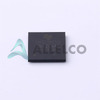
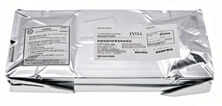
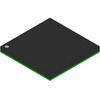
Image may be representation.
See specifications for product details.
EXPRESS OPTION
Payment method

TMS320C5514AZCH10 - Texas Instruments

Manufacturer Part Number
TMS320C5514AZCH10
Manufacturer
Texas Instruments
Allelco Part Number
41D-TMS320C5514AZCH10
Warranty
1 Year Allelco Warranty - Find out more
Stock Status:
16,910 pcs available, New & Original
Parts Description
NFBGA-196(10x10)
Data sheet
-
Category
Integrated Circuits (ICs) > Specialized ICs
RoHs Status
Our certification
In stock: 16910
  • Unit Price: $3.188
  • Subtotal: $0.00

Want a better price?
Add to Cart and Submit RFQ now, we'll contact you immediately.

Quantity Unit Price Ext. Price
1+ $3.188 $3.19
200+ $1.233 $246.60
500+ $1.191 $595.50
1000+ $1.169 $1,169.00
The above prices does not include taxes and freight rates, which will be calculated on the order pages.

Specifications

TMS320C5514AZCH10 Tech Specifications
Texas Instruments - TMS320C5514AZCH10 technical specifications, attributes, parameters and parts with similar specifications to Texas Instruments - TMS320C5514AZCH10

Product Attribute Attribute Value
Part Number TMS320C5514AZCH10
Package NFBGA-196(10x10)
Description NFBGA-196(10x10)
Stock Condition Get 16910 pcs available quantity at Allelco
Payment PayPal / TT / Credit Card / Western Union
Allelco Certifications ESD / ISO 9001 / ISO 13485 / ISO 28000
Product Attribute Attribute Value
Manufacturer Texas Instruments
RoHs Status -
Warranty 100% Perfect Functions
Transport port Hong Kong
Shipping by DHL / FedEx / UPS / TNT / SF Express
RFQ Email info@allelco.com

Parts Introduction

Manufacturer Part Number

TMS320C5514AZCH10

Manufacturer

texas-instruments

Introduction

The TMS320C5514AZCH10 is a fixed-point digital signal processor (DSP) from Texas Instruments' TMS320C55x series. This DSP offers a range of features and capabilities, making it suitable for a variety of embedded applications that require high-performance signal processing.

Product Features and Performance

100MHz clock rate

128kB of on-chip ROM and 256kB of on-chip RAM

Supports various interfaces, including EBI/EMI, I2C, I2S, MMC/SD, SPI, UART/USART, and USB

Operating temperature range of -10°C to 70°C

Available in a 196-LFBGA package

Product Advantages

High-performance signal processing capabilities

Flexible interface options for easy integration into a wide range of embedded systems

Low-power operation, suitable for battery-powered applications

Robust temperature range, enabling use in diverse environmental conditions

Key Reasons to Choose This Product

Proven reliability and performance of Texas Instruments' TMS320C55x DSP series

Versatile interface options for seamless integration into various embedded systems

Cost-effective solution for applications requiring advanced signal processing

Backed by Texas Instruments' extensive technical support and ecosystem

Quality and Safety Features

Rigorous quality control and testing processes

Compliance with industry standards and certifications

Robust design for reliable operation in diverse environments

Compatibility

The TMS320C5514AZCH10 is a member of the TMS320C55x DSP series and is compatible with other devices in this family, allowing for easy migration and scalability of embedded systems.

Application Areas

Audio and speech processing

Industrial automation and control

Wireless communication systems

Healthcare and medical devices

Consumer electronics and appliances

Product Lifecycle

The TMS320C5514AZCH10 is an active product, and Texas Instruments continues to support and maintain this model. While there may be newer or alternative models available, the TMS320C5514AZCH10 remains a viable and widely used option for many embedded applications. If you have any questions or need further assistance, please contact our sales team through our website.
Frequently Asked Questions(FAQ)

What are the key performance trade-offs when selecting the TMS320C5514AZCH10 for a low-power embedded application with strict thermal constraints?
The TMS320C5514AZCH10 offers a balanced combination of 100MHz clock rate, 256kB on-chip RAM, and ROM (128kB), which supports moderate computational workloads without requiring external memory. However, its core voltage of 1.30V enables power efficiency but limits peak performance under heavy DSP loads. For applications operating between -10°C and 70°C, thermal dissipation must be carefully managed due to the dense 196-pin NFBGA package. While the device is suitable for space-constrained designs, designers must evaluate whether the integrated memory reduces board complexity at the cost of potential power overhead from internal bus switching in high-throughput scenarios.
How does the TMS320C5514AZCH10 compare to other fixed-point DSPs in terms of I/O flexibility and interface support for industrial control systems?
Unlike many ultra-low-power microcontrollers, the TMS320C5514AZCH10 provides a rich set of interfaces including EBI/EMI, I2C, I2S, MMC/SD, SPI, UART/USART, and USB—making it highly adaptable for industrial environments requiring multiple communication protocols. In comparison to devices like the C5515 or C5517, the C5514AZCH10 maintains similar interface diversity while offering slightly reduced memory capacity, which may influence selection depending on algorithm complexity. Its ability to operate across 1.8V to 3.3V I/O rails enhances compatibility with legacy peripherals, giving it an edge in mixed-voltage industrial systems where integration density and protocol flexibility are prioritized over maximum clock speed.
Can the TMS320C5514AZCH10 reliably operate in automotive-grade temperature ranges, and what design considerations apply if extending beyond its specified -10°C to 70°C range?
No, the TMS320C5514AZCH10 is rated only for commercial temperatures (-10°C to 70°C). It is not qualified for automotive (-40°C to 125°C) or industrial (-40°C to 85°C) temperature grades. Designers aiming for extended temperature operation must either select a different device variant or implement additional thermal management. This includes ensuring adequate airflow, avoiding localized hotspots near the 196-LFBGA package, and validating solder joint integrity under thermal cycling. Without proper derating and environmental controls, reliability risks increase significantly outside the specified range.
What impact does the 196-NFBGA (10x10) package have on PCB routing complexity when integrating the TMS320C5514AZCH10 into a compact embedded system?
The small form factor of the 196-NFBGA package enables high-density layouts but demands careful attention to signal integrity and power delivery. With pins distributed across a 10x10 mm footprint, high-speed signals such as USB, SPI, or I2S require controlled impedance traces and minimal stub lengths to avoid reflections. Power planes must be closely coupled to the package’s ground and power balls to reduce inductance, especially given the core voltage of 1.30V. Routing becomes particularly challenging with limited layer count; a minimum of four layers is recommended, with dedicated power and ground planes. Thermal vias under the exposed pad further help dissipate heat but add manufacturing complexity.
Is the TMS320C5514AZCH10 suitable for real-time audio processing applications, and how do its memory resources compare to typical requirements?
Yes, the TMS320C5514AZCH10 is well-suited for real-time audio processing due to its I2S interface, fixed-point arithmetic efficiency, and 100MHz clock rate. However, the available memory—256kB of on-chip RAM and 128kB of ROM—may be constrained for advanced algorithms such as multi-channel echo cancellation or high-order filters. For example, a stereo audio pipeline with 32-bit samples at 48kHz requires approximately 384kB/s bandwidth, which the DSP can handle in terms of throughput, but larger coefficient tables or buffering may exceed available local memory. Designers should profile their algorithms early and consider offloading static data to external Flash or using compression techniques to stay within resource limits.
How does the Moisture Sensitivity Level (MSL) rating of 3 for the TMS320C5514AZCH10 affect assembly process planning and storage logistics?
The MSL rating of 3 indicates that the TMS320C5514AZCH10 can withstand up to 168 hours of exposure to ambient moisture before baking is required during reflow soldering. This necessitates careful inventory control: components should be stored in dry cabinets with dehumidifiers and tracked using FIFO (first-in, first-out) principles. If lead-free reflow profiles are used, the cumulative thermal stress must also be monitored to prevent latent damage. Failure to adhere to this timeline increases the risk of popcorning and delamination during assembly, particularly critical given the fine-pitch BGA geometry of the 196-pin package.
What role does the Base Product Number TMS320 play in selecting between variants like the C5514AZCH10 and others in the same family?
The TMS320 base product number signifies membership in TI’s digital signal processor ecosystem, enabling shared development tools, software libraries, and architectural compatibility. Variants within the C55x series differ primarily in memory size, clock speed, and pinout configuration. For instance, the C5514AZCH10 offers a balanced mix of 256kB RAM and 128kB ROM at 100MHz, making it ideal for mid-complexity applications. Choosing based on the base number allows engineers to leverage consistent interrupt handling, instruction sets, and peripheral mappings, reducing porting effort. However, they must still validate that specific features like USB support or EBI width match their system requirements.
Are there any known limitations in using the TMS320C5514AZCH10 for USB-based firmware updates versus alternative communication interfaces?
While the TMS320C5514AZCH10 includes native USB support, implementing reliable firmware updates via USB presents challenges due to limited on-chip RAM. The 256kB RAM must accommodate both the application code and the bootloader, leaving little room for large update buffers. Additionally, USB enumeration and descriptor handling consume cycles that could otherwise be used for real-time tasks. Compared to simpler interfaces like UART or SPI, USB offers faster transfer speeds but introduces higher software overhead and dependency on accurate timing. Therefore, unless high-speed data transfer is essential, UART-based updates may offer more predictable performance and lower RAM utilization for most embedded firmware deployment scenarios.
How should designers approach power budgeting when deploying multiple TMS320C5514AZCH10 units in a networked sensor node architecture?
Each TMS320C5514AZCH10 draws peak current proportional to its core voltage (1.30V) and clock activity. At full load, expect core currents in the tens of milliamperes; combined with I/O switching across 1.8–3.3V domains, total power per unit can reach 100–150mW under sustained computation. In a multi-node system, cumulative power must include communication overhead (e.g., radio, sensors), so careful duty-cycling and sleep modes are essential. Designers should simulate worst-case current draw using TI’s PowerTuner tools and ensure PCB traces and regulators support the aggregate demand without voltage droop. Given the tight thermal envelope, heat spreading through adjacent components must also be considered to avoid thermal throttling.
What are the implications of the RoHS3 and REACH compliance status for global distribution of products using the TMS320C5514AZCH10?
The TMS320C5514AZCH10 is fully compliant with RoHS3 directives, meaning it meets stricter limits on substances like lead, mercury, and cadmium. It is also REACH unaffected, indicating no SVHC (substance of very high concern) content above regulatory thresholds. These certifications simplify export processes into regions like Europe and Asia, reducing customs delays and audit risks. However, compliance must extend beyond the IC itself to include PCB materials, adhesives, and packaging. Manufacturers using this component must maintain full supply chain traceability and documentation to support end-product declarations, especially in industries such as medical or aerospace where certification rigor is elevated.
In what ways does the TMS320C5514AZCH10 support deterministic execution compared to general-purpose processors in time-critical control loops?
The TMS320C5514AZCH10 leverages a Harvard architecture with separate program and data buses, enabling single-cycle access to instructions and operands—critical for deterministic response in control loops. Its fixed-point math unit executes MAC operations in one cycle, allowing precise timing for PID controllers or motor commutation. Unlike variable-length instruction sets in ARM Cortex-M cores, the C55x uses fixed-width instructions, eliminating pipeline stalls from decoding variability. This predictability, combined with hardware interrupts and low-latency context switching, makes it preferable over GPUs or application processors for hard real-time tasks, provided the algorithm fits within its 256kB RAM constraint.
How does the ECCN classification (3A991A2) of the TMS320C5514AZCH10 influence international shipping and licensing requirements?
The ECCN 3A991A2 designation classifies the TMS320C5514AZCH10 as a commodity computer with cryptographic capabilities, subject to U.S. export regulations under the EAR. While it does not contain encryption per se, its use in secure communications or signal processing may trigger licensing reviews. Exporting to certain countries requires filing with BIS (Bureau of Industry and Security), especially if integrated into defense or surveillance equipment. Importers may also need end-use certificates. Companies deploying this chip globally must consult legal counsel and maintain records demonstrating non-military intent to avoid compliance violations and potential penalties.
What factors should be evaluated when deciding between the TMS320C5514AZCH10 and a microcontroller with integrated DSP extensions for audio filtering applications?
The choice hinges on algorithmic complexity and real-time demands. The TMS320C5514AZCH10 offers dedicated DSP instructions, optimized data paths, and larger on-chip memory, making it superior for complex filters like FIR or FFT-based spectral analysis. In contrast, microcontrollers with DSP extensions (e.g., ARM Cortex-M4) may suffice for simple moving averages or basic EQ functions but lack the parallelism and memory bandwidth needed for high-order filters. For the C5514AZCH10, its 100MHz clock and 256kB RAM allow efficient implementation of 512-tap filters with minimal latency. However, if cost and power are paramount, a lower-end MCU might be more economical despite reduced performance ceilings.
How does the presence of MMC/SD interface on the TMS320C5514AZCH10 affect storage expansion strategies in data-logging embedded devices?
The built-in MMC/SD interface simplifies direct connection to removable flash cards, eliminating the need for external controllers in data-logging systems. This reduces bill-of-materials cost and board space, leveraging the 128kB ROM to store FAT filesystem routines. However, SD card initialization and block transfers consume CPU cycles, potentially impacting real-time logging intervals. Compared to SPI-connected NOR Flash, SD cards offer higher capacity (up to several GB) but greater protocol overhead. Designers should benchmark log write times using the C5514AZCH10’s DMA channels to ensure sustained throughput meets application needs without buffer overruns.
What precautions are necessary when prototyping with the TMS320C5514AZCH10 due to its BGA packaging and high pin count?
Prototyping a 196-pin BGA device like the TMS320C5514AZCH10 requires specialized techniques: breakaway boards with controlled impedance traces, precision alignment jigs, and X-ray inspection post-assembly. Due to the risk of bridging or opens from misalignment, stencil printing must use laser-cut apertures with proper solder paste volume. Electrical testing should begin with continuity checks using bed-of-nails fixtures before power-up. Additionally, decoupling capacitors must be placed within 1–2mm of each power pin, and the ground plane beneath the array must remain uninterrupted. Many developers opt for QFN breakout adapters initially to verify firmware functionality before committing to full BGA assembly.
Can the TMS320C5514AZCH10 support dual-bank memory switching for safe firmware updates, and what hardware modifications would be required?
Yes, the TMS320C5514AZCH10 supports banked memory modes through its EBI interface, allowing execution from one memory region while updating another. However, its internal ROM (128kB) and RAM (256kB) are not designed for true dual-bank operation without external memory. To implement safe firmware updates, designers typically add external SRAM or Flash configured in mirrored banks, managed via software-controlled remapping. This approach requires careful synchronization during reset sequences and validation of checksums before switching execution pointers. While feasible, it increases complexity and cost compared to simpler update mechanisms like UART bootloaders, which are often preferred for field deployments unless storage capacity is insufficient.
How does the operating frequency of 100MHz balance performance versus power consumption in battery-powered edge devices using the TMS320C5514AZCH10?
The 100MHz clock strikes a middle-ground balance: fast enough to execute DSP algorithms efficiently but slow enough to keep dynamic power (P ∝ CV²f) manageable in low-duty-cycle applications. At 1.30V core voltage, the C5514AZCH10 typically consumes <100mW under full load, making it viable for battery operation if active periods are brief. However, aggressive clock gating and deep sleep modes (if supported by firmware) are essential to minimize average current. Compared to higher-frequency DSPs (e.g., 200MHz variants), this frequency reduces heat generation and EMI, benefiting longevity in unattended deployments. Designers must still profile worst-case current draw during peak computations to ensure months-long operation on coin-cell or LiPo sources.
What are the risks of exceeding the maximum junction temperature when using the TMS320C5514AZCH10 in sealed enclosures without active cooling?
The TMS320C5514AZCH10 has an absolute maximum junction temperature typically around 125°C, though its guaranteed operating range ends at 70°C. In sealed enclosures with poor ventilation, even modest power dissipation (e.g., 200mW) can raise die temperature beyond safe limits due to inadequate thermal resistance (θJA). Without heatsinks or fans, self-heating may cause thermal runaway or permanent damage. Designers must calculate total power, estimate θJA based on PCB copper area and layer stackup, and include margin for worst-case ambient conditions. If enclosure sealing is unavoidable, adding thermal vias, copper pours, or low-power sleep states becomes non-negotiable to maintain reliability over the product lifecycle.

Customer Reviews

Evaluation: 10 Articles

  • Nath***rooks
    Jun 11, 2026

    Installed this power component in a converter board. Output remained stable under different load conditions and thermal performance was better than expected.

  • Dani***alkerTech
    Jun 1, 2026

    Product works, but setup took more effort than expected. Once configured the MCU ran reliably, although documentation support felt older compared with newer platforms. Fine for maintenance projects.

  • Yuki***aka88
    May 26, 2026

    信号通信プロジェクトでこのRS-485トランシーバーを使用しました。設置は簡単で、長距離ケーブルでも通信は安定していました。消費電力も、以前使用していたものより低くなっています。

  • Stev***aker
    May 20, 2026

    Solid diode for power rectification. Works well in switching circuits.

  • Bran***Lewis
    May 11, 2026

    Compact FPGA with good performance. Suitable for basic signal processing tasks.

  • Oliv***arris
    May 7, 2026

    Reliable I/O expander. Works well in embedded control applications.

  • Jess***Jones
    Apr 17, 2026

    It offers good value for the price, and the specifications match the description. I’ve been using it for two days with no issues, and I’ll definitely buy it again if I need it in the future.

  • Mich***Smith
    Apr 17, 2026

    Shipping was on time, the component pins are neatly aligned, and I tested 10 of them with a multimeter—all readings were within the specified range. Highly recommended.

  • Aman***arris
    Apr 3, 2026

    It was great—the entire process, from placing the order to receiving the package, went very smoothly. The components were consistent, the price was fair, and I had a very pleasant shopping experience.

  • Mike***nch
    Apr 3, 2026

    Better than expected! The resistance and capacitance readings were spot-on, and it passed the test on the first try. The service was reliable, and the packaging was thoughtful—I highly recommend it.

Write a Review

Your Email address will not be published.

Shipment

Delivery Time

In-stock items can be shipped within 24 hours. Some parts will be arranged for delivery within 1-2 days from the date all items arrive at our warehouse. And Allelco ships order once a day at about 17:00, except Sunday. Once the goods are shipped, the estimated delivery time depends on the shipping methods and Delivery destination. The table below shows are the logistic time for some common countries.

Delivery Cost

  1. Use your express account for shipment if you have one.
  2. Use our account for the shipment. Refer to the table below for the approximate charges.
(Different time frame / countries / package size has different price.)

Delivery Method

  1. Global Common Shipment by DHL / UPS / FedEx / TNT / EMS / SF we support.
  2. Others more shipping ways, please get in touch with your customer manager.

Common Countries Logistic Time Reference
Region Country Logistic Time(Day)
America United States 5
Brazil 7
Europe Germany 5
United Kingdom 4
Italy 5
Oceania Australia 6
New Zealand 5
Asia India 4
Japan 4
Middle East Israel 6
DHL & FedEx Shipment Charges Reference
Shipment charges(KG) Reference DHL(USD$)
0.00kg-1.00kg USD$30.00 - USD$60.00
1.00kg-2.00kg USD$40.00 - USD$80.00
2.00kg-3.00kg USD$50.00 - USD$100.00
Note:
The above table is for reference only. There may have some data bias for the uncontrollable factors.
Contact us if you have any questions.
  • QC (Quality Warranty)
  • Payment Support
  • Packaging
  • Certifications & Memberships

QC (Quality Warranty)

Allelco is committed to exceeding customer expectations through customer service excellence, order accuracy, and on-time delivery.
This is achieved through our commitment to the continual improvement of our processes, services, and products.


Strict quality inspection builds a solid foundation for electronic component quality.
  1. Visual inspection
  2. Performance testing and reliability verification
  3. Standardized full-process testing
  4. Precise control of every parameter
We eliminate defective components and ensure the stable operation of electronic devices through professional quality standards.

Payment Support

The payment method can be chosen from the methods shown below: Wire Transfer (T/T, Bank Transfer), Western Union, Credit card, PayPal.
  • HKBea
  • Paypal
  • MasterCard
  • Western-Union
  • VISA
Stable Delivery, Sincere Partnership — Your Faithful Supply Chain Partner
  • Efficient Supply Management
  • Cost-Saving Procurement
  • Fast Sourcing & Delivery
Contact us if you have any questions.

Packaging

Electrostatic Discharge Protection and Handling

All electrostatic-sensitive components are handled in accordance with electrostatic discharge control procedures. The products are hermetically sealed in anti-static safe packaging to prevent electrostatic damage. Appropriate labeling is also applied for identification and traceability. This ensures product integrity during storage, handling and transportation.


ESD

Certifications & Memberships

Third-party certified, strict quality control. Our certification
  • ISO 9001: 2015
  • ISO 13485: 2016
  • ISO 14001: 2015
  • ISO 28000: 2007
  • ISO 45001: 2018
  • GB/T 27922-2011
  • SMTA
  • IPC
  • ESD
  • PSMA
Texas Instruments

TMS320C5514AZCH10

Texas Instruments
41D-TMS320C5514AZCH10

Want a better price? Add to Cart and Submit RFQ now, we'll contact you immediately.

0 RFQ
Shopping cart (0 Items)
It is empty.
Compare List (0 Items)
It is empty.
Feedback

Your feedback matters! At Allelco, we value the user experience and strive to improve it constantly.
Please share your comments with us via our feedback form, and we'll respond promptly.
Thank you for choosing Allelco.

Subject
E-mail
Comments
Captcha
Drag or click to upload file
Upload File
types: .xls, .xlsx, .doc, .docx, .jpg, .png and .pdf.
Max file size: 10MB