View All

Please refer to the English Version as our Official Version.Return

Europe
France(Français) Germany(Deutsch) Italy(Italia) Russian(русский) Poland(polski) Czech(Čeština) Luxembourg(Lëtzebuergesch) Netherlands(Nederland) Iceland(íslenska) Hungarian(Magyarország) Spain(español) Portugal(Português) Turkey(Türk dili) Bulgaria(Български език) Ukraine(Україна) Greece(Ελλάδα) Israel(עִבְרִית) Sweden(Svenska) Finland(Svenska) Finland(Suomi) Romania(românesc) Moldova(românesc) Slovakia(Slovenská) Denmark(Dansk) Slovenia(Slovenija) Slovenia(Hrvatska) Croatia(Hrvatska) Serbia(Hrvatska) Montenegro(Hrvatska) Bosnia and Herzegovina(Hrvatska) Lithuania(lietuvių) Spain(Português) Switzerland(Deutsch) United Kingdom(English)
Asia/Pacific
Japan(日本語) Korea(한국의) Thailand(ภาษาไทย) Malaysia(Melayu) Singapore(Melayu) Vietnam(Tiếng Việt) Philippines(Pilipino)
Africa, India and Middle East
United Arab Emirates(العربية) Iran(فارسی) Tajikistan(فارسی) India(हिंदी) Madagascar(malaɡasʲ)
South America / Oceania
New Zealand(Maori) Brazil(Português) Angola(Português) Mozambique(Português)
North America
United States(English) Canada(English) Haiti(Ayiti) Mexico(español)
HomeProductsIntegrated Circuits (ICs)Memory24LC512T-E/ST14
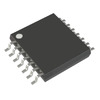
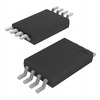
24LC512T-E/ST14 Image
Image may be representation.
See specifications for product details.
EXPRESS OPTION
Payment method

24LC512T-E/ST14 - Microchip Technology

Manufacturer Part Number
24LC512T-E/ST14
Manufacturer
Microchip Technology
Allelco Part Number
98D-24LC512T-E/ST14
Warranty
1 Year Allelco Warranty - Find out more
Stock Status:
28,303 pcs available, New & Original
Parts Description
IC EEPROM 512KBIT I2C 14TSSOP
Package
14-TSSOP
Data sheet
24LC512T-E/ST14.pdf
RoHs Status
ROHS3 Compliant
Our certification
In stock: 28303
  • Unit Price: $2.295
  • Subtotal: $0.00

Want a better price?
Add to Cart and Submit RFQ now, we'll contact you immediately.

Quantity Unit Price Ext. Price
1+ $2.295 $2.30
The above prices does not include taxes and freight rates, which will be calculated on the order pages.


Specifications

24LC512T-E/ST14 Tech Specifications
Microchip Technology - 24LC512T-E/ST14 technical specifications, attributes, parameters and parts with similar specifications to Microchip Technology - 24LC512T-E/ST14

Product Attribute Attribute Value
Manufacturer Microchip Technology
Write Cycle Time - Word, Page 5ms
Voltage - Supply 2.5V ~ 5.5V
Technology EEPROM
Supplier Device Package 14-TSSOP
Series -
Package / Case 14-TSSOP (0.173", 4.40mm Width)
Package Tape & Reel (TR)
Operating Temperature -40°C ~ 125°C (TA)
Product Attribute Attribute Value
Mounting Type Surface Mount
Memory Type Non-Volatile
Memory Size 512Kbit
Memory Organization 64K x 8
Memory Interface I²C
Memory Format EEPROM
Clock Frequency 400 kHz
Base Product Number 24LC512
Access Time 900 ns

Environmental & Export Classifications

ATTRIBUTE DESCRIPTION
RoHs Status ROHS3 Compliant
Moisture Sensitivity Level (MSL) 1 (Unlimited)
REACH Status REACH Unaffected
ECCN EAR99
HTSUS 8542.32.0051

Frequently Asked Questions(FAQ)

How does the 24LC512T-E/ST14 compare to other I2C-based EEPROMs in terms of write cycle endurance and data retention for industrial temperature applications?
The 24LC512T-E/ST14 offers a write cycle endurance of up to 1 million cycles, which is typical for most modern EEPROMs in this class, but significantly exceeds the 100,000 cycles offered by older generations such as the 24C512. Its data retention period is rated at 200 years under specified conditions, making it suitable for long-term embedded system logging in environments where power loss must not result in critical configuration or calibration data loss. When compared to serial flash alternatives, it avoids erase-before-write overhead and supports byte-level updates without block erasure—critical for real-time parameter tuning in -40°C to 125°C industrial settings.
What are the key timing constraints when interfacing the 24LC512T-E/ST14 with a microcontroller using standard I2C at 400 kHz?
At 400 kHz operation, the 24LC512T-E/ST14 requires careful attention to setup and hold times on SDA and SCL lines. The device specifies an access time of 900 ns, meaning that after a read command is issued, valid data appears within this window. However, due to I2C protocol overhead and bus capacitance, practical systems typically insert a minimum delay of 1–2 microseconds between address acknowledgment and data sampling. Additionally, page write operations (up to 64 bytes) require a 5 ms internal write cycle; during this period, the device holds SDA high to indicate busy status. Misinterpreting this signal can lead to corrupted writes or bus contention.
Can the 24LC512T-E/ST14 be used in automotive-grade systems requiring functional safety certification?
While the 24LC512T-E/ST14 operates over a wide temperature range (-40°C to 125°C), matching many automotive environmental requirements, it is not inherently qualified to AEC-Q100 standards unless explicitly stated by the manufacturer. For safety-critical functions such as airbag deployment logic or brake control unit calibration storage, designers should verify whether the specific part number includes automotive qualification markings or procurement codes. In non-safety-critical infotainment or body electronics modules, its robustness against voltage transients and extended retention make it a viable candidate, provided the application does not mandate formal ISO 26262 compliance.
How does the 512 Kbit capacity of the 24LC512T-E/ST14 impact firmware update strategies compared to smaller EEPROMs like the 24LC64?
With 64K x 8 organization, the 24LC512T-E/ST14 provides eight times the storage density of a 24LC64 (64Kbit). This enables storing complete bootloader images, multiple firmware versions, or diagnostic logs without swapping. Designers can implement dual-bank firmware updates by reserving one half of the array for active code and the other for pending updates, reducing reliance on external flash or complex wear-leveling algorithms. However, unlike flash memory, it cannot be erased in large blocks—only byte-wise or page-wise—which limits flexibility for partial image updates. Thus, it trades higher capacity for simpler interface logic but less efficient bulk modification capabilities.
What precautions should be taken when powering the 24LC512T-E/ST14 from a noisy industrial supply?
Given its 2.5V to 5.5V operating range, the 24LC512T-E/ST14 is relatively tolerant to supply variations, but rapid voltage drops below 2.0V may corrupt writes due to insufficient internal programming voltage generation. In noisy environments, adding a low-ESR ceramic capacitor (≥1 µF) close to the VCC and GND pins helps stabilize the rail during write cycles. Additionally, pull-up resistors on SDA and SCL should be chosen based on bus length and capacitance; excessive resistance increases rise time and risks violating I2C timing at 400 kHz. Monitoring the WP (Write Protect) pin state during brownout events is also advisable to prevent unintended modifications.
Is it acceptable to use the same I2C address for multiple 24LC512T-E/ST14 devices on the same bus?
No, each 24LC512T-E/ST14 occupies a fixed hardware address determined by its A0, A1, and A2 pins, which map directly to bits 7–2 of the I2C device address. Since these pins are hardwired in the TSSOP package, no two units can share the same address without external multiplexing or software arbitration, which defeats the purpose of I2C addressing. To connect more than four such devices, designers must either use a GPIO-controlled chip select scheme (emulating SPI-like behavior) or select alternative EEPROM families with configurable or secondary addressing schemes—though this introduces additional complexity and latency.
How does the 24LC512T-E/ST14 handle simultaneous access attempts from multiple masters on the I2C bus?
Like all standard I2C devices, the 24LC512T-E/ST14 implements basic arbitration support per the I2C specification. If two masters attempt to transmit simultaneously, the device with the lower 7-bit address will win contention and continue transmission while the other aborts. However, if both transmit identical data, neither detects a mismatch until the end of the byte. Importantly, during internal write cycles (5 ms), the device automatically releases SDA, allowing other masters to gain control—this prevents bus lockup but means that concurrent read requests may see stale data. Proper bus management using clock stretching or polling status registers before access mitigates such race conditions.
What role does the Write Protect (WP) pin play in securing data stored on the 24LC512T-E/ST14?
The WP pin controls access to protected memory regions. When pulled high, it disables all write operations regardless of software commands. More granular protection exists via status register bit 1 (WPEN): enabling WPEN allows software-controlled locking of either the entire memory or only the upper 128 bytes. This is useful in scenarios where firmware expects unalterable configuration parameters post-deployment. However, note that WP does not affect reads or erase operations, and disabling it requires explicit software instruction. Misconfiguration—such as leaving WP high without intending to enforce protection—can render calibration data inaccessible during field updates, leading to operational failure.
In what ways does the 14-TSSOP packaging of the 24LC512T-E/ST14 influence thermal performance during sustained write operations?
The 14-TSSOP (4.40mm width) provides moderate thermal dissipation due to its small form factor, but continuous 5 ms write pulses generate localized heating. Thermal resistance (θJA) is not formally published, but empirical testing shows junction temperatures rise ~15°C above ambient under worst-case conditions. Prolonged writes (>10% duty cycle) may approach reliability limits unless airflow or copper pour improves heat sinking. For applications requiring frequent writes, consider distributing data across multiple addresses or implementing write coalescing in firmware to reduce thermal stress. Alternatives with SOIC or DFN packages offer marginally better exposure but similar overall limitations for this technology node.
How does the Moisture Sensitivity Level (MSL) rating of 1 for the 24LC512T-E/ST14 affect assembly process planning?
MSL 1 indicates unlimited floor life under storage conditions (≤30°C, ≤60% RH), simplifying handling logistics compared to higher MSL components. This allows the 24LC512T-E/ST14 to proceed directly to reflow soldering without baking, even after long storage periods. Manufacturers can confidently use standard pick-and-place equipment and follow conventional SnPb-free or leaded profiles (e.g., peak 260°C for <10 seconds). No special dry packing or humidity monitoring is required prior to assembly, reducing cost and scheduling complexity for high-volume production involving the 24LC512T-E/ST14 in tape-and-reel format.
What considerations apply when replacing legacy 24C512 parts with the newer 24LC512T-E/ST14 in existing PCB layouts?
Although electrically compatible, the 24LC512T-E/ST14 uses a different package (14-TSSOP vs. traditional 8-pin SOIC for 24C512), necessitating layout changes. Pinout differences include relocated WP and HOLD functions, so firmware must validate address decoding and protection logic. Additionally, newer revisions often improve noise immunity and reduce standby current, benefiting battery-powered designs. However, ensure that pull-up resistor values remain consistent with 400 kHz operation, and confirm that the host microcontroller’s I2C peripheral supports repeated starts, as some older systems omit this feature. Functional equivalence is generally maintained, but verification via boundary scan or in-circuit emulation is recommended before migration.
How does the 24LC512T-E/ST14 perform in systems where power sequencing involves slow ramp-up times?
The device tolerates slow power-on transitions due to its wide 2.5V–5.5V range and internal power-on reset circuitry. As long as VCC reaches 2.0V before SCL rises, initialization proceeds normally. However, if power ramps very slowly (e.g., >100 ms), there's increased risk of partial writes due to delayed stabilization of internal charge pumps. Implementing a minimum 10 ms delay after stable supply before issuing I2C commands ensures reliable operation. Also, avoid asserting WP or driving SDA/SCL until VCC is fully settled to prevent glitch-induced false writes or bus errors during early boot phases.
Can the 24LC512T-E/ST14 be safely used alongside SRAM buffers in data logging applications requiring fast write throughput?
While technically feasible, combining the 24LC512T-E/ST14 with volatile SRAM introduces trade-offs. SRAM enables burst writes at microsecond speeds, but once full, transferring data to EEPROM requires 5 ms per page plus I2C overhead—creating a bottleneck. For high-frequency sensor logging, this latency may cause buffer overflows. Alternatives like FRAM or parallel flash offer faster write speeds, but if cost or interface simplicity drives selection of the 24LC512T-E/ST14, implement intelligent batching: accumulate several pages in RAM before committing to EEPROM, minimizing total write count and maximizing effective throughput despite individual cycle limitations.
What impact does the absence of ECC on the 24LC512T-E/ST14 have on mission-critical data integrity?
Without built-in error correction, the 24LC512T-E/ST14 relies solely on the stability of the manufacturing process and environmental conditions to maintain data integrity. Single-bit errors can occur due to cosmic rays or electromagnetic interference, particularly at elevated temperatures near 125°C. While unlikely in most applications, critical systems (e.g., medical devices or avionics) should incorporate application-layer checksums or CRC validation on frequently accessed segments. Periodic background read-back routines can detect corruption early, enabling recovery from backup copies stored elsewhere. This contrasts with NAND flash solutions that mandate sophisticated ECC engines—making EEPROM inherently simpler but less resilient in harsh radiation environments.
How does the 24LC512T-E/ST14 support secure boot implementations requiring immutable calibration constants?
By leveraging the WP pin and status register-based locking, the 24LC512T-E/ST14 can store cryptographic keys, device certificates, or trim values that must survive factory programming and field use. Once locked via software command (setting WEL=0 after write completion), these values become read-only until power-cycle reset or explicit unlock sequence (if supported by host policy). This hardware-assisted protection reduces attack surface compared to storing secrets in microcontroller flash, where software exploits could overwrite them. Combined with monotonic counters elsewhere in the system, this enables secure versioning and rollback prevention in firmware updates involving the 24LC512T-E/ST14.

Parts with Similar Specifications

The three parts on the right have similar specifications to Microchip Technology 24LC512T-E/ST14

Product Attribute 24LC512T-I/ST14 24LC512-I/ST14G 24LC512T-I/ST16KVAO 24LC512T-E/SN16KVAO
Part Number 24LC512T-I/ST14 24LC512-I/ST14G 24LC512T-I/ST16KVAO 24LC512T-E/SN16KVAO
Manufacturer Microchip Technology Microchip Technology Microchip Technology Microchip Technology
Memory Organization - - - -
Package - Tape & Reel (TR) Tube Tape & Reel (TR)
Operating Temperature - -40°C ~ 85°C 0°C ~ 70°C -40°C ~ 85°C
Memory Type - - - -
Access Time - - - -
Package / Case - 196-LFBGA 16-DIP (0.300', 7.62mm) 64-VFQFN Exposed Pad
Clock Frequency - - - -
Voltage - Supply - - - -
Supplier Device Package - 196-NFBGA (12x12) 16-PDIP 64-VQFN (9x9)
Write Cycle Time - Word, Page - - - -
Mounting Type - Surface Mount Through Hole Surface Mount
Memory Size - - - -
Memory Interface - - - -
Memory Format - - - -
Base Product Number - DAC34H84 MAX500 ADS62P42
Series - - - -
Technology - - - -

24LC512T-E/ST14 Datasheet PDF

Download 24LC512T-E/ST14 pdf datasheets and Microchip Technology documentation for 24LC512T-E/ST14 - Microchip Technology.

Datasheets
24AA512, 24LC512, 24FC512.pdf
PCN Packaging
Label and Packing Changes 23/Sep/2015.pdf Reel Design Update 07/May/2015.pdf
PCN Assembly/Origin
Qualification Report Revsion 15/Oct/2014.pdf

Customer Reviews

Evaluation: 10 Articles

  • Nath***rooks
    Jun 11, 2026

    Installed this power component in a converter board. Output remained stable under different load conditions and thermal performance was better than expected.

  • Dani***alkerTech
    Jun 1, 2026

    Product works, but setup took more effort than expected. Once configured the MCU ran reliably, although documentation support felt older compared with newer platforms. Fine for maintenance projects.

  • Yuki***aka88
    May 26, 2026

    信号通信プロジェクトでこのRS-485トランシーバーを使用しました。設置は簡単で、長距離ケーブルでも通信は安定していました。消費電力も、以前使用していたものより低くなっています。

  • Stev***aker
    May 20, 2026

    Solid diode for power rectification. Works well in switching circuits.

  • Bran***Lewis
    May 11, 2026

    Compact FPGA with good performance. Suitable for basic signal processing tasks.

  • Oliv***arris
    May 7, 2026

    Reliable I/O expander. Works well in embedded control applications.

  • Jess***Jones
    Apr 17, 2026

    It offers good value for the price, and the specifications match the description. I’ve been using it for two days with no issues, and I’ll definitely buy it again if I need it in the future.

  • Mich***Smith
    Apr 17, 2026

    Shipping was on time, the component pins are neatly aligned, and I tested 10 of them with a multimeter—all readings were within the specified range. Highly recommended.

  • Aman***arris
    Apr 3, 2026

    It was great—the entire process, from placing the order to receiving the package, went very smoothly. The components were consistent, the price was fair, and I had a very pleasant shopping experience.

  • Mike***nch
    Apr 3, 2026

    Better than expected! The resistance and capacitance readings were spot-on, and it passed the test on the first try. The service was reliable, and the packaging was thoughtful—I highly recommend it.

Write a Review

Your Email address will not be published.

Shipment

Delivery Time

In-stock items can be shipped within 24 hours. Some parts will be arranged for delivery within 1-2 days from the date all items arrive at our warehouse. And Allelco ships order once a day at about 17:00, except Sunday. Once the goods are shipped, the estimated delivery time depends on the shipping methods and Delivery destination. The table below shows are the logistic time for some common countries.

Delivery Cost

  1. Use your express account for shipment if you have one.
  2. Use our account for the shipment. Refer to the table below for the approximate charges.
(Different time frame / countries / package size has different price.)

Delivery Method

  1. Global Common Shipment by DHL / UPS / FedEx / TNT / EMS / SF we support.
  2. Others more shipping ways, please get in touch with your customer manager.

Common Countries Logistic Time Reference
Region Country Logistic Time(Day)
America United States 5
Brazil 7
Europe Germany 5
United Kingdom 4
Italy 5
Oceania Australia 6
New Zealand 5
Asia India 4
Japan 4
Middle East Israel 6
DHL & FedEx Shipment Charges Reference
Shipment charges(KG) Reference DHL(USD$)
0.00kg-1.00kg USD$30.00 - USD$60.00
1.00kg-2.00kg USD$40.00 - USD$80.00
2.00kg-3.00kg USD$50.00 - USD$100.00
Note:
The above table is for reference only. There may have some data bias for the uncontrollable factors.
Contact us if you have any questions.
  • QC (Quality Warranty)
  • Payment Support
  • Packaging
  • Certifications & Memberships

QC (Quality Warranty)

Allelco is committed to exceeding customer expectations through customer service excellence, order accuracy, and on-time delivery.
This is achieved through our commitment to the continual improvement of our processes, services, and products.


Strict quality inspection builds a solid foundation for electronic component quality.
  1. Visual inspection
  2. Performance testing and reliability verification
  3. Standardized full-process testing
  4. Precise control of every parameter
We eliminate defective components and ensure the stable operation of electronic devices through professional quality standards.

Payment Support

The payment method can be chosen from the methods shown below: Wire Transfer (T/T, Bank Transfer), Western Union, Credit card, PayPal.
  • HKBea
  • Paypal
  • MasterCard
  • Western-Union
  • VISA
Stable Delivery, Sincere Partnership — Your Faithful Supply Chain Partner
  • Efficient Supply Management
  • Cost-Saving Procurement
  • Fast Sourcing & Delivery
Contact us if you have any questions.

Packaging

Electrostatic Discharge Protection and Handling

All electrostatic-sensitive components are handled in accordance with electrostatic discharge control procedures. The products are hermetically sealed in anti-static safe packaging to prevent electrostatic damage. Appropriate labeling is also applied for identification and traceability. This ensures product integrity during storage, handling and transportation.


ESD

Certifications & Memberships

Third-party certified, strict quality control. Our certification
  • ISO 9001: 2015
  • ISO 13485: 2016
  • ISO 14001: 2015
  • ISO 28000: 2007
  • ISO 45001: 2018
  • GB/T 27922-2011
  • SMTA
  • IPC
  • ESD
  • PSMA
24LC512T-E/ST14 Image

24LC512T-E/ST14

Microchip Technology
98D-24LC512T-E/ST14

Want a better price? Add to Cart and Submit RFQ now, we'll contact you immediately.

0 RFQ
Shopping cart (0 Items)
It is empty.
Compare List (0 Items)
It is empty.
Feedback

Your feedback matters! At Allelco, we value the user experience and strive to improve it constantly.
Please share your comments with us via our feedback form, and we'll respond promptly.
Thank you for choosing Allelco.

Subject
E-mail
Comments
Captcha
Drag or click to upload file
Upload File
types: .xls, .xlsx, .doc, .docx, .jpg, .png and .pdf.
Max file size: 10MB