View All

Please refer to the English Version as our Official Version.Return

Europe
France(Français) Germany(Deutsch) Italy(Italia) Russian(русский) Poland(polski) Czech(Čeština) Luxembourg(Lëtzebuergesch) Netherlands(Nederland) Iceland(íslenska) Hungarian(Magyarország) Spain(español) Portugal(Português) Turkey(Türk dili) Bulgaria(Български език) Ukraine(Україна) Greece(Ελλάδα) Israel(עִבְרִית) Sweden(Svenska) Finland(Svenska) Finland(Suomi) Romania(românesc) Moldova(românesc) Slovakia(Slovenská) Denmark(Dansk) Slovenia(Slovenija) Slovenia(Hrvatska) Croatia(Hrvatska) Serbia(Hrvatska) Montenegro(Hrvatska) Bosnia and Herzegovina(Hrvatska) Lithuania(lietuvių) Spain(Português) Switzerland(Deutsch) United Kingdom(English)
Asia/Pacific
Japan(日本語) Korea(한국의) Thailand(ภาษาไทย) Malaysia(Melayu) Singapore(Melayu) Vietnam(Tiếng Việt) Philippines(Pilipino)
Africa, India and Middle East
United Arab Emirates(العربية) Iran(فارسی) Tajikistan(فارسی) India(हिंदी) Madagascar(malaɡasʲ)
South America / Oceania
New Zealand(Maori) Brazil(Português) Angola(Português) Mozambique(Português)
North America
United States(English) Canada(English) Haiti(Ayiti) Mexico(español)
HomeProductsIntegrated Circuits (ICs)Memory24LC512T-I/ST14
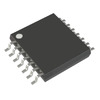
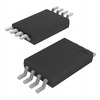
24LC512T-I/ST14 Image
Image may be representation.
See specifications for product details.
EXPRESS OPTION
Payment method

24LC512T-I/ST14 - Microchip Technology

Manufacturer Part Number
24LC512T-I/ST14
Manufacturer
Microchip Technology
Allelco Part Number
98D-24LC512T-I/ST14
Warranty
1 Year Allelco Warranty - Find out more
Stock Status:
43,700 pcs available, New & Original
Parts Description
IC EEPROM 512KBIT I2C 14TSSOP
Package
14-TSSOP
Data sheet
24LC512T-I/ST14.pdf
RoHs Status
ROHS3 Compliant
Our certification
In stock: 43700
  • Unit Price: $2.235
  • Subtotal: $0.00

Want a better price?
Add to Cart and Submit RFQ now, we'll contact you immediately.

Quantity Unit Price Ext. Price
1+ $2.235 $2.24
The above prices does not include taxes and freight rates, which will be calculated on the order pages.


Specifications

24LC512T-I/ST14 Tech Specifications
Microchip Technology - 24LC512T-I/ST14 technical specifications, attributes, parameters and parts with similar specifications to Microchip Technology - 24LC512T-I/ST14

Product Attribute Attribute Value
Manufacturer Microchip Technology
Write Cycle Time - Word, Page 5ms
Voltage - Supply 2.5V ~ 5.5V
Technology EEPROM
Supplier Device Package 14-TSSOP
Series -
Package / Case 14-TSSOP (0.173", 4.40mm Width)
Package Tape & Reel (TR)
Operating Temperature -40°C ~ 85°C (TA)
Product Attribute Attribute Value
Mounting Type Surface Mount
Memory Type Non-Volatile
Memory Size 512Kbit
Memory Organization 64K x 8
Memory Interface I²C
Memory Format EEPROM
Clock Frequency 400 kHz
Base Product Number 24LC512
Access Time 900 ns

Environmental & Export Classifications

ATTRIBUTE DESCRIPTION
RoHs Status ROHS3 Compliant
Moisture Sensitivity Level (MSL) 1 (Unlimited)
REACH Status REACH Unaffected
ECCN EAR99
HTSUS 8542.32.0051

Frequently Asked Questions(FAQ)

How does the 24LC512T-I/ST14 compare to other I²C EEPROMs in terms of memory density and interface speed, and what are the implications for system-level design when selecting this component?
The 24LC512T-I/ST14 offers 512 Kbit (64K x 8) of non-volatile memory accessed via an I²C interface operating at up to 400 kHz. This places it among mid-range EEPROM solutions that balance density with moderate-speed communication. Compared to lower-density parts like the 24LC256 (32K x 8), it supports larger data storage without requiring multiple ICs, reducing board space and BOM complexity. Relative to higher-speed SPI-based alternatives such as certain serial flash memories, the I²C interface trades raw throughput for simpler wiring and fewer pins—critical in space-constrained or multi-drop bus environments. The 400 kHz clock limit implies a theoretical maximum transfer rate of ~50 KB/s under optimal conditions, which is sufficient for configuration storage, calibration data, or small parameter sets but may bottleneck high-frequency logging applications. Designers must consider pull-up resistor values on SDA/SCL lines to maintain signal integrity over longer traces while respecting the capacitive load limitations of the I²C bus.
What write endurance characteristics should be expected from the 24LC512T-I/ST14, and how do typical application write patterns influence long-term reliability?
The 24LC512T-I/ST14 is specified for a minimum of 1 million write cycles per memory location, based on standard EEPROM endurance specifications. In practice, this equates to approximately one million byte-level writes, though page-write operations (up to 64 bytes per cycle) consume fewer cycles overall due to wear-leveling inefficiencies. For example, writing 100 bytes sequentially across 10 different addresses still counts as only 10 cycles toward endurance. Applications involving frequent data updates—such as real-time sensor logging or dynamic parameter tuning—must implement write coalescing or buffering to minimize individual erase/write events. Without such mitigation, even modest update rates can approach endurance limits within years of operation. It is also important to note that write cycles degrade over time and temperature; accelerated aging occurs above 70°C, so thermal management in industrial environments may further reduce effective lifespan.
Can the 24LC512T-I/ST14 reliably operate across the full industrial temperature range (-40°C to +85°C), and what design considerations arise from its temperature-dependent performance?
Yes, the 24LC512T-I/ST14 is qualified for operation from -40°C to +85°C, making it suitable for automotive edge cases and industrial control systems. However, its access time of 900 ns is guaranteed only within this range. At elevated temperatures near 85°C, propagation delays in the internal logic may increase slightly, potentially affecting timing margins in tight I²C read loops. Additionally, write cycle times remain constant at 5 ms regardless of temperature, but power consumption increases with temperature due to leakage currents, impacting battery-powered designs. PCB layout becomes more critical at extremes: at low temperatures, solder joints and package stresses require careful thermal cycling analysis, while at high temperatures, trace resistance and parasitic capacitance can alter I²C rise/fall times. Decoupling capacitors should be placed close to VCC pins to maintain stable supply rails under varying thermal conditions.
What is the significance of the 24LC512T-I/ST14’s page size of 64 bytes, and how does it affect firmware implementation when updating stored data?
The device organizes data into pages of 64 bytes each, meaning any write operation exceeding 64 bytes will span multiple cycles. If a firmware routine attempts to write 100 bytes starting at address 0x0000, only the first 64 bytes will fit in Page 0; the remaining 36 bytes must be written in a subsequent operation starting at address 0x0040. Failure to align writes with page boundaries results in unintended data corruption at page boundaries unless the firmware explicitly handles wrap-around or uses byte-level emulation via multiple single-byte writes—each of which incurs additional latency and wear. This constraint necessitates careful buffer management in embedded code, especially when updating large configuration blocks. Moreover, during a page write, all addressed locations are erased before being programmed, so partial updates require reading-modify-write sequences to preserve unchanged data.
How does the supply voltage range of 2.5V to 5.5V influence compatibility with common microcontroller platforms, and what precautions are needed when interfacing the 24LC512T-I/ST14 to 3.3V or 5V logic?
The 24LC512T-I/ST14 supports a wide supply window that enables direct connection to both 3.3V and 5V microcontroller GPIO pins without level shifting. Its inputs are 5V-tolerant, allowing safe bidirectional communication between 5V I²C masters and this EEPROM. However, when used with a 3.3V system, care must be taken to ensure the master’s output high voltage (typically >2.4V) meets the EEPROM’s VIH requirement, which is specified as 0.7 × VCC at minimum. Most modern 3.3V MCUs satisfy this, but legacy devices may not. Pull-up resistors on the SDA and SCL lines must be chosen carefully: too low a value causes excessive current draw and slow rise times at 2.5V operation, while too high a value slows edge rates at 5.5V, risking signal integrity. Typical values range from 2.2 kΩ to 10 kΩ depending on bus capacitance and desired speed.
What are the key differences between the 24LC512T-I/ST14 and its substitute part 24LC512T-I/ST regarding packaging and manufacturing traceability?
The 24LC512T-I/ST14 and its substitute 24LC512T-I/ST differ primarily in reel orientation and tape format within the same 14-TSSOP package (4.40mm width). The “-I/ST14” variant is supplied in Tape & Reel with a specific orientation (likely EIA-481 compliant for automated pick-and-place), whereas the non-suffixed version may be available in tube or tray formats. Both share identical electrical specifications and pinouts, ensuring interchangeability in production. However, procurement teams should verify exact reel dimensions and leader/trailer lengths when integrating into high-volume SMT lines. Neither variant includes a Digi-Electronics verification flag, indicating third-party testing has not been performed, so functional validation remains essential upon first implementation.
Why might a designer choose the 24LC512T-I/ST14 over a similar-capacity NOR flash despite differences in protocol and architecture?
While NOR flash offers faster random access and higher endurance than EEPROM, the 24LC512T-I/ST14 provides significant advantages in simplicity and cost for infrequent data retention tasks. Unlike flash, which requires complex erase-block management and often consumes more power during writes, the EEPROM’s byte-alterable nature eliminates need for erase-before-write routines. Its I²C interface uses only two wires compared to SPI’s four or more, simplifying routing on densely populated PCBs. Although flash typically achieves higher densities at lower cost per bit, the EEPROM’s smaller cell size enables tighter integration and lower static power. For applications storing firmware parameters, user preferences, or factory calibration data—where data changes are rare—the EEPROM’s deterministic write behavior and minimal firmware overhead make it preferable despite slower sequential write speeds.
How does moisture sensitivity level (MSL) classification of MSL 1 benefit users handling the 24LC512T-I/ST14 in mass production, and what steps are unnecessary?
With an MSL rating of 1, the 24LC512T-I/ST14 is considered non-sensitive to moisture-induced damage during normal handling. This means it does not require bake-out prior to reflow soldering, unlike components rated MSL 3 or higher. Production facilities can process reels directly from ambient storage without humidity conditioning, reducing lead time and handling complexity. However, standard ESD precautions (e.g., wrist straps, conductive trays) remain mandatory, as electrostatic discharge can permanently damage CMOS circuitry regardless of moisture exposure. The absence of moisture sensitivity simplifies inventory management and qualifies the part for inclusion in RoHS-compliant, lead-free assembly processes without special environmental controls.
What role does the base product number 24LC512 play in ecosystem compatibility for the 24LC512T-I/ST14, and how should engineers validate functional equivalence across variants?
The base product number 24LC512 defines a family of EEPROMs differing only in packaging, speed grade, or industrial compliance. All members share core functionality including 64K x 8 organization, I²C interface, and 400 kHz support. Engineers verifying compatibility should confirm that critical parameters—especially access time, write cycle duration, and voltage thresholds—are within acceptable limits for their application. Substituting another 24LC512 variant requires checking datasheet errata and ensuring no undocumented timing changes exist. In safety-critical designs, full characterization beyond datasheet guarantees may be necessary. Cross-referencing part numbers via Microchip’s official cross-reference tool ensures alignment with intended performance envelope rather than assuming parity based solely on base model.
How should system designers handle potential I²C bus contention or arbitration issues when integrating multiple devices alongside the 24LC512T-I/ST14?
Since the 24LC512T-I/ST14 participates in shared I²C bus protocols, it inherently supports multi-master arbitration and clock stretching. If another device attempts to drive the bus simultaneously, the EEPROM will release SDA upon detecting a mismatch between its output and input state, preserving protocol integrity. However, designers must assign unique 7-bit slave addresses (default 0x50–0x57 for A0/A1 tied low/high) and avoid address conflicts. Longer buses increase susceptibility to glitches; adding series termination resistors (22Ω–100Ω) near drivers or using I²C buffers can improve noise immunity. Firmware should implement timeout mechanisms around read/write sequences to recover from hung states caused by faulty peripherals, as the EEPROM itself cannot detect external bus faults. Proper pull-up placement (closer to the master) minimizes ringing and ensures clean transitions.
What are the implications of the 24LC512T-I/ST14’s lack of a Digi-Electronics Programmable flag, and how does this affect quality assurance in commercial deployments?
The absence of a Digi-Electronics verification status indicates that independent testing or qualification was not conducted by the distributor. Consequently, buyers must rely entirely on manufacturer-specified parameters and internal test reports. While Microchip generally maintains rigorous quality standards, first-time implementations should include functional validation under worst-case conditions (e.g., minimum VCC, maximum TA) to uncover any undetected anomalies. This is particularly relevant in regulated industries where traceability and failure mode analysis are required. Documentation should reference the original datasheet revision and cross-check against recent errata notes to ensure no latent defects have been identified post-release.
In what scenarios would the 24LC512T-I/ST14 be preferred over a volatile SRAM backed by a battery, and vice versa?
The 24LC512T-I/ST14 is ideal when data must survive power loss without auxiliary power, eliminating reliance on batteries that degrade over time or leak in humid environments. It consumes negligible standby current (<1 µA typical), making it suitable for always-on systems. Conversely, volatile SRAM offers near-infinite write cycles and microsecond access times but requires constant power or a backup source. If the application frequently updates large datasets (e.g., frame buffers) and operates in a stable power environment, SRAM reduces complexity and cost. However, for configuration data, logs, or settings that persist across brownouts, the EEPROM’s non-volatility provides inherent robustness. Trade-offs involve endurance, power budget, and data criticality.
How does the 24LC512T-I/ST14’s write protection feature work, and what safeguards does it offer against accidental data modification?
The device supports hardware write protection via WP pin control, which prevents all write operations when asserted high. When WP is connected to VCC, write protection is disabled. Alternatively, if WP is pulled low or left floating (depending on configuration), writes may be blocked globally. Some configurations allow partial protection by locking specific memory regions, though the 24LC512 lacks fine-grained sector protection like newer models. Firmware-based protection requires reading-modify-write sequences to preserve data integrity, increasing execution time. Designers implementing critical calibration tables should tie WP to a microcontroller GPIO that asserts during programming phases, preventing runtime corruption from misbehaving code. Always verify WP behavior through empirical testing, as default states vary by power-up condition.
What impact does the 24LC512T-I/ST14’s 5 ms page write time have on real-time system responsiveness, and how can firmware mitigate perceived latency?
A full-page write consumes 5 ms, during which the I²C bus is occupied and the EEPROM cannot respond to new requests. In interrupt-driven systems, this delay could stall other tasks if not managed properly. To mitigate, firmware should buffer outgoing data in RAM, then initiate bulk writes during idle periods or background loops. For small updates (<64 bytes), byte-wise writes take roughly 5 ms each, compounding latency. Implementing a queue with priority handling ensures critical reads proceed unimpeded while deferring writes. Real-time OS users may schedule EEPROM operations in dedicated threads with watchdog timers to prevent deadlock. Given that most EEPROMs are used for infrequent updates, the 5 ms penalty is often acceptable compared to the alternative of losing data on power loss.
How do RoHS3, REACH, and ECCN classifications affect global sourcing decisions involving the 24LC512T-I/ST14?
RoHS3 compliance ensures halogen and heavy metal restrictions meet EU Directive 2011/65/EU, facilitating market access in Europe and other jurisdictions adopting similar regulations. REACH unaffected status implies no SVHCs (substances of very high concern) above threshold concentrations, simplifying export documentation. ECCN EAR99 denotes U.S. export classification under Commerce Control List, indicating no special licensing is required for most end uses. Together, these classifications reduce regulatory friction in multinational supply chains, though importers must still maintain records of material declarations. They also assure alignment with corporate sustainability policies, avoiding reputational or legal risk associated with restricted substances.

Parts with Similar Specifications

The three parts on the right have similar specifications to Microchip Technology 24LC512T-I/ST14

Product Attribute 24LC512T-E/ST14 24LC512T-I/ST16KVAO 24LC512T-I/SN 24LC512T-I/SM
Part Number 24LC512T-E/ST14 24LC512T-I/ST16KVAO 24LC512T-I/SN 24LC512T-I/SM
Manufacturer Microchip Technology Microchip Technology Microchip Technology Microchip Technology
Memory Size - - - -
Mounting Type - Surface Mount Through Hole Surface Mount
Package - Tape & Reel (TR) Tube Tape & Reel (TR)
Operating Temperature - -40°C ~ 85°C 0°C ~ 70°C -40°C ~ 85°C
Memory Interface - - - -
Access Time - - - -
Technology - - - -
Memory Organization - - - -
Voltage - Supply - - - -
Memory Type - - - -
Series - - - -
Package / Case - 196-LFBGA 16-DIP (0.300', 7.62mm) 64-VFQFN Exposed Pad
Memory Format - - - -
Supplier Device Package - 196-NFBGA (12x12) 16-PDIP 64-VQFN (9x9)
Base Product Number - DAC34H84 MAX500 ADS62P42
Clock Frequency - - - -
Write Cycle Time - Word, Page - - - -

24LC512T-I/ST14 Datasheet PDF

Download 24LC512T-I/ST14 pdf datasheets and Microchip Technology documentation for 24LC512T-I/ST14 - Microchip Technology.

Datasheets
24AA512, 24LC512, 24FC512.pdf
PCN Assembly/Origin
8L SOIJ Package/Plating 31/Jul/2013.pdf
PCN Packaging
Label and Packing Changes 23/Sep/2015.pdf Reel Design Update 07/May/2015.pdf

Customer Reviews

Evaluation: 10 Articles

  • Nath***rooks
    Jun 11, 2026

    Installed this power component in a converter board. Output remained stable under different load conditions and thermal performance was better than expected.

  • Dani***alkerTech
    Jun 1, 2026

    Product works, but setup took more effort than expected. Once configured the MCU ran reliably, although documentation support felt older compared with newer platforms. Fine for maintenance projects.

  • Yuki***aka88
    May 26, 2026

    信号通信プロジェクトでこのRS-485トランシーバーを使用しました。設置は簡単で、長距離ケーブルでも通信は安定していました。消費電力も、以前使用していたものより低くなっています。

  • Stev***aker
    May 20, 2026

    Solid diode for power rectification. Works well in switching circuits.

  • Bran***Lewis
    May 11, 2026

    Compact FPGA with good performance. Suitable for basic signal processing tasks.

  • Oliv***arris
    May 7, 2026

    Reliable I/O expander. Works well in embedded control applications.

  • Jess***Jones
    Apr 17, 2026

    It offers good value for the price, and the specifications match the description. I’ve been using it for two days with no issues, and I’ll definitely buy it again if I need it in the future.

  • Mich***Smith
    Apr 17, 2026

    Shipping was on time, the component pins are neatly aligned, and I tested 10 of them with a multimeter—all readings were within the specified range. Highly recommended.

  • Aman***arris
    Apr 3, 2026

    It was great—the entire process, from placing the order to receiving the package, went very smoothly. The components were consistent, the price was fair, and I had a very pleasant shopping experience.

  • Mike***nch
    Apr 3, 2026

    Better than expected! The resistance and capacitance readings were spot-on, and it passed the test on the first try. The service was reliable, and the packaging was thoughtful—I highly recommend it.

Write a Review

Your Email address will not be published.

Shipment

Delivery Time

In-stock items can be shipped within 24 hours. Some parts will be arranged for delivery within 1-2 days from the date all items arrive at our warehouse. And Allelco ships order once a day at about 17:00, except Sunday. Once the goods are shipped, the estimated delivery time depends on the shipping methods and Delivery destination. The table below shows are the logistic time for some common countries.

Delivery Cost

  1. Use your express account for shipment if you have one.
  2. Use our account for the shipment. Refer to the table below for the approximate charges.
(Different time frame / countries / package size has different price.)

Delivery Method

  1. Global Common Shipment by DHL / UPS / FedEx / TNT / EMS / SF we support.
  2. Others more shipping ways, please get in touch with your customer manager.

Common Countries Logistic Time Reference
Region Country Logistic Time(Day)
America United States 5
Brazil 7
Europe Germany 5
United Kingdom 4
Italy 5
Oceania Australia 6
New Zealand 5
Asia India 4
Japan 4
Middle East Israel 6
DHL & FedEx Shipment Charges Reference
Shipment charges(KG) Reference DHL(USD$)
0.00kg-1.00kg USD$30.00 - USD$60.00
1.00kg-2.00kg USD$40.00 - USD$80.00
2.00kg-3.00kg USD$50.00 - USD$100.00
Note:
The above table is for reference only. There may have some data bias for the uncontrollable factors.
Contact us if you have any questions.
  • QC (Quality Warranty)
  • Payment Support
  • Packaging
  • Certifications & Memberships

QC (Quality Warranty)

Allelco is committed to exceeding customer expectations through customer service excellence, order accuracy, and on-time delivery.
This is achieved through our commitment to the continual improvement of our processes, services, and products.


Strict quality inspection builds a solid foundation for electronic component quality.
  1. Visual inspection
  2. Performance testing and reliability verification
  3. Standardized full-process testing
  4. Precise control of every parameter
We eliminate defective components and ensure the stable operation of electronic devices through professional quality standards.

Payment Support

The payment method can be chosen from the methods shown below: Wire Transfer (T/T, Bank Transfer), Western Union, Credit card, PayPal.
  • HKBea
  • Paypal
  • MasterCard
  • Western-Union
  • VISA
Stable Delivery, Sincere Partnership — Your Faithful Supply Chain Partner
  • Efficient Supply Management
  • Cost-Saving Procurement
  • Fast Sourcing & Delivery
Contact us if you have any questions.

Packaging

Electrostatic Discharge Protection and Handling

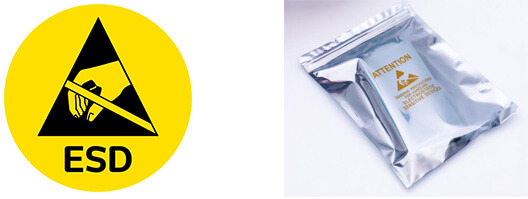
All electrostatic-sensitive components are handled in accordance with electrostatic discharge control procedures. The products are hermetically sealed in anti-static safe packaging to prevent electrostatic damage. Appropriate labeling is also applied for identification and traceability. This ensures product integrity during storage, handling and transportation.


ESD

Certifications & Memberships

Third-party certified, strict quality control. Our certification
  • ISO 9001: 2015
  • ISO 13485: 2016
  • ISO 14001: 2015
  • ISO 28000: 2007
  • ISO 45001: 2018
  • GB/T 27922-2011
  • SMTA
  • IPC
  • ESD
  • PSMA
24LC512T-I/ST14 Image

24LC512T-I/ST14

Microchip Technology
98D-24LC512T-I/ST14

Want a better price? Add to Cart and Submit RFQ now, we'll contact you immediately.

0 RFQ
Shopping cart (0 Items)
It is empty.
Compare List (0 Items)
It is empty.
Feedback

Your feedback matters! At Allelco, we value the user experience and strive to improve it constantly.
Please share your comments with us via our feedback form, and we'll respond promptly.
Thank you for choosing Allelco.

Subject
E-mail
Comments
Captcha
Drag or click to upload file
Upload File
types: .xls, .xlsx, .doc, .docx, .jpg, .png and .pdf.
Max file size: 10MB