View All

Please refer to the English Version as our Official Version.Return

Europe
France(Français) Germany(Deutsch) Italy(Italia) Russian(русский) Poland(polski) Czech(Čeština) Luxembourg(Lëtzebuergesch) Netherlands(Nederland) Iceland(íslenska) Hungarian(Magyarország) Spain(español) Portugal(Português) Turkey(Türk dili) Bulgaria(Български език) Ukraine(Україна) Greece(Ελλάδα) Israel(עִבְרִית) Sweden(Svenska) Finland(Svenska) Finland(Suomi) Romania(românesc) Moldova(românesc) Slovakia(Slovenská) Denmark(Dansk) Slovenia(Slovenija) Slovenia(Hrvatska) Croatia(Hrvatska) Serbia(Hrvatska) Montenegro(Hrvatska) Bosnia and Herzegovina(Hrvatska) Lithuania(lietuvių) Spain(Português) Switzerland(Deutsch) United Kingdom(English)
Asia/Pacific
Japan(日本語) Korea(한국의) Thailand(ภาษาไทย) Malaysia(Melayu) Singapore(Melayu) Vietnam(Tiếng Việt) Philippines(Pilipino)
Africa, India and Middle East
United Arab Emirates(العربية) Iran(فارسی) Tajikistan(فارسی) India(हिंदी) Madagascar(malaɡasʲ)
South America / Oceania
New Zealand(Maori) Brazil(Português) Angola(Português) Mozambique(Português)
North America
United States(English) Canada(English) Haiti(Ayiti) Mexico(español)
HomeProductsIntegrated Circuits (ICs)Specialized ICs24LC64-E/MS
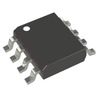
Image may be representation.
See specifications for product details.
EXPRESS OPTION
Payment method

24LC64-E/MS - Microchip

Manufacturer Part Number
24LC64-E/MS
Manufacturer
Microchip Technology
Allelco Part Number
41D-24LC64-E/MS
Warranty
1 Year Allelco Warranty - Find out more
Stock Status:
8,220 pcs available, New & Original
Parts Description
MSOP-8
Data sheet
-
Category
Integrated Circuits (ICs) > Specialized ICs
RoHs Status
Our certification
In stock: 8220
  • Unit Price: $0.629
  • Subtotal: $0.00

Want a better price?
Add to Cart and Submit RFQ now, we'll contact you immediately.

Quantity Unit Price Ext. Price
1+ $0.629 $0.63
10+ $0.613 $6.13
30+ $0.601 $18.03
100+ $0.591 $59.10
The above prices does not include taxes and freight rates, which will be calculated on the order pages.

Specifications

24LC64-E/MS Tech Specifications
Microchip - 24LC64-E/MS technical specifications, attributes, parameters and parts with similar specifications to Microchip - 24LC64-E/MS

Product Attribute Attribute Value
Part Number 24LC64-E/MS
Package MSOP-8
Description MSOP-8
Stock Condition Get 8220 pcs available quantity at Allelco
Payment PayPal / TT / Credit Card / Western Union
Allelco Certifications ESD / ISO 9001 / ISO 13485 / ISO 28000
Product Attribute Attribute Value
Manufacturer Microchip Technology
RoHs Status -
Warranty 100% Perfect Functions
Transport port Hong Kong
Shipping by DHL / FedEx / UPS / TNT / SF Express
RFQ Email info@allelco.com

Parts Introduction

Manufacturer Part Number

24LC64-E/MS

Manufacturer

microchip-technology

Introduction

The 24LC64-E/MS is a 64Kbit (8K x 8) serial EEPROM memory product from Microchip Technology. It offers reliable non-volatile memory storage with a simple I2C interface, making it a versatile solution for various embedded applications.

Product Features and Performance

64Kbit (8K x 8) of non-volatile EEPROM memory

I2C serial interface with clock speeds up to 400kHz

Fast access time of 900ns

Wide operating voltage range of 2.5V to 5.5V

Wide operating temperature range of -40°C to 125°C

5ms write cycle time for word or page writes

High endurance of up to 1 million write cycles

Data retention of up to 200 years

Product Advantages

Compact surface mount package options (8-TSSOP, 8-MSOP)

Low power consumption for energy-efficient designs

Seamless integration with microcontrollers and other I2C-compatible devices

Reliable non-volatile memory storage for critical data

Key Reasons to Choose This Product

Proven reliability and performance from a trusted manufacturer

Versatile memory solution suitable for a wide range of applications

Flexible operating conditions and packaging options

Cost-effective and easy to integrate into your design

Quality and Safety Features

Rigorous quality control and testing during manufacturing

RoHS-compliant and lead-free components for environmental safety

Compatibility

The 24LC64-E/MS is compatible with a wide range of I2C-enabled microcontrollers and other devices.

Application Areas

Industrial automation and control systems

Automotive electronics

Consumer electronics

Sensor and instrumentation applications

IoT and edge computing devices

Product Lifecycle

The 24LC64-E/MS is an active and supported product in our website's sales team's portfolio. There are no immediate plans for discontinuation, and the product has several equivalent or alternative models available, including:

24LC64-I/SN

24LC64-I/MS

24LC64-I/P

Customers are advised to contact our website's sales team for the latest information on product availability and support.

Frequently Asked Questions(FAQ)

How does the 24LC64-E/MS compare to other EEPROMs in terms of I²C clock frequency and write cycle performance for high-speed embedded applications?
The 24LC64-E/MS supports a standard I²C bus speed of up to 400 kHz, which is suitable for most microcontrollers operating at 3.3V or 5V logic levels. Its page write cycle time is 5 ms per 64-byte block, resulting in approximately 128 µs per byte during burst writes. This places it above basic 100 kHz devices but below high-performance serial flash alternatives that may support faster erase/write sequences. When compared to similar 64Kbit EEPROMs like the AT24C64 from Microchip, the 24LC64-E/MS offers comparable interface speeds and access times, though some newer variants include improved endurance ratings. For designs requiring sustained data logging with frequent small updates, the 5 ms write time introduces latency that must be factored into real-time constraints.
What are the key differences between the 8-MSOP package of the 24LC64-E/MS and alternative packaging options for space-constrained PCB layouts?
The 24LC64-E/MS is offered in an 8-pin MSOP (Micro Small Outline Package) measuring 3.00 mm wide with a pitch of 0.5 mm. While functionally equivalent to the more common TSSOP variant, the MSOP provides slightly better thermal dissipation due to its larger exposed pad and reduced lead inductance. However, it requires careful soldering profile management during reflow due to its smaller footprint. In comparison, SOIC packages offer higher pin counts for parallel interfaces but consume more board area. For compact IoT sensor nodes or handheld instrumentation where routing density matters, the 8-MSOP’s 3mm width allows placement adjacent to fine-pitch BGA components without violating clearance rules—though designers must ensure adequate copper pour on layer transitions to maintain signal integrity across the shared power and ground planes.
Can the 24LC64-E/MS reliably operate across industrial temperature ranges when used in automotive-grade monitoring systems?
Yes, the 24LC64-E/MS is specified for operation from -40°C to +125°C, making it suitable for automotive infotainment modules and industrial control panels exposed to extreme thermal cycling. At temperatures above 85°C, internal leakage currents increase modestly, which can affect retention over extended periods if power is lost. Nevertheless, under normal operating conditions with regulated supply voltages within 2.5V–5.5V, the device maintains full functionality including consistent I²C communication timing and predictable write endurance. Designers should still apply derating practices—such as limiting continuous write cycles to <1 million per cell—to preserve long-term reliability in harsh environments.
How does the memory organization of the 24LC64-E/MS impact firmware update strategies in bootloader implementations?
With an organization of 8K x 8 bits, the 24LC64-E/MS provides 64 kilobytes of addressable storage divided into 64-byte pages. Each page can be written individually via I²C bursts, enabling efficient firmware staging during bootloader operations. For example, flashing a 2KB application image would require four sequential page writes plus overhead for addressing. Because each write erases only one page at a time, partial updates must overwrite entire sectors, necessitating temporary buffer allocation in RAM. Compared to NOR flash with random-access capability, this sequential limitation increases code update latency but reduces complexity for simple data logging or configuration storage use cases.
What considerations apply when cascading multiple 24LC64-E/MS devices on a single I²C bus for expanded non-volatile storage?
Multiple 24LC64-E/MS units share the same SDA and SCL lines, differentiated by hardware address pins (A0, A1, A2). Up to eight devices can coexist using unique 7-bit addresses within the EEPROM range. Designers must assign distinct combinations of these pins—typically tied to VCC or GND—to avoid bus contention. Timing becomes critical during multi-device writes: since each device has a 5 ms page write delay, total transaction duration scales linearly with number of devices. Additionally, pull-up resistor values must balance rise time requirements against excessive current draw when multiple open-drain outputs are active simultaneously. A typical 4.7 kΩ resistor works well unless more than six devices are connected, in which case lower values (e.g., 2.2 kΩ) improve signal integrity at the cost of higher quiescent current.
Is the 24LC64-E/MS suitable for battery-backed data logging applications requiring >10 years of retention?
The 24LC64-E/MS guarantees data retention for at least 1 million write/erase cycles under standard conditions, but absolute retention duration depends heavily on storage temperature and voltage. According to JEDEC standards, 25°C ambient allows ~200 years of retention; however, at 85°C, this drops significantly—likely below 10 years. For battery-backed logging systems targeting >10-year lifetimes, periodic refresh cycles or migration to FRAM technology may be preferable. If using the 24LC64-E/MS, minimize exposure to elevated temperatures and reduce write frequency to extend retention. Implement wear-leveling algorithms to distribute writes evenly across memory blocks, thereby preserving overall array life even if individual cells degrade gradually.
How does the access time of the 24LC64-E/MS compare to SRAM in real-time data acquisition systems?
The 24LC64-E/MS has a maximum access time of 900 ns, measured from receiving a read command to data availability. While faster than typical SPI-based EEPROMs, this is substantially slower than synchronous SRAM (<100 ns). In real-time acquisition systems sampling at rates exceeding 1 MHz, direct streaming to EEPROM introduces bottlenecks unless buffered by FIFO structures. For moderate-speed applications (≤100 kHz effective sample rate), the 900 ns delay may be acceptable with proper queuing. However, when combined with the 5 ms write penalty for each page, cumulative latency can dominate system response. Therefore, SRAM remains preferable for high-bandwidth buffering, while the 24LC64-E/MS serves best as final archival storage rather than intermediate cache.
What precautions should be taken when power-cycling circuits containing the 24LC64-E/MS to prevent data corruption?
Sudden power loss during a write cycle—especially within the first few milliseconds after initiating a page write—can corrupt data or leave memory in an undefined state. To mitigate risk, implement a power-fail detection circuit using an external supervisor IC that holds the MCU in reset until Vcc stabilizes above 2.5V. Alternatively, software-based checks can validate write completion before proceeding. The 24LC64-E/MS does not provide built-in status flags for ongoing operations, so relying solely on timing assumptions is risky. During brownout events, ensure I²C pull-ups remain active long enough to complete any pending transactions. Also, avoid rapid power-on/off cycles that could stress the oxide layers over time, particularly in mission-critical firmware storage roles.
Why might the 24LC64-E/MS exhibit slower performance than expected in systems using very short I²C clock pulses?
The 24LC64-E/MS requires minimum high and low durations compliant with Fast Mode I²C specifications (t_HD;STA = 0.6 µs, t_LOW = 1.3 µs). If the master generates clocks shorter than these thresholds—common in aggressive timing-optimized firmware—the slave may fail to recognize start conditions or respond correctly. This results in repeated NACKs or missed acknowledgments, manifesting as communication failures. Unlike some modern serial memories supporting flexible timing, the 24LC64-E/MS adheres strictly to legacy I²C timing models. Designers must verify protocol compliance using oscilloscope measurements or logic analyzers, especially when interfacing with FPGAs or ultra-low-power MCUs configured for minimal duty-cycle operation.
How does the Moisture Sensitivity Level (MSL) rating of MSL 2 for the 24LC64-E/MS influence handling in automated assembly processes?
Classified as MSL 2 (Level 2a according to J-STD-020), the 24LC64-E/MS can withstand one 24-hour soak at 30°C/60% RH before soldering, provided storage conditions are maintained. After removal from dry pack, it must be processed within one year. Automated pick-and-place machines typically handle this without issue, but manual rework requires adherence to IPC-JEDEC guidelines for humidity exposure limits. Failure to follow MSL protocols risks popcorning during reflow, which can crack solder joints or damage internal bond wires. Most contract manufacturers pre-condition parts automatically, but smaller shops must track bake-out schedules carefully. Always consult the latest Microchip packing slip for batch-specific shelf-life expiration dates.
What role does the base product number 24LC64 play in selecting compatible replacement parts or evaluating supply chain continuity?
The base product designation 24LC64 identifies a family of 64-Kbit I²C EEPROMs from Microchip, including variants like 24LC64T-I/MS or 24LC64F-PU. All members share core electrical characteristics—interface protocol, memory size, and package outline—but differ in marking codes, lead finishes, or minor timing tolerances. When substituting the 24LC64-E/MS, confirm that the replacement supports identical voltage rails (2.5V–5.5V), same page size (64 bytes), and equivalent write cycle times. Some newer versions integrate enhanced security features or extended endurance, but may require updated firmware if register maps diverge. Supply chain resilience often favors keeping base numbers constant, as distributors stock inventory based on these designators rather than full part numbers.
How do RoHS and REACH compliance status impact procurement decisions involving the 24LC64-E/MS in EU-regulated consumer electronics?
As ROHS3 and REACH unaffected, the 24LC64-E/MS meets all European Union restrictions on hazardous substances such as lead, mercury, and cadmium, and contains no SVHCs (Substances of Very High Concern) above threshold levels. This simplifies CE certification documentation and avoids customs delays during import. Procurement teams can confidently source the component through authorized distributors without additional testing, assuming supplier declarations align with actual manufacturing batches. Note that counterfeit components sometimes falsely claim compliance, so always verify authenticity via Microchip’s online tools or authorized channels. Environmental audits benefit from this clean regulatory profile, reducing audit findings related to restricted materials.
What are the implications of the ECCN classification EAR99 for international sourcing of the 24LC64-E/MS?
Classified under EAR99, the 24LC64-E/MS is subject to U.S. export controls only if intended for military end-use or countries embargoed by OFAC. Most commercial electronics applications qualify for automatic general license exception ENC, streamlining global distribution. However, exporters must still comply with local ITAR regulations if integrating the device into defense-related products. For companies sourcing from non-U.S. foundries, this classification reduces licensing overhead compared to items classified as 5A992 or higher. Still, due diligence is advised when dealing with entities on denied party lists, regardless of component origin.
How should designers account for the 900 ns access time when designing interrupt-driven data capture routines around the 24LC64-E/MS?
In interrupt-heavy systems, assume worst-case latency of 900 ns from issuing a read command to receiving valid data. If interrupts occur during this window, nested servicing could delay response beyond safety margins. To avoid race conditions, disable interrupts briefly (~1 µs) before initiating reads, or poll the device using non-blocking logic with timeout safeguards. Alternatively, use double-buffering: pre-read configuration data into RAM during idle periods, then swap buffers atomically. Given the modest 900 ns delay, most ARM Cortex-M series processors can service other tasks concurrently without significant overhead, but real-time kernels may require scheduling adjustments to meet deadlines.
What trade-offs exist between using the 24LC64-E/MS versus SPI-based EEPROMs in cost-sensitive consumer gadgets?
The 24LC64-E/MS uses only two I²C lines (SDA/SCL), saving PCB real estate versus four-wire SPI implementations. It also consumes less quiescent current (~1 µA typical), beneficial for battery-powered devices. However, SPI EEPROMs often offer faster write cycles (microseconds vs. milliseconds) and higher clock rates (up to 10–20 MHz), reducing latency for large data transfers. Additionally, SPI lacks inherent arbitration, simplifying multi-master scenarios. For simple configuration storage, the 24LC64-E/MS wins on pin count and integration ease, but for high-throughput logging, SPI alternatives may justify added component count. Ultimately, selection hinges on system architecture priorities: minimal wiring vs. peak bandwidth.
How does the 64-byte page size of the 24LC64-E/MS affect file system design in embedded Linux environments?
File systems like LittleFS or SPIFFS assume block sizes aligned with underlying media geometry. Writing files smaller than 64 bytes wastes space due to page boundaries, increasing fragmentation. Conversely, large files spanning multiple pages incur overhead from repeated addressing and write amplification. For optimal efficiency, align file metadata structures to 64-byte multiples. Additionally, wear leveling algorithms must account for this fixed page granularity—unlike NAND flash with variable erase blocks. In practice, many embedded developers treat the 24LC64-E/MS as a flat binary store rather than a true filesystem, avoiding complexity unless absolutely necessary. Hybrid approaches using RAM buffers to coalesce writes before flushing to EEPROM reduce page waste significantly.

Customer Reviews

Evaluation: 10 Articles

  • Nath***rooks
    Jun 11, 2026

    Installed this power component in a converter board. Output remained stable under different load conditions and thermal performance was better than expected.

  • Dani***alkerTech
    Jun 1, 2026

    Product works, but setup took more effort than expected. Once configured the MCU ran reliably, although documentation support felt older compared with newer platforms. Fine for maintenance projects.

  • Yuki***aka88
    May 26, 2026

    信号通信プロジェクトでこのRS-485トランシーバーを使用しました。設置は簡単で、長距離ケーブルでも通信は安定していました。消費電力も、以前使用していたものより低くなっています。

  • Stev***aker
    May 20, 2026

    Solid diode for power rectification. Works well in switching circuits.

  • Bran***Lewis
    May 11, 2026

    Compact FPGA with good performance. Suitable for basic signal processing tasks.

  • Oliv***arris
    May 7, 2026

    Reliable I/O expander. Works well in embedded control applications.

  • Jess***Jones
    Apr 17, 2026

    It offers good value for the price, and the specifications match the description. I’ve been using it for two days with no issues, and I’ll definitely buy it again if I need it in the future.

  • Mich***Smith
    Apr 17, 2026

    Shipping was on time, the component pins are neatly aligned, and I tested 10 of them with a multimeter—all readings were within the specified range. Highly recommended.

  • Aman***arris
    Apr 3, 2026

    It was great—the entire process, from placing the order to receiving the package, went very smoothly. The components were consistent, the price was fair, and I had a very pleasant shopping experience.

  • Mike***nch
    Apr 3, 2026

    Better than expected! The resistance and capacitance readings were spot-on, and it passed the test on the first try. The service was reliable, and the packaging was thoughtful—I highly recommend it.

Write a Review

Your Email address will not be published.

Shipment

Delivery Time

In-stock items can be shipped within 24 hours. Some parts will be arranged for delivery within 1-2 days from the date all items arrive at our warehouse. And Allelco ships order once a day at about 17:00, except Sunday. Once the goods are shipped, the estimated delivery time depends on the shipping methods and Delivery destination. The table below shows are the logistic time for some common countries.

Delivery Cost

  1. Use your express account for shipment if you have one.
  2. Use our account for the shipment. Refer to the table below for the approximate charges.
(Different time frame / countries / package size has different price.)

Delivery Method

  1. Global Common Shipment by DHL / UPS / FedEx / TNT / EMS / SF we support.
  2. Others more shipping ways, please get in touch with your customer manager.

Common Countries Logistic Time Reference
Region Country Logistic Time(Day)
America United States 5
Brazil 7
Europe Germany 5
United Kingdom 4
Italy 5
Oceania Australia 6
New Zealand 5
Asia India 4
Japan 4
Middle East Israel 6
DHL & FedEx Shipment Charges Reference
Shipment charges(KG) Reference DHL(USD$)
0.00kg-1.00kg USD$30.00 - USD$60.00
1.00kg-2.00kg USD$40.00 - USD$80.00
2.00kg-3.00kg USD$50.00 - USD$100.00
Note:
The above table is for reference only. There may have some data bias for the uncontrollable factors.
Contact us if you have any questions.
  • QC (Quality Warranty)
  • Payment Support
  • Packaging
  • Certifications & Memberships

QC (Quality Warranty)

Allelco is committed to exceeding customer expectations through customer service excellence, order accuracy, and on-time delivery.
This is achieved through our commitment to the continual improvement of our processes, services, and products.


Strict quality inspection builds a solid foundation for electronic component quality.
  1. Visual inspection
  2. Performance testing and reliability verification
  3. Standardized full-process testing
  4. Precise control of every parameter
We eliminate defective components and ensure the stable operation of electronic devices through professional quality standards.

Payment Support

The payment method can be chosen from the methods shown below: Wire Transfer (T/T, Bank Transfer), Western Union, Credit card, PayPal.
  • HKBea
  • Paypal
  • MasterCard
  • Western-Union
  • VISA
Stable Delivery, Sincere Partnership — Your Faithful Supply Chain Partner
  • Efficient Supply Management
  • Cost-Saving Procurement
  • Fast Sourcing & Delivery
Contact us if you have any questions.

Packaging

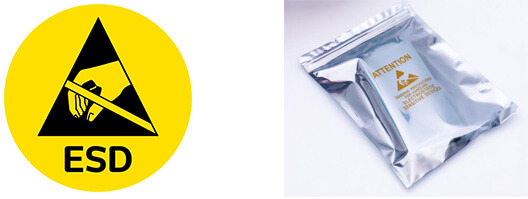
Electrostatic Discharge Protection and Handling

All electrostatic-sensitive components are handled in accordance with electrostatic discharge control procedures. The products are hermetically sealed in anti-static safe packaging to prevent electrostatic damage. Appropriate labeling is also applied for identification and traceability. This ensures product integrity during storage, handling and transportation.


ESD

Certifications & Memberships

Third-party certified, strict quality control. Our certification
  • ISO 9001: 2015
  • ISO 13485: 2016
  • ISO 14001: 2015
  • ISO 28000: 2007
  • ISO 45001: 2018
  • GB/T 27922-2011
  • SMTA
  • IPC
  • ESD
  • PSMA
Microchip

24LC64-E/MS

Microchip
41D-24LC64-E/MS

Want a better price? Add to Cart and Submit RFQ now, we'll contact you immediately.

0 RFQ
Shopping cart (0 Items)
It is empty.
Compare List (0 Items)
It is empty.
Feedback

Your feedback matters! At Allelco, we value the user experience and strive to improve it constantly.
Please share your comments with us via our feedback form, and we'll respond promptly.
Thank you for choosing Allelco.

Subject
E-mail
Comments
Captcha
Drag or click to upload file
Upload File
types: .xls, .xlsx, .doc, .docx, .jpg, .png and .pdf.
Max file size: 10MB