View All

Please refer to the English Version as our Official Version.Return

Europe
France(Français) Germany(Deutsch) Italy(Italia) Russian(русский) Poland(polski) Czech(Čeština) Luxembourg(Lëtzebuergesch) Netherlands(Nederland) Iceland(íslenska) Hungarian(Magyarország) Spain(español) Portugal(Português) Turkey(Türk dili) Bulgaria(Български език) Ukraine(Україна) Greece(Ελλάδα) Israel(עִבְרִית) Sweden(Svenska) Finland(Svenska) Finland(Suomi) Romania(românesc) Moldova(românesc) Slovakia(Slovenská) Denmark(Dansk) Slovenia(Slovenija) Slovenia(Hrvatska) Croatia(Hrvatska) Serbia(Hrvatska) Montenegro(Hrvatska) Bosnia and Herzegovina(Hrvatska) Lithuania(lietuvių) Spain(Português) Switzerland(Deutsch) United Kingdom(English)
Asia/Pacific
Japan(日本語) Korea(한국의) Thailand(ภาษาไทย) Malaysia(Melayu) Singapore(Melayu) Vietnam(Tiếng Việt) Philippines(Pilipino)
Africa, India and Middle East
United Arab Emirates(العربية) Iran(فارسی) Tajikistan(فارسی) India(हिंदी) Madagascar(malaɡasʲ)
South America / Oceania
New Zealand(Maori) Brazil(Português) Angola(Português) Mozambique(Português)
North America
United States(English) Canada(English) Haiti(Ayiti) Mexico(español)
HomeProductsIntegrated Circuits (ICs)Specialized ICsPIC16F690-E/SO
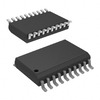
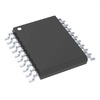
Image may be representation.
See specifications for product details.
EXPRESS OPTION
Payment method

PIC16F690-E/SO - Microchip

Manufacturer Part Number
PIC16F690-E/SO
Manufacturer
Microchip Technology
Allelco Part Number
41D-PIC16F690-E/SO
Warranty
1 Year Allelco Warranty - Find out more
Stock Status:
17,500 pcs available, New & Original
Parts Description
SOIC-20
Data sheet
-
Category
Integrated Circuits (ICs) > Specialized ICs
RoHs Status
Our certification
In stock: 17500

Required fields are indicated by an asterisk (*)
Please send RFQ, we will respond immediately.

Quantity

Specifications

PIC16F690-E/SO Tech Specifications
Microchip - PIC16F690-E/SO technical specifications, attributes, parameters and parts with similar specifications to Microchip - PIC16F690-E/SO

Product Attribute Attribute Value
Part Number PIC16F690-E/SO
Package SOIC-20
Description SOIC-20
Stock Condition Get 17500 pcs available quantity at Allelco
Payment PayPal / TT / Credit Card / Western Union
Allelco Certifications ESD / ISO 9001 / ISO 13485 / ISO 28000
Product Attribute Attribute Value
Manufacturer Microchip Technology
RoHs Status -
Warranty 100% Perfect Functions
Transport port Hong Kong
Shipping by DHL / FedEx / UPS / TNT / SF Express
RFQ Email info@allelco.com

Parts Introduction

Manufacturer Part Number

PIC16F690-E/SO

Manufacturer

microchip-technology

Introduction

The PIC16F690-E/SO is a high-performance, low-power 8-bit microcontroller from Microchip Technology. It features a rich set of peripherals and advanced capabilities, making it suitable for a wide range of embedded applications.

Product Features and Performance

8-bit PIC core

20MHz operating speed

7KB FLASH program memory

256 bytes of EEPROM and 256 bytes of RAM

Advanced peripheral set including I2C, SPI, UART, PWM, and more

12-bit Analog-to-Digital Converter (ADC)

Brown-out detection and Power-on Reset (POR)

Wide operating voltage range of 2V to 5.5V

Operating temperature range of -40°C to 125°C

Product Advantages

Optimal balance of performance and low power consumption

Comprehensive peripheral set for diverse application needs

Flexible and scalable architecture for easy design integration

Robust safety and reliability features

Key Reasons to Choose This Product

Proven reliability and quality from a trusted industry leader

Versatile and feature-rich design suitable for various embedded applications

Cost-effective solution for high-volume projects

Extensive development tools and ecosystem support

Quality and Safety Features

Stringent manufacturing and quality control processes

Built-in safety features like brown-out detection and POR

Industrial-grade operating temperature range

Compatibility

The PIC16F690-E/SO is compatible with other PIC16F and PIC18F series microcontrollers, allowing for easy migration and design flexibility.

Application Areas

Industrial control and automation

Home and building automation

Appliance and white goods

Automotive and transportation

Medical and healthcare devices

Consumer electronics

Product Lifecycle

The PIC16F690-E/SO is currently an active product. Microchip offers a range of alternative and equivalent microcontroller models, such as the PIC16F1847-E/SO and PIC16F1779-E/SO, which may provide similar or enhanced functionality. For the most up-to-date product information and availability, please contact our website's sales team.
Frequently Asked Questions(FAQ)

How does the PIC16F690-E/SO handle power-up and brown-out conditions in battery-operated embedded systems, and what safeguards are built into the microcontroller to ensure reliable operation?
The PIC16F690-E/SO integrates a Power-on Reset (POR) circuit that ensures the microcontroller initializes properly during power-up, even with slow-rising supply voltages. Additionally, it features a brown-out detect (BOD) peripheral that monitors the Vcc level and can trigger an interrupt or reset if the voltage drops below a programmable threshold—typically around 2.0V to 4.5V depending on configuration. This is critical in applications such as remote sensors or portable devices where sudden voltage dips could corrupt data or cause undefined behavior. Designers often configure the BOD to enter low-power sleep mode during undervoltage events, minimizing system downtime.
What trade-offs exist between using internal versus external oscillators with the PIC16F690-E/SO, particularly in terms of frequency accuracy, power consumption, and design complexity?
The PIC16F690-E/SO supports both internal and external oscillator configurations. The internal oscillator runs at up to 20MHz with ±1% typical accuracy over temperature and voltage, offering simplicity and reduced component count—ideal for cost-sensitive designs. However, it lacks precision for timing-critical applications like UART baud rate generation. In contrast, an external crystal or resonator can provide better stability (±30 ppm or higher), which improves communication reliability in serial protocols such as SPI or I2C. The trade-off involves increased board space, additional passive components, and potential load capacitance matching requirements, but this may be justified in high-speed or long-distance communication scenarios.
When selecting the PIC16F690-E/SO for an industrial control application, how should one evaluate its EEPROM endurance and retention characteristics under continuous write cycles?
The PIC16F690-E/SO includes 256 bytes of user-accessible EEPROM memory, which is rated for 1 million write/erase cycles at full operating temperature (125°C) and up to 10 years of data retention when stored at 55°C. For industrial control systems requiring frequent parameter updates—such as calibration values or operational counters—it's advisable to implement wear-leveling algorithms in software to distribute writes across logical segments. Given that each EEPROM cell degrades after repeated cycling, limiting writes per day or hour helps extend lifetime. Monitoring cumulative write counts via firmware can further enhance reliability.
In comparison to similar 8-bit MCUs like the PIC16F676 or PIC16F887, what advantages does the PIC16F690-E/SO offer in terms of integration, pin count, and peripheral mix?
While the PIC16F676 shares a similar core architecture, the PIC16F690-E/SO offers greater program memory (7KB vs. 3.5KB) and more I/O pins (18 vs. 14), making it more suitable for complex state machines. Compared to the PIC16F887, which has more advanced analog features and larger flash, the PIC16F690-E/SO trades off some peripherals—such as fewer ADC channels and no USB support—for lower cost and smaller package size (20-SOIC). It provides a balanced set of peripherals including PWM modules, multiple UART/USART options, and dual comparators, making it ideal for mid-complexity motor control or sensor interfacing without the overhead of higher-end devices.
Can the PIC16F690-E/SO reliably operate across the full -40°C to +125°C industrial temperature range, and what design considerations are necessary to maintain timing integrity at extreme temperatures?
Yes, the PIC16F690-E/SO is qualified for industrial-grade operation from -40°C to +125°C. However, internal oscillator frequency drift can exceed ±5% over this range due to semiconductor process variations. To maintain accurate timing—especially for baud rates or PWM outputs—designers should either use an external temperature-compensated crystal or implement runtime calibration routines that adjust timing constants based on measured clock deviation. Additionally, decoupling capacitors must be placed close to Vdd/Vss pins, and PCB layout should minimize noise coupling into sensitive analog sections like the ADC or comparator inputs.
What role does the Watchdog Timer (WDT) play in enhancing system robustness when using the PIC16F690-E/SO, and how should it be configured to balance responsiveness and power efficiency?
The WDT in the PIC16F690-E/SO provides hardware-based recovery from software hangs or infinite loops by periodically resetting the microcontroller unless periodically cleared by firmware. Configured with a typical timeout of 18 ms (with internal 32 kHz oscillator), it enables safe recovery without CPU intervention. In battery-powered systems, enabling the WDT while sleeping allows automatic wake-up and fault detection. However, excessive WDT resets may indicate poor software structure; thus, proper task scheduling and error handling should complement watchdog usage. It’s recommended to disable the WDT during debug phases and re-enable it only in production code with appropriate service intervals.
How does the analog-to-digital converter (ADC) on the PIC16F690-E/SO perform in noisy environments, and what steps can be taken to improve measurement accuracy when sampling sensor signals?
The PIC16F690-E/SO features a 10-bit successive approximation ADC with 12 input channels, capable of sampling at up to 100 kSPS. In electrically noisy environments—such as those near switching regulators or motors—ground plane separation, shielding, and filtering are essential. A common practice is to use RC filters at analog inputs (e.g., 1 kΩ + 0.1 µF) to reduce high-frequency interference. Additionally, oversampling and averaging multiple readings in firmware improves effective resolution and reduces quantization noise. Ensuring stable reference voltage (using bypass caps near the AVDD pin) also minimizes gain errors and enhances repeatability across temperature changes.
What impact does the choice of package—specifically the 20-SOIC variant of the PIC16F690—have on thermal performance and signal integrity in compact PCB layouts?
The 20-SOIC package (7.5 mm width) offers a good balance between component density and thermal dissipation compared to smaller SOP variants. While not designed for high-current applications, it provides adequate heat spreading for typical 8-bit MCU loads (<50 mA active current). Signal integrity remains manageable up to 20 MHz due to controlled lead inductance and capacitance. However, in densely populated boards, trace length matching becomes important for high-speed signals like SPI or I2C. Thermal vias under the IC body are generally unnecessary but can help if the device drives high-impedance loads continuously. Layout should prioritize short return paths and minimal stubs on clock lines.
Is it feasible to upgrade existing designs based on older PIC16F series microcontrollers (e.g., PIC16F628A) to the PIC16F690-E/SO, and what key compatibility issues should be anticipated?
Partial migration is possible due to architectural similarities in the PIC16F family, but several differences require attention. The PIC16F690-E/SO uses a slightly different instruction set (enhanced mid-range vs. baseline), necessitating code review for direct portability. Notably, register addresses for peripherals like CCP or ADC differ, and interrupt vector handling may vary. Program memory organization changes from 4K x 14 to 4K x 14 (same size but different addressing), and EEPROM access requires new instructions. Clock prescaler assignments also differ. Thorough testing of timing-critical routines and peripheral initialization sequences is strongly advised before deployment.
How do the integrated PWM modules in the PIC16F690-E/SO compare to dedicated motor driver ICs when controlling brushed DC motors, and what limitations should engineers consider?
The PIC16F690-E/SO provides two 10-bit PWM modules capable of generating complementary waveforms for H-bridge control or simple dimming. These are sufficient for low-to-medium torque applications but lack dead-time insertion, current sensing feedback, or fault protection found in specialized motor controllers. Without external transistors or drivers, driving inductive loads directly risks damaging the MCU. Engineers must add gate drivers and flyback diodes for robust motor control. Thus, while the PIC16F690-E/SO can generate timing signals, pairing it with discrete power stages yields safer, more reliable solutions than attempting full motor drive integration alone.
What precautions should be taken when using the PIC16F690-E/SO in automotive-grade applications despite its industrial temperature rating?
Although qualified to -40°C to +125°C, the PIC16F690-E/SO is not certified to AEC-Q100 automotive standards. Therefore, it cannot be used in safety-critical automotive subsystems without additional validation. If employed in non-safety functions like lighting controls or infotainment accessories, designers must still account for voltage transients, electromagnetic interference (EMI), and long-term reliability. Using TVS diodes on all I/O lines, implementing robust ESD protection, and following stricter layout guidelines (e.g., shorter traces, ground planes) can mitigate risks. Supply rail monitoring and graceful shutdown mechanisms become essential to prevent erratic behavior during load dumps or cold cranking events.
How does the PIC16F690-E/SO support low-power modes, and what is the expected current draw during sleep with WDT enabled versus deep sleep configurations?
The PIC16F690-E/SO enters low-power modes such as Sleep, where most clocks halt and only core logic remains powered. Typical current consumption drops to around 0.6 µA when the internal oscillator stops and peripherals are disabled. With the Watchdog Timer running on the 32 kHz internal oscillator, sleep current increases to approximately 1.5 µA. Deep sleep isn’t natively supported, but software can minimize activity further by disabling unused modules and configuring I/Os as inputs with pull-ups off. Wake-up sources include external interrupts, WDT timeout, or reset pin assertion. This makes it suitable for battery-powered IoT endpoints requiring weeks of operation on coin-cell batteries.
What considerations apply when programming the PIC16F690-E/SO in mass-production environments using automated test equipment?
Automated programming of the PIC16F690-E/SO typically employs ICSP (In-Circuit Serial Programming) via the PGC/PGD pins. To ensure reliable reprogramming, the target board must provide stable Vpp (12–13.5 V) during erase/write cycles, and power sequencing must avoid backfeeding the MCU. High-volume setups benefit from parallel programmers supporting multiple devices. Since flash memory erasure takes ~5 seconds, optimizing hex file segmentation and reducing redundant writes improves throughput. Firmware should validate checksums post-programming, and calibration byte settings (e.g., oscillator trim) must be preserved per Microchip’s guidelines to maintain performance consistency across units.

Customer Reviews

Evaluation: 10 Articles

  • Nath***rooks
    Jun 11, 2026

    Installed this power component in a converter board. Output remained stable under different load conditions and thermal performance was better than expected.

  • Dani***alkerTech
    Jun 1, 2026

    Product works, but setup took more effort than expected. Once configured the MCU ran reliably, although documentation support felt older compared with newer platforms. Fine for maintenance projects.

  • Yuki***aka88
    May 26, 2026

    信号通信プロジェクトでこのRS-485トランシーバーを使用しました。設置は簡単で、長距離ケーブルでも通信は安定していました。消費電力も、以前使用していたものより低くなっています。

  • Stev***aker
    May 20, 2026

    Solid diode for power rectification. Works well in switching circuits.

  • Bran***Lewis
    May 11, 2026

    Compact FPGA with good performance. Suitable for basic signal processing tasks.

  • Oliv***arris
    May 7, 2026

    Reliable I/O expander. Works well in embedded control applications.

  • Jess***Jones
    Apr 17, 2026

    It offers good value for the price, and the specifications match the description. I’ve been using it for two days with no issues, and I’ll definitely buy it again if I need it in the future.

  • Mich***Smith
    Apr 17, 2026

    Shipping was on time, the component pins are neatly aligned, and I tested 10 of them with a multimeter—all readings were within the specified range. Highly recommended.

  • Aman***arris
    Apr 3, 2026

    It was great—the entire process, from placing the order to receiving the package, went very smoothly. The components were consistent, the price was fair, and I had a very pleasant shopping experience.

  • Mike***nch
    Apr 3, 2026

    Better than expected! The resistance and capacitance readings were spot-on, and it passed the test on the first try. The service was reliable, and the packaging was thoughtful—I highly recommend it.

Write a Review

Your Email address will not be published.

Shipment

Delivery Time

In-stock items can be shipped within 24 hours. Some parts will be arranged for delivery within 1-2 days from the date all items arrive at our warehouse. And Allelco ships order once a day at about 17:00, except Sunday. Once the goods are shipped, the estimated delivery time depends on the shipping methods and Delivery destination. The table below shows are the logistic time for some common countries.

Delivery Cost

  1. Use your express account for shipment if you have one.
  2. Use our account for the shipment. Refer to the table below for the approximate charges.
(Different time frame / countries / package size has different price.)

Delivery Method

  1. Global Common Shipment by DHL / UPS / FedEx / TNT / EMS / SF we support.
  2. Others more shipping ways, please get in touch with your customer manager.

Common Countries Logistic Time Reference
Region Country Logistic Time(Day)
America United States 5
Brazil 7
Europe Germany 5
United Kingdom 4
Italy 5
Oceania Australia 6
New Zealand 5
Asia India 4
Japan 4
Middle East Israel 6
DHL & FedEx Shipment Charges Reference
Shipment charges(KG) Reference DHL(USD$)
0.00kg-1.00kg USD$30.00 - USD$60.00
1.00kg-2.00kg USD$40.00 - USD$80.00
2.00kg-3.00kg USD$50.00 - USD$100.00
Note:
The above table is for reference only. There may have some data bias for the uncontrollable factors.
Contact us if you have any questions.
  • QC (Quality Warranty)
  • Payment Support
  • Packaging
  • Certifications & Memberships

QC (Quality Warranty)

Allelco is committed to exceeding customer expectations through customer service excellence, order accuracy, and on-time delivery.
This is achieved through our commitment to the continual improvement of our processes, services, and products.


Strict quality inspection builds a solid foundation for electronic component quality.
  1. Visual inspection
  2. Performance testing and reliability verification
  3. Standardized full-process testing
  4. Precise control of every parameter
We eliminate defective components and ensure the stable operation of electronic devices through professional quality standards.

Payment Support

The payment method can be chosen from the methods shown below: Wire Transfer (T/T, Bank Transfer), Western Union, Credit card, PayPal.
  • HKBea
  • Paypal
  • MasterCard
  • Western-Union
  • VISA
Stable Delivery, Sincere Partnership — Your Faithful Supply Chain Partner
  • Efficient Supply Management
  • Cost-Saving Procurement
  • Fast Sourcing & Delivery
Contact us if you have any questions.

Packaging

Electrostatic Discharge Protection and Handling

All electrostatic-sensitive components are handled in accordance with electrostatic discharge control procedures. The products are hermetically sealed in anti-static safe packaging to prevent electrostatic damage. Appropriate labeling is also applied for identification and traceability. This ensures product integrity during storage, handling and transportation.


ESD

Certifications & Memberships

Third-party certified, strict quality control. Our certification
  • ISO 9001: 2015
  • ISO 13485: 2016
  • ISO 14001: 2015
  • ISO 28000: 2007
  • ISO 45001: 2018
  • GB/T 27922-2011
  • SMTA
  • IPC
  • ESD
  • PSMA
Microchip

PIC16F690-E/SO

Microchip
41D-PIC16F690-E/SO

Want a better price? Add to Cart and Submit RFQ now, we'll contact you immediately.

0 RFQ
Shopping cart (0 Items)
It is empty.
Compare List (0 Items)
It is empty.
Feedback

Your feedback matters! At Allelco, we value the user experience and strive to improve it constantly.
Please share your comments with us via our feedback form, and we'll respond promptly.
Thank you for choosing Allelco.

Subject
E-mail
Comments
Captcha
Drag or click to upload file
Upload File
types: .xls, .xlsx, .doc, .docx, .jpg, .png and .pdf.
Max file size: 10MB