View All

Please refer to the English Version as our Official Version.Return

Europe
France(Français) Germany(Deutsch) Italy(Italia) Russian(русский) Poland(polski) Czech(Čeština) Luxembourg(Lëtzebuergesch) Netherlands(Nederland) Iceland(íslenska) Hungarian(Magyarország) Spain(español) Portugal(Português) Turkey(Türk dili) Bulgaria(Български език) Ukraine(Україна) Greece(Ελλάδα) Israel(עִבְרִית) Sweden(Svenska) Finland(Svenska) Finland(Suomi) Romania(românesc) Moldova(românesc) Slovakia(Slovenská) Denmark(Dansk) Slovenia(Slovenija) Slovenia(Hrvatska) Croatia(Hrvatska) Serbia(Hrvatska) Montenegro(Hrvatska) Bosnia and Herzegovina(Hrvatska) Lithuania(lietuvių) Spain(Português) Switzerland(Deutsch) United Kingdom(English)
Asia/Pacific
Japan(日本語) Korea(한국의) Thailand(ภาษาไทย) Malaysia(Melayu) Singapore(Melayu) Vietnam(Tiếng Việt) Philippines(Pilipino)
Africa, India and Middle East
United Arab Emirates(العربية) Iran(فارسی) Tajikistan(فارسی) India(हिंदी) Madagascar(malaɡasʲ)
South America / Oceania
New Zealand(Maori) Brazil(Português) Angola(Português) Mozambique(Português)
North America
United States(English) Canada(English) Haiti(Ayiti) Mexico(español)
HomeProductsIntegrated Circuits (ICs)Specialized ICsHD6417020SVX12IV
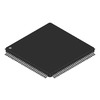
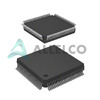
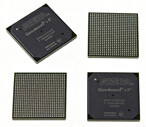
Image may be representation.
See specifications for product details.
EXPRESS OPTION
Payment method

HD6417020SVX12IV - Renesas

Manufacturer Part Number
HD6417020SVX12IV
Manufacturer
Renesas Electronics Corporation
Allelco Part Number
41D-HD6417020SVX12IV
Warranty
1 Year Allelco Warranty - Find out more
Stock Status:
10,540 pcs available, New & Original
Parts Description
100-TQFP
Data sheet
-
Category
Integrated Circuits (ICs) > Specialized ICs
RoHs Status
Our certification
In stock: 10540

Required fields are indicated by an asterisk (*)
Please send RFQ, we will respond immediately.

Quantity

Specifications

HD6417020SVX12IV Tech Specifications
Renesas - HD6417020SVX12IV technical specifications, attributes, parameters and parts with similar specifications to Renesas - HD6417020SVX12IV

Product Attribute Attribute Value
Part Number HD6417020SVX12IV
Package 100-TQFP
Description 100-TQFP
Stock Condition Get 10540 pcs available quantity at Allelco
Payment PayPal / TT / Credit Card / Western Union
Allelco Certifications ESD / ISO 9001 / ISO 13485 / ISO 28000
Product Attribute Attribute Value
Manufacturer Renesas Electronics Corporation
RoHs Status -
Warranty 100% Perfect Functions
Transport port Hong Kong
Shipping by DHL / FedEx / UPS / TNT / SF Express
RFQ Email info@allelco.com

Parts Introduction

Manufacturer Part Number

HD6417020SVX12IV

Manufacturer

renesas-electronics-america

Introduction

The HD6417020SVX12IV is an embedded microcontroller from the SuperH® SH7020 series. It features a 32-bit single-core SH-1 processor running at 12.5MHz, with various peripheral interfaces and memory configurations. This device is designed for use in a wide range of applications that require a cost-effective and reliable microcontroller solution.

Product Features and Performance

32-Bit Single-Core SH-1 Processor

5MHz Operating Frequency

1KB x 8 RAM Size

ROMless Program Memory

EBI/EMI, SCI Connectivity

DMA, POR, PWM, WDT Peripherals

32 I/O Pins

3V to 5.5V Operating Voltage

-40°C to 85°C Operating Temperature Range

Surface Mount 100-TQFP (14x14) Package

Product Advantages

Cost-effective embedded microcontroller solution

Versatile peripheral set for a wide range of applications

Reliable and robust design for industrial environments

Low power consumption for battery-powered devices

Extensive development support and ecosystem

Key Reasons to Choose This Product

Proven performance and reliability of the SuperH® architecture

Flexibility to adapt to various application requirements

Seamless integration with existing systems and designs

Long-term product availability and support

Competitive pricing and cost-effective solution

Quality and Safety Features

Industrial-grade temperature range support

Robust package and pinout design for reliable operation

Comprehensive development tools and documentation

Compliance with relevant safety and EMC standards

Compatibility

The HD6417020SVX12IV is compatible with other microcontrollers in the SuperH® SH7020 series, allowing for easy migration and scalability of designs.

Application Areas

Industrial automation and control systems

Automotive electronics

Consumer electronics

Home appliances

Medical devices

Telecommunications equipment

Product Lifecycle

The HD6417020SVX12IV is an obsolete product, meaning it is no longer in active production. However, there may be equivalent or alternative models available from Renesas Electronics America. Customers are advised to contact our website's sales team for more information on available options and product lifecycle status.

Frequently Asked Questions(FAQ)

What are the key operational constraints when implementing the HD6417020SVX12IV in a low-voltage embedded system, and how does its 3V–5.5V supply range impact design flexibility compared to fixed-voltage alternatives?
The HD6417020SVX12IV operates reliably across a wide 3V to 5.5V power supply range, which allows integration into mixed-voltage environments without requiring level shifters in many cases. However, this flexibility introduces trade-offs in noise immunity and timing margins at the lower end of the voltage spectrum. For systems targeting battery-powered applications, the 3V minimum enables use with single-cell Li-ion or alkaline batteries, but designers must ensure stable voltage regulation due to reduced headroom. At 3.3V, typical for modern microcontrollers, the device maintains full functionality, but clock stability may degrade if power ripple exceeds 50mV p-p. In contrast, devices with fixed 5V-only operation simplify power delivery but limit compatibility with newer low-power architectures. The SH-1 core within the HD6417020SVX12IV is optimized for this voltage range, balancing performance and efficiency.
How does the absence of on-chip ROM in the HD6417020SVX12IV influence boot-up behavior and external memory interface requirements?
As a ROMless microcontroller, the HD6417020SVX12IV requires an external program memory to execute code. Upon reset, the processor begins execution from address 0x00000000, expecting valid instruction fetch capability through its External Bus Interface (EBI). This necessitates connection to an external flash or ROM device during initialization. The EBI supports synchronous and asynchronous modes, allowing compatibility with various memory types such as SRAM, NOR Flash, or masked ROMs. Designers must ensure that the external memory is powered and accessible within the first few clock cycles after reset, typically within 10µs for proper startup. Failure to meet this timing constraint can result in undefined behavior or repeated resets. The internal 1KB RAM provides limited working space for stack and variables, further emphasizing the need for external program storage.
What is the significance of the 12.5MHz internal oscillator for real-time control applications using the HD6417020SVX12IV?
The integrated 12.5MHz oscillator in the HD6417020SVX12IV offers a balance between power consumption and deterministic timing, making it suitable for moderate-speed real-time tasks. With a nominal frequency tolerance of ±2% over the industrial temperature range (-40°C to 85°C), timing accuracy may degrade under extreme thermal conditions. In motor control or sensor sampling applications, where precise pulse-width modulation (PWM) or data acquisition intervals are required, this variation could lead to jitter in duty cycles exceeding 2%. While not sufficient for high-resolution audio or RF synchronization, it remains adequate for most embedded control loops running below 50kHz. For stricter timing needs, external crystal-based clocking would be preferred, though it increases component count and board complexity.
How does the DMA peripheral in the HD6417020SVX12IV improve system performance compared to manual data transfers in interrupt-driven designs?
The Direct Memory Access (DMA) controller in the HD6417020SVX12IV offloads the CPU from repetitive data movement tasks such as UART reception or ADC buffer filling, thereby reducing interrupt latency and freeing up cycles for application logic. For example, transferring a 128-byte UART receive buffer via software would consume approximately 256 instruction cycles at 12.5MHz, whereas DMA completes the same transfer in under 100 cycles including setup. This results in up to 60% reduction in CPU overhead for continuous data streams. However, the limited RAM size—only 1KB—restricts the depth of buffers that can be efficiently managed by DMA without risking overflow. Additionally, DMA channels are shared among peripherals, requiring careful arbitration in multi-source systems like those handling both SCI and PWM feedback data.
Can the HD6417020SVX12IV drive high-current loads directly, and what precautions should be taken regarding I/O pin configuration and protection?
No, the HD6417020SVX12IV’s general-purpose I/O pins are not designed to source or sink more than 25mA per pin, with a total package current limit typically around 200mA. Attempting to drive LEDs, relays, or other high-load devices directly risks exceeding these limits, potentially damaging the MCU. Instead, external drivers such as transistors or MOSFETs should be used. Furthermore, when configuring I/O direction registers, unused pins should be set as inputs or configured with weak pull-ups to avoid floating states that increase power consumption and electromagnetic interference. Electrostatic discharge (ESD) protection diodes exist internally but do not substitute for proper layout practices—especially grounding and decoupling near the TQFP package leads.
What role does the Power-On Reset (POR) and Watchdog Timer (WDT) play in ensuring reliable operation of systems using the HD6417020SVX12IV?
The POR circuit ensures that the HD6417020SVX12IV begins execution only after Vcc stabilizes above 2.7V, preventing erratic behavior during brownout conditions. It generates a reset signal until the internal voltage supervisor confirms stable supply. Coupled with the independent Watchdog Timer (WDT), which runs from the internal oscillator, this creates a robust fault detection mechanism. If software fails to periodically clear the WDT counter, it triggers a system reset, recovering from hangs caused by infinite loops or software crashes. The WDT period is configurable up to approximately 1 second, depending on prescaler settings. However, since it relies on the same internal oscillator, WDT accuracy is subject to temperature-induced drift, so long-timeouts should be verified under worst-case operating conditions.
How does the HD6417020SVX12IV compare to modern ARM Cortex-M0+ MCUs in terms of development ecosystem and long-term availability?
Unlike the HD6417020SVX12IV, which belongs to Renesas’ legacy SuperH SH7020 series, contemporary ARM Cortex-M0+ devices benefit from extensive toolchains (e.g., Keil, GCC, IAR), abundant open-source libraries, and broad community support. The SH-1 core lacks modern debugging interfaces like SWD and has limited IDE integration compared to ARM ecosystems. Additionally, while Renesas continues to supply the HD6417020SVX12IV, production status may become uncertain as newer architectures replace it. ARM-based parts often enjoy longer lifecycle support and easier migration paths. That said, the HD6417020SVX12IV remains viable in niche industrial retrofits or legacy systems where software reuse justifies maintaining older platforms.
What considerations apply when selecting external memory for the HD6417020SVX12IV’s EBI interface beyond basic capacity matching?
When interfacing external memory with the HD6417020SVX12IV, signal integrity becomes critical due to the lack of built-in termination or impedance control. The 100-TQFP package features closely spaced pins, increasing crosstalk susceptibility. Layout should maintain matched trace lengths for address and data lines, avoid vias near high-speed nets, and include termination resistors (typically 22Ω to 33Ω) close to memory devices if using parallel buses over 5MHz. Also, power sequencing must ensure memory Vcc reaches rail before or simultaneously with MCU Vdd to prevent latch-up. Finally, verify that memory access times align with the HD6417020SVX12IV’s EBI timing parameters; otherwise, wait states must be inserted, reducing effective bandwidth.
Is the HD6417020SVX12IV suitable for automotive-grade applications requiring AEC-Q100 certification?
No, the HD6417020SVX12IV is rated for industrial temperature range (-40°C to +85°C), not automotive (-40°C to +125°C). While it functions reliably in harsh environments, it does not meet AEC-Q100 qualification standards required for automotive electronics. Using it in vehicle systems could void warranty claims or fail functional safety audits. Alternatives like Renesas’ newer RH850 or RZ families offer certified automotive variants with enhanced reliability features. Even within industrial markets, some customers mandate extended temperature testing beyond datasheet specifications, which this part does not guarantee.
What are the implications of the HD6417020SVX12IV’s Moisture Sensitivity Level (MSL) 3 classification for manufacturing and storage?
MSL 3 indicates that the HD6417020SVX12IV must be soldered within 168 hours of opening the moisture barrier bag under ambient conditions (<30°C, <85% RH). Beyond this window, the device may experience popcorning during reflow soldering due to moisture expansion. Manufacturers must track bake-out procedures if rework is needed or prolonged exposure occurs. Proper documentation and handling protocols align with IPC/JEDEC J-STD-033. Although RoHS3 compliant, environmental compliance does not mitigate process sensitivity issues—so adherence to MSL guidelines remains essential regardless of regulatory status.
How does the limited RAM size affect interrupt service routine (ISR) design when using the HD6417020SVX12IV?
With only 1KB of internal RAM, the HD6417020SVX12IV imposes strict constraints on ISR footprint. Large local arrays or complex data structures cannot reside in RAM without risking stack overflow. Designers must minimize variable allocation inside ISRs, preferring global buffers or pre-allocated ring queues instead. Additionally, disabling interrupts for extended periods to protect shared resources increases system latency and defeats the purpose of fast-response ISRs. Careful analysis of worst-case execution time (WCET) is necessary to avoid cumulative stack growth across nested interrupts. In comparison, modern MCUs typically offer 8KB or more RAM, enabling safer and more modular ISR implementations.
Can the HD6417020SVX12IV be safely operated at 5.5V without additional protection circuitry?
Yes, the HD6417020SVX12IV tolerates up to 5.5V Vcc, making it compatible with 5V logic systems. However, exceeding 5.5V—even briefly—may cause irreversible damage. Input signals connected to GPIO pins must also respect absolute maximum ratings (±0.3V beyond Vcc), so 5V-tolerant inputs are not guaranteed. If interfacing with higher-voltage peripherals (e.g., 12V sensors), level-shifting circuits are mandatory. Moreover, although the device handles 5V operation, higher voltages reduce noise margin slightly and may accelerate electromigration in internal nodes over time. Therefore, while permissible, 5V operation should still adhere strictly to published limits.
What alternatives exist if the HD6417020SVX12IV lacks sufficient program memory density for firmware updates over-the-air (OTA)?
The HD6417020SVX12IV’s ROMless architecture theoretically supports OTA updates by storing new firmware in external flash, but its small RAM buffer (1KB) limits the size of update chunks that can be processed in memory. Firmware images larger than ~8KB would require streaming from external storage without buffering, complicating error recovery. Alternatives include migrating to MCUs with larger RAM (e.g., 16KB+) and integrated flash, or partitioning firmware into smaller modules updated incrementally. Another option is pairing the HD6417020SVX12IV with a companion microcontroller dedicated to managing external memory, offloading OTA logic from the main processor.
How does the choice between SCI and EBI affect real-world throughput when using the HD6417020SVX12IV in communication-heavy designs?
The Serial Communication Interface (SCI) supports baud rates up to 230.4 kbps using standard UART framing, suitable for debug output or sensor telemetry. In contrast, the EBI enables parallel transfers at much higher speeds—potentially tens of MBps—when interfacing with synchronous memories like SDRAM or NAND flash. Thus, for bulk data logging or rapid firmware loading, EBI dominates. However, SCI consumes less power and simplifies protocol implementation for point-to-point links. Designers must weigh bandwidth requirements against complexity: using SCI avoids external memory controllers but restricts program size and update capabilities, whereas EBI demands careful PCB layout and timing discipline.
What precautions are necessary to ensure reliable operation of the HD6417020SVX12IV in vibration-prone industrial environments?
Mechanical stress from vibration can compromise solder joints, especially in fine-pitch QFPs like the 100-pin TQFP used by the HD6417020SVX12IV. To enhance reliability, apply conformal coating to protect traces and pads, use stiffeners or metal frames for the PCB, and avoid placing high-mass components adjacent to the MCU. Additionally, ensure all bypass capacitors (typically 100nF ceramic) are mounted as close as possible to power pins to maintain stable decoupling under dynamic loads. Thermal cycling combined with vibration accelerates fatigue, so operating within the specified -40°C to +85°C range reduces stress. Periodic visual inspection or automated optical inspection (AOI) post-assembly helps detect early signs of joint failure.
Does the HD6417020SVX12IV support non-volatile configuration storage, and if not, how are system settings typically preserved?
No, the HD6417020SVX12IV contains no on-chip EEPROM or fuse-based configuration memory. System parameters such as calibration values or serial numbers must be stored in external non-volatile memory accessed via the EBI. Common approaches include using serial EEPROMs (e.g., 24LC series) or writing to external flash sectors reserved for configuration data. Each write cycle consumes significant time and endurance (typically 100k cycles for EEPROMs), so caching frequently read settings in RAM improves responsiveness. Alternatively, designers may embed constants in firmware and derive runtime settings algorithmically, trading flexibility for persistence.
What factors determine whether the internal oscillator of the HD6417020SVX12IV is acceptable for precision timing applications?
The internal oscillator’s suitability depends on required accuracy, stability, and environmental conditions. Over the industrial temperature range, the HD6417020SVXX12IV exhibits drift of ±100 ppm (approximately ±12.5 Hz at 12.5 MHz), leading to clock skew in multi-device systems or phase errors in PWM generation. For applications needing better than 1% timing accuracy (e.g., 1-second timers), external crystals (±20 ppm typical) are strongly recommended. Additionally, aging effects over time further degrade oscillator stability. In summary, while convenient for prototyping or low-criticality tasks, the internal oscillator is inadequate for GPS synchronization, real-time clocks, or precision motor control beyond basic speed regulation.
How does the absence of advanced security features in the HD6417020SVX12IV impact deployment in secure embedded systems?
The HD6417020SVX12IV lacks hardware encryption engines, secure boot mechanisms, or tamper detection circuits—features increasingly expected in modern IoT and industrial devices. Without them, sensitive data like keys or firmware hashes remain vulnerable to extraction via JTAG or bus snooping. While software-based obfuscation can provide minimal protection, it offers little resistance to determined attackers. Consequently, this MCU is best suited for non-security-critical applications such as factory automation monitoring or legacy equipment control. Projects requiring cryptographic integrity should consider newer architectures with TrustZone or similar isolation capabilities.

Customer Reviews

Evaluation: 10 Articles

  • Nath***rooks
    Jun 11, 2026

    Installed this power component in a converter board. Output remained stable under different load conditions and thermal performance was better than expected.

  • Dani***alkerTech
    Jun 1, 2026

    Product works, but setup took more effort than expected. Once configured the MCU ran reliably, although documentation support felt older compared with newer platforms. Fine for maintenance projects.

  • Yuki***aka88
    May 26, 2026

    信号通信プロジェクトでこのRS-485トランシーバーを使用しました。設置は簡単で、長距離ケーブルでも通信は安定していました。消費電力も、以前使用していたものより低くなっています。

  • Stev***aker
    May 20, 2026

    Solid diode for power rectification. Works well in switching circuits.

  • Bran***Lewis
    May 11, 2026

    Compact FPGA with good performance. Suitable for basic signal processing tasks.

  • Oliv***arris
    May 7, 2026

    Reliable I/O expander. Works well in embedded control applications.

  • Jess***Jones
    Apr 17, 2026

    It offers good value for the price, and the specifications match the description. I’ve been using it for two days with no issues, and I’ll definitely buy it again if I need it in the future.

  • Mich***Smith
    Apr 17, 2026

    Shipping was on time, the component pins are neatly aligned, and I tested 10 of them with a multimeter—all readings were within the specified range. Highly recommended.

  • Aman***arris
    Apr 3, 2026

    It was great—the entire process, from placing the order to receiving the package, went very smoothly. The components were consistent, the price was fair, and I had a very pleasant shopping experience.

  • Mike***nch
    Apr 3, 2026

    Better than expected! The resistance and capacitance readings were spot-on, and it passed the test on the first try. The service was reliable, and the packaging was thoughtful—I highly recommend it.

Write a Review

Your Email address will not be published.

Shipment

Delivery Time

In-stock items can be shipped within 24 hours. Some parts will be arranged for delivery within 1-2 days from the date all items arrive at our warehouse. And Allelco ships order once a day at about 17:00, except Sunday. Once the goods are shipped, the estimated delivery time depends on the shipping methods and Delivery destination. The table below shows are the logistic time for some common countries.

Delivery Cost

  1. Use your express account for shipment if you have one.
  2. Use our account for the shipment. Refer to the table below for the approximate charges.
(Different time frame / countries / package size has different price.)

Delivery Method

  1. Global Common Shipment by DHL / UPS / FedEx / TNT / EMS / SF we support.
  2. Others more shipping ways, please get in touch with your customer manager.

Common Countries Logistic Time Reference
Region Country Logistic Time(Day)
America United States 5
Brazil 7
Europe Germany 5
United Kingdom 4
Italy 5
Oceania Australia 6
New Zealand 5
Asia India 4
Japan 4
Middle East Israel 6
DHL & FedEx Shipment Charges Reference
Shipment charges(KG) Reference DHL(USD$)
0.00kg-1.00kg USD$30.00 - USD$60.00
1.00kg-2.00kg USD$40.00 - USD$80.00
2.00kg-3.00kg USD$50.00 - USD$100.00
Note:
The above table is for reference only. There may have some data bias for the uncontrollable factors.
Contact us if you have any questions.
  • QC (Quality Warranty)
  • Payment Support
  • Packaging
  • Certifications & Memberships

QC (Quality Warranty)

Allelco is committed to exceeding customer expectations through customer service excellence, order accuracy, and on-time delivery.
This is achieved through our commitment to the continual improvement of our processes, services, and products.


Strict quality inspection builds a solid foundation for electronic component quality.
  1. Visual inspection
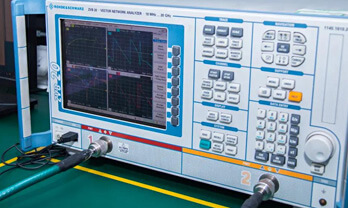
  2. Performance testing and reliability verification
  3. Standardized full-process testing
  4. Precise control of every parameter
We eliminate defective components and ensure the stable operation of electronic devices through professional quality standards.

Payment Support

The payment method can be chosen from the methods shown below: Wire Transfer (T/T, Bank Transfer), Western Union, Credit card, PayPal.
  • HKBea
  • Paypal
  • MasterCard
  • Western-Union
  • VISA
Stable Delivery, Sincere Partnership — Your Faithful Supply Chain Partner
  • Efficient Supply Management
  • Cost-Saving Procurement
  • Fast Sourcing & Delivery
Contact us if you have any questions.

Packaging

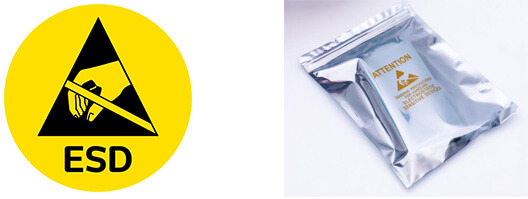
Electrostatic Discharge Protection and Handling

All electrostatic-sensitive components are handled in accordance with electrostatic discharge control procedures. The products are hermetically sealed in anti-static safe packaging to prevent electrostatic damage. Appropriate labeling is also applied for identification and traceability. This ensures product integrity during storage, handling and transportation.


ESD

Certifications & Memberships

Third-party certified, strict quality control. Our certification
  • ISO 9001: 2015
  • ISO 13485: 2016
  • ISO 14001: 2015
  • ISO 28000: 2007
  • ISO 45001: 2018
  • GB/T 27922-2011
  • SMTA
  • IPC
  • ESD
  • PSMA
Renesas

HD6417020SVX12IV

Renesas
41D-HD6417020SVX12IV

Want a better price? Add to Cart and Submit RFQ now, we'll contact you immediately.

0 RFQ
Shopping cart (0 Items)
It is empty.
Compare List (0 Items)
It is empty.
Feedback

Your feedback matters! At Allelco, we value the user experience and strive to improve it constantly.
Please share your comments with us via our feedback form, and we'll respond promptly.
Thank you for choosing Allelco.

Subject
E-mail
Comments
Captcha
Drag or click to upload file
Upload File
types: .xls, .xlsx, .doc, .docx, .jpg, .png and .pdf.
Max file size: 10MB