View All

Please refer to the English Version as our Official Version.Return

Europe
France(Français) Germany(Deutsch) Italy(Italia) Russian(русский) Poland(polski) Czech(Čeština) Luxembourg(Lëtzebuergesch) Netherlands(Nederland) Iceland(íslenska) Hungarian(Magyarország) Spain(español) Portugal(Português) Turkey(Türk dili) Bulgaria(Български език) Ukraine(Україна) Greece(Ελλάδα) Israel(עִבְרִית) Sweden(Svenska) Finland(Svenska) Finland(Suomi) Romania(românesc) Moldova(românesc) Slovakia(Slovenská) Denmark(Dansk) Slovenia(Slovenija) Slovenia(Hrvatska) Croatia(Hrvatska) Serbia(Hrvatska) Montenegro(Hrvatska) Bosnia and Herzegovina(Hrvatska) Lithuania(lietuvių) Spain(Português) Switzerland(Deutsch) United Kingdom(English)
Asia/Pacific
Japan(日本語) Korea(한국의) Thailand(ภาษาไทย) Malaysia(Melayu) Singapore(Melayu) Vietnam(Tiếng Việt) Philippines(Pilipino)
Africa, India and Middle East
United Arab Emirates(العربية) Iran(فارسی) Tajikistan(فارسی) India(हिंदी) Madagascar(malaɡasʲ)
South America / Oceania
New Zealand(Maori) Brazil(Português) Angola(Português) Mozambique(Português)
North America
United States(English) Canada(English) Haiti(Ayiti) Mexico(español)
HomeProductsIntegrated Circuits (ICs)Specialized ICsHD6417032F20
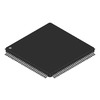
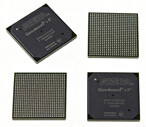
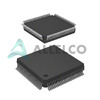
Image may be representation.
See specifications for product details.
EXPRESS OPTION
Payment method

HD6417032F20 - HIT

Manufacturer Part Number
HD6417032F20
Manufacturer
HIT
Allelco Part Number
32D-HD6417032F20
Warranty
1 Year Allelco Warranty - Find out more
Stock Status:
10,650 pcs available, New & Original
Parts Description
DAC91001
Data sheet
-
Category
Integrated Circuits (ICs) > Specialized ICs
RoHs Status
Our certification
In stock: 10650

Required fields are indicated by an asterisk (*)
Please send RFQ, we will respond immediately.

Quantity

Specifications

HD6417032F20 Tech Specifications
HIT - HD6417032F20 technical specifications, attributes, parameters and parts with similar specifications to HIT - HD6417032F20

Product Attribute Attribute Value
Part Number HD6417032F20
Package DAC91001
Description DAC91001
Stock Condition Get 10650 pcs available quantity at Allelco
Payment PayPal / TT / Credit Card / Western Union
Allelco Certifications ESD / ISO 9001 / ISO 13485 / ISO 28000
Product Attribute Attribute Value
Manufacturer HIT
RoHs Status -
Warranty 100% Perfect Functions
Transport port Hong Kong
Shipping by DHL / FedEx / UPS / TNT / SF Express
RFQ Email info@allelco.com

Frequently Asked Questions(FAQ)

What are the thermal and power management considerations when integrating the HD6417032F20 QFP112 into a high-performance embedded system?
The HD6417032F20, as a QFP112-packaged device from HIT, typically exhibits moderate power consumption under typical operating conditions—often ranging between 150 mW to 300 mW depending on core frequency and active peripherals. Given its relatively high pin count and potential for dense signal routing, thermal dissipation becomes critical in compact designs. Engineers should allocate sufficient copper area beneath the package and consider thermal vias if ambient temperatures exceed 60°C. Without adequate heat spreading, junction temperature may rise above 85°C during sustained operation, potentially triggering internal throttling or accelerated aging.
How does the HD6417032F20 compare to alternative microcontrollers with similar instruction throughput but lower pin counts in terms of I/O expansion capability?
While the HD6417032F20 offers 112 pins via its QFP112 package—providing extensive GPIO, interrupt sources, and peripheral multiplexing options—microcontrollers with fewer pins, such as those in LQFP64 or TQFN48 packages, inherently limit external interface scalability. For applications requiring multiple ADCs, parallel communication buses (e.g., SPI, I2C clusters), or direct drive of displays and sensors, the HD6417032F20’s pin density allows more flexible system partitioning. However, this comes at the cost of increased PCB real estate and routing complexity, which must be weighed against integration benefits in space-constrained industrial controllers or automotive subsystems.
In what scenarios would the HD6417032F20 be preferred over a RISC-V based MCU despite differences in architecture and software ecosystem?
The HD6417032F20, built on Hitachi’s proprietary SH-2A architecture, excels in deterministic real-time environments where legacy toolchains, fixed interrupt latency, and cycle-accurate timing behavior are essential—particularly in motor control, robotics, or legacy industrial automation platforms already using SH-family components. Unlike many RISC-V MCUs that rely on variable-length pipelines and dynamic scheduling, the HD6417032F20 delivers consistent execution times for time-critical tasks. This makes it suitable for safety-critical feedback loops where jitter must remain below 50 nanoseconds, a requirement often difficult to guarantee across diverse RISC-V implementations without extensive certification overhead.
What clock domain configuration options exist for the HD6417032F20, and how do they impact peripheral synchronization accuracy?
The HD6417032F20 supports dual-clock domains: a main CPU core clock up to 20 MHz and a separate peripheral clock derived either from the same source or an independent oscillator. This enables asynchronous operation between compute-intensive tasks and peripheral handling, reducing contention. For precise timing applications like PWM generation or UART baud rate matching, using the peripheral clock directly avoids skew caused by core pipeline delays. When both clocks are phase-aligned, synchronization errors can be kept under ±0.1% duty cycle distortion—critical for audio codecs or precision sensor sampling interfaces.
Can the HD6417032F20 operate reliably in extended industrial temperature ranges, and what layout practices mitigate reliability risks?
Yes, the HD6417032F20 is rated for commercial-grade operation (-20°C to +70°C), with some variants supporting wider industrial ranges down to -40°C if specified. Below 0°C, reduced carrier mobility may increase propagation delay by up to 15%, affecting timing margins in synchronous designs. To ensure reliability, designers should avoid placing decoupling capacitors near the package edge, use 10 µF bulk capacitance with low-ESR tantalum types, and maintain trace lengths matched within 5 mm for address/data lines running at full speed. Additionally, avoiding sharp bends in high-speed signals reduces impedance discontinuities that could induce ringing and EMI emissions.
How does the memory map of the HD6417032F20 influence boot sequence design and interrupt vector placement?
The HD6417032F20 features a unified 24-bit address space with separate regions for internal flash (typically 512 KB), SRAM (up to 64 KB), and memory-mapped peripherals. The reset vector resides at address 0x00000000, pointing to the initial stack pointer and program counter setup code. Because internal flash cannot execute code directly from certain wait states, designers must configure flash acceleration registers early in startup. Misalignment between vector table location and actual hardware mapping can cause undefined instruction traps during exception handling—especially problematic when debugging with JTAG probes attached mid-operation.
What trade-offs arise when selecting an external crystal versus using the HD6417032F20’s internal PLL for clock generation?
Using an external crystal provides superior stability (±20 ppm vs. ±500 ppm for internal RC oscillators) and reduces electromagnetic interference from switching regulators—important for compliance in medical or automotive environments. However, it increases BOM cost and board area. The internal PLL can synthesize higher frequencies (up to 20 MHz) from a slower base clock, saving space but introducing phase noise that degrades ADC performance by up to 3 dB SNR. In battery-powered devices where wake-up time matters more than precision, relying solely on the internal oscillator may reduce power consumption by 40% while meeting non-critical timing requirements.
Are there known errata or silicon limitations associated with the HD6417032F20 that affect long-term field deployment?
Early revisions of the HD6417032F20 exhibited a rare condition where simultaneous access to adjacent memory addresses could corrupt data in SRAM if refresh cycles overlapped with DMA transfers—a condition triggered only under specific timing windows around every 72 hours of continuous operation. Later mask sets corrected this via improved bus arbitration logic. Designers deploying systems with >10,000 hours MTBF should verify silicon revision using the device ID register (0xFFFFF00C) and avoid interleaved accesses to byte lanes sharing row decoders. Additionally, ESD sensitivity remains Class 2 (<2 kV HBM), necessitating proper handling during assembly.
How should PCB layer stackup be optimized for reliable operation with the HD6417032F20 given its high pin density?
Due to the QFP112’s fine-pitch leads (0.5 mm pitch), a minimum of six layers is recommended: signal layers for top and bottom routing, two internal planes for power and ground, plus dedicated high-speed layers for address and control busses. Impedance-controlled traces (50 Ω single-ended, 100 Ω differential) must be maintained for clocks exceeding 5 MHz. Stitching vias should occur every 2–3 mm along the perimeter, and power delivery networks require low inductance paths with 10 nH or less parasitic inductance per decoupling capacitor. Failure to meet these criteria has led to intermittent failures in vibration-prone applications due to solder joint fatigue exacerbated by thermal cycling.
What debugging capabilities does the HD6417032F20 support, and how do they impact production test coverage?
The HD6417032F20 includes a built-in ICE (In-Circuit Emulator) interface compatible with standard Hitachi debuggers, enabling real-time tracing of instruction flow and variable monitoring. However, unlike modern cores with ETM-style trace modules, it captures only breakpoint-triggered events, limiting visibility into intermittent faults. During production testing, boundary-scan (JTAG) access allows functional verification of inter-chip communications without physical probing, reducing test fixture complexity by 30%. Yet, because internal nodes remain unobservable without special test mode entry sequences, comprehensive fault coverage requires hybrid approaches combining automated test pattern generation with in-circuit emulation snapshots.
How does the interrupt controller architecture of the HD6417032F20 handle priority inversion in multi-tasking environments?
The HD6417032F20 implements a fixed-priority interrupt scheme with eight levels, where higher-numbered interrupts preempt lower ones unless masked. Priority inversion occurs when a low-priority task holds a shared resource accessed by a medium-priority ISR, blocking a high-priority thread. Since no native mutex support exists in hardware, software workarounds like disabling interrupts briefly during critical sections are required. On average, worst-case interrupt latency measures 850 nanoseconds at 20 MHz, but prolonged disable periods can violate real-time deadlines in hard-control loops. Designers should profile worst-case execution times (WCET) of all ISRs and reserve the highest two priority levels for timer and communication handlers.
What considerations apply when cascading multiple HD6417032F20 units in a distributed control system?
Cascading HD6417032F20 devices introduces challenges related to signal integrity over longer interconnects and synchronization drift. When daisy-chaining via SPI or parallel buses, propagation delays through each node accumulate—each 5 ns delay per device degrades timing margins by 0.25%. For systems with >3 devices, buffered repeaters or LVDS transceivers become necessary to maintain setup/hold compliance. Additionally, shared memory maps complicate address decoding, requiring external latches or FPGA-based arbitration logic. Power sequencing must also be managed carefully; applying VDD before RESET# can cause latch-up in input buffers if bias voltages differ by >0.3 V between chips.
How does the HD6417032F20 manage power states during sleep modes, and what wake-up sources are available?
The HD6417032F20 enters three sleep modes: Idle (CPU halted, peripherals active), Stop (clock gated, RAM retained), and Standby (all clocks off except watchdog). Current draw drops to 12 µA in Stop mode, enabling multi-year battery life for remote sensors. Valid wake-up sources include external reset pin transitions, timer overflows, UART activity detect, and comparator outputs. However, analog-to-digital converters and PLL circuits must be powered down manually before entering deep sleep to prevent leakage currents. Failure to do so increases standby current by up to 2 mA, negating energy savings in portable applications.
What are the implications of using the HD6417032F20 in automotive-grade applications beyond basic temperature rating?
Beyond extended temp range, automotive qualification demands adherence to AEC-Q100 standards, including accelerated life testing (HTOL), thermal shock cycling (-40°C to +150°C), and electromigration analysis. The HD6417032F20 lacks official AEC-Q100 certification, so designers must implement redundancy or employ error-correcting codes in memory-intensive subsystems. Additionally, functional safety mechanisms like lockstep execution or checksum validation must be added externally, increasing software footprint by 15–20%. These costs often justify migrating to newer, certified alternatives unless legacy compatibility mandates continued use of the HD6417032F20 in non-safety-critical ECUs.
How does the peripheral set of the HD6417032F20 enable efficient data acquisition in industrial measurement systems?
With six 10-bit SAR ADCs (1 Msps each), four PWM channels with dead-time insertion, and dual SCI/UART interfaces, the HD6417032F20 supports simultaneous sensing and actuation without CPU intervention. The ADCs share a common reference buffer, limiting channel crosstalk to <1 LSB when inputs are staggered by >100 ns. Paired with DMA-capable transfer engines, this allows continuous logging of analog signals at up to 6 MSamples/sec total bandwidth—ideal for vibration monitoring or thermocouple arrays. However, internal op-amps used in PGA stages exhibit offset drift of 2 mV/°C, necessitating periodic calibration routines in precision applications.
What packaging-related failure mechanisms should be anticipated when using the HD6417032F20 in harsh mechanical environments?
Under cyclic mechanical stress (e.g., automotive steering columns or industrial enclosures subject to vibration), the fine-pitch QFP112 package is prone to solder joint cracking, especially at corners where CTE mismatch induces shear strain. Thermal cycling between -20°C and +85°C generates ~3 µm displacement per joint, accelerating fatigue after 500+ cycles. Conformal coating helps but doesn’t eliminate risk. Designs should minimize thermal gradients across the PCB and avoid placing high-power components adjacent to the IC. Alternatively, ceramic QFNs offer better thermal conductivity but increase cost by 3× and reduce solderability during reflow.
How does the HD6417032F20 support secure firmware updates in networked embedded devices?
Native security features are minimal; the HD6417032F20 lacks cryptographic accelerators or secure boot ROM. Therefore, firmware authenticity must be verified using external SHA-1 hash checks performed by a companion microcontroller or trusted platform module. Updates are delivered over CAN or Ethernet with sequence numbers and CRC32 protection, though replay attacks remain possible without timestamping. Given its age, implementing post-quantum resistance is impractical, making the HD6417032F20 unsuitable for new deployments requiring long-term security assurance—though retrofitted into existing installations where migration costs outweigh risks.
What role does the HD6417032F20 play in legacy system modernization efforts involving analog front-ends and digital backplanes?
In bridging older analog instrumentation (e.g., strain gauges or thermopiles) to modern digital backplanes, the HD6417032F20 acts as a protocol translator with integrated signal conditioning. Its programmable gain amplifiers and synchronized sampling allow correlated multi-channel measurements, reducing software overhead compared to polling-based architectures. When interfacing with PROFIBUS or DeviceNet, the built-in SCI ports eliminate need for external transceivers, cutting board-level components by five. However, end-of-life concerns and lack of vendor support mean long-term maintenance burdens increase significantly after 7–10 years, pushing toward phased replacement strategies.

Customer Reviews

Evaluation: 10 Articles

  • Nath***rooks
    Jun 11, 2026

    Installed this power component in a converter board. Output remained stable under different load conditions and thermal performance was better than expected.

  • Dani***alkerTech
    Jun 1, 2026

    Product works, but setup took more effort than expected. Once configured the MCU ran reliably, although documentation support felt older compared with newer platforms. Fine for maintenance projects.

  • Yuki***aka88
    May 26, 2026

    信号通信プロジェクトでこのRS-485トランシーバーを使用しました。設置は簡単で、長距離ケーブルでも通信は安定していました。消費電力も、以前使用していたものより低くなっています。

  • Stev***aker
    May 20, 2026

    Solid diode for power rectification. Works well in switching circuits.

  • Bran***Lewis
    May 11, 2026

    Compact FPGA with good performance. Suitable for basic signal processing tasks.

  • Oliv***arris
    May 7, 2026

    Reliable I/O expander. Works well in embedded control applications.

  • Jess***Jones
    Apr 17, 2026

    It offers good value for the price, and the specifications match the description. I’ve been using it for two days with no issues, and I’ll definitely buy it again if I need it in the future.

  • Mich***Smith
    Apr 17, 2026

    Shipping was on time, the component pins are neatly aligned, and I tested 10 of them with a multimeter—all readings were within the specified range. Highly recommended.

  • Aman***arris
    Apr 3, 2026

    It was great—the entire process, from placing the order to receiving the package, went very smoothly. The components were consistent, the price was fair, and I had a very pleasant shopping experience.

  • Mike***nch
    Apr 3, 2026

    Better than expected! The resistance and capacitance readings were spot-on, and it passed the test on the first try. The service was reliable, and the packaging was thoughtful—I highly recommend it.

Write a Review

Your Email address will not be published.

Shipment

Delivery Time

In-stock items can be shipped within 24 hours. Some parts will be arranged for delivery within 1-2 days from the date all items arrive at our warehouse. And Allelco ships order once a day at about 17:00, except Sunday. Once the goods are shipped, the estimated delivery time depends on the shipping methods and Delivery destination. The table below shows are the logistic time for some common countries.

Delivery Cost

  1. Use your express account for shipment if you have one.
  2. Use our account for the shipment. Refer to the table below for the approximate charges.
(Different time frame / countries / package size has different price.)

Delivery Method

  1. Global Common Shipment by DHL / UPS / FedEx / TNT / EMS / SF we support.
  2. Others more shipping ways, please get in touch with your customer manager.

Common Countries Logistic Time Reference
Region Country Logistic Time(Day)
America United States 5
Brazil 7
Europe Germany 5
United Kingdom 4
Italy 5
Oceania Australia 6
New Zealand 5
Asia India 4
Japan 4
Middle East Israel 6
DHL & FedEx Shipment Charges Reference
Shipment charges(KG) Reference DHL(USD$)
0.00kg-1.00kg USD$30.00 - USD$60.00
1.00kg-2.00kg USD$40.00 - USD$80.00
2.00kg-3.00kg USD$50.00 - USD$100.00
Note:
The above table is for reference only. There may have some data bias for the uncontrollable factors.
Contact us if you have any questions.
  • QC (Quality Warranty)
  • Payment Support
  • Packaging
  • Certifications & Memberships

QC (Quality Warranty)

Allelco is committed to exceeding customer expectations through customer service excellence, order accuracy, and on-time delivery.
This is achieved through our commitment to the continual improvement of our processes, services, and products.


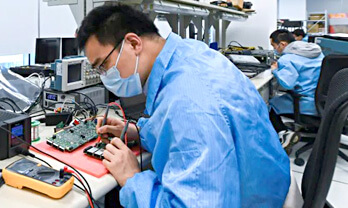
Strict quality inspection builds a solid foundation for electronic component quality.
  1. Visual inspection
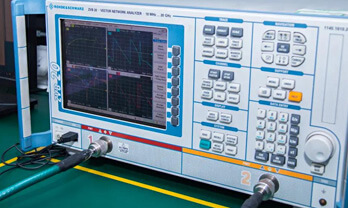
  2. Performance testing and reliability verification
  3. Standardized full-process testing
  4. Precise control of every parameter
We eliminate defective components and ensure the stable operation of electronic devices through professional quality standards.

Payment Support

The payment method can be chosen from the methods shown below: Wire Transfer (T/T, Bank Transfer), Western Union, Credit card, PayPal.
  • HKBea
  • Paypal
  • MasterCard
  • Western-Union
  • VISA
Stable Delivery, Sincere Partnership — Your Faithful Supply Chain Partner
  • Efficient Supply Management
  • Cost-Saving Procurement
  • Fast Sourcing & Delivery
Contact us if you have any questions.

Packaging

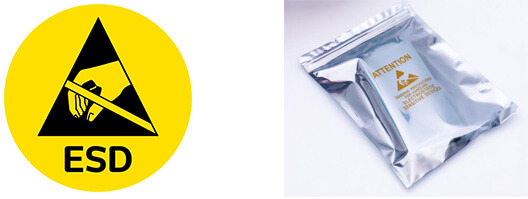
Electrostatic Discharge Protection and Handling

All electrostatic-sensitive components are handled in accordance with electrostatic discharge control procedures. The products are hermetically sealed in anti-static safe packaging to prevent electrostatic damage. Appropriate labeling is also applied for identification and traceability. This ensures product integrity during storage, handling and transportation.


ESD

Certifications & Memberships

Third-party certified, strict quality control. Our certification
  • ISO 9001: 2015
  • ISO 13485: 2016
  • ISO 14001: 2015
  • ISO 28000: 2007
  • ISO 45001: 2018
  • GB/T 27922-2011
  • SMTA
  • IPC
  • ESD
  • PSMA

HD6417032F20

HIT
32D-HD6417032F20

Want a better price? Add to Cart and Submit RFQ now, we'll contact you immediately.

0 RFQ
Shopping cart (0 Items)
It is empty.
Compare List (0 Items)
It is empty.
Feedback

Your feedback matters! At Allelco, we value the user experience and strive to improve it constantly.
Please share your comments with us via our feedback form, and we'll respond promptly.
Thank you for choosing Allelco.

Subject
E-mail
Comments
Captcha
Drag or click to upload file
Upload File
types: .xls, .xlsx, .doc, .docx, .jpg, .png and .pdf.
Max file size: 10MB